When business owners talk about downtime, they often imagine a complete power failure, lights off, and operations stopped. Everyone is waiting for the grid to return. In practice, that is not what causes the most disruption.
Most operational downtime is caused by partial failures. Brief interruptions, voltage drops, sudden demand spikes that push systems past their limits for a few seconds or a few minutes, computers have to reboot, control panels reset, air-conditioning units need restarting, and payment systems pause. None of these events looks serious on their own, but together they chip away at productivity and reliability.
In shops, power interruptions slow transactions and frustrate customers.
In offices, they break concentration and workflow.
In light industrial sites, they interrupt processes that rely on continuity.
In the Philippines, these issues are often closely tied to how electricity is delivered and billed. Commercial users are not just charged for energy consumed. They are charged for peak demand. A short spike at the wrong time can define costs for an entire billing period. Those same spikes often coincide with electrical instability.
This is why many businesses install solar and still experience downtime.
Why Grid-tied Solar alone is not Enough
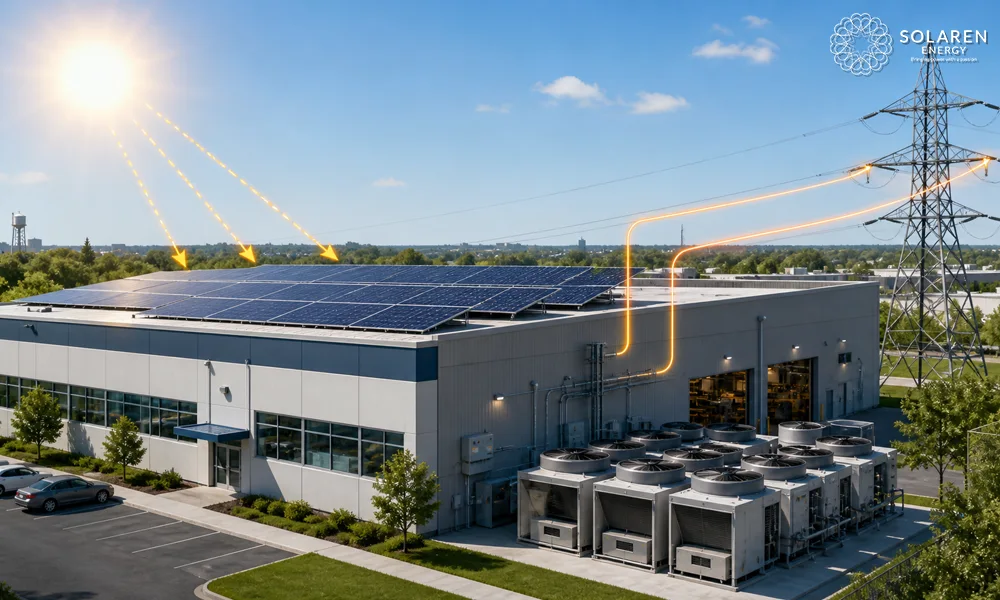
A standard grid-tied solar installation does exactly what it is supposed to do. It reduces energy drawn from the grid during daylight hours. It lowers kWh consumption and improves headline savings.
What it does not do is manage behaviour.
Most commercial sites have a clear load pattern. There is a base load that runs continuously, and there are predictable periods when demand rises. These peaks may be driven by occupancy, equipment start-up, cooling demand, or operational routines. They are not random.
Solar panels reduce energy use across the day, but they do nothing to soften those peaks. When demand rises suddenly, the grid still has to supply it. That is when meters register high demand and when electrical systems are placed under stress.
If the goal is to reduce downtime, energy volume is only part of the equation. Timing matters just as much.
The Five-Star Bus Terminal Project
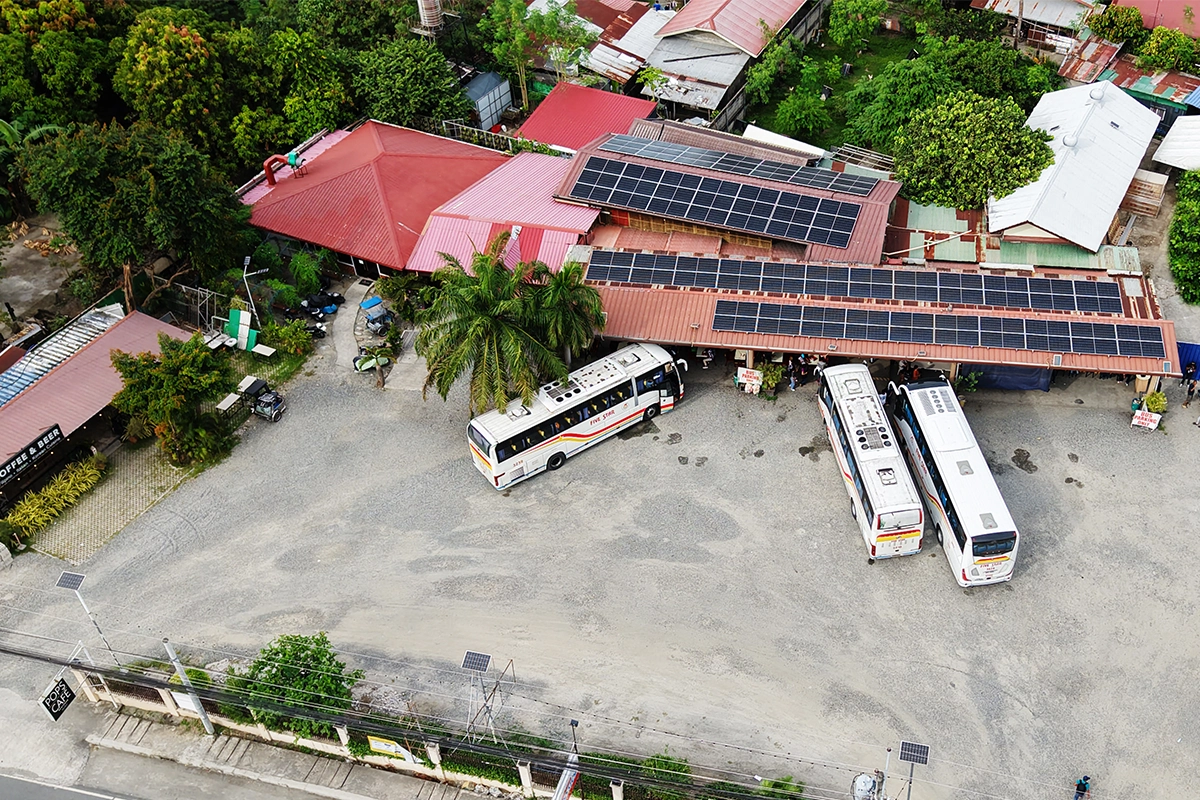
The Five Star Bus Terminal project is a good example of this distinction. The terminal operates on a highly predictable schedule. Passenger flow follows known peaks. Lighting, ventilation, ticketing systems, and support equipment all scale up and down in a repeatable way.
Their energy use was not particularly excessive. The issue was how demand behaved during busy periods.
Before the project, those peak periods pushed the site to the limit of its electrical capacity. Short spikes triggered demand charges and contributed to instability that affected sensitive systems. The problem was not continuous overload. It was brief stress at specific times of day.
The solution was not to oversize the solar array or rely on generators. Instead, the design integrated a grid-tied solar PV system with a battery system configured for control.
Designing for Control, Not Backup
The battery at the Five Star Bus Terminal was not installed as an emergency backup. It was installed to work every day.
Using operating data, specific peak windows were identified. These periods were consistent. They did not require prediction or guesswork. During those windows, a defined portion of the site’s load was shifted away from the grid and supplied by the battery instead.
The battery delivered a constant and predictable output during those periods. It did not chase fluctuations. It carried the part of the load that normally caused demand to spike.
From the grid’s perspective, demand remained steady.
From the site’s perspective, operations continued normally.
Solar generation continued to reduce overall energy consumption throughout the day. The battery simply ensured that timing no longer worked against the site.
How Does This Reduce Downtime?
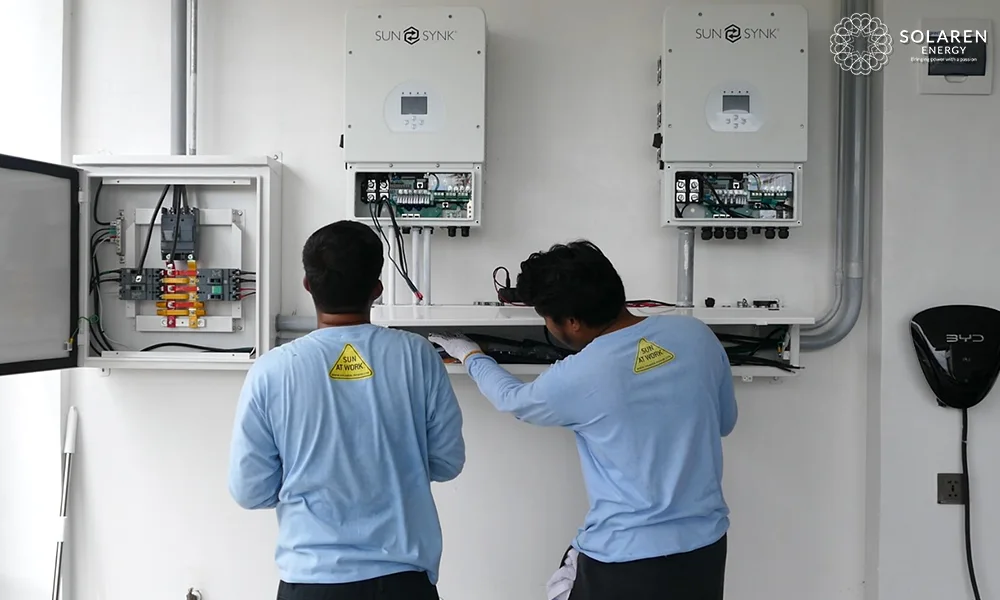
Once peak demand was controlled, several changes followed.
Firstly, demand charges fell. The meter never recorded the short spikes that previously set penalties for the entire billing cycle.
Second, electrical stability improved across the site. When demand stopped surging, voltage fluctuations reduced. Equipment that had previously tripped during busy periods stopped doing so.
Third, operational interruptions declined. Staff no longer had to deal with unexplained resets or system pauses during peak hours. These were not dramatic failures, but removing them had a real impact on day-to-day operations.
The key point is that nothing about the terminal’s behaviour had to change. Passenger flow remained the same. Operating hours remained the same. Staff did not need to manage the system. The energy system is adapted to the business, not the other way around.
How Solar Power Systems Philippines Uses Peak Shaving as an Operational Tool
Demand charges in the Philippines are unforgiving because they are set by the moment, not by averages. A site can operate efficiently for weeks and still be penalised for a brief spike.
Peak shaving addresses this directly.
By using a battery to carry known peak loads, the grid never sees the full demand. Costs fall, but more importantly, the electrical system stops operating at the edge of its capacity.
This is where solar power systems Philippines move beyond simple cost reduction. They become a way to stabilise operations.
Generators can do this in theory, but they are reactive, noisy, and often impractical for frequent use. Batteries perform the same role silently and precisely, without disrupting daily activity.
Why this applies to Shops, Offices, and Light Industrial Sites
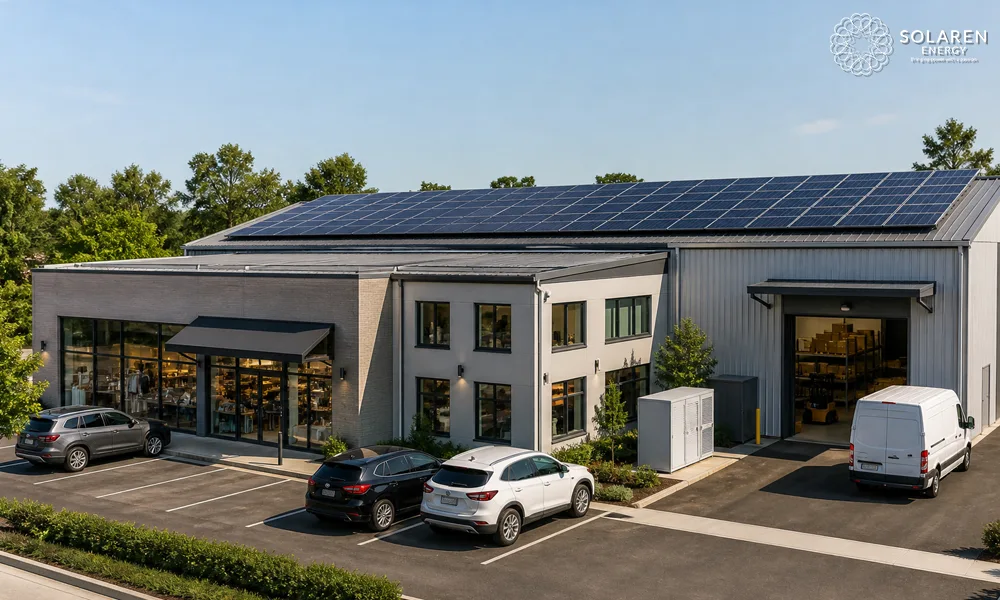
The Five Star Bus Terminal is quite a large site, but the principle applies equally well to smaller commercial environments.
Many shops and offices have fixed operating hours and consistent daily routines. Light industrial sites often run steady processes with known load profiles. Clinics, cold storage facilities, and service hubs rely on continuity rather than raw power.
In many of these cases, load behaviour is predictable. When behaviour is predictable, it can be managed.
Solar handles energy supply.
Batteries handle timing.
Control handles risk.
This combination reduces the small interruptions that accumulate into real downtime.
The Broader Lesson
Solar reduces downtime when it is integrated into a complete energy system. Panels alone lower bills. Panels, when combined with storage and control, reduce operational problems and friction.
The Five Star Bus Terminal project shows that the real value of solar is not only measured in pesos saved. It is measured in smoother operations, fewer interruptions, and power systems that work in step with the business they serve.
For shops, offices, and light industrial sites, that difference is often more valuable than headline savings.
Frequently Asked Questions
-
Will a standard grid-tied solar system reduce downtime from brownouts?
Not on its own. A grid-tied system stops generating the moment the grid goes down, because it is required by law to disconnect when the utility supply fails. It reduces your energy costs during normal operation but provides no protection against outages or the voltage instability that precedes and follows them.
If reducing downtime is a priority, a hybrid system with battery storage is the right specification. The battery keeps defined priority loads running through interruptions and provides the demand control that prevents instability from affecting sensitive equipment in the first place.
-
What is peak shaving and why does it matter for Philippine businesses?
Peak shaving means using a battery to supply a portion of your load during the specific periods when demand is highest, so the grid never sees the full spike. In the Philippines, demand charges are set by the single highest demand reading in a billing period, not by average consumption.
A brief surge lasting a few minutes can set your demand charge for the entire month. Peak shaving prevents that spike from being recorded and removes the electrical stress that causes equipment to trip or reset during busy periods. The result is lower bills and more stable operations, both at the same time.
-
How do I know if my site is a good candidate for battery storage?
The strongest candidates are sites with predictable daily load patterns where demand peaks happen at consistent, identifiable times. Shops with known busy periods, offices with predictable occupancy patterns, bus terminals, clinics, and light industrial sites running steady processes all fit this profile.
If you can describe when your site is busiest without checking data, your load is probably predictable enough to manage with storage. A load analysis using twelve months of billing data and, where available, interval meter readings will confirm it and size the battery correctly.