Ask ten installers to name the best solar inverters in the Philippines and you will get ten lists copied from the same overseas review sites. This is not one of those lists. Solaren has installed thousands of inverters across more than 2,500 projects and over 100 MW of capacity since 2014, on everything from provincial homes to award-winning industrial plants. We have watched these machines survive brownouts, voltage swings, typhoon season, salt air, and the occasional gecko. Some brands earned our trust. Some did not.
The five below did.
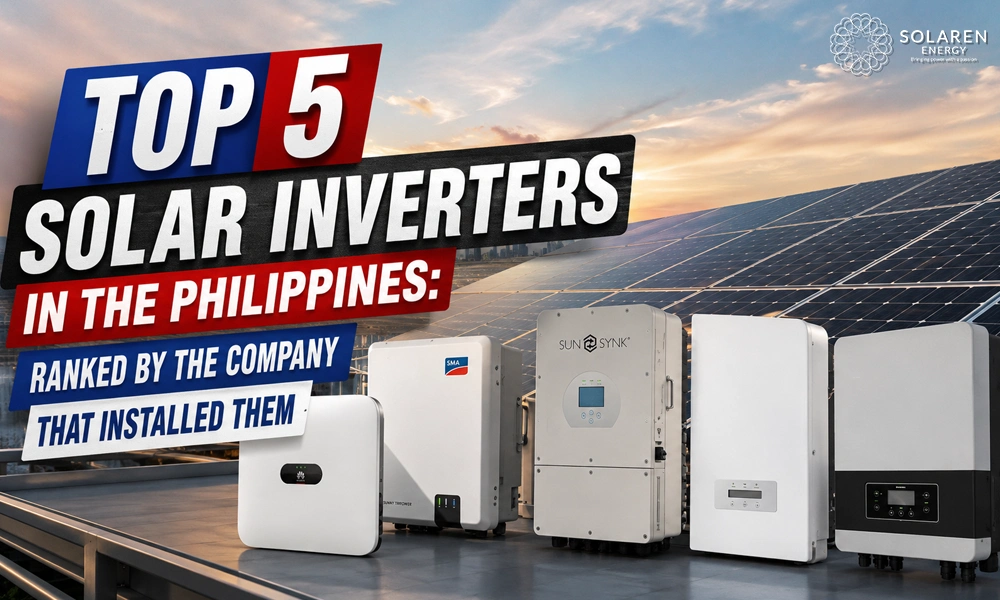
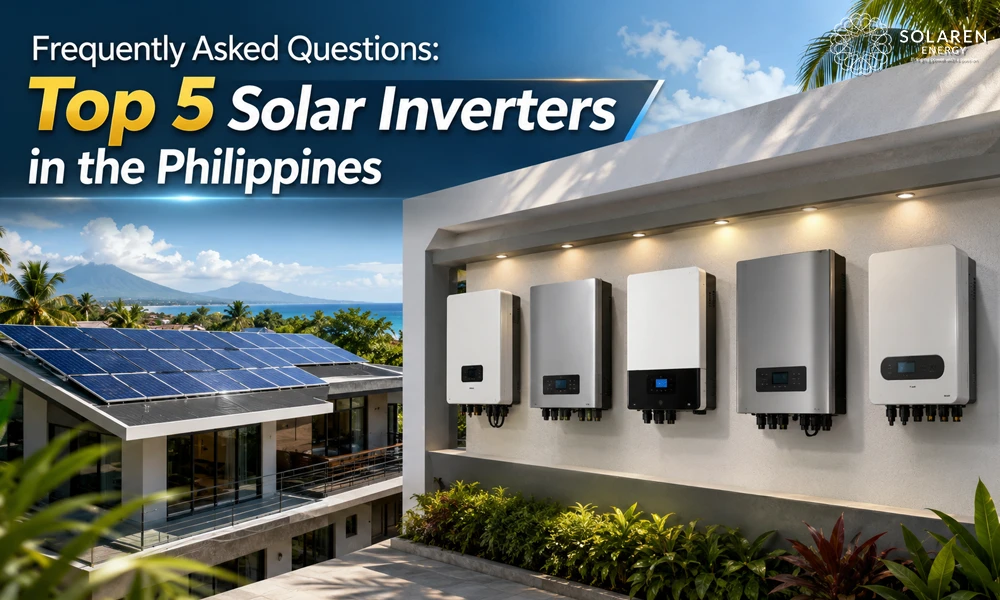
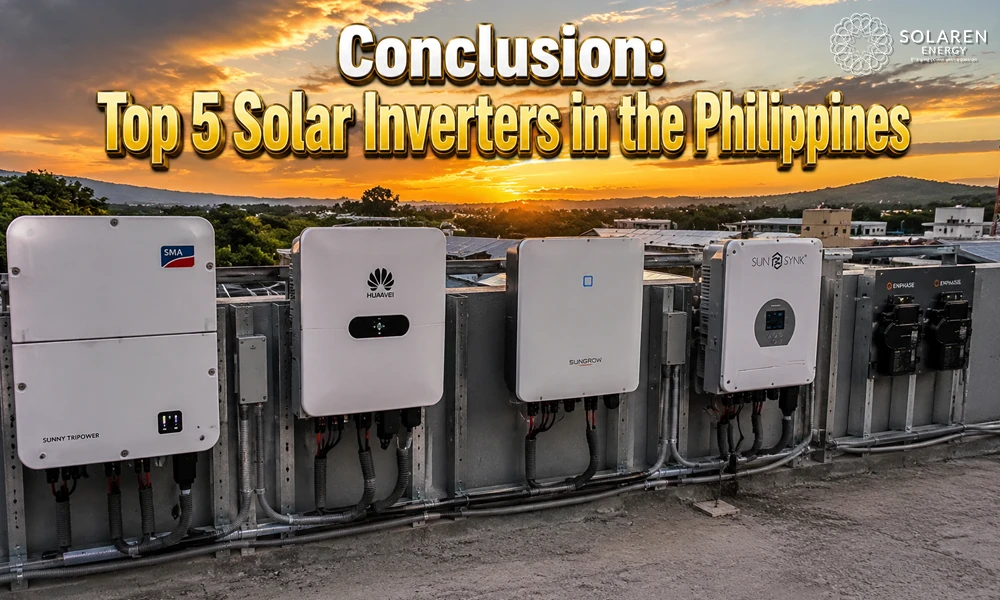
The top 5 solar inverters in the Philippines, based on Solaren’s field experience across more than 2,500 installations, are: 1) SMA of Germany for grid-tied reliability, 2) Huawei for technology and monitoring, 3) Sungrow for proven scale and support, 4) Sunsynk of the UK for hybrid flexibility, and 5) Enphase for shaded or complex roofs. All five are field-proven in Philippine grid conditions.
One thing before the ranking. Every brand on this list has been extensively field-tested by our own teams, on our own projects, with our own reputation attached to the outcome. None of them are the cheapest option in their category. That is not an accident. The inverter is the hardest-working component in a solar power system, the first thing to feel a bad grid day, and the component most likely to need support in year six. We stopped buying cheap inverters a long time ago, and our clients’ warranty claims folder is much thinner for it.
How We Judge an Inverter
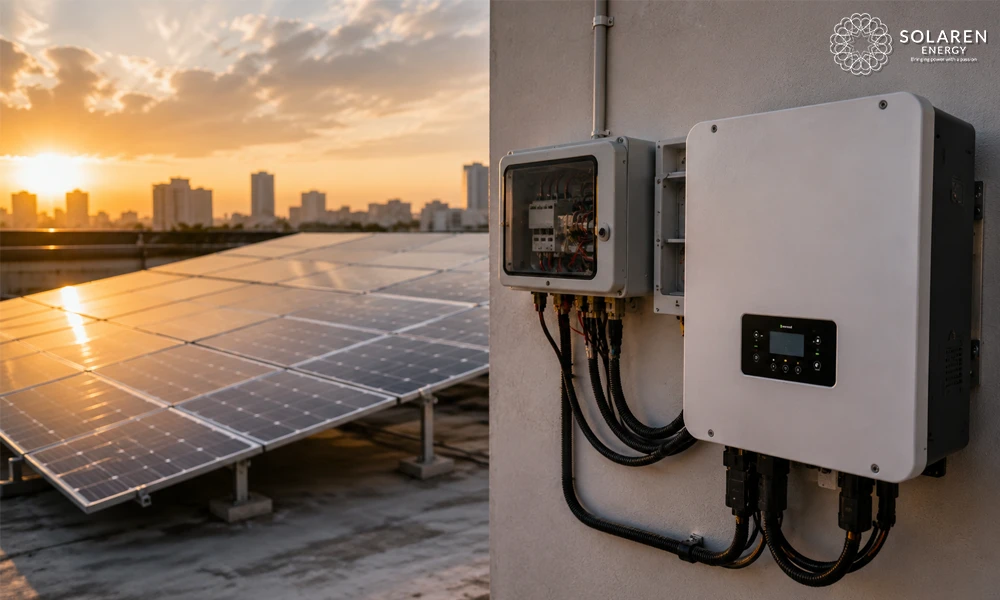
Datasheets are easy. Everyone’s datasheet says 98 percent efficiency and everyone’s brochure has a photo of a sunset. What separates inverters in the Philippines is different, and mostly invisible until you own one:
Grid tolerance: Philippine grid conditions are among the harshest an inverter will face anywhere. Voltage sags, frequency wobble, outages, and rough recoveries after storms. An inverter that rides through this without sulking and reconnects when the grid steadies is worth real money over 25 years.
After-sales support: When something fails, does a human answer? Is there local stock? Can a fault be diagnosed remotely? We weight this heavily because our clients feel it directly.
Serviceability and parts: A five-year-old inverter with no available spares is a paperweight with a warranty dispute attached.
Monitoring: If we cannot see it, we cannot fix it. Platform quality varies more than most buyers realize.
Price, you will notice, is not on that list. It matters, but it is the last filter, not the first.
-
SMA (Germany)
Our number one, and it has held that position for over a decade. SMA is the benchmark German inverter manufacturer and one of the most experienced in the industry, currently ranked third worldwide in Wood Mackenzie’s global inverter manufacturer assessment. We deploy the grid-tied Sunny Boy family on single-phase systems and the Sunny Tripower (STP) three-phase units on commercial and industrial projects, including some of the largest rooftops in our portfolio.
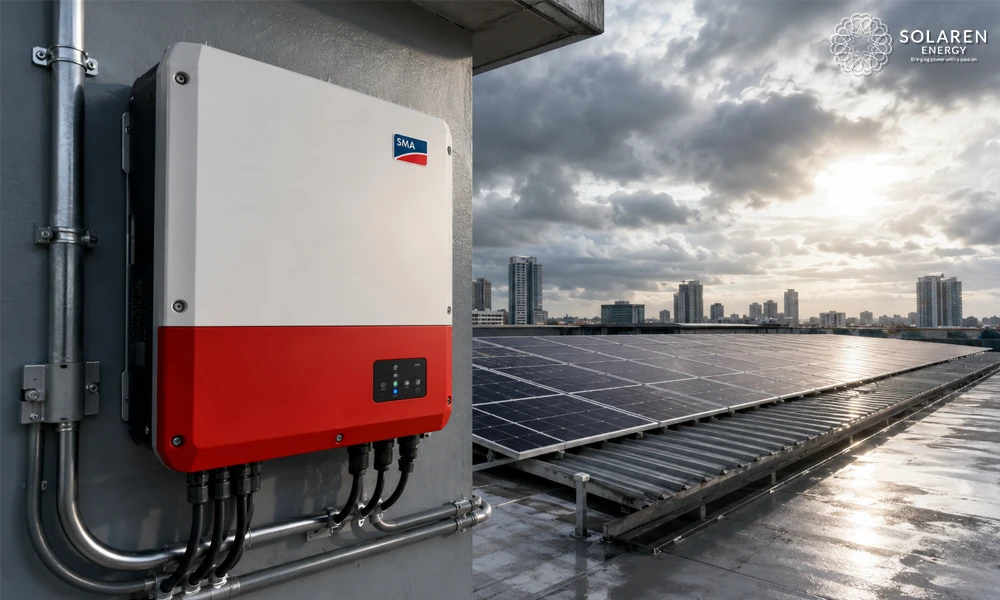
Why first place? Reliability, plain and simple. Across more than ten years of SMA deployments, we have seen a remarkable ability to withstand some of the harshest grid conditions the Philippines can produce. Sites where other equipment trips or faults, the SMA units shrug it off, ride through, and get on with the job. German engineering is a cliché until you watch it work through the electrical conditions of a typical typhoon season. Then it is just a fact.
After-sales support has been outstanding and responsive throughout. That consistency, over a decade, across hundreds of units, is the whole argument. Anyone can be reliable for two years.
The honest caveat: SMA carries a price premium, and its feature philosophy is conservative. You will not get the flashiest app or the most aggressive spec sheet. You get an inverter that is still producing, uneventfully, when the trendy brand from 2019 has exited the market. For a 25-year asset, we know which trade we prefer.
-
Huawei
Huawei is the world’s largest inverter manufacturer, holding the global number one position for ten consecutive years according to Wood Mackenzie, and after years of installing their equipment, we understand why. The technology is excellent. Not just good on paper, but amazingly well thought out in the details: commissioning workflow, diagnostics, arc-fault detection, thermal design. Someone at Huawei clearly installs their own products, because the pain points other brands ignore have been engineered away.
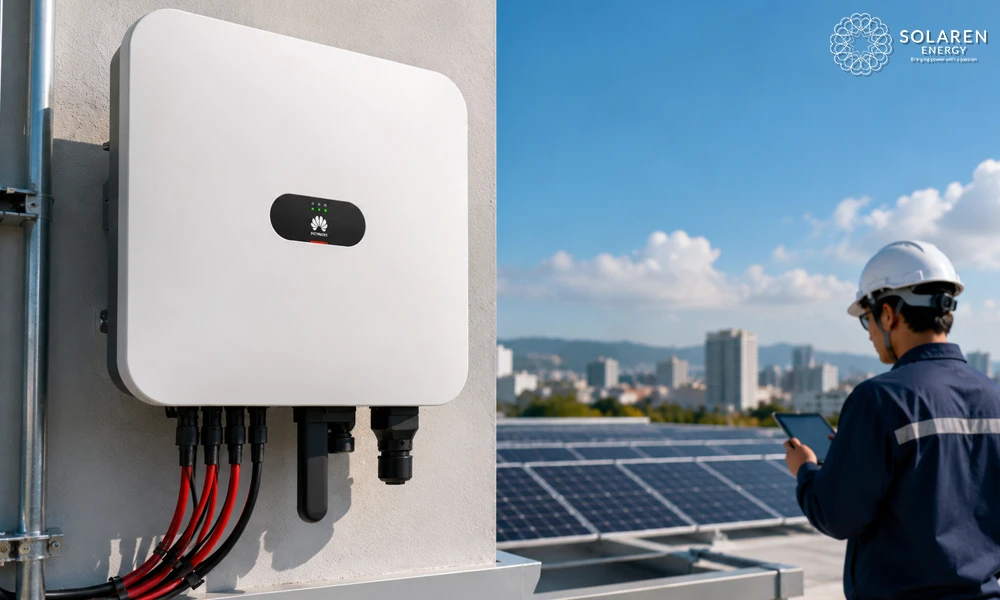
The monitoring deserves its own sentence. Huawei’s FusionSolar platform is, in our view, the best monitoring ecosystem in the industry right now, and it gives owners and our support engineers a level of visibility that turns most service calls into five-minute remote fixes. There is also a forward-looking angle: Huawei’s growing battery family integrates natively with its inverters, which gives today’s grid-tied buyer a clean storage upgrade path tomorrow.
Add a huge local presence in the Philippines, with first-class support and parts availability, and you have a thoroughly deserved second place.
The honest caveat: Huawei works best when you commit to Huawei. The ecosystem is superb precisely because it is an ecosystem, and buyers who want maximum third-party flexibility, particularly on batteries, should weigh that. Inside the fence, though, life is very good.
-
Sungrow
Sungrow is the other half of the global duopoly. Together with Huawei, it has held the top two positions worldwide for a decade straight, and the two combined for roughly 55 percent of the entire global inverter market in 2024. Sungrow is also the longest-established of the major Chinese manufacturers, founded by a university professor in 1997, and it shows in the maturity of the product line.
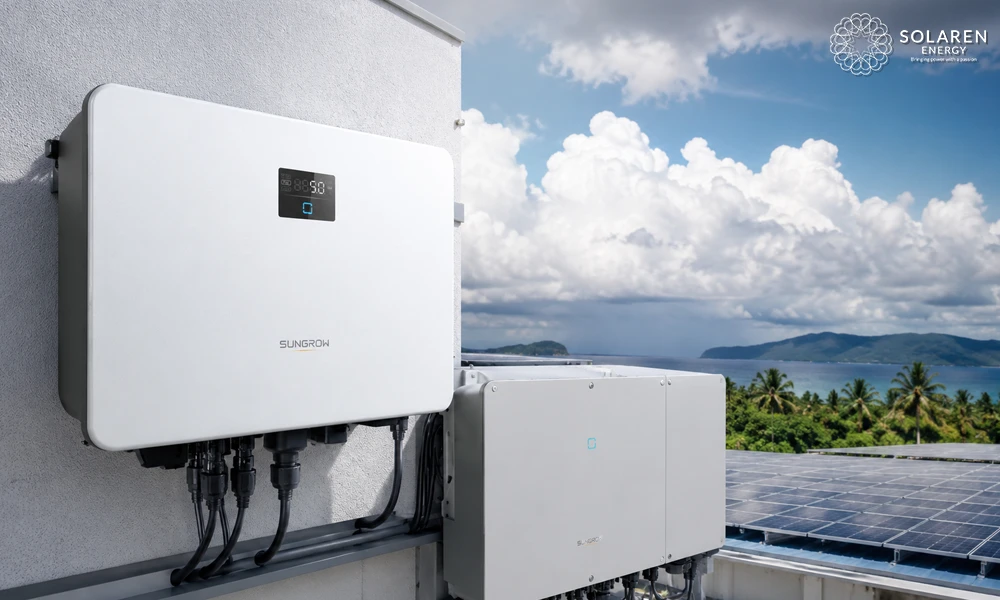
Our field experience mirrors the global numbers. Sungrow units have proven reliable in harsh environments, handle Philippine grid behavior well, and cover an enormous range, from residential string inverters to megawatt-scale central units, so there is a correctly-sized Sungrow answer for almost any project. Critically for us, the after-sales support has been strong, and after-sales is non-negotiable at Solaren. We have turned down cheaper brands in the past because their support could not be relied on, and Sungrow has never given us a reason to regret choosing the opposite.
The honest caveat: the range is so wide that model selection matters more than brand selection. The utility-scale pedigree is world-class; some entry-level models are more utilitarian than the flagship units, and the monitoring, while solid, is not quite FusionSolar. Buy the right Sungrow and you will be very happy. This is where an experienced installer earns its fee.
-
Sunsynk (UK)
Our winner in the hybrid solar systems category, and by a comfortable margin. Sunsynk is a UK-headquartered brand with over two decades in power electronics, an operational base in Hong Kong that keeps it close to this region, and a presence in more than 40 countries. Its hybrid inverters have become our default recommendation whenever a project involves batteries, backup, or future flexibility. Support has been strong, and the in-app assistance through the Sunsynk Connect platform is some of the best we have encountered from any brand.
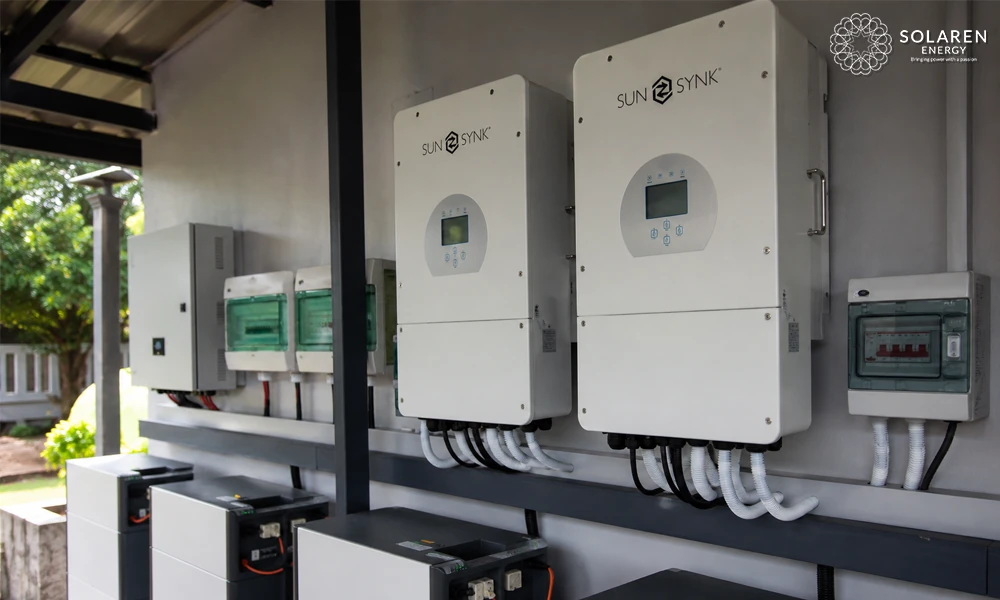
Two things put Sunsynk on this list. The first is robustness. These are very solid, dependable units that have handled everything our project sites have thrown at them. The second, and the one that matters most in practice, is adaptability. One of the most frequent requests we receive is to integrate an existing grid-tied system into a new hybrid setup, adding storage and backup without throwing away the equipment already on the roof. Sunsynk handles this scenario gracefully. It also works in the other direction: a client can start with a Sunsynk hybrid today and later expand generation with a more cost-effective grid-tied array feeding the same system. Very few platforms flex both ways.
And a genuine bonus: Sunsynk is battery-agnostic. Where many brands lock you into their own battery family, Sunsynk inverters communicate with a wide array of third-party batteries over open protocols. That is real, practical freedom, both on price today and on chemistry choices ten years from now. For a deeper look at how storage decisions play out for businesses, see our guide to energy storage solutions for Philippine businesses.
The honest caveat: Sunsynk is a hybrid specialist. For a plain grid-tied megawatt rooftop with no storage ambitions, the three brands above remain our first calls. Use the tool for the job it is brilliant at.
-
Enphase
Enphase is the odd one out on this list, and deliberately so. It is not a string inverter at all. Enphase makes microinverters, one small unit under each panel, and for a specific set of problem sites, there is simply nothing better.
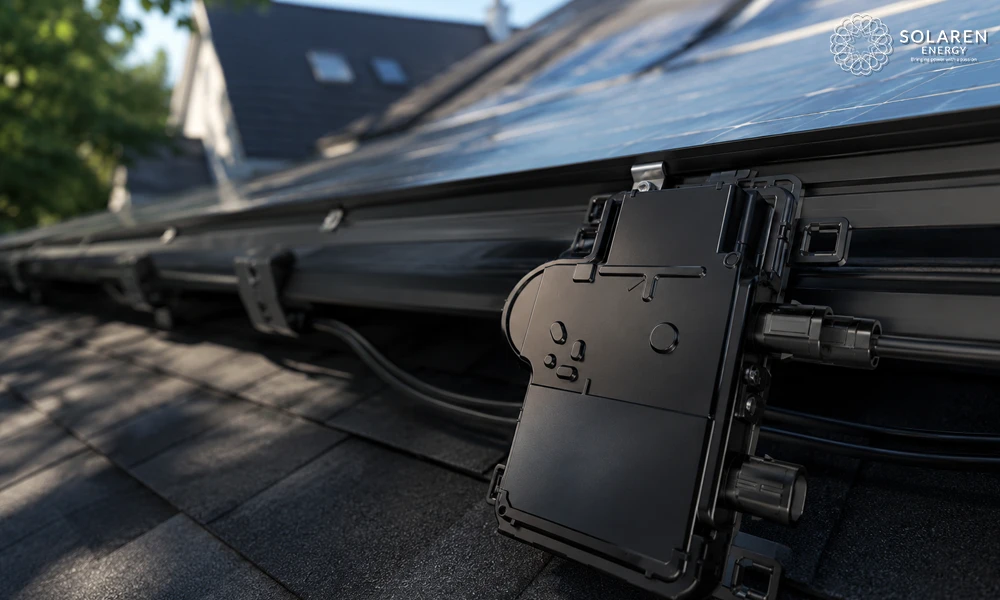
Shading from adjacent buildings or trees. Complicated roofs with panels facing three directions at three pitches. Sites where one problem panel would otherwise drag down an entire string. On these projects, Enphase’s panel-level architecture can enhance performance significantly because every module operates independently and one shaded panel costs you exactly one panel’s output, nothing more. The architecture also supports Rapid Shutdown as an inherent feature, de-energizing the roof at the module level, which is a meaningful safety upgrade for buildings where firefighting access matters.
Reliability is the other Enphase headline. With no single central point of failure and an industry-leading warranty of up to 25 years on the microinverters, it is the closest thing in solar to fit-and-forget hardware. There is a reason it is the only microinverter company in Wood Mackenzie’s global top ten.
The honest caveat: cost. On a large, open, unshaded commercial roof, microinverter economics rarely beat a well-designed string system, and we will tell you so. Enphase is the specialist surgeon, not the family doctor. In the right circumstances it is worth every peso.
What About Everyone Else?
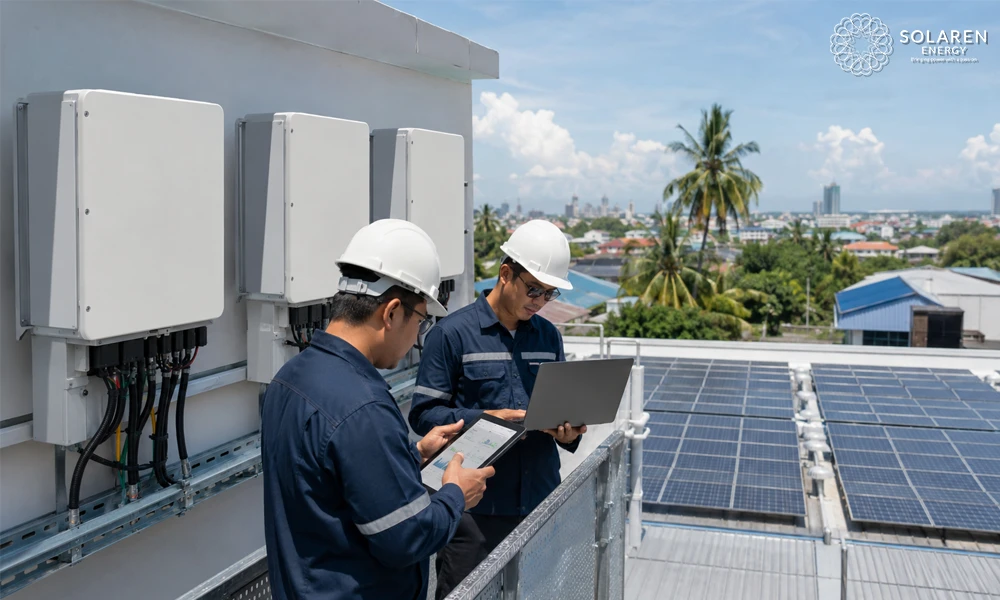
We get asked about other brands constantly, and we have evaluated plenty in the lab and unfortunately, sometimes in the field. Some are decent. A few are genuinely poor. The five above are the ones we are willing to put our name behind after more than a decade of commissioning reports, warranty claims, typhoon seasons, and 2 a.m. monitoring alerts. That is the entire methodology. We have proof on roofs all over the country, and you can browse it in our projects portfolio.
Frequently Asked Questions
-
What is the best solar inverter in the Philippines?
Based on over a decade of field data, SMA is our overall number one for grid-tied systems, single-phase and three-phase, due to exceptional reliability in harsh Philippine grid conditions and outstanding after-sales support. The best inverter for your project, however, depends on the application: Huawei and Sungrow excel across C&I, Sunsynk leads for hybrid and battery systems, and Enphase wins on shaded or complex roofs.
-
Are Chinese solar inverters reliable?
The top-tier ones, yes. Huawei and Sungrow have ranked as the world’s two largest inverter manufacturers for ten straight years, and our field experience confirms their reliability in Philippine conditions. The keyword is top-tier. The gap between the leading Chinese brands and the budget ones is enormous.
-
What inverter is best if I want batteries later?
A hybrid inverter such as Sunsynk gives you the cleanest path, especially since it is battery-agnostic and can integrate an existing grid-tied system. Huawei is also strong here if you are happy committing to its battery ecosystem. Either way, tell your installer about your storage plans before the design stage, not after.
-
Do more expensive inverters really last longer?
In our experience, yes, and the difference compounds. The inverter handles every watt your system ever produces and absorbs every grid disturbance. Premium units fail less, are supported better, and have parts available in year ten. Cheap inverters are how a 25-year asset becomes an 8-year asset, and often less.
-
Why does after-sales support matter so much for inverters
Because inverters are the component most likely to need attention over the system’s life, and downtime is lost generation. Brands with local presence, responsive engineers, and remote diagnostic capability get faults resolved in hours. Brands without them get resolved in weeks, if at all.
Conclusion: Top 5 Solar Inverters in the Philippines
The best solar inverters in the Philippines are not the ones with the noisiest marketing. They are certainly not the ones in the endless Facebook posts of installers giving a thumbs up beside a freshly mounted unit. Those posts measure enthusiasm, not quality. Often the opposite. The best inverters are the ones still working, still supported, and still monitored fifteen years after commissioning. SMA, Huawei, Sungrow, Sunsynk, and Enphase have each earned their place on this list the only way we accept: on our clients’ roofs, in real Philippine conditions, over years.
The inverter decision is one piece of a much bigger picture, from system design to commissioning. Our complete guide to solar panel installation covers where the inverter choice sits within the whole process. And if you want a recommendation for your specific site, load profile, and budget, talk to a contractor that has installed all five of these brands. We know exactly where each one shines.