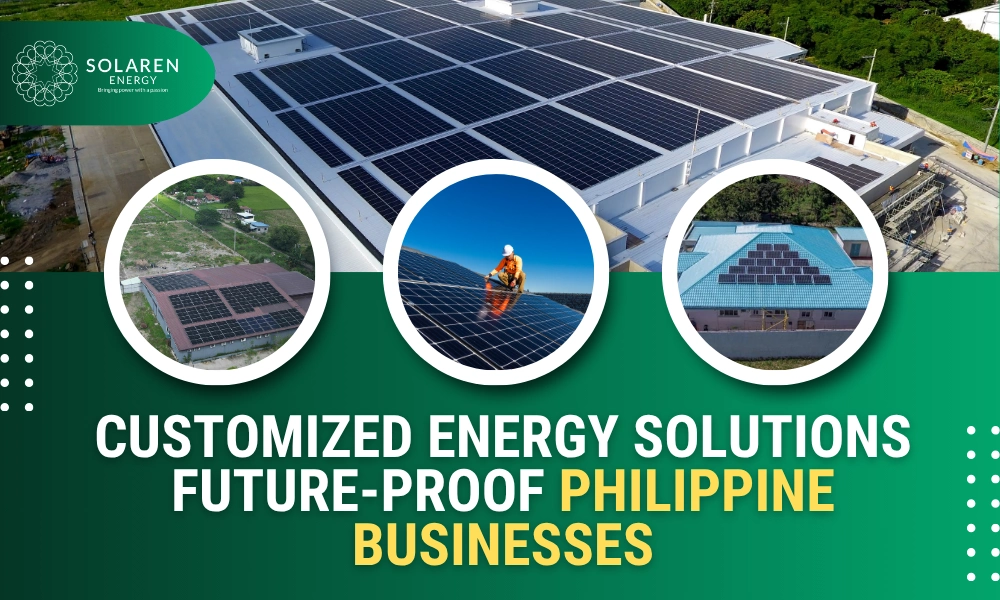
How Customized Energy Solutions Future-Proof Philippine Businesses in 2026

How Customized Energy Solutions Future-Proof Philippine Businesses

Solaren regularly hears from clients feeling the real pain of rising electricity costs. These sometimes climb as high as ₱18 to ₱20 per kWh, a figure that hits transport operators, logistics companies, and manufacturers hardest, because for them, power is not a background expense. It is a core operating cost that directly determines whether the business is profitable or not.

Businesses across the Philippines are responding by rethinking how they manage energy entirely. Many are moving toward customized energy solutions that combine solar generation, battery storage, and intelligent load management, not as an environmental gesture, but as a hard financial decision.

These systems are not off-the-shelf packages. Each one is engineered around a company’s exact energy profile, operational schedule, and financial objectives. The result is lower costs, greater reliability, and a genuine measure of independence from a grid that continues to face pressure from population growth, extreme weather, and ageing infrastructure.

Why Tailored Systems Are Essential

Every business has its own energy fingerprint. A hotel needs cooling systems running continuously through the night. A call center depends on servers that cannot go down for a single minute. A cold storage warehouse needs refrigeration that holds temperature regardless of what the grid is doing. A manufacturing plant needs voltage-stable power during production peaks or risks damaging equipment worth far more than any electricity bill.

Generic solar packages rarely address these differences. A proper customized system starts by understanding exactly how a facility consumes power load curves, peak demand times, critical equipment priorities, and backup requirements before a single panel is selected or a single peso is committed. This level of engineering detail is what separates a system that genuinely performs from one that simply looks good on paper.

What Goes Into a Customized Energy Setup
renewable energy company Philippines

The process begins with energy profiling. Solaren’s engineers audit twelve months of electricity bills and monitor real-time consumption to map how power moves through a facility across the day and across seasons.

Once the data is clear, solar generation is matched with the right battery storage capacity. Smart software then manages the entire system, when to store energy, when to draw from batteries, when to draw from the grid, and when to export excess power back under net metering. In more complex installations, programmable inverters shift non-critical loads to peak solar generation hours, compressing costs further.

Every design is built to comply with Philippine interconnection and net metering standards, ensuring smooth utility integration and avoiding the permit problems that plague poorly planned projects.

The Business Impact

Well-designed customized systems regularly cut electricity bills by thirty to sixty percent. Beyond savings, they reduce unplanned downtime, protect sensitive equipment from voltage fluctuations, and increasingly satisfy ESG and supply chain requirements from international partners and investors who now scrutinize energy sourcing.

For food processing, logistics, and transport operations, reliable power is not just a financial issue; it determines whether deadlines are met, whether products spoil, and whether operations run or stop. Solaren simulates full system performance before any deployment, projecting ROI, outage coverage, and tariff savings so that business owners understand the financial outcome long before installation begins.

How Different Industries Apply It
customized energy solutions

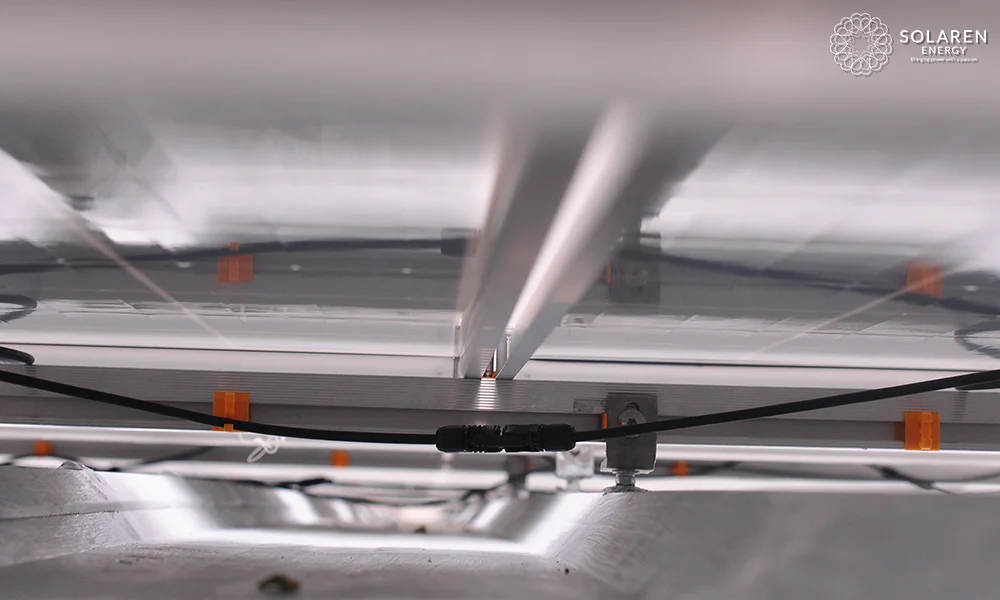
Hotels and resorts shift air-conditioning and pool loads to daytime solar production, cutting diesel generator use during outages and reducing peak-hour grid draws. Cold storage operators run compressors on battery power overnight to maintain temperature consistency without grid dependency. Factories use customized systems to stabilize voltage, protect automation equipment, and keep production lines running through brownouts. Retail chains power lighting, refrigeration, and point-of-sale systems from hybrid setups that continue operating seamlessly when the grid fails.

Each installation serves different goals. All share the same foundation, energy designed around actual operational needs, not around what happens to be available from a supplier’s catalogue.

A Real-World Example: Five Star Bus Terminal
Five Star Bus Terminal

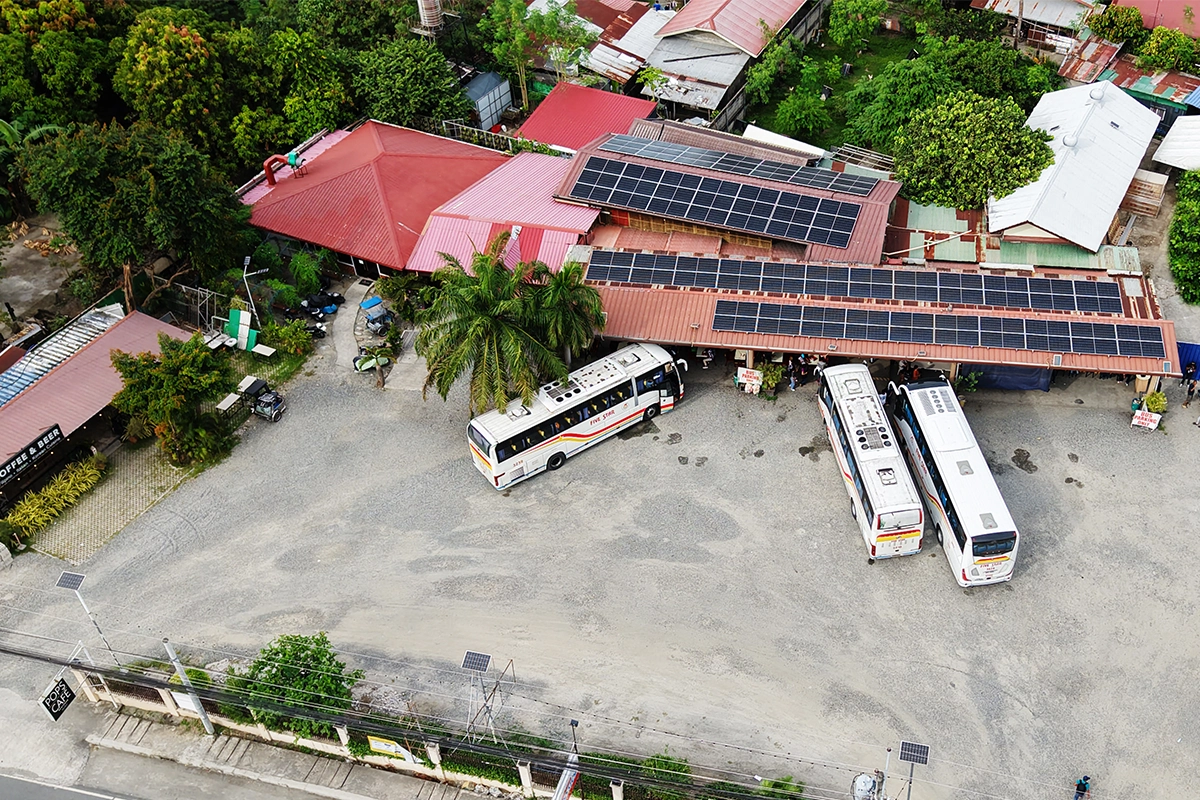
One of Solaren’s most technically sophisticated installations serves a transport terminal for Five Star, one of the Philippines‘ leading bus companies. The system is both exquisite and unique in its engineering, and it illustrates exactly what a truly customized energy solution looks like in practice.

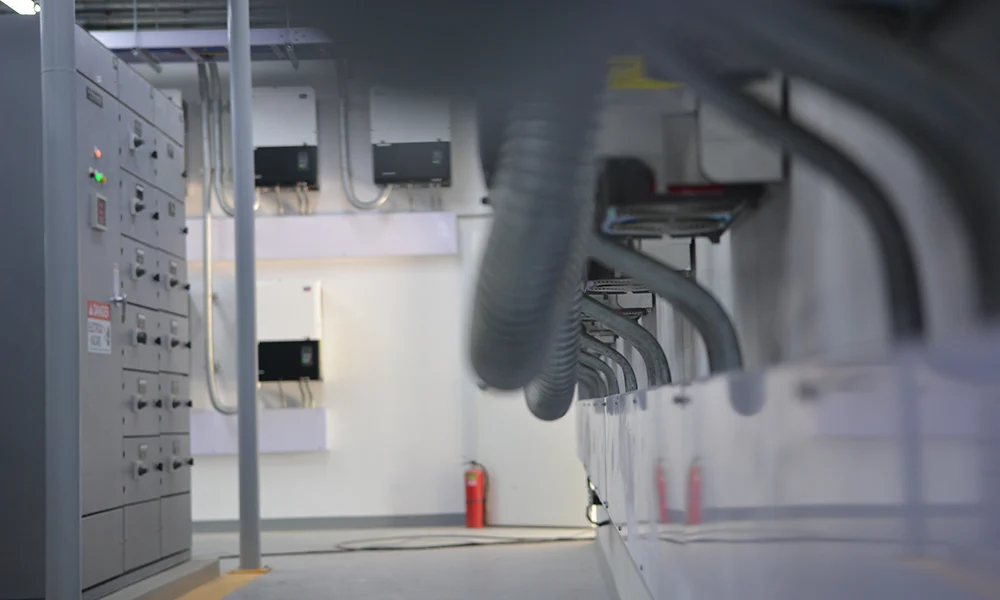
The installation centers on a 54kWp rooftop solar array paired with a 110kWh battery system powered by a Sunsynk Power Hub. The Sunsynk provides seamless microsecond switching in the event of a grid failure.  The terminal never loses power, not even for a blink. The solar system follows the traditional generation bell curve through the day, using that output to reduce shoulder loads during daylight hours. Night loads and backup power are covered as far as possible by the battery, which also handles peak shaving to keep demand charges low. In this setup, the grid is the last resort.

What makes this system genuinely exceptional is its integration with a Perkins generator controlled by a DeepSea controller. The system is programmed to automatically start the generator during extended grid outages.  Grid use always being the priority, and simultaneously optimizes diesel consumption so the generator covers live loads and battery charging at the same time rather than running inefficiently at partial load. Weekly automated generator maintenance sequences are also built into the programming, preventing common operational problems like wet stacking that plague backup systems left to run manually, or for short periods under standard ATS setups.

The result for Five Star is a guaranteed minimum saving of 225kWh daily from battery dispatch alone, plus ongoing savings from peak shaving. Combined, this represents a minimum of ₱1,150,000 in annual savings. The capital investment was significant.  This is a premium, engineered system, but the return on investment will still be achieved in under five years, after which the savings continue for the life of the asset.

Incentives That Improve the Economics
renewable energy storage solutions

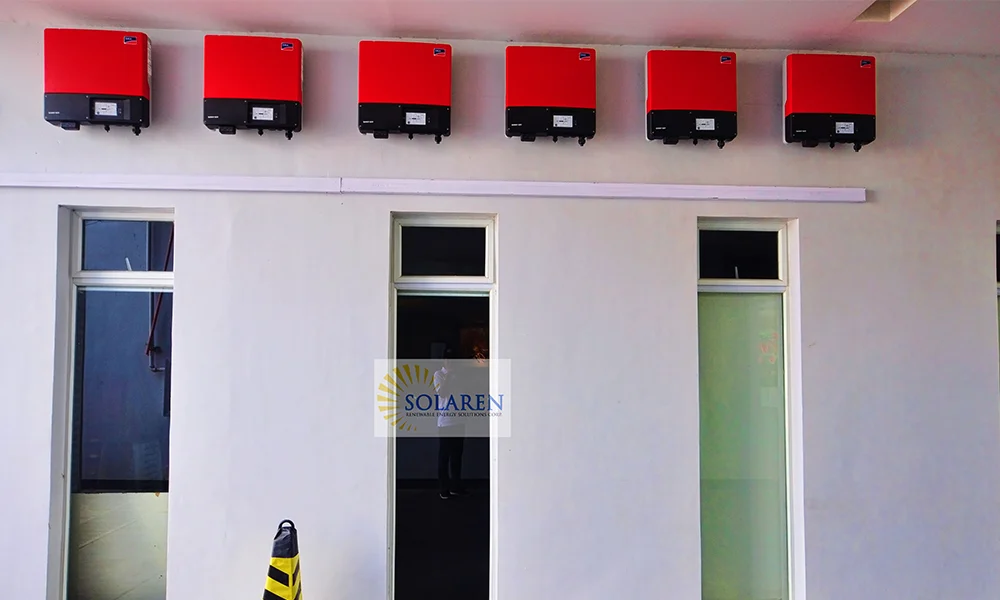
Government support continues to strengthen the financial case for commercial renewable investment. Through the Green Energy Option Program, qualified businesses can source electricity directly from renewable providers, often at rates below traditional utility tariffs. The Energy Regulatory Commission recognizes behind-the-meter batteries as part of certified renewable energy storage solutions, allowing businesses to earn credits of ₱5.638 per kilowatt-hour for solar energy exported after sunset.

Projects commissioned before December 2026 may also qualify for VAT-free import of battery components and access to green grant funding. Solaren manages all permit applications, compliance submissions, and utility coordination under its turnkey programme, removing the administrative burden entirely from the client.

Technology That Defines Performance

The technology landscape for commercial solar in the Philippines has matured considerably. Lithium Iron Phosphate batteries remain the industry standard for daily cycling. Safe, efficient, and capable of more than a decade of reliable service. Sodium-ion batteries are emerging as a strong option for facilities requiring faster charging and performance in high ambient temperatures. Vanadium flow batteries are gaining ground in heavy industrial applications where a twenty-plus year service life and zero fire risk justify the investment.

Battery prices have largely stabilized after years of decline, meaning the financial case for storage is now predictable and bankable rather than dependent on future cost assumptions. What will not stabilize is grid volatility or the trajectory of Philippine utility tariffs, both of which continue to move in one direction.

Hybrid inverters tie all of these elements together, managing solar input, battery output, and grid interaction from a single intelligent platform. This integration simplifies operation, improves overall system efficiency, and gives facility managers clear visibility into exactly how their energy is being generated, stored, and consumed.

The Long-Term Advantage

Companies that invest in customized energy systems now are locking in predictable energy costs against a backdrop of rising utility rates and growing grid uncertainty. But the advantage goes beyond the balance sheet. These systems create operational resilience, reduce carbon exposure ahead of tightening regulations, and give businesses genuine control over one of their largest and least predictable cost lines.

For Philippine enterprises planning seriously for the years ahead, a properly engineered customized energy solution is not a luxury or a sustainability gesture. It is a strategic infrastructure decision.  One that delivers financial returns, competitive stability, and energy independence that compounds in value every year it operates.
Share this post:
THE SMART INVESTMENT FOR YOUR HOME OR BUSINESS

SWITCH TO SOLAR PV!

We take pride in providing cutting-edge technology and expertise to help our clients power the future with clean, sustainable energy.
solar energy

asian top choice awards for excellence and outstanding achivers 2024

Lorem Ipsum is simply dummy text of the printing and typesetting industry. Lorem Ipsum has been the industry’s standard dummy text ever since the 1500s, when an unknown printer took a galley of type and scrambled it to make a type specimen book. It has survived not only five centuries, but also the leap into electronic typesetting, remaining essentially unchanged. It was popularised in the 1960s with the release of Letraset sheets containing Lorem Ipsum passages, and more recently with desktop publishing software like Aldus PageMaker, including versions of Lorem Ipsum.


Here are Lorem Ipsum bullet points you can use as placeholder text:

  • Lorem ipsum dolor sit amet, consectetur adipiscing elit.

  • Sed do eiusmod tempor incididunt ut labore et dolore magna aliqua.

  • Ut enim ad minim veniam, quis nostrud exercitation ullamco.

  • Duis aute irure dolor in reprehenderit in voluptate velit esse.

  • Excepteur sint occaecat cupidatat non proident.

installation teams

Solaren’s in-house installation teams deliver commercial and industrial solar projects with the consistency and precision that large sites demand. With several trained crews operating across the Philippines, we handle multiple installations simultaneously while maintaining high, uniform workmanship standards. Each team works closely with Solaren’s engineers to plan structural layouts, optimize wiring routes, position inverters for optimal performance, and integrate the system safely into the client’s existing electrical network. This level of coordination ensures clean execution on the roof and inside the facility, with every detail checked against strict safety and performance requirements. Our teams are experienced with complex environments, from homes to factories and warehouses, showrooms and food-production sites, and they follow a disciplined workflow that protects system performance for years. Because all installation work is performed by Solaren personnel, not subcontractors, clients receive complete accountability, better quality control, and systems built to deliver reliable energy from the day of commissioning.

JERRICO MIGUEL

Junior Electrical Engineer

Jerrico assists with electrical installation, testing, and commissioning across commercial PV systems. With 3 years of engineering experience, he supports senior engineers with wiring, system validation, and integration of monitoring systems. He has contributed to deployments for food manufacturing, warehousing, and commercial facilities.

Key Responsibilities

• Assist with wiring, conduit work, and panel installation
• Support testing, commissioning, and on-site validation
• Perform basic electrical troubleshooting and checks
• Document as-built work and site conditions
• Coordinate with senior engineers for daily tasks

ARNOLD NICOLE YOUNG

IT Specialist

Arnold manages and oversees Solaren’s IT infrastructure, Networking and monitoring platforms. With over seven years of IT and network experience, he maintains monitoring for hundreds of live systems nationwide, ensuring uptime, data security, and reliable performance visibility. He is CCNA-certified.  Arnold is responsible for coordinating the operations and maintenance of existing systems,

Key Responsibilities

• Manage O and M, monitoring portals and system dashboards
• Maintain IT networks and data security protocols
• Support engineers with diagnostics and remote checks
• Ensure uptime of client monitoring portals
• Implement updates and coordinate hardware integration

JOHN RUDOLF SIGUA

PV Design Engineer

John specializes in system modelling, layout design, and performance simulation for commercial and industrial projects. A Registered Electrical Engineer with five years of design experience, he works with PVsyst, AutoCAD, and utility-compliant PEC standards. He supports commissioning and troubleshooting to ensure accurate performance and reliable operation.

Key Responsibilities

• Prepare PV system layouts, modelling, and energy simulations
• Size components for optimal performance and compliance
• Produce design packages for permitting and construction
• Support commissioning, technical checks, and system validation
• Provide troubleshooting for design-related issues

EJ P. ERESE

Onsite Project Manager

EJ oversees daily on-site installation for commercial and industrial PV systems, coordinating manpower, safety, and client updates. A Registered Electrical Engineer, Registered Master Electrician, and Safety Officer 2, he brings six years of field experience and has supervised crews on multiple multi-MWp deployments with strong safety records.

Key Responsibilities

• Direct daily on-site installation and crew assignments
• Enforce safety compliance and conduct toolbox meetings
• Track progress and report updates to project managers
• Validate installation work against approved designs
• Support testing, energization, and turnover

CARLO BENJAMIN NUCUM

Senior Project Manager

Carlo has long led the company’s engineering teams across full project lifecycles, from planning to commissioning. He has delivered multi-MWp systems for clients such as Liwayway Marketing, Bench, Toyota, New Zealand Creamery, and Atlantic Grains. A Registered Electrical Engineer with more than eight years of experience, he manages and oversees PEC-compliant installations and quality control across commercial and industrial sites.

Key Responsibilities

• Lead project teams and manage end-to-end delivery in entirety
• Oversee installation quality, safety, and technical compliance
• Coordinate with clients, suppliers, and engineering groups
• Review electrical plans and validate system performance
• Supervise testing, commissioning, and turnover documentation

Christopher Henry Hutchings

Sales Director

Chris brings four decades of international finance experience, including senior leadership roles in Hong Kong where he still qualifies as a Responsible Officer under the Hong Kong Securities and Exchange Commission requirements. His background in Private Wealth, managing client portfolios and evaluating long-term financial strategies allows him to help enterprise clients assess solar investments with clarity and confidence. Chris leads Solaren’s commercial sales strategy, working with clients to structure accurate proposals, reliably analyses return expectations, and build sustainable partnerships. He collaborates closely with engineering and procurement teams to ensure every system is designed, priced, and projected with precision.

Key Responsibilities

• Leadership of enterprise and commercial sales strategy
• Client advisory on ROI, system design, and financial planning
• Proposal development with engineering and procurement teams
• Partnership building across commercial and industrial sectors
• Risk and value assessment for large-scale solar investments
• Reliable and trusted representation of Solaren in high-level client engagements and negotiations

Ronnie C. Lorenzo

General Manager & Corporate Secretary

Ronnie manages Solaren’s day-to-day operations, coordinating procurement, logistics, manpower, and documentation across all active project sites. He supervises regulatory submissions, contract execution, and local permitting to ensure every deployment remains compliant and on schedule. His critical role connects engineering, procurement, and administrative teams so projects move efficiently from planning to installation and commissioning. As Corporate Secretary, he maintains board records, supports executive reporting, and ensures transparency across the company’s internal processes and external commitments.

Key Responsibilities

• Daily operations, scheduling, and logistics
• Procurement coordination and supplier management
• Contract execution and regulatory submissions
• On-site documentation and compliance tracking
• Cross-team coordination from planning to commissioning
• Corporate Secretary duties and board record management

Anicia Pearce

President

Ann leads corporate governance, financial discipline, and regulatory compliance for Solaren, ensuring full alignment with the companies ever growing regulatory requirements. She manages audit readiness, internal controls, and risk management across all departments. Her work anchors the company’s expanding operations, providing clear structures for procurement, contracting, and documentation. Ann also oversees systems that ensure complete records and proper regulatory filings support each project from planning to commissioning. Her no-nonsense leadership reinforces Solaren’s credibility with clients, partners, and government agencies as the company continues to handle larger commercial and industrial portfolios.


Key Responsibilities

• Corporate governance and regulatory compliance
• Financial controls, budgeting, and audit readiness
• Risk management and operational discipline
• Oversight of contracting, documentation, and procurement workflows
• Alignment with all regulatory and Government standards
• Executive support for cross-department operations

Neil H. Pearce

Managing Director

Neil leads Solaren’s strategic planning and oversees all commercial, financial, and operational decisions across the company’s national portfolio. He brings over three decades of experience across Asia’s financial markets, including his past work and key Directorships for several private wealth management companies in Hong Kong. He guides capital allocation, project evaluation, and long-term planning while strengthening supplier relationships with global partners. Neil has overseen more than 85 MW of commercial, industrial, and residential installations and continues to steer Solaren’s expansion into AI-driven monitoring, energy storage, and enterprise-scale engineering systems. He also serves as a director for several regional companies.


Key Responsibilities

• Strategic direction and long-term planning
• Capital allocation and project funding oversight
• Partnership management with global suppliers
• Corporate governance and executive decision-making
• Evaluation of commercial and industrial project pipelines
• Expansion into energy storage and digital monitoring, together with Artificial Intelligence

Renewable Energy Solutions

GET A QUOTE