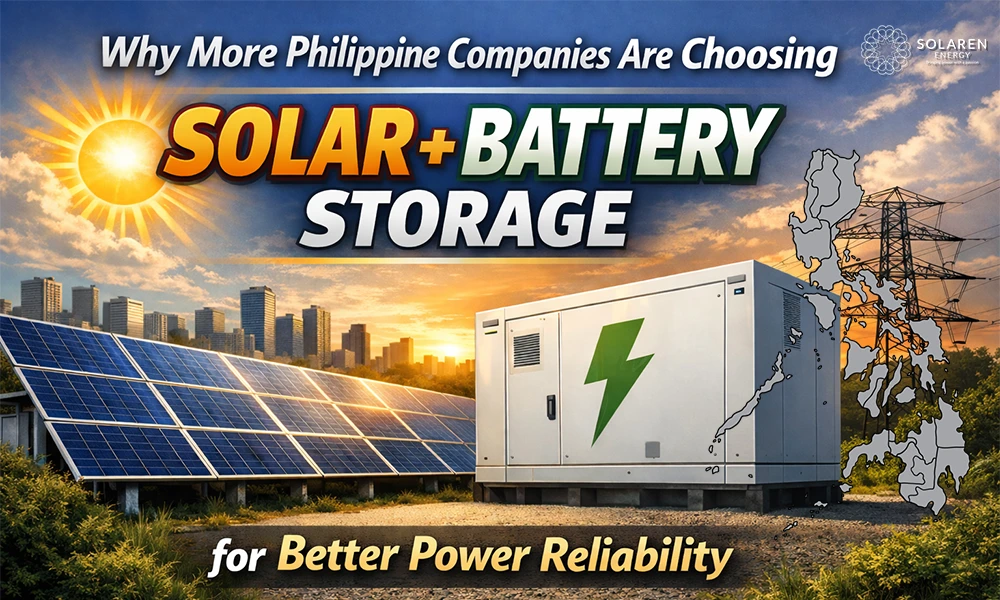
Electricity in the Philippines is expensive, inconsistent, and increasingly unpredictable. Outages still disrupt daily operations across many areas. Demand charges spike without warning. Monthly bills fluctuate in ways that make budgeting difficult. For a growing number of business owners and operations managers, solar alone is no longer the complete answer. What they are moving toward is solar paired with battery storage, and the reasons are practical, not aspirational.
This is not a trend driven by environmental commitments or government incentives. It is driven by daily experience. Companies that have gone through one too many unplanned shutdowns, one too many diesel bills, or one too many months of unpredictable utility costs are making the switch because the numbers and the operational reality both point in the same direction.
Why Power Reliability Has Become a Business Priority
Anyone running a facility in the Philippines understands what an outage actually costs. It is not just the inconvenience. It is the stalled production line, the interrupted refrigeration, the irrigation pump that stops mid-cycle, the sensitive equipment that trips and takes an hour to restart. Even short voltage dips carry a cost that accumulates month after month through accelerated equipment wear, lost staff hours, and delayed customer commitments.
Seasonal pressure makes this worse. Summer heat pushes grid demand higher. Storm season stretches transmission infrastructure thinner. Voltage swings become more frequent. Companies absorb these disruptions quietly until the cumulative cost becomes impossible to ignore.
Solar already addresses the daytime energy expense. Storage addresses something more valuable: stability. It gives a business control over its own power supply during the moments when the grid becomes unreliable. It captures excess solar generation and deploys it when it is needed most. The result is a more predictable operation, and predictability is something every business owner can put a number on.
How Storage Strengthens the Solar Investment
There is a straightforward economic case for adding storage to a solar system. Solar performs best when every kilowatt-hour generated is put to use. In reality, many facilities produce more power than they can consume during peak generation hours. Without storage, that surplus is exported at a reduced rate or simply lost during grid outages. With storage, it becomes a usable asset.
Excess generation is captured. Evening consumption is offset against it. Peak demand charges are reduced. The return on the original solar investment becomes steadier and more predictable over time.
Storage also protects the solar system during outages in a way that most business owners do not initially consider. When the grid goes down, grid-tied inverters are required by safety regulations to shut down automatically. This means a solar array stops producing power even when the sun is shining. A properly configured battery system prevents this by maintaining a stable local supply that keeps the inverters running. Instead of shutting down during an outage, the solar system continues operating, and so does the business.
What Real Projects Show About Storage
The clearest evidence for what storage delivers comes from projects already running in the field.
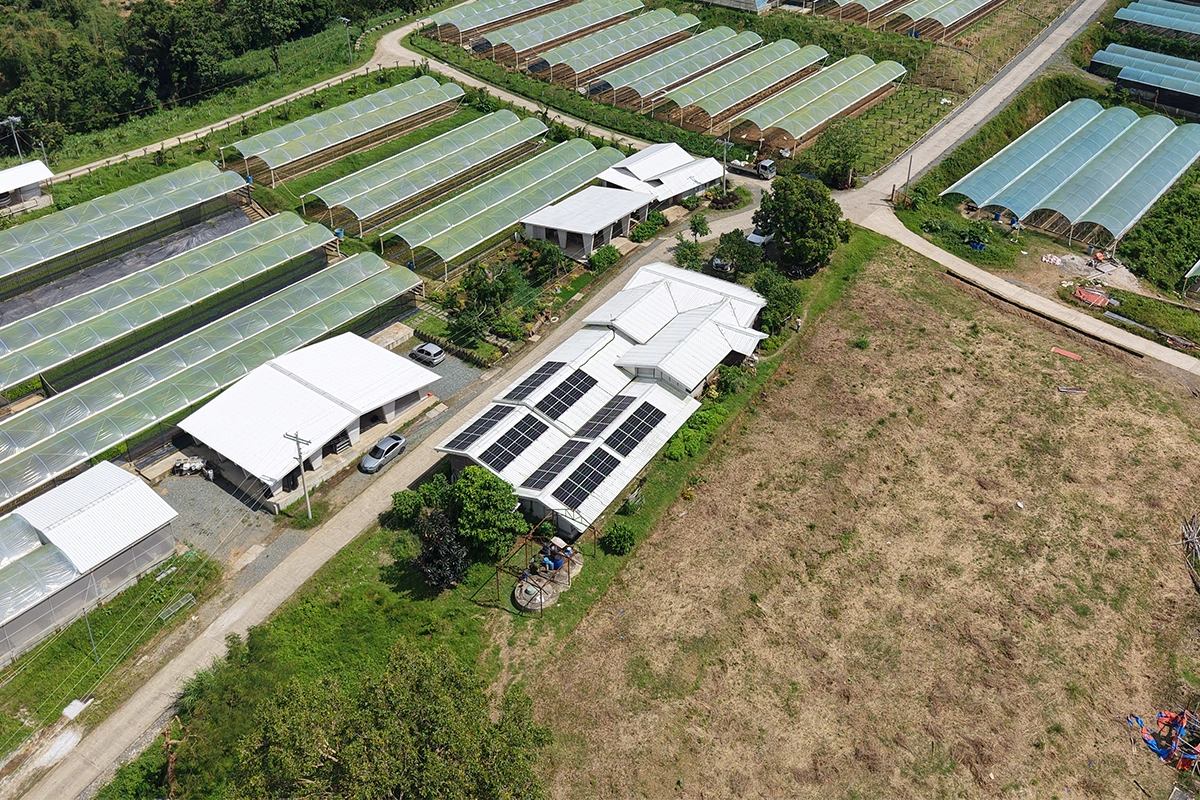
At Kayrilaw Farm in Nasugbu, Batangas, the operation depends on uninterrupted power for irrigation pumps, processing equipment, and daily administrative work. A short outage at the wrong time delays schedules, damages crops, and disrupts routines that are difficult to recover quickly. After installing solar with battery storage, the farm gained the supply consistency it had always needed. When the grid dips or fails, the system takes over automatically. Pumps keep running. Processing does not stall. The team focuses on the work rather than watching the lights.
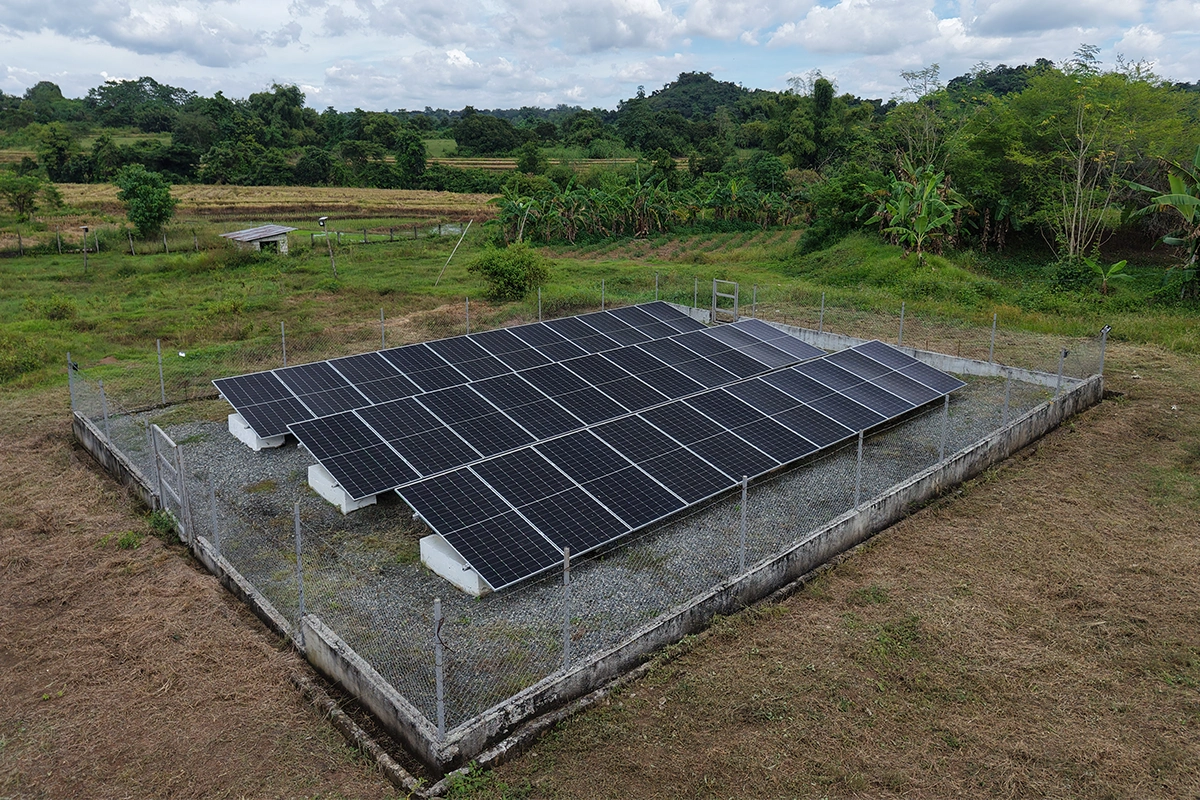
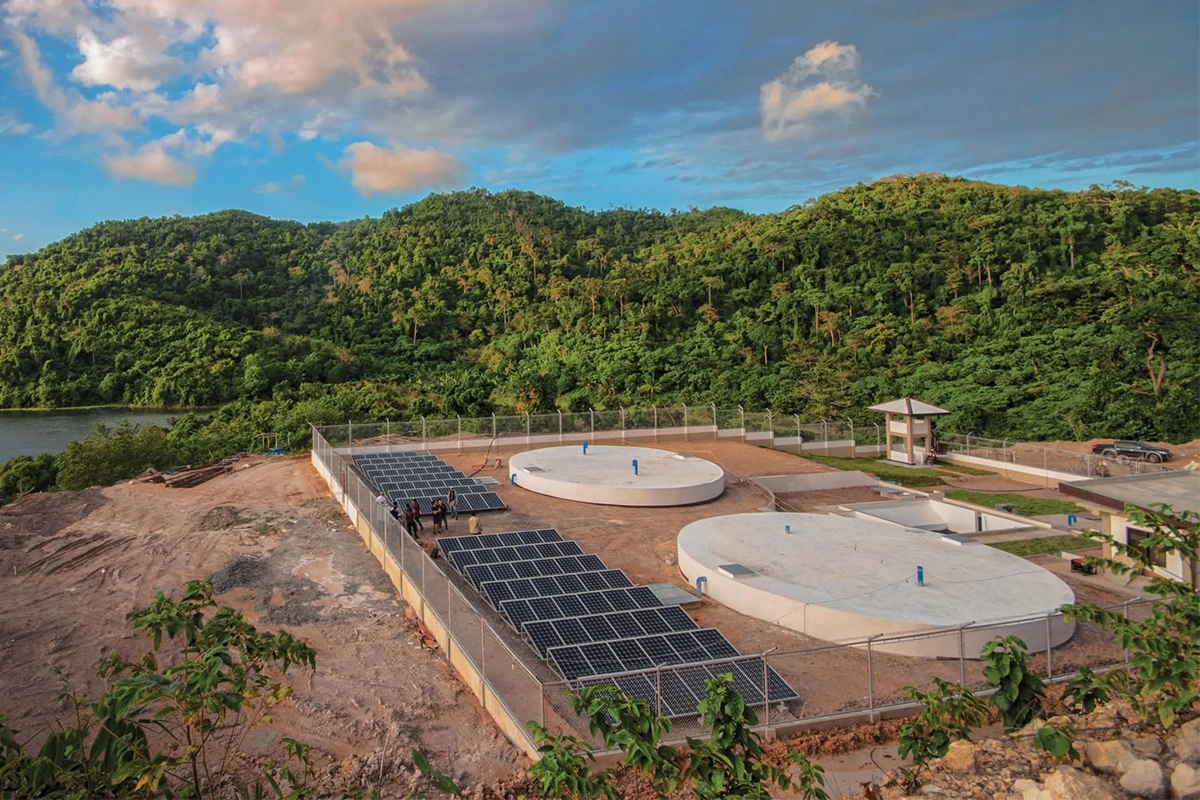
The Inainakay Foundation project tells a different story. Located in a remote mountain area with only sporadic grid access, the community previously lived without reliable electricity for basic needs. Evening lighting, a working water pump, functional security and communications equipment were never guaranteed. Once solar panels and batteries were commissioned, the change was immediate and lasting. Reliable power in that context is not a financial calculation. It is a shift in how people live and plan.
Both projects illustrate the same underlying point. Storage fills the gaps that the grid cannot. It provides stability where transmission infrastructure is stretched, inconsistent, or simply absent.
Why Companies Are Moving Away from Diesel
Diesel generators have been the default backup solution for decades. They are familiar, widely available, and straightforward to operate. But the full cost of ownership tells a different story once it is properly examined.
Fuel costs rise every year and are directly exposed to global oil price movements, which the Philippines has no control over. Every time crude prices spike in the Middle East, or shipping costs climb, the cost of running a generator follows. Maintenance never stops, either. Oil changes, filters, cooling systems, belts, injectors, and emergency callouts accumulate into a recurring annual expense that most businesses underestimate when they first install a unit.
The deeper problem is utilization. Generators spend the vast majority of their working life sitting idle, consuming capital and maintenance budget while producing nothing. A business pays for fuel stabilizers, battery trickle chargers, and periodic test runs just to keep a machine ready for the moments it is needed. Many companies discover after a proper audit that their generator is among the least utilized assets on the property and consistently one of the most expensive to keep operational year after year.
Battery storage changes this dynamic entirely. A battery system is used every single day. It charges during strong solar production. It discharges when the building needs support in the evening or during a grid event. It reduces peak demand charges on the monthly utility bill. It smooths voltage fluctuations that would otherwise stress equipment. It covers short outages without consuming a drop of fuel and significantly reduces generator runtime during longer ones. That daily utilization is what makes storage a genuinely compelling investment rather than a standby cost that delivers value only in emergencies.
Modern battery systems can also be programmed to behave intelligently. They prioritize essential loads during outages so critical operations stay online while non-essential circuits are temporarily shed. They charge during stable grid periods and discharge during expensive consumption windows to reduce demand charges. They can be configured remotely and updated as the facility’s load profile changes. Over time, the battery becomes a fully integrated part of the facility’s energy management rather than emergency equipment that sits in a corner waiting for a blackout.
The Technology Behind Modern Energy Storage
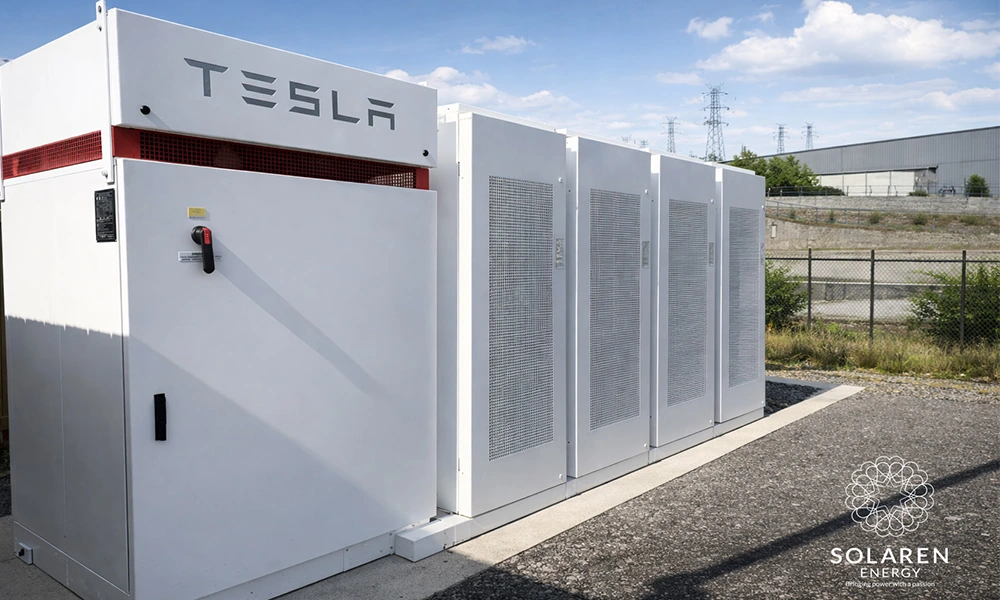
Battery technology has advanced considerably over the past decade, and the systems being installed in Philippine commercial facilities today are fundamentally different from the lead-acid backup units that most people associate with older UPS installations.
Modern commercial storage uses lithium iron phosphate chemistry, which offers a combination of safety, cycle life, and thermal stability that makes it well-suited to the Philippine climate. Unlike earlier lithium chemistries, lithium iron phosphate does not carry the same risk of thermal runaway, which matters significantly in hot and humid environments where battery cabinets are exposed to sustained high temperatures. These systems are designed to cycle daily for ten years or more without significant capacity loss, which is essential for a commercial investment to make financial sense.
The inverters that manage these systems have also become considerably more sophisticated. Hybrid inverters handle the simultaneous management of solar input, battery state, grid connection, and facility load without requiring manual intervention. They switch between sources in milliseconds, which is fast enough that most sensitive equipment never registers the transition. They also handle grid fluctuations actively, smoothing out voltage variations before they reach the facility’s internal circuits.
Energy management software ties everything together and provides the visibility that a commercial operator needs to verify performance. Live dashboards show solar production, battery state of charge, grid consumption, and load behavior in real time. Historical data allows the engineering team to identify underperformance early and address it before it affects returns. For a business making a significant capital investment, that transparency is not a bonus feature. It is a fundamental part of knowing the asset is working as designed.
The Financial Case for Solar Plus Storage
The savings from solar are well established and measurable from the first billing cycle. Storage adds a second layer of financial value that compounds over time and that is more difficult to see on a single month’s utility statement but becomes very clear across a full year of operation.
A solar plus storage system reduces exposure to future electricity rate increases by lowering the volume of grid energy a business needs to purchase. It stabilizes operating costs across the year by replacing unpredictable utility fluctuations with a managed, largely fixed energy cost. It lowers diesel consumption and eliminates a significant portion of the maintenance burden that comes with generator dependence. It reduces the financial impact of unplanned downtime by keeping critical operations running through grid events that would previously have caused full shutdowns.
Because the system works around the clock rather than only during daylight hours, the return on investment is easier to model and more consistent to achieve. Daytime savings come from direct solar consumption and reduced grid draw. Evening savings come from battery discharge offsetting peak consumption. Demand charge reductions come from the system’s ability to cap the facility’s maximum draw from the grid during high-tariff periods. Each of these represents a separate and measurable financial benefit that stacks on top of the others.
For businesses operating in a country where electricity prices have risen steadily and where grid instability creates unpredictable financial shocks, storage acts as a genuine buffer. It converts an unpredictable utility expense into a managed, stable cost. That kind of financial control is difficult to put a single number on, but every operations manager who has dealt with an unplanned outage, an unexpected demand charge, or a fuel delivery delay understands its value immediately.
How Solar Plus Storage Supports Business Continuity

Every business has functions that simply cannot stop. For some facilities, it is refrigeration keeping perishable inventory viable. For others it is irrigation keeping crops alive during a dry spell. For many, it is the lighting, computers, communications equipment, and security systems that keep staff safe and customers served.
Storage makes sure these functions continue even when the grid does not. It provides the time and the control that a grid-tied system alone cannot offer. When power is interrupted, a properly configured solar plus storage system identifies the critical loads that need to stay online and maintains them automatically, without anyone needing to start a generator, flip a manual transfer switch, or make decisions under pressure.
This capability changes how a business approaches risk planning. When critical operations are protected by a system that responds in milliseconds rather than the minutes it takes to start a generator, the business can plan growth and capacity expansion without factoring in the cost and disruption of repeated outages. It removes a variable that has historically been difficult to manage and replaces it with a known, engineered solution.
Why Solar Plus Storage Is Becoming the Standard Choice
Solar alone delivers real savings. Solar plus storage delivers savings, stability, and protection against the risks that the Philippine grid still regularly produces.
For businesses where reliable power is not optional, the case for storage has become straightforward. It is not a premium add-on reserved for companies with large capital budgets. It is a practical investment that reduces operational risk, lowers long-term energy costs, replaces an expensive and underutilized diesel dependency, and gives decision-makers genuine control over one of their largest and least predictable operating expenses.
The companies making this move are not doing so because storage is new or exciting. They are doing so because it works, the numbers support it, and the alternative of continued grid dependence is becoming harder to justify every year.