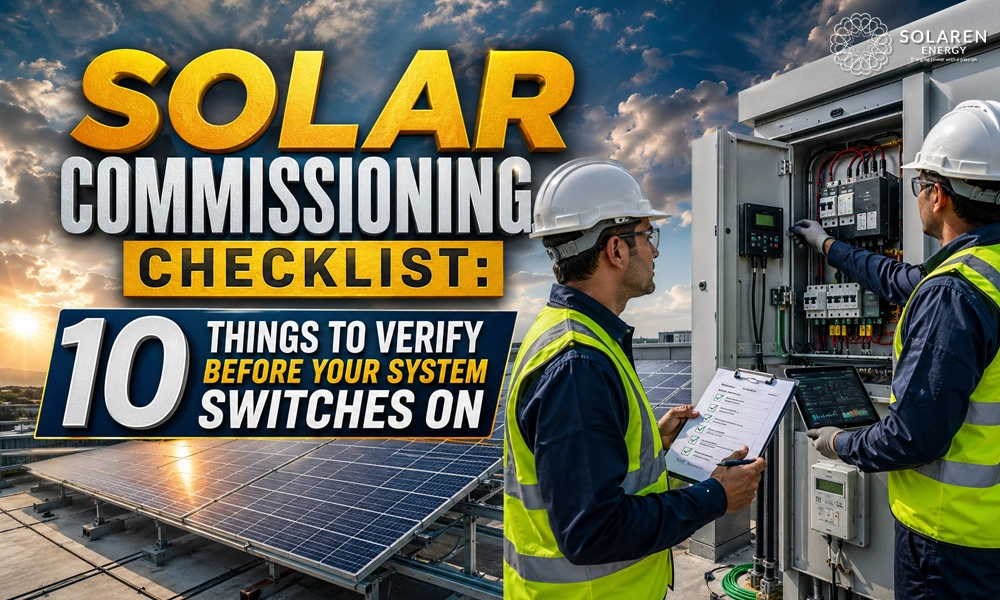
Your solar project is nearly done. The panels are mounted, the inverters are wired, and everyone wants to flip the switch. This is the moment when a good solar commissioning checklist earns its keep, because the difference between a system that performs for 25 years and one that disappoints from month one is usually decided in the final week, not the first one.
Commissioning is the formal process of testing, verifying, and documenting a solar installation before it goes live. It is not a ceremony. It is the last opportunity to catch wiring faults, wrong inverter settings, and missing paperwork while they are still cheap to fix. Once the system is energized and the installer’s van has left the site, every one of these items becomes harder, slower, and more expensive to correct.
A solar commissioning checklist is the set of electrical tests, configuration checks, and documentation verifications performed before a solar power system is switched on for the first time. A complete commissioning covers DC string testing, grounding, inverter grid settings, protection devices, monitoring, utility approvals, and formal handover documents.
This is the checklist Solaren runs on every project, from 6 kWp residences to megawatt-scale factory rooftops. We consider it the gold standard for commissioning in the Philippine market, and we publish it because owners who know what thorough looks like make better decisions about who builds their system. If you are a client, you do not need to perform these tests yourself. You need to confirm your contractor did, and that the results are written down. Here are the 10 things to verify.
-
String open-circuit voltage and polarity
Every DC string gets measured before it is connected to the inverter. Two things are being confirmed: the open-circuit voltage matches the design calculation for the panel count and temperature, and the polarity is correct.
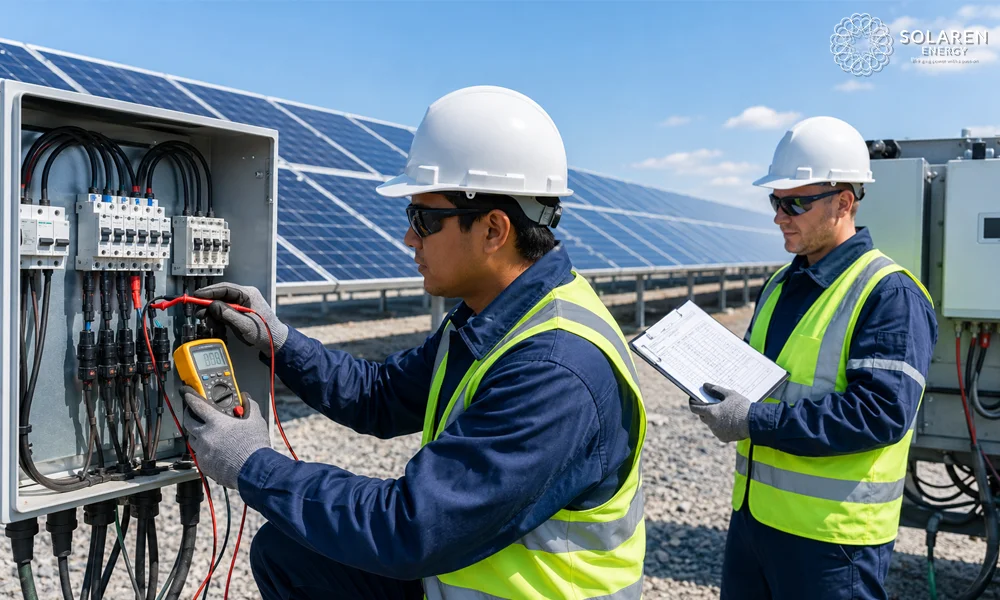
A reversed string is the classic commissioning catch. It can happen on any site where connectors were assembled in a hurry, and it will either knock out production on that string or, in the worst case, damage the inverter input. A voltage reading that comes in low usually means a panel was skipped, a connector is loose, or a bypass diode has failed in transit. Thirty seconds with a multimeter now prevents weeks of head-scratching later.
Ask your contractor for the string test sheet. It should show a measured voltage for every string, next to the expected value.
-
Insulation resistance testing
Insulation resistance testing, often called megger testing, applies a test voltage to the DC cabling to confirm the insulation is intact and there is no leakage path to ground. Damaged cable insulation is invisible from the outside. A cable nicked during pulling, pinched under a clamp, or resting on a sharp edge can pass a visual inspection and still leak current once the system is live.
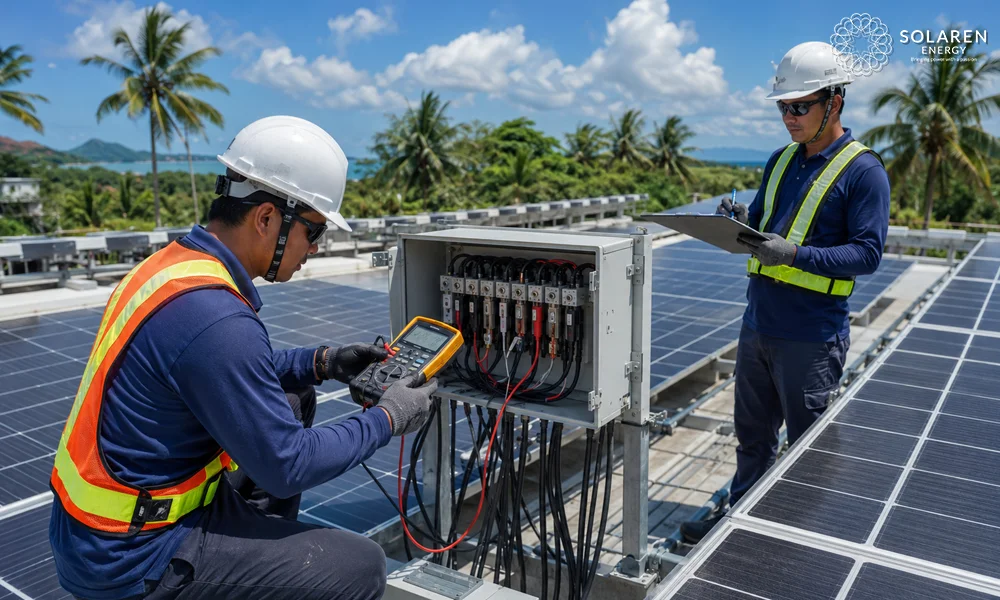
In the Philippine climate this test matters more than in most markets. Moisture ingress is the number one long-term cause of ground faults, and a marginal insulation reading at commissioning is an early warning that will become a fault trip during the first serious wet season. Readings should be recorded per string, not just spot-checked.
-
Grounding and bonding continuity
Every metallic component, including module frames, mounting rails, inverter enclosures, and combiner boxes, must be bonded to the grounding system, and that grounding system must show continuity back to the earth electrode with an acceptable resistance reading.
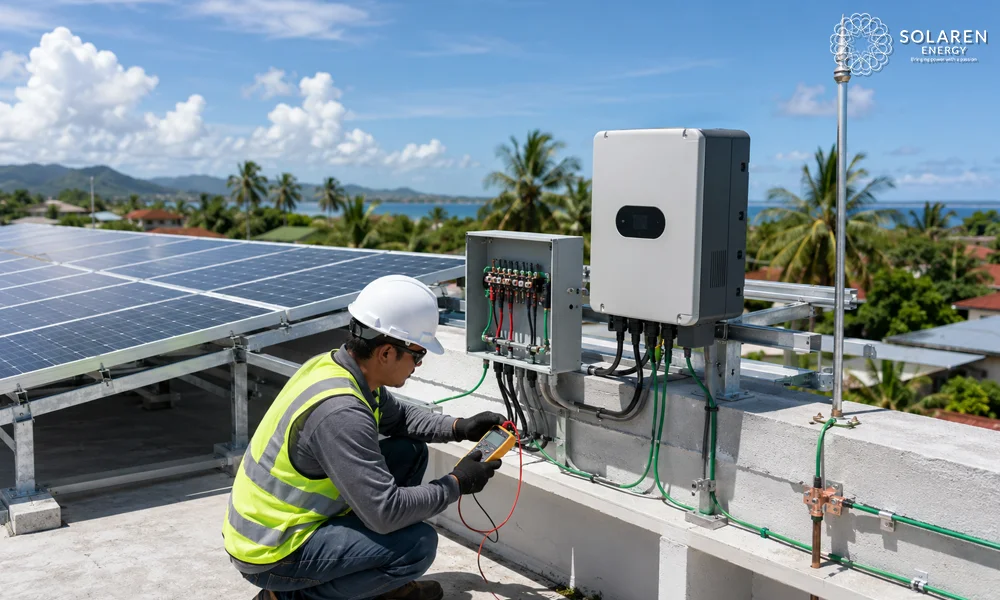
Grounding does three jobs at once. It gives fault current a safe path so that protection devices can trip. It protects people who touch the equipment. And it is the foundation of the lightning protection strategy, which no rooftop system in the Philippines should be without. A commissioning report that does not include an earth resistance measurement is incomplete.
-
Torque verification on mechanical and electrical connections
Loose connections are the slowest-burning failure in solar. A terminal that was hand-tightened instead of torqued to specification will pass every electrical test on day one, then gradually heat, oxidize, and eventually arc. On the mechanical side, module clamps and rail fixings that are under-torqued become a genuine hazard when the first typhoon arrives.
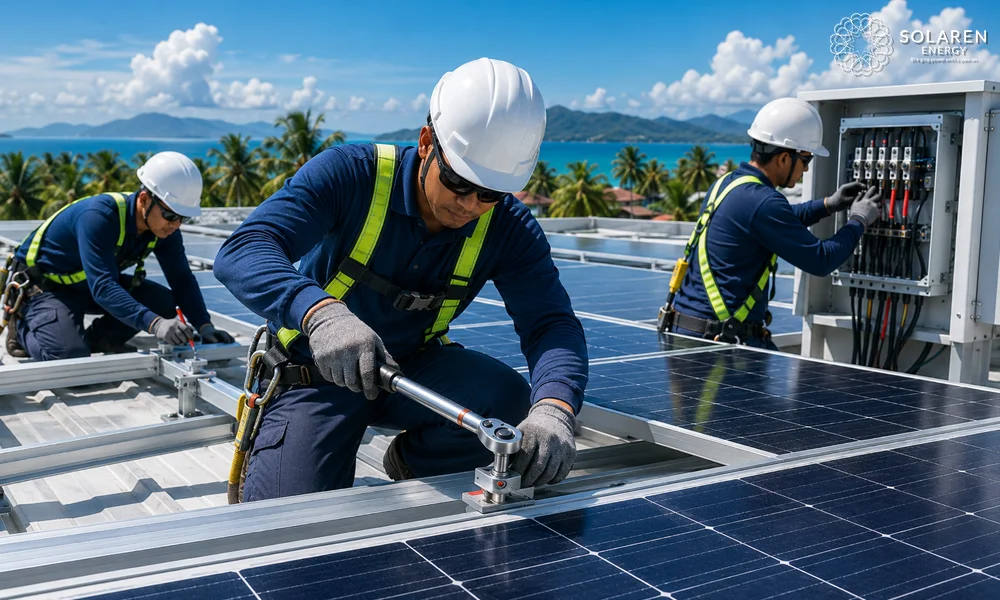
Proper practice is torque-marking: each verified connection gets a paint stripe across the fastener so any later movement is visible at a glance. On our installations, the racking torque check is treated as a typhoon-readiness item, not just an electrical one. Structures in Luzon and the Visayas will be load-tested by weather sooner or later. Commissioning is when you make sure they are ready.
-
Inverter grid settings and firmware
The inverter must be configured for the Philippine grid: 60 Hz frequency, the correct nominal voltage for your service (single phase, three phase 230V delta, or 400V wye), and the voltage and frequency trip windows required under the Philippine Distribution Code. Inverters ship with regional default profiles, and an inverter left on the wrong country profile will either refuse to connect or, worse, ride through conditions it should disconnect from.
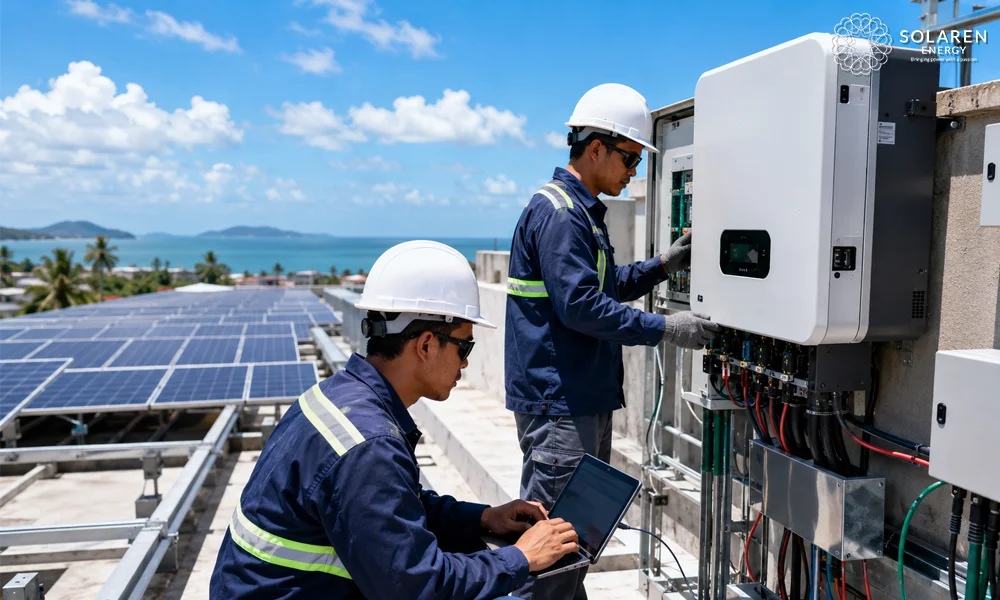
This step also covers firmware. Commissioning is the right time to bring every inverter to the current stable firmware release, because doing it later means production downtime. On sites with unusual supply arrangements, this check is critical. Not every inverter or accessory is compatible with every service type, and delta-configured supplies in particular need verification against the manufacturer’s compatibility documentation before energization, not after.
-
Anti-islanding and protection function tests
Anti-islanding is the safety function that shuts the inverter down the instant the grid goes out, so your system does not energize lines that utility workers believe are dead. It is a non-negotiable protection requirement for any grid-tied installation, and it must be functionally tested at commissioning rather than assumed.
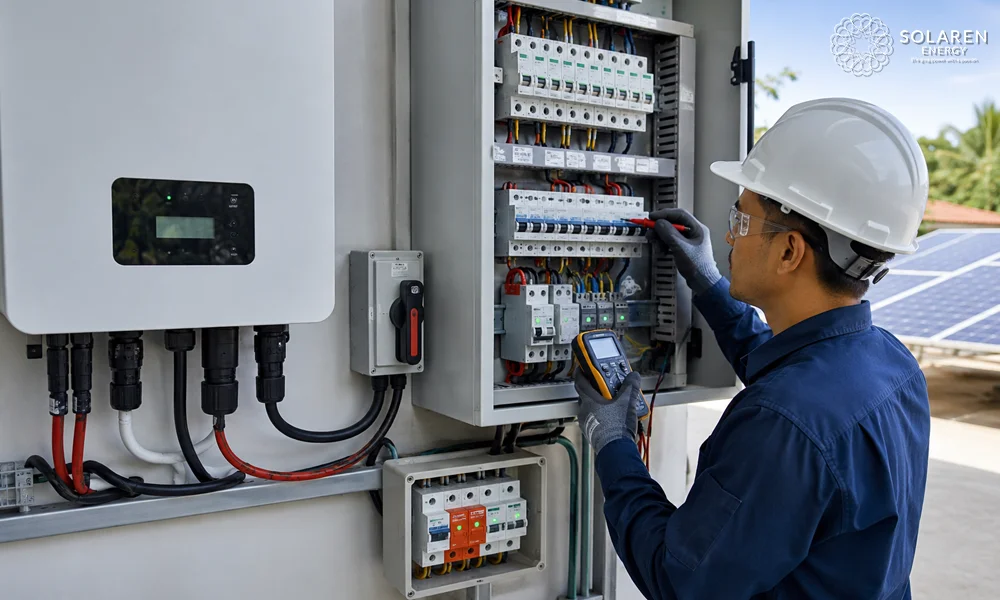
The same session should verify the rest of the protection chain: DC and AC breakers sized and labeled correctly, surge protection devices installed on both DC and AC sides and showing healthy status indicators, and residual current protection where the design calls for it. In a country with our lightning density, confirming the surge protection is actually connected, and not just mounted, is worth the five minutes it takes.
-
Monitoring system commissioning
If the monitoring is not working on day one, it tends to stay broken, and an unmonitored system is a system nobody can manage. Commissioning must confirm that the monitoring platform is online, every inverter is reporting, the site’s CT meters or smart meters are reading in the correct direction, and the owner has login credentials in hand.
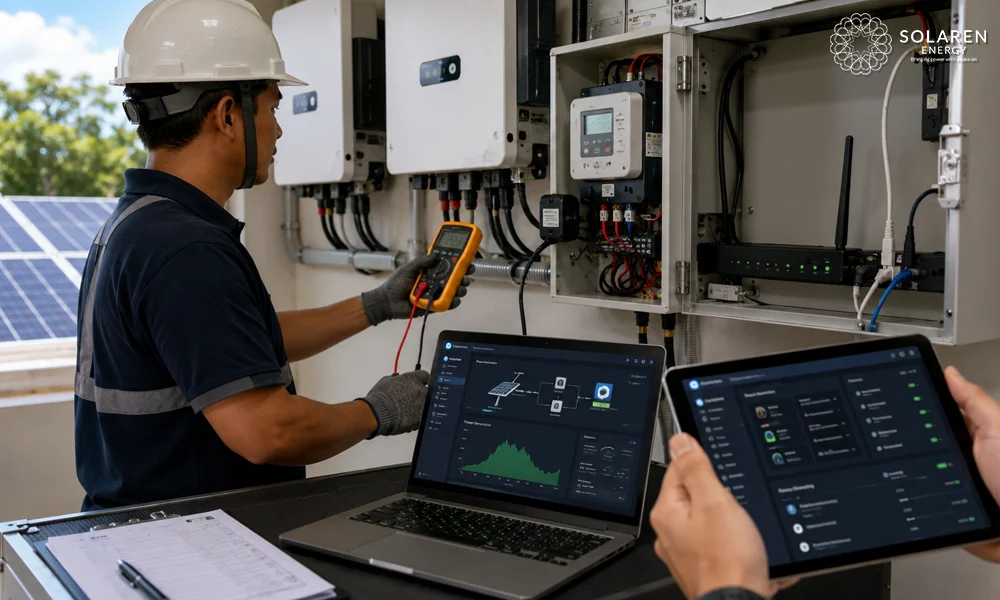
Direction matters more than people expect. A current transformer installed backwards will show the site exporting when it is importing, and every savings calculation built on that data will be wrong. Verify live values against a handheld meter reading before signing off. Then confirm alert thresholds are set, so the system tells someone when a string drops out in month eight instead of waiting for the electric bill to reveal it.
How the monitoring connects to the internet deserves its own line on the checklist. Solaren hardwires the communication link wherever the site allows it, and treats WiFi as the fallback, not the default. WiFi is notoriously unreliable for equipment that needs to report every day for 25 years. It drops with distance and interference, and it takes nothing more than a household member changing the router password to render an entire system blind. A LAN cable installed on day one costs a few hundred pesos and removes the single most common cause of monitoring outages we see on other installers’ systems.
We also install specialist equipment at commissioning that allows secure remote access to the system for after-sales support. Most after-sales issues, from inverter settings to fault diagnosis, can be identified and resolved remotely without waiting for a technician to travel to site. For an owner, that is the difference between a problem fixed the same afternoon and a problem fixed next week. Ask any contractor you are evaluating how they handle after-sales diagnosis. If the answer requires a truck every time, your downtime will always be measured in days.
-
Utility coordination and net metering status
No grid-tied system should be energized without the distribution utility’s knowledge and approval. Depending on your utility, whether Meralco or an electric cooperative, this covers the interconnection inspection, the meter change to a bidirectional unit if you are enrolling in net metering, and written permission to operate.
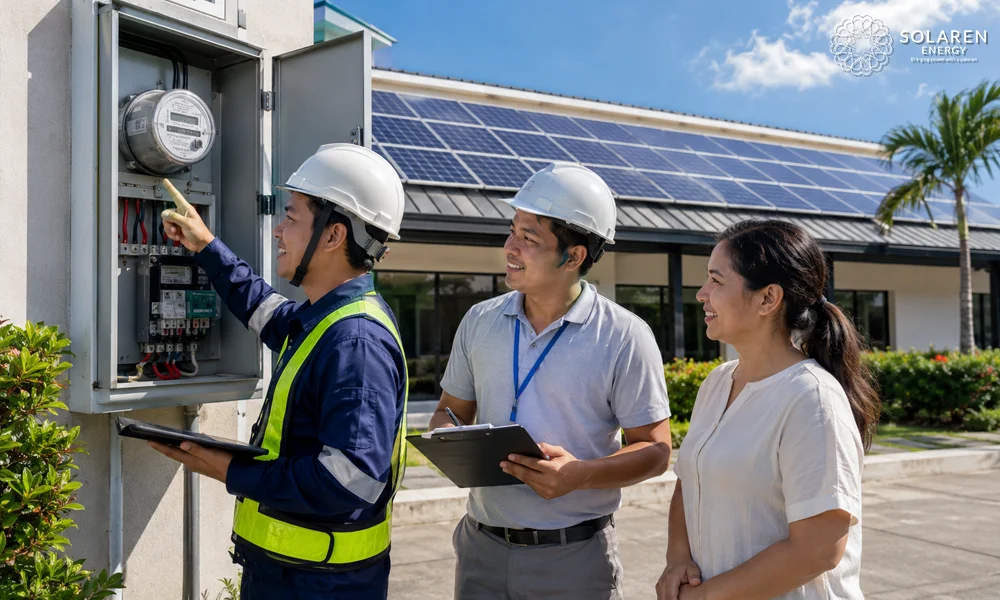
Be clear-eyed about sequencing here. The net metering application can lag the physical installation by weeks or months, and any energy you export before the program is active is given to the grid for free. Commissioning should establish exactly where the application stands and what the expected timeline is, so the owner can decide how to operate the system in the gap. What happens in that gap, and how to read your first post-solar bill, is a big enough subject that we cover it separately in our guide to what happens after commissioning.
-
Performance ratio baseline
On switch-on day, the system’s output should be measured against the irradiance conditions and compared with the design expectation. This produces the performance ratio, the single most useful number in solar operations. A well-built commercial system in the Philippines typically commissions at a performance ratio around 75 to 82 percent.

The point of measuring it now is to create a baseline. Every future performance question, whether about soiling, degradation, or a suspected fault, gets answered by comparison against this day-one figure. A contractor who commissions without recording a baseline has handed you a system with no reference point and a warranty claim with no evidence.
-
Documentation and formal handover
The last item is paper, and it is the one most often skipped. A complete handover package includes: signed as-built drawings that reflect what was actually installed, all test results from items 1 through 9, equipment datasheets and serial numbers, warranty certificates for panels, inverters, and workmanship, utility approval documents, and the operations and maintenance manual.
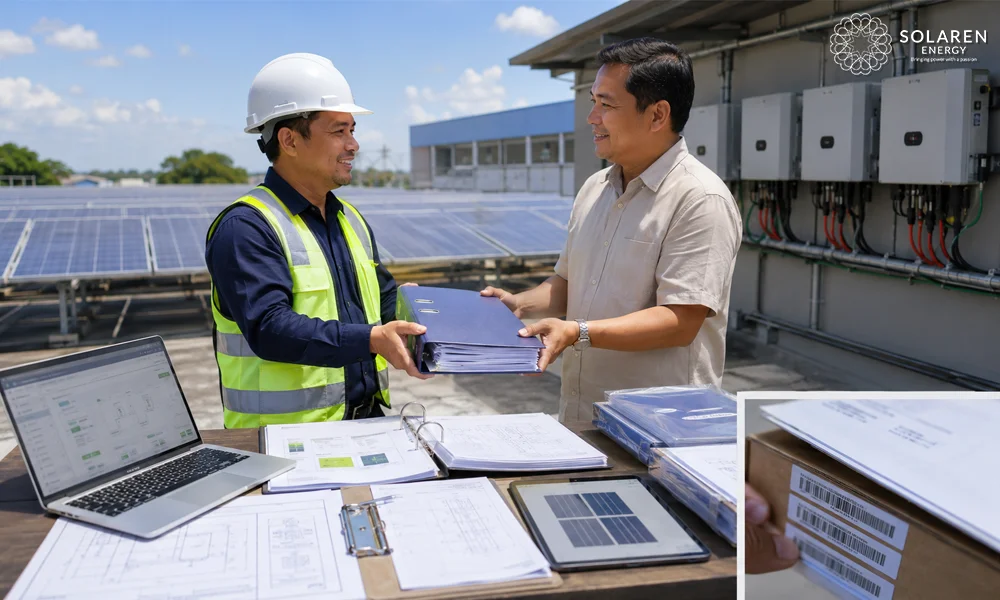
Serial numbers deserve special mention. Panel and inverter warranties are claimed against serial numbers, and collecting them from a live rooftop five years from now is nobody’s idea of a good afternoon. Insist they are recorded at commissioning. If your contractor resists producing any part of this package, that tells you something about how the rest of the checklist was treated. The questions worth asking were the same ones worth asking before you signed, which we covered in our top 10 solar contract questions.
Frequently Asked Questions
-
How long does solar commissioning take?
For a residential system, a thorough commissioning takes half a day to a full day. Commercial and industrial systems take one to five days depending on the number of strings and inverters, plus whatever time the utility inspection and meter change require.
-
Who performs the commissioning tests?
Your EPC contractor performs and documents the tests. The distribution utility conducts its own interconnection inspection separately. As the owner, your job is to receive the documented results and confirm nothing on this checklist is missing.
-
Can I switch on my system before net metering is approved?
Usually yes, once the utility has permitted interconnection, but any excess energy you export before net metering activation is not credited. Some owners choose to operate for self-consumption only during the gap. Your contractor should explain the specific rules of your utility.
-
What is a good performance ratio at commissioning?
For commercial systems in the Philippines, 75 to 82 percent is the healthy range. Below 75 percent warrants investigation before handover, starting with string output comparison and monitoring data.
-
What happens if commissioning finds a problem?
That is the checklist doing its job. Faults found at commissioning are corrected by the contractor before energization and the affected tests are repeated. This is exactly why commissioning happens before final payment milestones on a well-written contract.
Conclusion: The Solar Commissioning Checklist
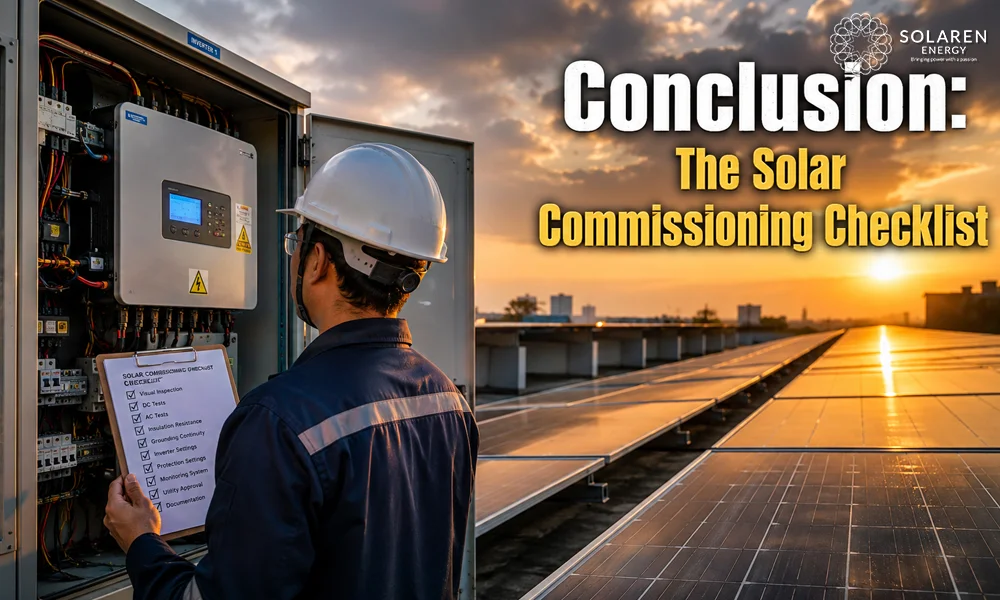
A solar commissioning checklist is not bureaucracy. It is the mechanism that converts an installation into an asset, with tested electrics, correct grid settings, working monitoring, utility approval, and documents that protect your warranties for the next 25 years. Every one of the 10 items above exists because skipping it has cost somebody real money.
If you are evaluating contractors, ask to see a sample commissioning report before you sign anything. The quality of that document predicts the quality of everything else. And if you want to understand the full journey from contract to switch-on, our guide to solar panel installation walks through the entire process, including where commissioning sits within it.
Solaren commissions every system it builds against this checklist, on installations ranging from homes to award-winning industrial plants. You can see the results across our projects.