Buying a solar power systems in the Philippines is not the same as buying one in Germany, Australia, or California. The grid conditions are different. The climate is different. The regulatory environment is different. And the market, the range of companies, the quality variation between proposals, and the consequences of choosing incorrectly are different in ways that matter for the next twenty-five years.
Most buying guides treat solar as a generic product that works the same way everywhere. This one does not. What follows is what buyers in the Philippines specifically need to understand about how solar power systems work here, what makes them succeed, and what makes them fail.
The Grid You Are Connecting To Is Part of the System
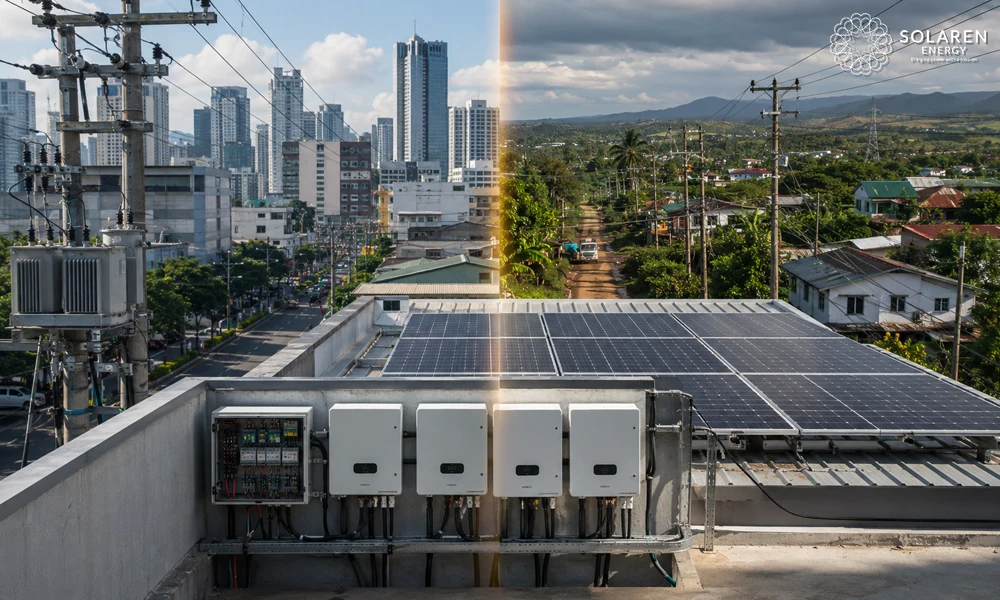
This is the most important thing that most solar proposals do not tell you.
A solar power system does not operate in isolation. It operates in continuous interaction with the distribution grid it is connected to. The quality of that grid, its voltage stability, frequency consistency, harmonic content, and restoration characteristics directly affect how the solar system performs.
In the Philippines, grid quality varies significantly by location. A facility in a Meralco zone in Metro Manila starts from a more stable baseline than one served by a rural cooperative at the end of a long distribution line. An inverter specified for stable European grid conditions will trip more frequently on a provincial cooperative feeder where voltage fluctuates outside a narrower tolerance window. Every trip is a lost generation. On a site with a genuinely unstable utility supply, an incorrectly specified inverter can reduce effective annual generation by ten to twenty percent compared to a correctly specified alternative.
This is why inverter selection is not a commodity decision. Ask for the inverter model on any proposal and check the input voltage range and frequency tolerance in the datasheet. Those numbers tell you whether the inverter was specified for the grid you actually have or for a theoretical ideal grid that does not exist on your site.
Temperature Is the Other Variable Most Proposals Understate
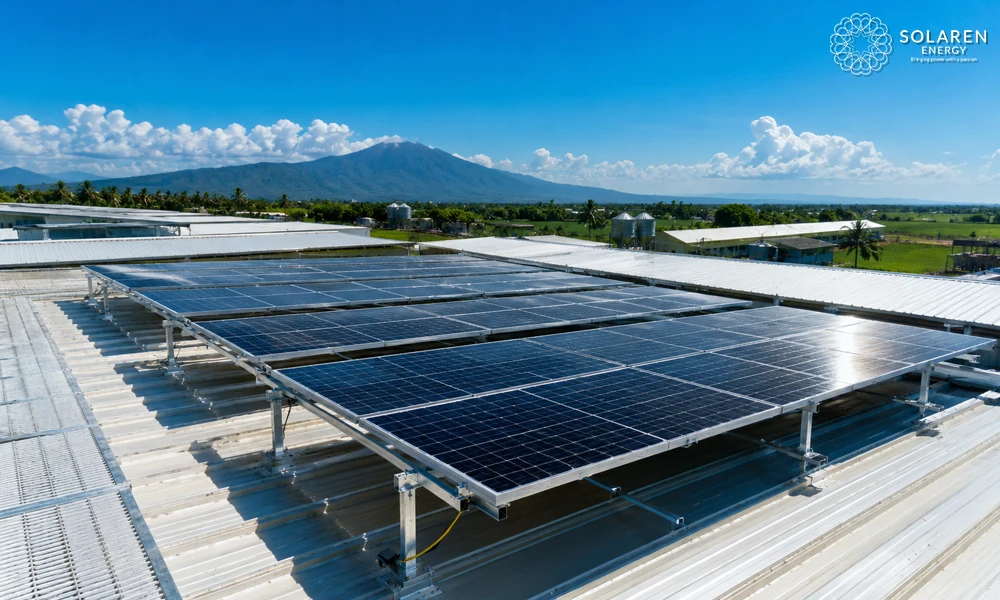
Solar panels generate electricity most efficiently at 25 degrees Celsius. In the Philippines, roof surface temperatures during peak solar hours regularly exceed 60 degrees. The gap between those two numbers matters because every panel has a temperature coefficient, a rated loss of output per degree above 25 degrees.
A panel with a temperature coefficient of minus 0.45 percent per degree loses significantly more output during a Philippine summer afternoon than one rated at minus 0.35 percent. Across a commercial installation lifetime, that difference compounds into a material amount of generation. A simulation that does not accurately account for Philippine ambient temperatures will overstate expected output.
Bifacial glass-glass modules handle heat better than conventional panels because the glass-glass construction dissipates heat more effectively than glass-backsheet designs. The rear surface also picks up reflected light from the roof surface below, which adds generation but only when the mounting system provides sufficient clearance for airflow and the roof surface is light-coloured enough to reflect meaningfully. A bifacial panel mounted flush to a dark metal roof gains almost nothing from its bifacial capability.
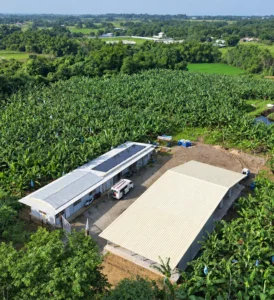
The specific yield of a correctly specified system on a clean, unshaded roof in Luzon should run between 1,300 and 1,450 kilowatt-hours per kilowatt-peak per year. The Tarlac poultry farm case study achieved 1,375 kilowatt-hours per kilowatt-peak per year across forty billing months of verified performance. That is the benchmark. A simulation that projects significantly above that range without a clear explanation deserves scrutiny.
What Net Metering Does and Does Not Do for Your System
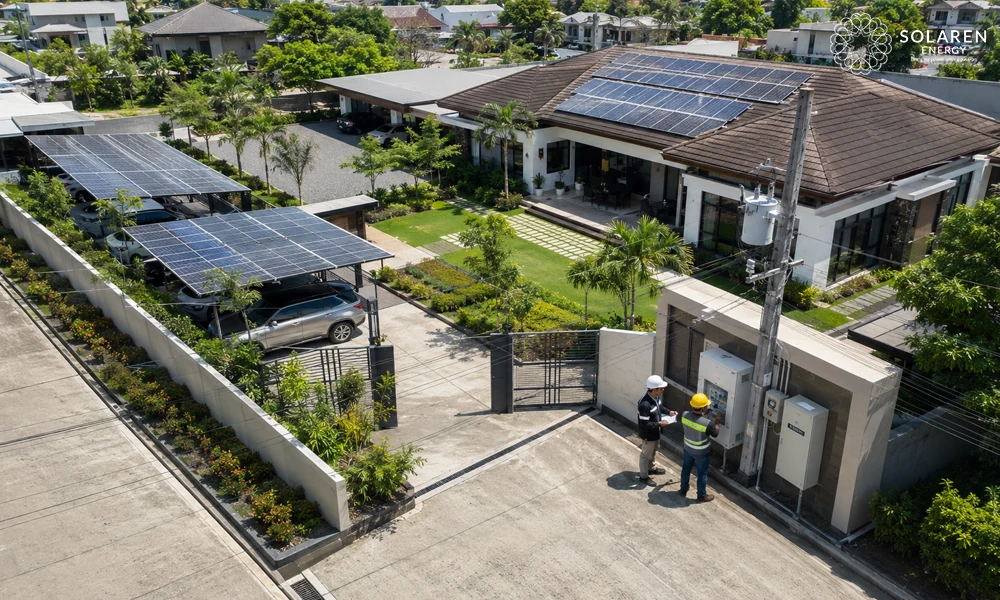
Net metering is the mechanism that converts surplus generation into financial value when your system produces more than your building needs in real time. The surplus flows out to the grid and the utility records it as a credit against future consumption.
Under Philippine ERC rules and Executive Order 110, distribution utilities are required to process complete net metering applications within ten working days. The intent is clear. The practical reality is that many utilities, particularly smaller rural cooperatives, are processing application volumes significantly higher than their administrative capacity was built for. An incomplete application does not start the clock. Getting the documentation right from the first submission is the most reliable path to approval within the regulatory window.
There is a more important point that most buyers do not consider until it is too late. A solar power system without approved net metering is not just missing the export credit value. It is operating a grid connection that has not been formally approved by the distribution utility. The metering configuration has not been tested by the utility. And if something goes wrong with the export control hardware, if the limiting device fails and the meter starts running additively rather than subtractively, the client is billed for exported energy rather than credited for it. This has happened on multiple Philippine sites. It is always discovered at the billing stage, not at commissioning.
A good EPC manages the entire net metering application on your behalf, follows it through to approval, and tests the metering configuration at commissioning before the system is handed over. That is not standard practice across the Philippine solar market. It should be a contractual requirement on every project.
What Determines the Performance of Solar Power Systems in the Philippines
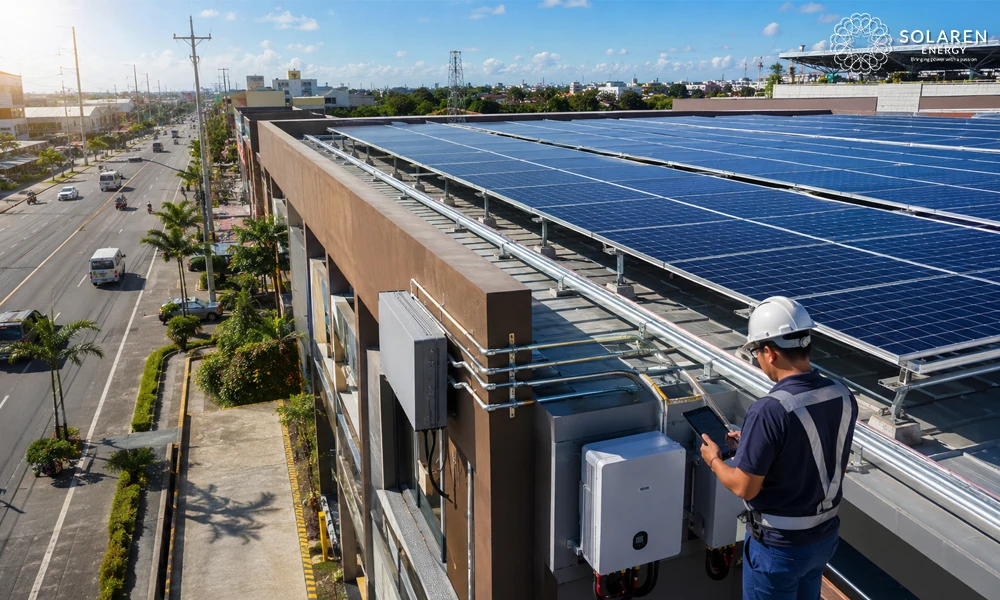
A solar power system is not a single product. There are five components that need to work correctly together under real Philippine operating conditions.
Panels determine the generation ceiling. Inverters determine how much of that ceiling is actually reached on your grid. Cabling determines how much is lost to resistance between the panels and the inverter. The mounting system determines how hot the panels run and whether they survive the next typhoon. Monitoring determines whether you know the system is performing as designed or whether underperformance accumulates undetected for months.
Each of these is a specification decision. Each one has a correct answer for your site and several cheaper alternatives that will look similar on day one and diverge over the years. Cable sizing is where the most invisible cost-cutting happens. Undersized DC cables cause resistive losses that reduce generation permanently and cannot be corrected without reopening cable routes. Mounting system specification matters most in typhoon-exposed locations where a mounting system not rated for Philippine wind loads can fail with the panels attached.
For the engineering detail behind these decisions, Built to Last: Engineering Solar Resilience for the Philippine Climate covers how each specification decision is made on Philippine commercial sites and why the choices that matter most are almost never the ones that show up in a price comparison.
What to Ask Before You Sign
Three questions cut through most of the complexity in evaluating a solar power system proposal.
First: can you show me the generation simulation file, not just the annual kilowatt-hour estimate? The file should show monthly generation, the weather dataset used, the performance ratio assumed, and the shading analysis conducted for your specific roof. A contractor who cannot produce this-sized system against your electricity bill.
Second: What is the inverter model and what is its input voltage tolerance range? Download the datasheet yourself and check it against the grid conditions in your area. This takes ten minutes and tells you more than any price comparison.
Third: can I speak with clients whose systems are more than three years old? Recent completions tell you whether a company can finish a project. Older installations tell you whether the system performs as promised over time and whether the company is still there when something needs attention.
For a complete guide to evaluating solar contractors in the Philippines before committing, choosing a solar EPC in the Philippines covers the full evaluation framework, including accreditation verification and contract requirements.
Frequently Asked Questions
-
How do I know if a solar power system simulation is realistic for my location in the Philippines?
Check the specific yield figure in the simulation; this is annual generation divided by installed kilowatts-peak. A correctly specified commercial system on a clean, unshaded roof in Luzon should achieve between 1,300 and 1,450 kilowatt-hours per kilowatt-peak per year. Systems projected significantly above that range without explanation are likely using optimistic weather data or understating temperature losses. Ask which weather dataset was used in the simulation. Philippine-specific irradiance data from NASA POWER or Meteonorm is appropriate. Simulations built on European or global average datasets will overstate expected output for Philippine conditions.
-
Why does my solar power system stop generating during a brownout even though the sun is shining?
Because grid-tied inverters are legally required to disconnect from the grid when utility supply fails. This is a safety requirement to protect utility workers who may be working on faulted lines. It is not a malfunction. When the grid goes down, the inverter isolates itself and generation stops regardless of how much sunlight is available. If keeping priority loads running through outages is a requirement for your facility, a hybrid system with battery storage is the specification that addresses it. The inverter switches to stored energy in milliseconds when the grid fails and priority loads keep running without interruption.
-
What maintenance does a solar power system in the Philippines actually require?
Panel cleaning is the most frequent requirement and the most impactful on performance. Dust, bird droppings, and pollution accumulate on panel surfaces and reduce generation. In Philippine conditions, cleaning every one to three months depending on location and season maintains output close to rated performance. Beyond cleaning, an annual inspection by a qualified technician should check mounting hardware torque, cable condition, inverter error logs, and protection settings.
Quality inverters require no routine internal maintenance. Battery systems in hybrid installations require monitoring of cell temperatures and state of health through the battery management system. A monitoring platform that flags deviations from expected generation allows issues to be identified and addressed before they compound into significant losses.