Philippine factories are dealing with two electricity problems at once. The first is cost. Commercial and industrial tariffs of ₱8 to ₱12 per kWh place local manufacturers among the highest payers in Asia. The second is reliability. Brownouts, voltage fluctuations, and unstable grid supply in industrial zones are not occasional events. For facilities running continuous production, these issues carry a direct peso cost each time they occur.
Solar panels address the generation side of the cost problem. They don’t deal with what happens when the grid goes down at 2am, nor do they address the peak demand charges that accumulate regardless of how much solar is generated. Battery Energy Storage Systems handle both, but only when specified correctly for local conditions.
This is where most BESS purchasing decisions go wrong. A system that performs well in a European warehouse or an Australian data centre may underperform significantly in a Philippine factory. The reasons are specific and technical, and they’re worth understanding before looking at any product.
Three Things That Determine BESS Performance in the Philippines
1. Thermal management: Philippine factory environments regularly reach 35 degrees Celsius and above. Lithium battery chemistry degrades faster at sustained high temperatures, and air-cooled systems lose measurable output capacity during the Philippine summer. Liquid-cooled systems handle this better, though the quality of implementation varies between manufacturers.
2. Voltage compatibility: Many Philippine commercial and industrial buildings run on a 230V Delta configuration. A large share of BESS products sold globally are engineered for 400V Wye, the standard across Europe and much of Asia. Connecting a 400V system to a 230V Delta building requires two step-down transformers, one for the load and one for backup. That means additional capital cost, additional installation work, and two extra parts that require maintenance and can fail. A system built natively for 230V eliminates all of this.
3. Generator integration: Outside Metro Manila, generator sets are standard infrastructure in industrial facilities. A storage system that cannot communicate with a genset creates gaps during grid outages, periods where neither source is supplying the facility correctly. The better systems handle generator startup, battery charging, and facility load supply simultaneously without any manual switching.
These three criteria determine this ranking. Not brand recognition. Not global market share.
5. Tesla Megapack
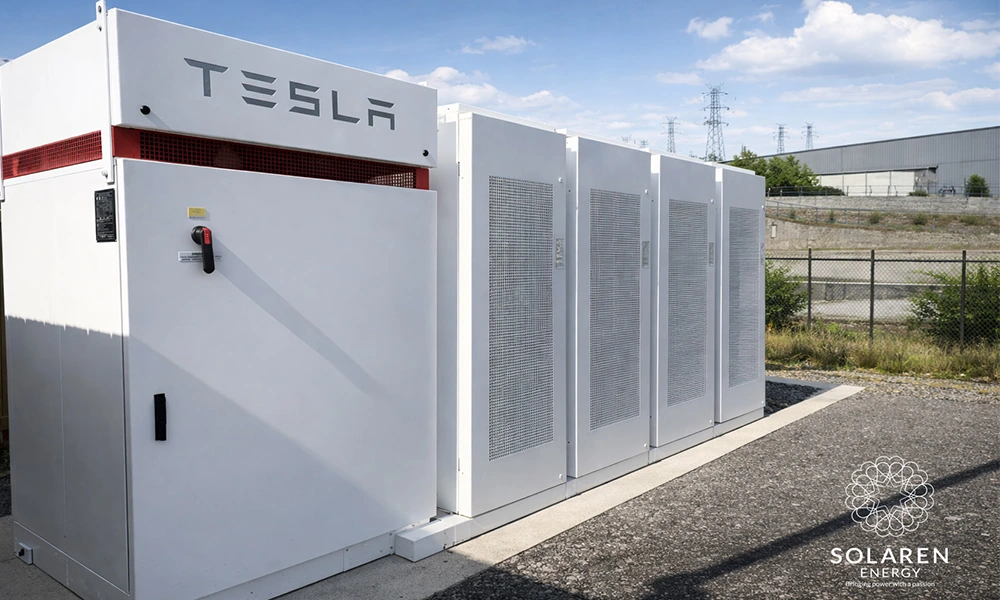
Tesla’s entry into the utility-scale storage market raised industry expectations around software, monitoring, and remote management capability. The Megapack platform is genuinely impressive in the environments it was designed for: large grid-connected projects, utility balancing applications, and infrastructure deployments where engineering teams have the budget and expertise to oversee complex integration.
For the typical Philippine commercial or industrial facility, it’s a difficult fit. The Megapack is a utility-scale product under consideration for a commercial application, and the mismatch shows in the integration requirements. Voltage compatibility with 230V Delta infrastructure requires additional transformer equipment. Third-party connections to existing solar inverters or generator sets outside the standard ecosystem add cost and ongoing complexity. The monitoring software is excellent, but it’s built around Tesla’s own hardware assumptions.
It ranks fifth rather than being excluded because, for the right project, a large industrial park, a campus-scale installation, or a facility already built around compatible infrastructure, it is a credible option. For most Philippine factories and commercial buildings, evaluating storage in the 200kW to 2MW range, it is not the most practical starting point.
4. Huawei LUNA2000
Huawei’s LUNA2000 is a modular, rack-based system that has found genuine traction in commercial and industrial markets across Asia. The modular architecture means capacity can be scaled by adding units, which suits facilities that want to start conservatively and expand as the financial case is proven. Huawei’s energy management software is sophisticated and integrates well with its own solar inverter range, which is already widely installed across the Philippines.
The limitation follows the same pattern as Tesla. The LUNA2000 is optimised for 400V Wye infrastructure. In a Philippine 230V Delta building, additional transformer equipment is required, and third-party integration with non-Huawei inverters and generator sets requires careful engineering that adds to project costs and ongoing maintenance complexity.
For facilities already running Huawei solar inverters on a compatible electrical system, the LUNA2000 is a logical extension of an existing setup. For facilities beginning from scratch or running mixed equipment, the transformer and integration requirements make it a more expensive proposition than the systems ranked above it.
3. BYD Battery-Box Commercial
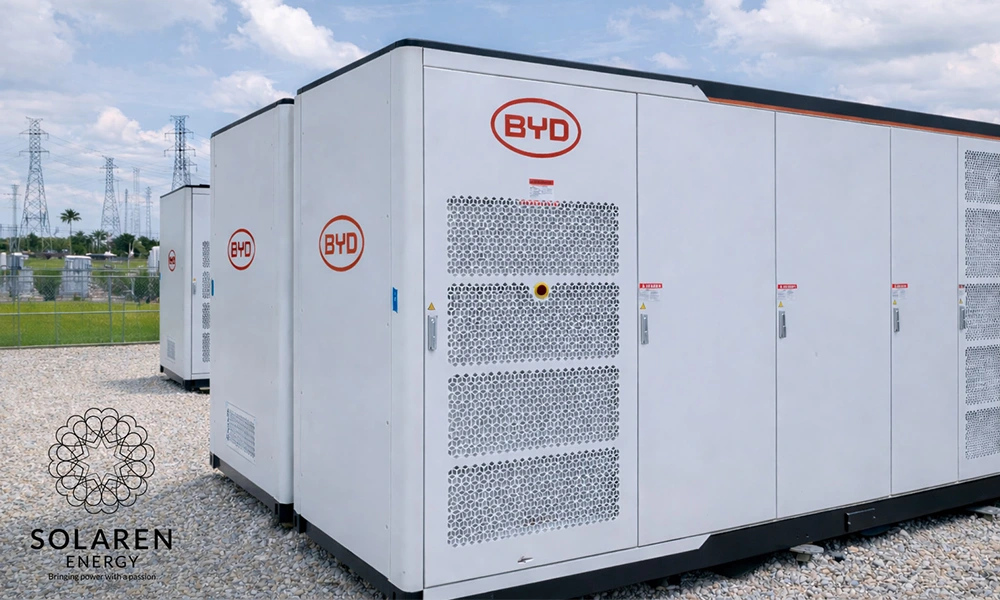
BYD’s reputation in the global storage market is deserved. The Battery-Box Commercial uses LFP chemistry with a conservative cell management approach that prioritises longevity and stability. It performs reliably across a broad range of commercial applications and carries a solid international track record.
The relevant limitation for Philippine industrial sites is environmental sensitivity. BYD systems perform at their best in controlled conditions, specifically a purpose-built battery room with stable temperature and humidity. Philippine commercial premises vary considerably. Ambient temperatures shift across the day, wet season humidity is persistent, and not every site has the controlled environment the product performs optimally in. This is manageable with careful installation planning, but locations without the option of a dedicated conditioned battery room need to factor that into the cost comparison.
BYD’s generator integration and third-party compatibility are workable but require additional engineering at the project level. For a facility with a simple installation environment and existing BYD solar equipment, it’s a solid choice. For a facility with a complex site or mixed equipment, the systems above it handle integration more naturally.
2. Sungrow ST Series (Liquid Cooled)
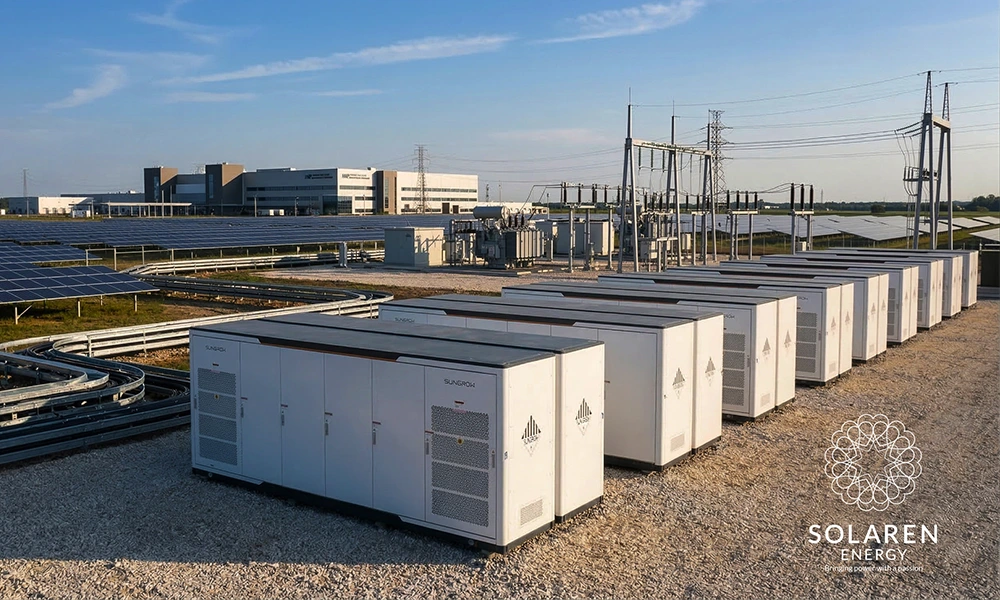
Sungrow’s ST Series addresses the thermal management problem more directly than most systems on this list. Active liquid cooling maintains a consistent battery operating temperature regardless of ambient conditions, so the performance derating that affects air-cooled systems during the Philippine summer does not apply to the same extent. For a factory or business where temperatures are high and variable across a long operating day, that’s a meaningful practical advantage.
The monitoring platform is capable, and Sungrow has a solid track record in grid environments with unstable supply characteristics. Their commercial storage products have been deployed across demanding markets in Asia and the Middle East, and the engineering reflects experience with real-world grid conditions.
It sits at two rather than one for two reasons. The 230V Delta compatibility question is not resolved as natively as in the top-ranked system, and generator integration requires additional site-specific engineering. For facilities where high ambient temperatures are the primary concern and the electrical infrastructure is already compatible, the ST Series is a serious contender. For the full range of challenges a typical Philippine industrial site presents, the system ranked first addresses more of them without additional integration work.
1. Sunsynk: Innagator and Powerhub
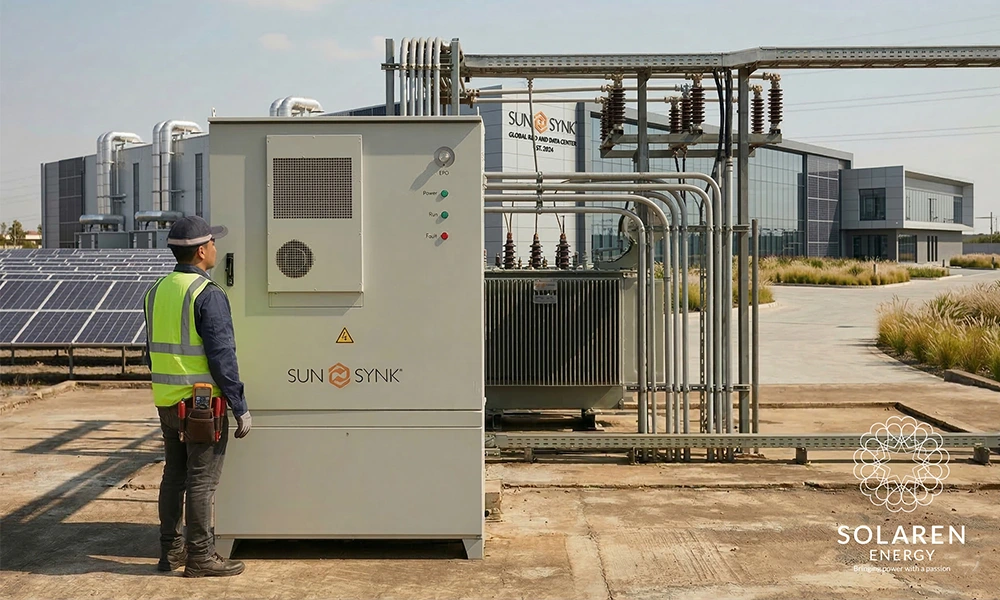
Sunsynk is not yet a familiar name in the Philippine market. That’s worth addressing directly, because unfamiliarity in a market is not the same as an unproven product.
Sunsynk built its track record in the United Kingdom and across Africa before entering Southeast Asia. In the UK, their systems are operational in NHS hospitals, powering critical care units. The reliability standard required in that environment, continuous uptime with no tolerance for failure, is the engineering baseline the product is built to. A factory in a Philippine industrial zone has demanding requirements. They are not more demanding than a hospital intensive care unit.
Sunsynk recently established formal operations in the Philippines. The locally available product is a mature platform with documented international performance, now backed by on-the-ground local support.
Both Sunsynk industrial systems currently run on EVE Lithium Iron Phosphate cells. EVE is a top-tier LFP cell manufacturer supplying automotive and utility applications globally. The rated cycle life is 8,000 cycles. Most competing products in this category are rated between 4,000 and 6,000 cycles. At one full charge and discharge per day, the typical pattern for industrial peak demand management, that is more than 21 years of operational life. On total cost of ownership terms, that difference is significant and does not appear in upfront price comparisons.
The Innagator: Containerized and Self-Contained
The Innagator is Sunsynk’s containerized industrial storage platform. It arrives as a fully assembled and tested unit, reducing installation time and simplifying commissioning considerably compared to rack-based systems that require on-site assembly.
The containerized format suits applications where deployment speed matters, where a facility wants the option to relocate the system, or where the installation environment makes a self-contained enclosure more practical than a battery room build-out. Typically available up to 2 MWh, it suits commercial buildings, schools, banks, and small-to-medium factories.
Its primary financial value in the Philippine context is peak demand management. Philippine distribution utilities bill based on the highest power draw recorded in any 15 or 30-minute window during a billing period. A facility that spikes to 600kW for 20 minutes at a shift changeover is billed at 600kW for the entire month, regardless of what consumption looks like the rest of the time. An accurately configured Innagator monitors load in real time and deploys stored energy to absorb those spikes before they register on the utility meter. For facilities spending ₱1.5 million or more monthly on electricity, demand charge savings alone typically justify the investment.
The Powerhub: Modular and Scalable
The Powerhub is Sunsynk’s modular rack-based platform, comparable in form factor to the Huawei LUNA2000 and Sungrow ST Series. Units stack and scale, meaning capacity grows with the facility rather than requiring a full system replacement when energy requirements change.
The Powerhub is configurable from the factory for the Philippine electrical infrastructure, supporting all voltage and grid requirements. For a facility on 230V Delta, no additional transformer equipment is required. Depending on system scale, that compatibility reduces installation costs and eliminates components from the long-term maintenance schedule.
During a grid outage, the Powerhub initiates generator startup, charges the batteries, and supplies facility loads simultaneously. No manual switching. No gap between grid loss and stable power supply. The grid conditioning function cleans incoming power and delivers stable output to sensitive machinery regardless of what the grid is providing. IP55/IP65 ingress protection keeps dust and moisture out of the system on an active factory floor, which matters more in year eight than it does in year one.
Why Sunsynk Integration Works Differently in Practice
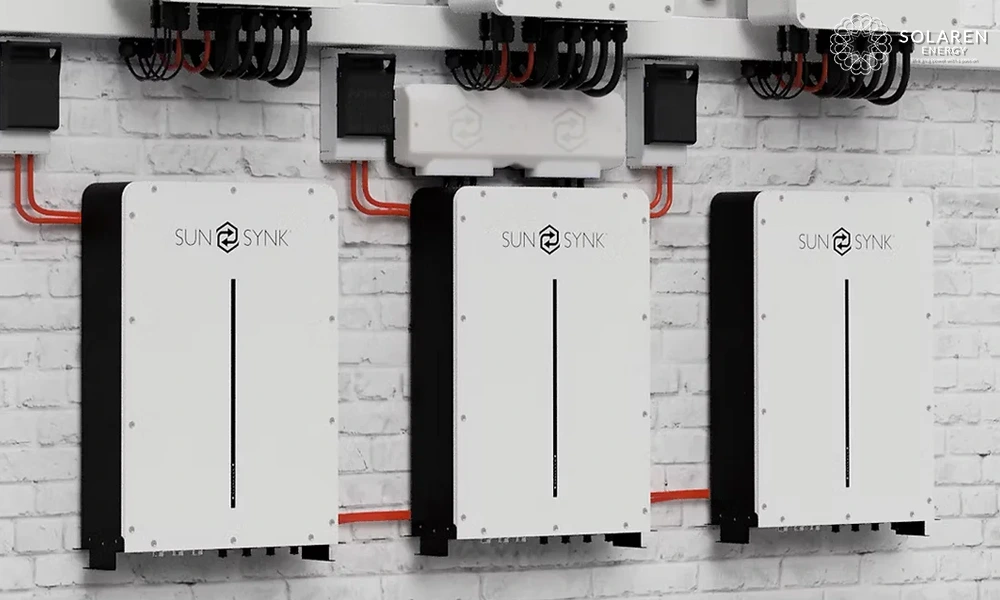
The advantage Sunsynk carries in this market is not just product specifications. It is the combination of Sunsynk’s own engineering depth and support platform, along with Solaren’s in-house technical capability on the ground.
Sunsynk’s support infrastructure is among the more responsive in the storage industry: technically competent and accessible in a way that larger manufacturers with formal regional distribution structures often are not. Combined with Solaren’s internal engineering team, which works through voltage requirements, generator coordination, and system integration at the project level rather than applying a standard template, complex sites with mixed inverter brands, existing generator infrastructure, or non-standard electrical configurations get resolved properly rather than worked around.
Solaren is an official Sunsynk partner in the Philippines. The Sunsynk range is what Solaren specifies most often for commercial and industrial storage because working through actual Philippine site requirements consistently points there. The partnership followed that conclusion.
Solar and Storage Together
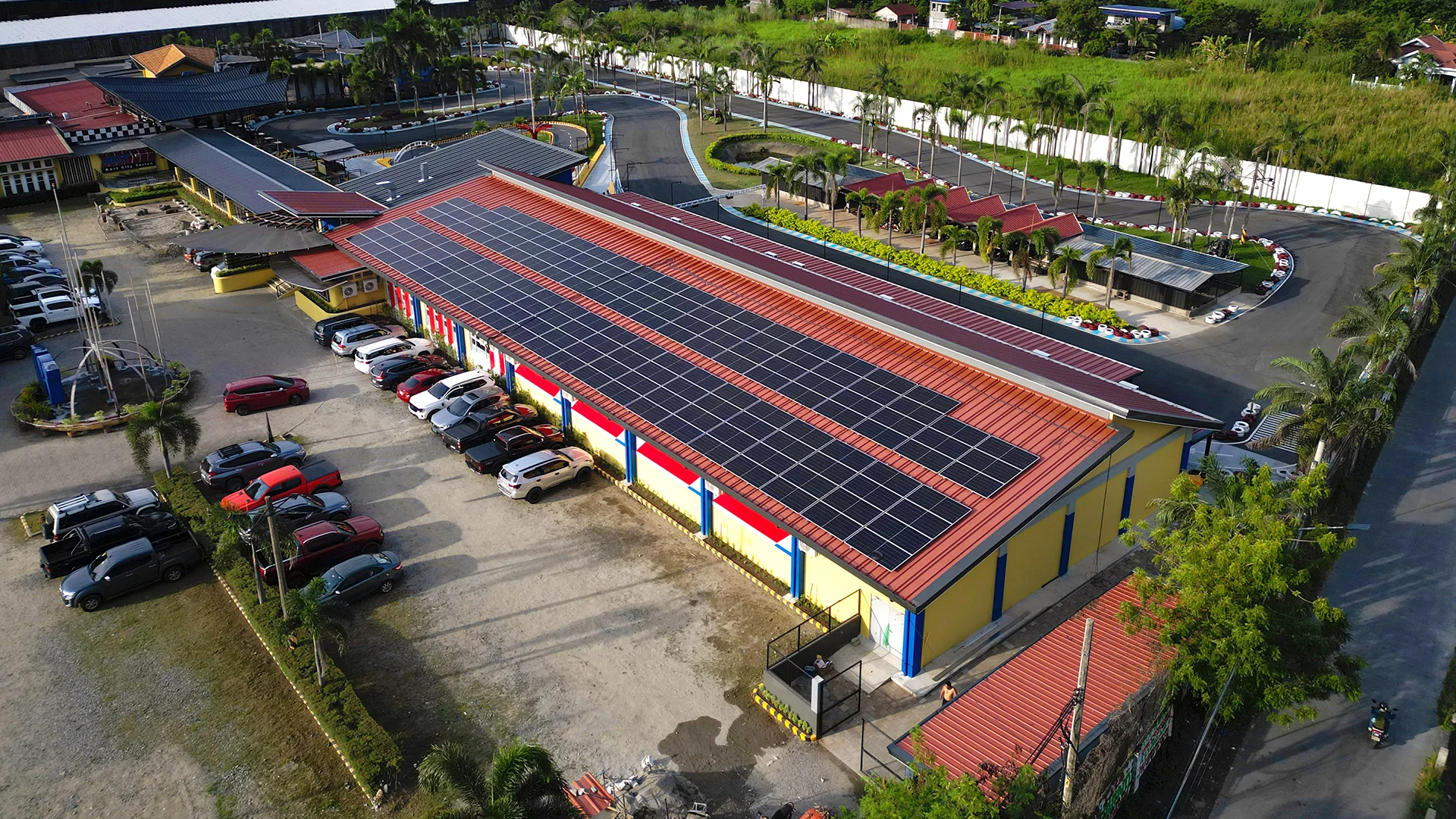
A BESS without solar charges entirely from the grid. The financial case rests on demand charge management and backup power, both real but limited in scope.
Solar generation charging a battery system and deploying stored energy during peak demand windows produces the strongest financial return for Philippine commercial and industrial facilities. It also provides meaningful energy independence. Combined generation and storage enable a facility to operate during extended grid outages without relying entirely on diesel.
Solaren specifies solar and storage as integrated systems. The panel array, inverter configuration, battery platform, and monitoring setup are designed together. This avoids the performance gaps and compatibility problems that appear when components from different contractors are combined after the fact.
Five Questions Worth Asking Before Signing a Proposal
Is this system natively compatible with my building’s voltage configuration?
- If transformers are required, ask for a full cost analysis, including installation and ongoing maintenance.
What is the thermal management system, and what does output derating look like at 35 degrees Celsius?
- Published manufacturer data should answer this. If it doesn’t, the system was designed for a different climate.
How does the system handle a grid outage when a generator is present?
- Ask for a step-by-step description of the load transfer sequence. If the battery and generator operate as separate systems with manual switching between them, factor that into the backup power assessment.
What is the rated cycle life, and under what temperature conditions is that figure specified?
- A cycle-life rating measured at 25 degrees Celsius is a different number from performance at actual Philippine operating temperatures.
Can you show us the monitoring platform on a live installation?
- Visibility into state of charge, cycle data, and demand management performance is how you verify after commissioning that the system is delivering what was projected. If a contractor cannot demonstrate this on an existing site, that is worth noting.
Battery Safety: What Philippine Buyers Need to Know
Fire safety is a legitimate concern in the Philippine market and arises in almost every serious BESS procurement. It deserves a straight answer rather than reassuring generalities.
Every system on this list uses Lithium Iron Phosphate (LFP) chemistry. The phosphate bond in the cathode structure is thermally stable in a way that older lithium chemistries are not. Industrial BESS manufacturers adopted LFP as the standard for commercial applications precisely because of this stability. All five systems ranked here use it.
Chemistry alone does not determine safety, however. The Battery Management System is the critical layer.
A BMS continuously monitors every cell in the battery pack: voltage, temperature, state of charge, and rates of charge and discharge. It is the intelligence that prevents any individual cell from operating outside safe parameters. A weak BMS allows cells to drift out of balance, overheat, or overcharge. A well-engineered BMS catches these conditions before they become failures.
This is where product quality separates itself from marketing claims. The BMS in premium systems like those from Sunsynk, Sungrow, Tesla, and BYD is multi-layered, with hardware and software protection operating independently so that a failure in one layer does not leave the system unprotected. Cell-level, pack-level, and system-level monitoring all operate simultaneously.
When evaluating any BESS proposal, ask specifically about the BMS architecture. Ask how many layers of protection are active. Ask what happens at the cell level when a temperature threshold is exceeded. Ask whether the BMS logs are available for review after commissioning. A contractor who cannot answer these questions in detail is not the right contractor for a serious industrial installation.
The Bottom Line
The battery storage market in the Philippines in 2026 is real, and the products work. The risk is not buying something that fails outright. The risk is buying something that performs adequately in the conditions for which it was designed and quietly underdelivers in the conditions in which it is actually operating.
Voltage compatibility, thermal management, and generator integration are the variables that separate a well-specified system from one that disappoints over a ten-year operating life. They are the reason this list is ranked the way it is.
Solaren provides a peak demand audit and savings analysis as part of the initial assessment for any facility considering battery storage. The numbers either support an investment at your site or they don’t. Better to know before commissioning than after.
Quick Reference: Top 5 BESS Systems for the Philippines (2026)
| Rank | System | Form Factor | Cooling | 230V Delta Native | Genset Integration |
Best For |
| 1 | Sunsynk Innagator + Powerhub | Containerized + Rack-based | Air / Liquid | Yes | Deep integration | Factories, commercial, industrial |
| 2 | Sungrow ST Series | Rack-based | Liquid | Partial | Workable | High-heat environments |
| 3 | BYD Battery-Box Commercial | Rack-based | Air | Partial | Workable | Regulated environments |
| 4 | Huawei LUNA2000 | Rack-based | Air | No | Limited | Existing Huawei solar sites |
| 5 | Tesla Megapack | Containerized | Liquid | No | Limited | Utility-scale only |
{
“@context”: “https://schema.org”,
“@graph”: [
{
“@type”: “Organization”,
“@id”: “https://solaren-power.com/#organization”,
“name”: “Solaren Renewable Energy Solutions Corp.”,
“alternateName”: [
“Solaren Power”,
“SOLAREN Renewable Energy Solutions Corp.”
],
“url”: “https://solaren-power.com/”,
“logo”: {
“@type”: “ImageObject”,
“@id”: “https://solaren-power.com/#logo”,
“url”: “https://solaren-power.com/wp-content/uploads/2024/03/solaren_logo_keyline_vert.png”
},
“email”: “sales@solaren-power.com”,
“telephone”: “+63 917 879 6037”,
“foundingDate”: “2014”,
“address”: {
“@type”: “PostalAddress”,
“addressLocality”: “Tarlac”,
“addressCountry”: “PH”
},
“areaServed”: {
“@type”: “Country”,
“name”: “Philippines”
},
“contactPoint”: [
{
“@type”: “ContactPoint”,
“contactType”: “sales”,
“telephone”: “+63 917 879 6037”,
“email”: “sales@solaren-power.com”,
“areaServed”: “PH”,
“availableLanguage”: [
“en”
]
},
{
“@type”: “ContactPoint”,
“contactType”: “customer support”,
“telephone”: “+63 917 879 6037”,
“email”: “sales@solaren-power.com”,
“areaServed”: “PH”,
“availableLanguage”: [
“en”
]
}
],
“sameAs”: [
“https://solaren-power.com/”
],
“knowsAbout”: [
“Solar power systems”,
“Commercial solar EPC”,
“Industrial solar EPC”,
“Battery energy storage systems”,
“Hybrid solar systems”,
“Net metering”,
“Renewable energy solutions in the Philippines”
]
},
{
“@type”: “WebSite”,
“@id”: “https://solaren-power.com/#website”,
“url”: “https://solaren-power.com/”,
“name”: “Solaren Power”,
“alternateName”: “Solaren Renewable Energy Solutions Corp.”,
“publisher”: {
“@id”: “https://solaren-power.com/#organization”
},
“inLanguage”: “en-PH”,
“potentialAction”: {
“@type”: “SearchAction”,
“target”: “https://solaren-power.com/?s={search_term_string}”,
“query-input”: “required name=search_term_string”
}
},
{
“@type”: “CollectionPage”,
“@id”: “https://solaren-power.com/blog/#blog”,
“url”: “https://solaren-power.com/blog/”,
“name”: “Solaren Blog”,
“isPartOf”: {
“@id”: “https://solaren-power.com/#website”
},
“publisher”: {
“@id”: “https://solaren-power.com/#organization”
},
“inLanguage”: “en-PH”
},
{
“@type”: “BreadcrumbList”,
“@id”: “https://solaren-power.com/top-battery-energy-storage-systems-philippines/#breadcrumb”,
“itemListElement”: [
{
“@type”: “ListItem”,
“position”: 1,
“name”: “Home”,
“item”: “https://solaren-power.com/”
},
{
“@type”: “ListItem”,
“position”: 2,
“name”: “Blog”,
“item”: “https://solaren-power.com/blog/”
},
{
“@type”: “ListItem”,
“position”: 3,
“name”: “Top 5 Commercial & Industrial Battery Energy Storage Systems for Philippine Businesses (2026)”,
“item”: “https://solaren-power.com/top-battery-energy-storage-systems-philippines/”
}
]
},
{
“@type”: “WebPage”,
“@id”: “https://solaren-power.com/top-battery-energy-storage-systems-philippines/#webpage”,
“url”: “https://solaren-power.com/top-battery-energy-storage-systems-philippines/”,
“name”: “Top 5 Commercial & Industrial Battery Energy Storage Systems for Philippine Businesses (2026)”,
“isPartOf”: {
“@id”: “https://solaren-power.com/#website”
},
“about”: {
“@id”: “https://solaren-power.com/top-battery-energy-storage-systems-philippines/#article”
},
“breadcrumb”: {
“@id”: “https://solaren-power.com/top-battery-energy-storage-systems-philippines/#breadcrumb”
},
“primaryImageOfPage”: {
“@id”: “https://solaren-power.com/top-battery-energy-storage-systems-philippines/#primaryimage”
},
“datePublished”: “2026-03-16”,
“description”: “A 2026 guide to the top commercial and industrial battery energy storage systems for Philippine businesses, covering reliability, peak shaving, backup power, and solar integration.”,
“inLanguage”: “en-PH”
},
{
“@type”: “ImageObject”,
“@id”: “https://solaren-power.com/top-battery-energy-storage-systems-philippines/#primaryimage”,
“url”: “https://solaren-power.com/wp-content/uploads/2026/03/top-battery-energy-storage-systems-philippines.jpg”,
“width”: 1000,
“height”: 600,
“caption”: “Top 5 Commercial & Industrial Battery Energy Storage Systems for Philippine Businesses (2026)”
},
{
“@type”: “BlogPosting”,
“@id”: “https://solaren-power.com/top-battery-energy-storage-systems-philippines/#article”,
“mainEntityOfPage”: {
“@id”: “https://solaren-power.com/top-battery-energy-storage-systems-philippines/#webpage”
},
“isPartOf”: {
“@id”: “https://solaren-power.com/blog/#blog”
},
“headline”: “Top 5 Commercial & Industrial Battery Energy Storage Systems for Philippine Businesses (2026)”,
“alternativeHeadline”: “Top Battery Energy Storage Systems Philippines”,
“description”: “A 2026 guide to the top commercial and industrial battery energy storage systems for Philippine businesses, covering reliability, peak shaving, backup power, and solar integration.”,
“image”: {
“@id”: “https://solaren-power.com/top-battery-energy-storage-systems-philippines/#primaryimage”
},
“author”: {
“@type”: “Organization”,
“@id”: “https://solaren-power.com/#organization”,
“name”: “Solaren Renewable Energy Solutions Corp.”
},
“publisher”: {
“@id”: “https://solaren-power.com/#organization”
},
“datePublished”: “2026-03-16”,
“dateModified”: “2026-03-16”,
“articleSection”: [
“Battery Energy Storage”,
“Commercial Solar”,
“Industrial Solar”,
“Renewable Energy Philippines”
],
“keywords”: [
“battery energy storage systems Philippines”,
“BESS Philippines”,
“commercial battery storage Philippines”,
“industrial battery energy storage”,
“battery storage for factories Philippines”,
“battery backup for business Philippines”,
“peak shaving battery system Philippines”,
“solar plus storage Philippines”,
“commercial and industrial BESS”,
“Philippine businesses guide 2026”
],
“wordCount”: 2200,
“inLanguage”: “en-PH”,
“about”: [
{
“@type”: “Thing”,
“name”: “Battery Energy Storage Systems”
},
{
“@type”: “Thing”,
“name”: “Commercial and Industrial Energy Storage”
},
{
“@type”: “Thing”,
“name”: “Peak Shaving”
},
{
“@type”: “Thing”,
“name”: “Backup Power”
},
{
“@type”: “Thing”,
“name”: “Solar plus Storage”
},
{
“@type”: “Place”,
“name”: “Philippines”
}
],
“mentions”: [
{
“@type”: “Thing”,
“name”: “Lithium battery systems”
},
{
“@type”: “Thing”,
“name”: “Hybrid inverter systems”
},
{
“@type”: “Thing”,
“name”: “Demand charge reduction”
},
{
“@type”: “Thing”,
“name”: “Grid reliability”
},
{
“@type”: “Thing”,
“name”: “Commercial solar ROI”
}
],
“audience”: {
“@type”: “Audience”,
“audienceType”: [
“Business owners”,
“Factory managers”,
“Commercial property owners”,
“Industrial facility operators”,
“Energy decision-makers”
]
},
“spatialCoverage”: {
“@type”: “Country”,
“name”: “Philippines”
},
“publisherImprint”: {
“@id”: “https://solaren-power.com/#organization”
},
“copyrightHolder”: {
“@id”: “https://solaren-power.com/#organization”
},
“copyrightYear”: 2026
}
]
}