When Philippine businesses evaluate solar, most of the conversation focuses on system size, panel brand, inverter quality, and payback period. Grid conditions rarely come up. That is a mistake, because the quality of the grid your building is connected to has a direct bearing on what your solar system produces, how reliably it operates, and what your actual financial return looks like over time.
This is not a theoretical concern. It is a practical reality for a significant proportion of commercial and industrial sites across the Philippines, particularly those outside major urban franchise areas. Understanding how grid conditions shape solar output is part of making a sound investment decision.
The Philippine Grid Is Not Uniform
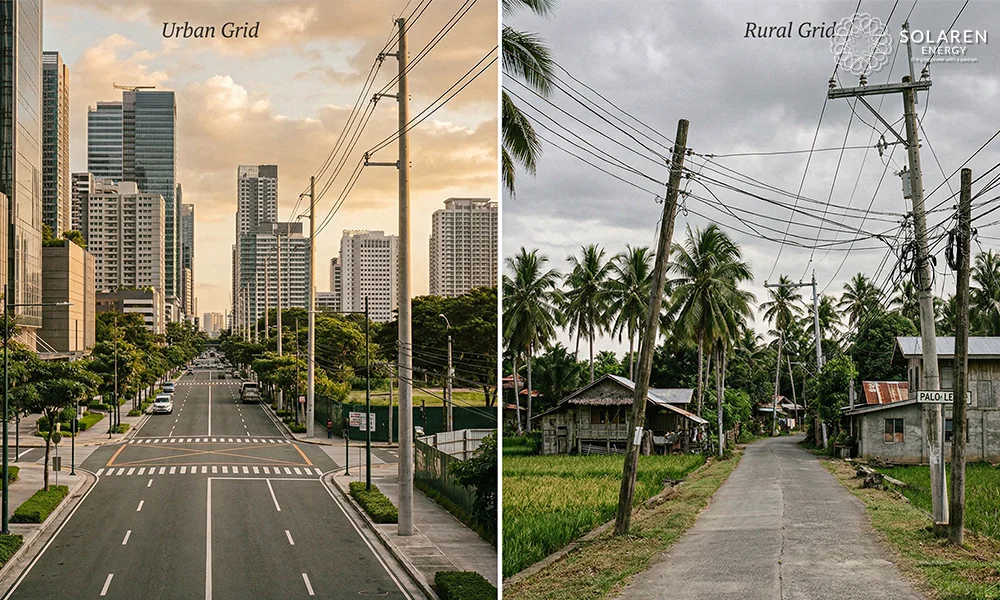
Manila and the major urban centres served by Meralco operate on a relatively stable, well-maintained distribution network. Voltage is consistent, outages are infrequent, and the grid behaves predictably enough that a standard grid-tied solar system performs close to its design specifications throughout its operating life.
Move outside those franchise areas and the picture changes considerably. Rural electric cooperatives serving provincial and agricultural areas frequently operate on ageing infrastructure with thin reserve margins. Voltage fluctuations are common. Outages are longer and less predictable. Lines serving remote barangays and farming communities are often at the end of long distribution runs, where voltage sag is a daily reality rather than an occasional fault.
For a commercial solar system connected to that kind of grid, the performance implications are real and measurable.
How Voltage Instability Affects Solar Output
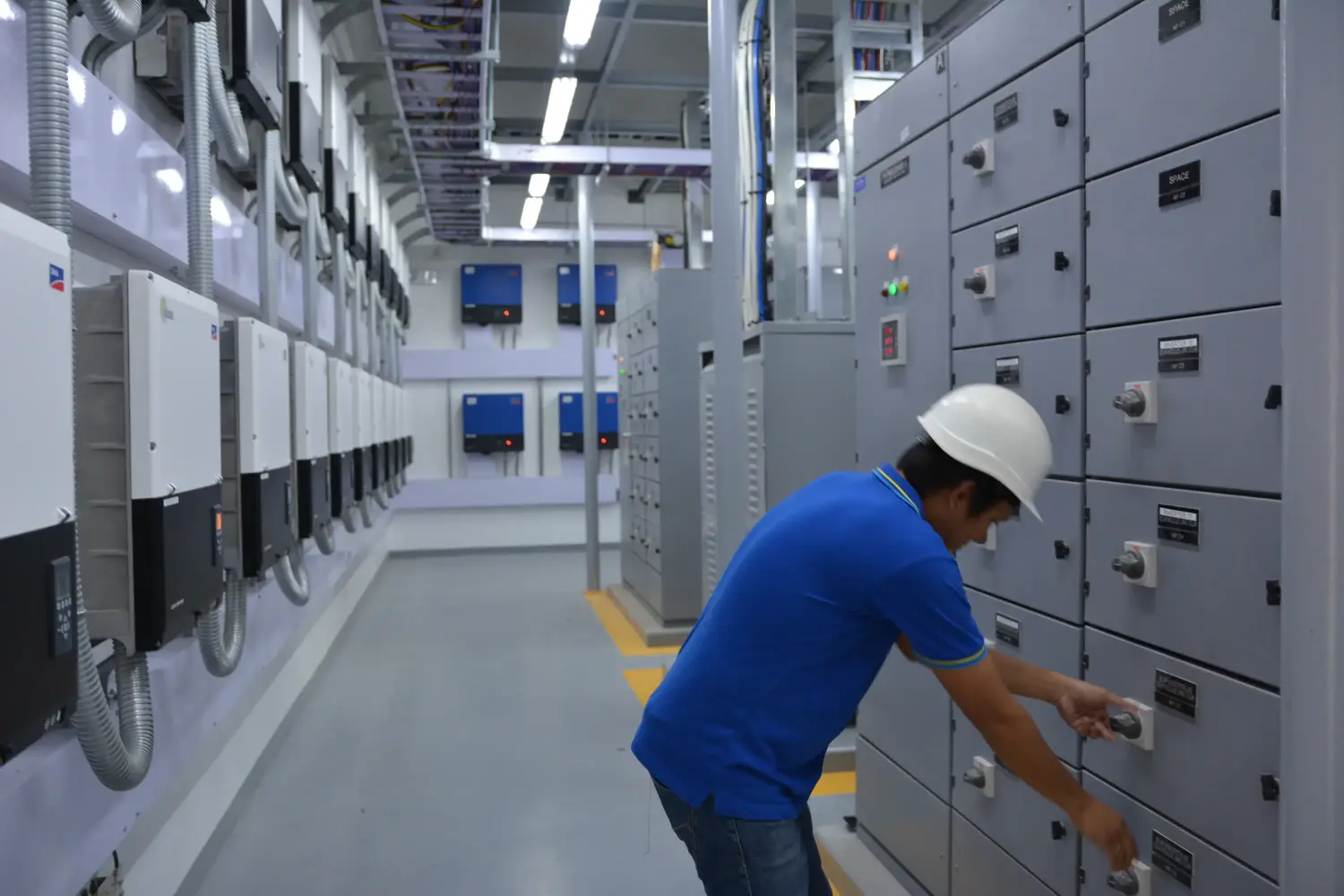
A grid-tied solar inverter is designed to synchronise with the utility supply. It reads the grid voltage and frequency continuously and matches its output to those parameters. When the grid voltage is stable and within specification, the inverter operates at its design efficiency and the system produces what the engineering model predicted.
When grid voltage fluctuates outside acceptable bands, the inverter responds. Depending on the severity and frequency of the fluctuation, this can mean reduced output as the inverter throttles generation to stay within safe operating parameters, or it can mean the inverter trips offline entirely until grid conditions normalise. Either outcome costs you a generation. Across a year, repeated voltage events on a weak grid can meaningfully reduce actual yield below the design figure.
This is distinct from outages. An outage is visible and measurable. Voltage-related output reduction is quieter and harder to detect without monitoring, but it accumulates over time and shows up in the gap between projected and actual generation figures.
Frequency Instability and Inverter Stress
Beyond voltage, frequency stability matters for grid-tied systems. The Philippine grid operates at 60Hz. Inverters are designed to operate within a narrow frequency band around that target. On a well-managed grid, frequency deviation is rare and brief. On a stressed grid, particularly during peak demand periods or when generation reserves are thin, frequency can wander enough to affect inverter behaviour.
The current energy emergency has put pressure on grid frequency management in ways that were not a regular concern twelve months ago. With WESM prices elevated and generation margins tighter, the grid is operating with less headroom than usual. For commercial solar system owners, this is not a reason for alarm, but it is a reason to understand how your system responds to grid stress and whether your monitoring setup will flag anomalies when they occur.
Weak Grid Sites: The Design Response
The engineering response to a weak or unstable grid is not to avoid solar. It is to design the system with grid conditions as a primary input rather than an afterthought.
For sites with known voltage instability, inverter selection matters more than usual. Not all inverters handle voltage fluctuation equally. A quality inverter with a wide input voltage tolerance and a well-configured response to grid events will maintain output across a broader range of conditions than a budget unit specified purely on price.
For sites with frequent outages or where grid availability is genuinely unreliable, a hybrid system with battery storage changes the operating model entirely. The system generates and stores during grid-available periods and draws from storage when the grid is down, maintaining continuity of supply to priority loads regardless of what the utility line is doing. This is a fundamentally different value proposition from a grid-tied system, and the financial case for that additional capital is strongest precisely where grid conditions are worst.
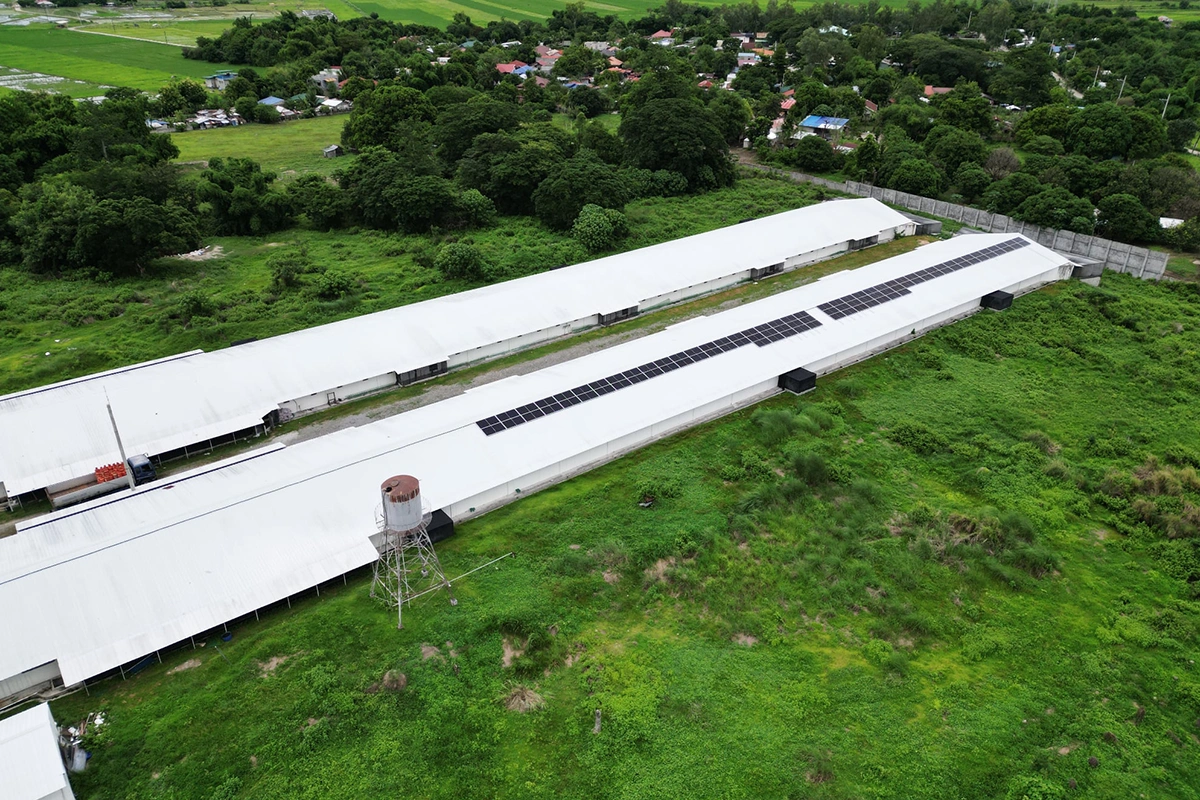
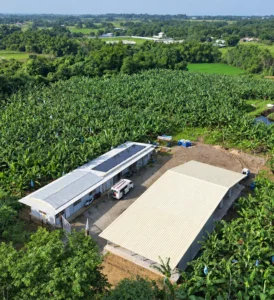
The Laoang Poultry Farm installation is a clear example of grid conditions driving system design. Serving a large agricultural operation in a remote provincial location, the site faces the kind of supply variability that is simply not present on a Meralco franchise area connection. The system was specified with those conditions as a design constraint, not a footnote. The result is a installation that performs reliably in an environment that would expose a poorly specified system quickly.
Net Metering and Grid Quality
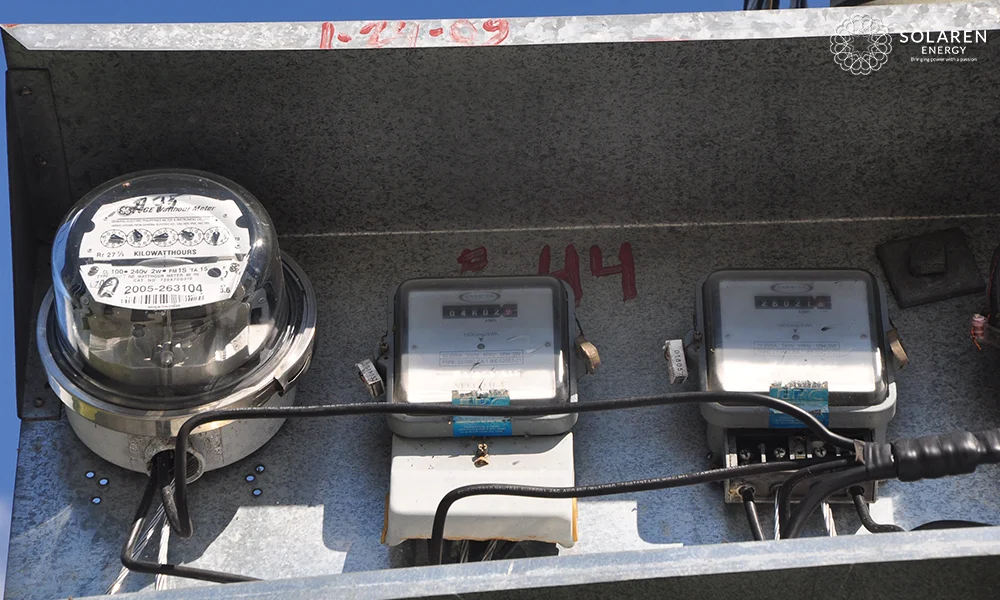
Grid conditions also affect how net metering works in practice. Net metering allows a solar system to export surplus generation to the grid and receive credits against future consumption. On a stable grid with a cooperative or distribution utility that processes net metering applications efficiently, this mechanism works as intended and significantly improves system economics.
On a weak grid, two complications can arise. First, some rural cooperatives have been slower to implement net metering than the urban distribution utilities, meaning the administrative path to approval is longer and less certain. Second, on a grid where voltage is frequently outside normal bands, export conditions may not always be met, reducing the volume of credits the system can accumulate.
Neither issue makes solar unviable in weak grid areas. But they are factors that belong in the financial model, and a competent EPC should be raising them before you sign off on a system design.
Monitoring: The Only Way to Know What Your Grid Is Doing
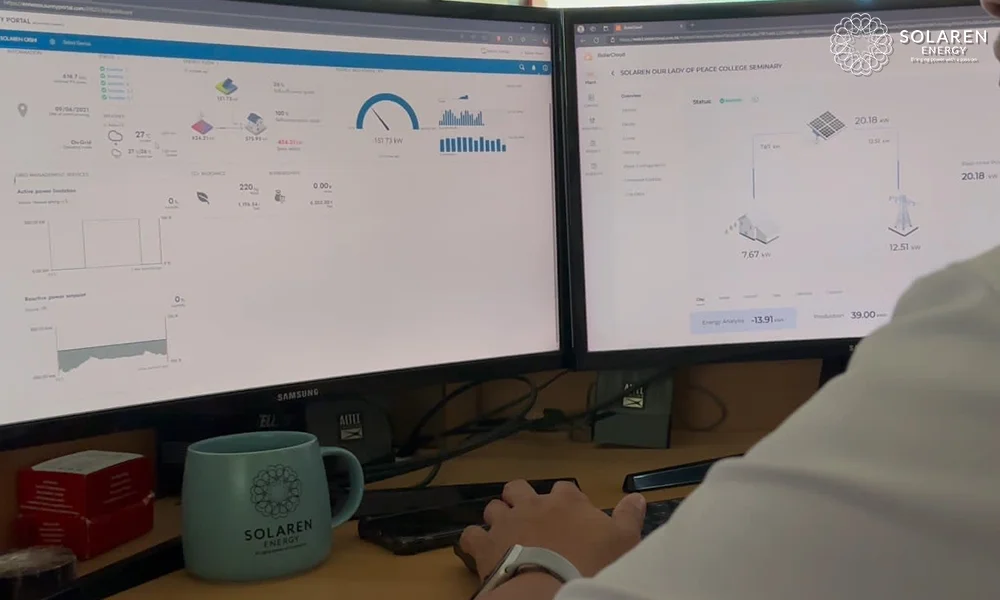
For any commercial solar system, but particularly for systems on grids outside major urban areas, monitoring is not optional. It is the only way to know whether your system is performing as designed, whether grid events are costing you generation, and whether an inverter fault or grid anomaly needs attention.
A properly specified commercial solar energy systems installation should include remote monitoring that shows generation in real time, cumulative yield against projection, and inverter status. That data tells you what your grid is actually doing to your system, and it gives your EPC the information needed to diagnose performance issues before they compound into significant losses.
Systems without monitoring are a black box. You will not know whether a weak grid is costing you 5% of your annual yield or 15% until you look at the numbers carefully, and by then you may have lost months of generation you cannot recover.
What This Means for Commercial Buyers
If your site is in a Meralco franchise area or a well-managed urban cooperative, grid conditions are a background factor rather than a primary design concern. Your system will perform close to its design specification and net metering will work as intended. The standard evaluation criteria, system size, component quality, EPC track record, and payback period are the right focus.
If your site is in a provincial or rural area served by a cooperative with known instability, grid conditions belong at the centre of your evaluation. Ask your prospective EPC what inverter input voltage tolerance they are specifying and why. Ask whether the system design accounts for the grid profile at your specific location. Ask how the monitoring setup will detect and report grid-related performance losses.
The answers to those questions will tell you a great deal about whether you are dealing with an EPC that understands Philippine grid realities or one that is applying an urban system template to a site that needs something more considered.
The Bottom Line
Grid conditions shape solar output in ways that are measurable, manageable, and too often ignored in the commercial solar sales process. The Philippine grid is not uniform, and a system designed for Meralco voltage stability will not necessarily perform the same way on a weak provincial cooperative line.
Solaren has been installing commercial solar systems across the Philippines since 2012, across franchise areas ranging from stable urban grids to remote provincial cooperatives with genuine supply challenges. That field experience is the difference between a system designed on paper and one designed for where it will actually operate.
If grid conditions at your site are a concern, we can assess them before we specify anything.