Most businesses evaluating solar focus on the right things: system size, equipment quality, payback period, and the credibility of the installer. What often gets less attention until it causes a problem is compliance. Specifically, how your system is designed relative to the net metering rules set by your utility provider.
Getting this wrong does not just create administrative headaches. It can remove one of the most valuable financial benefits your solar system delivers.
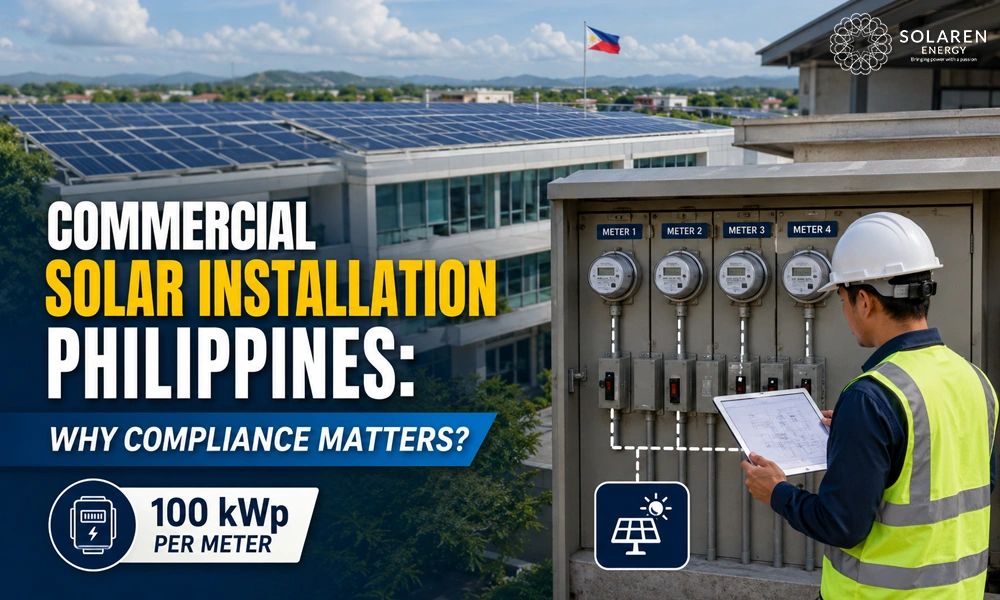
The 100kWp Rule and Why It Matters

Under the Philippine net metering framework, each utility meter on your property is eligible for net metering only if the solar capacity connected to that meter does not exceed 100 kilowatt-peak. That is the threshold. Stay below it, and your system can export surplus power to the grid during high-generation periods, with those exports credited against your bill. Exceed it, even by a small margin, and your utility reclassifies your installation as a Self-Generating Facility.
That reclassification has real financial consequences. As an SGF, you lose net metering privileges on that meter entirely. The power your system generates beyond your own consumption at that moment simply goes to the grid with no credit returned to you. Over a 25-year system life, the cumulative impact on your return on investment is significant.
This is not an obscure technicality. It is one of the most common ways a poorly designed commercial solar installation underperforms against its original projections.
Multiple Meters Open Up the Opportunity

Here is where many businesses miss an important point. The 100kWp limit applies per meter, not per property. If your facility has multiple utility meters, each one can support up to 100kWp of solar capacity under net metering. A building with four meters can accommodate up to 400kWp in total while keeping every meter within compliance.
This matters enormously for factories, commercial complexes, universities, hospitals, and any large facility with significant electrical infrastructure. The design question is not just how much solar capacity you need. It is how that capacity is allocated across your meters to maximise net metering eligibility across the entire site.
Getting this right requires an installer who understands both the engineering and the regulatory framework. These are not the same skill set, and not every solar company has both.
What Happens When Installers Get It Wrong

There are three common failure points. The first is poor system sizing. An installer who does not rigorously map your consumption profile against the 100kWp threshold per meter can produce a design that looks right on paper but triggers reclassification once the utility reviews the net metering application.
The second is inadequate documentation. Applications to your utility provider, the Department of Energy, and relevant local government units require specific paperwork submitted in a specific sequence. Errors or omissions at this stage cause delays, and in some cases rejections that require the process to restart.
The third is the absence of ongoing support. Regulations evolve. What is compliant today may require adjustment in two or three years. An installer who disappears after commissioning leaves you to manage that on your own.
How Solaren Approaches Compliance
Solaren designs every commercial solar installation around the 100kWp rule from the first site inspection. Before a system is sized, we map your meter configuration, your consumption profile per meter, and your projected energy use going forward. The system is then designed to maximise total solar capacity across your meters while keeping each one within net metering eligibility.
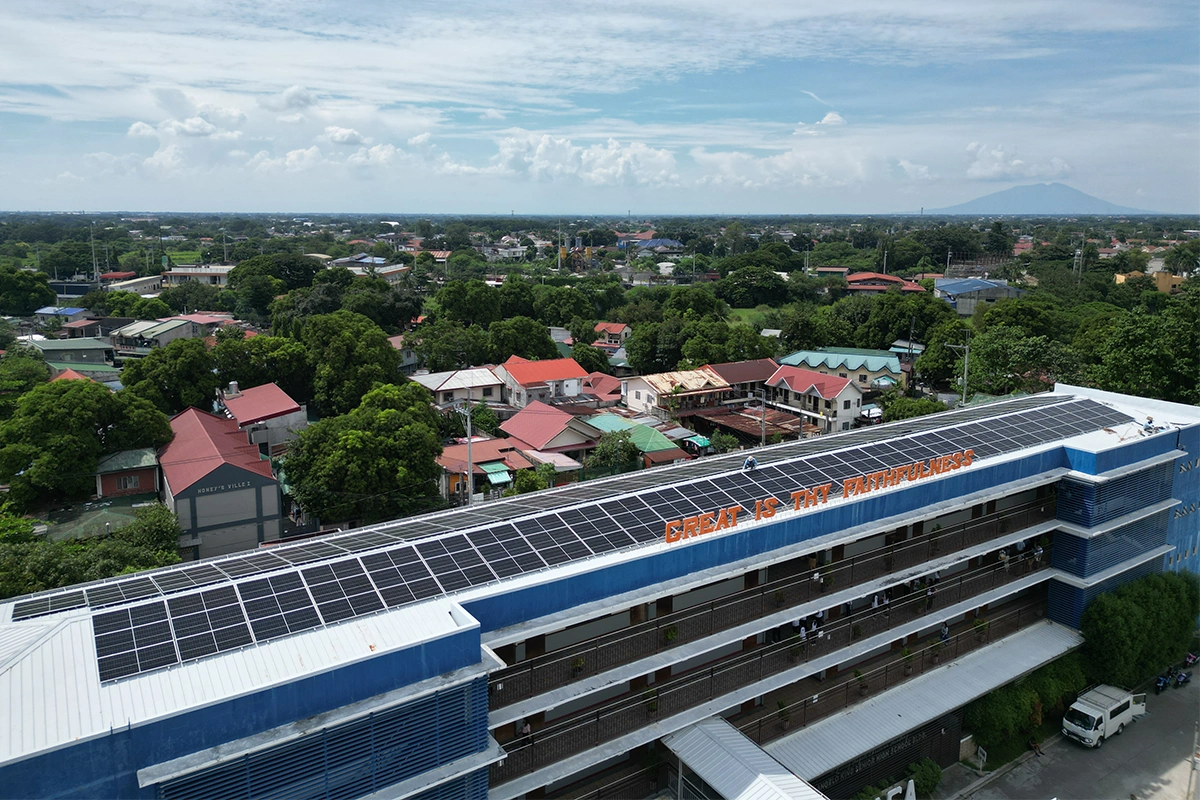
Living Angels Christian Academy is one example of how this plays out in practice. The campus installation was deliberately structured across multiple meters, keeping each connection within the net metering threshold while maximising total system output. The result was a dramatic reduction in monthly electricity costs, with the institution’s bills brought to near zero without a single meter losing its net metering status.
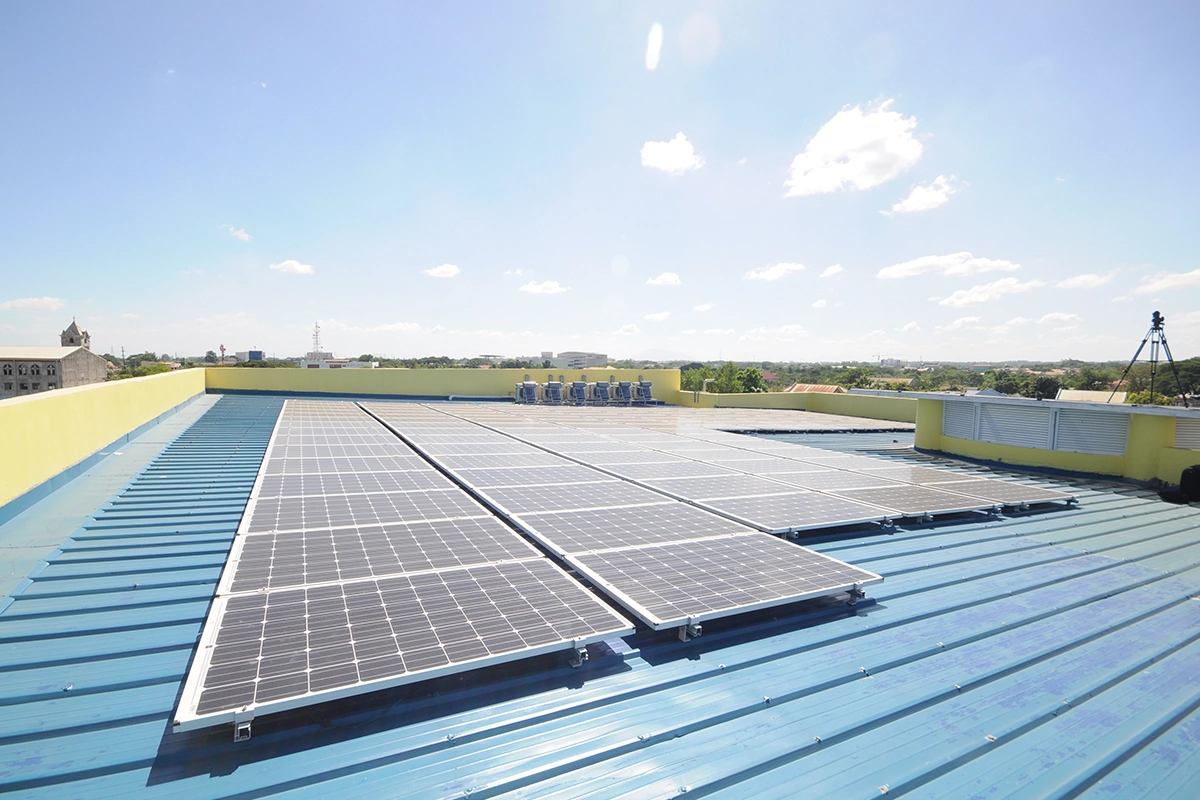
BIR Tarlac is another case where careful system design and proper utility coordination produced a clean outcome. The installation aligns with government office operating hours, net metering approval was secured as part of the process, and the system has been generating credits against the utility bill since commissioning. No compliance issues, no reclassification, no surprises.
Solaren handles all utility submissions, DOE documentation, and LGU requirements as part of the standard installation process. This is not a service add-on. It is part of what a properly executed commercial solar installation looks like.
The Financial Case for Getting It Right

A compliant system delivers predictable returns. Your net metering credits arrive every billing cycle. Your payback period runs on schedule. Your system’s financial performance matches the projections you used to make the investment decision.
A non-compliant system, or one that loses net metering eligibility due to poor design, delivers none of that predictability. Payback periods extend. The financial case weakens. And correcting the problem after installation is far more expensive than designing it correctly from the start.
Compliance is not a regulatory burden. It is a prerequisite for the investment performing as intended.
Contact Solaren to arrange a site assessment. We will review your meter configuration, model the optimal system design for your facility, and handle the full compliance process from application through to commissioning.
Frequently Asked Questions: Commercial Solar Compliance in the Philippines
-
What exactly is the 100kWp net metering limit and where does it come from?
The 100kWp per meter limit is set under the Philippine net metering programme administered by the Department of Energy and implemented through distribution utilities. It defines the maximum solar capacity that can be connected to a single utility meter while remaining eligible for net metering credits. The limit exists to help utilities manage the volume of distributed generation feeding back into the grid. It applies to each individual meter on your property, not to your total installation.
-
What happens if my system exceeds 100kWp on a single meter?
Your utility will reclassify your installation on that meter as a Self-Generating Facility. This means you lose net metering eligibility on that meter. Surplus electricity your system generates beyond your own consumption is exported to the grid but receives no credit against your bill. This reduces the financial return on your investment and extends your payback period.
-
Can I install more than 100kWp in total if my property has multiple meters?
Yes. The 100kWp limit applies per meter, not per property. A facility with multiple utility meters can accommodate up to 100kWp per meter under net metering, which means total system capacity can be significantly larger. Proper system design allocates solar capacity across meters in a way that keeps each one within the threshold and maximises net metering eligibility across the entire site.
-
Who handles the net metering application and utility submissions?
A reputable solar installer should handle this as part of the installation process. At Solaren, utility applications, DOE documentation, and any LGU requirements are managed by our team from the design stage through to approval. You should not need to navigate this independently.
-
How long does the net metering approval process take in the Philippines?
Under current DOE guidelines, distribution utilities are required to process net metering applications within a defined timeframe following the submission of complete documentation. Delays typically arise from incomplete paperwork at submission. Working with an installer who prepares documentation correctly from the outset significantly reduces waiting time.
-
Does compliance require ongoing attention after installation?
Yes. Regulations can change, and your system should be monitored to ensure it continues to meet applicable requirements. This is one reason ongoing after-sales support matters. An installer who remains engaged after commissioning can flag any regulatory changes that affect your installation and advise on what, if anything, needs to be adjusted.
-
Does a compliant solar installation affect the value of my property?
Generally yes, in a positive direction. A properly permitted, DOE-compliant commercial solar installation is a documented asset with verified regulatory standing. For commercial property buyers or tenants, this is preferable to inheriting an installation with unresolved compliance questions. It also reduces the risk of forced system modifications or disconnection that could affect the property’s energy costs.