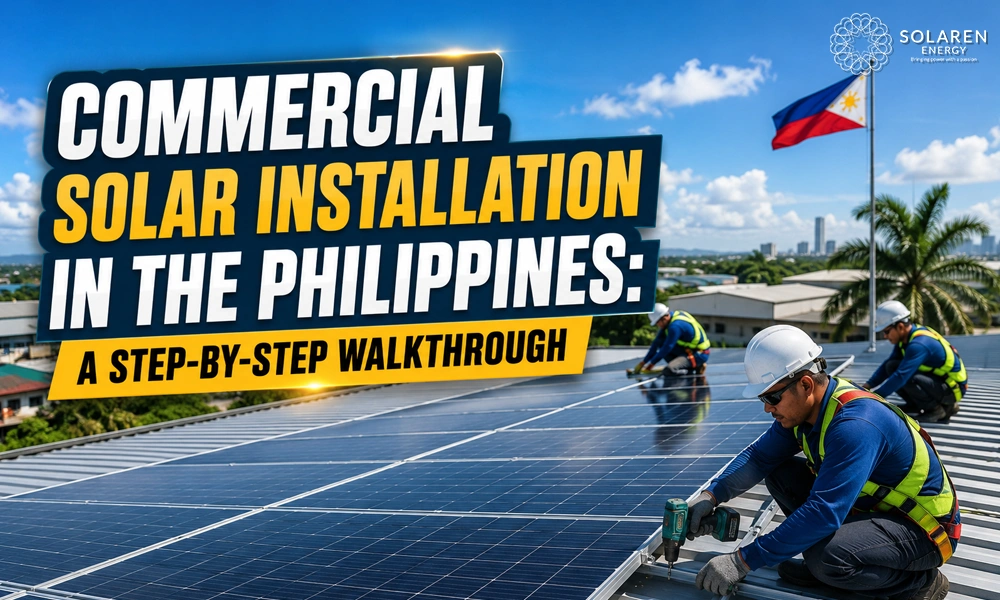
Commercial solar has grown into one of the most critical investments Philippine businesses can make. Companies want stable operating costs, predictable cash flow, and protection from the constant swings in electricity prices. Solar used to be something companies explored only when budgets allowed. Today, it sits much closer to the center of financial planning. A commercial solar installation in the Philippines is no longer a quick add-on or a nice extra. It is a long-term asset that needs to be adequately engineered so it performs quietly for twenty years or more.
The difference between a system that delivers consistent savings and one that fails after a few seasons has very little to do with marketing claims and everything to do with how the project is planned, built, and supported. The best way to understand this is to look at the actual steps involved and how a premium solar company approaches each one.
Kings Court in Makati is a strong example. These are two premium office buildings in Manila’s central business district. They needed a system that blended into their environment without disrupting tenants or operations. The expectations were high. The work had to be precise, quiet, and respectful of a building that operates at full capacity every day. A mediocre installation would have been obvious. A premium one becomes part of the property.
This is how a proper commercial installation should unfold.
Stage 1: Studying the Facility’s True Energy Pattern
A commercial solar installation starts long before anyone touches a roof. A premium supplier studies the building’s actual electrical patterns hour by hour, season by season. Office towers, distribution hubs, manufacturing plants, schools, hotels, and retail complexes each have their own rhythms. No two are identical.
This analysis is what reveals the real opportunities.
At Kings Court, the evaluation showed highly predictable daytime loads that aligned perfectly with solar production. That meant the system could generate immediate value without complicated controls or operational changes. Many installations fail because this early step is skipped or simplified. The result is a system that looks fine on paper but never matches the client’s needs.
A proper load study examines how the building behaves in real life, not just what the meter reads. It checks whether the electrical phases pull evenly, how hard the transformer works during busy hours, and which pieces of equipment switch on at the same time. It also helps uncover small inefficiencies that never appear on bills but matter once solar connects to the system. When these things are understood early, the solar design supports the business rather than creating unexpected friction later.
Stage 2: Designing a System That Fits the Building
Commercial roofs in the Philippines tend to have their own history. Some are packed with old air handlers or water tanks. Others have vents scattered everywhere, wiring that has been adjusted many times, or extensions added long after the original structure was built. There are warm spots, shaded corners, and surfaces that don’t line up the way drawings suggest. It is rare to step onto a roof that behaves like a clean technical layout. Most sites need a design that adapts to the building’s quirks and works with what is already there, not a design that forces the building to match a template.
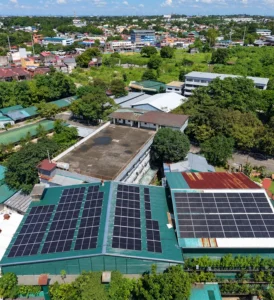
Kings Court demonstrated this clearly. The roof was restrictive. Space was segmented. The shape created shifting shadow paths. An ordinary layout would have performed poorly. Instead of imposing a simple pattern on the roof, the engineering team designed a more intricate string configuration that matched the roof’s geometry, obstructions, and the building’s energy profile. That extra level of design work proved highly beneficial. The system has been running for years with stable output because every string was positioned and balanced with intention.
A premium commercial solar installation in the Philippines is never improvised. It is measured, modelled, and refined until the building and the system cooperate naturally.
Stage 3: Choosing Equipment Built for Philippine Conditions
The Philippines is unforgiving of solar equipment. Heat, humidity, salinity, and violent storms test every panel, bolt, and cable. A premium EPC knows that hardware selection determines long-term yield far more than location alone.
Panels must withstand high temperatures without significant output loss. Inverters must remain stable through voltage swings and rapid dips. Structures must handle typhoon winds year after year. Even the smallest components, such as connectors and cables, can dramatically influence performance.
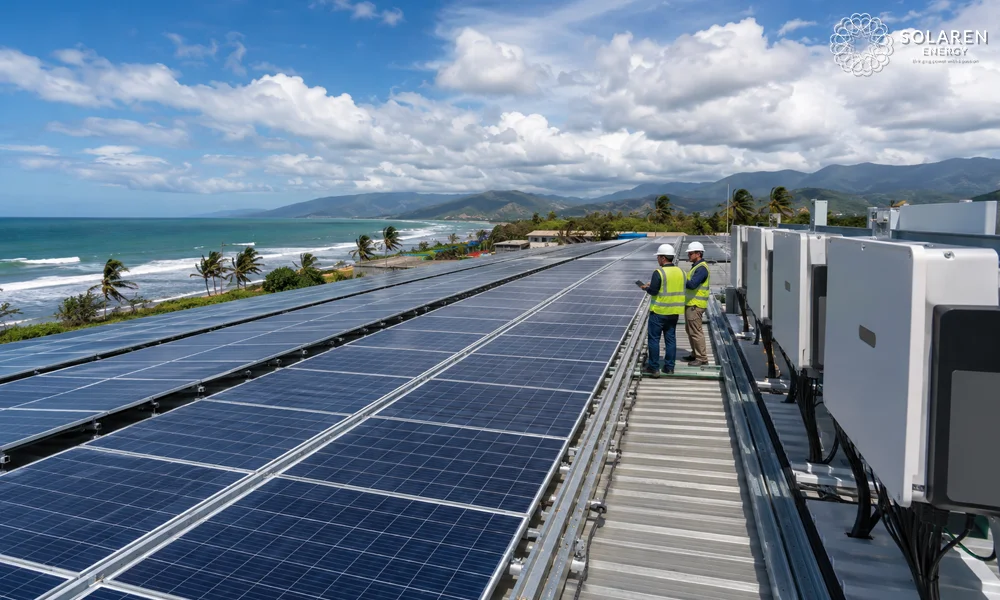
Look at our projects in Ilocos and La Union. The installations sit beside the shore, exposed to salt air and strong winds every day. Because the design accounted for corrosion, uplift pressure, and long-term fatigue, the system continues performing strongly. These are the sites where weaknesses show first, yet a properly engineered installation holds steady.
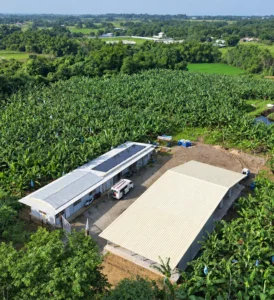
Long-running inland projects tell the same story. Many of our commercial systems have been operating for between 5 and 10 years at the time of writing. Yields remain strong. Components remain intact. No unexpected failures. This is what happens when equipment is chosen based on experience rather than price lists.
Stage 4: Installing Without Disrupting Operations
Many commercial property owners fear the installation phase. They imagine scaffolding blocking entrances, loud work echoing through hallways, untidy wiring, disturbance to tenants, and general hassle. It is a valid concern. A rushed or careless team can cause real disruption.
Premium execution looks entirely different.
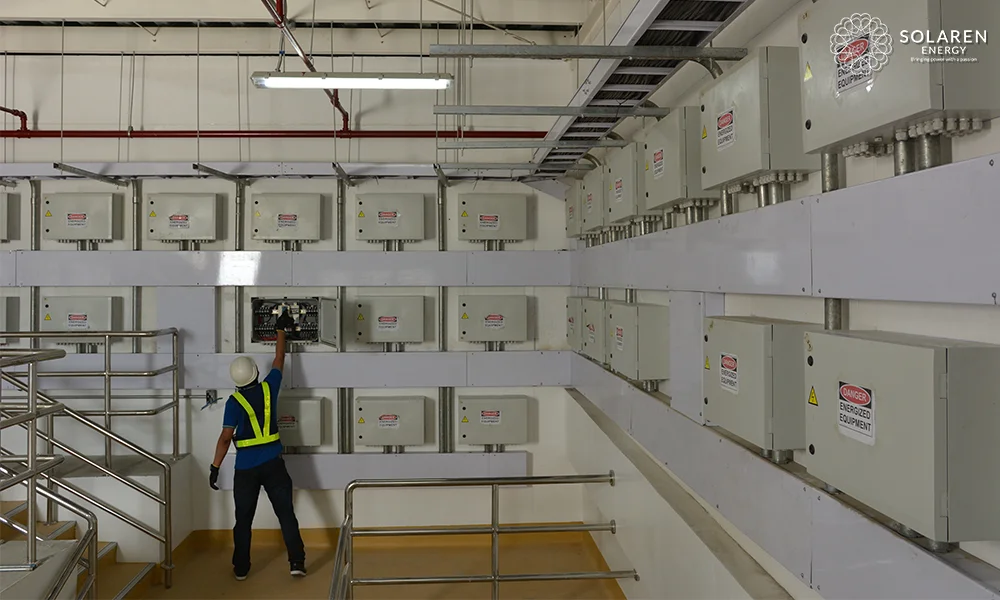
At Kings Court, long piping runs had to pass through public areas. Every route was planned to avoid disrupting tenants or affecting the space’s aesthetics. Work was scheduled to keep the buildings operating normally. Cabling was placed cleanly and invisibly. There was no noise, no mess, and no chaos. Most tenants never noticed anything had changed until the commissioning announcement.
That kind of quiet, careful work is what separates a premium installation from an ordinary one. When you look through Solaren’s older projects, you see the same approach repeated over and over. The teams move through a site without getting in the way, the work stays tidy, and nothing feels out of place. Most people who walk into the building afterwards assume the system was always meant to be there.
Stage 5: Commissioning With Precision and Coordinating with Utilities
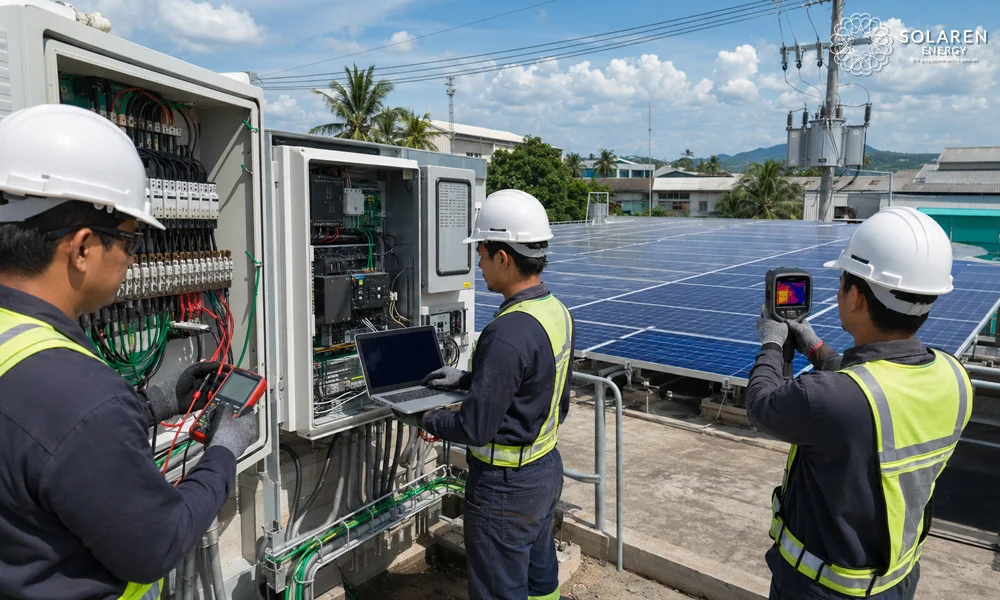
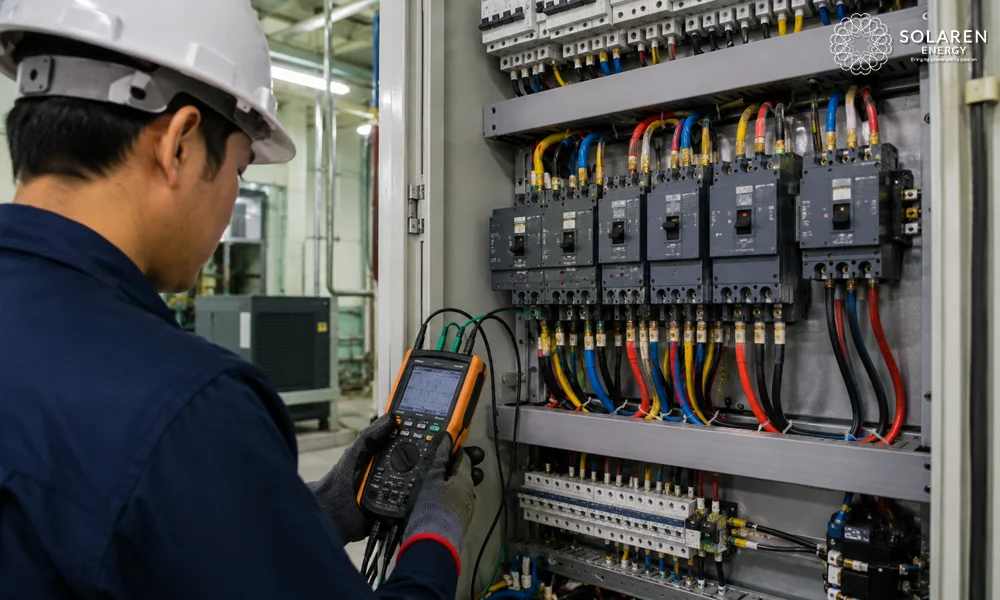
Commissioning is where shortcuts reveal themselves. A proper commercial solar installation in the Philippines undergoes a comprehensive set of electrical tests, structural checks, and performance validations.
This includes:
- Insulation testing
- String-level analysis
- Voltage-drop check
- Breaker calibration
- Grounding verification
- Thermal imaging
- Inverter tuning according to local grid conditions
Only after these checks should a system be energized.
Working with the utility is just as important as the engineering. Every area has its own quirks. Some feeders are sensitive, some transformers react differently under load, and certain locations have strict limits on export. If the installer does not understand this from the outset, the system disconnects repeatedly. The best providers anticipate and map these issues early and design around them, which is why their systems switch on and stay on without problems.
Stage 6: Monitoring and Long-Term Yield Protection
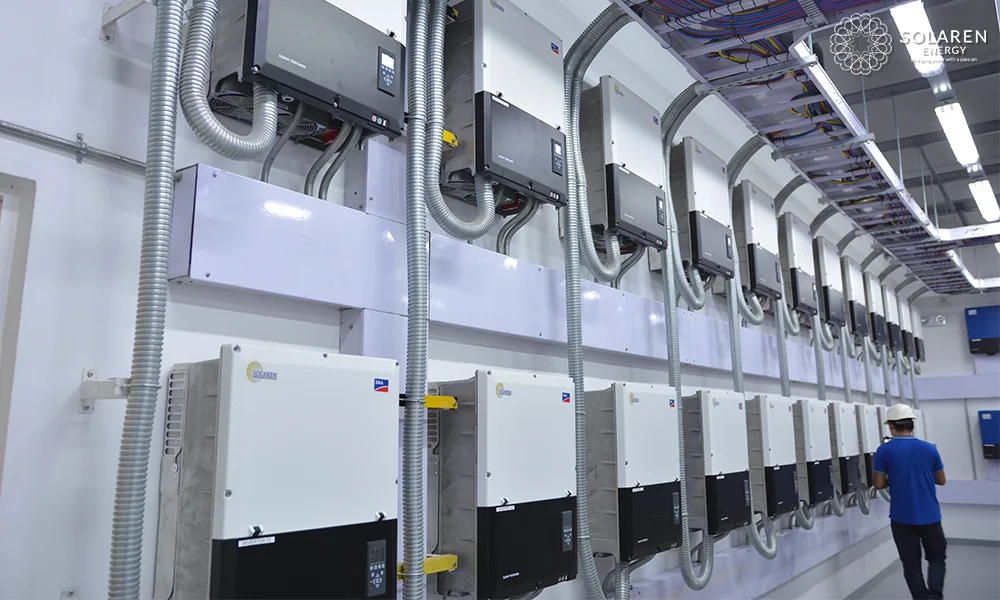
Solar systems that fail rarely physically break apart. They fail slowly through unnoticed performance losses. Dirt accumulation, string faults, disturbances, voltage issues, and early-stage component wear go undetected without monitoring.
A premium EPC treats monitoring as non-negotiable.
Monitoring is what keeps the system healthy for twenty years. It shows subtle trends long before they become expensive problems. It also reveals if the installation design was correct. A system that maintains its expected yield curve year after year is the best sign of proper engineering.
Kings Court is again a clear example. Since commissioning, the system has maintained stable, predictable generation. No unexplained losses. No sudden interruptions. That is what happens when the design, the build, and the monitoring work together.
Across Solaren’s wider portfolio, the same trend appears. Dozens of commercial installations continue to perform strongly many years after commissioning. These are not only exemplary projects. They are proof of repeatable design discipline.
You can explore the pattern yourself: https://solaren-power.com/projects/
Stage 7: Long-Term Support That Actually Exists
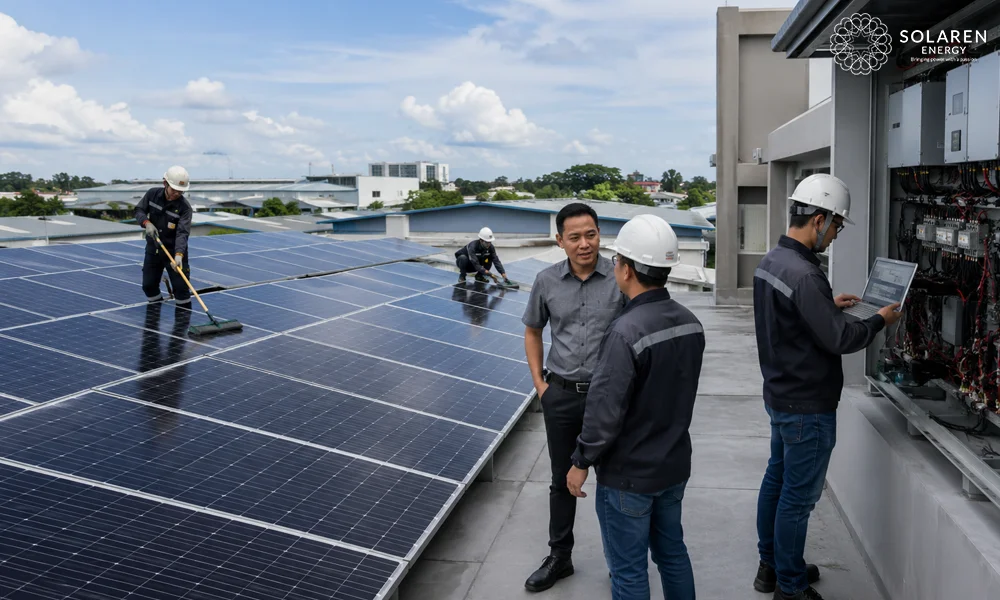
Solar carries a minimum of a twenty-year relationship. Panels, inverters, and cables are durable, but they still need routine care. Dust and dirt must be removed. Connections must be checked. Components eventually require replacement.
A commercial system without support is a stranded asset.
Premium companies stay with the client for the life of the system. They provide clear maintenance plans, annual inspections, cleaning schedules, and rapid response to any alerts in the monitoring platform. They understand that the objective measure of an installation is not how it looks on day one, but how it performs ten years later.
This is why many businesses now choose partners with deep experience, stable management, and proven portfolios. A low-cost installer may offer a cheaper proposal, but the risk is astronomical. Once their original solar company disappears, the client is left with a complex system that no one wants to take responsibility for.
A Commercial System That Strengthens the Business, Not Just the Building
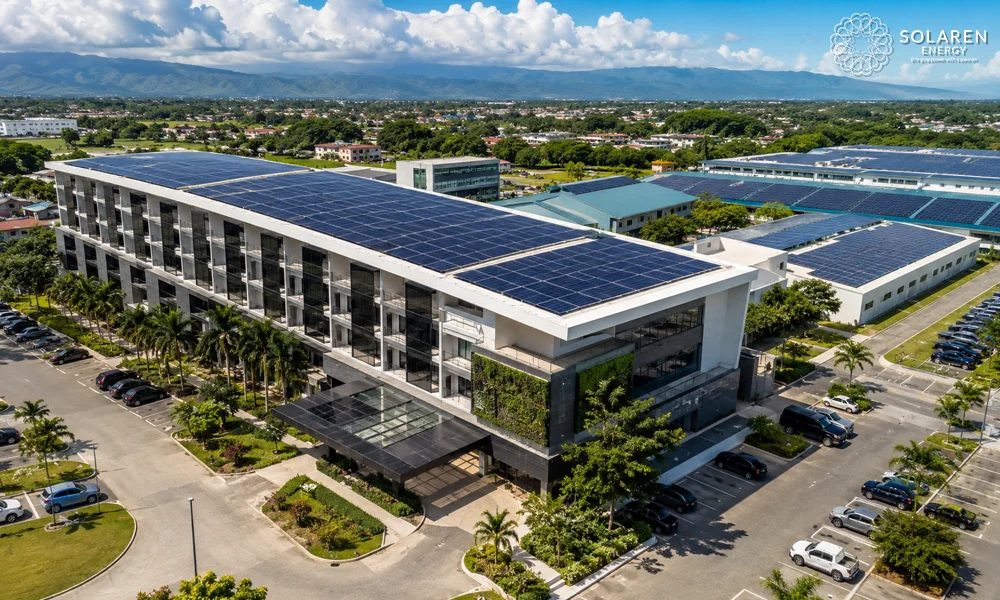
A commercial solar installation in the Philippines becomes a financial and operational asset when it is engineered and supported correctly. It lowers daytime demand. It stabilizes planning. It protects against unpredictable grid events. It increases property value. It gives businesses control over long-term operating costs in a country where electricity prices rarely move downward.
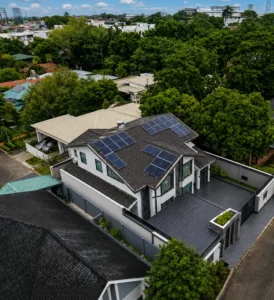
Kings Court shows what this looks like in real life. So do warehouses, schools, factories, resorts, and agricultural sites across the country. When the work is done with precision, the system becomes part of the business. It operates quietly. It produces energy reliably. It does exactly what it was designed to do.
Commercial solar is not about installing panels on a roof. It is about building a durable energy asset that supports the organization for decades. That requires engineering discipline, reliable equipment, thoughtful installation, careful commissioning, constant monitoring, and dependable after-sales support.
With the right partner, commercial solar becomes more than a technical decision. It becomes a long-term advantage that strengthens the business every single day.