
Since October 2024, Solaren Renewable Energy Solutions Corporation has been replacing its conventional diesel fleet with electric (EVs) and hybrid vehicles. There was no announcement and no pilot programme. We started making the switch and kept precise records of what happened. This case study presents the cumulative data as at 12 May 2026, updated in the context of the Philippines fuel crisis that began in late February 2026.
The fleet now comprises six vehicles: a fully electric BYD Dolphin, a Tesla Model Y Long Range Dual Motor, two BYD Sealion 6 hybrids, a BYD Sealion 5 hybrid, and a BYD Seal hybrid. These are working vehicles. They cover site visits, project meetings, long provincial drives, and daily errands. They are not driven carefully to flatter the numbers.
Why This Data Matters More Now
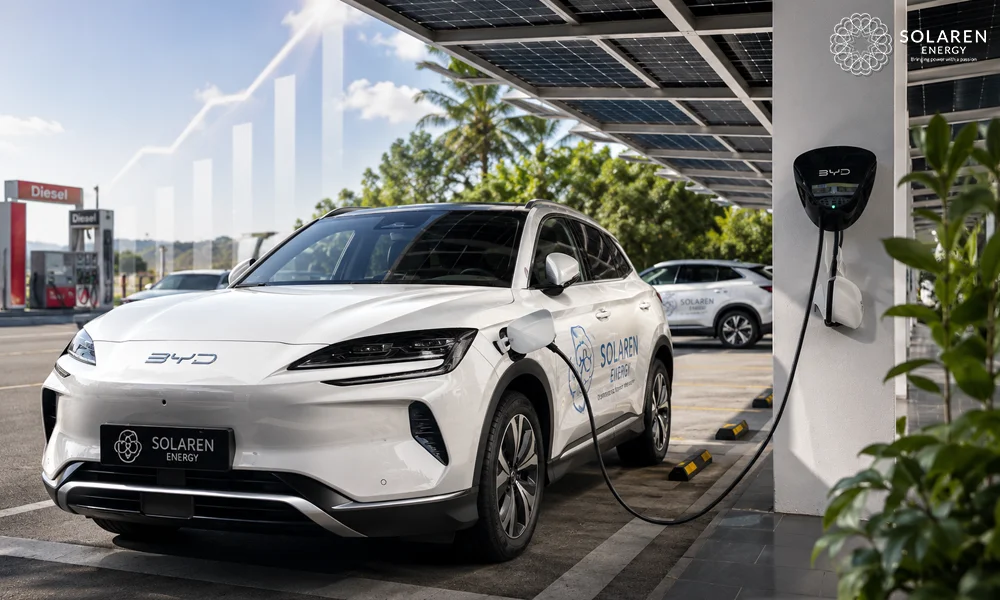
When we began this transition, fuel prices in the Philippines were a predictable operational cost. They moved weekly but within a manageable range. That changed on 28 February 2026, when the outbreak of conflict in the Middle East triggered a fuel crisis that sent diesel prices to a peak of PhP 154 per litre by April 2026. Year-to-date, diesel has increased by a net PhP 51.82 per litre from pre-crisis levels.
The fleet data below was recorded against our old diesel fleet, which we considered the most cost-efficient option available to us at the time. At a conservative benchmark of PhP 120 per litre representing the crisis-period average, the savings figures below are real and, if anything, understated relative to the peak prices our remaining diesel vehicles were exposed to during the same period.
At the April peak of PhP 154 per litre, the same fuel saving would have been worth over PhP 1.78 million. The case for electrification, already solid before the crisis, has become considerably stronger since.
The Fleet as at 12 May 2026
|
Vehicle |
Total km | Cumulative L/100km | Fuel Used (L) |
Diesel Saved (L) |
|
BYD Dolphin (EV) |
57,413 | 0.0 | 0 | 5,741 |
| Tesla Model Y (EV) | 14,915 | 0.0 | 0 |
1,492 |
|
BYD Sealion 6 #1 |
15,793 | 1.1 | 174 |
1,405 |
|
BYD Sealion 6 #2 |
20,296 | 3.1 | 629 | 1,401 |
|
BYD Sealion 5 |
10,275 | 2.2 | 226 |
801 |
| BYD Seal | 9,851 | 2.6 | 256 |
729 |
| TOTAL | 128,543 | 1,285 |
11,569 |
Comparison basis: conventional diesel vehicle at 10 litres per 100 kilometres, PhP 120 per litre. Total diesel saved: 11,569 litres. Total saving in direct fuel costs: PhP 1,388,280. This figure excludes servicing savings, reduced oil change frequency, and lower brake wear from regenerative braking.
The Fully Electric Vehicles
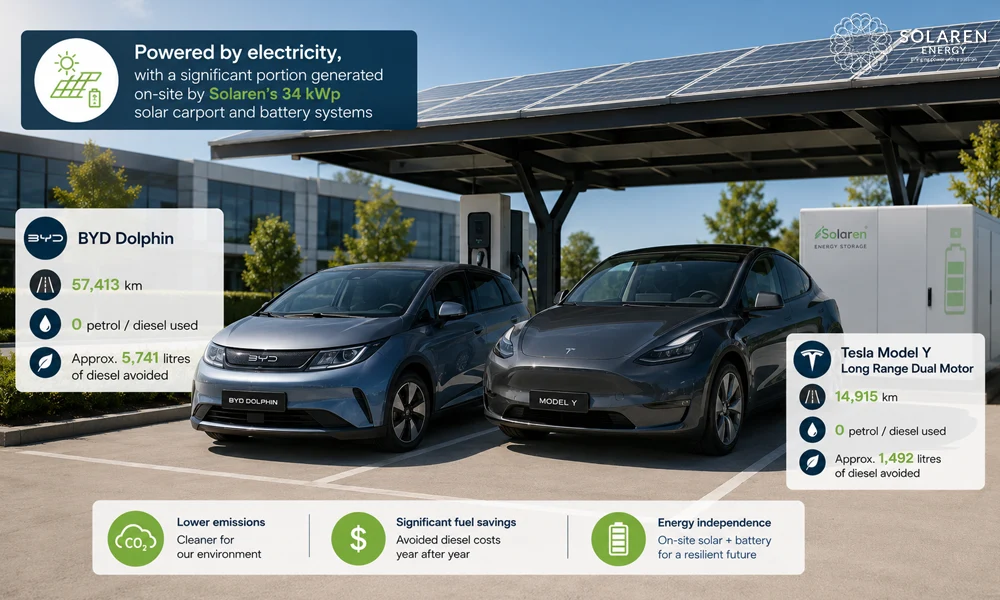
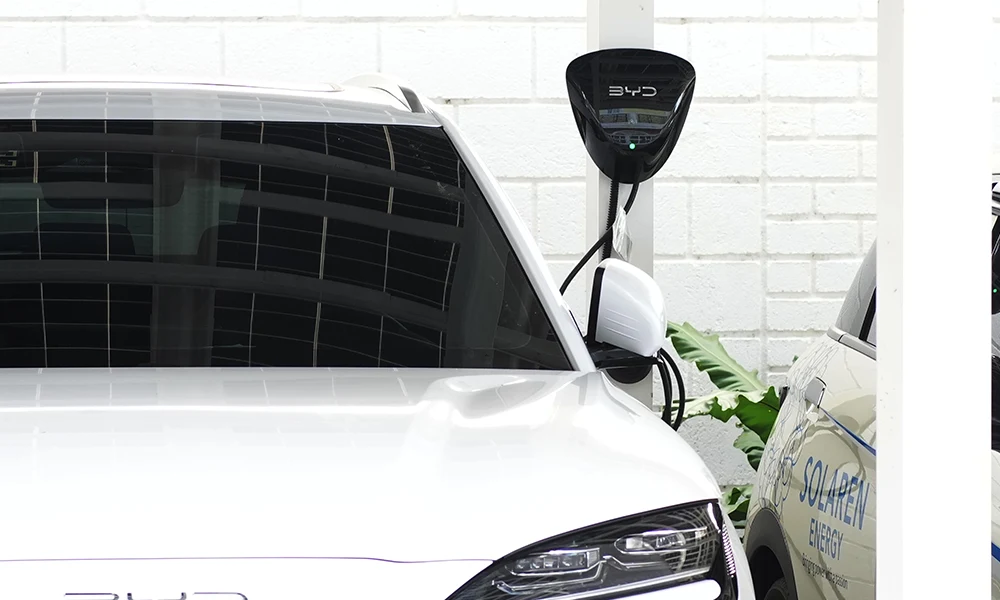
The BYD Dolphin has now covered 57,413 kilometres and consumed no petrol or diesel. A conventional diesel vehicle covering the same distance would have used approximately 5,741 litres of fuel. Every kilometre was powered by electricity, a significant portion of it generated on-site by Solaren’s 34 kWp solar carport and stored in battery systems at the office.
The Tesla Model Y Long Range Dual Motor has covered 14,915 kilometres since joining the fleet. At the same diesel benchmark, that represents another 1,492 litres not purchased. The Model Y is used primarily for longer provincial runs where its range and performance on open roads make it the most practical option in the fleet.
The Hybrid Vehicles
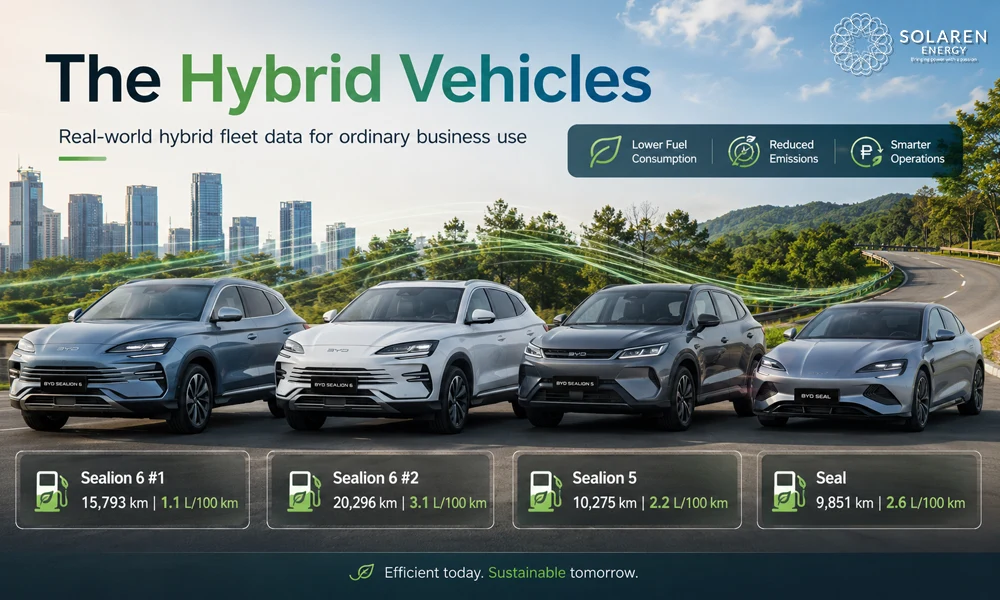
The hybrid data is the most relevant for Philippine businesses not yet ready to commit fully to electric. These vehicles refuel at ordinary stations but do so far less often. The results across the three hybrid models reflect different use cases and driving patterns, which is precisely why they are presented individually rather than averaged.
Sealion 6 #1 has covered 15,793 kilometres at a cumulative fuel consumption of 1.1 litres per 100 kilometres on mixed city and provincial routes. That is a fraction of what a conventional diesel vehicle uses on the same roads. Sealion 6 #2 has covered 20,296 kilometres at 3.1 litres per 100 kilometres. The higher figure reflects a different use profile: longer inter-provincial journeys at higher sustained speeds where the combustion engine carries more of the load. Both figures represent substantial savings over diesel.
The Sealion 5 has covered 10,275 kilometres at 2.2 litres per 100 kilometres. The Seal has covered 9,851 kilometres at 2.6 litres per 100 kilometres. Neither figure is the result of careful driving or route optimization. They reflect ordinary use by ordinary drivers going about ordinary company business.
Solar Charging and On-Site Generation
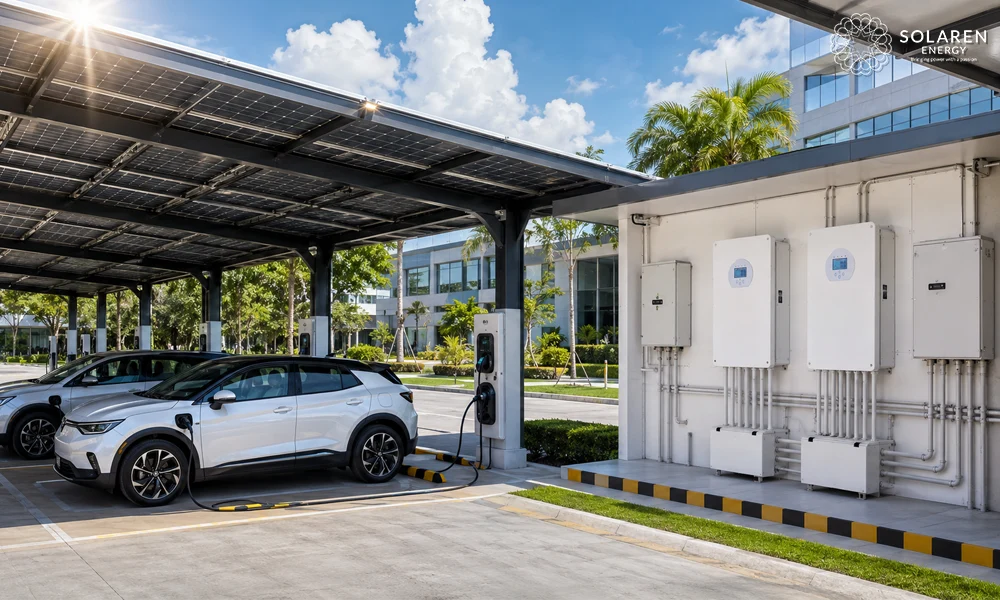
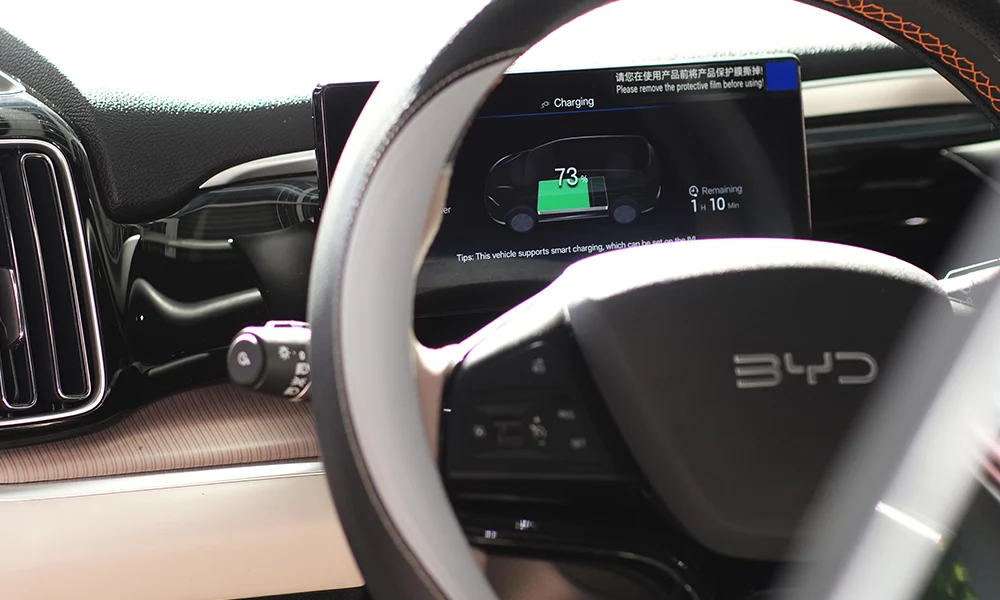
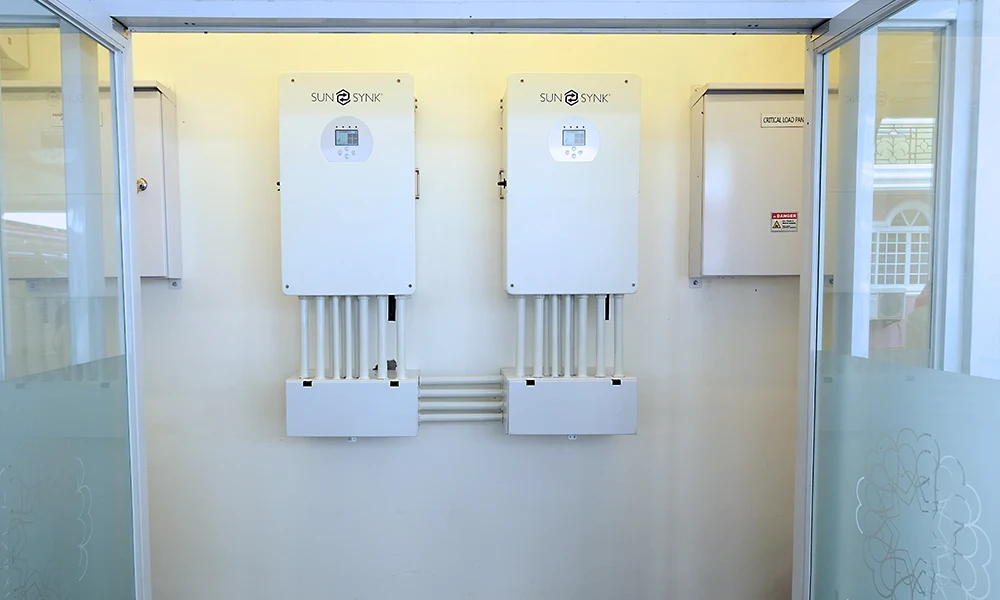
The electric vehicles charge from Solaren’s 34 kWp solar carport at the company’s Tarlac office. Vehicles plug in during the day when parked, drawing directly from solar generation. The system operates with hybrid inverters and battery storage and is net metered with the utility. A large proportion of the kilometres covered by the fully electric vehicles in this fleet are therefore powered by sunlight generated on site, at zero marginal fuel cost. Where grid power supplements solar charging, net metering offsets the cost.
This arrangement means that the fuel savings figures above do not capture the full economic picture. The electricity cost of charging is itself substantially offset by the solar system. The combination of electrified vehicles and on-site generation creates a compounding cost reduction that a conventional diesel fleet with no solar has no equivalent to.
What Has Changed Day to Day
Fuel has stopped coming up in weekly planning. Pump prices move sharply and often, particularly since the crisis began, but they no longer drive the monthly transport budget the way they used to. The vehicles that do use fuel use so little of it that price movements have a negligible effect on total operating costs.
Drivers cover more ground between fuel stops. On long provincial days, the time previously spent detouring to stations is recovered. Servicing intervals are longer. The fleet is quieter. None of this appears in a savings calculation, but it is noticed by the people using the vehicles every day.
What This Means for Other Philippine Businesses
Fleet operating costs are a significant and largely uncontrollable expense for businesses running vehicles across multiple sites or doing regular provincial work. Before the crisis, diesel at PhP 58 to 65 per litre was already a substantial line item for a multi-vehicle fleet. At crisis-period prices, it became acute. The businesses most exposed were those with no hedging strategy and no ability to reduce consumption quickly.
The Solaren fleet data shows what a transition to electric and hybrid vehicles actually delivers in Philippine operating conditions, on real roads, driven by real staff, over a meaningful period of time. The savings are not modelled. They are recorded. For a business running five to ten vehicles on regular provincial routes, the numbers above scale directly.
Hybrid vehicles in particular require no change in behaviour or infrastructure. They use the same fuel stations as conventional vehicles, just far less frequently. For any company looking to reduce fleet operating costs without committing to full electrification, the hybrid data here provides a reliable reference point.
Where This Goes
The Solaren fleet is not fully electric and will not be for some time. Practical EV options remain limited for certain vehicle types and use cases in the Philippine market. The plan is to continue replacing conventional vehicles with electric or hybrid alternatives as suitable options become available.
The data from the past eighteen months gives a clear picture of what the transition looks like in practice. The savings are real, the operational changes are manageable, and the case has only become stronger as fuel prices have moved. At PhP 120 per litre and rising, the payback on electrification is faster than it has ever been.