Why Philippine Businesses Are Now Thinking About Risk, Not Just Savings
A decade ago, most businesses in the Philippines looked at solar and other renewable technologies as a way to lower electricity bills. Today, the conversation has shifted to something much bigger. Executives and owners are asking how to make their operations more stable. They are thinking about risk management, not only cost reduction. Rising grid rates, brownouts, fuel price swings, and the overall unpredictability of the country’s power landscape have forced companies to reconsider how they source electricity.
The shift is easy to understand. Every business leader wants less uncertainty. When a company depends entirely on the grid, it inherits all the risks that come with it. Weather events, outages, rate adjustments, transmission failures, and even geopolitical changes can affect what a business pays or how reliably it operates. Renewable energy solutions in the Philippines offer something businesses rarely get from traditional supply: reliability. A level of control.
Companies are no longer asking whether renewable energy works; they are asking how. They already know it does. The new question is how to use it to stabilise operations, protect cash flow, and reduce the chance of unpleasant surprises.
Solar as a Stability Tool for Philippine Businesses

Solar has become the most accessible way for businesses to reduce risk because it directly addresses the largest source of uncertainty. Electricity costs. Commercial and industrial operations often run long hours, and daytime consumption accounts for a large share of their monthly bills. When a solar system covers a meaningful percentage of that daytime load, the company’s exposure to market fluctuations drops instantly.
Think of it as building a protective layer over one of your biggest expenses. When sunlight powers your operations, you are not fully tied to whatever the grid decides to charge. You are generating a portion of your own supply without requiring fuel, mechanical movement, or complex logistics. That simplicity is a big part of why solar has become such a reliable tool for risk reduction.
Solar also creates an interesting psychological shift for business owners. Before solar, electricity felt like a variable you could not control. After solar, it becomes something predictable and measurable. Once your system is commissioned, you know roughly how much energy it will produce month after month. That level of predictability is rare in business, and companies value it more than ever.
The Role of Predictability in Business Planning
Predictability has always been one of the biggest challenges for Philippine companies, especially those operating in energy-intensive sectors. Manufacturing plants, refrigeration facilities, hotels, poultry farms, schools, and even rural resorts all face energy bills that fluctuate widely from month to month. Renewable energy solutions give them a way to reduce that volatility.
Sunlight patterns in the Philippines are consistent. Even with rainy season fluctuations, you can forecast solar generation more accurately than you can forecast electricity rates or future grid behavior. A company that generates its own power gains a clearer view of its future costs. Budgets become more accurate. Price modelling becomes simpler. Long-term planning stops feeling like educated guesswork.
The beauty of solar is that it sits quietly on the roof and does its job every day. No fuel deliveries. No moving parts. No sudden cost changes. Just steady production that makes your financial forecasts far easier to trust.
Real Examples of Risk Reduction Through Renewable Energy
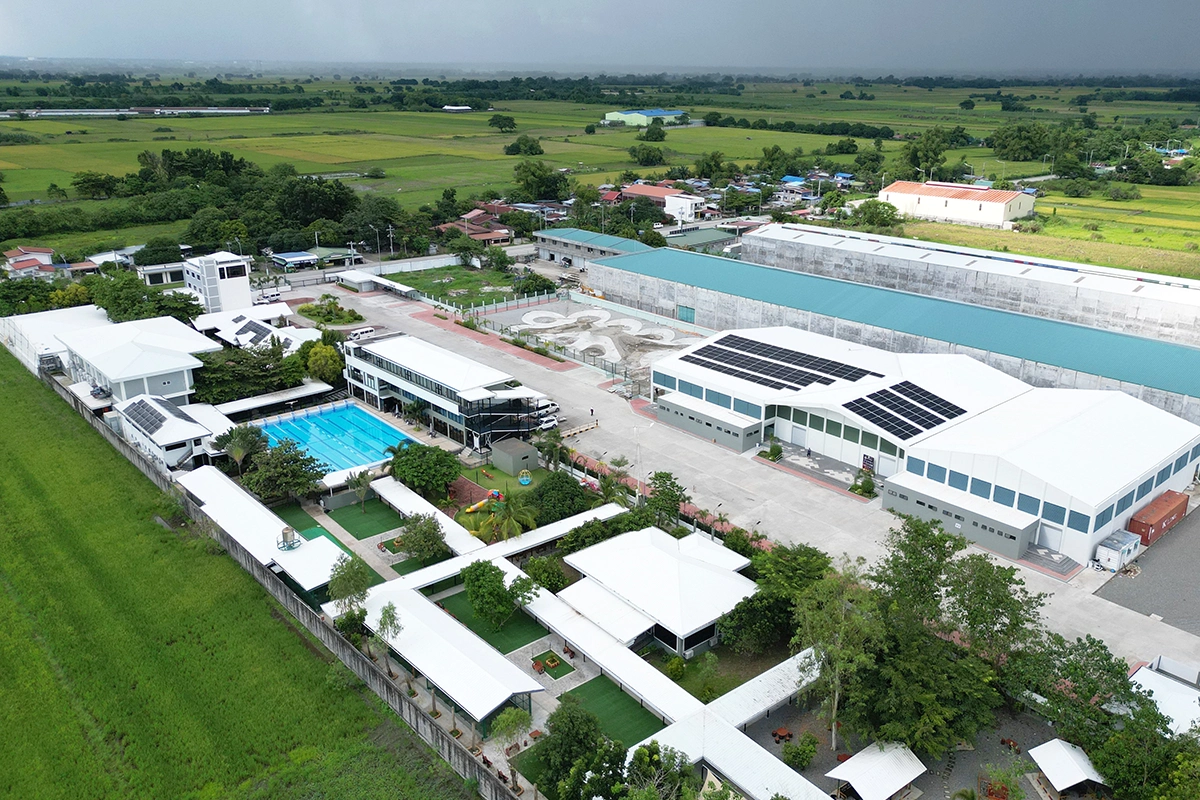
This shift toward stability becomes very clear when you look at real Philippine projects. One example is the North Victoria Sports and Leisure Inn in Tarlac. Hotels often face unpredictable occupancy levels. Some months are strong. Some months are not. During quieter periods, high electricity bills can put unnecessary pressure on cash flow. After the solar system went live, the inn began achieving near-zero billing during periods of low occupancy. This was possible because their system offsets a large part of daytime consumption and uses a fully compliant net metering setup. The business is now significantly less exposed when seasonal demand drops.
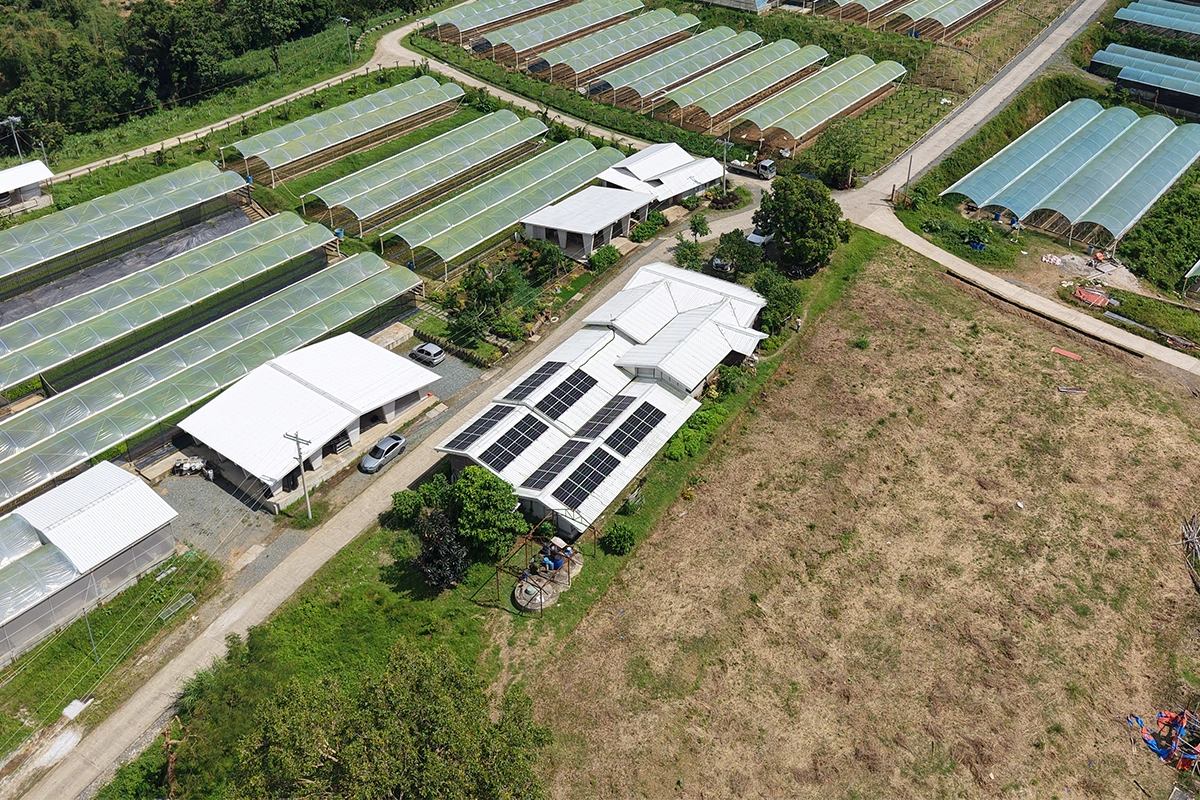
Another example is the Kayrilaw Organic Farm. Remote locations often face harsher conditions. Voltage drops, outages, and long restoration times can interrupt irrigation, water movement, cooling, and administrative operations. A farm cannot just wait for power to return. Crops fail. Solar installation has provided the farm with a stable, reliable power supply that shields it from the unpredictability of a provincial grid that is often very damaging. Solar allows the farm to operate without fear of sudden interruptions or equipment failures caused by unstable power.
Both projects show that renewable energy solutions in the Philippines are not just cost-saving tools. They are risk management tools. They allow companies to continue running smoothly even when external factors become less reliable.
Reducing Exposure to Grid Instability
No matter how robust the Philippine grid becomes, businesses still face occasional brownouts, voltage drops, or unplanned outages. Some industries can pause operations for a few minutes without consequence. Others cannot. Cold storage, food processing, agricultural facilities, and hotels often need continuous power to avoid losses.
Solar helps reduce the frequency and severity of these disruptions. On stable days, it carries a large part of the load and reduces strain on the facility’s electrical systems. During brief drops or fluctuations, a system equipped with even modest storage can ride through the disturbance. Managers know that the entire site is no longer fully exposed to the grid’s weaknesses.
This extra layer of protection, even if partial, becomes a critical operational advantage.
Energy Independence as a Long-Term Safety Net
Energy independence does not mean disconnecting from the grid. It means reducing reliance on it. Even a company that shifts forty to sixty percent of its consumption to self-generation is meaningfully safer from price spikes and outages.
- When prices rise, the financial impact is softened.
- When grid issues happen, the business experiences fewer disruptions.
- When the economy becomes unstable, operational expenses remain more predictable.
It is very difficult to achieve this level of control through traditional means. Generators require fuel. UPS systems are expensive and limited. Diesel is volatile. Solar, on the other hand, provides a steady baseline of energy with minimal ongoing risk.
This is why so many companies now view renewable energy as a stability tool rather than just an efficiency upgrade.
The Hidden Costs of Full Grid Dependence
Companies often underestimate the losses they incur due to grid instability. A short outage can cause product spoilage in cold storage, spoiled production, or ruined packaging. Delays with essential machines. A few voltage fluctuations can damage sensitive equipment. A day of downtime in a factory can derail production schedules. Renewable energy reduces the chance of these problems. Even partial offsetting can protect critical operations from the kinds of disruptions that quietly drain profitability.
Some companies realise too late that the cost of doing nothing is far higher than the cost of a proper solar system.
How Renewable Energy Supports Business Continuity
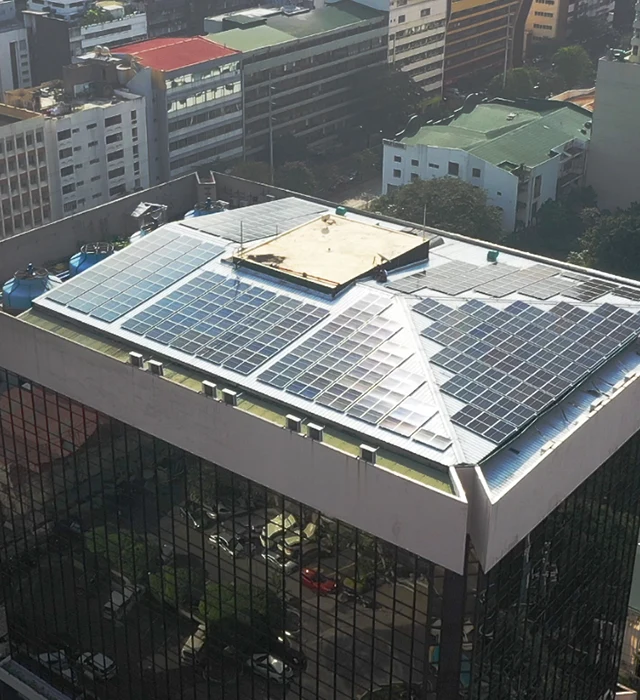
Business continuity has become a major theme across the Philippines in recent years. Companies want to ensure that their operations continue even during economic shocks, weather events, or grid failures. Renewable energy supports continuity in three ways.
- It stabilises daytime power.
- It protects operations during minor grid disruptions.
- It reduces reliance on external markets for electricity pricing.
This simple combination affords many businesses breathing space. Company owners feel more confident when planning expansions, taking on new clients, or perhaps investing in new equipment. Cashflow changes.
Improving Financial Stability and Predictable Costs
The most understated and underrated benefits of solar are its impact on financial stability. When a company can predict a large share of its energy costs over the coming years, instantly, it becomes easier to manage cash flow. Forecasting becomes simpler. Risk assessments become more accurate. Even financing becomes easier in some cases, as lenders prefer businesses with predictable, lower operational expenses.
That predictability is something the grid cannot provide. Renewable energy fills that gap.
The Importance of Choosing the Right c Partner
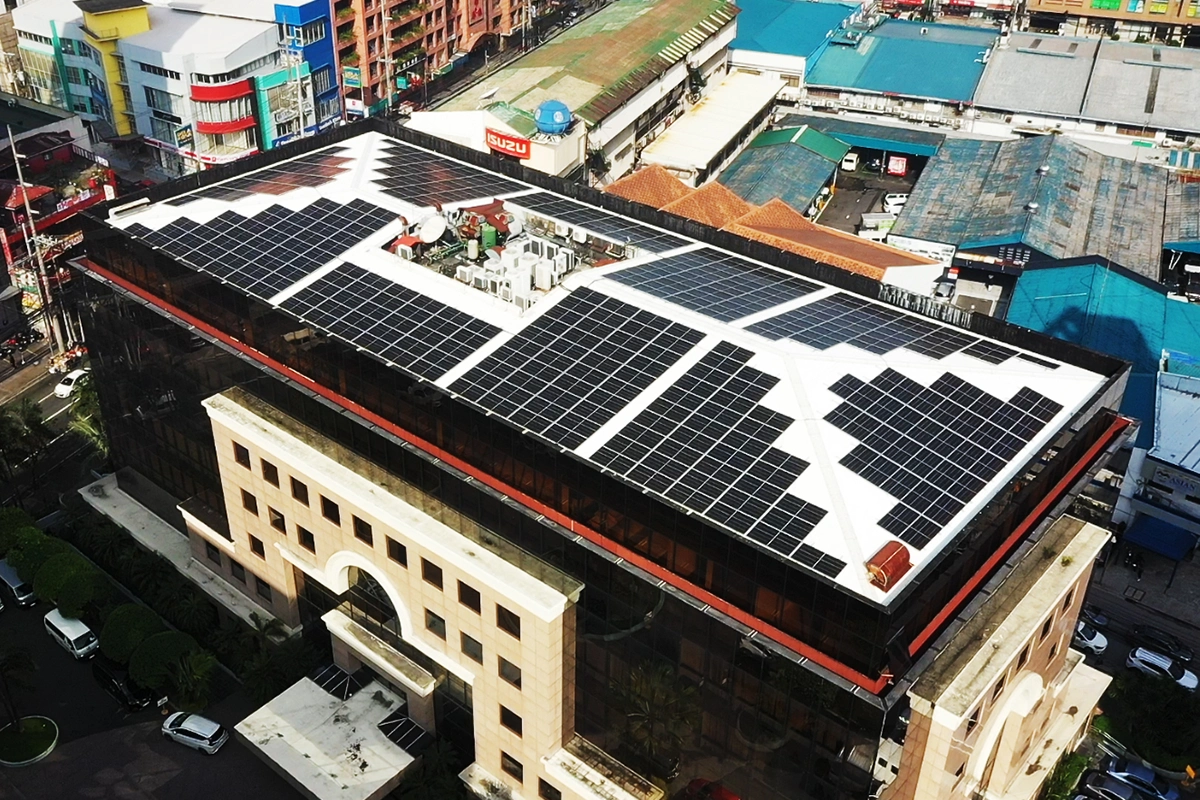
Renewable energy only becomes a stable tool when it is installed correctly. Poor design, cheap components, or rushed installation can increase risk rather than reduce it. A reliable EPC understands the demands of the Philippine climate. They know how to build systems that survive extreme heat, monsoon winds, rust, and heavy roof movement. They also know how to design around real load profiles rather than theoretical ones.
When a company chooses an EPC that treats the installation as a long-term asset, the stability benefits become much more significant.
A More Secure Future for Philippine Businesses
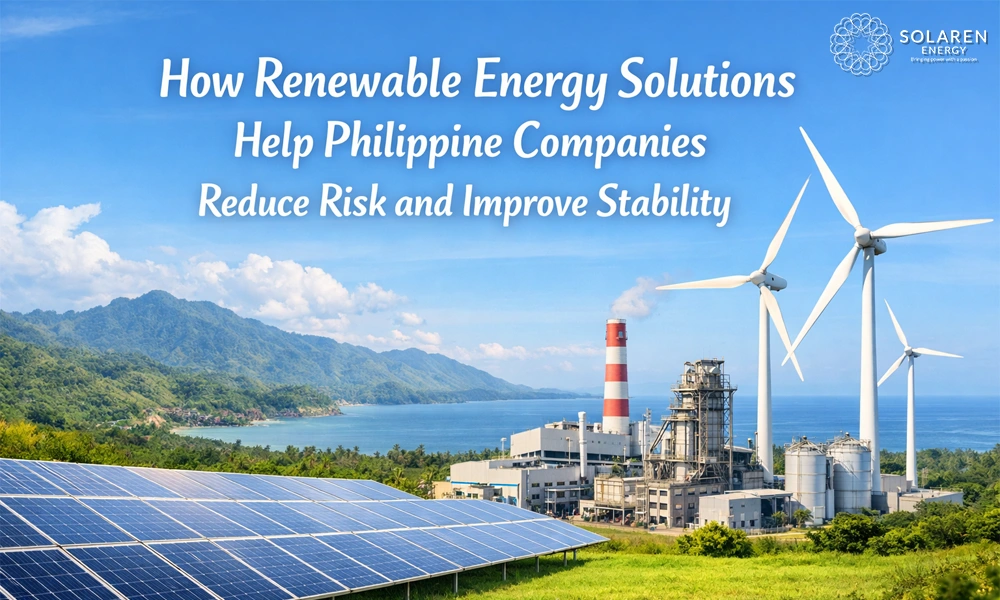
Renewable energy solutions in the Philippines have moved far beyond the early adoption stage. They have become an essential part of how modern companies manage risk, protect margins, and plan for long-term stability. Businesses that invest early enjoy more predictable costs, stronger resilience, and a level of operational control that grid dependence alone cannot offer.
The direction is clear. Companies that adopt renewable energy are becoming more stable and more competitive. Those who wait continue absorbing the growing uncertainty that comes with traditional power sources.