A supplier tells you the battery is rated for 6,000 cycles. The next one says ten years. A third says both, in the same paragraph, without noticing that the two numbers contradict each other.
None of those figures mean anything on their own.
Solar battery cycle life only becomes useful when you know four other things alongside it, and most quotations in this market state none of them. That gap is not an accident. It is the whole reason the headline number gets printed so large.
Solar battery cycle life is the number of full charge and discharge cycles a battery can complete before usable capacity falls to a stated percentage of its original rating, usually 70% or 80%. The cycle figure is meaningless without four accompanying variables: depth of discharge, operating temperature range, charge and discharge rate, and the end-of-life capacity the manufacturer will guarantee in writing. Change any one of those and the same physical battery can be honestly advertised at 3,000 cycles or at 8,000.
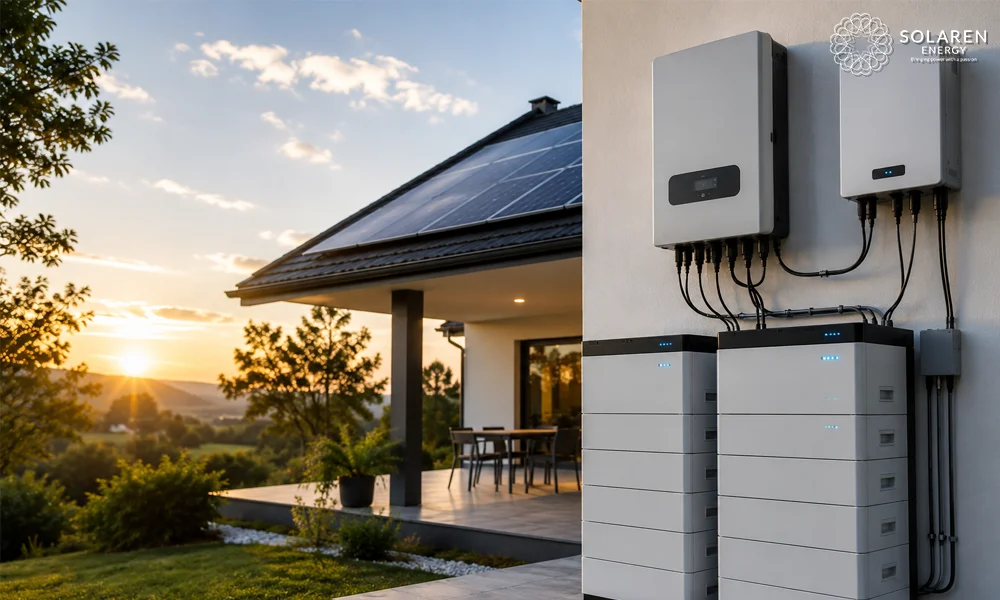
The battery is the most expensive component in a storage system. It is also the one buyers examine least carefully, because the specification sheet looks technical enough to be trusted. It usually is not.
The four variables that turn a cycle count into a promise
Here is what each missing variable lets a supplier do to the headline number.
| Variable | If it is stated | If it is left out |
| Depth of discharge | 6,000 cycles at 80% DoD means 8 kWh of work per cycle on a 10 kWh pack | The fine print can define a cycle at 50% DoD, cutting real energy delivered by 37.5% for the same headline |
| Temperature range | 15C to 35C, with a published derating curve above 35C | No obligation at all once the room hits 38C, which most Philippine plant rooms do by mid-afternoon |
| Charge and discharge rate | Cycles rated at 0.5C, matching how the system actually runs | Cycles rated at a gentle 0.2C in a lab, then a claim of installation abuse when you run it at 1C |
| End of life retention | Guaranteed 70% or 80% of nameplate at the end of the term | The word degradation appears with no number attached, so no failure threshold exists to claim against |
A cycle count without those four is not a warranty. It is a marketing figure with a number after it.
Convert the warranty into pesos per kWh of throughput
This is the calculation that ends most sales conversations. Almost nobody in this market publishes it.
Stop comparing batteries by price and by headline cycles. Convert every offer into total guaranteed energy throughput in kWh, then divide the price by that number. You get a peso figure per kWh of work the battery is contractually obliged to do. Now the offers are actually comparable.

Take three packs. All 10 kWh nameplate, all pitched at the same client.
| Pack A | Pack B | Pack C | |
| Headline claim | 6,000 cycles | 10 year warranty | 6,000 cycles at 90% DoD |
| Price | PHP 260,000 | PHP 310,000 | PHP 240,000 |
| Depth of discharge stated | No | No | Yes, 90% |
| End of life retention stated | No | No | Yes, 70% |
| Temperature limits stated | No | Normal use | Yes, 15C to 35C |
Now decode them. Average capacity across the life of a pack that ends at 70% retention is roughly 85% of nameplate, so that factor is applied to all three.
| Scenario | Energy per cycle | Cycles | Raw throughput | Adjusted throughput | Cost per kWh |
| Pack A, if fine print says 50% DoD | 5 kWh | 6,000 | 30,000 kWh | 25,500 kWh | PHP 10.20 |
| Pack A, if it turns out to be 80% DoD | 8 kWh | 6,000 | 48,000 kWh | 40,800 kWh | PHP 6.37 |
| Pack B, at one cycle per day for 10 years | 8 kWh | 3,650 | 29,200 kWh | 24,820 kWh | PHP 12.49 |
| Pack C, as written | 9 kWh | 6,000 | 54,000 kWh | 45,900 kWh | PHP 5.23 |
Three things fall out of that table.
The cheapest headline is not the cheapest battery. Pack C costs the least and delivers guaranteed energy at half the rate of Pack B, which is the most expensive of the three.
Pack A cannot be evaluated at all. The same product sits at PHP 10.20 or PHP 6.37 depending on a definition buried in a document you have not been shown. That is not a pricing question. It is a disclosure question, and the refusal to answer it is the answer.
Pack C is the only one you can hold anybody to. It states all four variables. Whether those numbers are optimistic is a separate argument, but at least there is something to argue with. That is the same logic we apply when comparing solar quotes generally. Disclosure beats a good headline, every time.
Calendar life and cycle life expire separately
Nearly every battery warranty runs on whichever limit arrives first. Cycles or years.

That matters more than it sounds. A commercial site cycling once a day reaches 3,650 cycles in ten years, so a 6,000 cycle rating never gets used. The calendar runs out with 2,350 cycles left on the sheet, and you paid for those. A site cycling twice a day burns through 6,000 cycles in eight years and three months, so the ten-year term is the part that never gets used.
Work out which limit binds on your actual load before you compare warranties. If you cycle once a day, a 10,000 cycle rating is worth nothing to you and you should not pay for it. If you cycle twice, the years figure is decoration.
What seven years of this actually taught us
We have been installing storage since well before lithium became the default here. The honest record is more instructive than the brochures.
Our first serious deployments used premium deep cycle gel. High-grade units, not budget stock. We followed the manufacturer depth of discharge guidance strictly and stayed inside the recommended cycling regime the whole way through. Those batteries reached roughly 70% of their published life expectancy. Not 70% capacity. 70% of the years we were told to expect.

Nothing was done wrong on site. The most likely explanation is climate. Published cycle figures come from laboratories held at 25C. A plant room in Central Luzon does not do 25C, and sustained heat is the single largest accelerator of battery aging. Every degree of average temperature above the test condition compounds over a decade.
We now expect the same pattern from LFP, the lithium iron phosphate chemistry sold as LiFePO4 on most quotations here. Not identical, because LFP is more tolerant than gel, but the direction is the same. If a supplier quotes you a laboratory cycle figure with no derating for local conditions, add a mental discount and plan the replacement earlier than the sheet suggests.
Our oldest LFP installation is four years old and running well. That system is Homegrid. We have had issues with it, as you have with any equipment, and what mattered was that the manufacturer answered. Most faults were resolved through remote access. There have been occasional small part replacements, handled without argument.
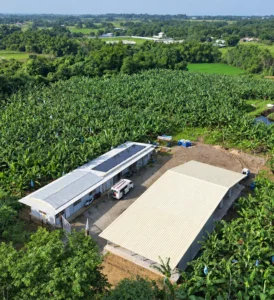
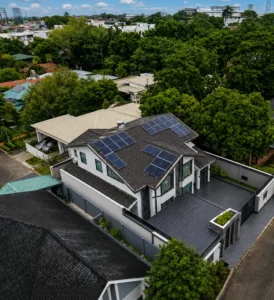
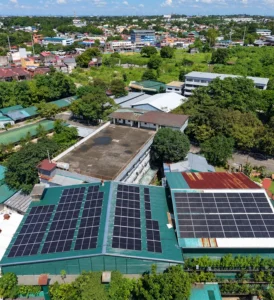
Storage sites across our project record give us the installed base to say this with numbers rather than impressions. That includes battery systems at the Inainakay Foundation and Kings Orchard, and hybrid generation at Rivera Agro Industrial, where solar runs alongside an existing biogas plant and the system has been expanded as demand grew.
Four years is the honest limit of what we can tell you from the field. That is the point worth sitting with. Anyone in this market claiming validated real-world results at 6,000 cycles on LFP is extrapolating from lab data, not reporting field experience. Volume lithium deployment in the Philippines is recent enough that nobody has a decade of it. Be suspicious of confidence that the calendar does not support.
Where the failures come from
Across our service history, roughly 60% of battery problems trace back to the battery management system, and 40% to the cells or the physical pack build.
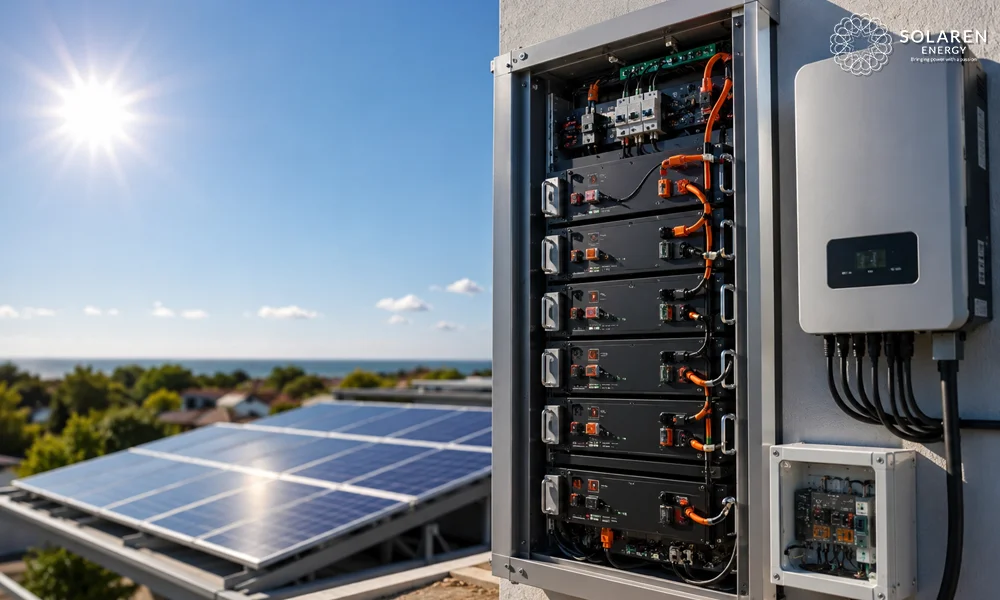
That ratio surprises people. Most assume a battery fails because the cells wear out. Usually the cells are fine and something upstream of them mismanaged the pack into an early grave.
Poor cell balancing. State of charge readings that cut the system off at a reported 40%. Weak temperature monitoring, or none at all. Communication faults with the inverter. Low-grade MOSFETs and contactors sitting on the disconnect path.
All of it lands the same way for the owner. Capacity quietly falls, warnings appear on the inverter, and the warranty conversation goes nowhere.
We cover that side in detail in what a battery management system does, and why cheap ones fail. The relevant point here is narrower. A cycle life guarantee does not protect you against the most common cause of failure, because the supplier will argue that a BMS fault is not a cell degradation claim. The physical build side, including bulging and what Grade A cells actually mean, is a separate piece.
What happens when a warranty claim goes wrong
Warranty inquiries on generic packs generally end in one of two places. Silence, or a claim that the installation was at fault.
The second is hard to fight. Once a supplier asserts the pack was over-discharged, run hot, or wired incorrectly, the burden effectively sits with you. You are arguing about conditions that occurred months ago inside a sealed enclosure.
There is one defense, and it is worth choosing a battery for. Ask whether the BMS keeps fault logs, and whether you can export them. A pack that records cell voltages, temperatures, and protection events, and lets you pull that record out, gives you evidence. A pack whose logs are inaccessible or nonexistent leaves you with an assertion against an assertion, and you will lose that.
Ask before you buy. Nobody asks before they buy.
Questions to put in writing before you sign

Warranty specific. Get the answers in an email, not a conversation.
- Who carries the warranty. The cell manufacturer, the pack assembler, the importer, or the installer.
- Is that entity SEC-registered in the Philippines, and how many years has it traded here.
- State the cycle count and the calendar term, and confirm which one expires first on our expected duty cycle.
- At what depth of discharge is the cycle count measured.
- What capacity retention percentage is guaranteed at the end of the term.
- What is the rated temperature range, and is there a published derating curve above 35C.
- Is there a throughput warranty in kWh. If yes, state the figure.
- Provide the complete written list of what voids the warranty.
- Who inspects a claim, who pays freight both ways, and is the remedy replacement or pro rata credit.
- Will BMS boards and modules still be available as spare parts in eight years.
- Does the BMS log faults, and can we export those logs ourselves.
- Show us a warranty claim you have honored in the Philippines.
Question 12 ends more conversations than the other eleven together.
If you are still at the stage of working out what size and type of system you need, start with how to choose a solar battery and come back to the warranty questions once you know what you are pricing.
Frequently asked questions

What is a good solar battery cycle life for a commercial system?
For LFP, also written LiFePO4 or lithium iron phosphate, a stated 6,000 cycles at 80% depth of discharge with 70% end of life retention is a reasonable specification to work from. Treat it as a specification, not a prediction. Plan on achieving less in Philippine ambient conditions.
Does one cycle mean one day?
Not necessarily. A cycle is a full charge and discharge of the rated depth. Two half discharges count as one cycle. A site running a battery hard for peak shaving may complete more than one cycle per day, which brings the cycle limit forward.
Why does temperature matter so much?
Published cycle figures are generated at around 25C. Sustained operation above that accelerates chemical aging, and the effect compounds over years rather than appearing suddenly. Our own gel installations reached roughly 70% of published life despite strict adherence to cycling guidance, and heat is the most likely cause.
Is a ten-year warranty better than a 6,000-cycle warranty?
Neither is better until you know your cycling rate. At one cycle per day, ten years is 3,650 cycles and the cycle rating never binds. At two cycles per day, 6,000 cycles arrives in just over eight years and the calendar term never binds. Match the warranty to your load, not to the bigger number.
What is throughput and why should I calculate it?
Throughput is the total energy in kWh the battery is guaranteed to deliver across its warranty life. Dividing the purchase price by guaranteed throughput gives a cost per kWh figure that lets you compare offers directly, which headline cycle counts do not.
What is the most common cause of battery failure?
In our field experience, roughly 60% of battery problems originate in the battery management system rather than the cells. Poor balancing, inaccurate state of charge, and inadequate temperature monitoring account for most of it.
Can I claim on a warranty if capacity drops but the battery still works?
Only if the warranty states a guaranteed retention percentage. If no end-of-life capacity figure appears in the document, there is no threshold to claim against, and gradual capacity loss will not be treated as a fault.
The short version
Solar battery cycle life is the most quoted number in storage and the least useful one in isolation. Get the depth of discharge, the temperature range, the C rate, and the guaranteed end-of-life retention. Convert the whole thing into pesos per kWh of throughput. Check which limit expires first on your own duty cycle. Then ask who will still be answering the phone in year eight, and ask them to show you a claim they have already honored.
Our oldest lithium system is four years old and healthy, and we will tell you honestly that four years is the limit of what anyone in this country can prove. That should make you more careful, not less. The battery is the most expensive thing in the system, and the sales sheet is the least reliable document in the transaction. If you want to see what we specify and why, start with the projects we have built.