Everyone who signs a solar contract spends a lot of time on the price. That is understandable. It is a significant capital investment and the monthly savings figure is the number that makes the decision feel right. But price is almost never the thing that causes problems later. What causes problems later is everything that was not in the contract.
We are currently on a site fixing a system installed by another company. The contract the client signed listed the system size and the equipment. That was essentially it. No engineering plans. No compliance documentation. No mention of permits or grid connection requirements. The installation went ahead, the client paid, and they lived with a system that turned out to have wiring defects serious enough to create a genuine fire hazard. They had no contractual basis to go back to the installer. The contract said nothing about any of it.
Top 10 Questions Before Signing Solar Contract Philippines
That situation is not as unusual as it should be. Here are the Top 10 questions that would have changed the outcome.
Question 1: Does your contract include engineering drawings and at what stage of the project will they be provided?
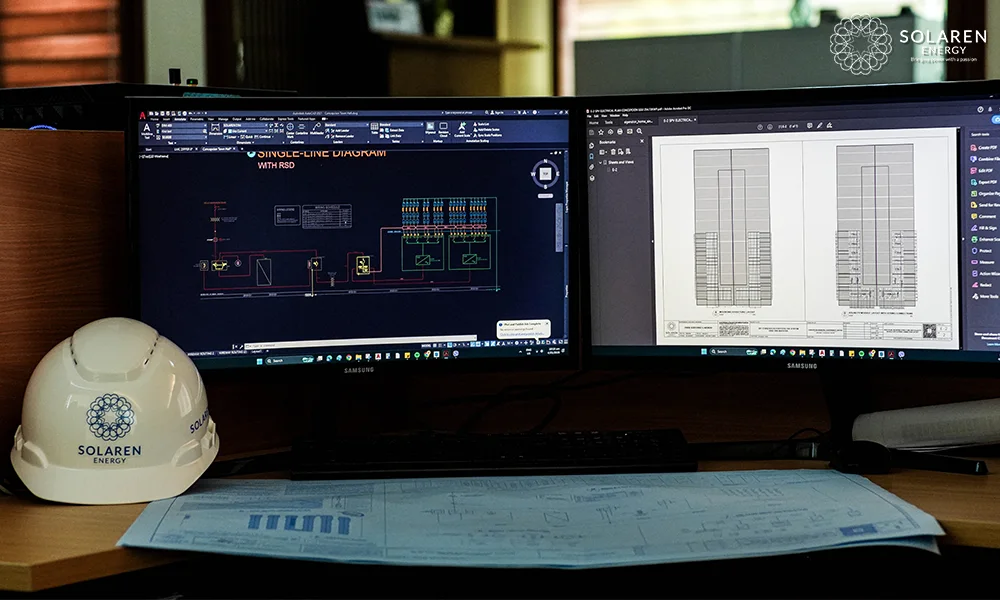
A solar contract that does not include engineered drawings is not a solar contract. It is a purchase order for equipment. The drawings should quickly be made available, show panel layout, string configuration, cable routing, mounting detail, single-line electrical diagrams, and earthing design. They should be signed by a licensed electrical engineer. If a contractor cannot produce these or is vague about when they will be available, that tells you everything you need to know about how the installation will be managed.
Question 2: Who is responsible for permits and compliance documentation?
In the Philippines, a compliant commercial solar installation requires an Electrical Permit, a Certificate of Final Electrical Inspection, and net metering application processing, among other requirements. The buyer typically needs to provide standard documents such as the occupancy permit, title, and proof of ownership. Everything else should be handled by the EPC.
Ask specifically who handles each document, what the timeline is, and what happens if a permit is delayed. A contractor who is vague about this process has either not done it properly before or does not intend to do it at all.
Solaren has processed compliance documentation for every installation it has completed over more than a decade. Not one system has been left without proper permits and grid connection approvals. That is not something we say lightly. It is a record that took real work to build and that clients can verify.
Question 3: Is all engineering and installation done in-house, or do you subcontract?
This question makes many contractors uncomfortable, which is useful information in itself.
A significant number of commercial solar installations in the Philippines are sold by one company and installed by another. The client never meets the people doing the physical work. The mounting decisions, cable sizing, earthing, string configuration, and commissioning tests are all carried out by a subcontractor whose qualifications and attention to detail the client has no way to assess.
Ask directly. Get the answer in the contract. Solaren has never subcontracted an installation. Every system is designed and built by Solaren’s own licensed engineers. That is why the generation data on our sites matches the simulation data consistently over years rather than diverging in ways nobody can explain.
Question 4: What does the warranty actually cover and who honors it?
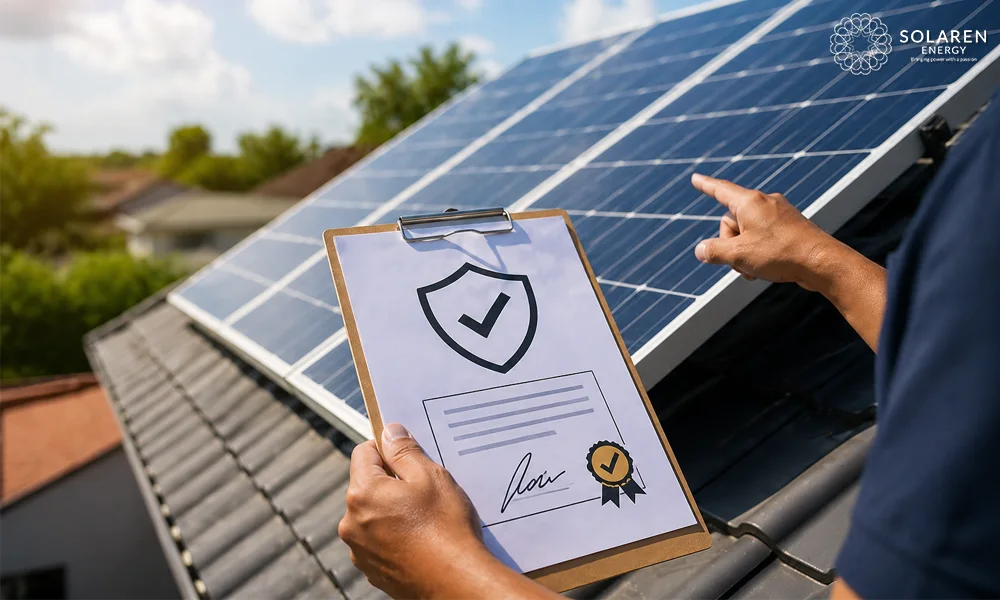
Equipment warranties and workmanship warranties are different things. A panel manufacturer’s 25-year performance warranty covers the panel. It does not cover the cable that was sized incorrectly, the mounting bracket that was not torqued properly, or the earthing that was skipped. Workmanship warranty covers the installation itself and it is the EPC’s obligation, not the manufacturers.
Read both. Understand what each cover and what each excludes. And then ask the next question.
Question 5: What happens in five years?
This is the question nobody asks and it is the most important one on this list.
The statistics on solar contractor longevity in the Philippines are not encouraging. Industry estimates suggest that around 90 percent of solar installers will not be operating in their current form within five years. Some close. Some change ownership. Some simply stop answering calls. If your installer is gone, your workmanship warranty is worth nothing. Your net metering processing stops if it was never completed. The monitoring platform goes dark. And you are left with a system that is generating but has nobody responsible for it.
This problem is even more acute with lease and PPA models, where the installer owns the equipment and the client’s rights depend entirely on the financial and operational continuity of that company. A PPA from an unknown installer is a 25-year commitment to a company that may not exist in five. Unless a well-capitalised and verifiable company is behind the PPA, the risk is real and it is not priced into the monthly rate you are being offered.
Ask the contractor how long they have been operating. Ask to see completed projects from five or more years ago and speak to those clients. There are always issues with installation. Find out how these were addressed. Ask what happens to your warranty and monitoring if the company is acquired or closes.
Question 6: How was the system sized and can you show me the load analysis?
A system sized against your total monthly kWh consumption rather than your daytime load profile will underperform against expectations. Ask to see the load analysis that drove the system size shown on the contract. It should show measured or estimated consumption broken down by time of day, not just a total figure from the electricity bill.
If the contractor cannot produce this or describes it in vague terms, the system size was a guess. Almost always based on an electricity billing statement.
Question 7: What monitoring is included and who reviews the data?
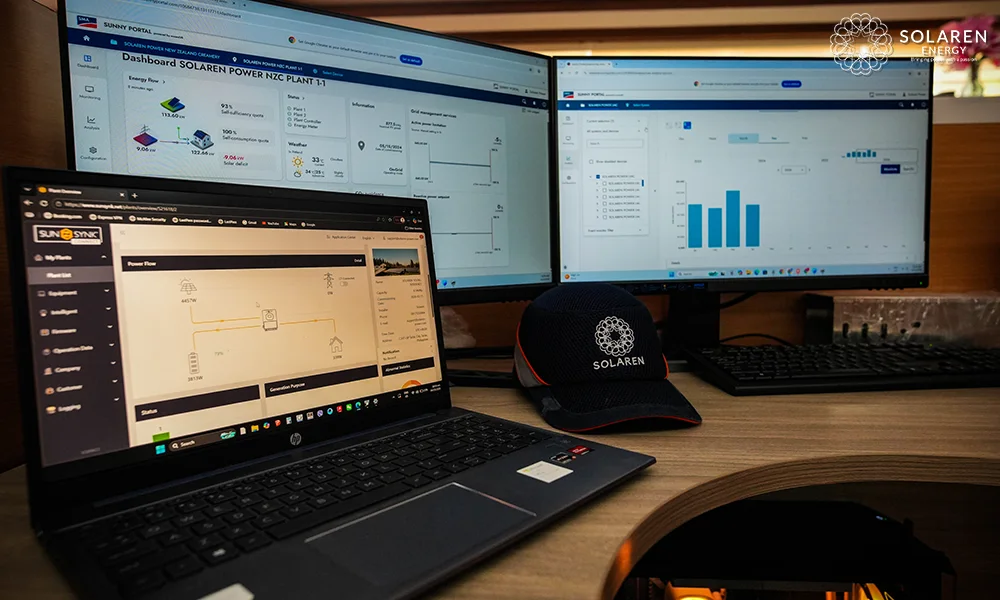
Every commercial installation should include inverter-level monitoring that records generation continuously. But monitoring is only useful if someone is actually looking at it. Ask whether the EPC conducts periodic performance reviews against the original simulation and what the process is if generation falls below expected levels.
A system commissioned and then left without ongoing performance review will almost certainly underperform for months before anyone notices. By then the loss is permanent. The cost is significant.
Question 8: How does your mounting system handle Philippine wind loads?
The Philippines sits in one of the most active typhoon corridors in the world. Mounting systems should be designed and certified for local wind load requirements, not adapted from specifications written for European or American conditions. Ask what wind speed the mounting system is rated for, whether it has been load-tested, and who designed the structural specification.
This is another question that reveals a great deal about the engineering rigor behind the proposal.
Question 9: What is the process if something goes wrong after commissioning?
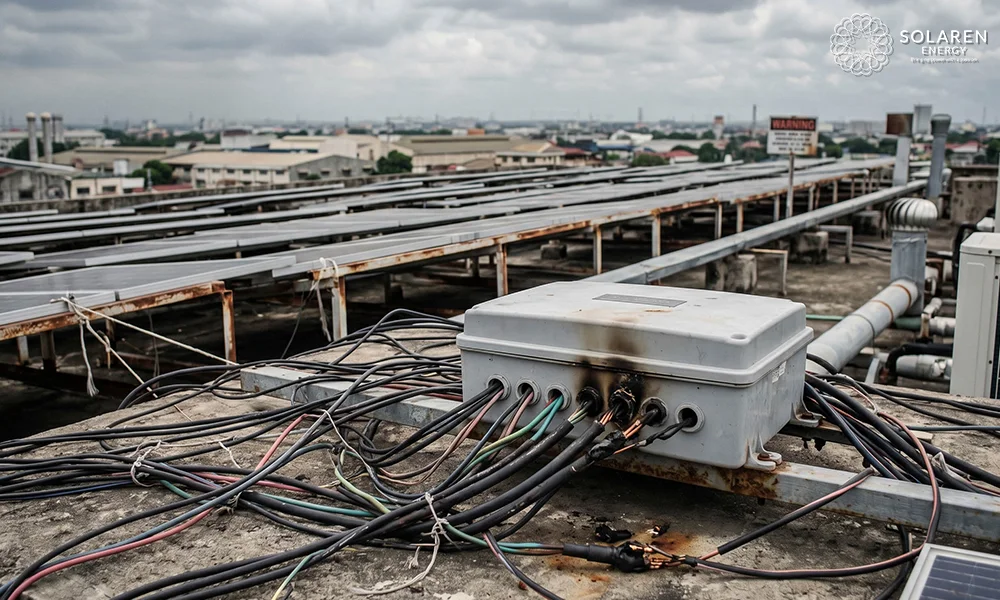
A clear and contractual after-sales process is the difference between a problem that gets fixed and a problem that gets ignored. Ask specifically. Who is the contact? What is the response time commitment? Is it in the contract or just a verbal assurance? What happens if the inverter fails outside business hours during peak production?
Verbal assurances from a salesperson are not after-sales support. A signed commitment with defined response times and actionable service is.
Question 10: Can I speak to clients whose systems are more than three years old?
References from recent installations tell you whether the contractor can complete a job. References from installations that are three, five, or seven years old tell you whether the contractor stands behind their work over time. These are very different questions.
Any contractor with a genuine long-term track record will have no hesitation providing these contacts. A contractor who steers you toward recent completions only is telling you something about what happens after the first year. Don’t rely on a Facebook page.
For a broader look at what separates reliable EPC contractors from the rest of the market, choosing a solar EPC in the Philippines covers the evaluation framework in detail. And if the PPA versus ownership question is part of your decision, The True Cost of Free Solar sets out the real long-term economics of both models honestly.
The contract you sign defines your rights for the next 25 years. It deserves at least as much attention as the price.