Choosing where our power comes from has never mattered more. As the world faces rising fuel prices and climate change, countries like the Philippines are seeking smarter, cleaner, and more reliable energy sources. Two of the most practical answers are wind and solar energy.
Both come from natural resources that are readily available. They don’t depend on imported fuel or unstable global markets. And when designed properly, they can power everything from homes and schools to factories and cities with less environmental impact and lower long-term cost.
Why choose solar energy
Among all renewable options, solar power has become the most accessible and proven choice. The Philippines has sunlight almost all year, making it one of the best locations in Asia for solar generation.
Solar energy systems convert sunlight directly into electricity through panels installed on rooftops or open land. Once the system is set up, it produces power quietly and cleanly for decades. The panels don’t require constant attention, and there are no moving parts to wear out.
When people ask why choose solar energy, the answer comes down to control. With solar, you generate your own electricity instead of relying completely on the grid. That control protects you from sudden rate increases and makes your energy costs predictable. For businesses, it’s also a way to free up funds that can be redirected into expansion or new technology.
Solar power reduces long-term costs
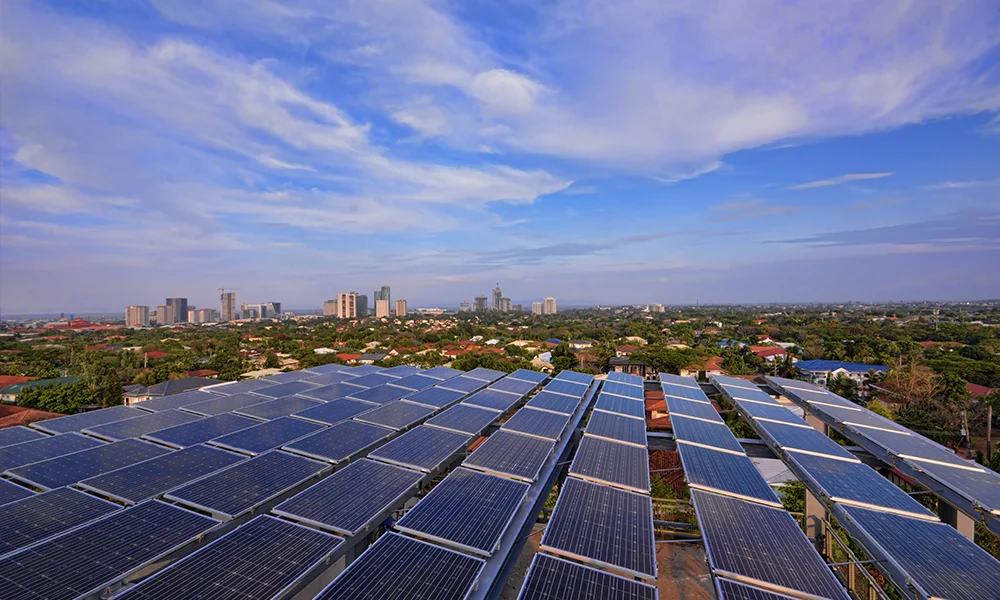
Traditional electricity bills keep going up because utilities depend on fuel imports. Solar reverses that trend. Every kilowatt-hour you produce is one you don’t buy. The system’s upfront cost may seem significant, but it pays for itself through savings.
Once the panels are installed, sunlight becomes your free fuel source. Maintenance is minimal, and high-quality panels can last more than twenty-five years. Many commercial users see full payback in four to five years, followed by two decades of low-cost energy.
For businesses in the Philippines, where power rates are among the highest in Asia, this can make a massive difference. Large solar systems installed by Solaren Renewable Energy Solutions Corporation have cut operating costs by more than half for clients in manufacturing, logistics, and retail.
Energy independence and reliability
Solar power also brings stability. During power outages or brownouts, systems equipped with batteries can keep essential operations running. Homes can maintain lighting, refrigeration, and communication. Factories can keep critical machines online.
This kind of energy independence is increasingly valuable in regions where grid power remains inconsistent. Solar energy systems give you direct access to the power you need, when you need it, without waiting for the grid to recover.
A cleaner and safer environment
Choosing renewable energy is one of the easiest ways to reduce environmental impact. Solar panels generate electricity without releasing smoke, carbon dioxide, or noise. Each kilowatt-hour of solar power prevents roughly 0.7 kilograms of carbon emissions. Over its lifetime, even a modest 100-kilowatt system can offset more than 1,000 tons of CO₂.
Unlike fossil fuels, solar doesn’t pollute the air or water. It also reduces the need for large-scale power plants and long transmission lines, which often damage ecosystems. Cleaner energy means cleaner air, healthier communities, and a safer planet for future generations.
The benefits of combining wind and solar energy
While solar energy performs best during the day, wind energy often generates power at night or during rainy periods. When combined, the two form a balanced energy mix.
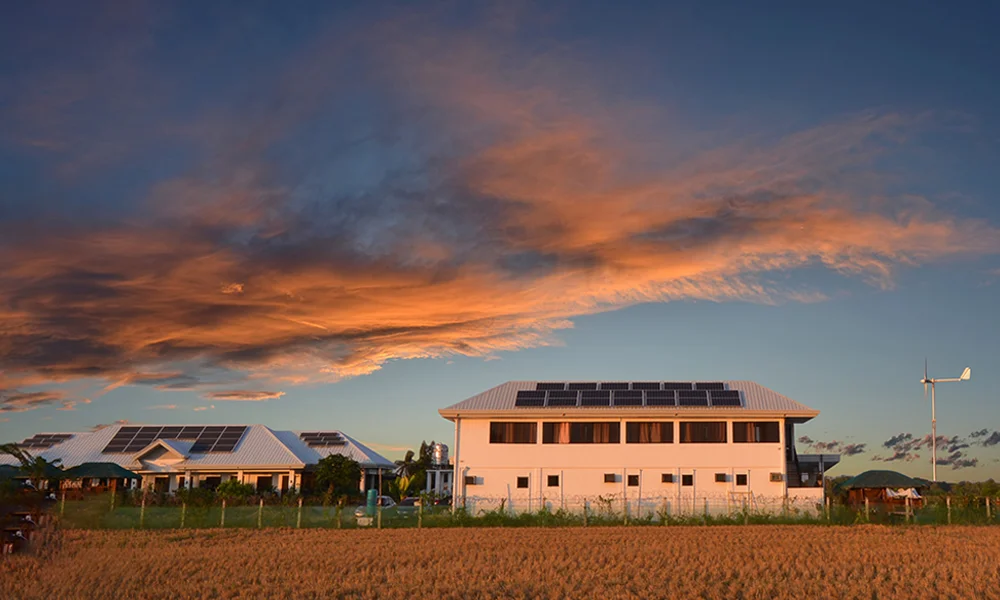
Hybrid systems that use both wind and solar energy can deliver power more consistently. They make sense in coastal or elevated areas where wind conditions are strong. For island communities and off-grid facilities, this combination ensures energy supply even when weather conditions vary.
Businesses that install both types of systems gain round-the-clock renewable power and greater protection against outages or supply shortages.
Economic advantages for communities
Every solar or wind project also creates local jobs. Engineers, electricians, and maintenance workers are needed at every stage of design, installation, and upkeep. These are long-term, skilled jobs that stay within the country.
When more communities adopt renewable systems, less money flows out to pay for imported fuel. Instead, it stays within the local economy. The ripple effect includes more business for suppliers, service providers, and logistics companies that support the renewable sector.
The Philippines is already seeing this shift. Solar projects from companies like Solaren employ local technicians in Tarlac, Pampanga, Laguna, and other provinces, showing how renewable energy can stimulate both environmental and economic progress.
Government support and incentives
The Philippine government has recognized the importance of renewable energy through programs such as the Green Energy Option Program (GEOP). This allows qualified users to source electricity directly from renewable providers. There are also tax incentives and zero-VAT provisions for renewable components that make the investment more attractive.
Regulators have also simplified net metering, allowing households and businesses to export excess solar power back to the grid for credits. These policies make solar not only environmentally sound but financially rewarding.
Why solar is ideal for Philippine businesses
The commercial sector benefits the most from large-scale solar. Many facilities operate during daylight hours, which aligns perfectly with solar generation. Warehouses, factories, schools, and shopping centers can all produce significant portions of their energy on-site.
Solaren’s clients often see electricity bill reductions of 50 to 70 percent, depending on their load profile and available roof space. The systems are built with German and British components, installed by in-house engineers, and monitored 24/7 to ensure consistent performance.
For these companies, solar is not only a sustainability move but a financial strategy that strengthens their bottom line.
The long-term vision
Renewable energy is no longer an experiment or a luxury. It’s a practical solution for a country that faces rising costs and an unstable power supply. Wind and solar energy offer reliability, security, and environmental benefits that conventional sources can’t match.
Every business and household that switches to solar helps the Philippines move closer to energy independence. The more we produce locally from the sun and wind, the less we rely on imported fuels.
For anyone asking why choose solar energy, the answer is clear. It saves money, stabilizes operations, protects the environment, and supports national progress. It’s not just about today’s bills. It’s about creating a cleaner, stronger energy future that benefits everyone.