There is a story that keeps repeating in the Philippine solar market. A buyer decides the gap between the cheapest quote and the best quote is just a margin play by established companies. They find an installer prepared to go far below what serious providers can responsibly charge. They sign quickly, the system goes up, and they walk away convinced they have beaten every solar company in the Philippines at their own game.
It feels clever in the moment. It rarely stays that way.
What follows is a walk through what actually happens in these situations, why commercial and industrial buyers cannot afford to learn this lesson the hard way, and what separates providers that last from those that disappear.
What the Cheapest Quote Actually Buys
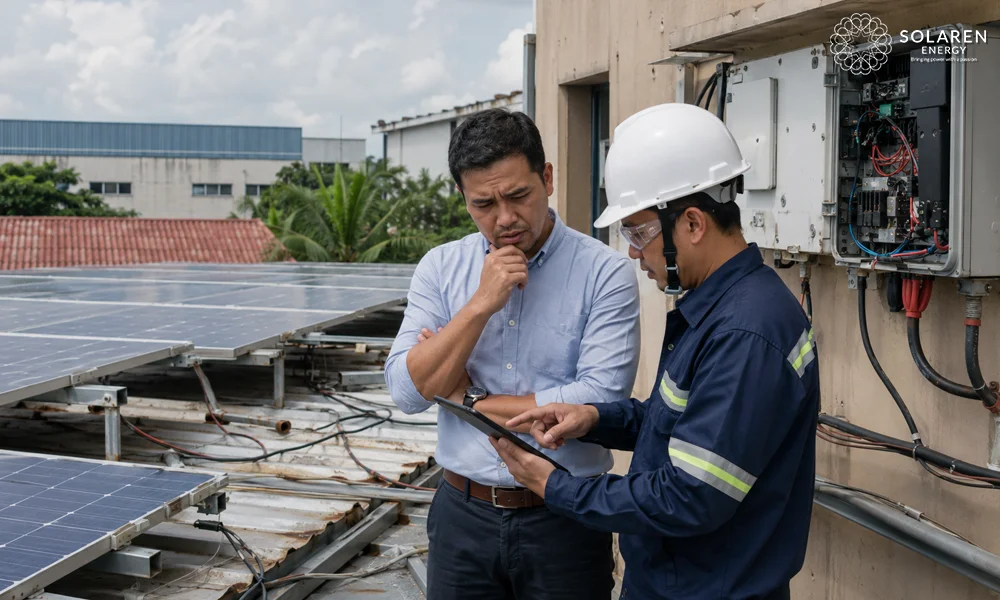
When an installer prices a system significantly below what responsible commercial solar installation in the Philippines actually costs, something has to give. The shortfall does not come from a leaner business model or smarter procurement. It comes from compromises that are invisible at handover and costly over time.
Components are selected for price rather than performance or longevity. Cable sizing is reduced below what the load profile requires. Design checks are compressed or skipped entirely. Installation workmanship reflects the economics of the job: fast, cheap, and done. Safety becomes secondary to the schedule.
The system works on the switch-on day. It often looks fine for the first few months. Underneath, the degradation has already started. By the time the problems become impossible to ignore, the installer is usually unreachable. The phone goes unanswered. The warranty document turns out to be unenforceable. And the buyer, who was certain they had been clever, is now looking at a system that needs remedial work before it has delivered a fraction of its projected return.
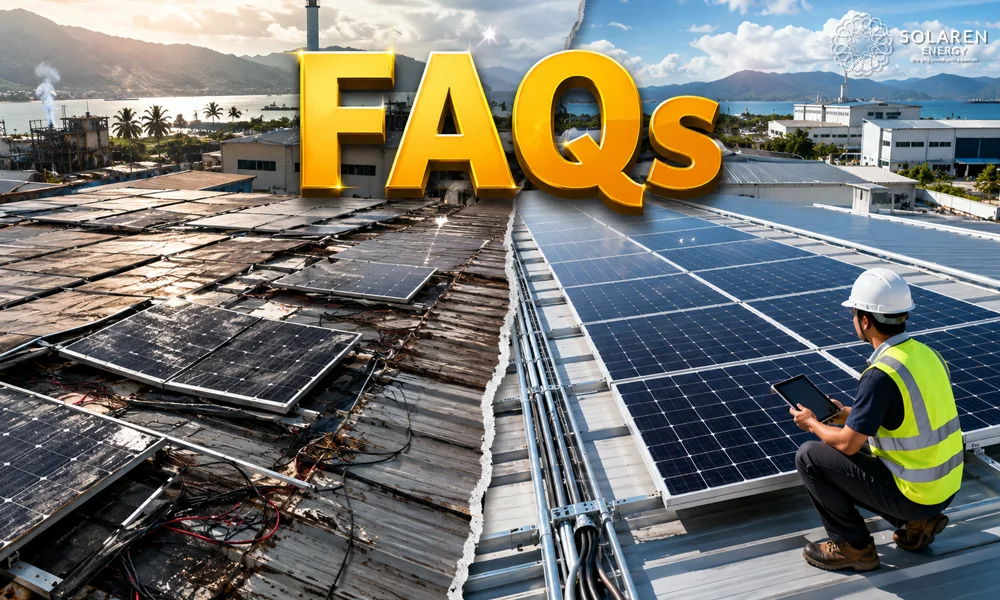
Solaren’s engineering teams encounter this regularly. A business calls asking us to assess or repair a system installed by someone else. The pattern is consistent: undersized wiring, uncertified components, mounting systems not rated for Philippine wind loads, and inverters from manufacturers with no local support presence. The remedial work costs more than the original saving. In some cases, it costs more than a proper installation would have.
The Comforting Lie: Fix It Later
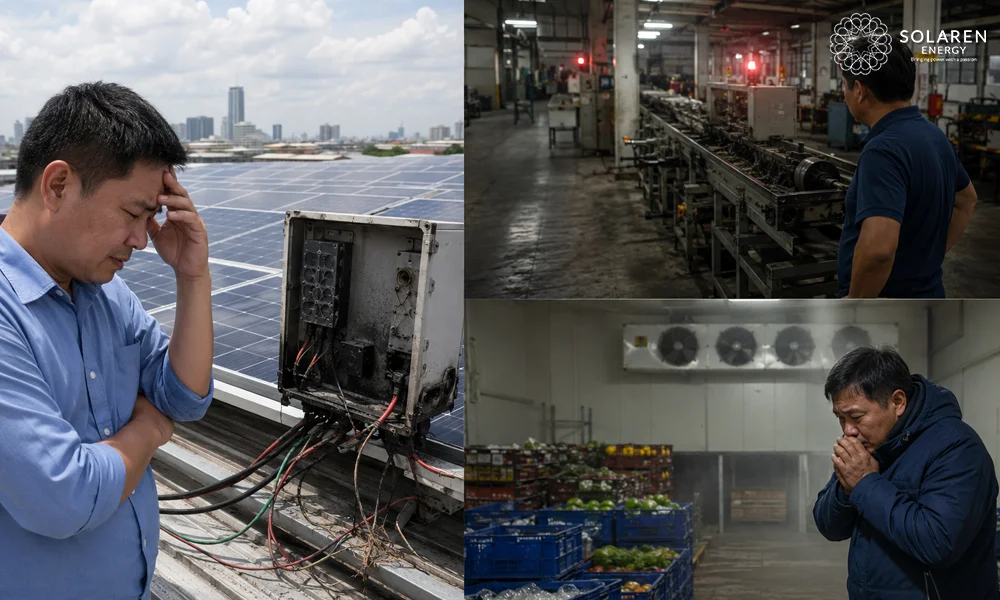
Many buyers tell themselves they can accept a cheaper system now and address any issues as they arise. The logic sounds reasonable. In practice it does not hold.
A failed inverter on a manufacturing line does not just increase the electricity bill. It stops production. A degraded system in a cold storage facility does not just underperform on paper. It raises operating temperatures. A poorly earthed system on a school rooftop is not just an efficiency problem. It is a safety one. The consequences of a commercial solar installation in the Philippines that was never properly engineered do not stay contained to the electricity account.
And when they surface, the installer who offered the discount is not there to address them. The buyer absorbs the cost alone, with no meaningful recourse and no documentation trail adequate to support a claim. What looked like a saving at the start has compounded into a loss measured not just in pesos but in operational disruption, equipment damage, and time.
Why Commercial and Industrial Systems Are Different
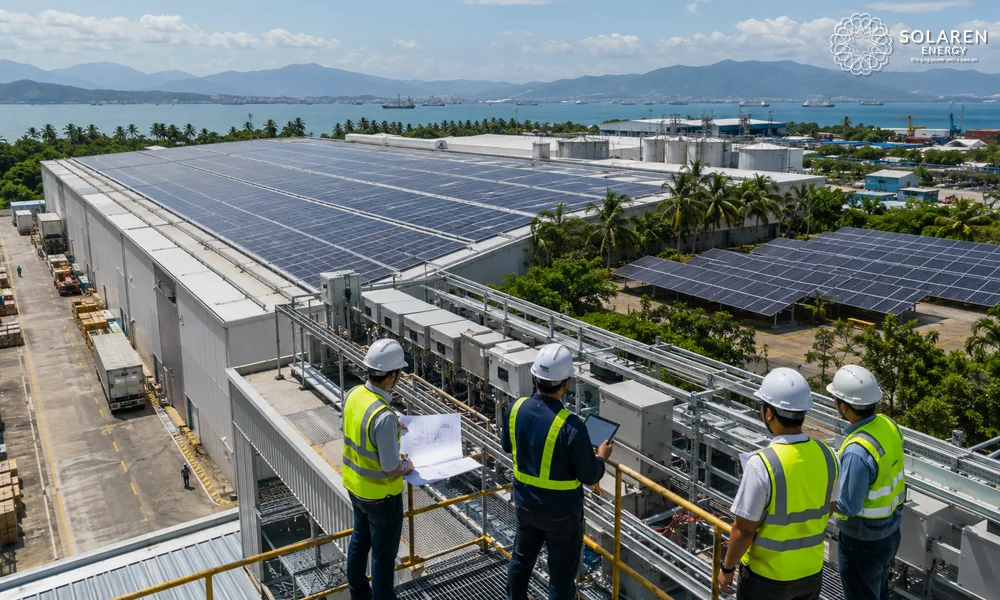
Cutting corners on a small residential installation is already a poor decision. At the commercial and industrial scale, the stakes are categorically different.
Industrial solar power systems in the Philippines are expected to operate reliably for 25 years or more. They are integrated into facilities where downtime has immediate, measurable financial consequences. A factory, a cold storage warehouse, a hotel, a hospital, a processing plant: none of these can absorb the operational risk that comes with a system that was never engineered to last. The complexity of the electrical integration, the structural requirements of the roof or ground mount, the grid compliance obligations, and the monitoring requirements all demand a level of engineering rigour that bargain pricing cannot support.
Businesses that understand this do not approach solar as a procurement exercise where the lowest compliant bid wins. They approach it as an infrastructure decision where reliability, engineering depth, and long-term support are the selection criteria. The difference in how they frame the question leads to very different outcomes.
What Reliable Renewable Energy Companies in the Philippines Actually Do
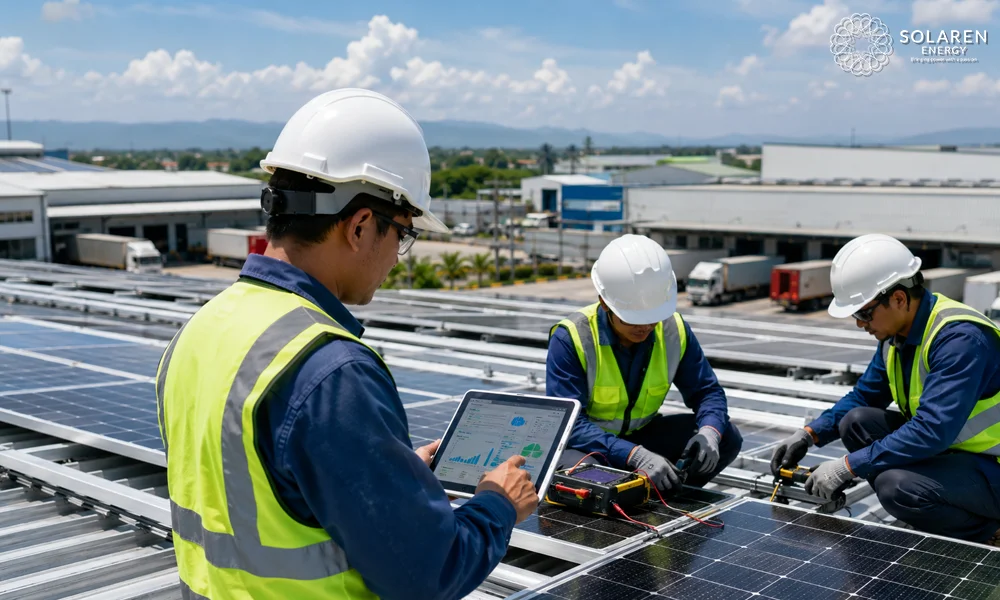
Established renewable energy companies in the Philippines are not expensive because they are inefficient. They are priced the way they are because doing the work properly costs what it costs. Tier 1 equipment, certified engineers, accredited installers, proper structural analysis, regulatory compliance, commissioning to standard, and an after-sales structure capable of responding when something needs attention years later: none of that is cheap, and none of it is optional in a system expected to perform for a generation.
The businesses that stay with Solaren do so because the systems perform as designed, the monitoring works, and when they call, someone who knows the installation answers. That is not a marketing claim. It is what repeat clients and referrals reflect over more than a decade of commercial and industrial solar installation in the Philippines. Any serious provider should be able to point to a visible, verifiable portfolio of completed work and connect prospective clients with past customers prepared to speak frankly about their experience.
Solaren’s completed projects across manufacturing, food processing, retail, logistics, and public infrastructure are documented on the Solaren projects page. In addition, Solaren is currently building out a series of documented remedial action case studies covering systems inherited from other installers. These pages will detail the specific failures encountered, the engineering work required to correct them, and the outcomes achieved. They will be published as they are completed.
The Bigger Picture for Solar in the Philippines
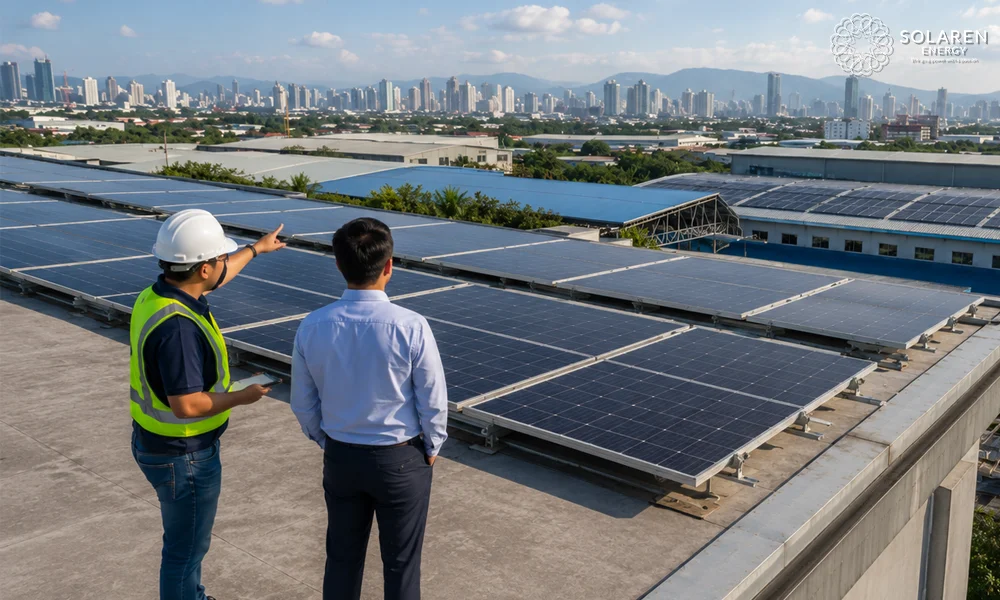
The Philippine solar market has grown rapidly. That growth has brought in a significant number of providers who will not be operating five years from now. Their pricing reflects their horizon. A company that does not expect to be accountable for a system’s long-term performance has no structural reason to build it for long-term performance.
The businesses and property owners left holding those systems when the installer closes or moves on have limited options. Remedial work is expensive. Replacement may be the only viable path. And the national renewable energy programme, which depends on solar delivering consistent, reliable results at scale, is undermined every time a poorly installed system fails to deliver on its promise.
This is why the selection decision matters beyond the individual project. Choosing a provider with genuine engineering capability, regulatory standing, and a long-term business commitment is not just a financial decision. It is a decision about what kind of solar industry the Philippines ends up with.
Frequently Asked Questions
-
Q: Why do cheap solar systems fail so often in the Philippines?
Because the pricing that makes them cheap requires compromises in components, design, and workmanship that are invisible at installation and costly over time. A system priced below what responsible installation actually costs cannot be built to last. The components will be selected for price, the installation will be rushed, and the after-sales support will be minimal or absent. Performance degradation begins immediately, even if the problems do not become apparent until months or years later.
-
Q: How do you identify a reputable solar company in the Philippines?
Start with regulatory credentials: DOE accreditation for solar PV installation and PCAB licensing for electrical contracting are the baseline requirements. Beyond that, look for a visible, verifiable portfolio of completed commercial and industrial projects at scale comparable to your own. Ask for client references and contact them directly. Ask specifically how the company handles after-sales support, monitoring, and fault response. A serious provider will have specific, confident answers to all of these questions. One that deflects or generalises should be treated with caution.
-
Q: Why is commercial and industrial solar riskier than a home system when cheap installers are involved?
Because the consequences of failure are proportionally larger. A residential system that underperforms raises the electricity bill. A commercial or industrial system that fails can halt production, spoil refrigerated stock, interrupt critical services, or create safety hazards on a rooftop carrying significant structural and electrical loads. The engineering requirements are more complex, the regulatory obligations are more demanding, and the financial exposure from a system that does not perform is far greater. The same logic that makes a cheap installer acceptable to some homeowners makes them unacceptable for any serious commercial or industrial application.