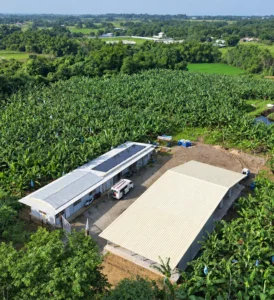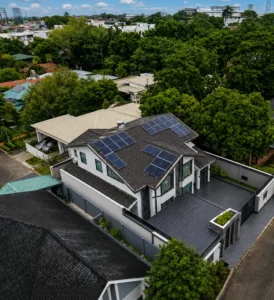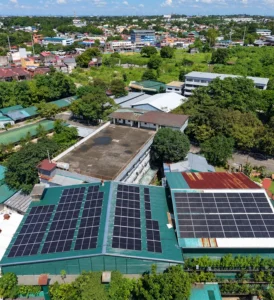
Commercial solar panels in the Philippines are often judged by installed capacity. Kilowatts get quoted, projections get shown, and decisions are made quickly. That approach misses the factor that determines real value. Performance is defined by how much usable energy a system delivers under heat, grid constraints, and daily operating conditions. Panels set the ceiling. Engineering decides whether that ceiling is reached.
Two systems with the same capacity can deliver very different results over time. The difference is not marketing, pricing, or brand reputation. It is the cumulative effect of design decisions made before installation and confirmed after commissioning.
Installed capacity does not equal delivered energy
Installed capacity describes what was purchased. Delivered energy describes what the site actually receives. The gap between the two is where performance is won or lost. Temperature losses, electrical losses, grid interaction, and curtailment all reduce usable output without reducing the headline kWp figure.
In the Philippines, that gap can be material. High ambient temperatures reduce module efficiency during peak irradiance. Voltage rise on export can force inverter derating. Poor layout increases mismatch losses. None of these issues are solved by adding more panels. They are solved by the engineering discipline.
Panel construction and heat behaviour
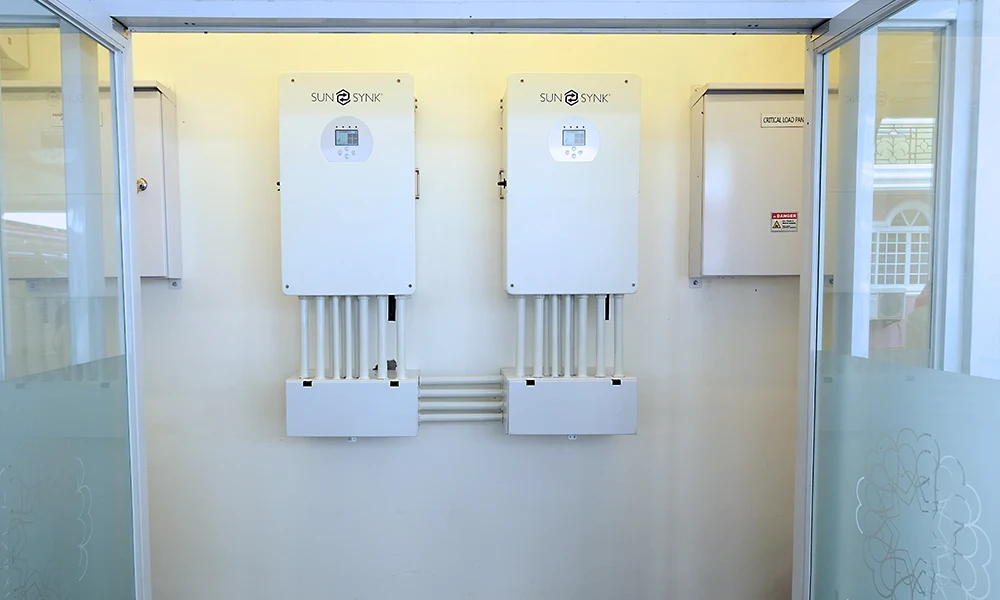
Panel construction sets the baseline for long-term performance. Glass-glass modules are better suited to Philippine conditions because they manage heat more effectively, resist moisture ingress, and degrade more slowly over time. Mechanical stability also matters in humid, high-wind environments where micro-cracking can accelerate degradation.
That said, panel quality alone does not guarantee output. A premium module installed into a poorly designed system will still underperform. Construction quality determines potential. System design determines whether that potential is realised.
Bifacial panels and rear-side generation
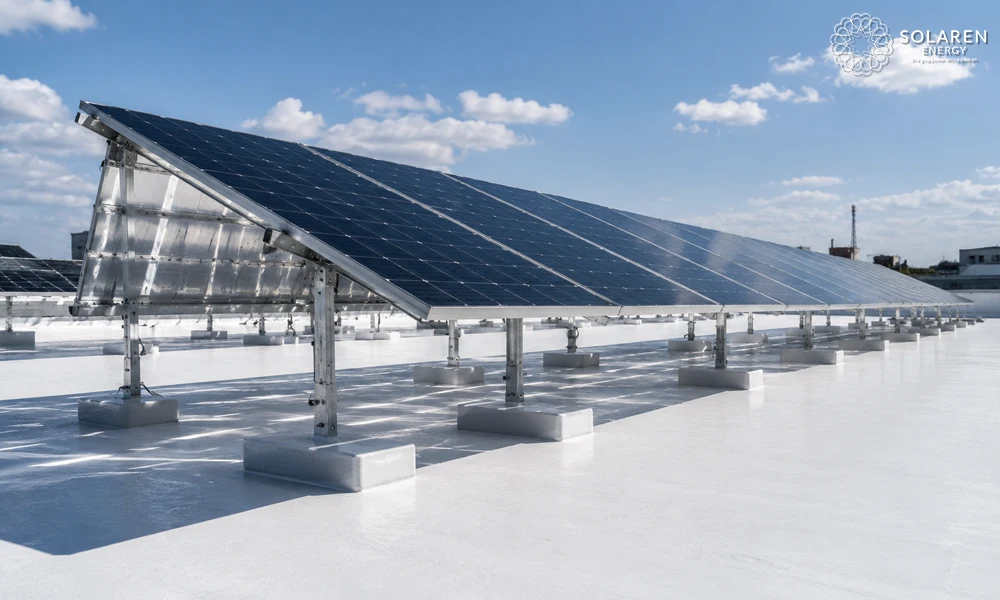
Bifacial glass-glass panels are frequently specified for commercial systems, but rear-side energy capture is not automatic. Rear-side contribution depends on mounting height, clearance, surface reflectivity, and shading geometry. Panels mounted close to roofs or over dark surfaces gain little from bifacial capability.
To extract real uplift, the rear side must be exposed to reflected light throughout the day. That requires elevation, spacing, and attention to the surfaces beneath the array. Without these conditions, bifacial panels behave like standard panels with higher cost and no yield advantage.
Structure, airflow, and thermal losses
Panel temperature is one of the strongest drivers of output loss in tropical climates. Structural design directly affects airflow and heat dissipation. Tightly mounted arrays trap heat. Flat rooftop installations over metal sheets or concrete slabs absorb and re-radiate heat into the modules.
Elevated structures allow air movement behind the panel, reducing operating temperature during peak generation hours. This effect compounds daily and across the year. Systems that ignore thermal behaviour lose energy steadily rather than occasionally.
Orientation aligned with actual demand
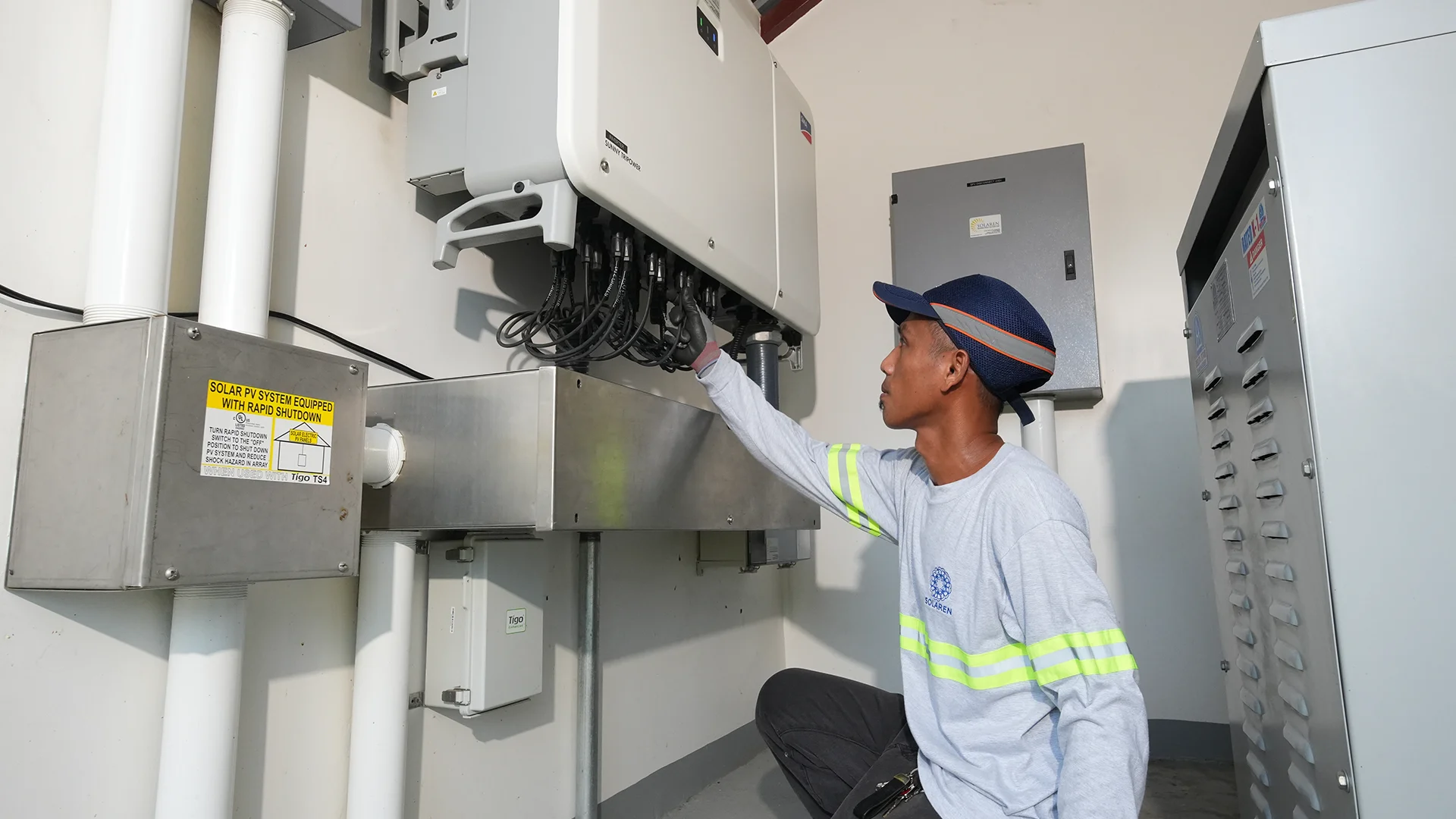
High-performance systems are designed around how power is used, not only how sunlight is received. Oversizing arrays to maximise midday output often leads to export limits, inverter throttling, or grid rejection. In those cases, installed capacity increases while delivered energy does not.
Effective design considers daily load profiles, peak demand windows, and grid acceptance limits. Aligning generation with consumption increases usable output and reduces avoidable losses. Performance is not created by producing power that cannot be used or exported.
Electrical design and loss control
Electrical losses are often underestimated. Cable sizing, string configuration, inverter loading ratios, and voltage rise management all affect delivered kWh. In high-temperature environments, undersized DC cabling increases resistive losses and accelerates insulation aging. Poor string balance increases mismatch losses and reduces inverter efficiency.
On the AC side, inadequate coordination with site protection and grid limits leads to derating and nuisance trips. These issues do not show up in capacity figures. They show up in production data and reduce savings.
Grid interaction as a performance constraint

Commercial solar panels operate within grid limits, not independently of them. Voltage fluctuation, phase imbalance, and protection coordination influence inverter behaviour regardless of module quality. Systems that ignore grid characteristics experience curtailed output even when sunlight is available.
High-performance systems account for grid behaviour during design and configuration. Export limits, inverter settings, and protection coordination are treated as performance variables rather than compliance afterthoughts.
Commissioning as a performance checkpoint
A system is not proven when it is energised. Commissioning is where performance assumptions are confirmed or corrected. String balance, inverter configuration, monitoring thresholds, and export controls determine how the system behaves under real operating conditions.
Without proper commissioning, underperformance becomes accepted as normal operation. With it, deviations from expected output are identified early and corrected while they are still inexpensive to fix.
Monitoring that reflects usable energy
Monitoring should measure delivered energy, not just installed capacity. Generation curves, thermal behaviour, curtailment events, and fault recurrence reveal how a system actually performs. Systems without meaningful monitoring can appear acceptable while consistently under-delivering.
High-performance systems treat monitoring as a management tool rather than a reporting feature. Data is used to confirm design intent and detect losses early.
A practical reference from a bifacial carport system
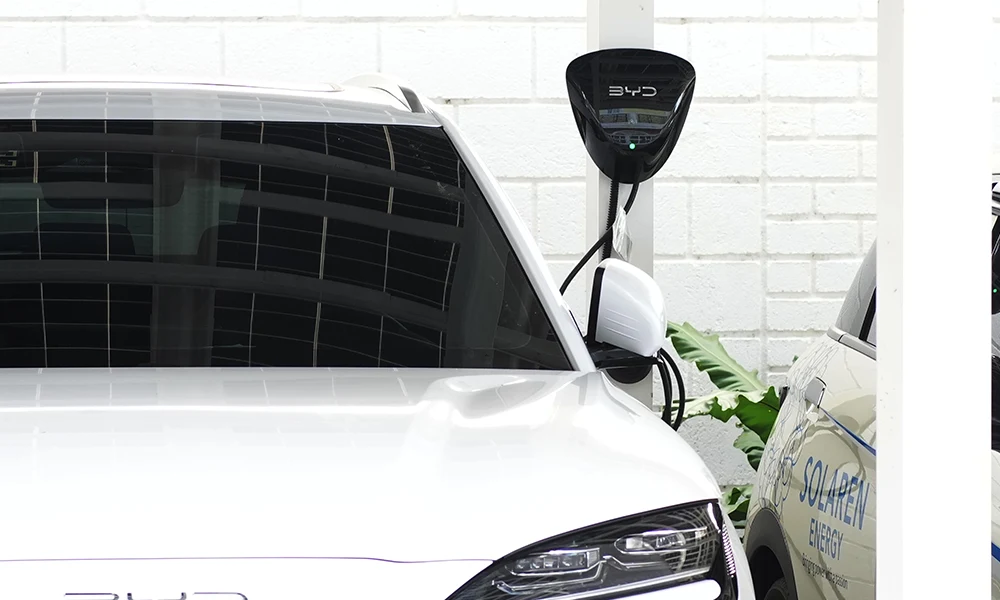
At the office of Solaren Renewable Energy Solutions Corp., a solar carport canopy was designed specifically to maximise bifacial glass-glass panel output. The structure was elevated, rear exposure was maintained, and reflective surfaces were used beneath the array to increase rear-side irradiance. Spacing and orientation were set to avoid self-shading across the day.
Using the same panels as a conventional rooftop system, this configuration delivers a higher usable yield by allowing the bifacial design to function as intended. The project can be viewed here.
Performance is engineered, not specified
Commercial solar panels do not determine system performance on their own. Performance emerges from the interaction between panel construction, structural design, electrical discipline, grid awareness, and commissioning rigour. Systems that address these factors deliver predictable energy output over time. Systems that focus only on panel specifications do not.
When evaluating commercial solar panels in the Philippines, the right question is not how large the system is. It is how much energy the system can reliably deliver under real operating conditions.
Frequently Asked Questions

-
Why do two commercial solar systems with the same kilowatt capacity produce different amounts of electricity?
Because installed capacity measures what was purchased under laboratory conditions, not what the site actually receives under real operating conditions. Temperature losses, cable resistance, string configuration errors, inverter derating under voltage rise, and poor layout all reduce usable output without reducing the headline kilowatt-peak figure.
In the Philippines, where roof surface temperatures regularly exceed 60 degrees Celsius and grid voltage fluctuations are common, these losses compound daily across the year. The gap between installed capacity and delivered energy is where performance is won or lost, and it is determined entirely by engineering decisions made before installation, not by the panel specification on the datasheet.
-
Are bifacial solar panels worth the extra cost for a Philippine commercial installation?
Only if the installation is designed to take advantage of them. Bifacial panels generate from both the front and rear surface, but rear-side energy capture depends on mounting height, clearance above the roof surface, surface reflectivity beneath the array, and shading geometry. Panels mounted close to dark roofing surfaces with no clearance gain almost nothing from bifacial capability and behave like standard panels at higher cost.
To extract real yield uplift, the array needs elevation, appropriate spacing, and reflective surfaces beneath it. When those conditions are met, bifacial glass-glass panels deliver measurably higher specific yield in Philippine conditions. When they are not, the bifacial specification is a cost without a benefit.
-
What should happen at the commissioning of a commercial solar system, and why does it matter?
Commissioning is where design assumptions are confirmed or corrected under real operating conditions. String balance, inverter configuration, monitoring threshold settings, export control verification, and protection coordination should all be tested and documented before the system is handed over. Critically, the export metering should be tested to confirm that net metering credits are being recorded correctly and that the meter is running subtractively rather than additively.
A system energised without proper commissioning testing may appear to be working while consistently underperforming its design, or worse, running the meter in the wrong direction. Deviations found at commissioning are inexpensive to correct. The same deviations found twelve months later, after they have been accepted as normal operation, are not.