Commercial Solar Energy Systems: How Grid Conditions Shape Output

Commercial Solar Energy Systems: How Grid Conditions Shape Output

When Philippine businesses evaluate solar, most of the conversation focuses on system size, panel brand, inverter quality, and payback period. Grid conditions rarely come up. That is a mistake, because the quality of the grid your building is connected to has a direct bearing on what your solar system produces, how reliably it operates, and what your actual financial return looks like over time.

This is not a theoretical concern. It is a practical reality for a significant proportion of commercial and industrial sites across the Philippines, particularly those outside major urban franchise areas. Understanding how grid conditions shape solar output is part of making a sound investment decision.

The Philippine Grid Is Not Uniform
The Philippine Grid Is Not Uniform

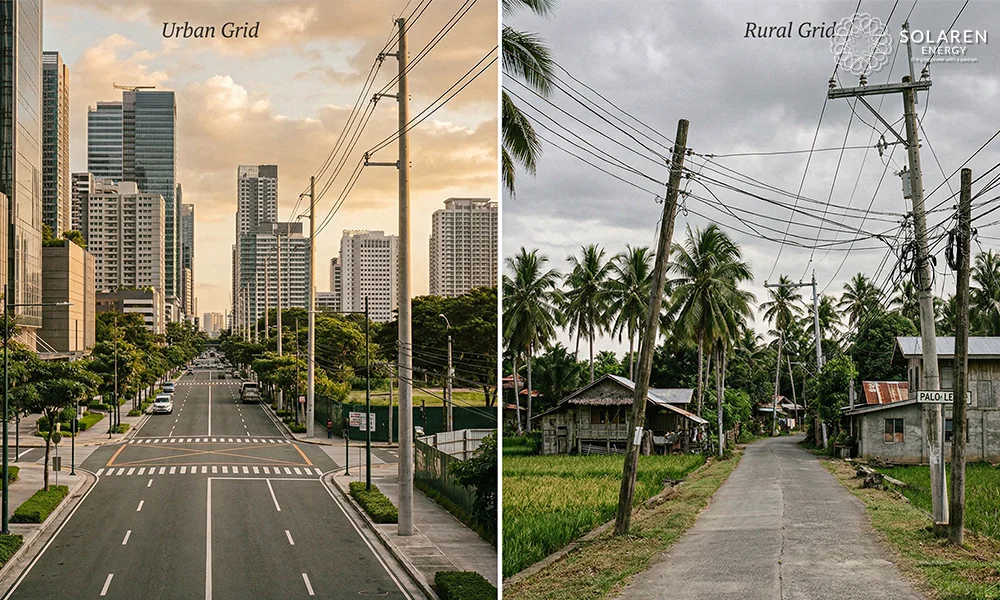
Manila and the major urban centres served by Meralco operate on a relatively stable, well-maintained distribution network. Voltage is consistent, outages are infrequent, and the grid behaves predictably enough that a standard grid-tied solar system performs close to its design specifications throughout its operating life.

Move outside those franchise areas and the picture changes considerably. Rural electric cooperatives serving provincial and agricultural areas frequently operate on ageing infrastructure with thin reserve margins. Voltage fluctuations are common. Outages are longer and less predictable. Lines serving remote barangays and farming communities are often at the end of long distribution runs, where voltage sag is a daily reality rather than an occasional fault.

For a commercial solar system connected to that kind of grid, the performance implications are real and measurable.

How Voltage Instability Affects Solar Output
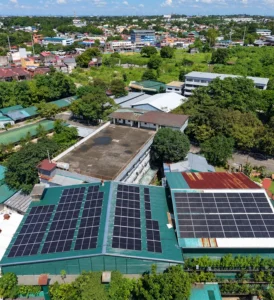
New Zealand Creamery

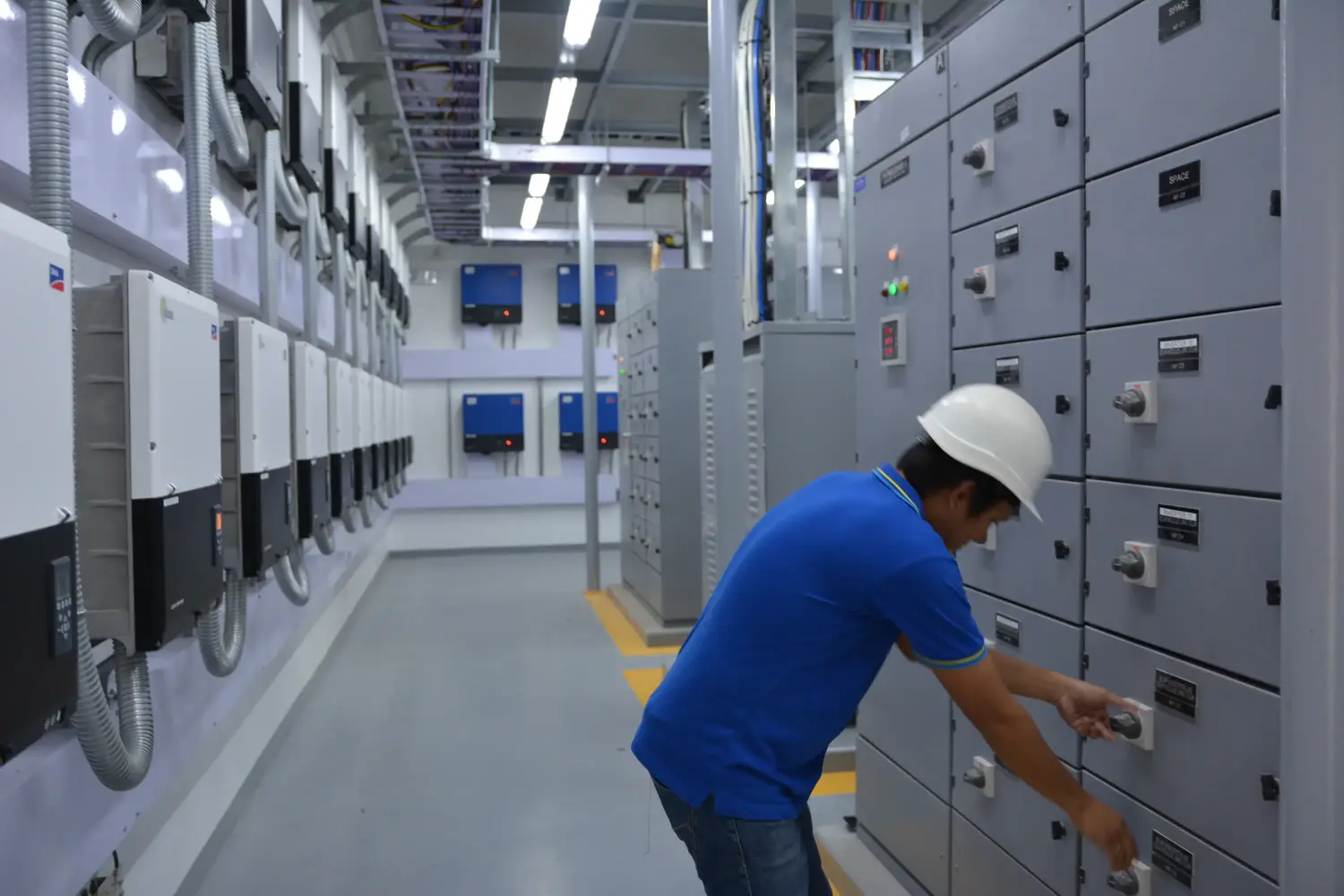
A grid-tied solar inverter is designed to synchronise with the utility supply. It reads the grid voltage and frequency continuously and matches its output to those parameters. When the grid voltage is stable and within specification, the inverter operates at its design efficiency and the system produces what the engineering model predicted.

When grid voltage fluctuates outside acceptable bands, the inverter responds. Depending on the severity and frequency of the fluctuation, this can mean reduced output as the inverter throttles generation to stay within safe operating parameters, or it can mean the inverter trips offline entirely until grid conditions normalise. Either outcome costs you a generation. Across a year, repeated voltage events on a weak grid can meaningfully reduce actual yield below the design figure.

This is distinct from outages. An outage is visible and measurable. Voltage-related output reduction is quieter and harder to detect without monitoring, but it accumulates over time and shows up in the gap between projected and actual generation figures.

Frequency Instability and Inverter Stress

Beyond voltage, frequency stability matters for grid-tied systems. The Philippine grid operates at 60Hz. Inverters are designed to operate within a narrow frequency band around that target. On a well-managed grid, frequency deviation is rare and brief. On a stressed grid, particularly during peak demand periods or when generation reserves are thin, frequency can wander enough to affect inverter behaviour.

The current energy emergency has put pressure on grid frequency management in ways that were not a regular concern twelve months ago. With WESM prices elevated and generation margins tighter, the grid is operating with less headroom than usual. For commercial solar system owners, this is not a reason for alarm, but it is a reason to understand how your system responds to grid stress and whether your monitoring setup will flag anomalies when they occur.

Weak Grid Sites: The Design Response

The engineering response to a weak or unstable grid is not to avoid solar. It is to design the system with grid conditions as a primary input rather than an afterthought.

For sites with known voltage instability, inverter selection matters more than usual. Not all inverters handle voltage fluctuation equally. A quality inverter with a wide input voltage tolerance and a well-configured response to grid events will maintain output across a broader range of conditions than a budget unit specified purely on price.

For sites with frequent outages or where grid availability is genuinely unreliable, a hybrid system with battery storage changes the operating model entirely. The system generates and stores during grid-available periods and draws from storage when the grid is down, maintaining continuity of supply to priority loads regardless of what the utility line is doing. This is a fundamentally different value proposition from a grid-tied system, and the financial case for that additional capital is strongest precisely where grid conditions are worst.
Laoang Poultry Farm

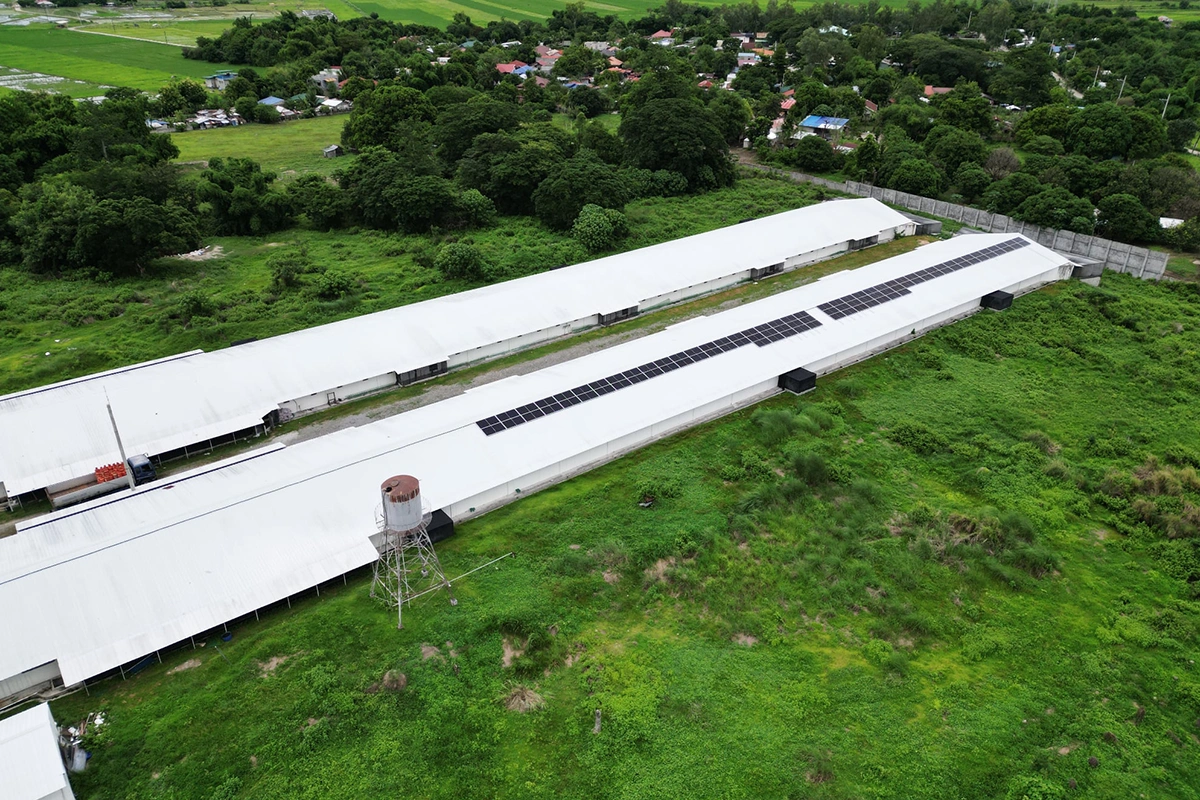
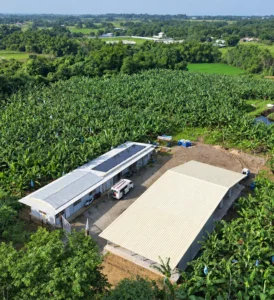
The Laoang Poultry Farm installation is a clear example of grid conditions driving system design. Serving a large agricultural operation in a remote provincial location, the site faces the kind of supply variability that is simply not present on a Meralco franchise area connection. The system was specified with those conditions as a design constraint, not a footnote. The result is a installation that performs reliably in an environment that would expose a poorly specified system quickly.

Net Metering and Grid Quality
net metering

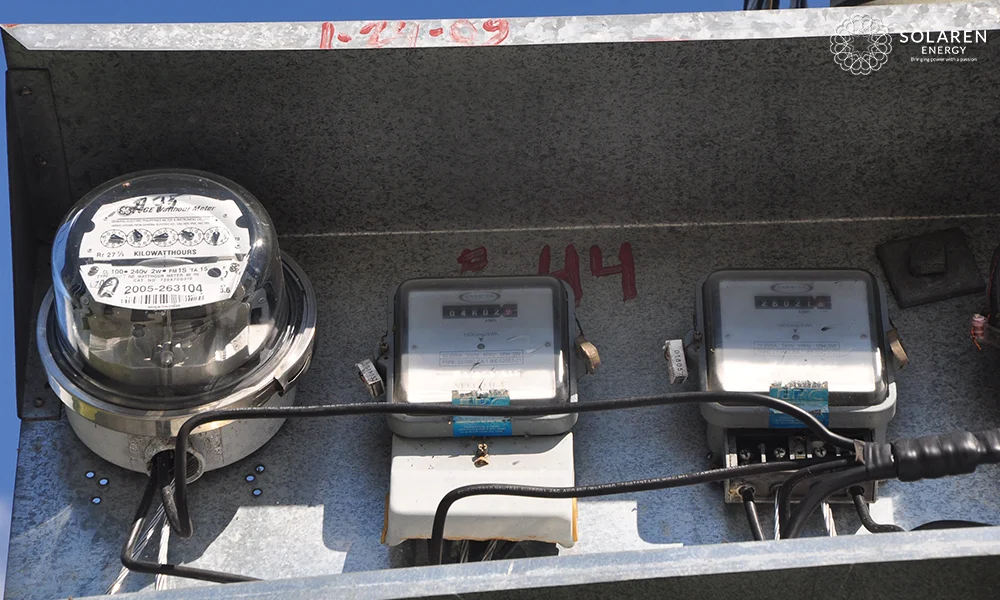
Grid conditions also affect how net metering works in practice. Net metering allows a solar system to export surplus generation to the grid and receive credits against future consumption. On a stable grid with a cooperative or distribution utility that processes net metering applications efficiently, this mechanism works as intended and significantly improves system economics.

On a weak grid, two complications can arise. First, some rural cooperatives have been slower to implement net metering than the urban distribution utilities, meaning the administrative path to approval is longer and less certain. Second, on a grid where voltage is frequently outside normal bands, export conditions may not always be met, reducing the volume of credits the system can accumulate.

Neither issue makes solar unviable in weak grid areas. But they are factors that belong in the financial model, and a competent EPC should be raising them before you sign off on a system design.

Monitoring: The Only Way to Know What Your Grid Is Doing

For any commercial solar system, but particularly for systems on grids outside major urban areas, monitoring is not optional. It is the only way to know whether your system is performing as designed, whether grid events are costing you generation, and whether an inverter fault or grid anomaly needs attention.

A properly specified commercial solar energy systems installation should include remote monitoring that shows generation in real time, cumulative yield against projection, and inverter status. That data tells you what your grid is actually doing to your system, and it gives your EPC the information needed to diagnose performance issues before they compound into significant losses.

Systems without monitoring are a black box. You will not know whether a weak grid is costing you 5% of your annual yield or 15% until you look at the numbers carefully, and by then you may have lost months of generation you cannot recover.

What This Means for Commercial Buyers
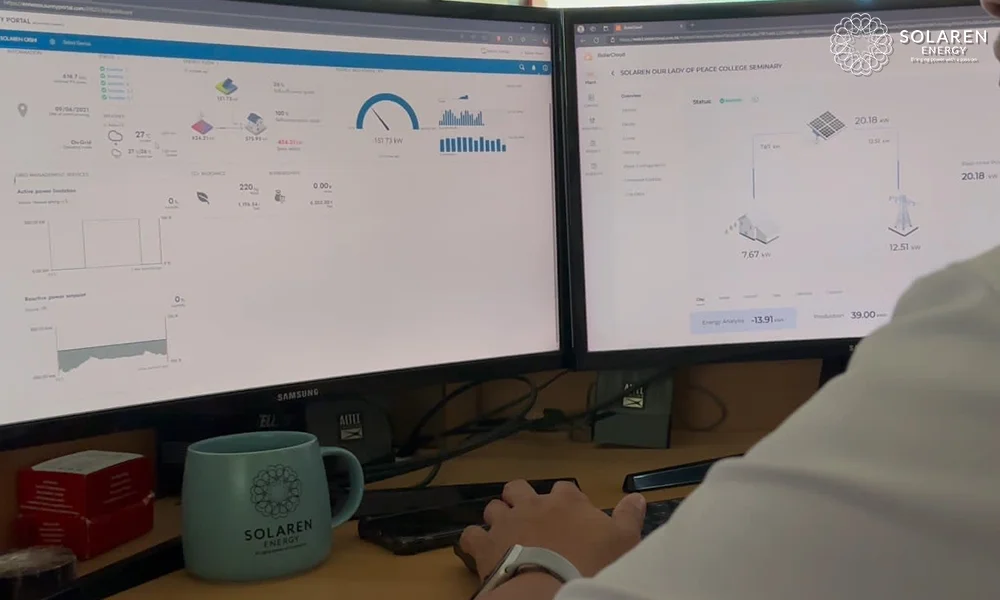
SMA Monitoring

If your site is in a Meralco franchise area or a well-managed urban cooperative, grid conditions are a background factor rather than a primary design concern. Your system will perform close to its design specification and net metering will work as intended. The standard evaluation criteria, system size, component quality, EPC track record, and payback period are the right focus.

If your site is in a provincial or rural area served by a cooperative with known instability, grid conditions belong at the centre of your evaluation. Ask your prospective EPC what inverter input voltage tolerance they are specifying and why. Ask whether the system design accounts for the grid profile at your specific location. Ask how the monitoring setup will detect and report grid-related performance losses.

The answers to those questions will tell you a great deal about whether you are dealing with an EPC that understands Philippine grid realities or one that is applying an urban system template to a site that needs something more considered.

The Bottom Line

Grid conditions shape solar output in ways that are measurable, manageable, and too often ignored in the commercial solar sales process. The Philippine grid is not uniform, and a system designed for Meralco voltage stability will not necessarily perform the same way on a weak provincial cooperative line.

Solaren has been installing commercial solar systems across the Philippines since 2012, across franchise areas ranging from stable urban grids to remote provincial cooperatives with genuine supply challenges. That field experience is the difference between a system designed on paper and one designed for where it will actually operate.

If grid conditions at your site are a concern, we can assess them before we specify anything.
Share this post:
THE SMART INVESTMENT FOR YOUR HOME OR BUSINESS

SWITCH TO SOLAR PV!

We take pride in providing cutting-edge technology and expertise to help our clients power the future with clean, sustainable energy.
solar energy

BIR TAX CLEARANCE CERTIFICATE

A BIR Tax Clearance Certificate is issued by the Bureau of Internal Revenue and confirms that Solaren Renewable Energy Solutions Corporation has no outstanding tax liabilities and is fully current with all income and business tax obligations. This certificate is valid until 16 March 2027.
Under Executive Order No. 398 and the Government Procurement Reform Act (RA 9184), this clearance is a legal requirement for any contractor participating in government projects or bidding processes. It is a continuing obligation for the duration of any government contract. A contractor without a valid tax clearance cannot settle government contracts or receive final payment for completed works.
For private sector clients, this certificate signals something equally important. Solaren is a financially compliant, properly registered business with clean tax standing. In a sector where fly-by-night and hit-and-run operators are not uncommon, this is verifiable proof that Solaren is built for the long term. That distinction matters when our customers are committing to a 25-year asset.

KIM BRYAN C. LUSUNG

Project Electrical Engineer

Bryan brings a disciplined engineering background to Solaren’s project execution team, taking direct responsibility for on-site electrical works and individual project cycles from mobilisation through to commissioning. A Registered Electrical Engineer and Registered Master Electrician with a Master’s degree in Electrical Engineering (Power Systems) from Tarlac State University, he combines strong academic grounding with practical field experience across commercial construction, multi-site energy management, and solar PV maintenance and performance monitoring with a leading Philippine EPC. His prior exposure to solar plant operations gives him a working understanding of how installation decisions affect long-term system performance, which informs the quality of his on-site execution at Solaren.

Key Responsibilities

• Lead on-site electrical installation and project execution
• Manage individual project cycles from mobilisation to commissioning
• Ensure all electrical works conform to approved designs and Philippine Electrical Code standards
• Coordinate with the project management team on progress, timelines, and technical issues
• Support testing, energization, and formal turnover

BIR 2303

The BIR Certificate of Registration, also known as BIR Form 2303, is issued by the Bureau of Internal Revenue and confirms that Solaren Renewable Energy Solutions Corporation is a fully registered taxpaying business entity in the Philippines. This document establishes that Solaren operates transparently within the Philippine tax system, issues official receipts, and complies with national revenue regulations. For clients commissioning solar installations, working with a BIR-registered company matters. It protects you legally, ensures that payments are properly receipted, and confirms that the contractor you are dealing with is a legitimate, accountable business. Many informal or underqualified installers operate without proper tax registration. Solaren’s BIR registration is current, publicly verifiable, and forms part of the baseline compliance documentation we maintain alongside all other government accreditations.

BUREAU OF CUSTOMS REG 2025-2026

Solaren’s Bureau of Customs registration for 2025 to 2026 confirms our authorization to import solar equipment directly into the Philippines. This registration is significant for clients who want assurance that the hardware installed on their property has been sourced, declared, and cleared through official channels. Direct importation means Solaren has full visibility over the supply chain, from manufacturer shipment to local delivery. It eliminates the risks associated with undeclared, gray market, or improperly handled equipment that can affect warranty validity and long-term performance. Solaren sources panels, inverters, and battery systems from verified international manufacturers and processes all shipments through proper customs documentation. This registration is renewed annually and reflects our ongoing commitment to transparent, compliant procurement on behalf of every client we serve.

PHILIPPINE BOARD OF INVESTMENTS

Solaren’s Board of Investments registration confirms our standing as a recognized participant in the Philippines’ renewable energy sector under the national investment framework. BOI registration is granted to companies that meet specific criteria related to industry classification, capital structure, and compliance with Philippine investment law. For Solaren, this registration reflects our role as an established solar energy company operating within the country’s broader push toward clean energy development. It is a mark of institutional recognition that distinguishes properly structured solar companies from informal operators. Clients working with BOI-registered contractors can be confident they are dealing with a company that has been assessed at the national investment level, not just at the local licensing level. This credential is part of the complete compliance profile Solaren maintains across all relevant government agencies.

VIA MEMBERSHIP CERTIFICATE

Dun and Bradstreet is one of the world’s most recognized business verification and credit intelligence organizations. A Dun and Bradstreet listing confirms that Solaren has been independently verified as a legitimate, operating business entity with a traceable commercial history. This credential is particularly relevant for corporate clients, multinational companies, and procurement teams that require suppliers to meet international due diligence standards before awarding contracts. Many large organizations require a D&B listing as part of their vendor accreditation process. Solaren’s inclusion in the Dun and Bradstreet registry reflects our standing as a professionally structured company with a documented business history. It adds an internationally recognized layer of verification to our local government accreditations and reinforces Solaren’s credibility for clients operating at an enterprise or institutional level.

DEPARTMENT OF ENERGY REGISTRATION

The Department of Energy accreditation is the most direct and authoritative confirmation that Solaren is a qualified solar contractor in the Philippines. The DOE does not accredit companies based on self-declaration. Accreditation requires demonstrated technical capability, proper licensing, qualified personnel, and a verifiable track record of completed installations. For any homeowner or business commissioning a solar project, DOE accreditation should be a baseline requirement when evaluating contractors. It is the government’s own confirmation that the company you are hiring meets the national standard for solar installation work. Solaren has maintained DOE accreditation throughout our operating history and renews it through the standard assessment process. This certificate is one of the most important documents on this page and one of the first things any serious buyer should ask to see before signing a contract.

VIA MEMBERSHIP CERTIFICATE

Dun and Bradstreet is one of the world’s most recognized business verification and credit intelligence organizations. A Dun and Bradstreet listing confirms that Solaren has been independently verified as a legitimate, operating business entity with a traceable commercial history. This credential is particularly relevant for corporate clients, multinational companies, and procurement teams that require suppliers to meet international due diligence standards before awarding contracts. Many large organizations require a D&B listing as part of their vendor accreditation process. Solaren’s inclusion in the Dun and Bradstreet registry reflects our standing as a professionally structured company with a documented business history. It adds an internationally recognized layer of verification to our local government accreditations and reinforces Solaren’s credibility for clients operating at an enterprise or institutional level.

PCAB LICENSE 2025-2026

The Philippine Contractors Accreditation Board license is a legal requirement for any contractor performing electrical and construction work in the Philippines. Solaren holds a current PCAB license for 2025 to 2026, which confirms that our company meets the technical, financial, and organizational requirements set by the Construction Industry Authority of the Philippines. Working with an unlicensed contractor exposes clients to legal risk, voided permits, and installations that cannot pass government inspection. PCAB licensing ensures that the contractor has qualified personnel, proper bonding, and a track record that has been assessed by the relevant regulatory body. For solar installations that involve rooftop structural work, electrical systems, and grid connection, this license is not optional. It is a legal baseline, and Solaren maintains it without interruption as part of our standard compliance obligations.

Philgeps Solaren 2026

PhilGEPS, the Philippine Government Electronic Procurement System, is the official registry for suppliers authorized to participate in government procurement. Solaren’s PhilGEPS registration for 2026 confirms that we meet the documentary and compliance requirements set by the national government for accredited suppliers. This registration is relevant not only for government projects but as a general trust signal. The PhilGEPS accreditation process requires verified business registration, tax compliance, and proper licensing documentation. Companies that cannot pass this process are not eligible to work with government agencies, state universities, or publicly funded institutions. Solaren’s active registration confirms that our documentation is complete, current, and has passed independent government review. For any client, public or private, this is additional confirmation that Solaren operates as a fully compliant and accountable solar contractor.

Securities and Exchange Commission Registration

Solaren Renewable Energy Solutions Corporation is registered with the Securities and Exchange Commission of the Philippines, confirming our legal existence as a domestic corporation under Philippine law. SEC registration establishes the company’s corporate structure, confirms the identity of incorporators and directors, and places the company within the formal regulatory framework governing Philippine corporations. For clients, this means you are dealing with a properly constituted legal entity that can be held accountable, can enter into enforceable contracts, and has a verifiable corporate history. Many informal solar operators function as sole proprietorships or unregistered partnerships with limited legal accountability. Solaren’s SEC registration is part of the foundation that makes us a dependable long-term partner. It is publicly verifiable through the SEC’s online registry and has been in place since Solaren was founded in 2014.

SOLAREN BUSINESS PERMIT 2026

Solaren’s local government business permit for 2026 confirms that our operations are fully authorized by the relevant local government unit. Business permits are renewed annually and require compliance with local ordinances, zoning regulations, and tax obligations at the municipal level. While a business permit may seem like a basic credential, its absence is a red flag. Contractors operating without a current permit are not legally authorized to conduct business in that jurisdiction. For clients in Central Luzon and surrounding regions, this permit confirms that Solaren is a locally rooted, properly authorized business, not a transient operator with no fixed accountability. Combined with our national accreditations, DOE registration, and SEC incorporation, this permit completes the full picture of a solar company that operates transparently at every level of government oversight.

Ayala Land Accreditation Certificate

Ayala Land is one of the Philippines’ most respected property developers, and their accreditation process for solar contractors is rigorous. Being an Ayala Land accredited solar installer means Solaren has passed assessment across licensing, engineering standards, insurance requirements, safety compliance, and track record. Developers of Ayala Land’s standing do not accredit contractors lightly. Their projects involve premium residential and commercial properties where installation quality directly affects property value and tenant satisfaction. Solaren’s accreditation confirms that our technical standards, documentation, and project execution meet the requirements set by one of the country’s most demanding real estate organizations. For clients in Ayala-developed communities or those who simply want assurance that their contractor has been vetted by a credible third party, this accreditation is a meaningful signal of quality and reliability.

installation teams

Solaren’s in-house installation teams deliver commercial and industrial solar projects with the consistency and precision that large sites demand. With several trained crews operating across the Philippines, we handle multiple installations simultaneously while maintaining high, uniform workmanship standards. Each team works closely with Solaren’s engineers to plan structural layouts, optimize wiring routes, position inverters for optimal performance, and integrate the system safely into the client’s existing electrical network. This level of coordination ensures clean execution on the roof and inside the facility, with every detail checked against strict safety and performance requirements. Our teams are experienced with complex environments, from homes to factories and warehouses, showrooms and food-production sites, and they follow a disciplined workflow that protects system performance for years. Because all installation work is performed by Solaren personnel, not subcontractors, clients receive complete accountability, better quality control, and systems built to deliver reliable energy from the day of commissioning.

JERRICO MIGUEL

Junior Electrical Engineer

Jerrico assists with electrical installation, testing, and commissioning across commercial PV systems. With 3 years of engineering experience, he supports senior engineers with wiring, system validation, and integration of monitoring systems. He has contributed to deployments for food manufacturing, warehousing, and commercial facilities.

Key Responsibilities

• Assist with wiring, conduit work, and panel installation
• Support testing, commissioning, and on-site validation
• Perform basic electrical troubleshooting and checks
• Document as-built work and site conditions
• Coordinate with senior engineers for daily tasks

ARNOLD NICOLE YOUNG

IT Specialist

Arnold manages and oversees Solaren’s IT infrastructure, Networking and monitoring platforms. With over seven years of IT and network experience, he maintains monitoring for hundreds of live systems nationwide, ensuring uptime, data security, and reliable performance visibility. He is CCNA-certified.  Arnold is responsible for coordinating the operations and maintenance of existing systems,

Key Responsibilities

• Manage O and M, monitoring portals and system dashboards
• Maintain IT networks and data security protocols
• Support engineers with diagnostics and remote checks
• Ensure uptime of client monitoring portals
• Implement updates and coordinate hardware integration

JOHN RUDOLF SIGUA

PV Design Engineer

John specializes in system modelling, layout design, and performance simulation for commercial and industrial projects. A Registered Electrical Engineer with five years of design experience, he works with PVsyst, AutoCAD, and utility-compliant PEC standards. He supports commissioning and troubleshooting to ensure accurate performance and reliable operation.

Key Responsibilities

• Prepare PV system layouts, modelling, and energy simulations
• Size components for optimal performance and compliance
• Produce design packages for permitting and construction
• Support commissioning, technical checks, and system validation
• Provide troubleshooting for design-related issues

EJ P. ERESE

Project Manager | Senior Electrical Engineer

EJ manages full project life cycles for Solaren’s commercial and industrial installations, from design coordination and procurement through to commissioning and client turnover. A Registered Electrical Engineer, Registered Master Electrician, and Safety Officer 2, he brings six years of hands-on field experience across some of Solaren’s most demanding deployments, including the Oishi and Toyota projects, and has supervised crews on multiple multi-MWp systems with a flawless safety record. His combination of technical depth and site-level discipline makes him one of the most capable project managers operating in the Philippine solar EPC space.

Key Responsibilities

• Manage full project life cycles across commercial and industrial PV systems
• Lead engineering coordination, crew assignments, and on-site execution
• Enforce safety compliance and conduct toolbox meetings
• Track progress, manage timelines, and maintain client communication
• Validate installation work against approved designs
Oversee testing, energization, and formal project turnover

CARLO BENJAMIN NUCUM

Senior Project Manager

Carlo has long led the company’s engineering teams across full project lifecycles, from planning to commissioning. He has delivered multi-MWp systems for clients such as Liwayway Marketing, Bench, Toyota, New Zealand Creamery, and Atlantic Grains. A Registered Electrical Engineer with more than eight years of experience, he manages and oversees PEC-compliant installations and quality control across commercial and industrial sites.

Key Responsibilities

• Lead project teams and manage end-to-end delivery in entirety
• Oversee installation quality, safety, and technical compliance
• Coordinate with clients, suppliers, and engineering groups
• Review electrical plans and validate system performance
• Supervise testing, commissioning, and turnover documentation

Christopher Henry Hutchings

Sales Director

Chris brings four decades of international finance experience, including senior leadership roles in Hong Kong where he still qualifies as a Responsible Officer under the Hong Kong Securities and Exchange Commission requirements. His background in Private Wealth, managing client portfolios and evaluating long-term financial strategies allows him to help enterprise clients assess solar investments with clarity and confidence. Chris leads Solaren’s commercial sales strategy, working with clients to structure accurate proposals, reliably analyses return expectations, and build sustainable partnerships. He collaborates closely with engineering and procurement teams to ensure every system is designed, priced, and projected with precision.

Key Responsibilities

• Leadership of enterprise and commercial sales strategy
• Client advisory on ROI, system design, and financial planning
• Proposal development with engineering and procurement teams
• Partnership building across commercial and industrial sectors
• Risk and value assessment for large-scale solar investments
• Reliable and trusted representation of Solaren in high-level client engagements and negotiations

Ronnie C. Lorenzo

General Manager & Corporate Secretary

Ronnie manages Solaren’s day-to-day operations, coordinating procurement, logistics, manpower, and documentation across all active project sites. He supervises regulatory submissions, contract execution, and local permitting to ensure every deployment remains compliant and on schedule. His critical role connects engineering, procurement, and administrative teams so projects move efficiently from planning to installation and commissioning. As Corporate Secretary, he maintains board records, supports executive reporting, and ensures transparency across the company’s internal processes and external commitments.

Key Responsibilities

• Daily operations, scheduling, and logistics
• Procurement coordination and supplier management
• Contract execution and regulatory submissions
• On-site documentation and compliance tracking
• Cross-team coordination from planning to commissioning
• Corporate Secretary duties and board record management

Anicia Pearce

President

Ann leads corporate governance, financial discipline, and regulatory compliance for Solaren, ensuring full alignment with the companies ever growing regulatory requirements. She manages audit readiness, internal controls, and risk management across all departments. Her work anchors the company’s expanding operations, providing clear structures for procurement, contracting, and documentation. Ann also oversees systems that ensure complete records and proper regulatory filings support each project from planning to commissioning. Her no-nonsense leadership reinforces Solaren’s credibility with clients, partners, and government agencies as the company continues to handle larger commercial and industrial portfolios.


Key Responsibilities

• Corporate governance and regulatory compliance
• Financial controls, budgeting, and audit readiness
• Risk management and operational discipline
• Oversight of contracting, documentation, and procurement workflows
• Alignment with all regulatory and Government standards
• Executive support for cross-department operations

Neil H. Pearce

Managing Director

Neil leads Solaren’s strategic planning and oversees all commercial, financial, and operational decisions across the company’s national portfolio. He brings over three decades of experience across Asia’s financial markets, including his past work and key Directorships for several private wealth management companies in Hong Kong. He guides capital allocation, project evaluation, and long-term planning while strengthening supplier relationships with global partners. Neil has overseen more than 85 MW of commercial, industrial, and residential installations and continues to steer Solaren’s expansion into AI-driven monitoring, energy storage, and enterprise-scale engineering systems. He also serves as a director for several regional companies.


Key Responsibilities

• Strategic direction and long-term planning
• Capital allocation and project funding oversight
• Partnership management with global suppliers
• Corporate governance and executive decision-making
• Evaluation of commercial and industrial project pipelines
• Expansion into energy storage and digital monitoring, together with Artificial Intelligence

Renewable Energy Solutions

GET A QUOTE