Most people who run businesses here have stopped calling them power outages. They call them brownouts. And somewhere along the way, brownouts stopped being an emergency and became just another thing to manage. Like traffic on EDSA. Like the rainy season. You plan around them, you absorb the cost, and you get on with it.
That acceptance is understandable. It is also expensive.
What is actually happening when the lights go out
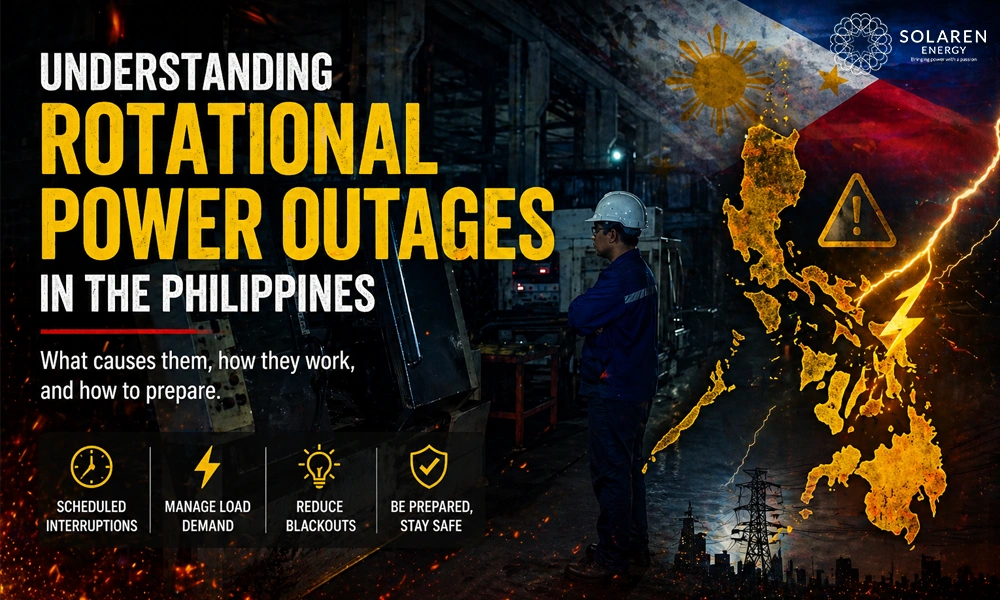
A rotational outage, load shedding, in utility language, happens when total demand across the grid exceeds what the system can supply. Rather than let the whole thing collapse, which would be far worse, the utility cuts supply to different areas in turns. Your area goes down for a defined period, then power comes back, and somewhere else takes the hit.
That is the theory. In practice, the rotation is messier than it sounds. Schedules change. Duration extends past what was posted. Some barangays get hit three times before a neighboring one gets hit once. And during the summer months, March, April, May, when air conditioning loads spike and generation is already stretched, the schedule starts to feel more like a suggestion than a commitment.
It has gotten worse. The energy emergency declared in March 2026 following the Strait of Hormuz disruption removed a significant buffer from the system. The Philippines imports close to all of its fuel. When global supply tightens, Philippine electricity margins tighten with it. That is not going to change quickly. The government has accelerated renewable energy approvals under Executive Order 110, but new generation capacity takes time to build, commission, and connect. The grid you are operating on today is largely the same grid that was already under pressure before the crisis started.
What it actually costs and where businesses get the numbers wrong
Here is where most businesses are not being honest with themselves.
The obvious costs are easy to see. Production stops. Cold storage warms up. The generator kicks in and starts burning diesel at whatever diesel costs today. Staff stand around waiting. You know those numbers.
What businesses tend to undercount is the damage that happens around the outage rather than during it. The voltage instability that precedes a brownout, the flickering, the sags, and the brief surges when power returns are often more destructive than the outage itself. Sensitive equipment takes the hit. A CNC machine mid-cycle. A server during a write. A batch of product at a temperature-critical stage of processing. The outage lasted twenty minutes. The damage took three days to fix.
Then there is the restart cost. Heavy motors, compressors, and HVAC systems draw significantly higher current when they restart from cold than they do during normal operation. Every brownout puts mechanical stress on equipment that was not designed to start and stop repeatedly throughout the day. The maintenance bill reflects this over time, even when no single event causes obvious damage.
We have seen this repeatedly on industrial sites across Central Luzon and Batangas. The generator log shows a thirty-minute event. The production loss report tells a different story.
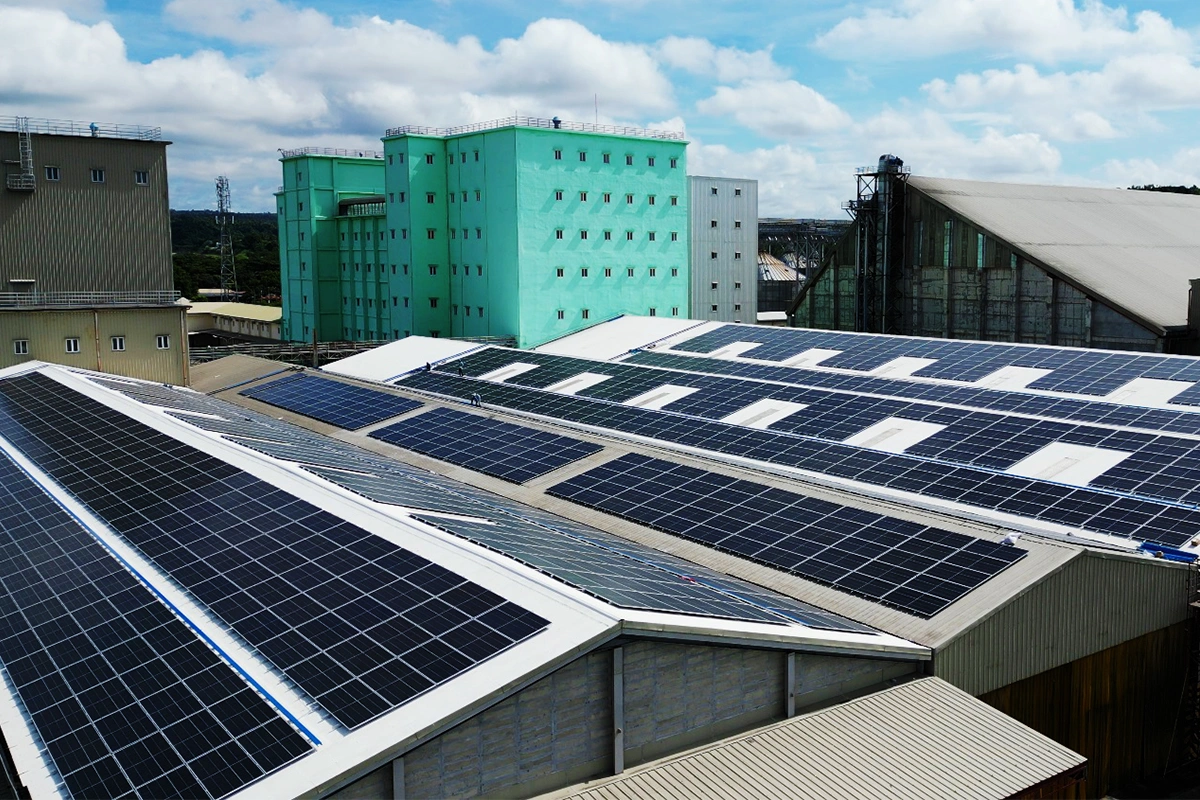
Atlantic Grains, which runs the largest grain importing and processing facility in the country, understood this when they decided to invest in solar. The facility operates silos, conveyors, drying systems, and continuous processing lines that cannot absorb unplanned interruptions lightly. Grid reliability was not a secondary consideration in the Atlantic Grains project brief. It was central to the whole design.
Does solar fix Brownouts (Power Outages)?
Partly. And it is worth being clear about which part.
A grid-tied solar system reduces how much you are drawing from the utility during daylight hours. If the system is covering sixty or seventy percent of your daytime load and the grid goes down, the financial hit is smaller. You were already relying on the grid less. That is real and it compounds over time as outage frequency increases.
But a grid-tied inverter disconnects when the grid goes down. That is not a flaw. It is a safety requirement that linemen working on faulted lines cannot have generation pushing current through a system they think is dead. So during a full outage, a grid-tied system does not keep you running. Generation stops with the grid.
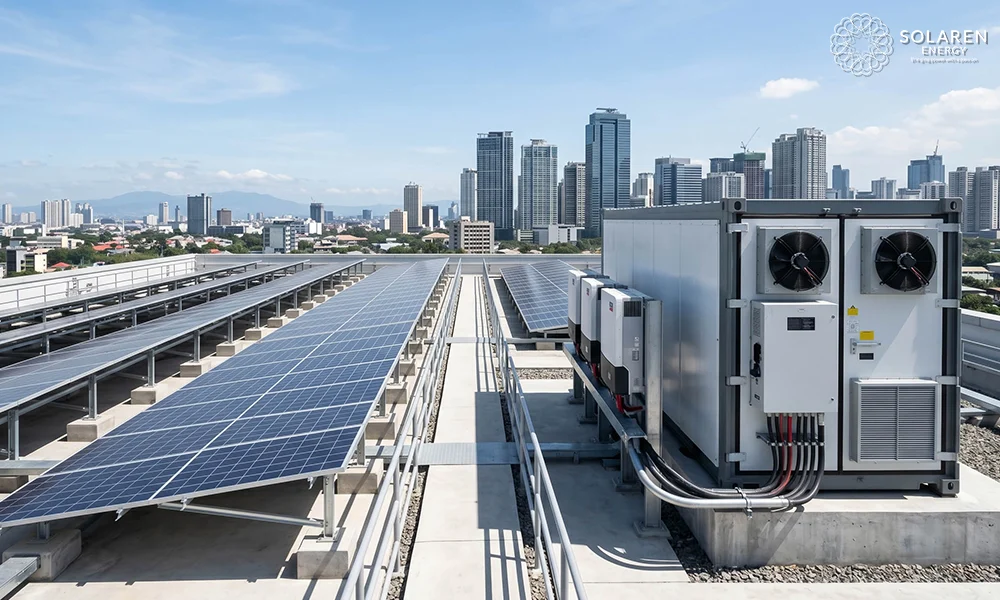
If you need to keep running through outages, refrigeration, servers, and a production line where a restart costs more than the electricity, that requires a hybrid system with battery storage. The inverter switches in milliseconds. Priority loads keep running. The grid can do what it wants.
The full engineering case for how those decisions get made, and what they cost versus what they protect, is in Built to Last: Engineering Solar Resilience for the Philippine Climate. Worth reading before you design anything.
What to do while you are waiting for a better grid
The grid is not going to fix itself in the next two or three years. That is just the honest position. The structural problems, fuel import dependence, aging baseload capacity, and transmission constraints are real and they are slow to resolve.
So what do you actually do in the meantime?
Start by measuring properly. Track outage frequency, duration, and timing for ninety days. Most businesses are surprised by what they find when they actually count. Then calculate what each brownout costs across production loss, spoilage, generator fuel, restart time, and equipment wear. That annualised number is your baseline for evaluating any investment in solar, storage, or backup power. Without it, you are guessing, and you will probably underinvest.
Next, look at your load profile. Not all loads need to keep running during an outage. Identify the ones that do, the ones where going down for thirty minutes costs real money or causes real damage. Size your backup strategy around those loads rather than trying to back up everything, which is almost always cost-prohibitive.
And talk to an EPC that has actually designed systems for Philippine grid conditions rather than adapted a generic design to the local context. The equipment choices, the inverter specification, the battery sizing all of it looks different when the designer has spent time on sites where brownouts happen daily rather than occasionally.
The businesses that have acted on this are already in a different position. Their energy costs are more predictable. Their exposure to the next supply shock is smaller. And they stopped dreading the sound of the aircon cutting out.
For a closer look at how solar performs specifically during grid stress across different commercial and industrial applications, How Philippine Businesses Can Use Solar to Offset Increasing Grid Instability covers the practical details.
Frequently Asked Questions
Will solar stop my business from experiencing brownouts?
A standard grid-tied solar system reduces how much you draw from the utility during the day, so the financial impact of a brownout is smaller. But it does not keep you running through one. When the grid goes down, a grid-tied inverter disconnects for safety reasons and generation stops. If you need to keep operating through outages, you need a hybrid system with battery storage. The inverter switches in milliseconds and priority loads keep running regardless of what the grid is doing.
How do I calculate what brownouts are actually costing my business?
Track outage frequency, duration, and timing for ninety days. Then calculate the cost across production loss, spoilage, generator fuel, restart time, and equipment wear for each event. Most businesses are surprised by the total when they actually count it properly. That annualised figure is your baseline for evaluating any investment in solar, storage, or backup power. Without it, you are guessing, and you will almost certainly underinvest.
Why are brownouts worse in summer in the Philippines?
March to May is when air conditioning loads across the grid spike sharply. Total demand increases significantly while generation capacity stays the same or decreases as some thermal plants go into planned maintenance before the hot season peaks. The gap between supply and demand widens, the utility has less buffer to work with, and rotation schedules become more frequent and less predictable. It is the same grid under heavier pressure with less margin for error.