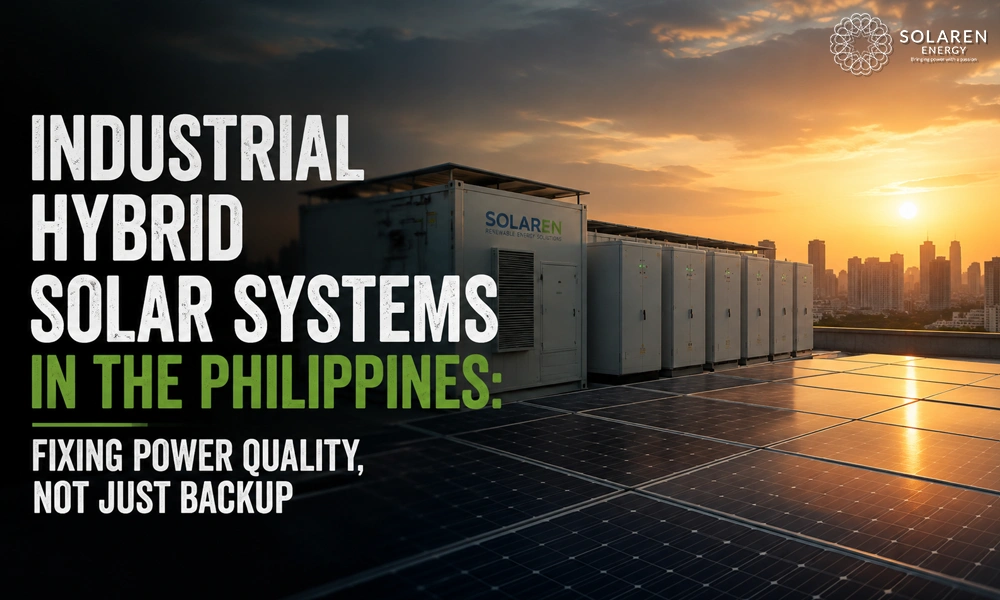
Most people view an industrial hybrid solar system in the Philippines as a backup solution to keep factories running during grid outages. While backup is important, many industrial sites benefit even more from enhanced power quality. Power quality refers to the daily condition of electricity supplied to equipment while the grid is operational, including its stability and consistency. Poor power quality incurs ongoing costs that often go unnoticed. A well-designed hybrid system addresses this issue directly, a benefit that is rarely discussed in the market. It is one branch of the broader topic covered in our guide to hybrid solar systems in the Philippines.
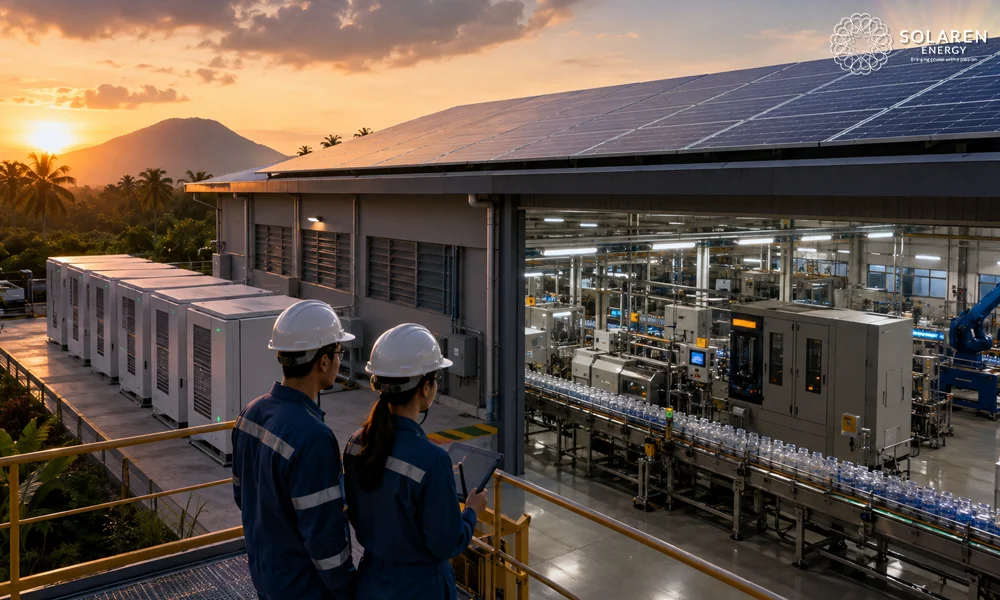
What does an industrial hybrid solar system do beyond backup? It stabilizes the power feeding your equipment. For example, at one manufacturing site we are currently working with, hybrid storage prevented multiple production stoppages caused by voltage dropping 30% below standard, demonstrating how the system rides through sags that would otherwise trip automated lines. It also helps correct a poor power factor, which utilities commonly penalize, and shields sensitive machinery from the surges and dips of an unstable grid. On many industrial sites, these daily savings and the damage they prevent matter more than the occasional blackout the system also covers.
Bad power costs more than blackouts
A blackout is obvious. Everyone notices when the lights go out. What most factories miss is the steady cost of poor power quality while the grid is still running. Common issues include voltage fluctuations, low power factor that results in monthly utility penalties, harmonics that overheat equipment, and brief voltage dips that can halt sensitive automated lines. Added together over a year, these ongoing costs often surpass those from more visible outages. There is a fuller list of power quality problems on our site, but the pattern is always the same: money leaking out while the power is technically on.
What a voltage sag does to a production line
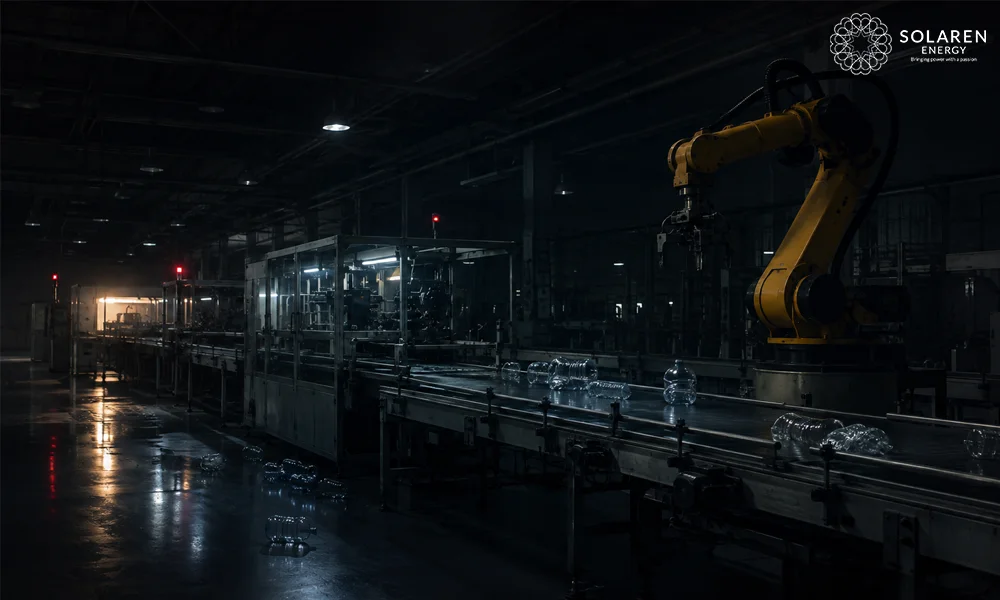
Here is a real number from a site we are currently working on. The voltage there sags to thirty percent below standard. Think about what that means on a factory floor. An automated line is built to operate at a stable voltage. When the supply drops that far, even for a moment, drives fault and the whole line stops. Now you have a halted production run, product spoiled inside the machine, and often physical damage to equipment that was never designed to be hit like that. The factory loses output and material and pays to repair the line. None of it shows up as a blackout. The grid was on the whole time.
How storage fixes what the grid breaks
A hybrid system with fast switching sits between the dirty grid and your sensitive loads. When the supply sags or drops, the system disconnects from the fault and carries the load from the battery in a fraction of a second, fast enough that the line never sees the dip. That is the core of it. The battery serves as a buffer between an unpredictable grid and machinery that cannot tolerate uncertainty.
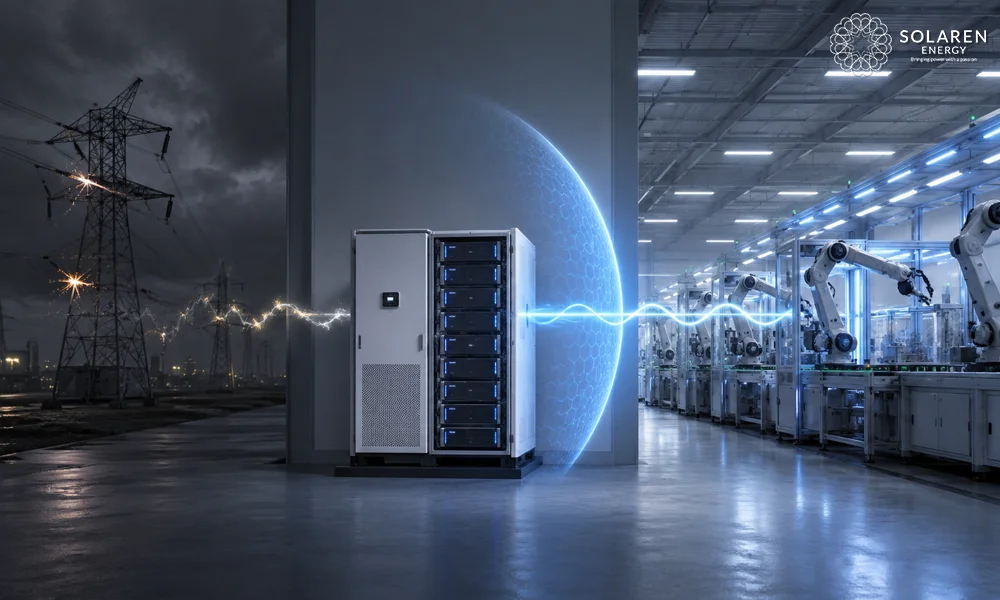
We are honest about the trade-off. In the system I am describing, the design routes power from AC to DC and back to AC, and that conversion loses a little energy on the way. We do not pretend otherwise. But those losses are small set against scrapped batches and burnt-out drives. For a factory bleeding money to bad power, it is a trade worth making.
A real industrial example
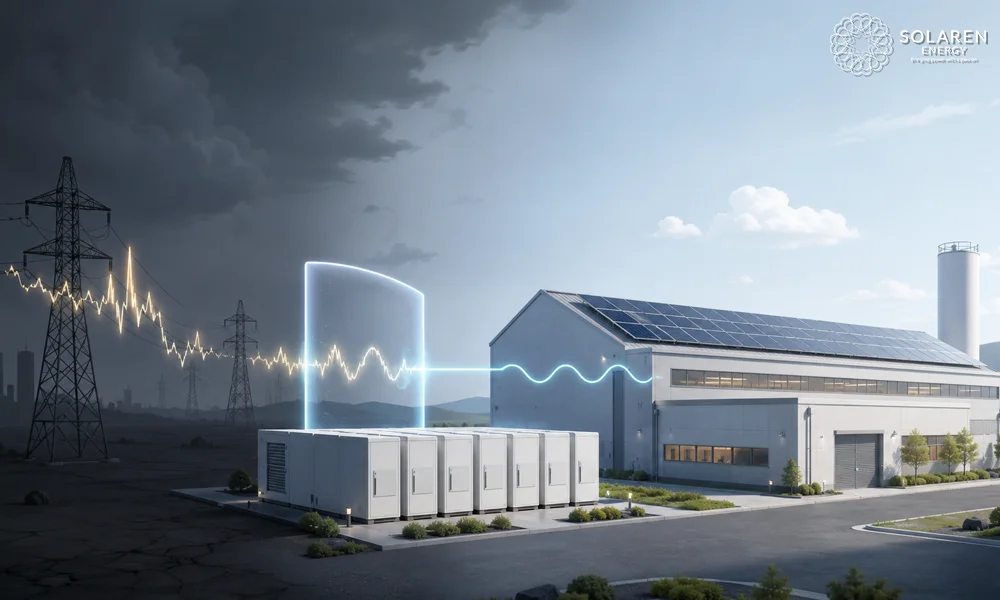
The site is a brand-name manufacturer we are keeping anonymous while the work is underway. The grid there is unstable and expensive, a bad pairing. We are installing roughly one megawatt-peak of solar on the roof and around two megawatt-hours of storage. Some of the solar serves the factory directly. The storage does the harder job. It rides through the sags, buffers the power quality problems, and cushions the constant unpredictability of the supply. The voltage sags are 30% below standard, and the power factor currently sits at 0.75. The system is designed around those specific problems, not pulled from a catalog.
The power factor penalty nobody explains

The 0.75 power factor is significant because it results in ongoing financial penalties for the factory. Utilities impose these penalties when the power factor drops below a typical threshold of 85 percent, adding charges to the utility bill each month. Therefore, a factory operating at 0.75 incurs continuous additional costs. Our storage system design helps improve the power factor, though there are minor energy conversion losses to consider. Ultimately, power factor is not merely a technical concept; it directly impacts operational expenses, and many factories pay these penalties unknowingly.
Why “backup” is the wrong frame for industry
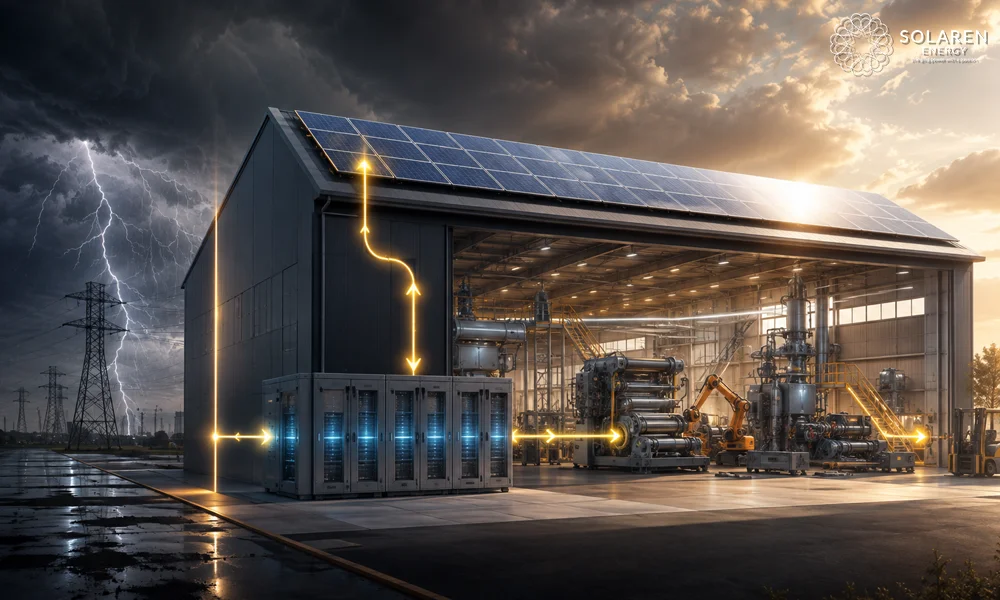
For a home, hybrid is mostly about backup. Keep the lights and the fridge on when the grid fails. For a commercial building the priority is usually evening load and demand charges, covered in commercial hybrid solar systems. For a factory, framing it as backup sells the system short. Backup is one job among several. An industrial system also corrects power quality, protects expensive equipment from damage, manages peak demand, and puts otherwise wasted solar to work. A larger array that cannot net meter, for instance, has surplus that must go somewhere, and storage is where it goes. Judge an industrial hybrid system by all of that, not just by how it behaves during a blackout.
You cannot design this from a spec sheet
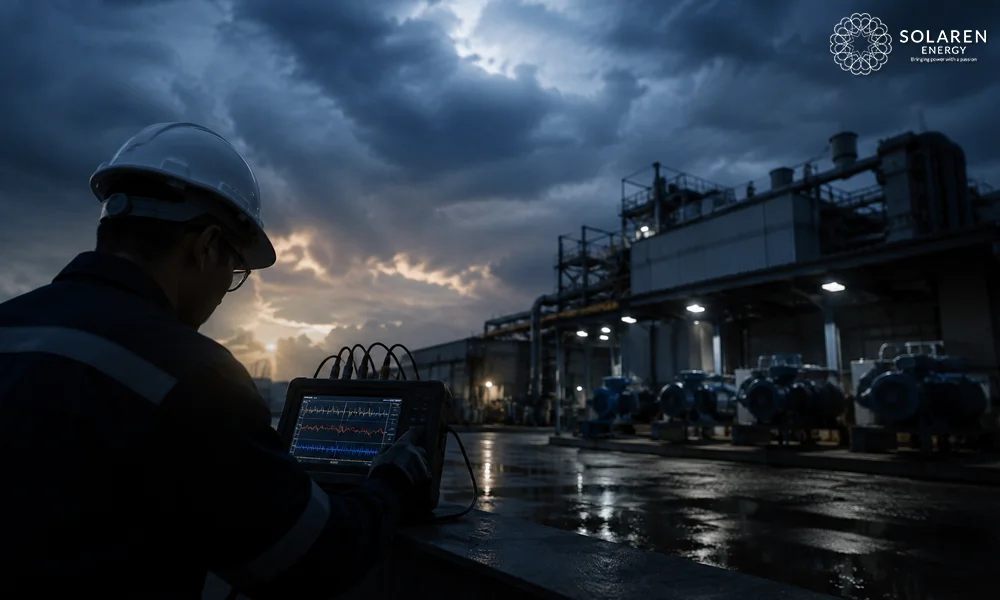
None of this works if the system is guessed at. The critical check on an industrial site can usually only be made with a power quality analyzer placed on the main feeders, closely monitoring peak loads and sag behavior over time. If a system is specified without that data, or a cheaper unit is fitted that cannot handle the peak inrush, it fails at exactly the moment it is needed. This is engineering work, done with instruments and a proper load study, before anything is ordered. It is the opposite of pulling a boxed kit off a shelf and hoping it fits your specific loads.
Where this leaves you
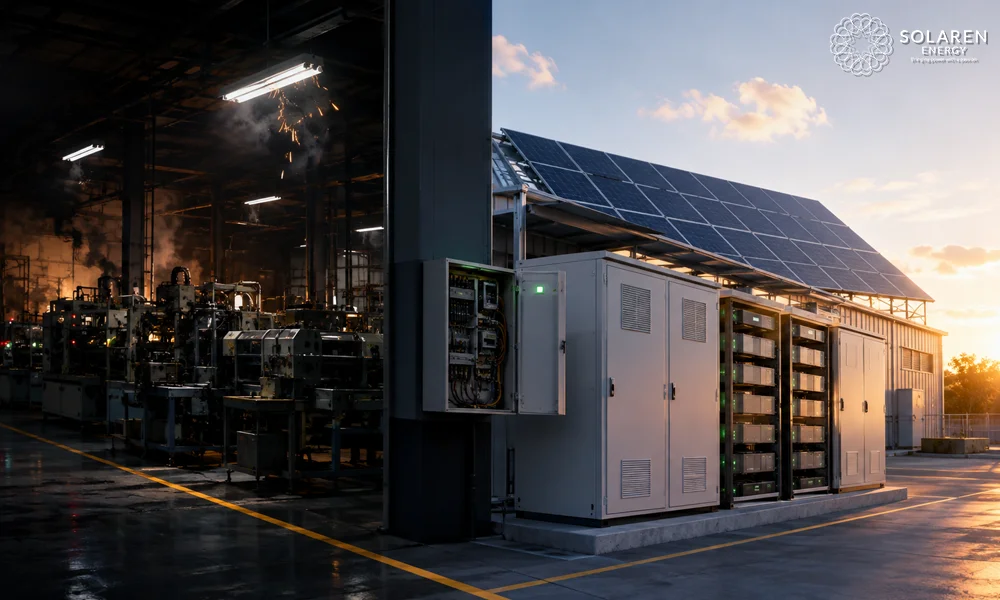
If you are still deciding which system type a facility needs, start with grid-tie vs hybrid vs off-grid solar. An industrial hybrid solar system in the Philippines is not just insurance against the next blackout. For many factories, it is the fix for a problem that drains money every day the grid is on, through sags, penalties, damaged equipment, and wasted solar. Backup is real, and the system provides it. But the daily value often sits in the power quality it restores. If your production is being hit by an unstable or expensive supply, ask us to put an analyzer on your feeders and show you what is actually happening. Then we design a system around your problem, rather than sell you a box and hope.
Frequently Asked Questions
Can a hybrid solar system fix power quality problems?
It can address several of them. With fast switching, it rides through voltage sags that would trip your equipment, and a well-designed system can help correct a poor power factor. It does not cure every power quality issue, but for sags and instability it is one of the most effective tools available.
What is the difference between backup and power quality?
Backup keeps you running when the grid fails. Power quality is the condition of the power while the grid is still on. Sags, low power factor, and harmonics all cost money without ever causing a blackout, and for many factories, that daily cost is greater than the cost of outages.
Why does a low power factor cost money?
Philippine utilities penalize a power factor below a set threshold, commonly around 85 percent. A factory running at 0.75 pays that penalty every month. Correcting the power factor removes the penalty and cuts losses in your own wiring as well.
How big is an industrial hybrid system?
It depends entirely on the site. One factory we are working on uses roughly one megawatt-peak of solar and around two megawatt-hours of storage, sized to its specific loads and power-quality problems. There is no standard size, so a load study comes first.
Do I need a power quality analyzer before installing?
For an industrial site, yes. The peak loads and sag behavior can only be measured properly with an analyzer on the main feeders. Designing without that data is how systems end up too small to do the job they were bought for.