Call Us

0917 879 6037

Send Mail

sales@solaren-power.com

Solar Energy in the Philippines: Benefits, Costs, and What to Expect in 2026

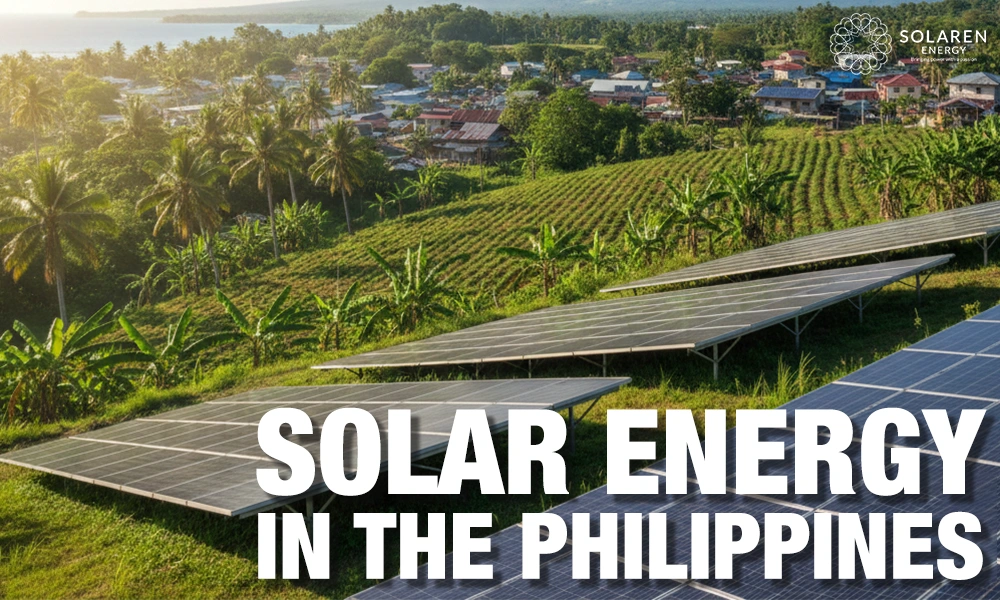
Solar Energy in the Philippines

The Philippines sits in one of the most solar-rich regions on the planet. With an average of five to six peak sun hours per day and an electricity grid that consistently delivers some of the highest power rates in Southeast Asia, the case for solar energy in this region is not a hard one to make. For homeowners, businesses, and industrial operators alike, the numbers have been pointing in the same direction for years. In 2026, they are pointing harder than ever.

This guide covers what solar energy actually costs in the Philippines, how long it takes to recover your investment, the current government framework, and what is possibly coming next.

Why the Philippines Is Built for Solar
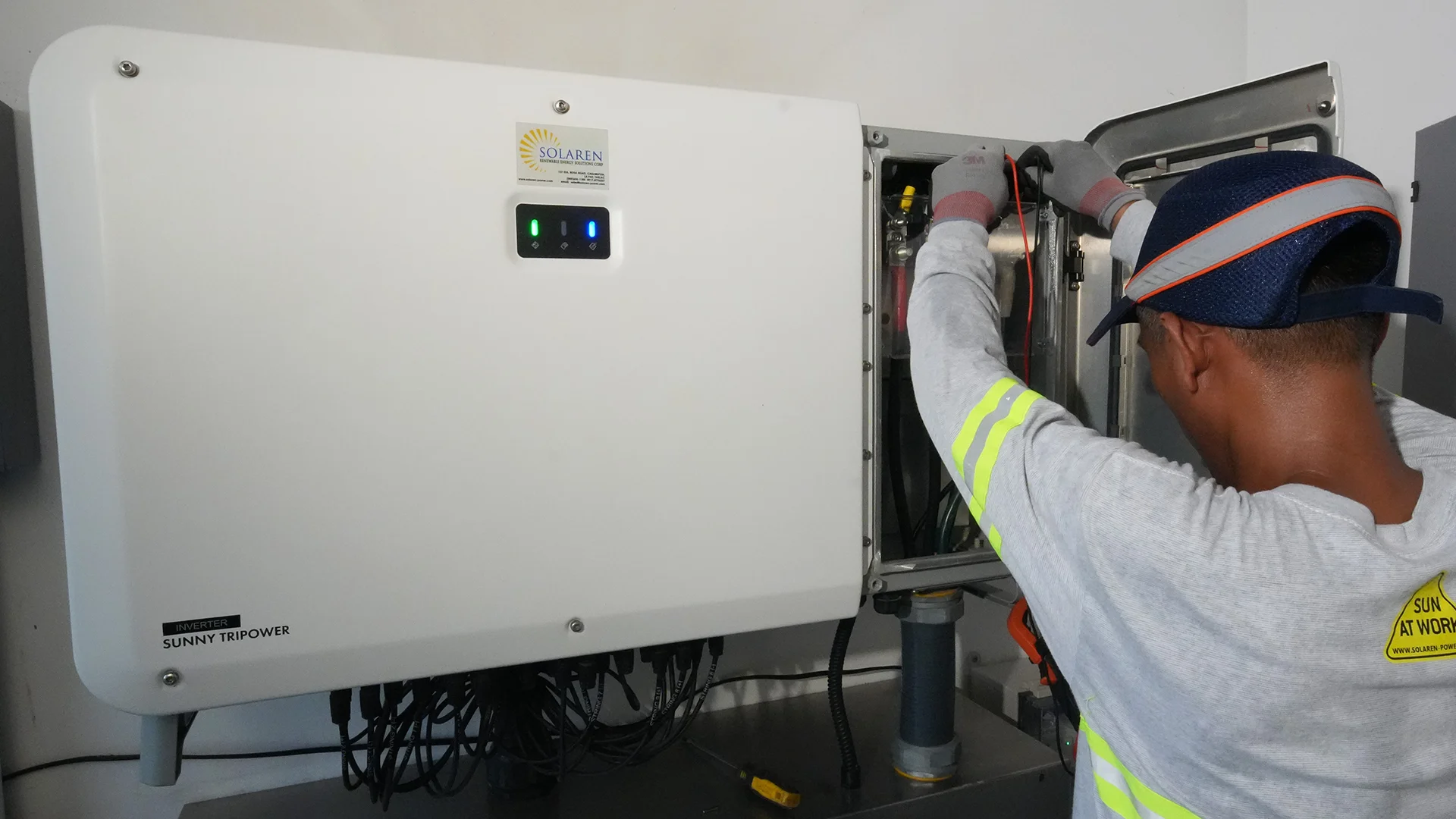
installation team

Geography does a lot of the work here. Positioned just above the equator, the Philippines receives between 1,500 and 1,600 kWh of solar irradiation per square meter every year. That is not a marginal advantage. It means that a solar panel installed in Manila, Cebu, or Tarlac will regularly outperform an equivalent panel installed in Germany, Japan, or the United Kingdom — countries where solar adoption has long been mainstream.

Beyond the geography, the economics are driven by one unavoidable reality: electricity in the Philippines is expensive. Depending on your utility provider and region, you are likely paying somewhere between PHP 10 and PHP 18 per kilowatt-hour. For commercial and industrial customers with high consumption, those bills represent a high and recurring cost that compounds year after year. Solar can address these costs directly, transforming simple sunlight into electricity that offsets grid power from the moment your system is switched on.

Add to this the falling cost of solar panels globally, and you have a market that has moved from early adoption to mainstream investment over the past five years.

What Does Solar Cost in the Philippines in 2026?

This is the question most people lead with, and understandably so.

For a quality, fully installed solar system from an established provider, expect to pay in the range of PHP 35,000 to PHP 45,000 per kilowatt-peak (kWp). This is an all-in figure covering panels, inverter, mounting, wiring, metering, installation labour, and commissioning. Prices vary depending on system size, roof type, location, and the equipment specified.

To put that in practical terms:
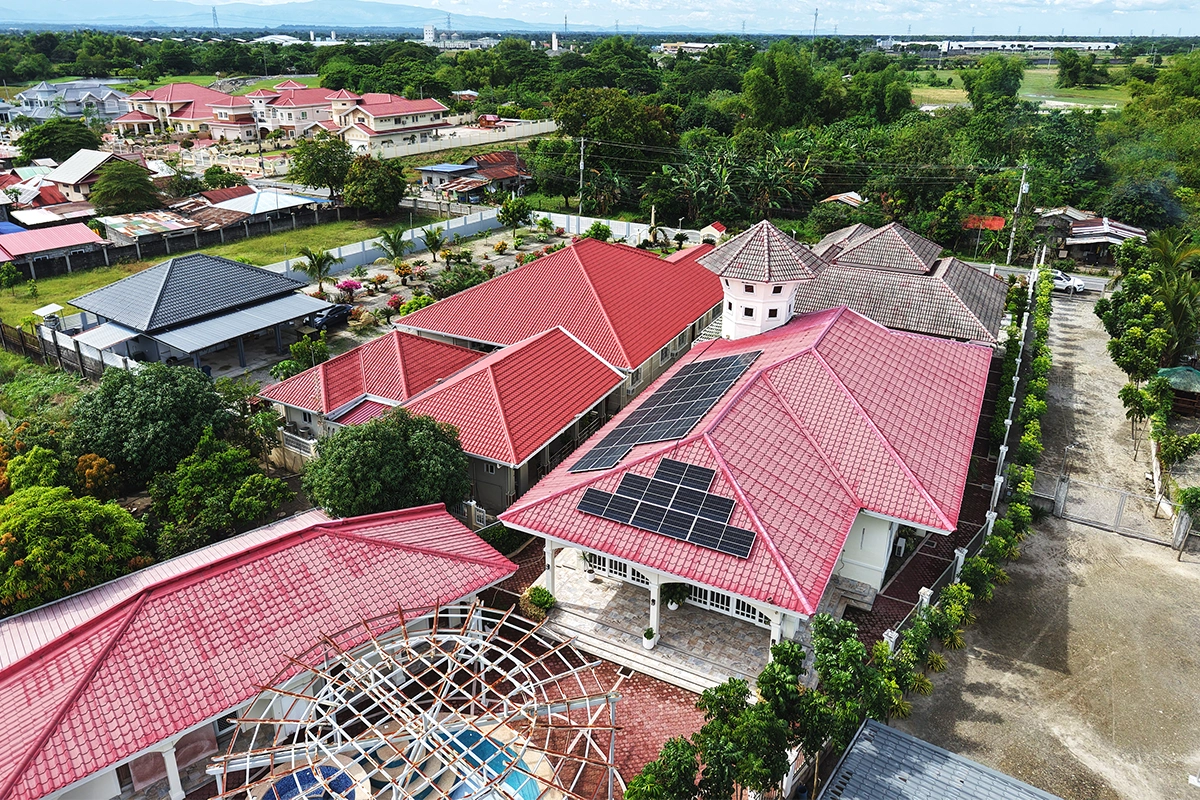
Tanedo Residence

A typical mid-sized home might install a 5 kWp system, which would cost roughly PHP 175,000 to PHP 225,000 and offset a significant portion of a household’s electricity bill. A commercial operation running machinery, cold storage, or large air-conditioning loads might install anything from 30 kWp to several hundred kWp.  Expected economies of scale bring the per-kWp cost toward the lower end of the range.

Panel quality does matter. There is a significant difference between budget panels from unverified suppliers and Tier 1 panels from manufacturers with established performance warranties. A reputable installer will always specify panels with a 25-year performance warranty and an expected system life of 30 years. Over that lifespan, the cost per unit of energy produced becomes very low indeed.

How Long Before You Get Your Money Back?

Payback periods in the Philippines are among the shortest in the world for solar, precisely because electricity rates are high and sunlight is abundant.

For residential customers, a well-designed system typically pays for itself within three to five years. For commercial and industrial customers, where consumption is higher, and the system can be sized more aggressively to the load, payback often falls within 2 to 4 years.

After payback, the system continues producing electricity for another 25 years or more. That is a long period of near-zero energy cost for the output the panels generate. For any business running tight margins on energy-intensive operations, that change is material.

The key variable is your current electricity rate. A business paying PHP 16 to PHP 18 per kWh will recover costs faster than one paying PHP 10 to PHP 12 per kWh. Your solar provider should be able to model this precisely for your site, using actual consumption data and local irradiation figures.

Net Metering: Selling Power Back to the Grid
Why net metering mattered

The Philippines has had a net metering framework in place for several years under the Renewable Energy Act (Republic Act 9513). Under net metering, any excess electricity your solar system produces and feeds into the grid is credited against your future electricity bills.

There are several limits to be aware of.  Net metering in the Philippines currently applies to systems up to 100 kWp.  In other words, to qualify, a system must not exceed this size. For residential and small commercial customers, this covers most scenarios comfortably, but systems that do not have their own dedicated transformers are sometimes restricted due to what is called “hosting Capacity”. Larger commercial and industrial systems above that threshold generate and consume their energy on site, which is typically the design intent for bigger installations anyway.

The entire regulatory environment around solar has improved noticeably in recent years. Red tape has been slashed, and legislation has been passed to simplify the interconnection.  This has all reduced the administrative burden that previously slowed net metering applications. What was once a lengthy, uncertain process has become significantly more straightforward for most applicants.   As a company, Solaren always handles these processes anyway.

Energy Pooling: A Major Development on the Horizon

In early 2026, the Department of Energy announced the introduction of an energy pooling framework for renewable energy in the Philippines. This is genuinely significant.

Energy pooling, in its most practical form, would allow multiple solar system owners to aggregate their generation capacity and participate collectively in the electricity market. For commercial and industrial users, this opens the possibility of monetising excess solar production beyond simple net metering credits.

The full implementation details are still being developed and published by the DOE, and Solaren is watching the rollout closely. What is clear already is the direction of intent: the government wants to make it easier, not harder, for solar energy to flow through the economy. For anyone considering a solar investment now, that direction matters. Systems being installed today are being built into a regulatory environment that is actively moving in favour of solar producers.

We will publish additional updates on energy pooling as the DOE releases guidance.

Who Is Going Solar Energy in the Philippines?
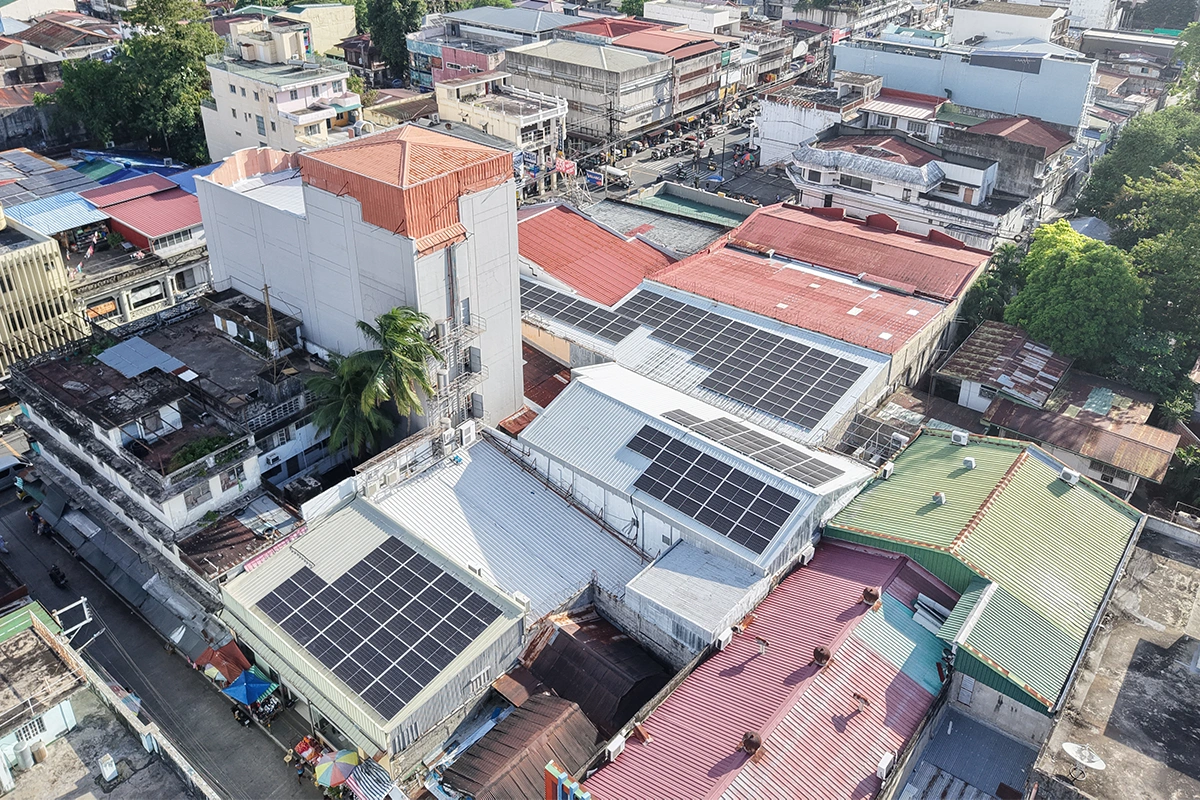
J Mart Department Store

One thing that stands out about solar adoption here is how broad it has become. This is no longer a technology reserved for large corporations with sustainability targets.

Walk through Solaren’s completed project portfolio, and you find manufacturing plants, department stores, poultry farms, hotels, universities, hospitals, government buildings, fast food outlets, residential homes in gated communities, and farms across multiple provinces. Please browse the full range of installations across commercial, industrial, and residential sectors on our projects page.

Our installation diversity shows a straightforward reality.  Solar works across virtually every property type and consumption profile in the Philippines. The economics differ for a cold storage facility operating 24 hours a day versus a residential home with daytime occupants, but in both cases, a properly designed and executed system delivers a strong return.

The sectors seeing the fastest uptake in 2026 are commercial retail, food production and agriculture, and mid-sized industrial operations. These are businesses with predictable, high daytime consumption and the space and structural capacity to accommodate meaningful system sizes.

What to Look for in a Solar Provider

solar installation company in the Philippines

Installation quality is the single most important factor in determining how well your system performs over its lifetime. A poorly installed system will break down faster, require more maintenance, and may never hit its projected output figures.  Quality components are critical, and speak for themselves.

There are several additional items worth verifying before signing any contract with an installation company. The company should have a demonstrable track record of completed projects across distinct sectors and scales. They should use in-house installation teams rather than subcontractors, which secures consistent standards and clear accountability when issues arise. They should be able to provide detailed energy modelling based on your actual site conditions, not just a standard estimate. And they should specify equipment with proper manufacturer warranties. For panels, a 25-year performance guarantee is a minimum. For inverters, generally 5 or 10 years

Philippine Electrical Code compliance is mandatory. Any system connected to the grid must be designed and installed in accordance with PEC standards by registered electrical engineers. This is both a legal requirement and a basic protection for your investment.

The Longer View

Electricity prices in the Philippines are not going down. The foundational factors that keep power expensive here —dependence on imported fuel, aging grid infrastructure, and high transmission losses—are not being resolved quickly. Solar does not solve all of those problems, but it solves your exposure to them. A solar investment locks in a significant portion of your energy supply at a cost that is known, predictable, and declining in real terms over time.

Over a 30-year system life, the gap between what you would have paid to the grid and what you actually pay becomes very large. For a commercial operation with a monthly electricity bill of PHP 500,000, even a 60% solar offset yields savings of tens of millions of pesos over the life of the system.

That is not a speculative outcome. It is a function of physics and arithmetic, applied to conditions that exist across the Philippines right now.

Getting Started
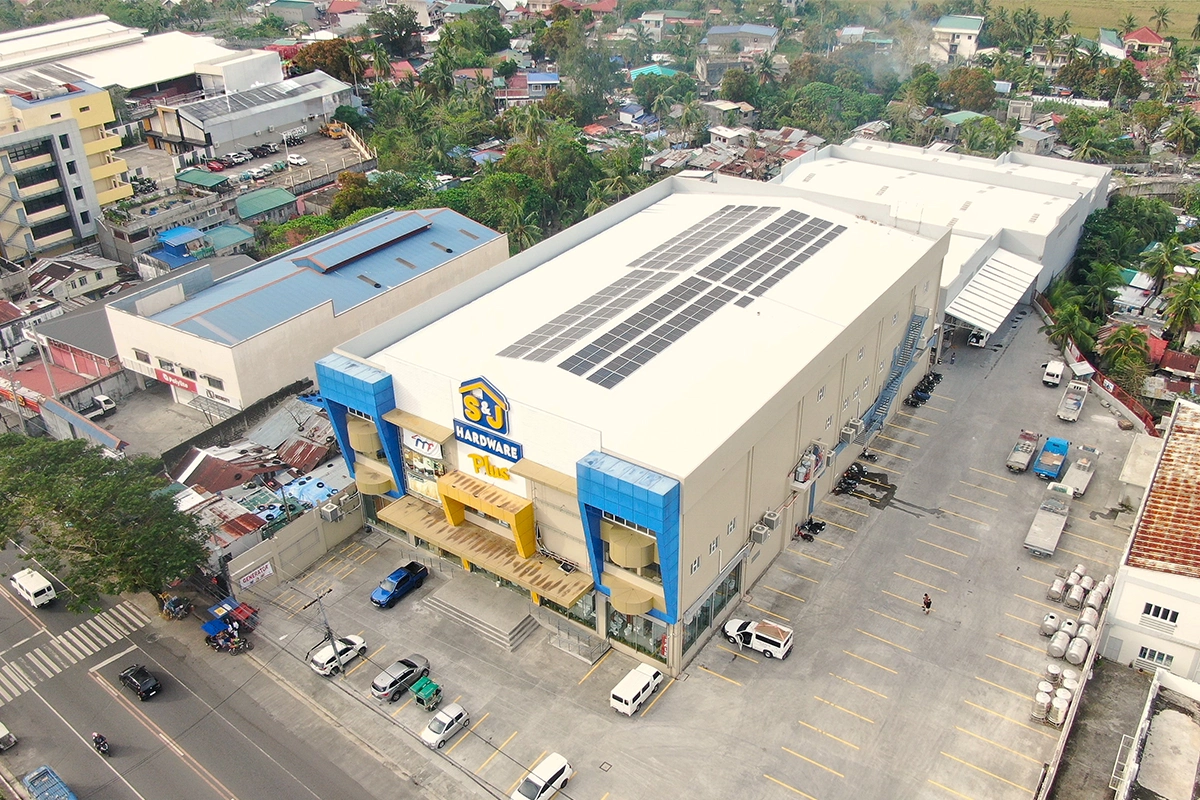
S&J Hardware Plus

The right starting point for any solar project is an accurate assessment of your site and consumption. An established provider will ask for your electricity bills, assess your roof or ground area, model your expected output, and present a clear financial projection showing costs, savings, and payback timeline.

If you are comparing providers, ask each one to walk you through their assumptions. How many peak sun hours are they using? What degradation rate have they applied to the panels? Are they using actual irradiation data for your location or a generic national average? The answers to those questions will tell you a great deal about how seriously they take the analysis.

Solaren has completed installations across more than 99 sites in the Philippines, spanning residential homes, commercial facilities, industrial operations, farms, schools, hospitals, and government buildings. To see the breadth and scale of what has been delivered, take a look at our completed projects.

If you are ready to explore what solar energy could look like for your property, get in touch with the Solaren team for a no-obligation consultation.
Share this post:
THE SMART INVESTMENT FOR YOUR HOME OR BUSINESS

SWITCH TO SOLAR PV!

We take pride in providing cutting-edge technology and expertise to help our clients power the future with clean, sustainable energy.
solar energy

BIR TAX CLEARANCE CERTIFICATE

A BIR Tax Clearance Certificate is issued by the Bureau of Internal Revenue and confirms that Solaren Renewable Energy Solutions Corporation has no outstanding tax liabilities and is fully current with all income and business tax obligations. This certificate is valid until 16 March 2027.
Under Executive Order No. 398 and the Government Procurement Reform Act (RA 9184), this clearance is a legal requirement for any contractor participating in government projects or bidding processes. It is a continuing obligation for the duration of any government contract. A contractor without a valid tax clearance cannot settle government contracts or receive final payment for completed works.
For private sector clients, this certificate signals something equally important. Solaren is a financially compliant, properly registered business with clean tax standing. In a sector where fly-by-night and hit-and-run operators are not uncommon, this is verifiable proof that Solaren is built for the long term. That distinction matters when our customers are committing to a 25-year asset.

KIM BRYAN C. LUSUNG

Project Electrical Engineer

Bryan brings a disciplined engineering background to Solaren’s project execution team, taking direct responsibility for on-site electrical works and individual project cycles from mobilisation through to commissioning. A Registered Electrical Engineer and Registered Master Electrician with a Master’s degree in Electrical Engineering (Power Systems) from Tarlac State University, he combines strong academic grounding with practical field experience across commercial construction, multi-site energy management, and solar PV maintenance and performance monitoring with a leading Philippine EPC. His prior exposure to solar plant operations gives him a working understanding of how installation decisions affect long-term system performance, which informs the quality of his on-site execution at Solaren.

Key Responsibilities

• Lead on-site electrical installation and project execution
• Manage individual project cycles from mobilisation to commissioning
• Ensure all electrical works conform to approved designs and Philippine Electrical Code standards
• Coordinate with the project management team on progress, timelines, and technical issues
• Support testing, energization, and formal turnover

BIR 2303

The BIR Certificate of Registration, also known as BIR Form 2303, is issued by the Bureau of Internal Revenue and confirms that Solaren Renewable Energy Solutions Corporation is a fully registered taxpaying business entity in the Philippines. This document establishes that Solaren operates transparently within the Philippine tax system, issues official receipts, and complies with national revenue regulations. For clients commissioning solar installations, working with a BIR-registered company matters. It protects you legally, ensures that payments are properly receipted, and confirms that the contractor you are dealing with is a legitimate, accountable business. Many informal or underqualified installers operate without proper tax registration. Solaren’s BIR registration is current, publicly verifiable, and forms part of the baseline compliance documentation we maintain alongside all other government accreditations.

BUREAU OF CUSTOMS REG 2025-2026

Solaren’s Bureau of Customs registration for 2025 to 2026 confirms our authorization to import solar equipment directly into the Philippines. This registration is significant for clients who want assurance that the hardware installed on their property has been sourced, declared, and cleared through official channels. Direct importation means Solaren has full visibility over the supply chain, from manufacturer shipment to local delivery. It eliminates the risks associated with undeclared, gray market, or improperly handled equipment that can affect warranty validity and long-term performance. Solaren sources panels, inverters, and battery systems from verified international manufacturers and processes all shipments through proper customs documentation. This registration is renewed annually and reflects our ongoing commitment to transparent, compliant procurement on behalf of every client we serve.

PHILIPPINE BOARD OF INVESTMENTS

Solaren’s Board of Investments registration confirms our standing as a recognized participant in the Philippines’ renewable energy sector under the national investment framework. BOI registration is granted to companies that meet specific criteria related to industry classification, capital structure, and compliance with Philippine investment law. For Solaren, this registration reflects our role as an established solar energy company operating within the country’s broader push toward clean energy development. It is a mark of institutional recognition that distinguishes properly structured solar companies from informal operators. Clients working with BOI-registered contractors can be confident they are dealing with a company that has been assessed at the national investment level, not just at the local licensing level. This credential is part of the complete compliance profile Solaren maintains across all relevant government agencies.

VIA MEMBERSHIP CERTIFICATE

Dun and Bradstreet is one of the world’s most recognized business verification and credit intelligence organizations. A Dun and Bradstreet listing confirms that Solaren has been independently verified as a legitimate, operating business entity with a traceable commercial history. This credential is particularly relevant for corporate clients, multinational companies, and procurement teams that require suppliers to meet international due diligence standards before awarding contracts. Many large organizations require a D&B listing as part of their vendor accreditation process. Solaren’s inclusion in the Dun and Bradstreet registry reflects our standing as a professionally structured company with a documented business history. It adds an internationally recognized layer of verification to our local government accreditations and reinforces Solaren’s credibility for clients operating at an enterprise or institutional level.

DEPARTMENT OF ENERGY REGISTRATION

The Department of Energy accreditation is the most direct and authoritative confirmation that Solaren is a qualified solar contractor in the Philippines. The DOE does not accredit companies based on self-declaration. Accreditation requires demonstrated technical capability, proper licensing, qualified personnel, and a verifiable track record of completed installations. For any homeowner or business commissioning a solar project, DOE accreditation should be a baseline requirement when evaluating contractors. It is the government’s own confirmation that the company you are hiring meets the national standard for solar installation work. Solaren has maintained DOE accreditation throughout our operating history and renews it through the standard assessment process. This certificate is one of the most important documents on this page and one of the first things any serious buyer should ask to see before signing a contract.

VIA MEMBERSHIP CERTIFICATE

Dun and Bradstreet is one of the world’s most recognized business verification and credit intelligence organizations. A Dun and Bradstreet listing confirms that Solaren has been independently verified as a legitimate, operating business entity with a traceable commercial history. This credential is particularly relevant for corporate clients, multinational companies, and procurement teams that require suppliers to meet international due diligence standards before awarding contracts. Many large organizations require a D&B listing as part of their vendor accreditation process. Solaren’s inclusion in the Dun and Bradstreet registry reflects our standing as a professionally structured company with a documented business history. It adds an internationally recognized layer of verification to our local government accreditations and reinforces Solaren’s credibility for clients operating at an enterprise or institutional level.

PCAB LICENSE 2025-2026

The Philippine Contractors Accreditation Board license is a legal requirement for any contractor performing electrical and construction work in the Philippines. Solaren holds a current PCAB license for 2025 to 2026, which confirms that our company meets the technical, financial, and organizational requirements set by the Construction Industry Authority of the Philippines. Working with an unlicensed contractor exposes clients to legal risk, voided permits, and installations that cannot pass government inspection. PCAB licensing ensures that the contractor has qualified personnel, proper bonding, and a track record that has been assessed by the relevant regulatory body. For solar installations that involve rooftop structural work, electrical systems, and grid connection, this license is not optional. It is a legal baseline, and Solaren maintains it without interruption as part of our standard compliance obligations.

Philgeps Solaren 2026

PhilGEPS, the Philippine Government Electronic Procurement System, is the official registry for suppliers authorized to participate in government procurement. Solaren’s PhilGEPS registration for 2026 confirms that we meet the documentary and compliance requirements set by the national government for accredited suppliers. This registration is relevant not only for government projects but as a general trust signal. The PhilGEPS accreditation process requires verified business registration, tax compliance, and proper licensing documentation. Companies that cannot pass this process are not eligible to work with government agencies, state universities, or publicly funded institutions. Solaren’s active registration confirms that our documentation is complete, current, and has passed independent government review. For any client, public or private, this is additional confirmation that Solaren operates as a fully compliant and accountable solar contractor.

Securities and Exchange Commission Registration

Solaren Renewable Energy Solutions Corporation is registered with the Securities and Exchange Commission of the Philippines, confirming our legal existence as a domestic corporation under Philippine law. SEC registration establishes the company’s corporate structure, confirms the identity of incorporators and directors, and places the company within the formal regulatory framework governing Philippine corporations. For clients, this means you are dealing with a properly constituted legal entity that can be held accountable, can enter into enforceable contracts, and has a verifiable corporate history. Many informal solar operators function as sole proprietorships or unregistered partnerships with limited legal accountability. Solaren’s SEC registration is part of the foundation that makes us a dependable long-term partner. It is publicly verifiable through the SEC’s online registry and has been in place since Solaren was founded in 2014.

SOLAREN BUSINESS PERMIT 2026

Solaren’s local government business permit for 2026 confirms that our operations are fully authorized by the relevant local government unit. Business permits are renewed annually and require compliance with local ordinances, zoning regulations, and tax obligations at the municipal level. While a business permit may seem like a basic credential, its absence is a red flag. Contractors operating without a current permit are not legally authorized to conduct business in that jurisdiction. For clients in Central Luzon and surrounding regions, this permit confirms that Solaren is a locally rooted, properly authorized business, not a transient operator with no fixed accountability. Combined with our national accreditations, DOE registration, and SEC incorporation, this permit completes the full picture of a solar company that operates transparently at every level of government oversight.

Ayala Land Accreditation Certificate

Ayala Land is one of the Philippines’ most respected property developers, and their accreditation process for solar contractors is rigorous. Being an Ayala Land accredited solar installer means Solaren has passed assessment across licensing, engineering standards, insurance requirements, safety compliance, and track record. Developers of Ayala Land’s standing do not accredit contractors lightly. Their projects involve premium residential and commercial properties where installation quality directly affects property value and tenant satisfaction. Solaren’s accreditation confirms that our technical standards, documentation, and project execution meet the requirements set by one of the country’s most demanding real estate organizations. For clients in Ayala-developed communities or those who simply want assurance that their contractor has been vetted by a credible third party, this accreditation is a meaningful signal of quality and reliability.

installation teams

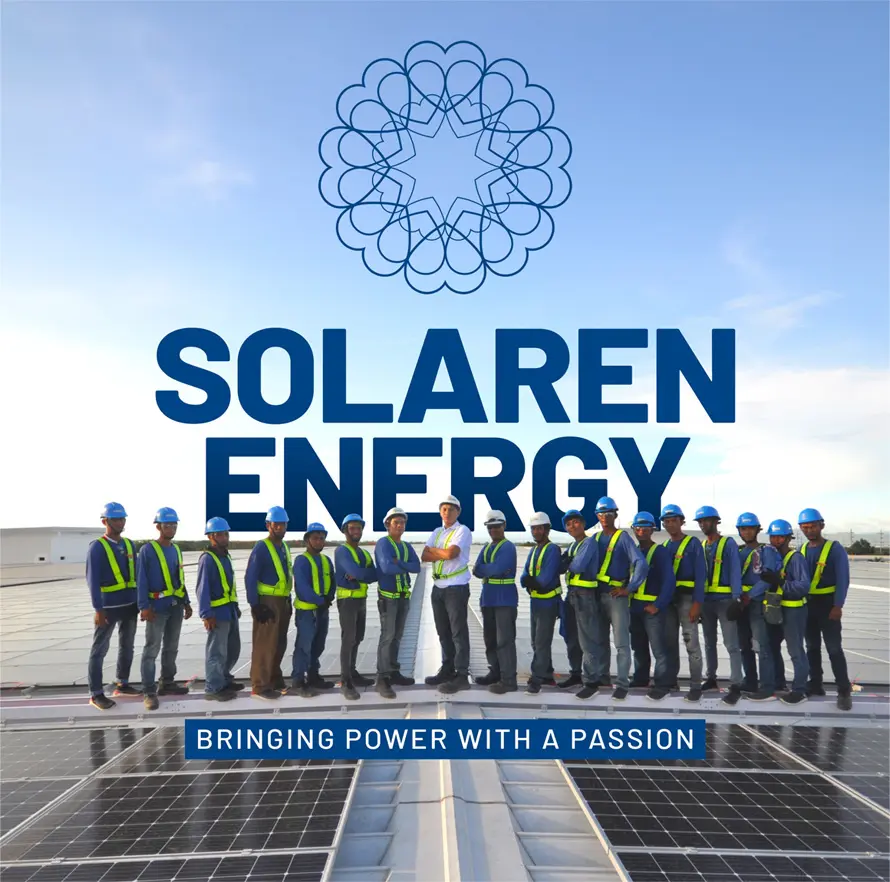
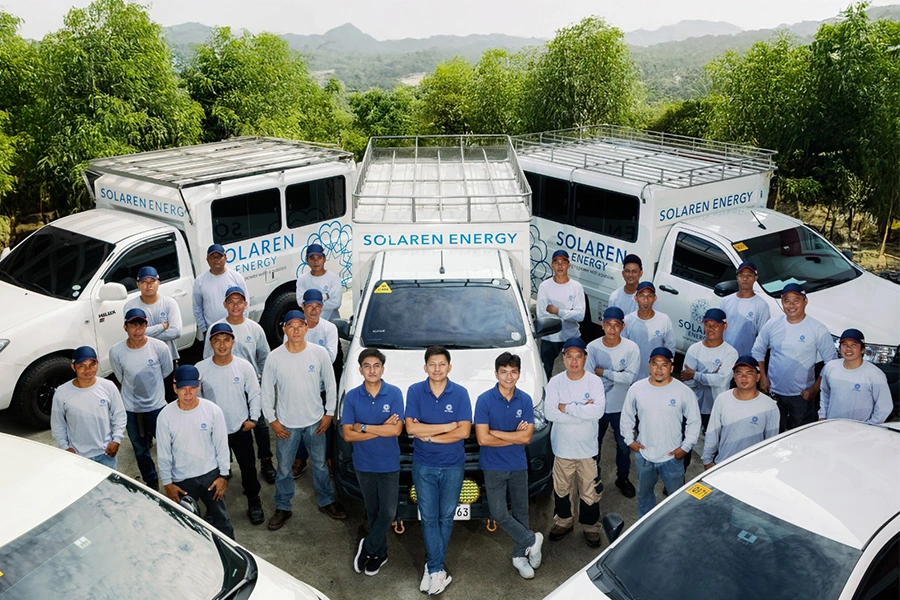
Solaren’s in-house installation teams deliver commercial and industrial solar projects with the consistency and precision that large sites demand. With several trained crews operating across the Philippines, we handle multiple installations simultaneously while maintaining high, uniform workmanship standards. Each team works closely with Solaren’s engineers to plan structural layouts, optimize wiring routes, position inverters for optimal performance, and integrate the system safely into the client’s existing electrical network. This level of coordination ensures clean execution on the roof and inside the facility, with every detail checked against strict safety and performance requirements. Our teams are experienced with complex environments, from homes to factories and warehouses, showrooms and food-production sites, and they follow a disciplined workflow that protects system performance for years. Because all installation work is performed by Solaren personnel, not subcontractors, clients receive complete accountability, better quality control, and systems built to deliver reliable energy from the day of commissioning.

JERRICO MIGUEL

Junior Electrical Engineer

Jerrico assists with electrical installation, testing, and commissioning across commercial PV systems. With 3 years of engineering experience, he supports senior engineers with wiring, system validation, and integration of monitoring systems. He has contributed to deployments for food manufacturing, warehousing, and commercial facilities.

Key Responsibilities

• Assist with wiring, conduit work, and panel installation
• Support testing, commissioning, and on-site validation
• Perform basic electrical troubleshooting and checks
• Document as-built work and site conditions
• Coordinate with senior engineers for daily tasks

ARNOLD NICOLE YOUNG

IT Specialist

Arnold manages and oversees Solaren’s IT infrastructure, Networking and monitoring platforms. With over seven years of IT and network experience, he maintains monitoring for hundreds of live systems nationwide, ensuring uptime, data security, and reliable performance visibility. He is CCNA-certified.  Arnold is responsible for coordinating the operations and maintenance of existing systems,

Key Responsibilities

• Manage O and M, monitoring portals and system dashboards
• Maintain IT networks and data security protocols
• Support engineers with diagnostics and remote checks
• Ensure uptime of client monitoring portals
• Implement updates and coordinate hardware integration

JOHN RUDOLF SIGUA

PV Design Engineer

John specializes in system modelling, layout design, and performance simulation for commercial and industrial projects. A Registered Electrical Engineer with five years of design experience, he works with PVsyst, AutoCAD, and utility-compliant PEC standards. He supports commissioning and troubleshooting to ensure accurate performance and reliable operation.

Key Responsibilities

• Prepare PV system layouts, modelling, and energy simulations
• Size components for optimal performance and compliance
• Produce design packages for permitting and construction
• Support commissioning, technical checks, and system validation
• Provide troubleshooting for design-related issues

EJ P. ERESE

Project Manager | Senior Electrical Engineer

EJ manages full project life cycles for Solaren’s commercial and industrial installations, from design coordination and procurement through to commissioning and client turnover. A Registered Electrical Engineer, Registered Master Electrician, and Safety Officer 2, he brings six years of hands-on field experience across some of Solaren’s most demanding deployments, including the Oishi and Toyota projects, and has supervised crews on multiple multi-MWp systems with a flawless safety record. His combination of technical depth and site-level discipline makes him one of the most capable project managers operating in the Philippine solar EPC space.

Key Responsibilities

• Manage full project life cycles across commercial and industrial PV systems
• Lead engineering coordination, crew assignments, and on-site execution
• Enforce safety compliance and conduct toolbox meetings
• Track progress, manage timelines, and maintain client communication
• Validate installation work against approved designs
Oversee testing, energization, and formal project turnover

CARLO BENJAMIN NUCUM

Senior Project Manager

Carlo has long led the company’s engineering teams across full project lifecycles, from planning to commissioning. He has delivered multi-MWp systems for clients such as Liwayway Marketing, Bench, Toyota, New Zealand Creamery, and Atlantic Grains. A Registered Electrical Engineer with more than eight years of experience, he manages and oversees PEC-compliant installations and quality control across commercial and industrial sites.

Key Responsibilities

• Lead project teams and manage end-to-end delivery in entirety
• Oversee installation quality, safety, and technical compliance
• Coordinate with clients, suppliers, and engineering groups
• Review electrical plans and validate system performance
• Supervise testing, commissioning, and turnover documentation

Christopher Henry Hutchings

Sales Director

Chris brings four decades of international finance experience, including senior leadership roles in Hong Kong where he still qualifies as a Responsible Officer under the Hong Kong Securities and Exchange Commission requirements. His background in Private Wealth, managing client portfolios and evaluating long-term financial strategies allows him to help enterprise clients assess solar investments with clarity and confidence. Chris leads Solaren’s commercial sales strategy, working with clients to structure accurate proposals, reliably analyses return expectations, and build sustainable partnerships. He collaborates closely with engineering and procurement teams to ensure every system is designed, priced, and projected with precision.

Key Responsibilities

• Leadership of enterprise and commercial sales strategy
• Client advisory on ROI, system design, and financial planning
• Proposal development with engineering and procurement teams
• Partnership building across commercial and industrial sectors
• Risk and value assessment for large-scale solar investments
• Reliable and trusted representation of Solaren in high-level client engagements and negotiations

Ronnie C. Lorenzo

General Manager & Corporate Secretary

Ronnie manages Solaren’s day-to-day operations, coordinating procurement, logistics, manpower, and documentation across all active project sites. He supervises regulatory submissions, contract execution, and local permitting to ensure every deployment remains compliant and on schedule. His critical role connects engineering, procurement, and administrative teams so projects move efficiently from planning to installation and commissioning. As Corporate Secretary, he maintains board records, supports executive reporting, and ensures transparency across the company’s internal processes and external commitments.

Key Responsibilities

• Daily operations, scheduling, and logistics
• Procurement coordination and supplier management
• Contract execution and regulatory submissions
• On-site documentation and compliance tracking
• Cross-team coordination from planning to commissioning
• Corporate Secretary duties and board record management

Anicia Pearce

President

Ann leads corporate governance, financial discipline, and regulatory compliance for Solaren, ensuring full alignment with the companies ever growing regulatory requirements. She manages audit readiness, internal controls, and risk management across all departments. Her work anchors the company’s expanding operations, providing clear structures for procurement, contracting, and documentation. Ann also oversees systems that ensure complete records and proper regulatory filings support each project from planning to commissioning. Her no-nonsense leadership reinforces Solaren’s credibility with clients, partners, and government agencies as the company continues to handle larger commercial and industrial portfolios.


Key Responsibilities

• Corporate governance and regulatory compliance
• Financial controls, budgeting, and audit readiness
• Risk management and operational discipline
• Oversight of contracting, documentation, and procurement workflows
• Alignment with all regulatory and Government standards
• Executive support for cross-department operations

Neil H. Pearce

Managing Director

Neil leads Solaren’s strategic planning and oversees all commercial, financial, and operational decisions across the company’s national portfolio. He brings over three decades of experience across Asia’s financial markets, including his past work and key Directorships for several private wealth management companies in Hong Kong. He guides capital allocation, project evaluation, and long-term planning while strengthening supplier relationships with global partners. Neil has overseen more than 85 MW of commercial, industrial, and residential installations and continues to steer Solaren’s expansion into AI-driven monitoring, energy storage, and enterprise-scale engineering systems. He also serves as a director for several regional companies.


Key Responsibilities

• Strategic direction and long-term planning
• Capital allocation and project funding oversight
• Partnership management with global suppliers
• Corporate governance and executive decision-making
• Evaluation of commercial and industrial project pipelines
• Expansion into energy storage and digital monitoring, together with Artificial Intelligence

Renewable Energy Solutions

GET A QUOTE