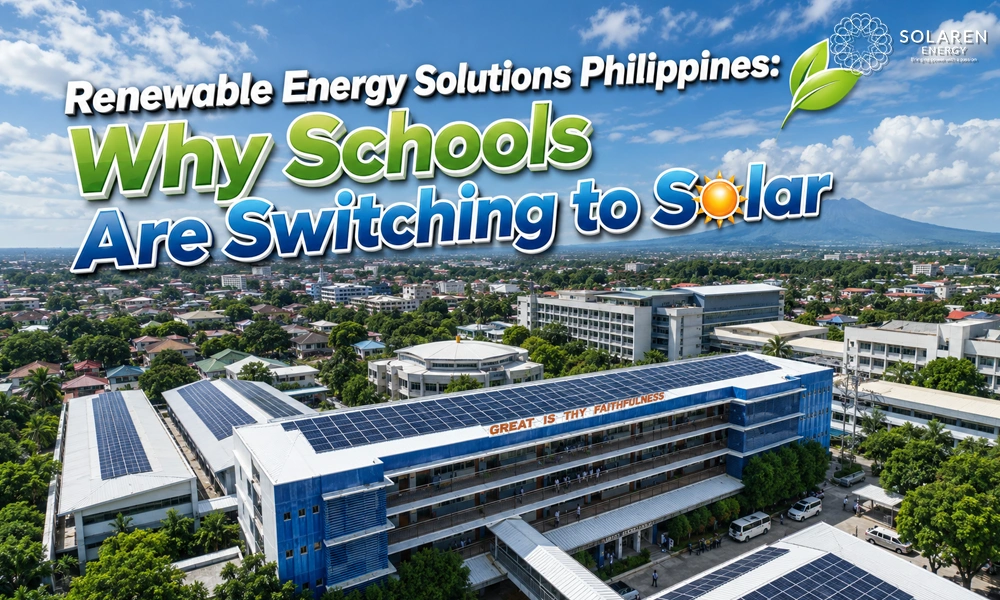
Schools are one of the best candidates for solar in the Philippines, and the reason is straightforward. A school operates roughly 221 teaching days a year, with classrooms, air conditioning, lighting, and IT equipment running consistently through daylight hours. That consumption profile lines up almost perfectly with what a solar system produces. The sun generates power during the day. Schools use power during the day. The match is about as clean as it gets.
Add net metering, which allows surplus power generated on weekends and during school holidays to earn credits against future bills, and the financial case becomes compelling.
What the Numbers Look Like
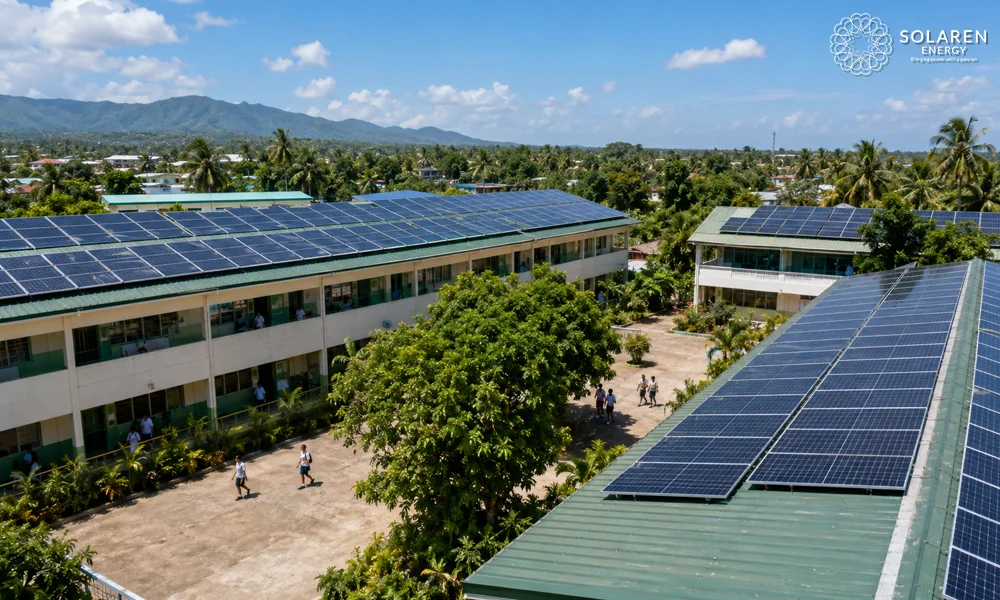
A 100 kWp rooftop system on a mid-size campus will generate approximately 140,000 kWh per year under typical Philippine conditions. During school days, around 70 percent of that generation is consumed directly by the campus, displacing grid purchases worth roughly PHP 1.1 million annually at current utility rates. The remaining 30 percent, generated on weekends and during holiday periods when the campus load is low, is exported to the grid and credited against future bills.
Total annual benefit from a system of that size typically lands in the range of PHP 1.3 to 1.4 million. At that rate, payback sits well under four years, against a panel life of 30 years or more. The remaining 26-plus years of generation are essentially free electricity.
For a school managing tight budgets and pressure on tuition fees, those numbers are not marginal. They are transformative.
Schools That Have Already Made the Move
Solaren has installed systems across several Philippine educational institutions. Holy Angel University, Creston Academy, Northeastern Colleges, Living Angels Christian Academy, and Osias Colleges are among the campuses now running on solar.
At Living Angels Christian Academy, a carefully structured multi-meter installation brought monthly electricity costs to near zero across the campus. The savings freed up budget that went directly into facilities and academic programmes. That is the outcome a well-designed renewable energy solution delivers for a school. Not just lower bills, but resources redirected toward the institution’s actual purpose.
How Net Metering Works for a School
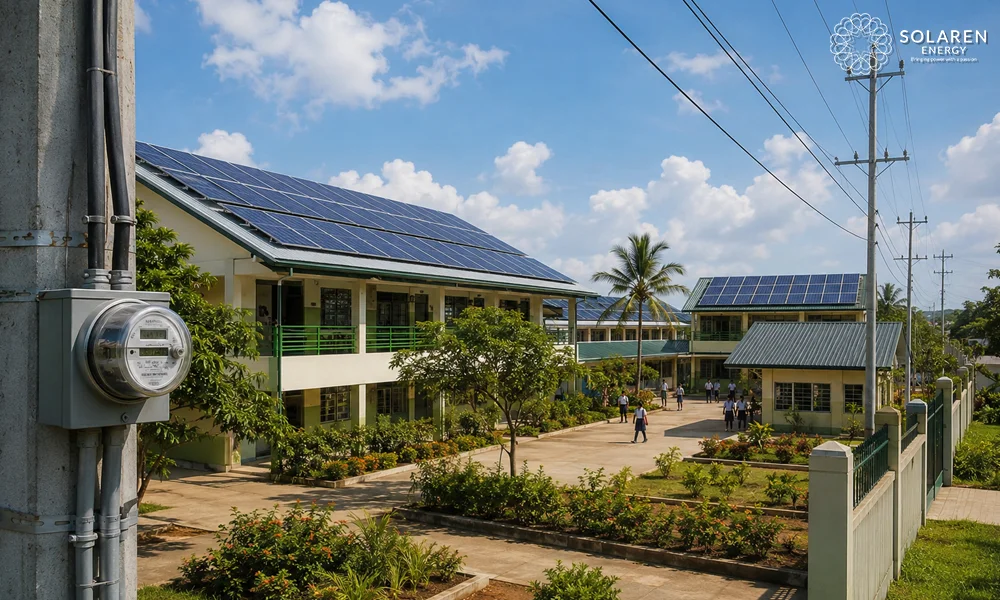
The mechanics are worth understanding clearly. Your solar system connects to the grid through a bi-directional meter that tracks both what your campus draws from the grid and what it exports back. At the end of each billing period, your utility calculates the difference. If your exports exceed your imports, the surplus carries forward as a credit against the following month.
For a school, this means the heavy generation during summer vacation and long holiday breaks is not wasted. It accumulates as credits that offset bills during the busier academic terms when consumption is higher and generation may be slightly lower due to cloud cover.
The system size should be matched to your peak demand or slightly below it to stay within the 100 kWp per meter net metering threshold. Exceed that threshold on any single meter and you lose net metering eligibility on that connection. Solaren designs around this from the first proposal.
Design Considerations Specific to Schools
A few design decisions make a meaningful difference for school installations.
Oversizing slightly for peak summer sun helps compensate for reduced output during the monsoon months, smoothing the annual generation curve. On flat concrete or metal roofs, an east-west panel orientation can spread generation across more of the school day rather than peaking sharply at midday. Where flagpoles, water towers, or trees create partial shading, microinverters maintain output from unshaded panels without the losses you get from string inverter configurations.
If battery storage is a future consideration, wiring the system to be battery-ready from the start avoids costly retrofitting later.
Renewable Energy Solutions for Schools Beyond the Electricity Bill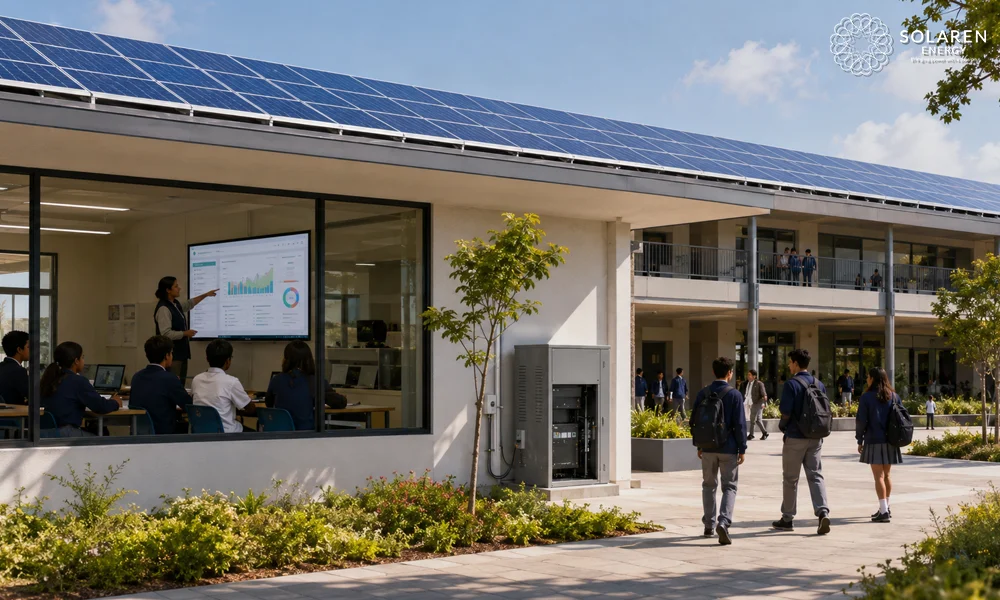
The financial return is the headline, but schools that have gone solar report several other gains worth noting.
Stable electricity costs make multi-year tuition planning more predictable, which eases pressure on families. A credible sustainability commitment strengthens relationships with eco-minded donors and corporate partners. Live energy monitoring dashboards create genuine STEM teaching opportunities. Rooftop panels shade the roof surface beneath them, which reduces radiant heat into top-floor classrooms. And a properly designed system with battery backup can maintain lights, servers, and water pumps during grid outages.
None of these replace the financial case. But they reinforce it.
How Schools Typically Fund the Project
Zero-down lease structures allow a school to go solar with no upfront capital. Monthly lease payments are set below the school’s previous electricity spend, so the project is cash-flow positive from the first month.
Green loans from Philippine banks with favourable terms for energy efficiency investments are another route, particularly for schools that prefer to own the asset outright from the start. Some institutions have paired green loans with energy efficiency grants to reduce the net financing cost further.
A less conventional but effective approach used by some alumni-connected schools is a dedicated solar fund, where graduates contribute toward panels installed in their name or their graduating batch. It turns an infrastructure project into a community one.
Practical Steps for School Leadership
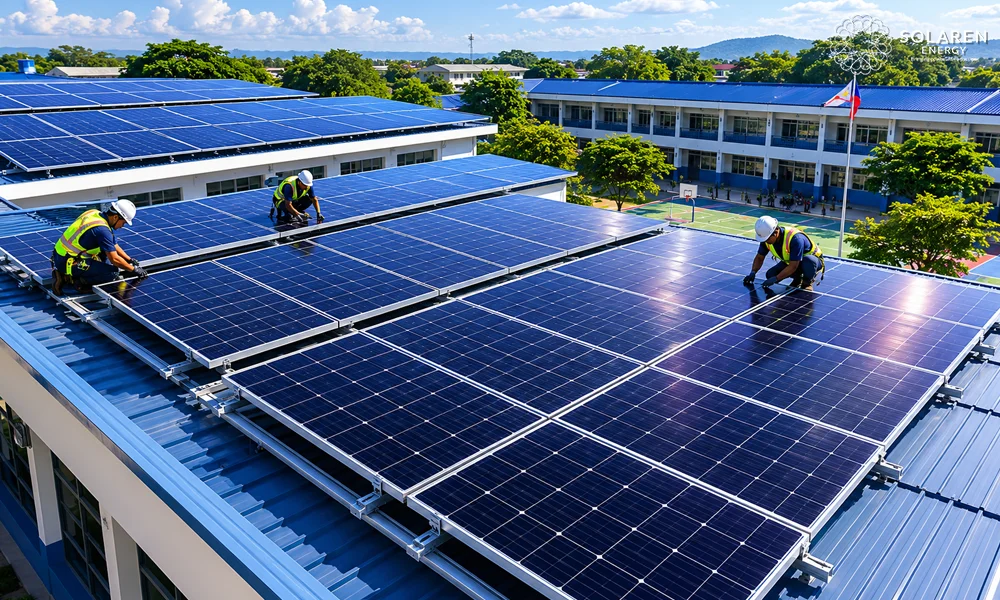
The process does not need to be complicated. Gather your last 12 months of electricity bills. Note your available roof space, any carport structures, and open grounds that could support ground-mounted panels. Then invite an accredited contractor to conduct a free site audit.
From there, a credible provider should give you a layout, a generation forecast, and a cash-flow model within a week. That is the document you bring to your board. Frame it as a long-term infrastructure asset, not a one-time expense, because that is exactly what it is.
Contact Solaren for a free site assessment. We have worked with schools across the Philippines and understand the specific design, compliance, and financing considerations that apply to educational institutions.
Frequently Asked Questions: Solar for Schools in the Philippines

-
Will cloudy weather during exam periods significantly affect the system?
No. The grid supplies power instantly whenever solar generation falls short, so your campus operations are unaffected. Net metering spreads the financial impact of lower-generation periods across the full billing cycle, keeping your overall return on investment stable. A well-sized system accounts for seasonal variation in its projections.
-
How much maintenance does a school solar system require?
Very little. Panels should be cleaned once or twice a semester depending on dust and weather conditions at your site. Remote monitoring alerts your provider if output drops unexpectedly, so issues are caught early without requiring staff to actively manage the system. Day-to-day, the system runs in the background without attention.
-
Do rooftop panels make classrooms hotter?
The opposite, generally. Panels installed above a roof surface shade the concrete or metal beneath them, reducing radiant heat transfer into the building. Top-floor classrooms directly below the array typically see a measurable reduction in indoor temperature, which can improve comfort and concentration during class hours.
-
What about fire safety?
Modern solar installations include rapid shutdown systems that de-energise the array within seconds in the event of a fault or emergency. This is a standard requirement under current Philippine electrical codes and is included in all Solaren installations as a matter of course, not as an optional upgrade.
-
Can a school get solar without any upfront capital?
Yes. Zero-down lease structures are available for schools that cannot or do not want to commit capital upfront. Under this arrangement, a third party owns the system and the school pays a monthly lease fee set below its previous electricity spend. Ownership can transfer to the school at the end of the lease period. The school benefits from lower electricity costs from day one without any capital outlay.
-
How long does the installation take and will it disrupt classes?
Most school installations of 50 to 200 kWp take between 10 and 20 working days for the physical installation. Work is scheduled to avoid disruption to classes, and the installation process itself does not require any part of the campus to go offline. The switch-on process involves a utility witness test and takes one day.
-
What size system does a typical school need?
It depends on your campus load, available roof space, and meter configuration. A single-building school might need 30 to 50 kWp. A multi-building campus with multiple utility meters could support several hundred kWp in total while keeping each meter within the 100 kWp net metering threshold. Solaren sizes every system based on an actual audit of your site, not a standard template.