Planning a commercial solar installation in the Philippines takes more than selecting panels and signing a contract. It touches engineering, finance, safety, regulation, and long-term energy management. When the process is handled well, the result is an asset that performs quietly and reliably for decades. When it is rushed or poorly coordinated, problems surface after commissioning when they are hardest and most expensive to fix.
This guide walks through each stage in order, from early planning through to post-installation monitoring, so you know what to expect and what to insist on at every step.
Set Clear Goals Before You Do Anything Else
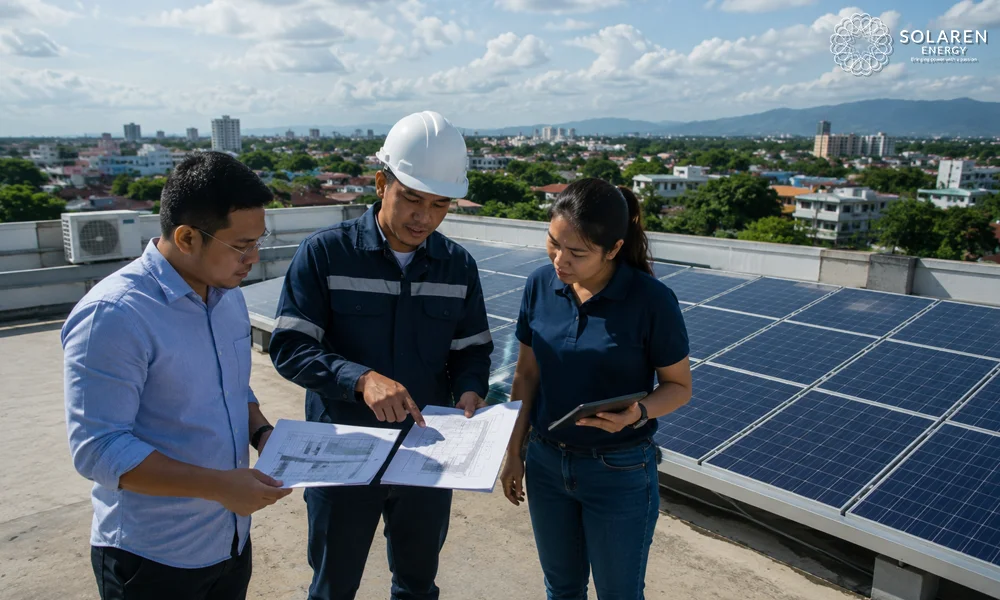
The most common source of project problems is starting without a clear brief. Before you request quotes or invite site inspections, align your internal team on what you are actually trying to achieve.
Gather at least 12 months of electricity bills. This gives your installer a full picture of how your consumption changes across seasons, not just a snapshot. Identify your primary objective. Is this primarily about reducing operating costs? ESG commitments? Energy security against grid outages? The answer shapes the design.
Check for site constraints early. Roof lease agreements, planned construction work, structural load limits, and upcoming building modifications all affect what is feasible. A short written brief covering these points keeps the project focused and prevents design rework later. It also signals to your installer that you are a serious and organised client, which tends to produce better proposals.
Insist on a Proper Site Inspection
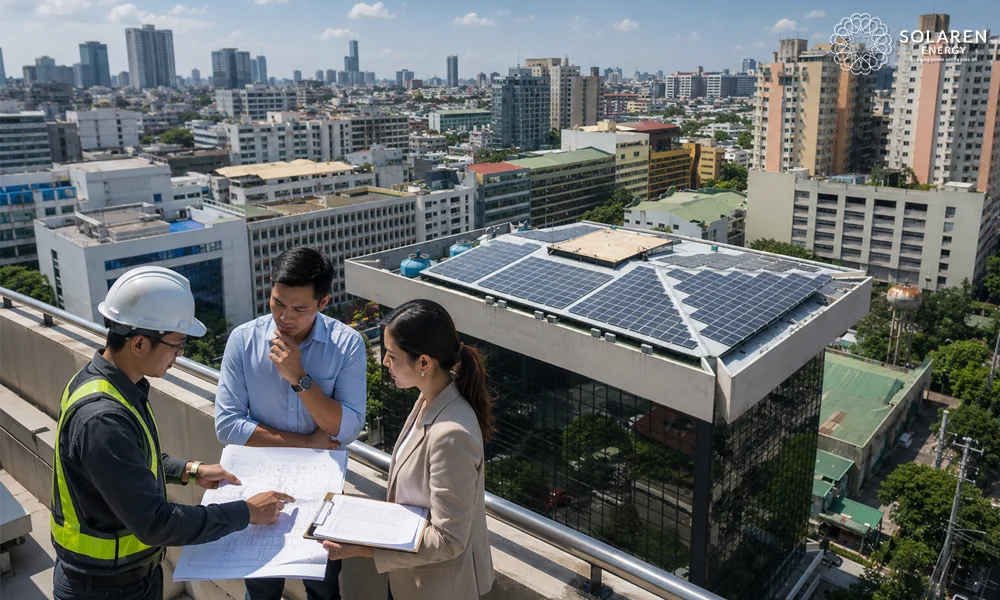
A quote produced without a site visit is not a serious quote. Before any design work begins, your installer should physically inspect the roof, examine drainage paths and available anchor points, measure shading at different times of day, and review your electrical diagrams to confirm spare capacity in your switchboards.
What you should receive afterward is a written site report with photographs, measurements, and marked roof drawings. This document becomes the foundation for engineering design and permit applications. If an installer cannot or will not produce this, that tells you something important about how they will handle the rest of the project.
Compare at Least Two Design Options
A single proposal gives you nothing to evaluate against. Ask for at least two layouts. One that maximises total output, and one that balances cost with practical installation constraints. Then compare them properly: capacity in kilowatts DC and AC, estimated annual generation, self-consumption ratio, connection points for net metering, and a risk list with mitigation measures.
Understanding the trade-offs between upfront cost, long-term yield, and operational flexibility is the whole point of this exercise. A provider who offers only one option and discourages comparison is not acting in your interest.
Start Permits and Approvals Early
This is where many projects lose months. Commercial solar installations in the Philippines require a building permit, structural safety clearance, and utility authorisation for grid interconnection. If you plan to export surplus power, you also need a net metering agreement with your distribution utility.
Each of these involves a different agency or authority, and processing times are not always predictable. Start as early as possible and choose an installer with direct experience managing this paperwork. Solaren handles all documentation and submissions in-house, which means clients do not need to coordinate across multiple agencies while also running their business.
Build a Realistic Project Schedule
Once permits are in process, work with your operations team to identify the best installation window. Many businesses align solar installation with low-production periods or planned maintenance shutdowns to minimise disruption. If your facility runs continuously, phased installation across zones is usually possible.
Your installer should provide a milestone schedule covering equipment delivery, lifting, installation by area, and testing. Share this internally so every department that needs site access visibility has it. Surprises during installation are almost always avoidable with adequate advance planning.
Manage Procurement With Discipline
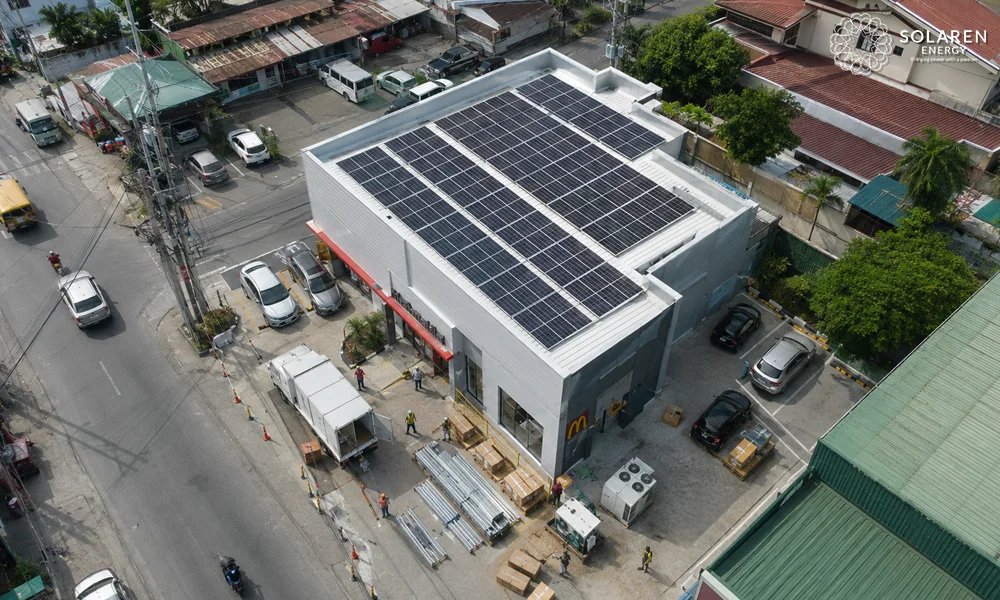
Supply chain timing can delay an otherwise well-organised project. Confirm panel and inverter models early, and verify they are approved for Philippine conditions, including local wind zone requirements. The mounting system must match both your roof type and structural specifications.
Delivery timing matters. Materials arriving too early create site congestion. Late arrivals stall installation crews. Solaren’s procurement team coordinates suppliers, freight, and staging to ensure materials arrive when they are needed, not before and not after.
Maintain Safety and Quality Standards Throughout Installation
A professional installer divides work into zones, maintains clear safety boundaries, and runs daily briefings that cover both crew safety and the protection of your staff and operations. This is not bureaucratic overhead. It is how serious contractors protect everyone on site.
Before the system is energised, technicians should test electrical polarity, grounding, and insulation resistance. Inverter settings should be verified against design specifications. Every stage should be documented with a checklist. At Solaren, every project goes through multiple inspection layers before commissioning. The paperwork that results is not just for compliance. It protects the client.
Documentation and Handover
At completion, you should receive a full handover package. This includes as-built drawings, product manuals, test certificates, warranty documentation, and access to the monitoring platform. Your team should be trained on how to use the monitoring system and who to contact if something requires attention.
Agree on a preventive maintenance schedule before the installer leaves site. Get direct contact details for support staff, not just a general inbox. These steps are the difference between a project that ends at commissioning and a relationship that continues for the life of the asset.
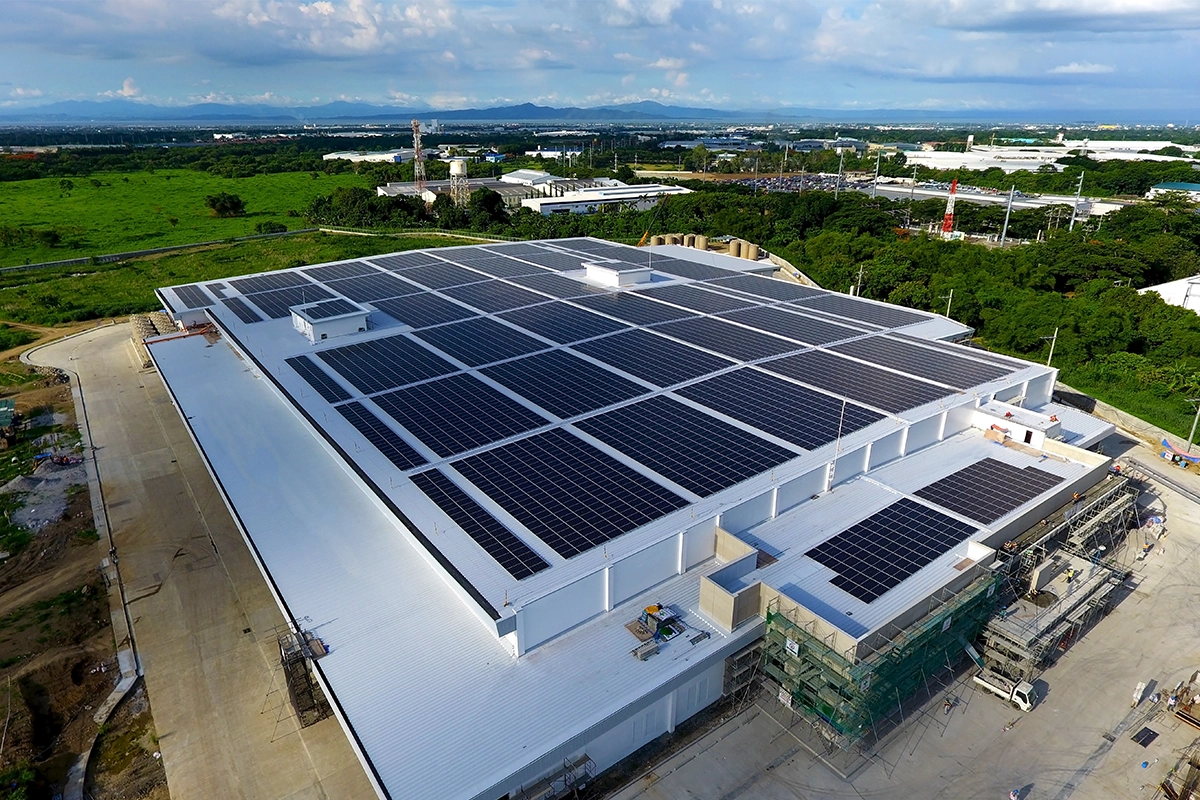
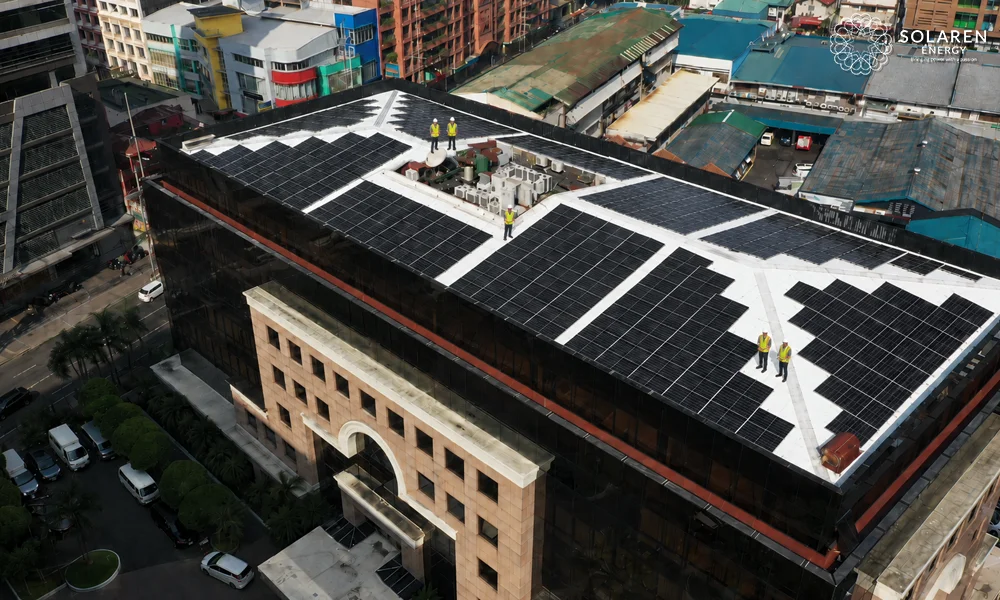
New Zealand Creamery is one example of how this handover process matters in a demanding environment. A food production facility with strict power quality requirements and no tolerance for operational disruption needs an installer who treats commissioning and aftercare as seriously as the installation itself. That is the standard Solaren applies across every project.
Explore Financing Before You Assume Cash Purchase Is the Only Option
Most businesses do not need to fund a solar installation entirely from operating capital. Several structures are available for commercial solar installation in the Philippines.
Direct purchase delivers the highest overall return since there are no financing costs, but requires upfront capital. Lease-to-own spreads the cost across a defined period with ownership transferring at the end, with monthly payments that are typically set below your previous electricity spend. Green loans from Philippine banks offer structured financing with terms designed for energy efficiency investments. For some facilities, zero-interest credit programmes cover partial costs.
Solaren works with financial partners who specialise in renewable energy lending and can help align your financing structure with projected system returns. This conversation is worth having early, not after the design is finalised.
After the System Goes Live
Commissioning is not the end of the project. It is the start of the operational phase. Track your system output monthly and compare it against the projections in your proposal. If there is a consistent gap, raise it with your installer early. Performance issues are almost always easier to resolve when they are identified quickly.
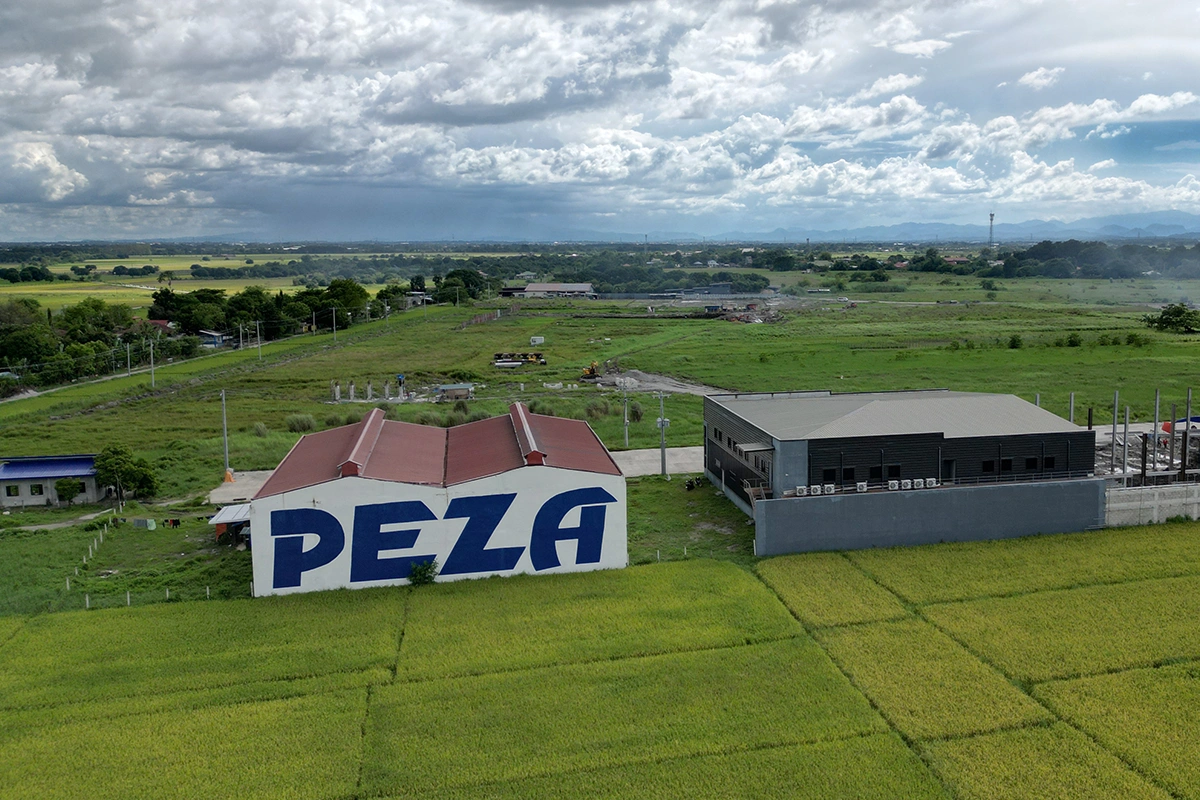
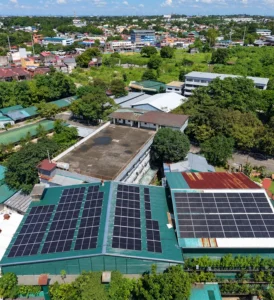
Victoria Industrial Park is one installation where post-commissioning monitoring has been part of the ongoing relationship. For a multi-tenant industrial facility, consistent performance visibility matters to both the property operator and the businesses occupying the space.
Once your system has stabilised, consider publishing a case study or sharing your results with your industry network. It supports your sustainability positioning and contributes to a broader understanding of what solar delivers in real commercial conditions.
What a Well-Executed Project Delivers
A commercial solar power system in the Philippines, properly planned and installed, cuts energy costs for decades. It protects your business from utility rate increases. It reduces dependence on a grid that is not always reliable. And it does all of this without disrupting the operations it is designed to support.
The process works when every stage is handled with discipline. Solaren’s teams plan, execute, and support each installation as a long-term commitment, not a one-time transaction. Contact us to arrange a free site assessment and we will show you exactly what a properly structured solar project looks like for your facility.
Frequently Asked Questions: Commercial Solar Installation Philippines
-
How long does a commercial solar installation in the Philippines typically take from start to finish?
The timeline varies with system size and site complexity, but a typical commercial project runs between three and six months from initial site inspection to commissioning. The longest component is usually permit and utility approval processing, which can take four to eight weeks depending on the distribution utility and completeness of documentation submitted. Physical installation of the system itself typically takes two to six weeks. Starting the permit process early is the single most effective way to keep the overall timeline on track.
-
Do I need to be present during the installation?
You do not need to be on site daily, but you should designate an internal contact who can make operational decisions and coordinate site access for the installation team. Your installer should provide a schedule in advance and flag any points where your input is required. For facilities with active operations during installation, clear communication between the installation team and your operations manager is essential.
-
What warranties should I expect from a commercial solar installation?
Panel manufacturers typically warrant performance for 25 to 30 years, guaranteeing output at a defined percentage of rated capacity over that period. Premium inverters from established brands carry warranties of 10 to 20 years. Solaren provides a five-year workmanship warranty covering the installation itself, alongside ongoing after-sales support and preventive maintenance. Always ask for warranty documentation before commissioning, not after.
-
What is the minimum system size that qualifies for net metering in the Philippines?
There is no minimum size requirement for net metering eligibility, but there is a maximum: 100 kWp per utility meter. Any solar system connected to a single meter that exceeds this threshold loses net metering eligibility on that connection and is reclassified as a Self-Generating Facility. For facilities with multiple meters, each meter can support up to 100 kWp under net metering independently.
-
Can a commercial solar installation be expanded after commissioning?
Yes, in most cases. Systems designed with future expansion in mind can accommodate additional panels or battery storage without replacing the existing infrastructure. This is worth discussing at the design stage rather than after installation, since wiring and inverter selection decisions made early either facilitate or complicate later expansion.
-
How do I evaluate whether a solar provider is genuinely capable of managing a commercial project?
Ask to see completed project references of comparable scale and complexity. Request copies of DOE accreditation, PCAB licensing, and current business registration documents. Ask specifically how the company handles permit submissions and utility applications, and whether this is done in-house or outsourced. A provider that manages the full scope in-house, from engineering through to aftercare, carries more accountability than one that subcontracts significant portions of the work.