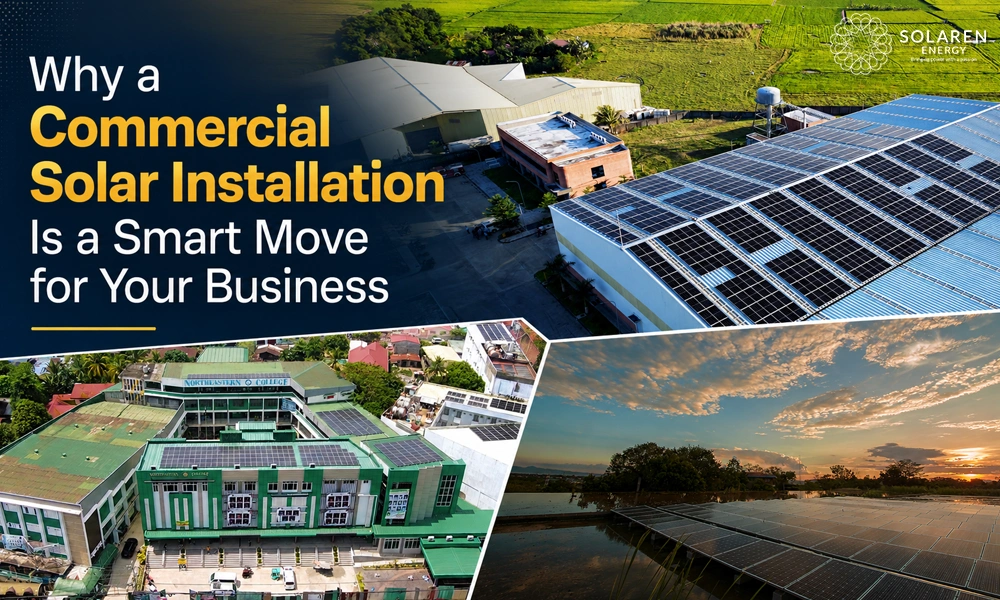
Let’s be direct. Electricity in the Philippines is expensive, it keeps getting more expensive, and the grid is not always reliable. For any business carrying a significant monthly power bill, those are three very good reasons to take solar seriously.
A commercial solar installation is not a luxury decision. It is an operational one. It reduces your exposure to utility price increases, gives you predictability in your energy costs, and in many cases takes your monthly bill down by 50% to 100%. Those savings compound over time. And unlike most capital investments, a solar system keeps paying you back for 25 years or more.
What the Numbers Actually Look Like
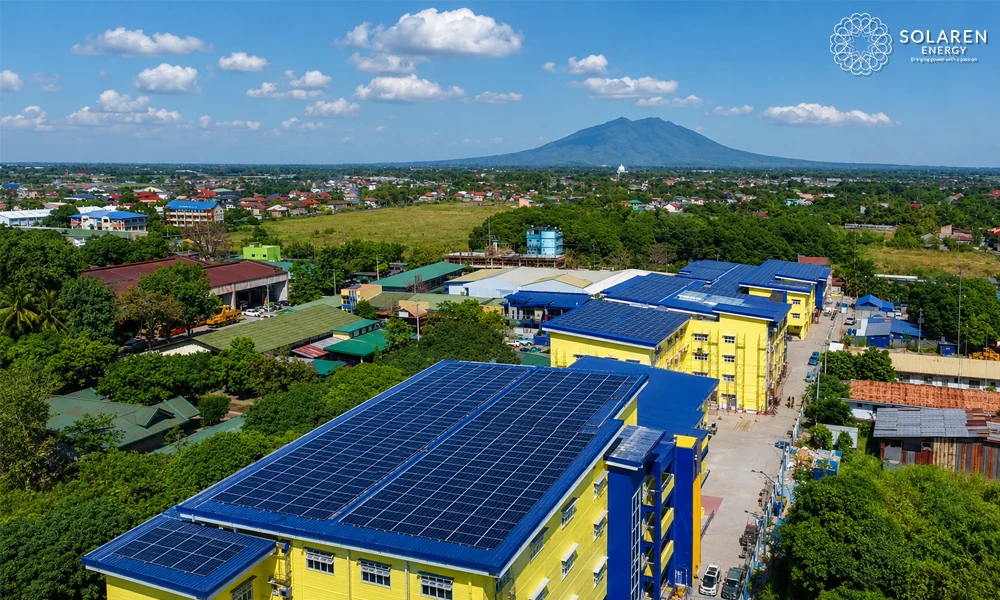
Consider a business paying PHP 150,000 a month in electricity. After a well-designed commercial solar installation, that same business might pay PHP 60,000 or less. That is a saving of over PHP 1 million a year. Over five years, the savings cover the system cost and then some.
Most commercial solar energy systems pay back between three and five years, depending on system size, consumption profile, and current utility rates. After payback, the energy is essentially free. No depreciation, no fuel cost, no rate increases to worry about.
Compare that to any other major business investment. Vehicles depreciate. Equipment wears out. Solar just keeps generating.
Why Philippine Businesses Cannot Afford to Ignore This
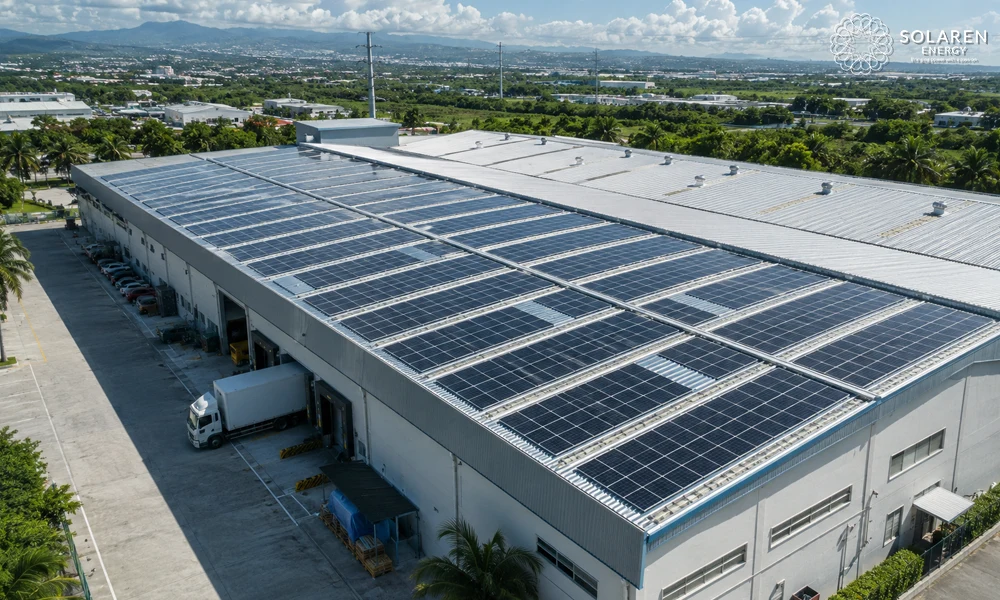
Philippine electricity rates are among the highest in Southeast Asia. They have risen consistently over the past decade and will almost certainly continue to do so. Every year you delay a solar installation is another year of paying full grid rates while your operating costs grow.
Beyond cost, there is the reliability issue. Grid interruptions affect productivity, damage equipment, and disrupt operations. A properly sized solar power system, paired with net metering, reduces how much your business depends on the grid during peak daytime hours when production matters most.
There is also the customer and investor angle. An increasing number of procurement teams, multinational partners, and institutional buyers now ask about energy practices before signing contracts. Going solar is not just an efficiency decision. It is a positioning one.
It Works Across Almost Every Industry
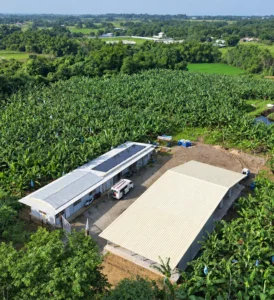
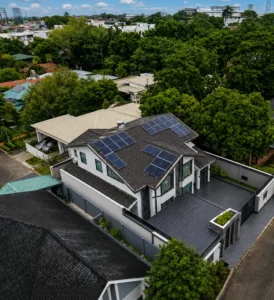
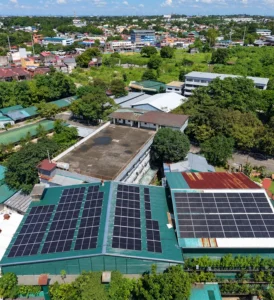
One of the strongest arguments for commercial solar is how broadly it applies. Solaren has installed systems across:
- Hotels and resorts are looking to cut operating costs and reduce carbon footprint
- Food factories and cold storage facilities with high daytime power draws
- Poultry farms and agricultural operations where grid reliability is a recurring problem
- Schools, hospitals, and government offices where long-term cost stability matters
- Gasoline stations, where safety compliance is as important as savings
- Retail chains and commercial buildings across multiple locations
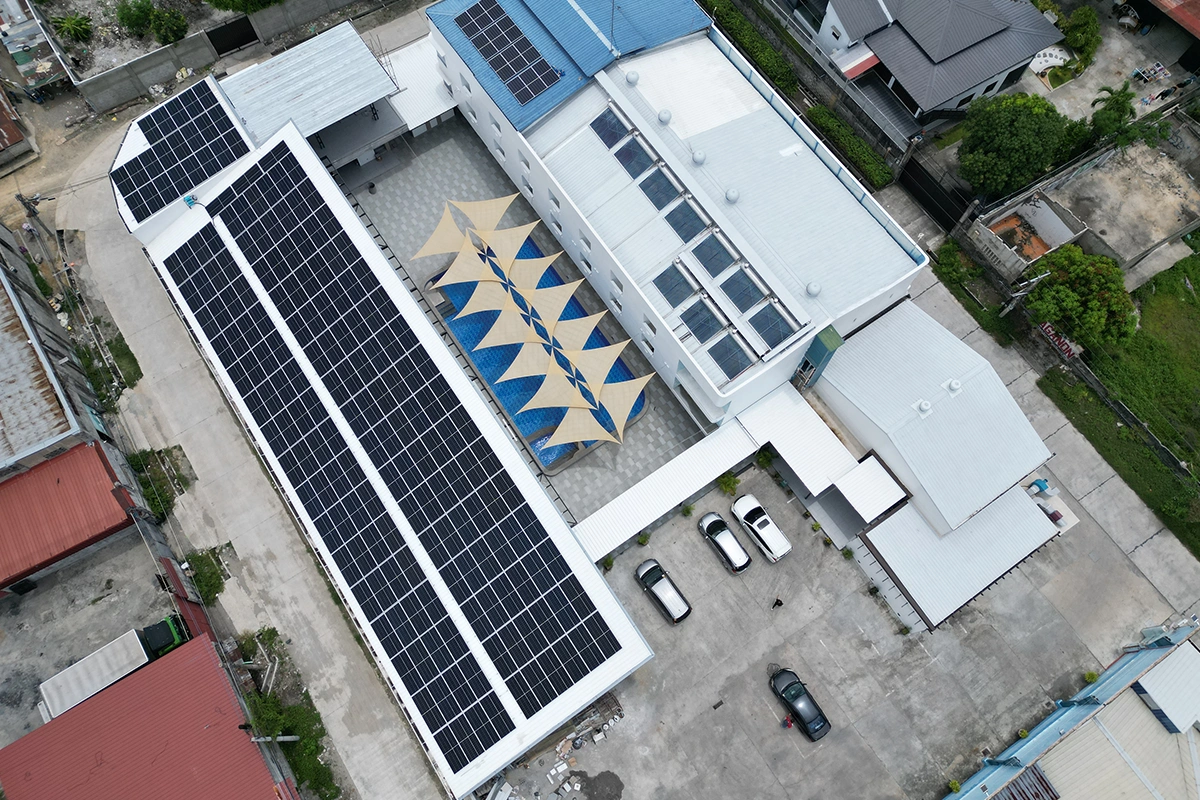
Take Sun Garden Hotel as one example. The property faced mounting electricity costs that were eating into margins year after year. After switching to solar, the hotel gained control over its daytime energy costs and reduced its utility dependence during peak guest hours. The system runs in the background. Guests notice nothing. The savings show up every month.

Or consider Bench Philippines, a long-standing Solaren client that has rolled out commercial solar installations across multiple facilities. When a nationally recognised retail brand commits to solar across its operations, it is not a PR exercise. It is a financial decision grounded in performance data.
Tailored Systems, Not Off-the-Shelf Solutions
No two businesses have identical energy profiles. A hotel’s peak demand is different from a factory’s. A school operates on a different schedule than a gasoline station. A well-designed commercial solar installation starts with understanding your actual consumption, your roof or ground space, and your grid situation. Then it builds a system around that.
Solaren does not sell packages. Every proposal starts with a site inspection. We look at your utility bills, your available roof or ground space, your grid connection, and your growth plans. If battery storage makes sense for your site, we will tell you. If net metering is the better option, we will show you the numbers. The goal is a system that performs for your specific business, not a system that was designed for someone else.
Why the Installer You Choose Matters
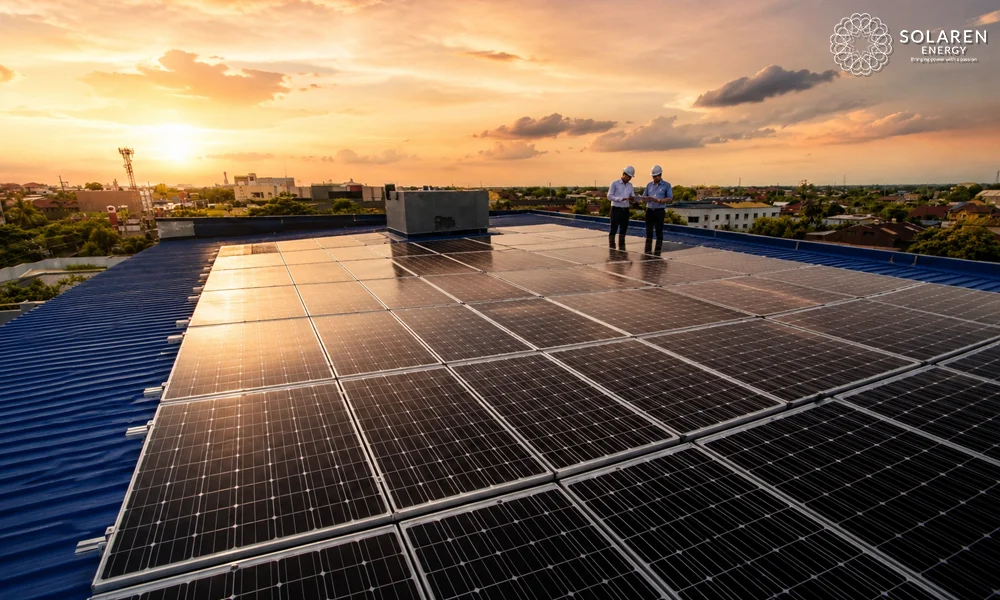
There are a lot of solar companies operating in the Philippines right now. Not all of them will still be around in five years. That matters when you are committing to a 25-year asset that requires ongoing monitoring, maintenance, and occasional technical support.
Solaren has been operating for over a decade. We carry full government accreditations, including DOE registration, PCAB licensing, and PhilGEPS compliance. All installations are done by our own certified engineers, not subcontractors. And we offer genuine after-sales support, not just a warranty card.
We use premium European equipment. SMA inverters, which carry 10 to 20 year warranties. Panels with 30-year performance guarantees. The systems we install are designed to still be producing at full capacity when the loan is paid off and the savings are pure gain.
Safety Is Not Optional
For high-risk environments like petrol stations, food production facilities, or sites with chemical storage, safety specifications matter more than price. Solaren designs for those environments. Panel-level shutdown capability, safe high-voltage DC management, and fire-safe system architecture are standard on any site where they apply. This is not an upsell. It is an engineering practice.
Start With a Free Site Assessment
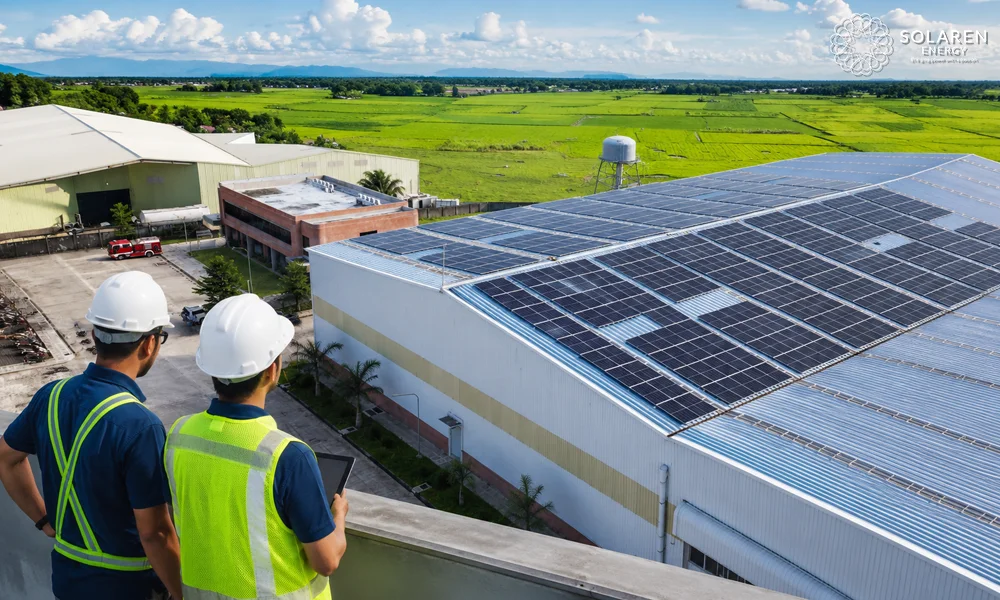
If your monthly electricity bill is significant and you have roof or ground space available, a commercial solar installation is almost certainly worth looking at seriously. The savings are real, the payback periods are predictable, and the long-term value is clear.
Solaren will assess your site, analyse your energy use, and give you a proposal built around your actual situation. No guesswork, no pressure. Just numbers you can make a decision with.
Contact us to arrange a free assessment. Let’s find out exactly how much your business can save.
Frequently Asked Questions About Commercial Solar Installation

-
How much does a commercial solar installation cost in the Philippines?
System cost depends on size, equipment specification, and site conditions. A small commercial system of 20 to 50 kWp typically ranges from PHP 1.5 million to PHP 4 million. Larger industrial systems of 100 kWp and above are priced based on a detailed site assessment. Solaren provides free proposals after a site inspection, with full cost breakdowns and projected savings so you can evaluate the investment clearly before committing.
-
How long does it take for a commercial solar installation to pay for itself?
Most commercial solar energy systems in the Philippines achieve full payback in three to five years. Sites with high daytime electricity consumption, such as factories, cold storage facilities, and hotels, often see payback at the shorter end of that range. After payback, the energy generated is essentially free for the remaining life of the system, which typically exceeds 25 years.
-
Will a commercial solar installation work during a power outage?
A standard grid-tied solar system will shut down during a grid outage as a safety requirement under Philippine regulations. If continuity through outages is a requirement for your business, a hybrid system with battery storage can be configured to keep priority loads running when the grid fails. Solaren can advise on whether this makes sense for your site based on grid reliability history and critical load requirements.
-
What happens to excess solar energy my business does not use?
Under the Philippine net metering programme, excess electricity generated by your solar system is exported to the grid and credited against your utility bill. This means you effectively earn credit for power your business generates but does not consume during the day, which can further reduce your monthly charges. Solaren handles the net metering application as part of the installation process.
-
Can a commercial solar installation be expanded later if my business grows?
Yes. Solaren designs systems with future expansion in mind wherever the site allows. If your energy demand increases, additional panels or battery storage can often be integrated with the existing system. This is something we factor into the original design discussion so that expansion, if needed, does not require starting from scratch.
-
How much maintenance does a commercial solar installation need?
Solar systems require relatively little ongoing maintenance. Panels should be cleaned periodically, typically every one to three months, depending on site conditions, and the system should be monitored for performance. Solaren provides after-sales support and preventive maintenance programmes so that any issues are caught early and performance remains consistent over the life of the system.
-
Is a commercial solar installation suitable for a petrol station or chemical facility?
Yes, but the system must be designed specifically for that environment. Petrochemical sites require panel-level shutdown capability, arc-fault protection, and compliance with relevant fire and safety standards. Solaren has experience designing and installing systems in high-risk environments and can provide full documentation on safety compliance for your specific site requirements.