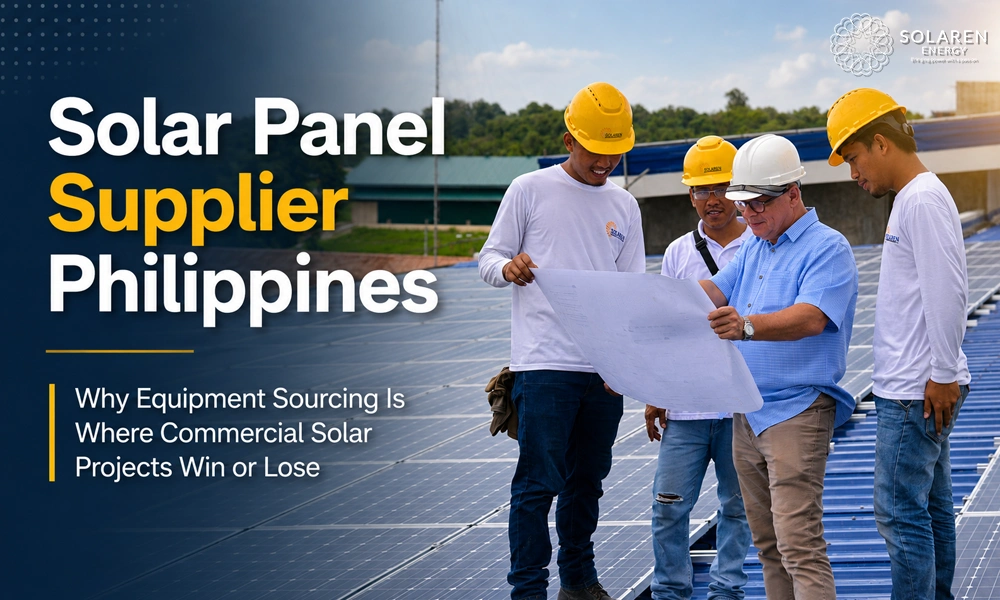
Most commercial solar buyers focus on the system size, the installer’s reputation, and the quoted payback period. Fewer look carefully at what is actually going into the system and where it came from. That is a mistake. Equipment sourcing decisions made before a single panel is installed determine how a system performs across its entire 25-year life. In a market where the number of suppliers has grown rapidly and the quality variance between products is significant, procurement discipline is not a technical detail. It is the foundation of a commercial solar investment.
Solaren Renewable Energy Solutions Corporation has completed over 2,500 commercial and industrial solar installations across more than 85 megawatts of capacity in the Philippines. Every one of those projects uses exclusively Tier 1, internationally certified panels sourced through a structured procurement process. This is what that process looks like, and why it matters to the businesses that commission these systems.
What Tier 1 Actually Means
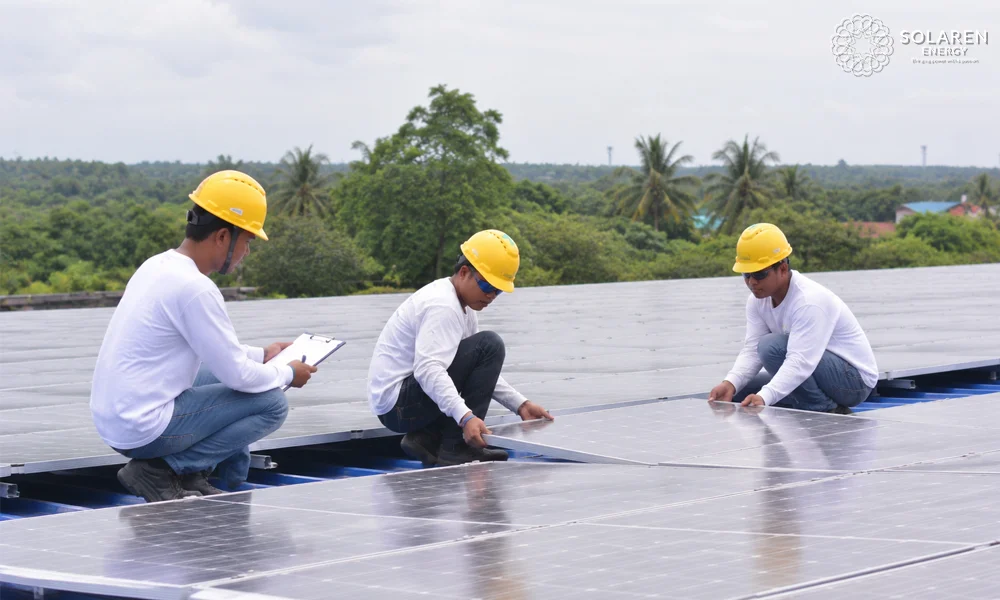
The term Tier 1 is widely used in solar marketing and is widely misunderstood. It does not refer to panel efficiency or performance quality directly. It refers to a manufacturer’s financial stability, production scale, and bankability as assessed by Bloomberg NEF. A Tier 1 manufacturer has demonstrated consistent production volume, invests in research and quality control, and is considered a credible counterparty by project finance lenders.
For a commercial or industrial solar buyer in the Philippines, the significance is straightforward. A Tier 1 manufacturer is likely to still exist in 15 years when you need to make a warranty claim. A non-Tier 1 supplier sourcing panels from spot markets or secondary distributors may not be. The warranty printed on a panel from a manufacturer that no longer operates is worth nothing. Solaren does not procure from non-Tier 1 sources, and will not do so regardless of price differential.
Certification Standards That Matter
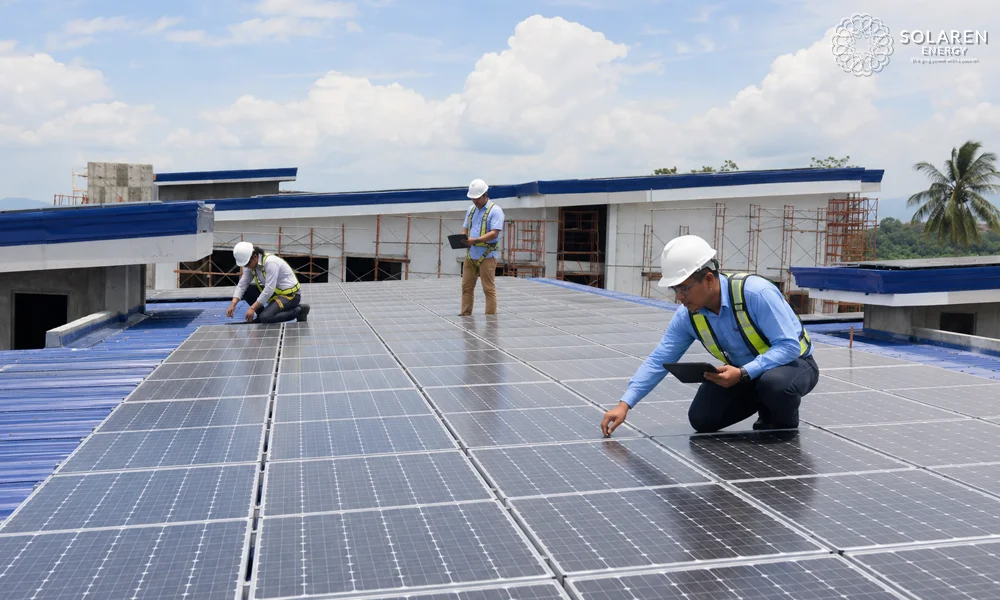
Beyond Tier 1 status, panels used in serious commercial installations should carry independent certification to IEC 61215 and IEC 61730. IEC 61215 confirms that the panel has been tested for performance consistency and durability under standardised conditions. IEC 61730 covers safety requirements, including resistance to fire, mechanical stress, and electrical fault conditions.
These are not marketing claims. They are the output of third-party laboratory testing by accredited certification bodies. Any reputable solar panel supplier that businesses in the Philippines engage should be able to produce the full certification documentation for every panel model they supply, without being asked twice. If that documentation is not immediately available, the panels should not be on your roof.
The temperature coefficient is a specification that deserves specific attention in the Philippine context. Panels lose efficiency as they heat up, and the rate at which they do so varies by product. In a tropical climate where module surface temperatures routinely exceed 60 degrees Celsius, a panel with a poor temperature coefficient will consistently underperform its rated capacity in real conditions. This figure appears on every technical datasheet and should be reviewed as part of any procurement decision.
Batch Testing and Traceability
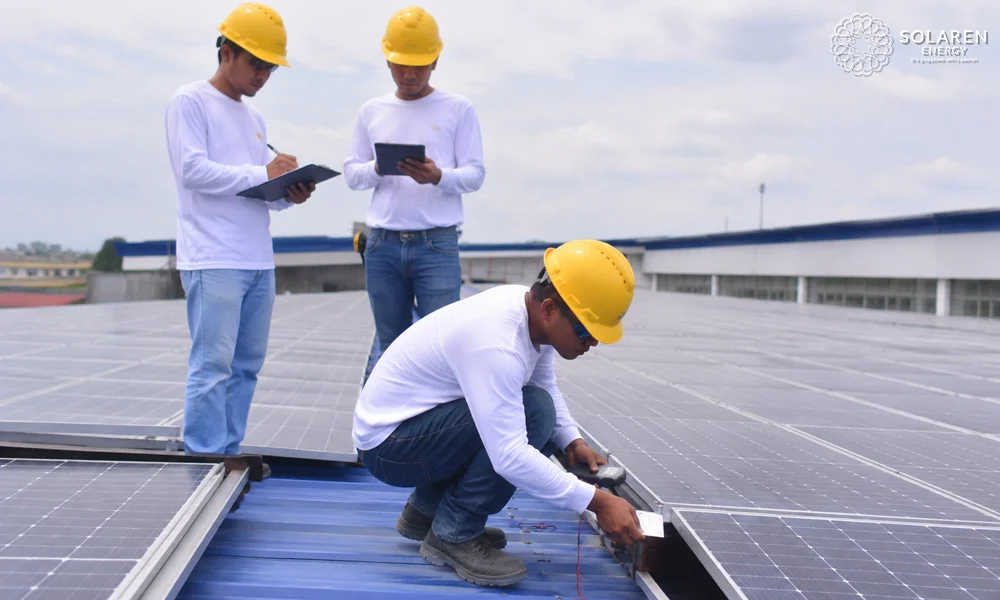
Certification at the model level confirms that a panel design has passed standardized tests. It does not guarantee that every panel coming off the production line meets the same standard. That is where batch testing becomes critical.
Solaren requires formation data and batch test certification for all panel deliveries on commercial projects. This includes documented open circuit voltage, short circuit current, and power output measurements for panels within the specific production batch being supplied, not aggregate figures from a generic datasheet. Serial number traceability is required so that every panel installed on every project can be identified, verified, and cross-referenced against manufacturer records if a warranty issue arises.
This level of procurement rigor adds time and cost to the sourcing process. It also virtually eliminates the risk of receiving a substandard product disguised under a credible brand name, which is a real and documented problem in markets where demand has outpaced supply chain oversight.
The Hidden Cost of Cheap Panels
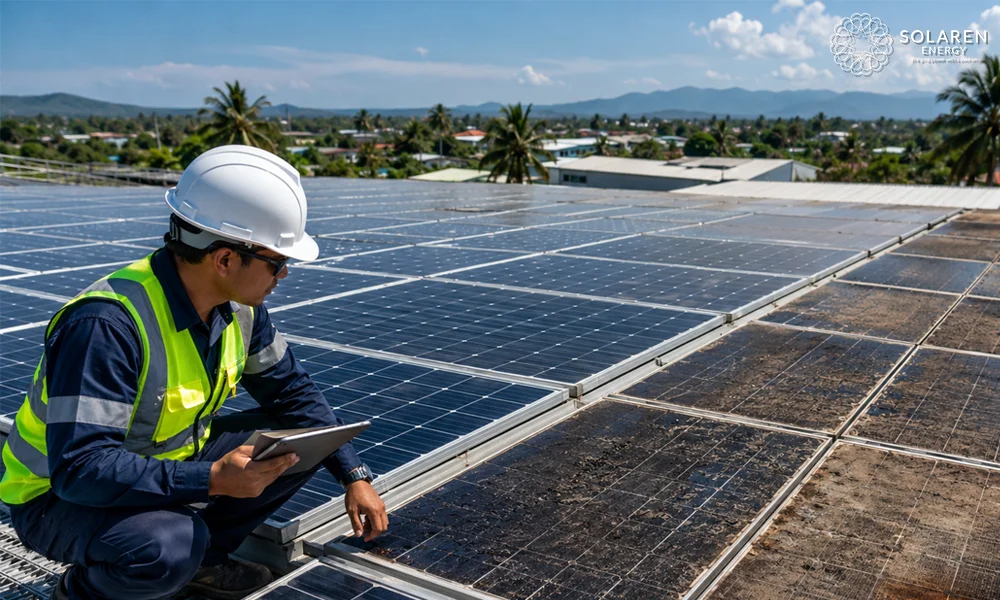
A panel quoted at a lower price per watt is not automatically a worse choice. A panel quoted significantly below prevailing market rates for its claimed specification, almost always is. Spot market procurement, grey market product, and panels sourced through uncertified distributors all carry risks that do not appear on the invoice but accumulate over the system’s operating life.
Faster degradation rates are the most common problem. A good quality Tier 1 panel loses less than 0.5 percent of its rated output per year under standard degradation warranties. Lower quality products often degrade at double that rate or more. Over a 25-year system life, that difference compounds into a substantial shortfall in energy production and, consequently, in financial returns.
Hot spots are a related issue. Manufacturing defects that pass visual inspection can create localized resistance points within cells that generate heat under load. A panel with hot spots will underperform, degrade faster, and in serious cases create a fire risk on the roof structure it is mounted on. Batch testing and certification are the primary defenses against this outcome.
Procurement at Scale: Multi-Site and Large System Considerations
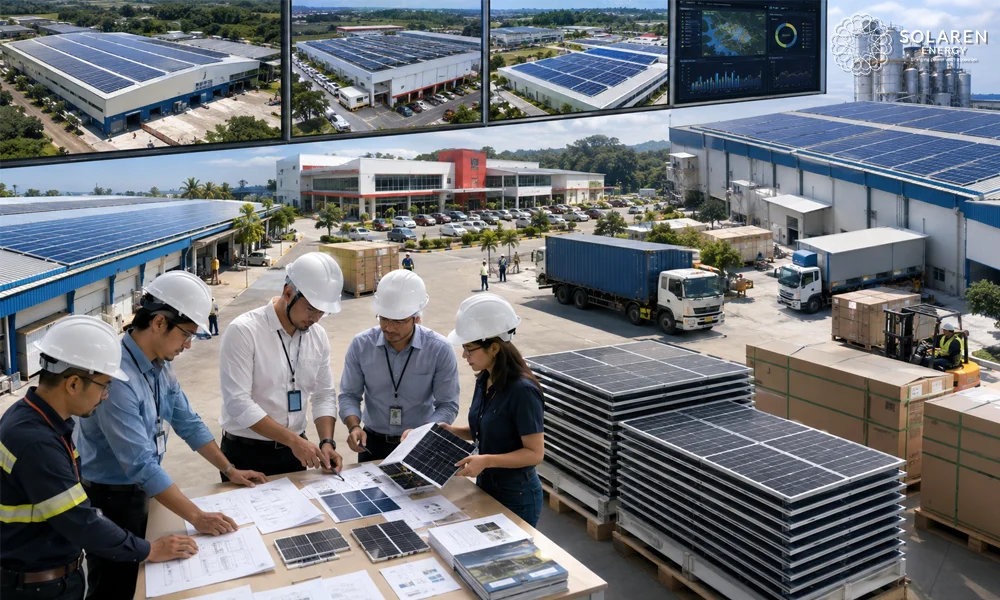
For businesses managing solar installations across multiple locations, procurement discipline becomes even more consequential. Batch consistency matters in ways that do not apply to a single-site installation. Panels from the same production batch have matched electrical characteristics, which means string performance across an array is balanced and predictable. Mixing panels from different batches or different production periods introduces variance that reduces total system output and complicates monitoring and fault diagnosis.
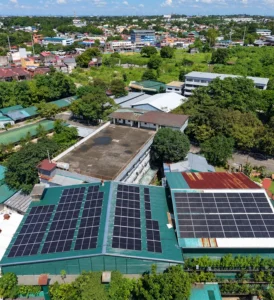
Solaren has managed equipment procurement across large-scale and multi-site rollouts for clients including Bench and Oishi, coordinating consistent Tier 1 sourcing, batch-matched deliveries, and full certification documentation across every location. Details of these and other completed installations are available on the Solaren projects page. For businesses evaluating a phased rollout or a simultaneous multi-site program, the procurement framework behind the installation is as important as the installation itself.
Volume procurement also creates the opportunity for better commercial terms with Tier 1 manufacturers and their authorized distributors. Solaren’s procurement team manages this on behalf of clients, ensuring that cost efficiencies from scale are captured without compromising the quality and traceability standards applied to every project, regardless of size.
Inverters and Mounting: The Rest of the Procurement Picture
Panel quality is the most discussed procurement variable, but inverters and mounting systems carry their own certification and sourcing requirements. Inverters should carry IEC 62109 certification covering safety for power conversion equipment, and manufacturers should be able to demonstrate compliance with Philippine grid code requirements for anti-islanding protection and power quality output.
Mounting systems in the Philippines must be designed and certified for typhoon wind loads. This is not a specification to review after installation. Structural compliance should be confirmed at the design stage with documentation that the mounting system has been engineered for the specific wind zone applicable to the installation site. Solaren’s engineering team reviews mounting specifications as part of the standard design process for every project.
What to Ask Any Supplier Before Procurement
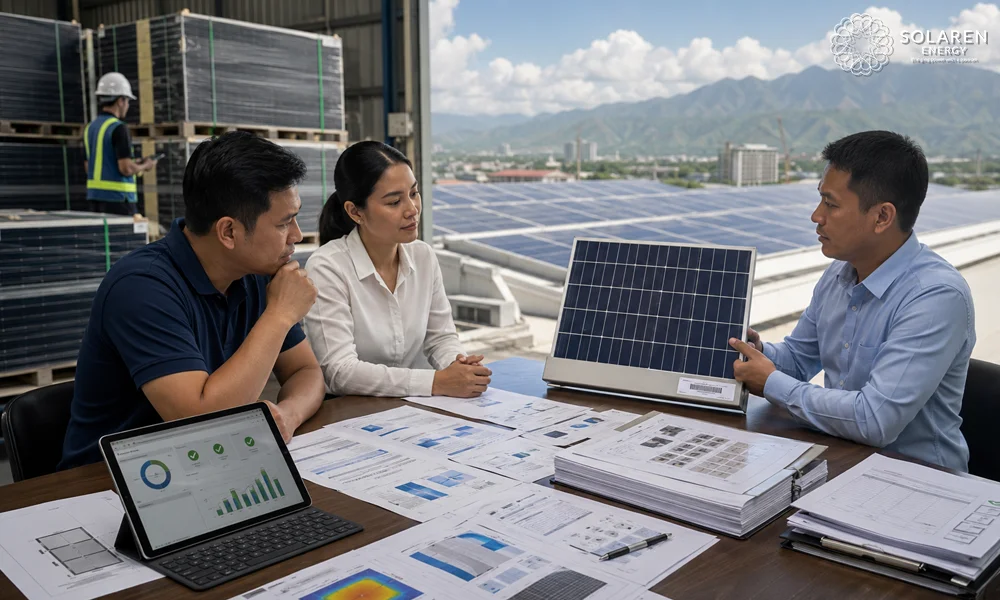
Before committing to any panel supply arrangement, ask for the full IEC certification documentation for the specific model being proposed. Ask for the manufacturer’s Tier 1 classification evidence. Confirm that batch test data will be provided with delivery and that serial number traceability is guaranteed. Ask how warranty claims are processed in the Philippines and whether the supplier has a local presence or an authorized representative capable of managing claims without routing everything through an overseas head office.
If a supplier cannot answer these questions clearly and completely, they are not the right solar panel supplier Philippines commercial projects should be using. The documentation either exists or it does not. There is no middle ground on certification.
Frequently Asked Questions
-
Q: What does Tier 1 mean for solar panels in the Philippines?
Tier 1 refers to a manufacturer classification by Bloomberg NEF based on financial stability, production scale, and bankability. It indicates that a manufacturer is a credible long-term counterparty capable of honoring warranties and maintaining product support over the life of a solar system. It does not directly measure panel efficiency, but it is a reliable indicator of production quality standards and long-term viability.
-
Q: What certifications should solar panels have for commercial installations in the Philippines?
At a minimum, panels should carry IEC 61215 certification for performance and durability and IEC 61730 certification for safety. These confirm that the panel design has been independently tested by an accredited laboratory. Reputable suppliers should be able to provide the full certification documentation for any panel model on request. Panels without these certifications should not be used in commercial or industrial installations.
-
Q: Why does batch testing matter for solar panels?
Model-level certification confirms that a panel design has passed standardized tests. Batch testing confirms that the specific panels being delivered to your project meet the same standard. Without batch test data, there is no way to verify that what arrives on site matches what was specified. For large systems and multi-site programs, batch consistency also ensures matched electrical characteristics across arrays, which improves overall system performance and simplifies monitoring.
-
Q: How do cheap solar panels affect long-term returns in the Philippines?
Lower quality panels typically degrade faster than their rated specification, produce less energy over time, and carry warranty support from suppliers who may not remain in operation long enough to honor claims. Over a 25-year system life, the difference in energy output between a quality Tier 1 panel degrading at 0.5 percent per year and a substandard panel degrading at 1 percent or more compounds into a substantial financial shortfall. The initial price saving is rarely sufficient to offset the long-term underperformance.
-
Q: Does Solaren handle panel procurement on behalf of clients?
Yes. Solaren manages the full procurement process as part of its EPC service, including supplier selection, batch testing requirements, certification verification, and delivery coordination. Clients do not source panels independently. This ensures that every system Solaren installs uses exclusively Tier 1, certified equipment with full traceability, regardless of project size or location.