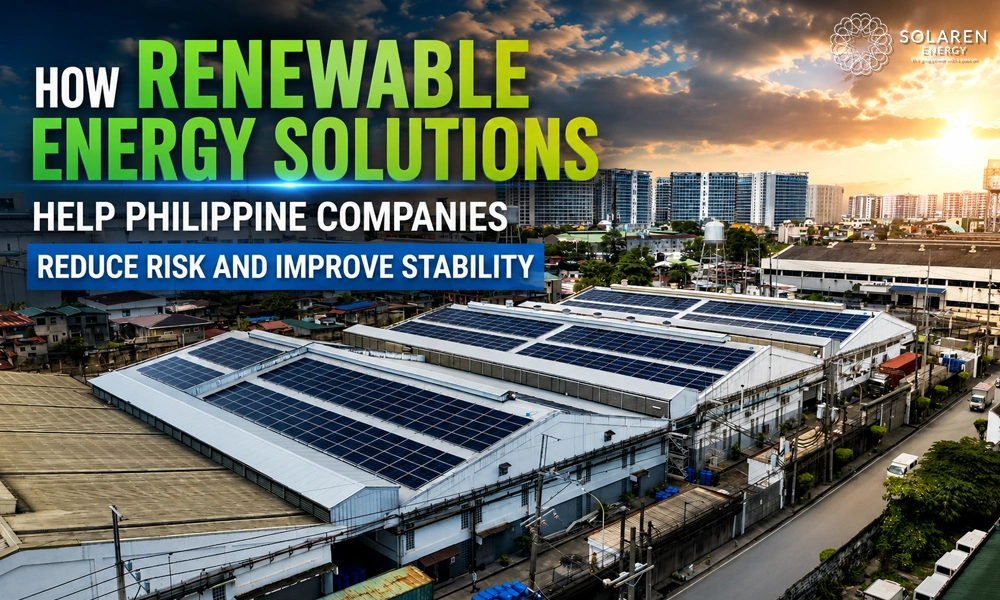
A decade ago, most businesses in the Philippines looked at solar as a way to lower electricity bills. The conversation today has shifted to something larger. Executives and owners are asking how to make their operations more stable. They are thinking about risk management, not only cost reduction. Rising grid rates, brownouts, fuel price swings, and the general unpredictability of the Philippine power landscape have forced companies to reconsider how they source electricity.
The shift is easy to understand. Every business leader wants less uncertainty. When a company depends entirely on the grid, it inherits all the risks that come with it. Weather events, outages, rate adjustments, transmission failures, and geopolitical changes all affect what a business pays and how reliably it operates. Renewable energy solutions in the Philippines offer something businesses rarely get from traditional supply: a meaningful level of control.
Companies are no longer asking whether renewable energy works. They already know it does. The question now is how to use it to stabilise operations, protect cash flow, and reduce exposure to unpleasant surprises.
Solar as a Stability Tool, Not Just a Cost-Cutting One
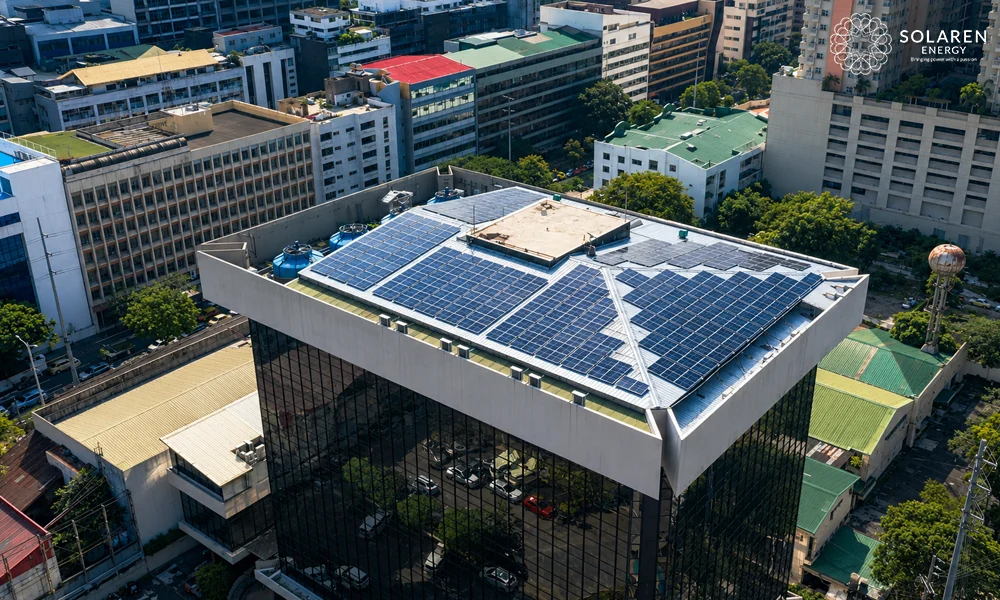
Solar has become the most accessible way for Philippine businesses to reduce energy risk because it directly addresses the largest source of uncertainty: electricity costs. Commercial and industrial operations often run long hours, and daytime consumption accounts for a significant share of monthly bills. When a solar system covers a meaningful proportion of that daytime load, exposure to market fluctuations drops immediately.
Think of it as building a protective layer over one of your biggest operating expenses. When sunlight is powering your operations, you are not fully tied to whatever the grid decides to charge. You are generating a portion of your own supply without requiring fuel, mechanical complexity, or supply chain logistics. That simplicity is a large part of why solar has become such a reliable risk-reduction tool.
Solar also creates a meaningful shift in how business owners experience energy costs. Before solar, electricity felt like a variable outside their control. After solar, it becomes predictable and measurable. Once a system is commissioned, you know roughly how much energy it will produce month after month. That kind of predictability is rare in business, and its value compounds over time.
The Role of Predictability in Business Planning
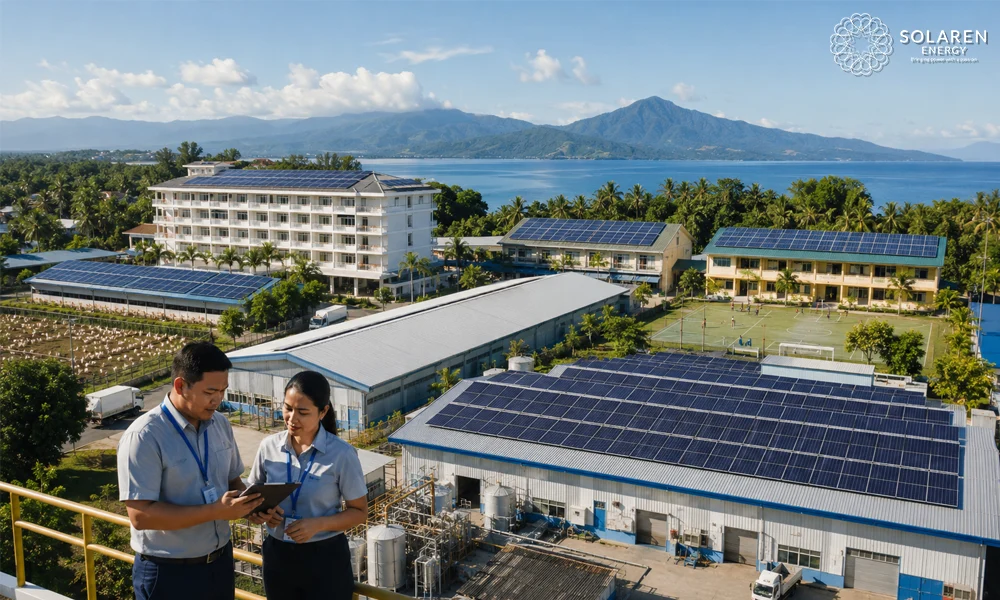
Predictability has always been one of the biggest operational challenges for Philippine companies, particularly those in energy-intensive sectors. Manufacturing plants, cold storage facilities, hotels, poultry farms, schools, and rural resorts all face electricity bills that fluctuate widely. Renewable energy solutions give them a way to reduce that volatility in a way that nothing else can match.
Sunlight patterns in the Philippines are consistent. Even accounting for monsoon season variation, you can forecast solar generation more accurately than you can forecast grid tariff movements or future utility behaviour. A company that generates a meaningful share of its own power gains a clearer view of its future costs. Budgets become more accurate. Financial modelling becomes simpler. Long-term planning stops feeling like guesswork.
The system sits on the roof and does its job every day. No fuel deliveries. No moving parts. No sudden cost changes. Just steady production that makes your financial forecasts easier to defend and easier to trust.
Real Projects That Demonstrate Risk Reduction
This shift toward stability becomes concrete when you look at actual Philippine installations.
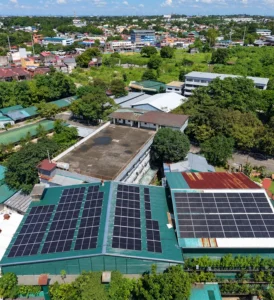
North Victoria Sports and Leisure Inn in Tarlac is one example. Hotels face inherently unpredictable occupancy. Some months are strong. Others are not. During quieter periods, high electricity bills put unnecessary pressure on cash flow precisely when revenue is lower. After the solar system went live, the inn began achieving near-zero billing during low-occupancy periods. The system offsets a large proportion of daytime consumption through a fully compliant net metering setup. The business is now significantly less exposed during seasonal demand troughs. That is risk reduction in a form that shows up directly on the profit and loss statement.
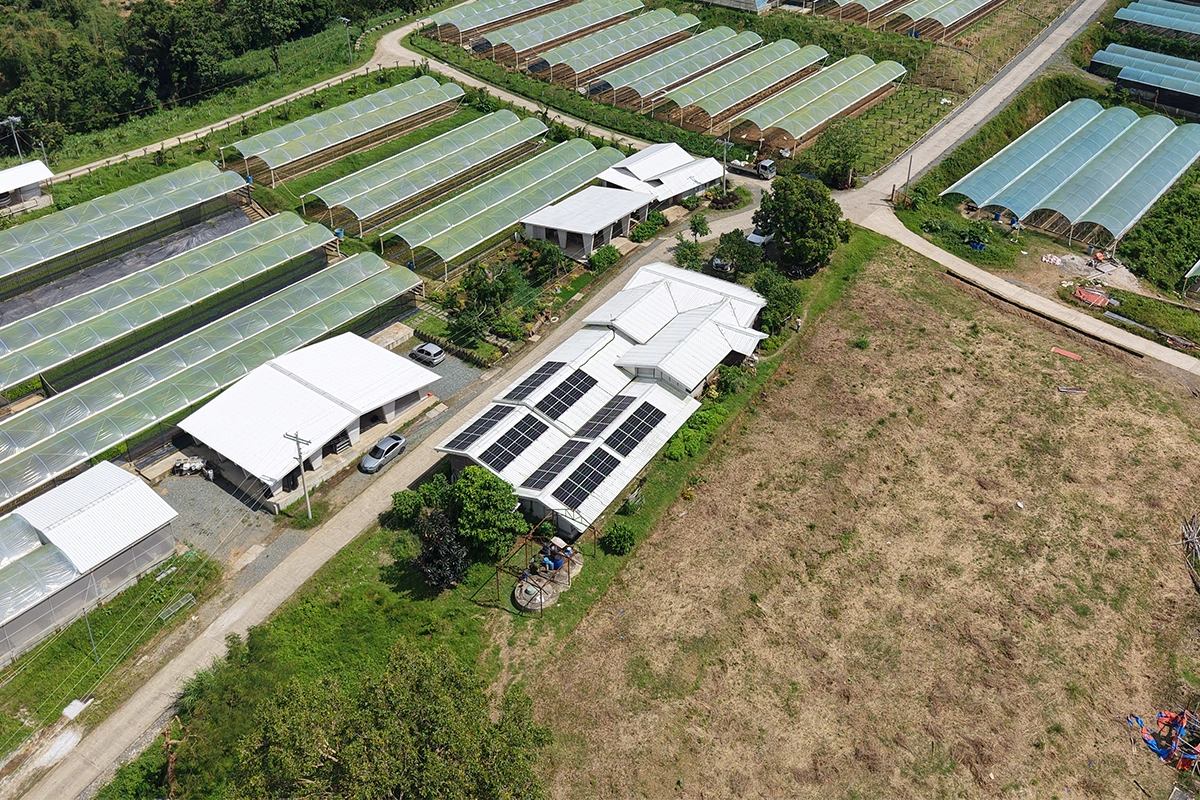
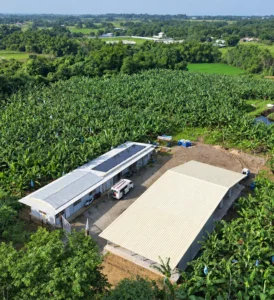
Kayrilaw Organic Farm illustrates a different but equally important dimension. Remote locations often face harsher grid conditions. Voltage drops, extended outages, and long restoration times can interrupt irrigation, water movement, cooling, and administrative operations. A farm cannot simply wait for power to return. Solar has provided the farm with a stable, reliable supply that shields it from the unpredictability of a provincial grid where instability is a genuine operational threat. The farm now operates without the constant risk of sudden interruptions or equipment damage caused by unstable voltage.
Both projects demonstrate the same principle. Renewable energy solutions in the Philippines are not only cost-saving tools. They are risk management tools that allow businesses to keep running smoothly when external conditions become unreliable.
Reducing Exposure to Grid Instability
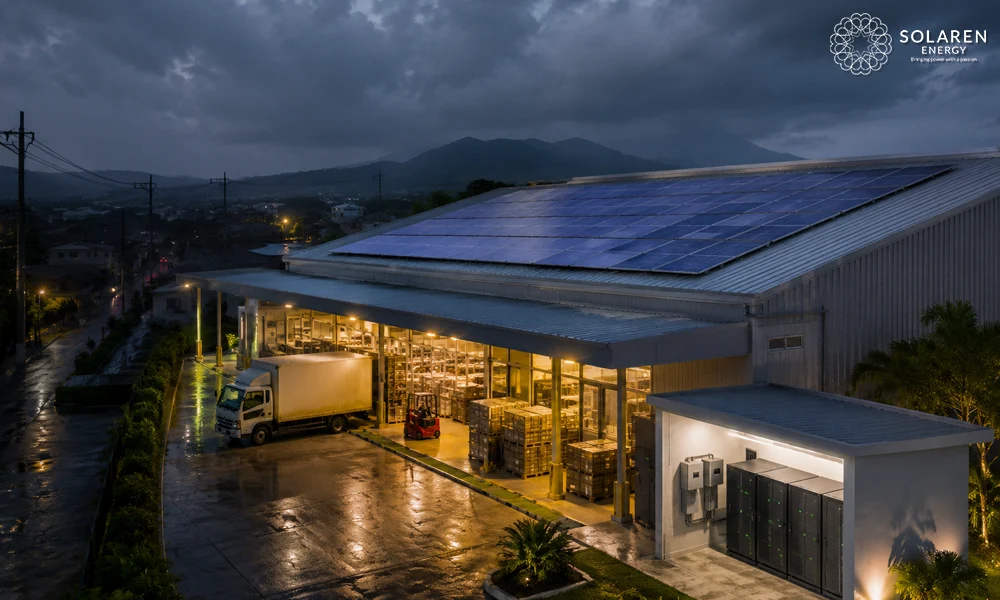
No matter how much the Philippine grid improves, businesses still face occasional brownouts, voltage drops, and unplanned outages. Some operations can pause for a few minutes without consequence. Others cannot. Cold storage, food processing, agricultural facilities, and hospitality businesses often need continuous power to avoid losses that are immediate and not recoverable.
Solar reduces the frequency and severity of these disruptions. On normal days it carries a large share of the load and reduces strain on the facility’s electrical systems. During brief fluctuations, a system equipped with even modest storage can ride through the disturbance without interruption. The entire site is no longer fully exposed to whatever the grid is doing at that moment.
That extra layer of protection, even when partial, becomes a meaningful operational advantage over time.
Energy Independence as a Long-Term Safety Net
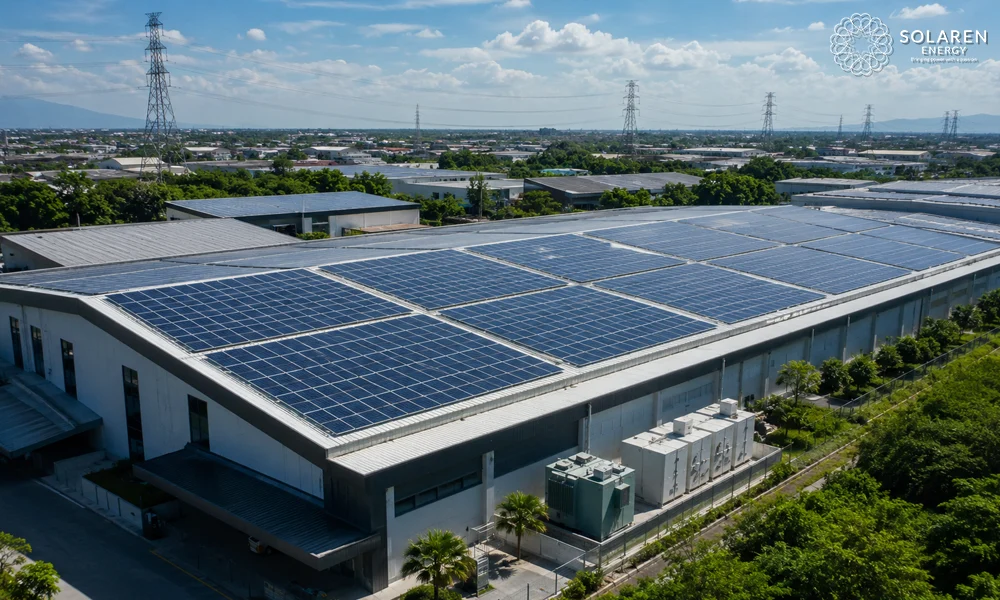
Energy independence does not mean disconnecting from the grid. It means reducing reliance on it. A company that shifts 40% to 60% of its consumption to self-generation is meaningfully safer from price spikes and supply disruptions than one that draws everything from the utility.
When grid prices rise, the financial impact is softened. When outages happen, fewer operations are affected. When the broader economy becomes volatile, energy costs remain more predictable. It is very difficult to achieve this level of control through any other means. Generators require fuel with its own price volatility. UPS systems are expensive and limited in duration. Diesel is unpredictable. Solar provides a steady baseline of energy with minimal ongoing cost and risk.
This is why so many companies now view renewable energy as a stability infrastructure decision rather than an efficiency upgrade.
The Hidden Costs of Full Grid Dependence
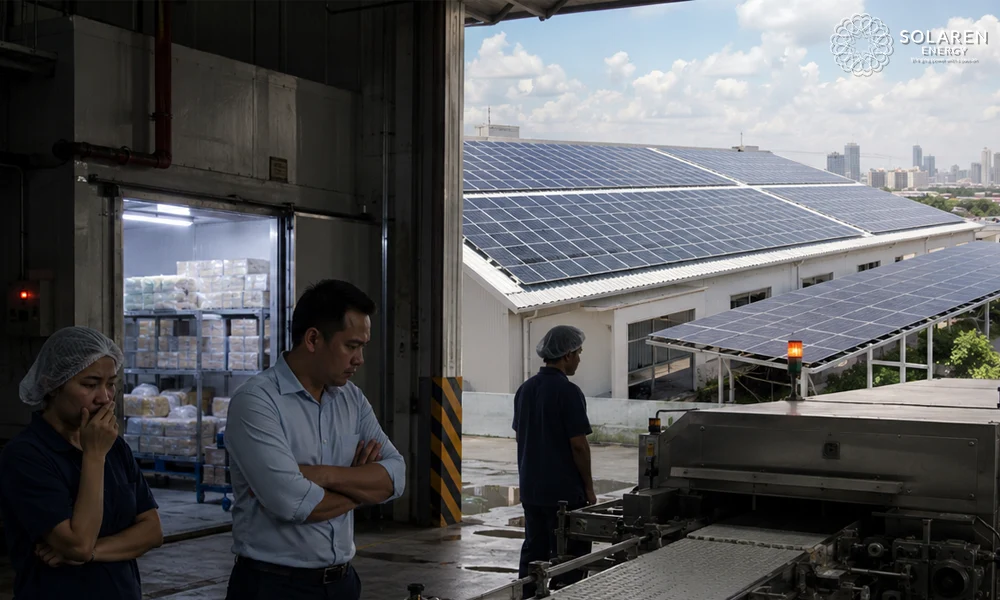
Companies often underestimate the losses they absorb because of grid instability. A short outage can cause product spoilage in cold storage. A few voltage fluctuations can damage sensitive manufacturing equipment. A day of unplanned downtime in a factory can derail a production schedule that takes days to recover. These losses rarely appear as a single dramatic event. They accumulate quietly, eroding profitability in ways that are hard to attribute and easy to underestimate.
Some companies realise too late that the cost of doing nothing was far higher than the cost of a properly designed solar system.
How Renewable Energy Supports Business Continuity
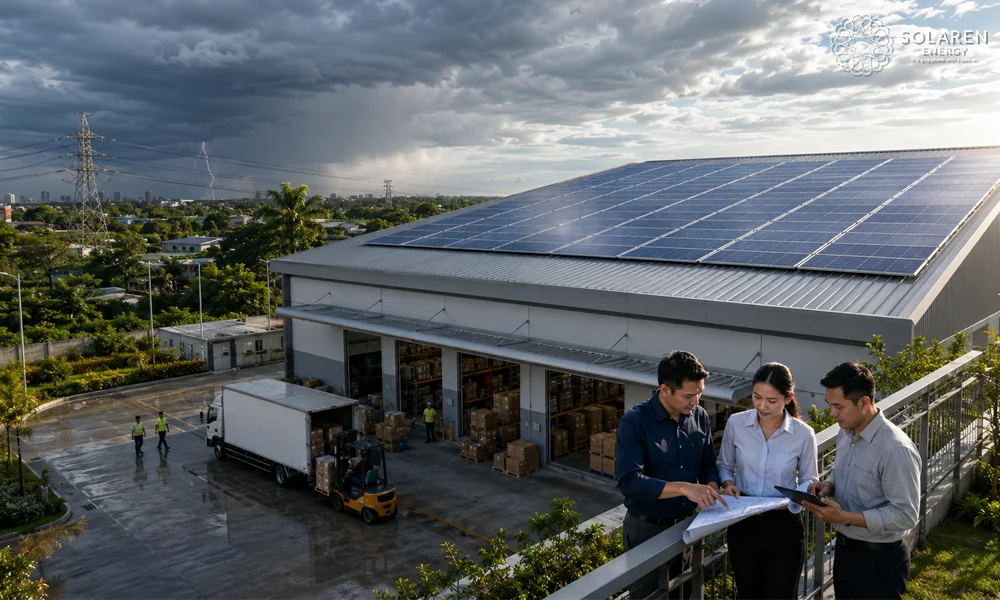
Business continuity has become a serious theme for Philippine companies across sectors. Operations need to continue through economic shocks, extreme weather events, and grid failures. Renewable energy supports continuity in three direct ways.
It stabilises daytime power supply. It protects critical operations during minor grid disruptions. And it reduces reliance on external markets for electricity pricing.
That combination gives businesses breathing room. Owners feel more confident planning expansions, taking on new clients, and committing to capital investments when their energy costs are predictable and their operational exposure is lower. Cash flow management becomes less reactive. Financial planning becomes more credible.
The Importance of Choosing the Right Partner
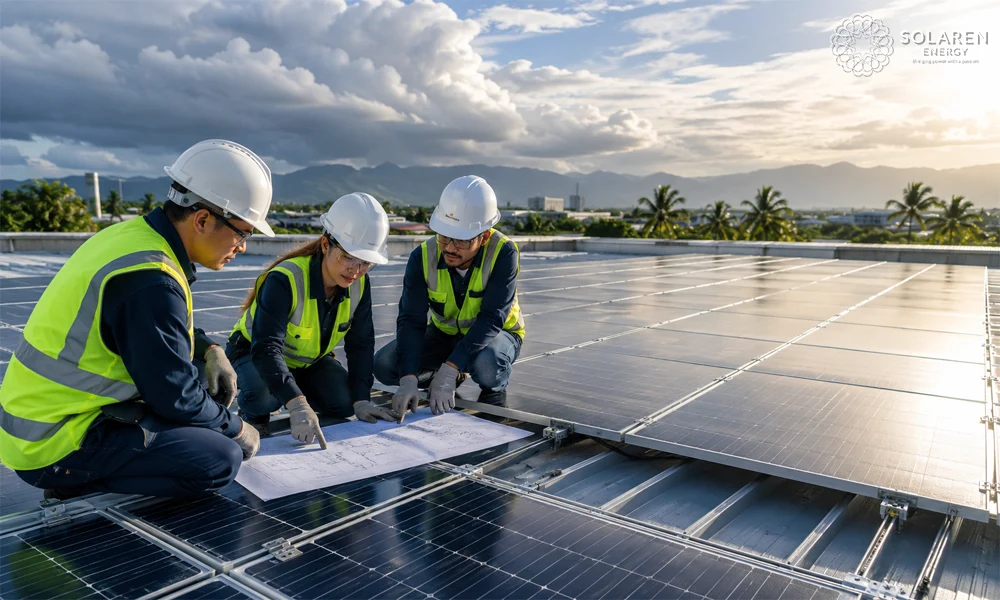
Renewable energy only becomes a stable tool when it is installed correctly. Poor design, cheap components, or rushed workmanship can introduce new risks rather than eliminating existing ones. A reliable EPC understands the demands of the Philippine climate. It knows how to build systems that survive extreme heat cycles, monsoon conditions, corrosion, and roof movement over decades. It also knows how to design around real load profiles rather than theoretical ones.
When a company chooses an EPC that treats the installation as a long-term asset rather than a closed transaction, the stability benefits become substantially greater. The difference is not always visible at commissioning. It becomes visible over the years that follow.
A More Secure Future for Philippine Businesses
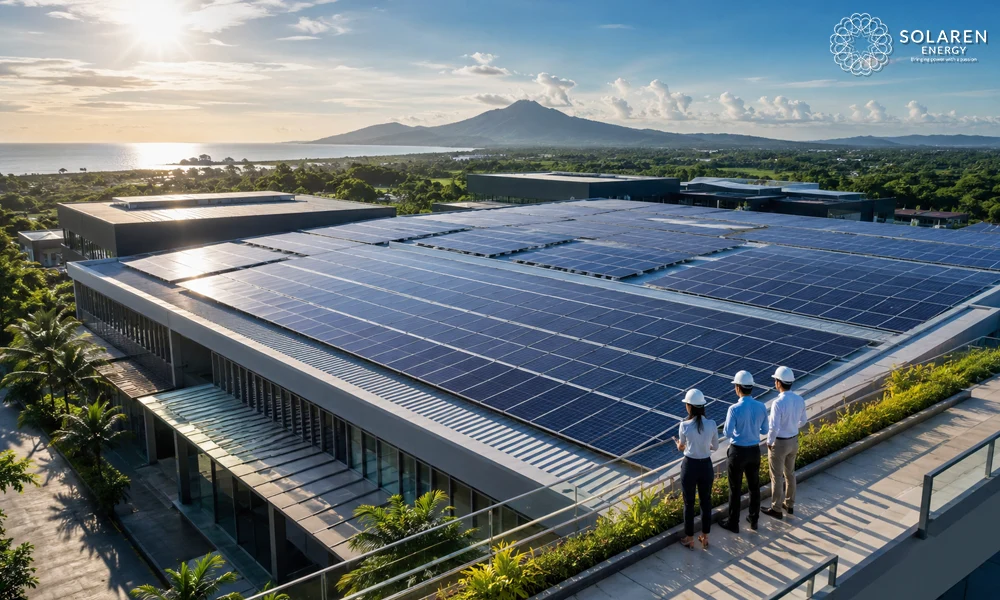
Renewable energy solutions in the Philippines have moved well beyond the early adoption stage. They have become an essential part of how serious companies manage risk, protect margins, and plan for long-term operational stability. Businesses that invest early gain more predictable costs, stronger resilience, and a level of control over their energy supply that grid dependence alone cannot provide.
The direction is clear. Companies adopting renewable energy are becoming more stable and more competitive. Those who wait continue absorbing the growing uncertainty that comes with depending entirely on a grid they cannot influence.
Contact Solaren to arrange a free site assessment and find out how a properly designed renewable energy solution can reduce your exposure and improve the stability of your operations.
Frequently Asked Questions: Renewable Energy Solutions and Business Risk in the Philippines
-
How does solar energy actually reduce business risk rather than just cutting costs?
Solar reduces risk by replacing a variable, uncontrollable expense with a predictable one. When your facility generates a significant share of its own electricity, rising grid tariffs affect you less. Outages affect fewer of your operations. Your energy cost forecasts become more reliable, which improves cash flow management and financial planning. The risk reduction is real and measurable, not just a marketing claim.
-
How much of my electricity consumption can solar realistically replace?
It depends on your consumption profile, available roof or ground space, and whether battery storage is included. For businesses with significant daytime loads, such as factories, hotels, schools, and agricultural operations, solar can offset between 40% and 80% of grid consumption, sometimes more. Solaren models this against your actual utility bills during the proposal stage so you get a site-specific answer rather than a general estimate.
-
Does solar help during brownouts or grid outages?
A standard grid-tied solar system will shut down during a grid outage as a safety requirement. However, a hybrid system with battery storage can keep priority loads running during outages, switching to stored power within milliseconds of a grid failure. For businesses where continuity through outages is a hard requirement, this specification is worth the additional investment. Solaren advises on this based on your grid reliability history and critical load profile.
-
Is solar suitable for businesses in remote or provincial locations?
Yes, and often it is even more valuable there. Provincial grids frequently have lower reliability, more voltage fluctuations, and longer restoration times after outages. Solar provides a stable generation source that reduces dependence on a grid that may not always perform consistently. For farms, resorts, and facilities in remote locations, this stability advantage is sometimes more important than the cost saving.
-
How does solar affect a company’s ability to plan financially?
Significantly and positively. Once a solar system is commissioned, a business can forecast a meaningful share of its energy costs with much greater accuracy than relying entirely on grid tariffs. This makes budgeting more reliable, financial modelling more credible, and long-term planning less speculative. Some lenders also view predictable, lower operating costs favourably when assessing business loan applications.
-
What is the risk of choosing a low-quality solar installer for a risk-management project?
It is considerable. A poorly designed or installed system can introduce new risks: inconsistent output, recurring faults, premature component failure, and compliance issues that affect net metering eligibility. If the installer is not around to support the system after commissioning, those problems fall entirely on the owner. Choosing an EPC with a verifiable track record, in-house engineering teams, and genuine after-sales support is not a premium option. It is the baseline requirement for a system that actually delivers stability.
-
How long before a solar investment starts reducing business risk noticeably?
From commissioning day, your daytime grid dependence drops immediately. The financial stabilisation effect, meaning more predictable monthly costs, is visible from the first billing cycle after installation. The broader risk reduction, covering exposure to tariff increases and grid instability, compounds over time as utility rates continue to move and your solar generation remains at a fixed cost baseline.