Most capital investments replace one cost with another. You buy new equipment and the old maintenance bill disappears, replaced by depreciation and new running costs. You upgrade your fleet and fuel savings offset the finance payments for a few years. The net position improves but the expense never goes away entirely.
A solar power system works differently. The capital is spent once. After that, every kilowatt-hour the system generates is electricity you did not buy from the grid. The grid tariff keeps rising. The cost of your solar generation does not. Over time the gap between what you would have paid and what you actually pay widens every year. That is not a sales claim. It is arithmetic.
In the Philippines, where commercial and industrial electricity tariffs are among the highest in Southeast Asia and have increased consistently over the past decade, this arithmetic is unusually favourable. A well-specified commercial solar power system in the Philippines generates electricity at a levelised cost of roughly PHP 1.50 to PHP 2.00 per kilowatt-hour across its service life. The grid rate for those kilowatt-hours replaced is currently PHP 10.00 or above for most commercial consumers. The gap between those two numbers is the return on the investment, and it grows every time the utility raises its tariff.
What This Means for a Philippine Home
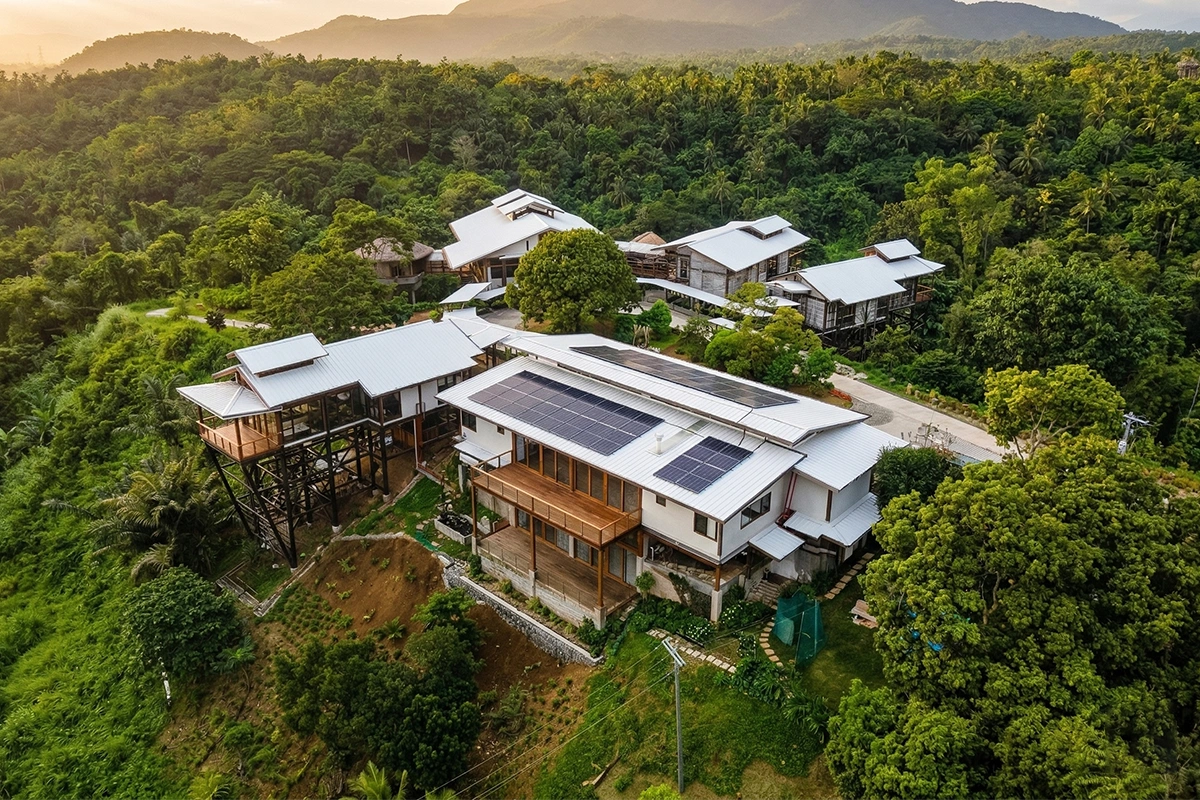
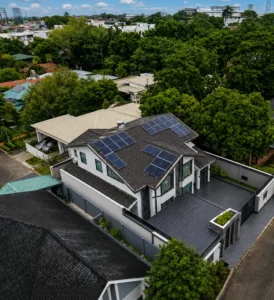
For a household spending PHP 8,000 to PHP 15,000 per month on electricity, a correctly sized solar power system typically reduces that bill by 40 to 70 percent, depending on how much of the household’s consumption happens during daylight hours. Appliances running during the day, air conditioning, refrigeration, washing machines, and water heaters draw directly from solar generation. The grid supplies what solar cannot cover, and net metering credits offset nighttime consumption.
The payback period for a quality residential system in the Philippines currently runs five to seven years, depending on system size, tariff rate, and consumption profile. After payback the electricity is essentially free for the remaining life of the installation, which on quality equipment, exceeds twenty-five years. A household that installs solar today and holds the property for ten years will recover the investment and bank several years of free electricity before the decade is out.
Property value is a secondary benefit but a real one. A house with a compliant, warranted solar power system and an active net metering connection is a more attractive purchase than an equivalent house without one. The buyer inherits a lower electricity cost from day one. In a market where running costs are a significant consideration for buyers, that matters.
What This Means for a Philippine Business
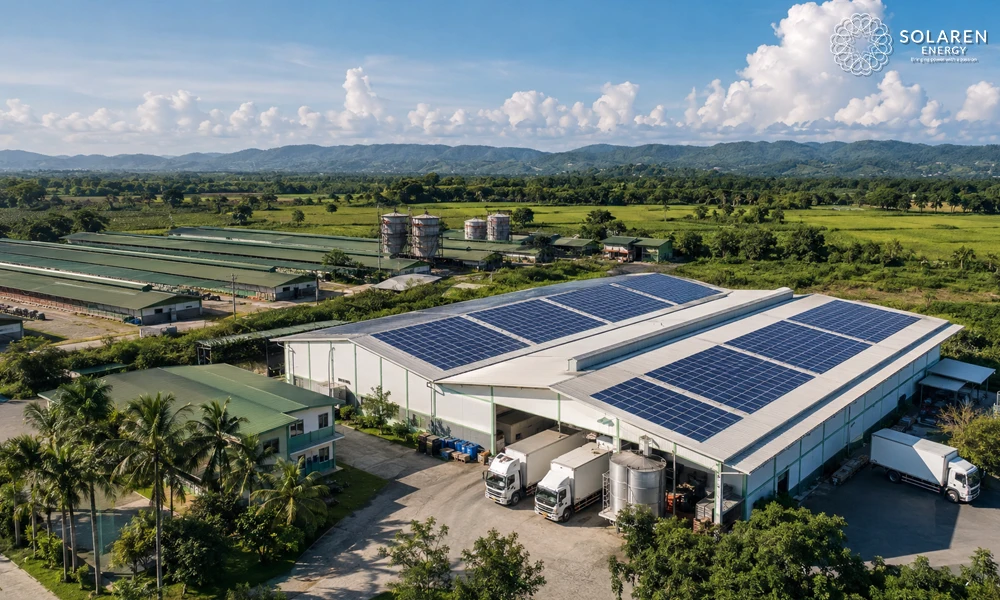
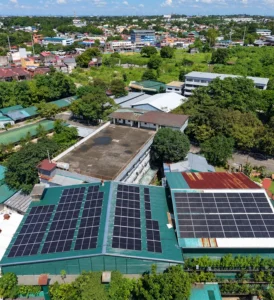
For commercial and industrial operators, the case is stronger and the numbers are larger.
A business spending PHP 300,000 per month on electricity that reduces that bill by 35 percent saves PHP 105,000 per month. That is PHP 1.26 million per year flowing directly to operating margin from a single capital investment. On a correctly specified commercial system, the payback period runs three to four years. After payback, those savings continue for the remaining life of the installation.
The electricity cost reduction also improves the predictability of operating costs in a way that matters to finance teams and investors. A business whose energy cost is partially fixed through solar generation is less exposed to the tariff volatility that affects competitors drawing entirely from the grid. When the next fuel price shock hits the Philippines, businesses with solar will be better protected from the impact, especially given the country’s near-total dependence on imported fuel.
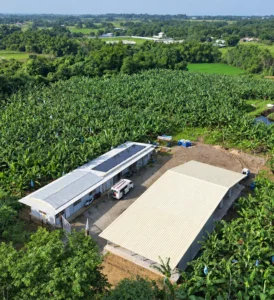
For daytime-intensive operations, food manufacturing, poultry and livestock farms, retail with long trading hours, and industrial facilities running day shifts, the alignment between solar generation and operational consumption is particularly strong. Every kilowatt-hour generated is consumed on site and the avoided grid cost is maximized. The Tarlac poultry farm case study published on Solaren’s website documents this in detail, PHP 5,759,547 in verified savings over 40 billing months from a 100kWp installation, with zero equipment failure downtime across the entire period.
Battery Storage and Hybrid Systems
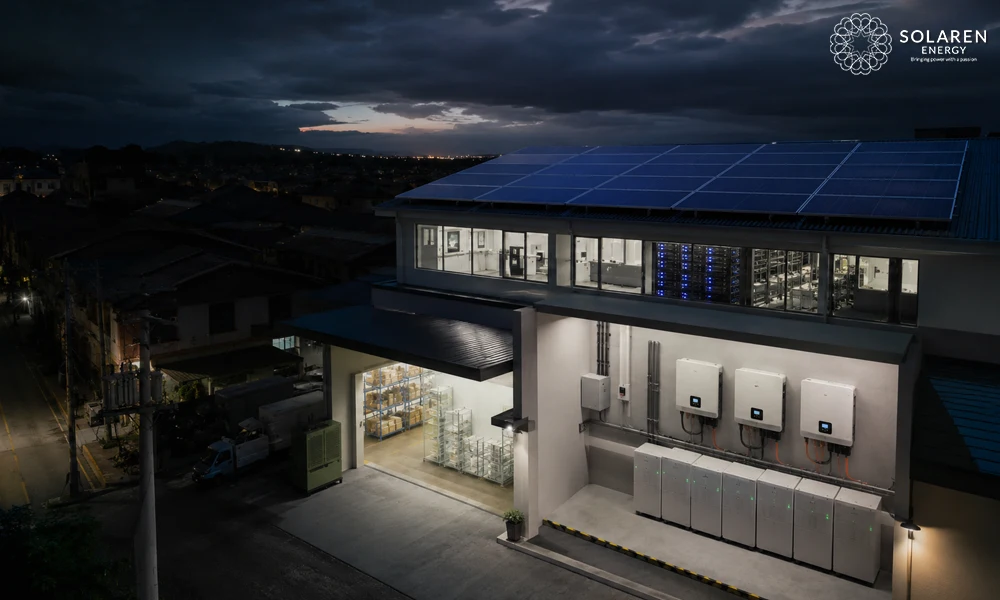
A standard grid-tied solar power system reduces what you buy from the grid during daylight hours. It does not keep you running when the grid fails. For households and businesses where continuity through brownouts matters, medical equipment, cold storage, server infrastructure, and production lines where a restart costs more than the electricity, a hybrid system with battery storage addresses that gap.
The hybrid inverter switches to stored energy in milliseconds when the grid fails. The transition is invisible to most equipment. Priority loads keep running. For facilities in areas with documented grid reliability problems, the cost of a correctly sized battery bank often pays back faster than the solar array itself when measured against avoided downtime costs.
Battery storage also enables demand management on commercial sites. A battery discharging during peak demand windows prevents the brief spikes that set monthly demand charges from reaching the meter. On high-tariff commercial connections where demand charges are a significant proportion of the bill, this alone can justify storage investment independent of any backup power argument.
The Starting Point
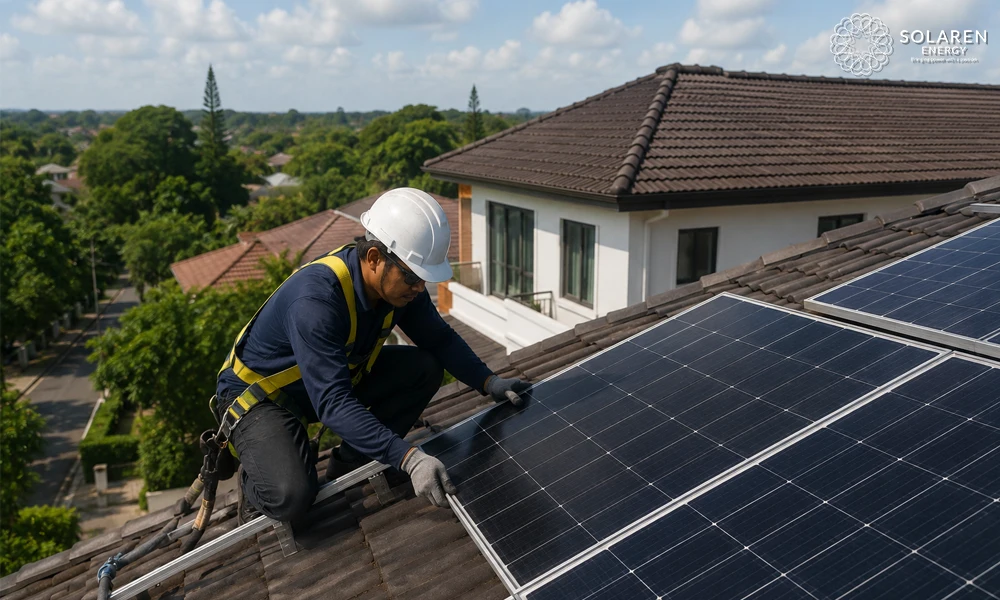
The financial case for solar in the Philippines is not complicated. The technology is mature, the irradiance is excellent, the tariffs are high, and the payback periods are short relative to the service life of quality equipment. What determines whether that case materialises in practice is the quality of the system design, the equipment specified, and the engineering behind the installation.
A solar power system that underperforms its simulation by fifteen percent because the string configuration was designed incorrectly costs the owner that fifteen percent permanently, every year, for the life of the installation. A system that does not have net metering approved because the contractor did not manage the application correctly loses the export credit value permanently for every month the approval is delayed.
Both problems are avoidable. The starting point is choosing an installer whose track record demonstrates that the promised performance is what actually gets delivered.
For a detailed look at how to evaluate solar proposals before signing anything, choosing a solar EPC in the Philippines covers the evaluation framework in full. And for the financial modelling methodology behind commercial solar returns, The Ultimate Guide to Commercial Solar ROI in the Philippines gives the numbers and tools to work with.
Frequently Asked Questions
-
How much can a solar power system realistically reduce my electricity bill in the Philippines?
For residential properties, reductions of 40 to 70 percent are achievable depending on how much of the household’s consumption happens during daylight hours and how the system is sized relative to that consumption. For commercial and industrial facilities with significant daytime loads, reductions of 30 to 40 percent on the total bill are common. The exact figure depends on your current tariff, your consumption profile, and system sizing. The starting point for an accurate projection is a load analysis that shows when your property actually uses electricity, not just how much it uses in total.
-
Is solar worth it if I am planning to sell my property in the next few years?
Yes, for two reasons. First, the payback period on a quality Philippine solar installation is short enough that even a property sold three to four years after installation will have recovered a significant portion of the capital through bill savings. Second, a compliant solar power system with active net metering is a genuine selling point that adds to the property’s market value.
The buyer inherits a lower electricity cost from day one, which is an attractive proposition in a market where running costs matter to buyers. A system installed correctly with full documentation and an active net metering connection is easier to transfer than one with incomplete compliance records.
-
What is the difference between a grid-tied and a hybrid solar power system?
A grid-tied system connects your solar panels to the grid and reduces how much electricity you buy during the day. When the grid fails, the system disconnects for safety reasons and generation stops. A hybrid system adds battery storage and a hybrid inverter that manages the relationship between solar, batteries, and the grid simultaneously. When the grid fails, the hybrid inverter switches to stored energy in milliseconds and priority loads keep running.
The right choice depends on whether continuity through outages is a requirement for your property. For sites with stable grid supply and no critical backup requirement, grid-tied typically produces a better financial return. For sites with documented grid reliability problems or critical loads, hybrid is the specification that matters.