The Philippine solar market has matured enough that most buyers know to ask about accreditations, equipment brands, and warranties. Fewer think to ask a more fundamental question: who actually does the work? Whether a solar company designs, engineers, and installs in-house or subcontracts those functions to third parties is one of the most important differences in the market. It is also one of the least discussed.
The gap between a company that keeps every critical function under one roof and one that coordinates a chain of subcontractors is not cosmetic. It determines who is accountable when something goes wrong, how quickly problems are identified and resolved, and whether the system you receive in year one performs the way it was designed to perform in year fifteen.
What In-House Engineering Actually Means
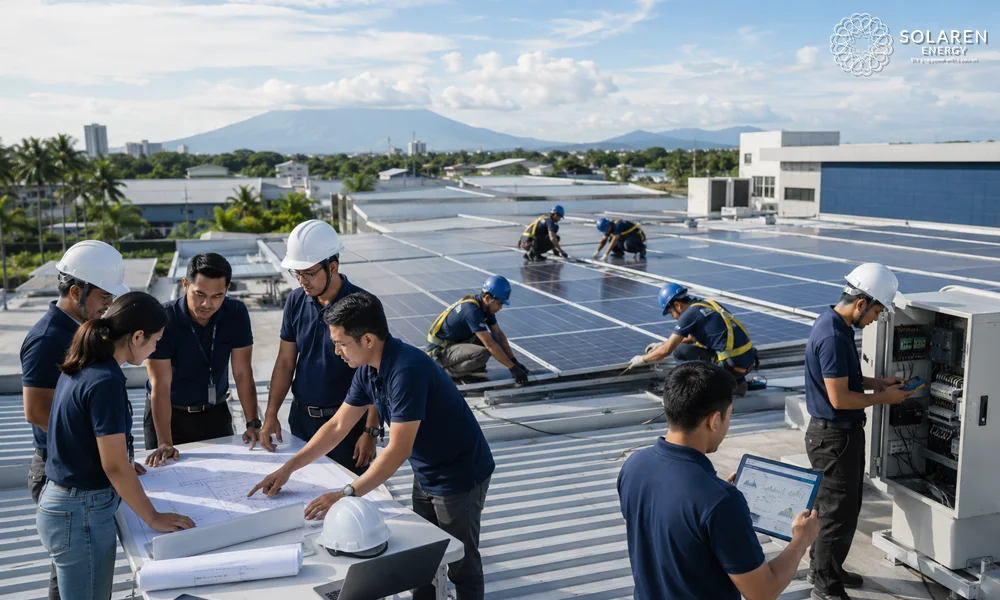
In-house engineering means that the team designing your system is the same organisation installing it, commissioning it, and supporting it afterwards. The electrical engineers, the installation crews, the monitoring technicians, and the after-sales support staff all operate under the same management, the same quality standards, and the same accountability structure.
This sounds like it should be standard practice. In the Philippine solar market, it is not. A significant number of companies operating as solar installers are primarily sales organisations. They take the contract, manage the client relationship, and hand the technical work to subcontractors they may use regularly or may have engaged specifically for the job. The design might come from one firm, the installation from another, the electrical works from a third. When the system underperforms or develops a fault, the question of who is responsible becomes genuinely complicated.
For a residential system, that complexity is manageable. For a commercial or industrial installation expected to operate reliably for 25 years, it is not.
Where Subcontracting Creates Risk
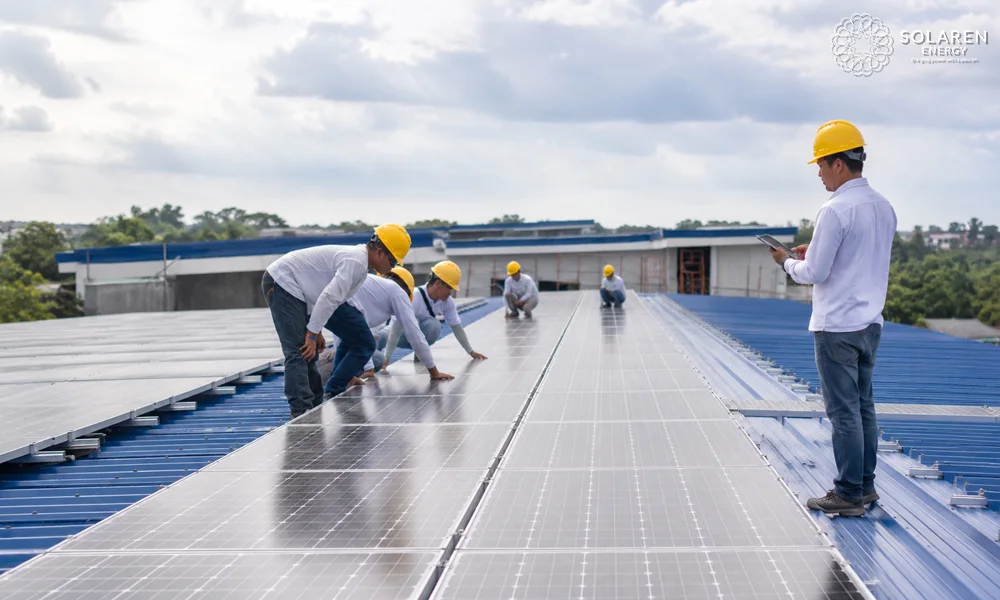
The risks introduced by subcontracting are not theoretical. They appear in specific, recurring patterns that any experienced solar EPC company in the Philippines encounters when taking over or assessing systems installed by others.
Design and installation mismatches are among the most common. A design produced by one team based on site survey data may specify components, cable runs, or mounting configurations that a separate installation team interprets differently on site. Small deviations from specification accumulate. The as-built system is not quite what was designed, and the as-built documentation, if it exists at all, does not capture the changes.
Quality control is the second problem. When installation crews are subcontracted, the principal company’s quality standards have to be enforced at arm’s length. Site supervision may be intermittent. Workmanship that would be caught and corrected immediately in an in-house team passes without review. The buyer has no visibility into any of this until something fails.
After-sales accountability is the third. When a fault develops eighteen months after installation, a company with in-house engineering knows the system, knows how it was built, and can dispatch a technician who has direct knowledge of the installation. A company whose installation was subcontracted has to work backwards through a chain of parties, each of whom has limited records and divided responsibility.
The Sunsynk and SMA Standard
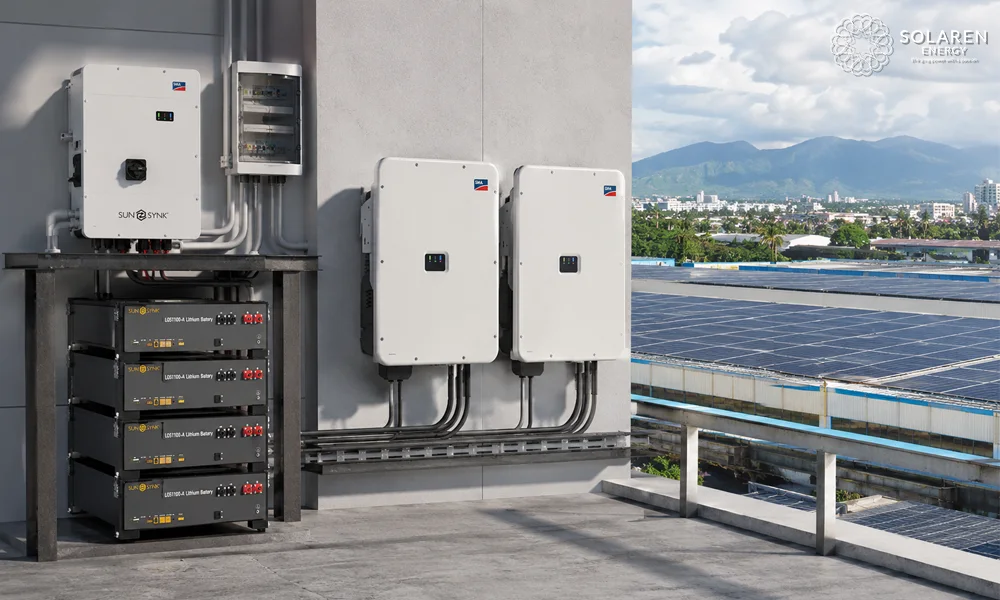
Equipment selection reflects engineering philosophy as much as commercial relationships. Solaren installs Sunsynk inverters as an official distributor and SMA inverters from Germany across its commercial and industrial portfolio. Both choices reflect specific engineering rationale rather than margin optimisation.
Sunsynk’s hybrid inverter architecture is designed for the grid conditions prevalent across the Philippines: variable voltage, frequent outages, and the need for seamless battery integration in facilities where uninterrupted power is operationally critical. As an official Sunsynk distributor, Solaren’s engineering team has direct access to technical support, firmware updates, and warranty processing that an installer working with a grey-market or secondary-channel supply cannot match.
SMA’s track record in commercial solar is measured in decades and across millions of installations globally. The engineering depth behind their monitoring, grid management, and power quality management makes them the appropriate choice for larger and more complex commercial systems where performance data needs to be granular and reliable over a long operating life.
Neither inverter brand is the cheapest option available. Both are chosen because they perform to specification over the life of the system, which is the only metric that matters when the installation is expected to deliver a return over 20 to 25 years.
What a 3 to 4 Year Payback Actually Requires
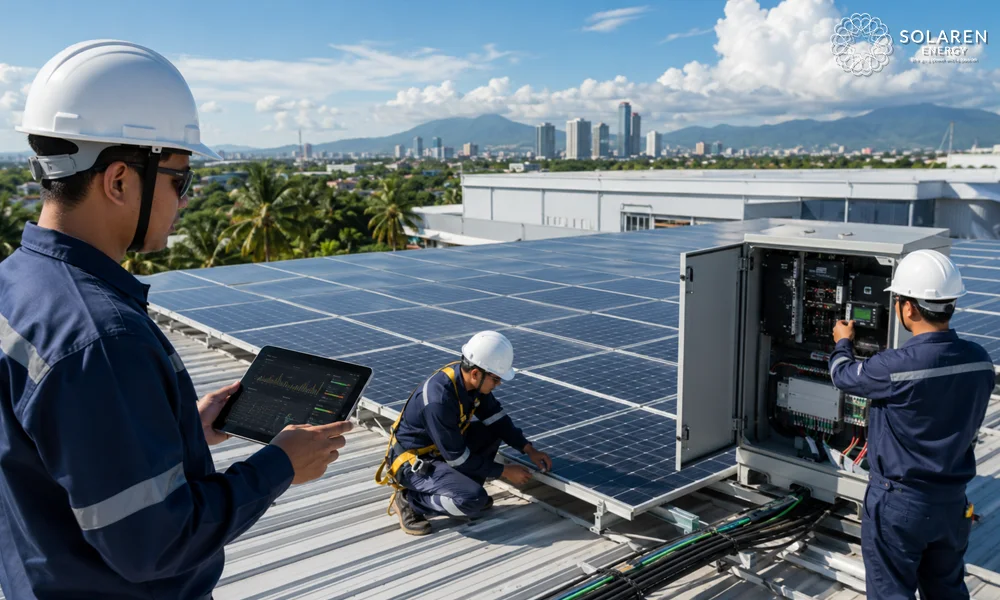
The projected payback period for a well-designed commercial solar installation in the Philippines is currently 3 to 4 years. That figure is achievable, but it is not automatic. It depends on the system performing at or close to its designed output consistently across those years, not just in the first few months when the installation is new and everything is functioning as specified.
Achieving that performance consistently requires accurate load profiling before design, correct component selection for the specific site conditions, workmanship that meets the specification at every stage of installation, commissioning that verifies the system is performing to design, and monitoring that identifies any deviation from expected output before it compounds into a meaningful shortfall.
Each of these steps requires the engineering team to have direct knowledge of the system and direct accountability for its performance. A subcontracted installation chain cannot reliably deliver all five. An in-house team that designs, builds, and monitors the same system can.
The difference between a system that pays back in 3.5 years and one that pays back in 6 years is often not the equipment specification. It is the quality of the engineering behind it.
Accreditation as a Floor, Not a Ceiling
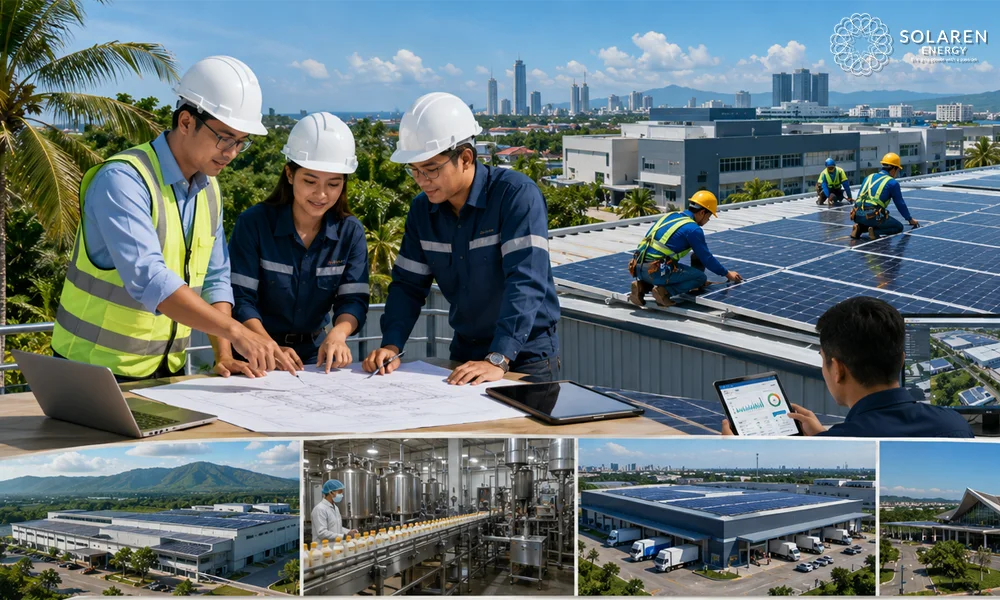
DOE accreditation and PCAB licensing are the minimum regulatory requirements for a credible solar company in the Philippines. They confirm that a company has met baseline standards for registration, financial capacity, and technical capability. They are necessary but not sufficient as a basis for selecting a partner for a significant capital investment.
The best solar companies treat accreditation as a floor. Above that floor, what distinguishes them is the depth of their engineering capability, the consistency of their installation quality, the verifiability of their completed portfolio, and the robustness of their after-sales structure. These are qualities that accreditation does not measure and that marketing materials cannot reliably signal. They are visible in completed projects, in client references, and in the willingness of a company to connect prospective clients with past customers and let those conversations happen without a sales representative present.
Solaren’s completed commercial and industrial portfolio is documented on the Solaren projects page, covering manufacturing, food processing, retail, logistics, and public infrastructure clients across the Philippines. For a broader view of how Solaren compares to other solar providers operating in the market, the
Top 10 Solar Companies in the Philippines provides an independent overview of the competitive landscape and where different providers sit within it.
What to Ask Before Signing
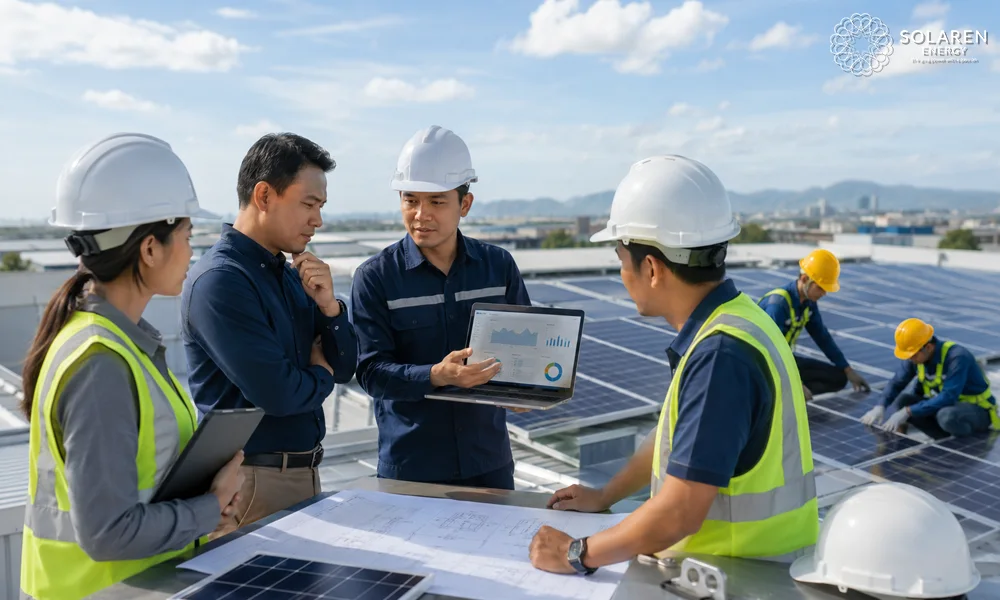
Before committing to any solar provider for a commercial or industrial installation, ask directly: Does your company design, install, and commission in-house, or do you use subcontractors for any of these functions? The answer will tell you more than any accreditation certificate or equipment specification sheet.
Ask who will be on site during installation and what their relationship is to the company you are contracting with. Ask who will respond if there is a fault in three years, and whether that person will have direct knowledge of how your system was built. Ask to see the monitoring interface and understand what happens when output drops below the expected baseline.
A company with genuine in-house engineering capability will answer all of these questions specifically and confidently. One that relies on subcontractors will find some of them difficult to answer clearly. That difficulty is itself useful information.
Frequently Asked Questions
-
Q: What does in-house engineering mean for a solar installation in the Philippines?
It means the company designing, installing, and supporting your system is a single integrated organisation rather than a principal contractor coordinating subcontractors. In practice, this means the same quality standards apply across every stage of the project, accountability is undivided, and the team responsible for after-sales support has direct knowledge of how your specific system was built. For commercial and industrial installations expected to perform for 25 years, this distinction has significant implications for long-term reliability and return on investment.
-
Q: How do I know if a solar company in the Philippines subcontracts its installations?
Ask directly. A company that installs in-house will be able to tell you exactly who will be on site, what their employment relationship is with the company, and who supervises installation quality. A company that subcontracts will often give vague answers about partners or affiliated teams. You can also ask to speak with the installation supervisor for your project before signing and assess whether they have direct knowledge of the system design and specifications.
-
Q: Does it matter which inverter brand a solar company uses in the Philippines?
Yes, significantly. Inverter selection reflects engineering philosophy, not just commercial relationships. Brands with strong local support infrastructure, direct warranty processing, and a track record of performance in Philippine grid conditions are categorically different from cheaper alternatives sourced through secondary channels. Sunsynk and SMA, both used by Solaren, offer long-term technical support, firmware management, and warranty processing that protect the buyer’s investment across the full operating life of the system. An inverter from a manufacturer with no local presence may cost less upfront and cost considerably more when it needs attention.
-
Q: What payback period should I expect from a commercial solar installation in the Philippines?
A well-designed and properly installed commercial solar system currently delivers a payback period of 3 to 4 years in the Philippines, depending on system size, consumption profile, grid tariff, and financing structure. That figure assumes the system performs at or close to its designed output consistently across the payback period. Systems that were poorly designed or installed often underperform their projections, extending the payback period significantly. The engineering quality behind the installation is one of the most important variables in whether the projected payback is actually achieved.
-
Q: Why does DOE accreditation alone not guarantee quality?
DOE accreditation confirms that a solar company has met minimum regulatory requirements for registration and technical capability. It does not measure the depth of in-house engineering capacity, the consistency of installation workmanship, or the robustness of after-sales support. Many accredited companies subcontract significant portions of their project delivery. Accreditation is a necessary baseline, not a sufficient basis for selecting a partner for a long-term capital investment. The additional due diligence, completed projects, client references, and direct conversations with past customers tell you what accreditation alone cannot.