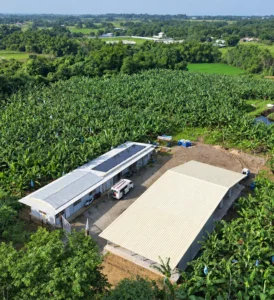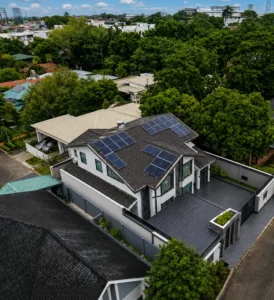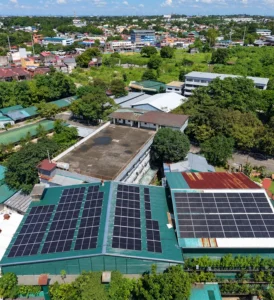
If you were to ask ten installers to name the best solar panels in the Philippines, you would get ten confident answers, most of them determined by whatever is sitting in their warehouse that month. We want to answer the question differently. Solaren has installed tens of thousands of solar panels throughout the country, and in the last 12 years, we have commissioned, serviced, inspected, and repaired systems built on a wide range of panel brands, both our own and others’. That experience leads us to the five main brands behind our installations, explains what each one has done to earn its place, and is honest about the one thing most “best-of” lists skip: why we stay loyal to a short list instead of chasing the cheapest supplier for the month or quarter.
The best solar panels in the Philippines are not defined by brand marketing but by tier, measured by field performance and after-sales support. At Solaren, we have installed many brands, but the five main brands on our original systems are LONGi, Trina, Sunova, Jinko, and SolarWorld. Each was chosen for long-term performance on Philippine rooftops and the strength of the relationship behind the warranty.
How a Solar Contractor Actually Judges Panels
Spec sheets have never installed anything. When you commission systems for a living, three things end up mattering far more than the datasheet wattage and other technical details.
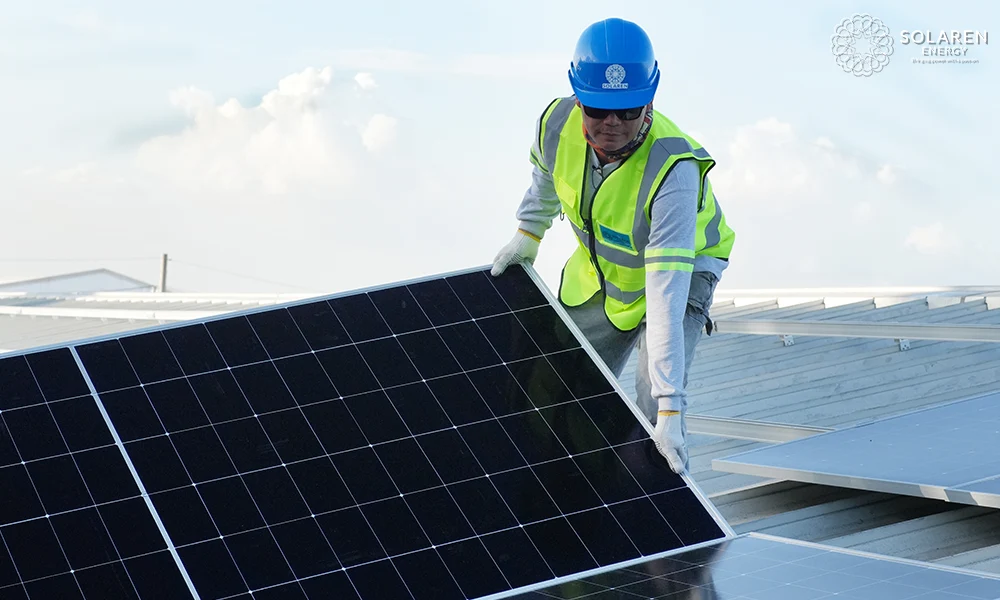
The first is the tier line. Today, we install nothing below Tier 1. Tier 1 is a bankability classification, not a quality medal, but it correlates with the things that keep panels alive: real manufacturing scale, financial soundness, and warranties backed by a company that will still exist after fifteen or twenty years. The roster changes every quarter, but the current members include LONGi, Trina Solar, JinkoSolar, JA Solar, Canadian Solar, Tongwei, and Astronergy, among others. And here is the honest truth from our service work: the majority of Tier 1 panels on the market are good products. We have worked with customers running most major brands, and there is absolutely nothing wrong with them. The problem panels we get called out to are almost always lower-tier products that were bought on price, or often relabeled as Tier 1.
The second is measured output on Philippine roofs. We publish real production data from our monitored portfolio, and our 2025 dataset covering 103 actual systems showed what panels genuinely function under local heat, humidity, dust, and typhoon seasons. Brochure numbers are written in Germany and China. Our numbers are written in the places where the panels are installed, such as Tarlac, Metro Manila, Cavite, Isabela, Iloilo, and Cebu.
The third is after-sales support, which buyers underrate every single time. A warranty is a promise, and a promise is only as good as the counterparty behind it and the local channel that supports it. When a module fails in year six, what matters is whether a claim gets processed and replaced in weeks. That depends on relationships, and relationships are exactly why our brand list is short. That same logic applies when we move from criteria to brands.
The Five Main Brands and What Earned Their Place
LONGi
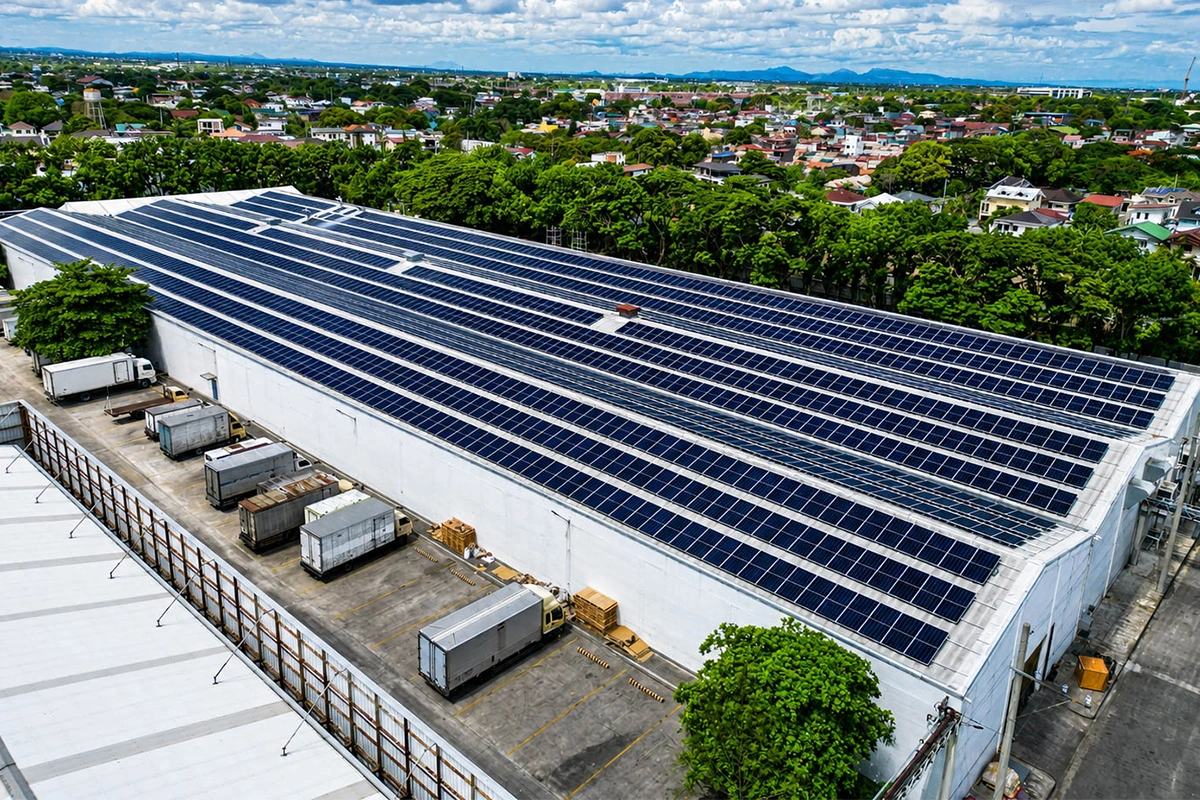
Verdict: the brand we trust with our flagship projects, and the technology edge of our current lineup.
LONGi is the world’s largest module manufacturer, and its panels now anchor our most advanced work. Our latest premium contract, the 1,532.05 kWp Phase 4A installation for Liwayway Marketing Corporation (Oishi) in Imus, Cavite, runs on LONGi 650 W back contact modules, a cell architecture that moves the electrical contacts to the rear of the cell so the entire front face collects light. Commissioned in July 2026, the system is designed to deliver roughly 1,302 kWh per kWp per year. When a client trusts you with a seventh installation in a nationwide program, you put your best technology on their roof, and for us, that was LONGi.
Trina Solar
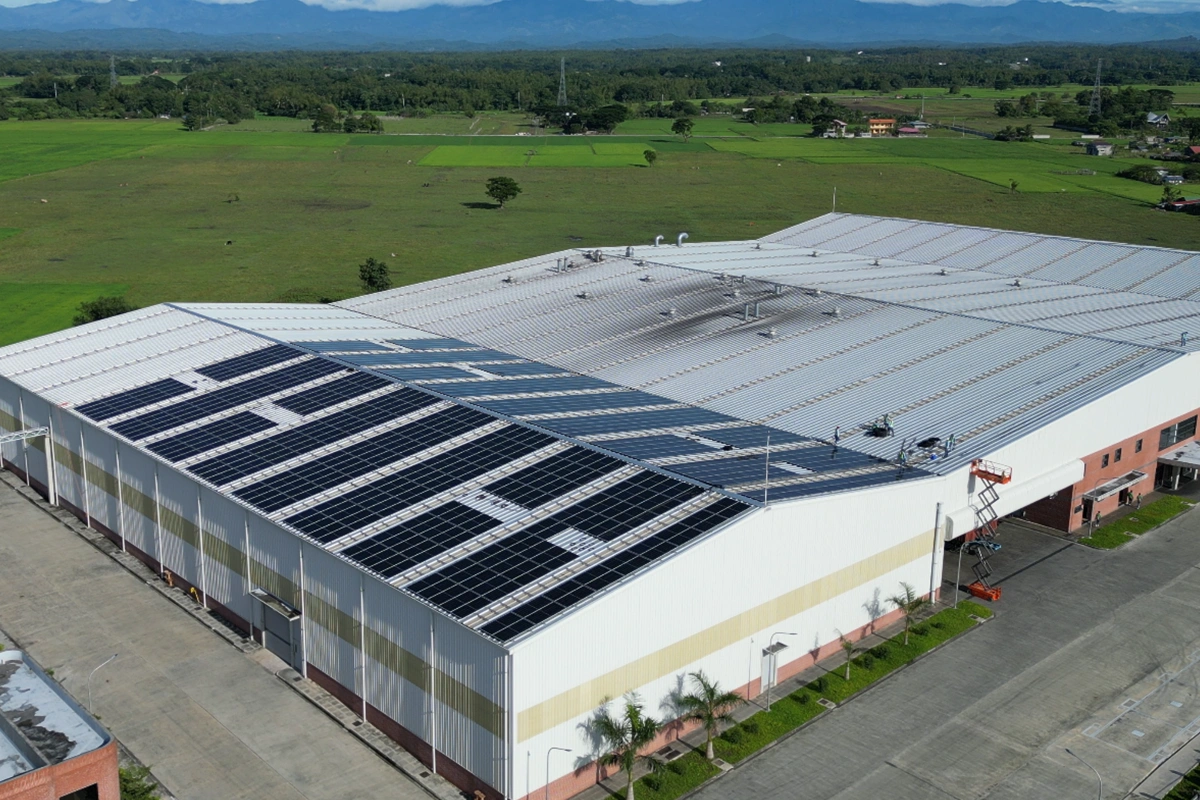
Verdict: the dependable workhorse commonly used across our commercial and industrial portfolio.
Trina has been a fixture of our C&I work for years for an unglamorous reason: it simply performs. Modules arrive with their rated output; defect rates on delivery are low; degradation in our monitoring data stays stable; and the warranty channel is mature. Some brands win on excitement. Trina wins on the absence of drama, which, when you are responsible for a factory roof for twenty-five years, is exactly the quality you want.
JinkoSolar
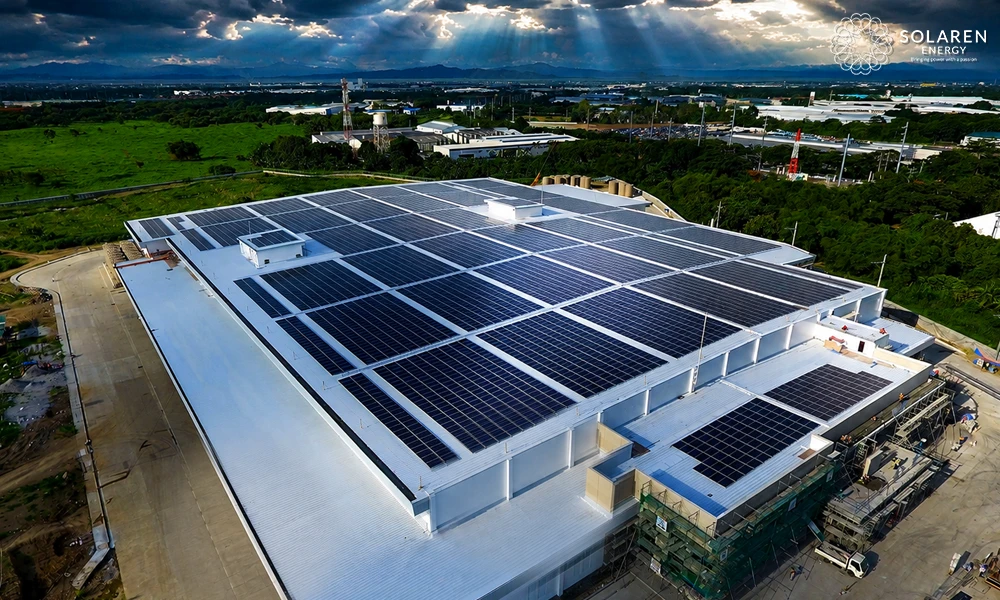
Verdict: The panels on our award-winning roof are still proving themselves years later.
Jinko modules power the project that put Solaren on the regional map: the 2.16 MWp rooftop at New Zealand Creamery, which won the Asian Power Award in 2019. That system has been generating through Philippine summers and storm seasons ever since, and it remains one of the roofs we point prospective clients toward. Jinko is one of the largest module makers on earth, but for us, the credential is simpler: our longest-running large commercial reference runs on it, and it still performs to this day.
Sunova
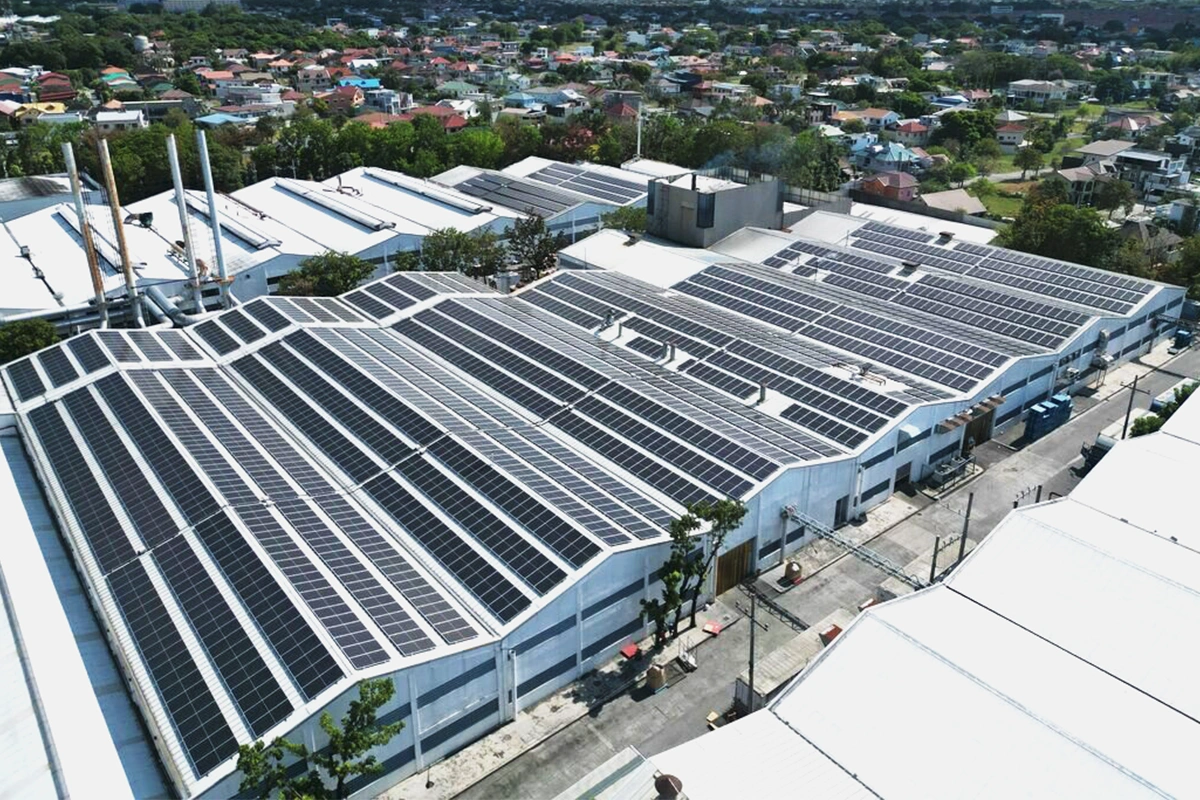
Verdict: a brand that did its job, and still does.
We put Sunova on a good number of commercial roofs over the years, and the monitoring data tells a short story: those systems produce what they were designed to produce. We are not buying Sunova at the moment. For the clients who have it, nothing changes. We service the systems, monitor the output, and handle any warranty matter the same way it would have on day one.
SolarWorld
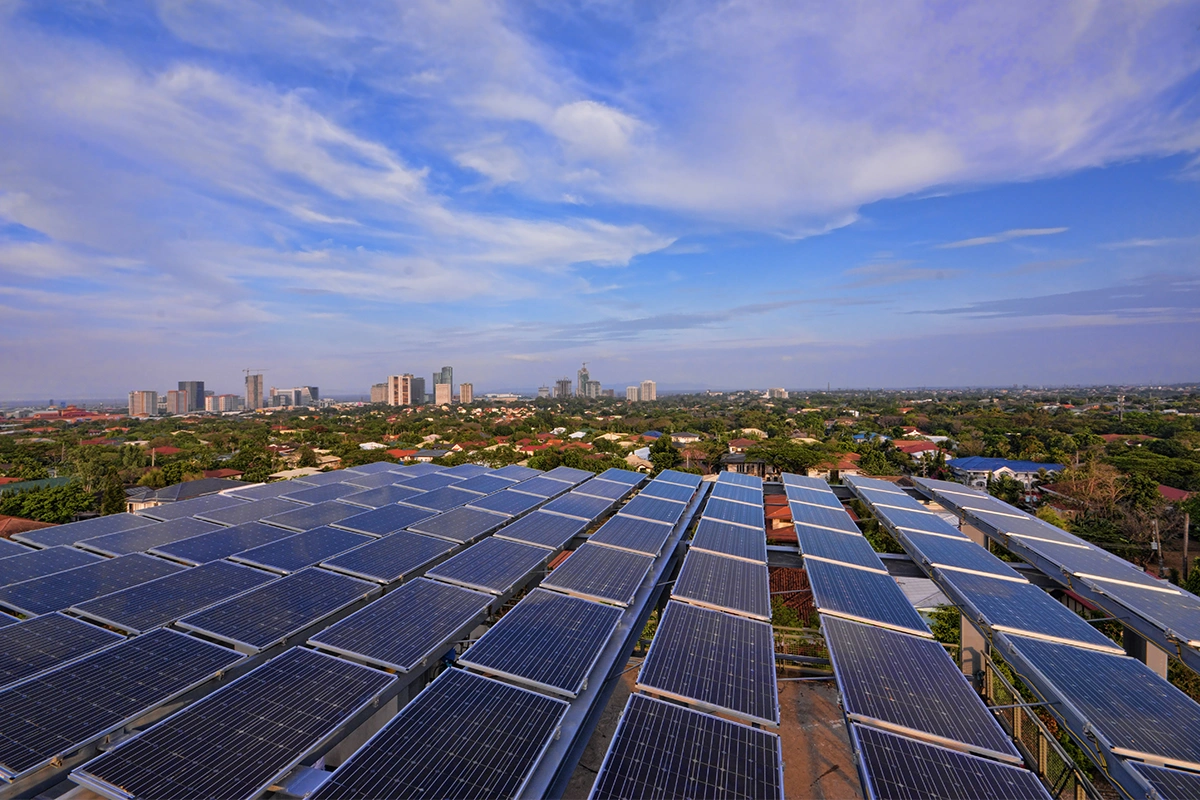
Verdict: the brand that taught us our entire procurement philosophy.
SolarWorld sits on this list for a reason no marketing department could invent. The German manufacturer went bankrupt years ago, and its warranties effectively died with it. The SolarWorld modules in our original installations have now survived and outlived their 10-year product warranty. To date, we have recorded zero panel failures across those systems. Not fewer than expected. Zero. Degradation is running better than the specification promised.
The 25-year performance warranty is still some years from its end, but every indication from our monitoring suggests these panels will honor it. Promises made will hopefully be promises kept, even with no one left to keep them. These modules also made history: deployed at the Lotus manufacturing facility along Daang Hari, they were the first bifacial panels installed in the country, pioneering a technology that is now industry standard. Our own office runs on SolarWorld modules to this day, still producing more than a decade in.
Two lessons sit inside that story. Quality manufacturing of a product should outlive the company that made it. And a paper warranty is worth exactly nothing if the counterparty disappears, which is why we now weigh manufacturer stability and local channel strength so heavily. Every single procurement decision we make is determined by watching a good manufacturer die while its panels kept refusing to.
The List Does Not End at Five
Five main brands do not mean five brands ever. Over 12 years, we have installed many, many different panel makes and serviced even more on systems that other contractors built. Plenty of them have been perfectly good. Our short list is a conclusion drawn from all of that experience, not a limitation of it.
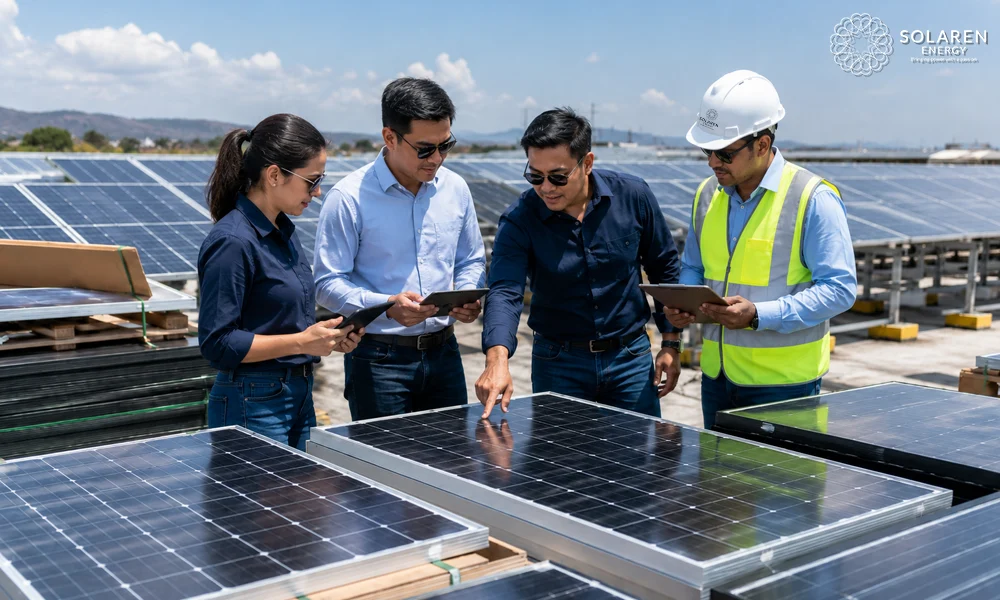
The evaluation never stops, either. We continuously assess a wide range of Tier 1 manufacturers against our current lineup on performance, warranty terms, local support, and supply reliability. Back contact technology, the cell architecture on our newest flagship, is a particular focus, and we are exploring multiple suppliers of it, AIKO and AE Solar among them. Canadian Solar is another regular on our procurement shortlists, and a brand worth a footnote: despite the name, its manufacturing is not Canadian, but it has earned its Tier 1 standing the same way the others have, alongside a multitude of other Tier 1 candidates we review.
The bar to enter our chosen lineup is high, and the bar to stay in it is just as high. As a result, our clients benefit from something casual brand-switching destroys. A deeply tested relationship between installer and manufacturers that turns warranty claims from letters and stressful telephone conversations into actual replacements.
Where the Problem Panels Really Come From
In our service and rescue work, we do a lot of rescue on systems that other contractors built, and a pattern repeats itself. The failing panels are rarely the big Tier 1 names. They are unbranded or lower-tier modules bought at the lowest landed cost. In the early years of the market, especially, smaller installers were driven less by engineering and more by whatever appeared on Facebook at a bargain price from distributors who made their living importing the cheapest available alternatives.
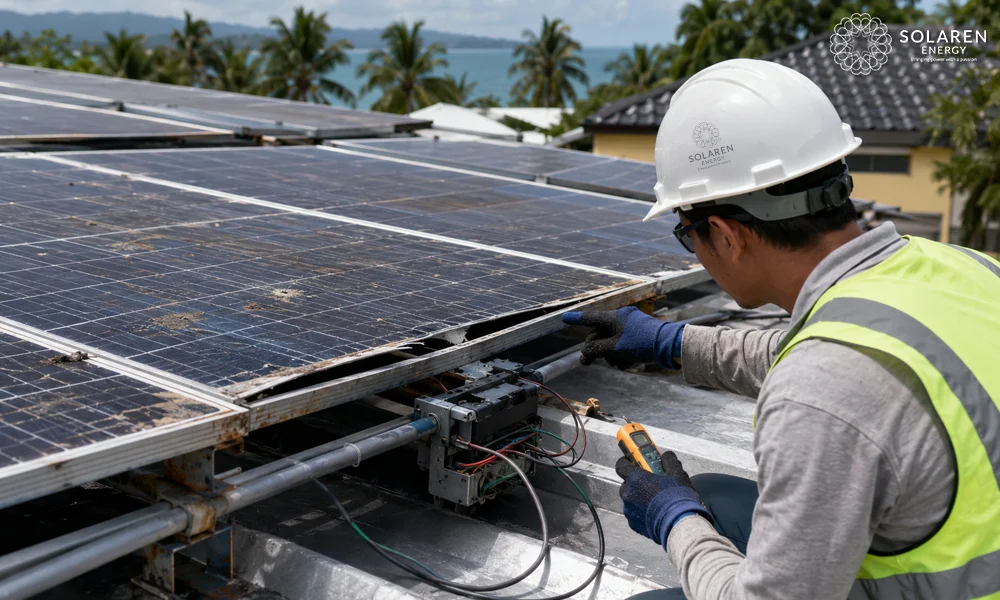
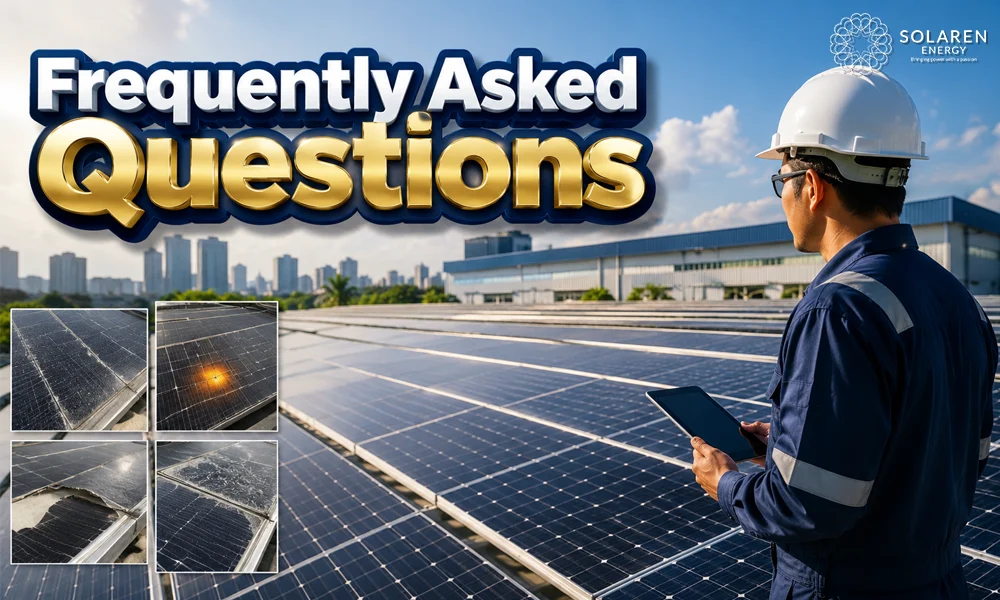
The faults we find on those roofs are specific and predictable. Snail trails creeping across the cell face, the visible signature of microcracks reacting with moisture. PID, potential induced degradation, silently drains output from entire strings. Delamination occurs when the layers of a poorly made laminate let go in the heat. Hotspots from badly matched cells. Output collapses far beyond any normal degradation curve. And when the owner reaches out for a warranty claim, the seller is gone. Substandard wiring and workmanship often ride along with cheap panels, which compounds the damage, but the panels themselves are usually where the trouble starts. Cheap panels are not a discount. They are a deferred invoice. The panel is only half the story of a reliable system, of course. The other half is what converts and manages the power, which is why we published a companion piece on the inverters we install.
Frequently Asked Questions
- What are the best solar panels in the Philippines for commercial projects?
Based on measured performance among our monitored portfolio, the five main brands behind Solaren’s installations are LONGi, Trina, Jinko, Sunova, and SolarWorld, with LONGi and Trina leading our current projects. For commercial and industrial projects, panel choice should be paired with strong after-sales support and an installer who publishes real output data.
- Does Tier 1 automatically mean a panel is high quality?
No. People treat the Tier 1 list as a quality award, and it was never that. It exists for banks. It tells a lender whether a manufacturer is big enough and financially solid enough to finance projects against, and that is all it tells anyone. A panel from a Tier 1 factory can still disappoint on a hot roof. We install Tier 1 only, because financial strength is what keeps a warranty alive in year fifteen, but the buying decision itself comes from our own monitoring data and from how a manufacturer behaves when something needs replacing.
- Are cheap, lower-tier solar panels worth the savings?
In our experience, no. Nearly all the failing panels we are called to repair or replace are lower-tier products bought on price. The upfront savings are routinely erased by snail trails, PID, delamination, hotspots, early output collapse, and warranties that cannot be claimed because the seller has no local presence.
- What happens to my warranty if the panel manufacturer goes out of business?
In most cases, the warranty becomes unenforceable, which is why manufacturer stability matters as much as the warranty length printed on the quote and datasheet. Our own SolarWorld installations show the flip side: well-made panels can keep performing long after the maker is gone, but you cannot count on being that fortunate. Choose panels where both the product and the company are built to last.
- How long do quality solar panels last in the Philippine climate?
Quality Tier 1 modules are built to last 25 years or more, and our field data support that. Our original SolarWorld systems have outlived their ten-year product warranty with zero panel failures and better-than-expected degradation, and they are tracking to meet their 25-year performance warranty. The Philippine climate punishes poor manufacturing quickly, which makes brand selection more consequential here, not less.
Conclusion: Why We Stay Loyal
Here is what twelve years of installing teaches you about the best solar panels in the Philippines. The brand name matters less than three questions.
1. Will the panel still be producing in year ten?
2. Will the manufacturer still exist to honor the warranty?
3. Will your installer still pick up the phone when you need him?
Our five main brands are the ones that kept answering yes. Some are on our newest flagship roofs. One went bankrupt, and its panels outlasted it. The list will change over time, because we never stop testing what the Tier 1 field offers, but it will change slowly, and never because a container of something cheaper by a few cents. We have spent too many hot hours on other people’s rooftops finding faults, testing strings, and replacing modules that were bought on price.
If you want panel advice, we can start with something unusual and almost unique: published production data from systems we actually built. Talk to us, and we will show you the numbers before we show you a brochure.