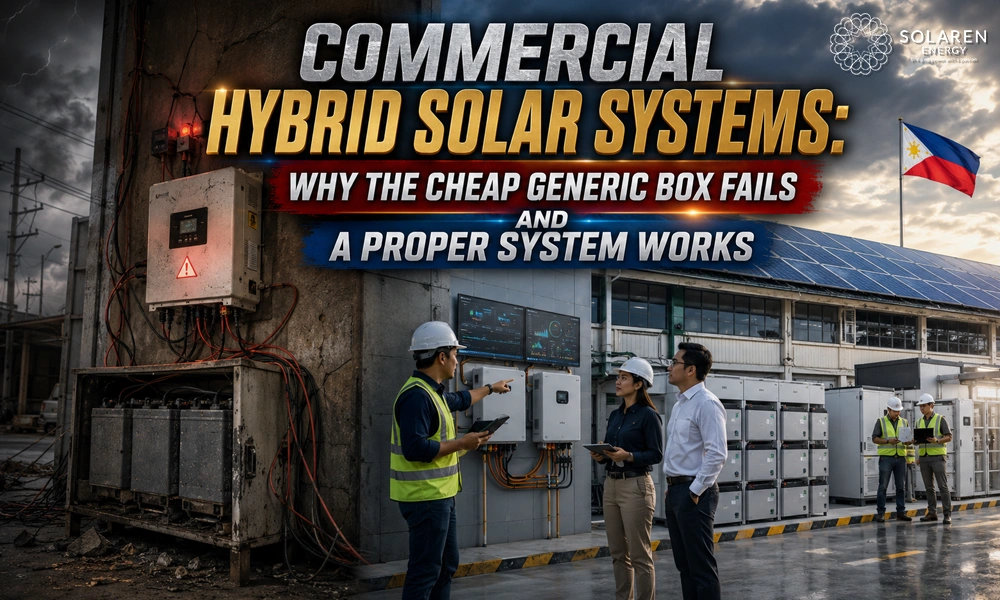
A commercial hybrid solar system is not a product you buy off the shelf, and treating it as one is the most costly mistake we see in this market. Businesses spot a plug-and-play kit with a battery and inverter at a tempting price and assume it will work for them. In most factories and commercial buildings, it does not. The difference between a cheap generic box and a system designed around your building is where most hybrid problems begin, and it is worth understanding before you invest. It builds on our complete guide to hybrid solar systems in the Philippines. Here is what sets the two apart.
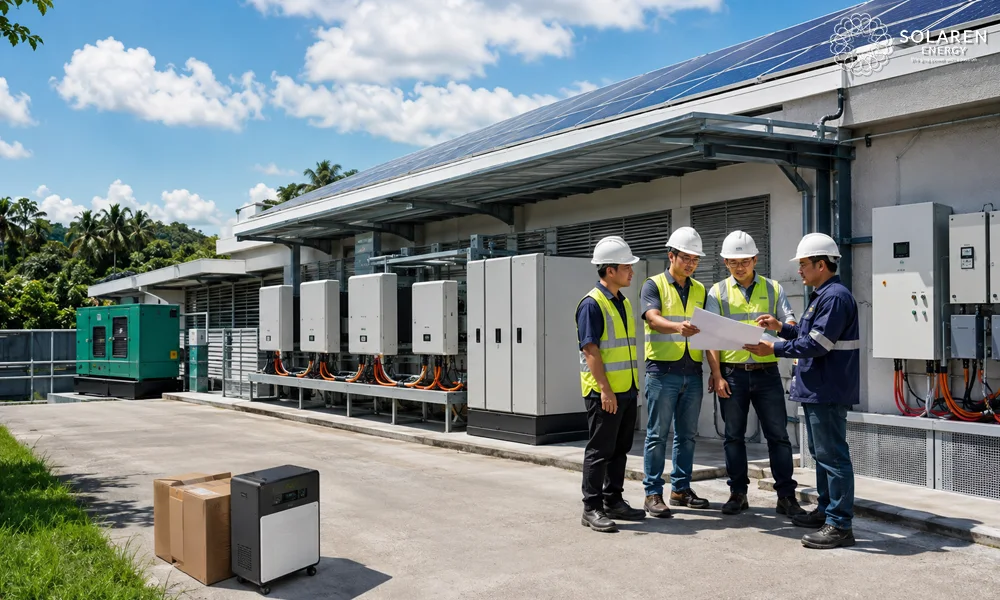
What is the difference between a boxed hybrid kit and a proper commercial system? A boxed kit is a sealed, mass-produced unit sold as plug-and-play, usually with unbranded batteries and a generic inverter too small for industrial loads. A proper system is specified from your actual load data, with correctly sized batteries, an industrial power control system, intelligent control, remote monitoring, automatic switching, and generator integration.
What a boxed hybrid kit really is
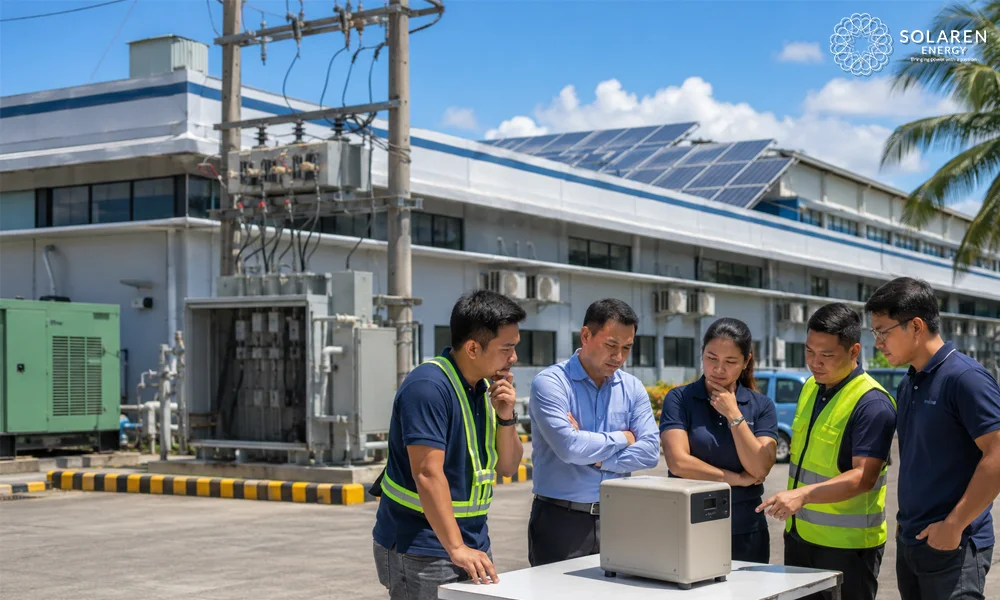
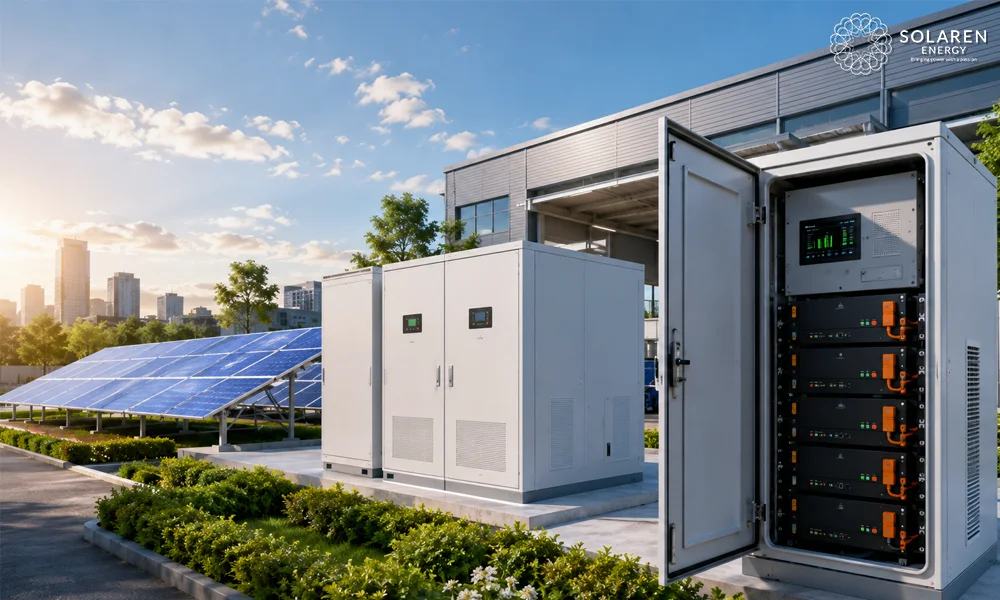
A boxed hybrid kit is a sealed product built to hit a price and sold in volume. The appeal is clear. One unit, one price, plug it in. The problem is what sits inside it and what is missing. Many kits use unbranded lithium or lead-acid batteries with low cycle-life ratings, paired with a generic inverter that is often single-phase, or rated for a continuous output too low for industrial three-phase loads and inductive equipment. They are built to be sold, not to be integrated into your building.
For a home with light demands, a good kit can work well. For a factory or commercial facility, the same kit is usually the wrong tool, and the problems appear only after it is installed and paid for. Heavy plant with power-quality issues is a distinct case covered in industrial hybrid solar systems.
What functionality do boxed kits lack?
The biggest failing of a boxed system is not the hardware. It is the functionality that was never built in. Three gaps matter most on a commercial site.
The first is automatic switching. Many boxed kits cannot transfer the load from grid to battery on their own, so when a brownout hits, nothing happens until someone throws the changeover by hand. That is not what a business expects from a hybrid system.
The second is integration with existing solar. A boxed kit usually ignores any grid-tie array already on the roof rather than working with it, which wastes solar you have already paid for.
The third is generator integration. Without the ability to start and manage a backup generator, a long outage leaves the business dark.
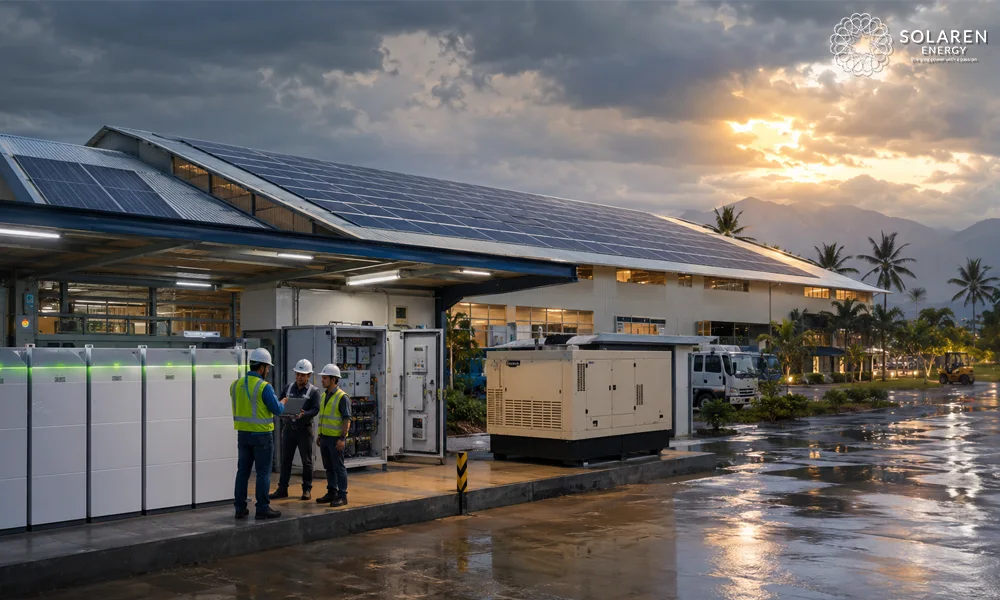
That third gap matters more than it sounds. After a typhoon, with days of cloud and no grid, the generator is what keeps a site alive. We program the generator to start automatically when the battery drops to 20% state of charge, after which it carries the load and recharges the battery. It is the backup of last resort, not the main source. A boxed kit does none of this, because the functionality was never part of its design.
What is an EMS in a commercial hybrid system?
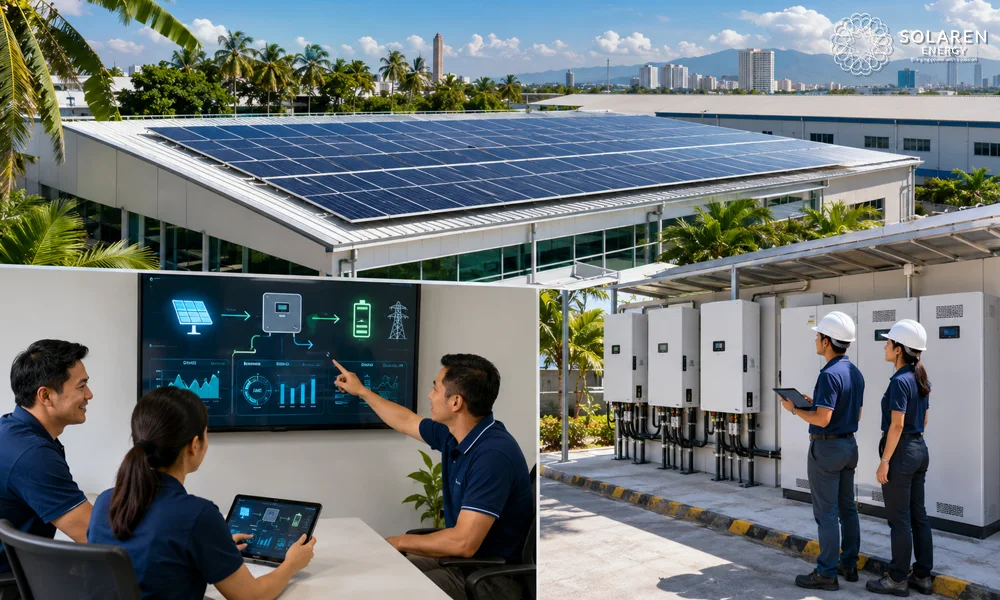
A proper commercial hybrid system is run by an intelligent energy management system, or EMS. The EMS is the controller that decides when and why energy is used. It reads the site’s demand pattern and decides when to charge and discharge the battery. How that interacts with export and billing is covered in hybrid solar and net metering. It also chooses when to pull from the grid or from on-site generation, and when to hold reserve for backup rather than release it to cut a demand-charge peak. A boxed kit has little to no control over this, which is why it so often fails to do the job it was bought for. The hardware may look capable on paper, but without a controller making the right decisions in real time, the capability is wasted.
Why does remote monitoring matter?
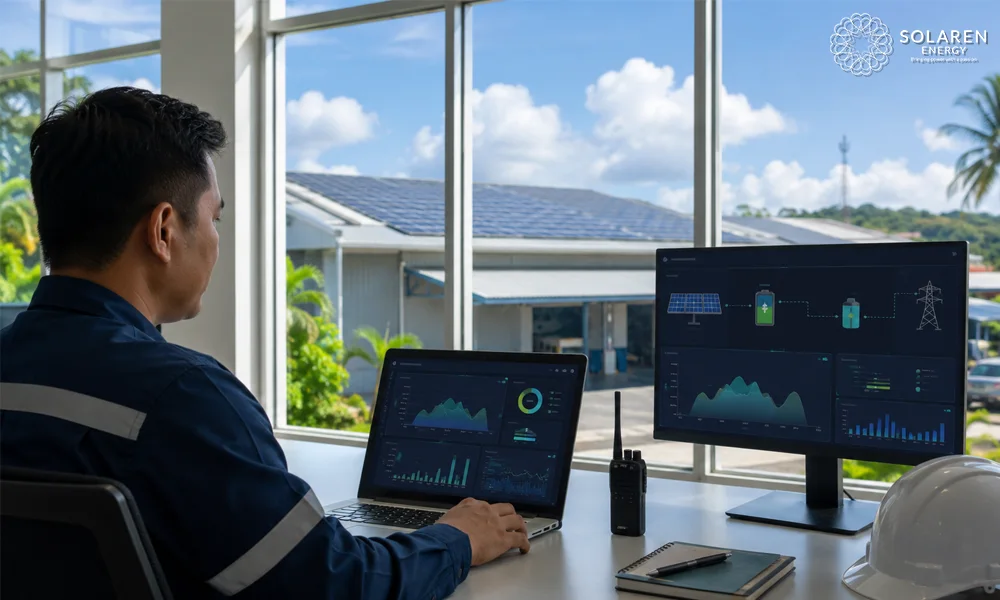
Many of the systems we are called to inspect have no remote monitoring or control at all. When something goes wrong, someone has to travel to the site to find out what. On a commercial site, that is real cost and real delay. We use only equipment that allows secure remote access for a simple reason. We do not want to drive 200 kilometers to diagnose a fault that could often be understood and fixed from a screen. For a business that depends on the system, remote visibility is not a luxury. It is part of keeping the site running.
The voltage trap: why 380-volt kits fail on 230-volt sites
One mistake catches buyers again and again, and it is expensive. It is voltage mismatch. We repeatedly see 380-volt and 400-volt systems bought for facilities that actually run at 230 volts, which is common in the Philippines. A system at the wrong voltage is not a small fix. We recently worked with a commercial client who had installed a 400-volt boxed kit in a 230-volt facility.

The mismatch caused significant downtime and forced the urgent installation of custom transformers, one for the backup and one for the regular load, which multiplied the project cost and caused delays. Backup at a different voltage from your main supply always means transformers, and if that is not designed in from the start, correcting it later is brutally expensive. A boxed kit does not account for this. A proper design settles it before anything is ordered.
Sizing, peak inrush, and the BMS
Two more failures round out the picture.
The first is undersizing. When the battery and PCS are specified too small to carry the loads they were sold to protect, the system folds during the very outage it was meant to cover, and production or critical services stop.
The second is peak inrush. The actual peak load at a commercial site can usually be measured only with a power quality analyzer on the main feeders. Without that data, a system is chosen that cannot handle sudden demand spikes from equipment startups or the return to full operation after an outage, and it shuts down at the worst moment.
We also avoid the cheap battery management systems that come with many boxed kits. The BMS is what protects the cells. A poor one shortens the life of the whole battery and raises maintenance costs later on.
How should a commercial hybrid system be specified?
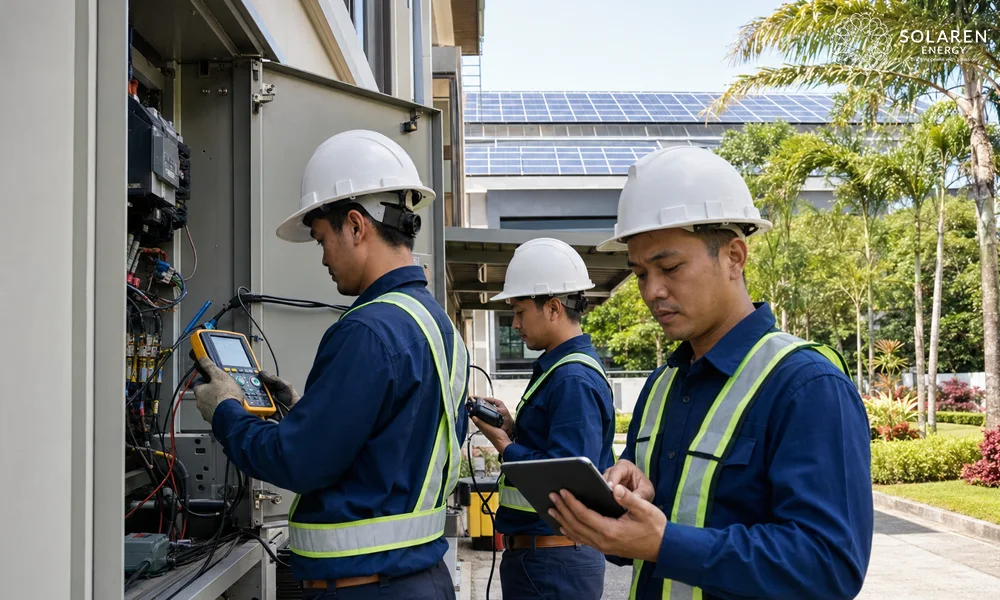
The correct approach is not complicated, but it takes work that a box skips. Before we recommend anything, we study the site. We use a detailed hybrid and off-grid questionnaire, usually visit in person, and, where warranted, install a data logger and a power quality analyzer to measure actual loads. Only then do we design a system around what the building actually needs.
This is standard engineering practice, and it is the difference between a system that lasts for years and one that fails within months. A feasibility study before purchase is far cheaper than replacing a system that was wrong from the day it went in. It identifies the site’s real requirements and prevents the downtime caused by a mis-specified system.
Where this leaves you

A commercial hybrid solar system pays off only when it is designed for the building it serves, and only when a hybrid is the right system type in the first place, which our guide to grid-tie vs hybrid vs off-grid solar helps you settle. A cheap generic box can look like the same thing for less money, but the savings vanish the first time a brownout hits, nothing switches, or a fault appears, and no one can see it. The wrong voltage does the same, and costs more to fix than the box ever saved. The battery is the easy part. The functionality, intelligent control, remote monitoring, and proper design around your loads are what actually matter.
If you want a system that does the job rather than one that looks cheap on paper, ask us to study your site first. That study is where the real difference begins.
Frequently Asked Questions

What is wrong with a boxed hybrid solar kit?
For a commercial site, boxed kits often use unbranded batteries with low cycle-life ratings, a power control system that cannot handle real load, and little of the functionality a business needs, such as automatic switching, generator integration, remote control, and intelligent energy management. In one case, a manufacturing plant running a residential-rated kit suffered repeated overloads and downtime until it was replaced with a properly specified system. Boxed kits are built to be sold cheaply, not designed for your building.
What is an EMS in a hybrid solar system?
An intelligent energy management system is the controller that decides when and why energy is used: when to charge or discharge the battery, when to draw from the grid, and when to hold reserve for backup or release it to shave a peak. It is the part that makes a hybrid system worth having, and it is what boxed kits usually lack.
Why does remote monitoring matter?
Because faults happen, and without remote access someone has to travel to the site to diagnose them, which costs time and money. Systems with secure remote visibility can often be understood and fixed from a screen, which keeps the business running.
Can I use a 380-volt system on a 230-volt facility?
Not without proper design. Backup at a different voltage from your main supply requires transformers, one for the backup and one for the regular load. If this is not planned from the start, correcting it later is very expensive, and it is a common boxed-kit mistake.
How do you avoid these problems?
We study the site before recommending anything, using a questionnaire, a site visit, and, where needed, a power quality analyzer on the main feeders, then design the system around the building’s real loads. A feasibility study up front is far cheaper than replacing a system that was wrong from the day it was installed.