Most companies compare solar quotes the same way. When comparing solar quotes, they line up the system sizes. Divide the price by the kilowatts. Pick the best number. Move on.
It is a reasonable approach for buying office furniture. For a capital investment that will sit on your roof generating electricity for twenty-five years, it misses almost everything that matters.
Two quotes for the same system size from two different contractors can produce completely different financial outcomes over the life of the installation. The difference is rarely in the headline figures. It is in the technical detail that most buyers do not know to look for and most contractors are not volunteering.
Compare the Generation Simulation, Not the System Size
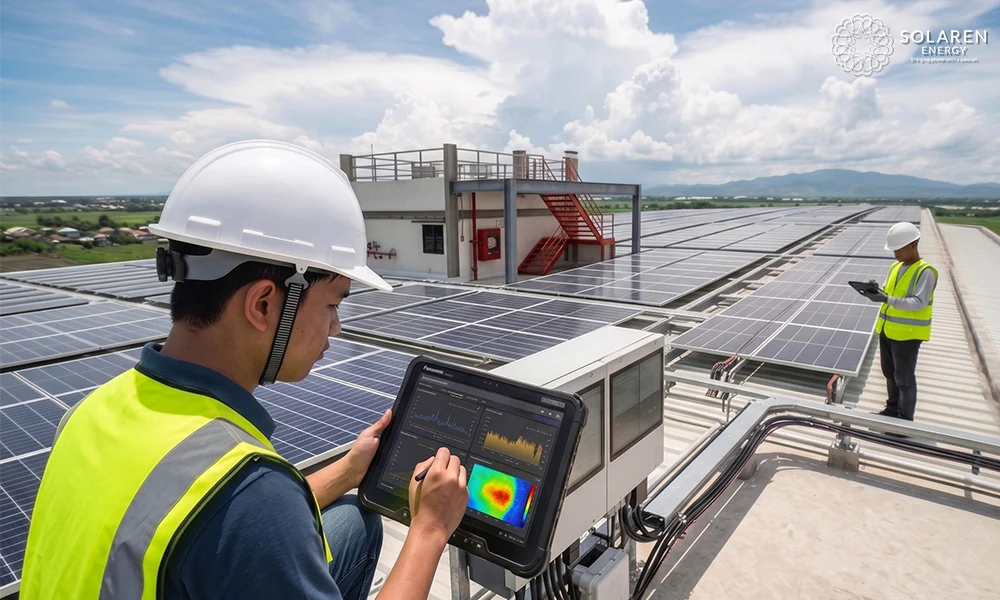
System size in kilowatts peak is a measure of installed panel capacity under laboratory conditions. It is not a measure of how much electricity the system will actually generate on your roof, in your location, facing your orientation, with your shading conditions, across the actual weather patterns of your area.
Two systems of identical size can produce meaningfully different annual generation figures depending on how they are designed. Ask every contractor to provide their generation simulation file, not just the annual kWh estimate on the proposal cover page. The simulation should show monthly generation broken down across the year, the weather dataset used, the performance ratio assumed, and the shading analysis conducted for your specific roof.
A performance ratio below 75% on a Philippine commercial rooftop is a red flag. A contractor who cannot show you a simulation file at all sized the system against your electricity bill. That is a guess dressed up as a proposal.
Ask for the actual performance of systems that have been operating for years. Do not accept made-up numbers.
The Module Datasheet Matters More Than The Brand Name. Ask For Proof Of Factory Testing
Tier 1 is a financing classification. It means the manufacturer has been assessed as bankable. It does not mean every Tier 1 module performs identically over twenty-five years in Philippine conditions.
Ask for the specific module datasheet on every quote. Four numbers matter most.
Temperature coefficient. This tells you how much output the panel loses per degree above 25 degrees Celsius. Philippine roof surfaces regularly exceed 60 degrees. A panel with a temperature coefficient of minus 0.35 percent per degree loses significantly less output in that heat than one at minus 0.45 percent. Across a full commercial installation lifetime that difference compounds into real money.
Power tolerance. A panel specified at 400W with a tolerance of plus or minus 3 percent could be delivering 388W. A panel with a positive-only tolerance is guaranteed to meet or exceed its rating. Read the datasheet.
Degradation warranty. Most panels are warranted to 80 percent of rated output at year 25. Some are warranted to 84 or 86 percent. That difference across a 200kWp commercial installation is a substantial amount of generation over the back half of the system’s life.
Warranty enforcement. A 25-year warranty from a manufacturer with no Philippine presence and no regional support infrastructure is a document, not a commitment. Ask how warranty claims are actually processed.
Insist of factory tests for the modules, or make this contractually explicit. Reputable manufacturers and contractors can and should provide flash test results, at factory level. This ensures you are not receiving sub standard solar panels.
Inverter Specification Is Not a Commodity Decision
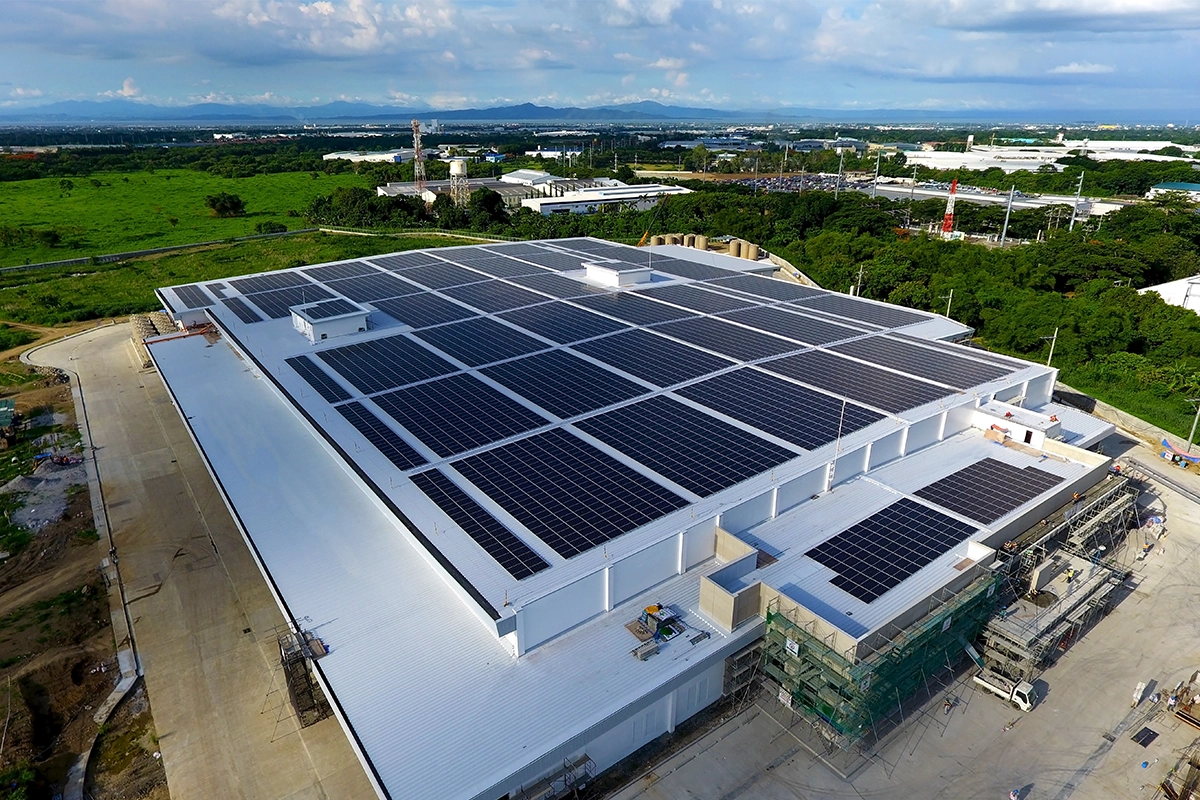
This is where the most consequential variation between quotes usually sits and where buyers most often treat it as interchangeable.
Not all inverters handle Philippine grid conditions equally. Voltage and frequency on the Philippine grid move outside the range that cheaper inverters tolerate, particularly in provincial areas, at the end of long distribution lines, and in areas served by smaller cooperatives. An inverter that trips when grid voltage sags outside a narrow window stops generating during those periods. On a site with genuinely unstable utility supply that can reduce effective annual generation by ten to twenty percent compared to a well-specified alternative.
Ask for the inverter model on every quote. Download the datasheet. Check the input voltage range, the frequency tolerance window, and the grid support functions. Compare those numbers across quotes rather than just the brand names.
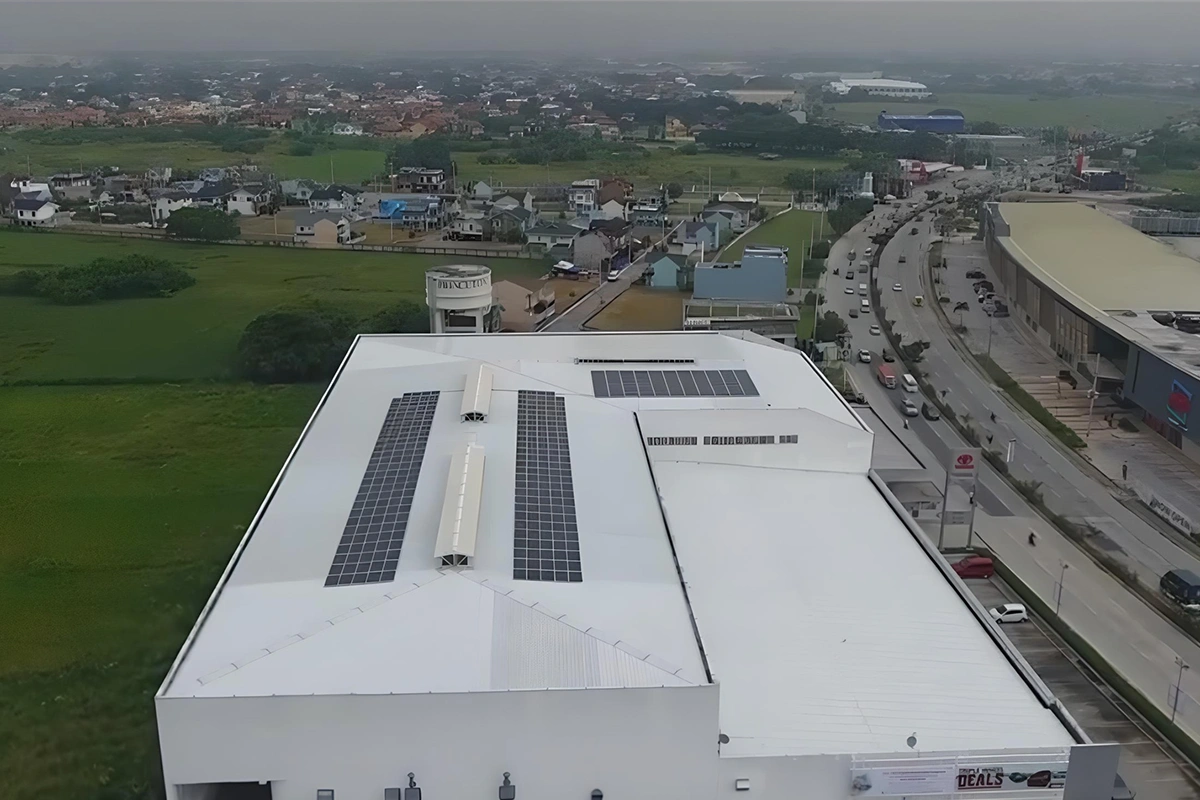
Solaren specifies SMA Germany inverters across its commercial portfolio, including New Zealand Creamery which won the Asian Power Award for Solar Project of the Year, and Toyota Bacoor, partly for their documented tolerance of Philippine supply conditions. That decision shows up in generation data over years, not in the initial price comparison.
Ask for Cable Specifications
Cabling is where the most invisible cost-cutting happens in Philippine solar installations and it is almost never visible in a standard quote comparison.
Undersized DC cables between panels and the inverter cause resistive losses that reduce generation permanently for the life of the system. Undersized AC cables between the inverter and the distribution board do the same. A system losing three to five percent of its output to cable resistance every day for twenty-five years is losing a meaningful percentage of its total lifetime generation. That loss was locked in at installation and cannot be recovered.
Ask each contractor to specify DC string cable cross-sections and AC output cable sizes in the proposal. If they cannot or will not specify these, that is information. The Hidden Power of Proper Solar Cabling covers what the correct numbers look like and why they matter enough to check.
The Mounting System and Wind Load Specification
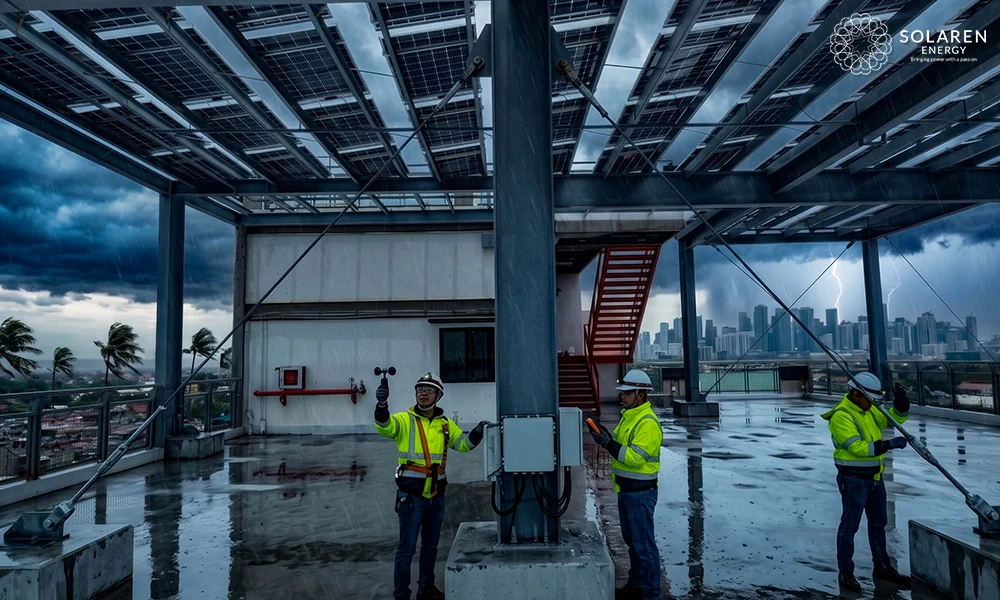
The Philippines is in one of the most active typhoon corridors in the world. Mounting systems should be specified for local wind load requirements, not adapted from European or North American standards.
Ask what wind speed the mounting system on each quote is rated for. Ask whether it has been structurally certified and by whom. A mounting system that fails in a Category 3 typhoon takes the panels with it and the resulting insurance claim, roof repair, and system replacement cost makes the original price difference between quotes irrelevant.
This is also a question that reveals the engineering rigour behind each proposal quickly. A contractor who can answer it precisely has thought about it. A contractor who is vague has not.
Compare the Monitoring Platforms
Monitoring is not just a feature. It is the mechanism by which you will know whether the system is performing as promised for the next twenty-five years.
Ask what monitoring platform is included in each quote. Ask whether it provides inverter-level data or just system-level totals. Ask whether the EPC conducts periodic performance reviews against the original simulation or simply commissions the system and leaves. A system that underperforms quietly for six months before anyone notices has already lost the generation that cannot be recovered.
Ask whether the monitoring platform is tied to the contractor’s continued operation. If the contractor closes, does the monitoring platform go dark? This is not a hypothetical question in the Philippine solar market.
The Right Way to Compare Prices

After all of this, price still matters. But the right comparison is cost per kilowatt-hour generated over the system lifetime, not cost per kilowatt-peak installed at purchase. You should be reassured that the generation will match your financial expectations.
A system that costs eight percent more but generates twelve percent more over twenty-five years because the cabling was correctly sized, the inverter was specified for the site, the modules carry a stronger degradation warranty, and the mounting system survived the last three typhoons is the cheaper system. The upfront numbers do not show that.
The financial framework for running this comparison properly is in The Ultimate Guide to Commercial Solar ROI in the Philippines. And for the contract and compliance questions that should accompany any quote comparison, the Top 10 Questions to Ask Before Signing a Solar Installation Contract covers that ground in full.
The quote that wins on the day you sign is not always the quote that wins over the life of the system. In our experience, it usually is not.
Frequently Asked Questions (Comparing Solar Quotes)

-
What is a good performance ratio for a commercial solar system in the Philippines?
A well-designed commercial rooftop system in the Philippines should achieve a performance ratio of 78 to 82 percent under normal conditions. Below 75 percent is a red flag and warrants an explanation from the contractor. Performance ratio accounts for all real-world losses, including temperature, wiring, inverter efficiency, and shading. A contractor who cannot tell you the performance ratio assumed in their simulation, or who cannot show you the simulation file at all, has not done the engineering work the proposal implies.
-
Why do solar quotes for the same system size come back at very different prices?
Because system size in kilowatts peak tells you almost nothing about what is actually being proposed. Two quotes at 100kWp can use completely different module quality, inverter brands, cable specifications, mounting systems, and monitoring platforms. The cheaper quote is almost always cheaper because something in that list was downgraded. The question is whether the downgrade is visible now or only visible in the generation data three years from now. Ask for the module datasheet, the inverter model, the DC cable cross-sections, and the wind load certification on the mounting system. Those four things will explain most of the price difference.
-
How do I verify that the solar panels I am being quoted are genuinely what the contractor claims?
Ask for flash test results at the factory level. Reputable manufacturers test every panel before it leaves the factory and can provide individual panel test certificates showing measured output at standard test conditions. A contractor sourcing genuine Tier 1 panels from a reputable manufacturer will have no hesitation providing these. A contractor who cannot produce them, or who becomes vague when asked, is telling you something about where the panels actually came from. Make this requirement contractually explicit before you sign.