Diesel hit PhP 154 per liter in April. For businesses running conventional vehicle fleets across multiple sites, that was not an abstraction. It was a line item that moved sharply and could not be controlled. At Solaren, we had already been through that calculation. We started replacing our diesel fleet with electric and hybrid vehicles in October 2024, kept detailed records from each vehicle’s app, and updated the numbers as recently as this morning.
The total as at 12 May 2026: 128,543 kilometers covered across six vehicles, 11,569 liters of diesel not purchased, and PhP 1,388,280 in direct fuel savings. None of those figures are projections. They come from cumulative consumption data recorded by each vehicle since it entered service.
The EV Fleet
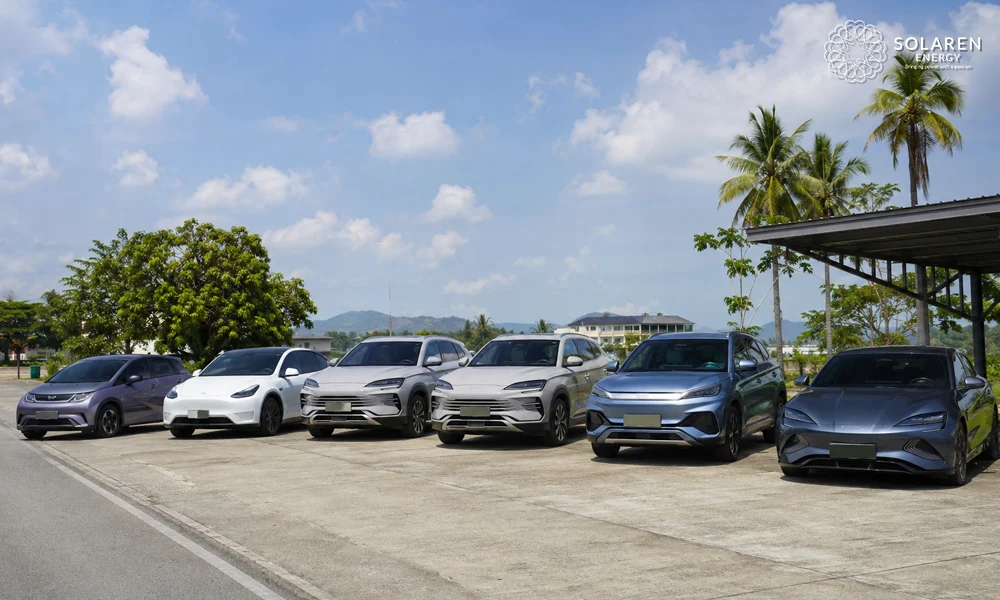
Six vehicles are currently in the program. Two are fully electric: a BYD Dolphin and a Tesla Model Y Long Range Dual Motor. Four are plug-in hybrids: two BYD Sealion 6s, a BYD Sealion 5, and a BYD Seal. These are ordinary company vehicles used for site visits, project meetings, and regular provincial drives across Central Luzon. They are not driven carefully to produce flattering numbers.
The comparison baseline is our old diesel fleet, which we considered the most cost-efficient option available at the time. At PhP 120 per liter as a conservative crisis-period average, and a conventional diesel consumption rate of 10 liters per 100 kilometers, the savings figure above is what the fleet has delivered in real use.
The Fully Electric Vehicles
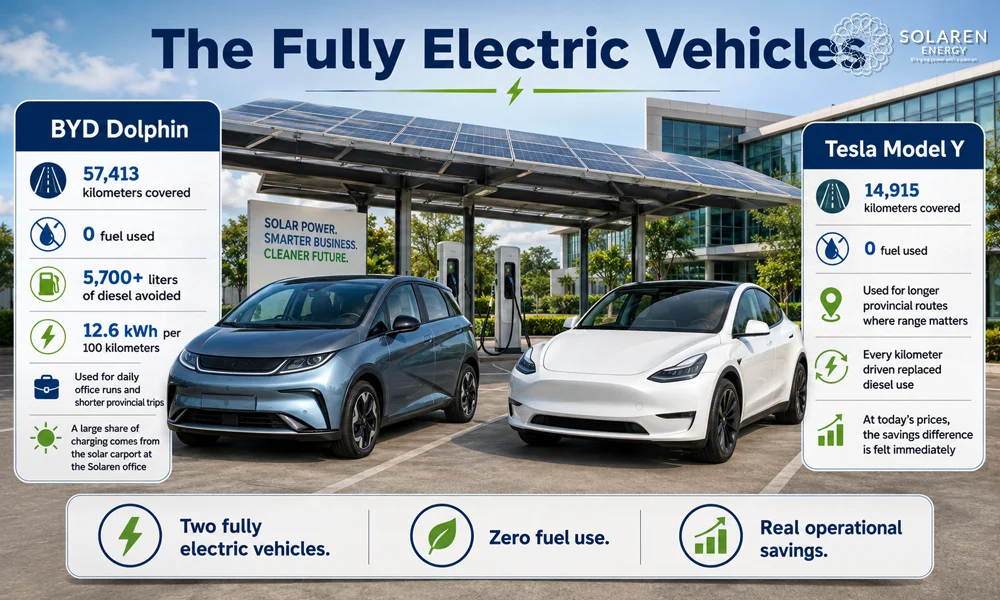
The BYD Dolphin has now covered 57,413 kilometers and used no fuel at all. A conventional diesel vehicle covering the same distance would have consumed more than 5,700 liters. The Dolphin is used for daily office runs and shorter provincial trips. Its cumulative electricity consumption is 12.6 kWh per 100 kilometers, a large share of which comes from the solar carport at the Solaren office.
The Tesla Model Y has covered 14,915 kilometers since joining the fleet. It handles the longer provincial routes where range matters. Every kilometer driven is one that previously would have depended on diesel. At today’s prices, that difference is felt immediately.
The Hybrids: Real Numbers From Different Use Cases
The hybrid data tells a more nuanced story, and it is the more relevant one for most Philippine businesses. These vehicles do not require charging infrastructure. They use the same fuel stations as conventional vehicles but visit them far less often.
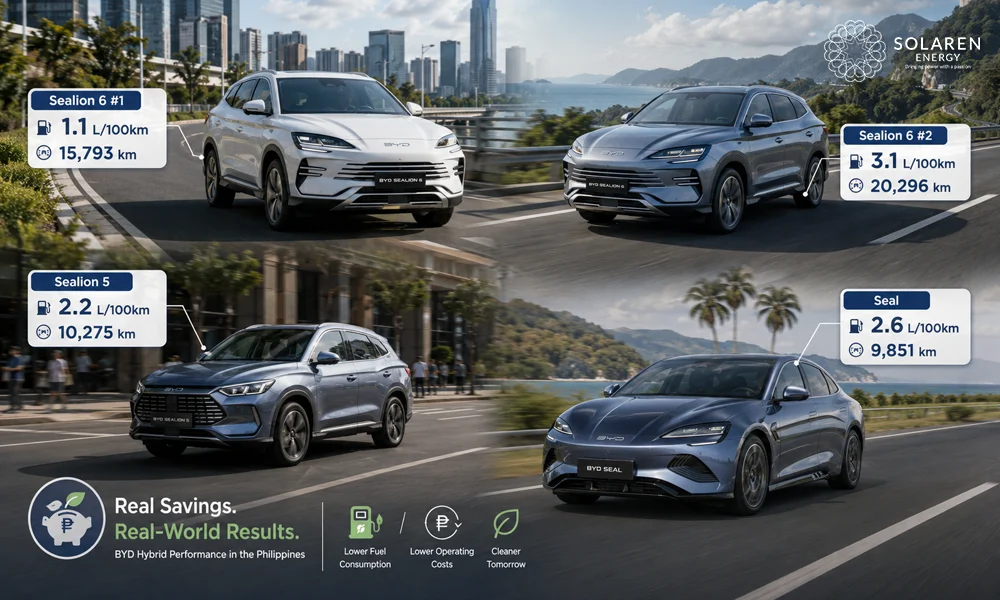
Sealion 6 #1 has averaged 1.1 liters per 100 kilometers across nearly 16,000 kilometers of mixed city and provincial driving. Sealion 6 #2 has averaged 3.1 liters per 100 kilometers across just over 20,000 kilometers. The difference is not a malfunction. The second vehicle does longer inter-provincial runs at higher sustained speeds, where the combustion engine carries more of the load. Both figures are a fraction of what a diesel vehicle uses on the same routes, and presenting them separately is more honest than blending them into a single average.
The Sealion 5 is running at 2.2 liters per 100 kilometers across 10,275 kilometers. The Seal at 2.6 liters per 100 kilometers across 9,851 kilometers. Nothing about how these vehicles are driven is unusual. The savings come from the technology.
Solar Charging: The Second Layer of Savings
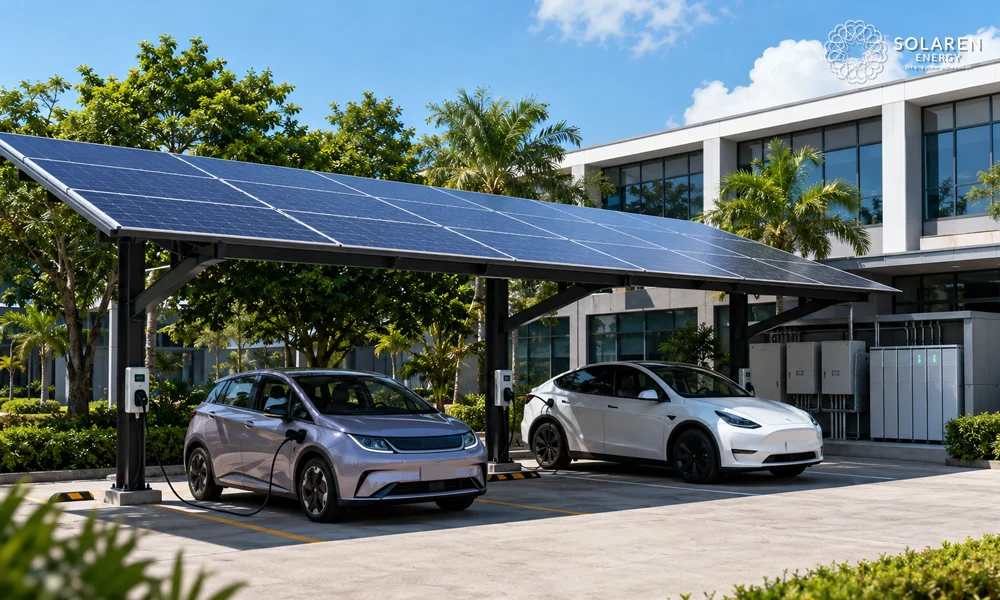
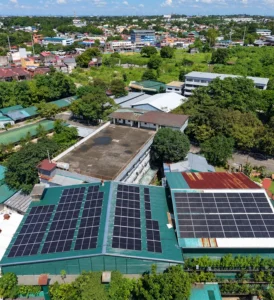
The electric vehicles charge from a 34 kWp solar carport at the Solaren office in Tarlac. Cars plug in during the day when parked, drawing directly from solar generation. The system runs with hybrid inverters and battery storage and is net metered with the utility. A significant share of the kilometers covered by the Dolphin and the Model Y are therefore powered by sunlight generated on site.
The fuel savings figure above does not capture this second layer. The electricity used for charging is itself largely offset by the solar system. For a business with on-site solar already installed, adding EV charging creates a compounding effect that a straightforward fuel cost comparison does not fully reflect.
What the Fuel Crisis Changes

The transition began before the crisis. The case was already solid based on pre-crisis diesel prices in the PhP 58 to 65 per liter range. What the crisis has done is dramatically accelerate the payback calculation for any business still evaluating the switch.
At the April peak of PhP 154 per liter, the same 11,569 liters saved would have been worth PhP 1,781,626. The vehicles in this fleet were insulated from that exposure. The conventional diesel vehicles that remained in service elsewhere were not. That difference, playing out in real time across the crisis period, is the clearest possible illustration of what fleet electrification actually protects against.
What Has Changed Operationally
Fuel has stopped featuring in weekly planning. Prices move sharply every Tuesday, but they no longer drive the monthly transport budget. Drivers cover more ground between stops. Servicing intervals are longer. The fleet is quieter on long days. None of that appears in the savings figure, but it is consistently noted by the people using the vehicles.
The transition has not required any significant change in how the fleet is managed. Hybrid vehicles, in particular, are operationally identical to conventional vehicles. They just use far less fuel.
The Numbers in Full
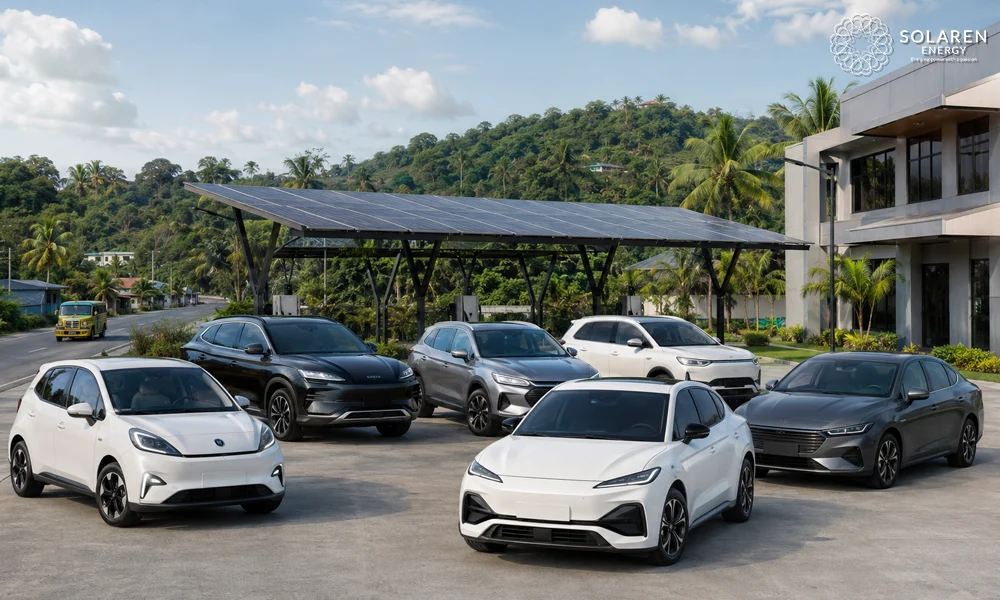
The complete fleet data, vehicle by vehicle, with cumulative consumption figures and a full savings breakdown, is published in the Solaren EV Fleet Case Study. The data is updated as new figures become available from the vehicle apps. What is there now reflects exactly what the fleet has done in real Philippine operating conditions over the past eighteen months.
For any business running five or more vehicles on regular provincial or multi-site routes, the figures scale directly. The savings are not unique to Solaren’s specific routes or driving patterns. They reflect what electric and hybrid drivetrains do when used as ordinary working vehicles in ordinary Philippine conditions.
At PhP 120 per liter and rising, the arithmetic has never been more straightforward.