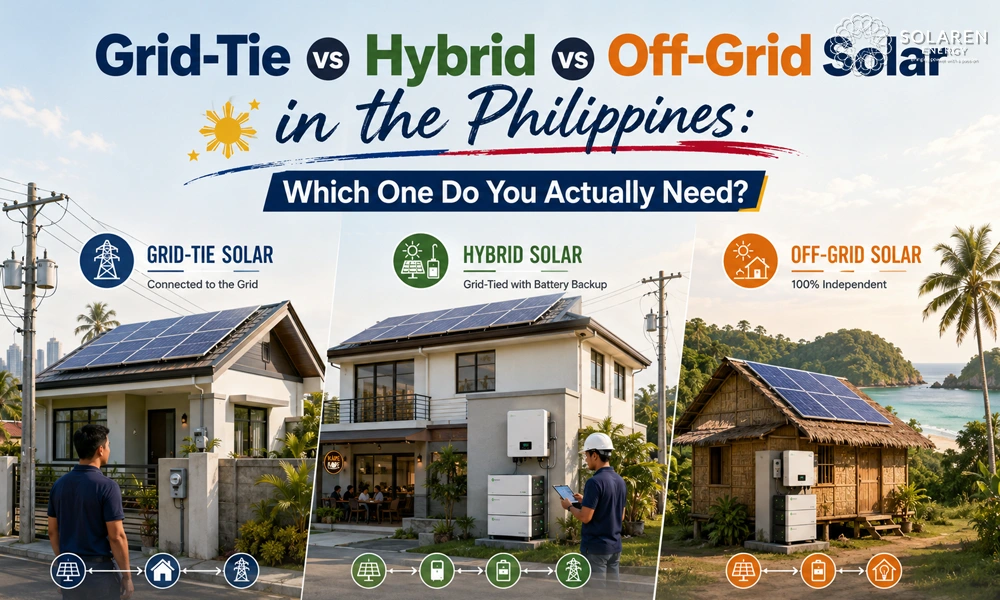
There are three main types of solar systems, and picking the right one is an important first step for any home or business. We get asked about grid-tie vs hybrid vs off-grid solar all the time, and making the right choice can save you a lot of money. No single system is best for everyone. Each one suits a different situation, depending on your power use, how reliable your grid is, the size of your system, and your budget. This guide will help you understand the differences and figure out which system is right for you, and it expands on our complete guide to hybrid solar systems in the Philippines.
So, which solar system should you choose? For most homes and businesses that use power during the day and have a reliable grid, grid-tie solar with net metering is usually the cheapest and best option. Go for a hybrid system if you need backup during power outages, use a lot of electricity at night, or have a system over 100 kilowatts that cannot use net metering.
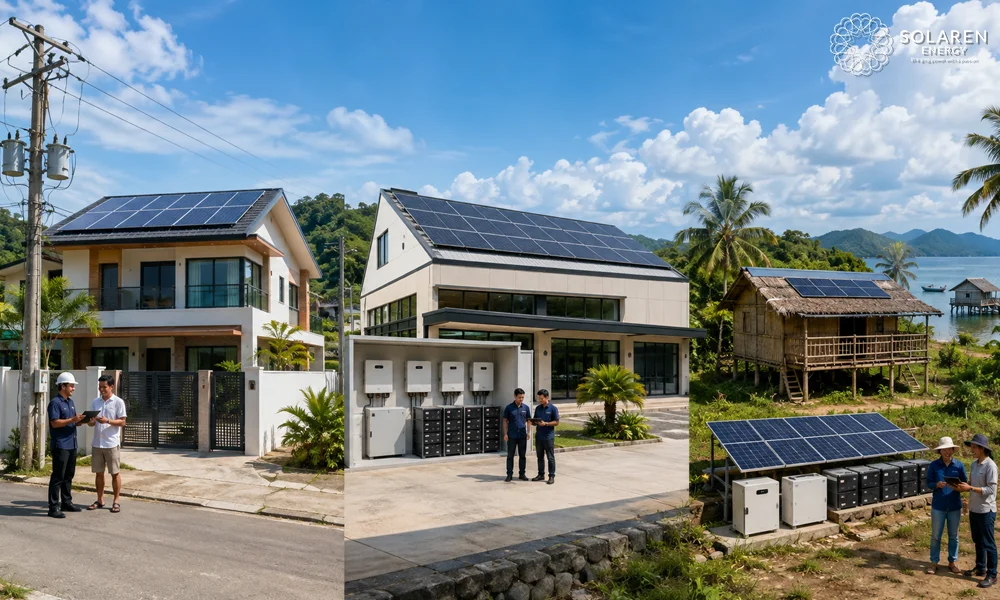
Off-grid systems are only needed when there is no utility supply at all, since they are the most expensive and rarely make sense if a grid is available. In fact, about half the businesses that ask us about hybrid systems would actually be better off with grid-tie and net metering.
Grid-tie solar, the default for most
Grid-tie is the simplest and most common type of solar system. During the day, your panels power your home or business, and any extra electricity goes back to the utility grid. There is no battery involved. If your panels are not making enough power, you just use electricity from the grid as usual. With net metering, any extra power you send to the grid earns you a peso credit on your bill, as long as your system is under the 100-kilowatt-peak limit in the Philippines.
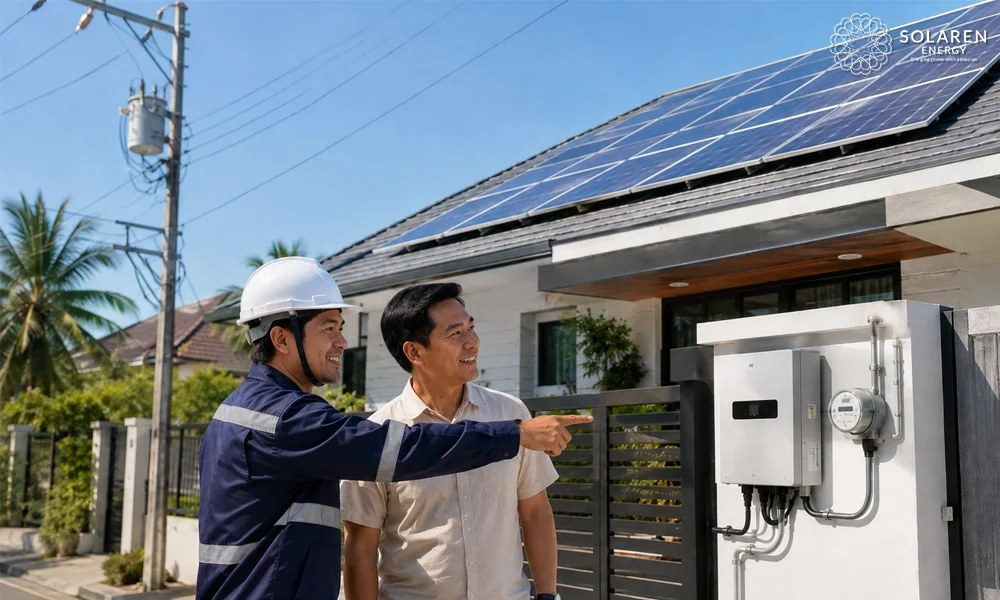
For most people, this is the best system. If your home or business uses most of its electricity during the day and your grid is fairly reliable, grid-tie gives you the fastest payback and lowest cost. There is one important thing to know: grid-tie systems do not provide backup power. If the grid goes down, your system shuts off for safety, and you lose power like everyone else. If that is not a problem for you, grid-tie is usually the smartest and most cost-effective choice.
Hybrid solar, the grid plus storage
A hybrid system is a solar setup that connects to the grid and also includes a battery. It works like a grid-tie system but can also store energy for later. This storage gives you two main benefits: you can use your own solar power in the evening instead of buying from the grid, and you can keep some or all of your appliances running when the grid goes down. If you use a lot of power at night or cannot afford to lose electricity during outages, a hybrid solar system for a commercial building can be a good choice.
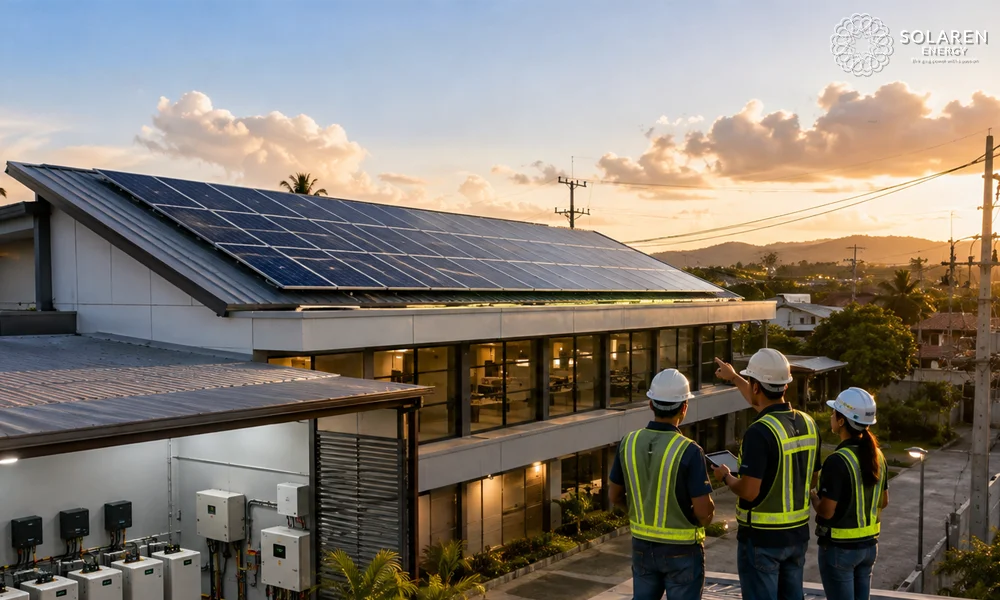
The main downside is the cost. Batteries are expensive, so hybrid systems take longer to pay for themselves. Usually three to four years for a simple setup, and five to six years for a more complex one. That is why we tell about half of the businesses who ask about hybrid systems that they do not really need one.
If you run in daylight under a stable grid and your system qualifies for net metering, the battery is often money you do not need to spend. Hybrid becomes the right answer when you have a genuine evening load, an unreliable or damaging grid, or a system is too big for net metering, and you need somewhere to store extra solar energy. On heavy plant loads, that damaging-grid case is really about industrial hybrid solar systems.
Off-grid solar, only when there is no grid
Off-grid solar systems are not connected to the utility at all. They have to generate and store all the electricity your site needs, since there is no grid as a backup. This makes off-grid systems the most demanding and expensive option, because they must be large enough to handle even the worst-case scenarios, like several cloudy days in a row, and have enough battery storage to get you through.
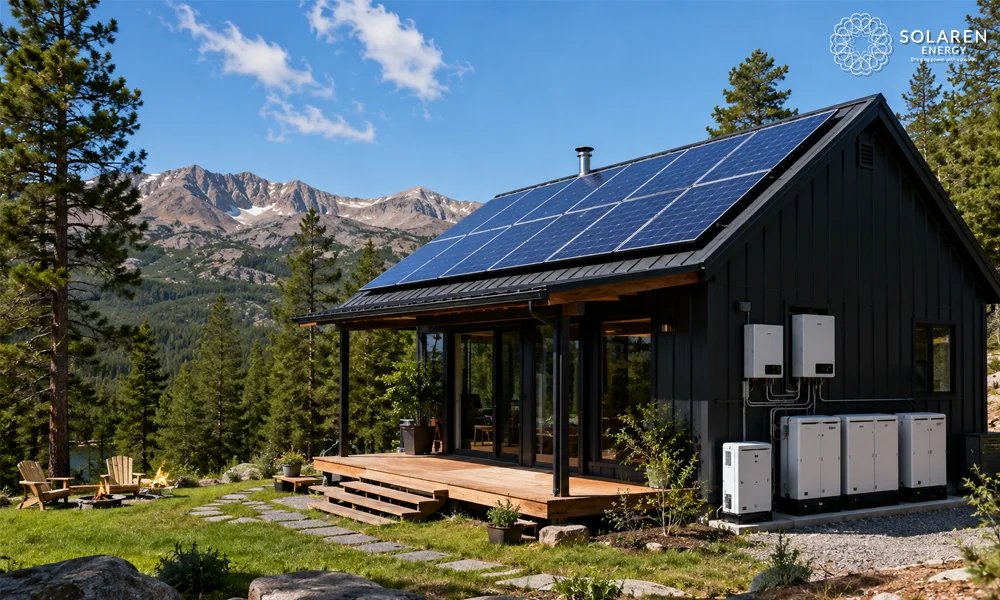
Off-grid systems only make sense if there is truly no utility supply to connect to, or if connecting would cost more than going independent. Remote farms or island sites far from any power lines are typical examples. For almost everyone else, off-grid is not the right choice. Some people like the idea of being free from the utility, but that freedom is expensive and often means buying a bigger battery bank than you really need. If you have access to a grid, a hybrid system gives you most of the independence for much less money.
The three, side by side
| Grid-Tie | Hybrid | Off-Grid | |
| Connected to the grid | Yes | Yes | No |
| Has a battery | No | Yes | Yes |
| Backup during an outage | No | Yes | Yes |
| Net metering | Yes, under 100 kWp | Possible, under 100 kWp | No |
| Relative cost | Lowest | Higher | Highest |
| Best suited to | Daytime users, reliable grid | Evening load, backup, or over 100 kWp | Sites with no grid |
The most common mistake
The most common mistake we see is people choosing a bigger or more complex system than they actually need. Sometimes, someone wants a hybrid system just because their neighbor has one, or because a recent power outage made them worry, even though grid-tie with net metering would work better and cost less. Others think going off-grid means they can avoid the utility and its rules, but that is a different misunderstanding we should clear up.
Adding a battery to your system does not make it off-grid. If your system still works alongside the utility, it is still connected and follows the same rules, no matter what the battery does. We explain this in detail in hybrid solar and net metering, but the main point is simple: choose your system based on your real power needs, not just the idea of independence, since the setup may not give you that.
How can I decide?
Figuring out which system is right for you comes down to a few simple, honest questions. Do you use most of your electricity during the day or at night? How reliable is your grid, and what does a power outage really cost you? How big is your system, and is it under or over the 100-kilowatt-peak limit for net metering? And finally, what is your budget for both buying the system and over the payback period?
If you use most of your power during the day, have a stable grid, and your system is under 100 kilowatts, grid-tie with net metering is almost always the best choice. If you use a lot of power at night, have an unreliable grid, or your system is too big for net metering, a hybrid system is better for businesses; that usually points to commercial hybrid solar systems. If there is no grid at all, then off-grid is the way to go. Most people find the answer is clearer than they expected once they answer these questions honestly and set aside worries about the last power outage.
Where this leaves you
Choosing between grid-tie, hybrid, and off-grid solar is really about what fits your situation, not which technology is best overall. Grid-tie works for most people who use power during the day and have a reliable grid. If you need backup or storage, or cannot use net metering, then hybrid is the right choice. Off-grid is only for those who have no utility connection. If you pick the right system, it will pay for itself and do what you need.
If you choose the wrong one, you might spend too much on storage you do not use, or end up without the backup you expected. If you want help figuring out which system is right for your site, just ask us. We will give you an honest answer, not just try to make the biggest sale.
Frequently Asked Questions: Grid-Tie vs Hybrid vs Off-Grid Solar
What is the difference between grid-tie, hybrid, and off-grid solar?
Grid-tie connects to the utility and has no battery. Hybrid connects to the utility and adds a battery for storage and backup. Off-grid has no utility connection at all and must generate and store everything the site uses.
Which is best? Grid-tie or hybrid solar?
For most daytime users on a reliable grid, grid-tie with net metering is better, because it is cheaper and pays back faster. Hybrid is better if you need evening use of your own solar, backup during outages, or if you run a system too large to net-meter.
Does grid-tie solar work during a blackout?
No. A grid-tie system shuts down when the grid fails, for safety reasons. If you need power during outages, you need a hybrid system with a battery.
Is off-grid solar worth it in the Philippines?
Only where there is no utility supply to connect to, or where connecting would cost more than going independent. Where a grid exists, off-grid is usually the most costly choice, and a hybrid system delivers most of the benefit for far less.
Can I add a battery to a grid-tie system later?
If the system is designed for it, the answer is often yes. Many sites start with grid-tie and add storage when the need or the budget arrives, which is why we design expandable systems where it makes sense. One way is to start with a grid-tied system with a hybrid inverter, without batteries. We do this often.