The most common reason Philippine businesses delay going solar is not scepticism about the technology. It is the assumption that they need to find a large sum of cash before anything can happen.
That assumption is no longer accurate. Solar Project Financing options for commercial solar have expanded significantly, and the right structure can mean your monthly repayments are lower than your current electricity bill from day one. This guide walks through the process step by step.
Step 1: Understand How Your Business Actually Uses Electricity
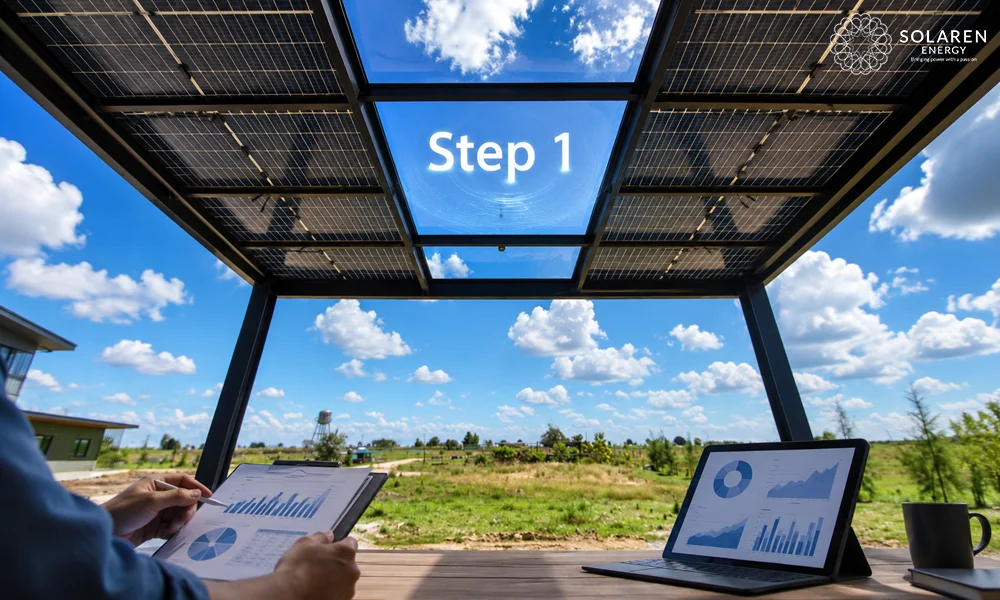
Before any conversation about financing makes sense, you need a clear picture of your energy profile. That means looking at your consumption hour by hour across a full day, identifying your monthly peak usage, understanding any nighttime loads, and knowing whether backup power is a requirement for your operations.
This is not something you need to do yourself. A serious solar power company will conduct an energy audit as part of the pre-installation process. What you do need to do is bring 12 months of utility bills to that first conversation. That data drives everything that follows.
Step 2: Decide What Kind of System You Actually Need
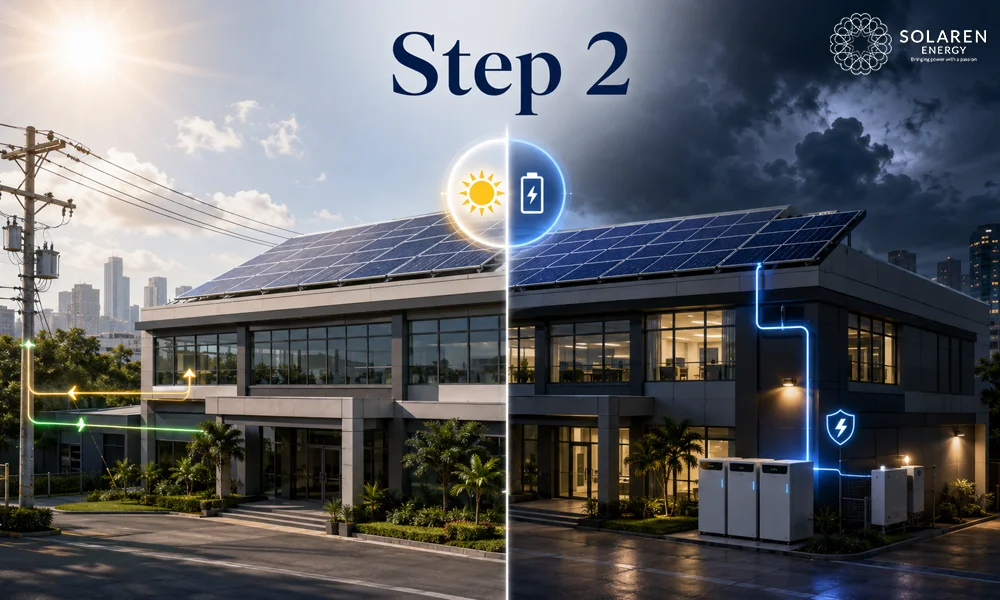
There are two main directions. A grid-tied solar system reduces your daytime electricity purchases and exports excess power back to the grid through net metering. A hybrid system adds battery storage, which gives you backup power during outages and lets you use stored solar energy during evening peak hours when grid rates are higher.
Hybrid systems cost more upfront. They also deliver more. The right choice depends on your grid reliability, your operating hours, and whether continuity through outages is a hard requirement for your business. A good solar provider will model both options and show you the numbers before you decide.
Step 3: Get a Proper Financial Model
Before you approach any lender or present a proposal internally, your solar provider should give you a detailed financial forecast. This should include the total capital cost, projected monthly and annual savings, estimated payback period, and return on investment figures.
These numbers are what a bank wants to see. They are also what your CFO or board wants to see. Without them, any financing conversation is just a discussion about an idea. With them, it becomes a business case.
Step 4: Choose the Right Financing Structure
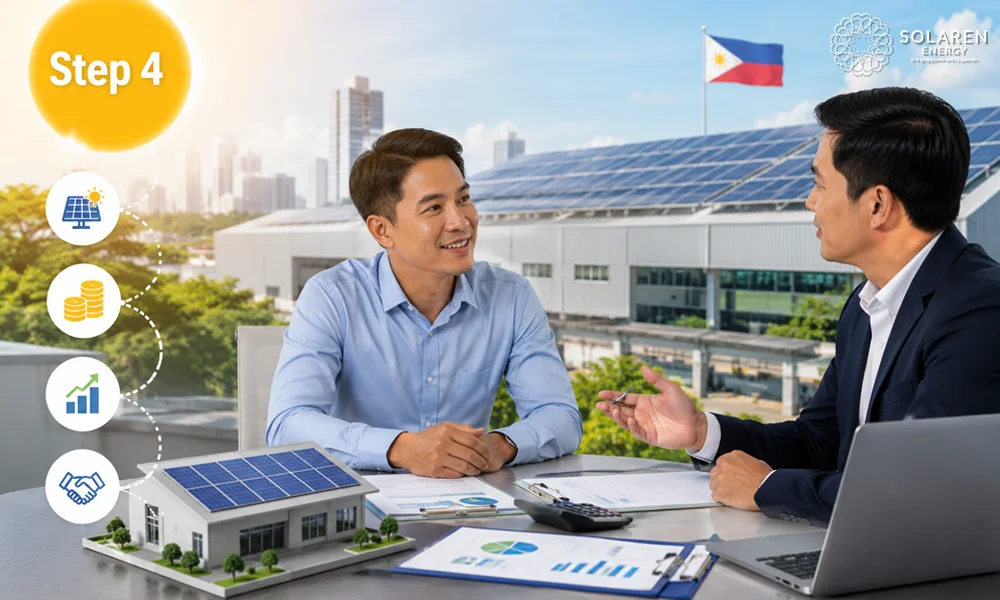
Several options are now available for commercial solar energy systems in the Philippines.
Green loans from local banks typically run on three to five-year terms. Interest rates vary depending on the institution and your credit profile, but solar is increasingly treated as a low-risk, productive asset, which works in your favour during application.
Lease-to-own arrangements spread the cost across an agreed period, with ownership transferring at the end. Monthly payments are fixed and predictable, which makes budgeting straightforward.
Power purchase agreements, or PPAs, involve zero capital outlay. Instead of buying the system, you pay for the electricity it generates, usually at a rate below your current utility tariff. For businesses that want the savings without any capital commitment, this is worth exploring seriously.
Some solar providers already have relationships with financial institutions and can help you pre-qualify or structure the application. Ask about this early. It can save significant time.
Step 5: Prepare Your Documentation
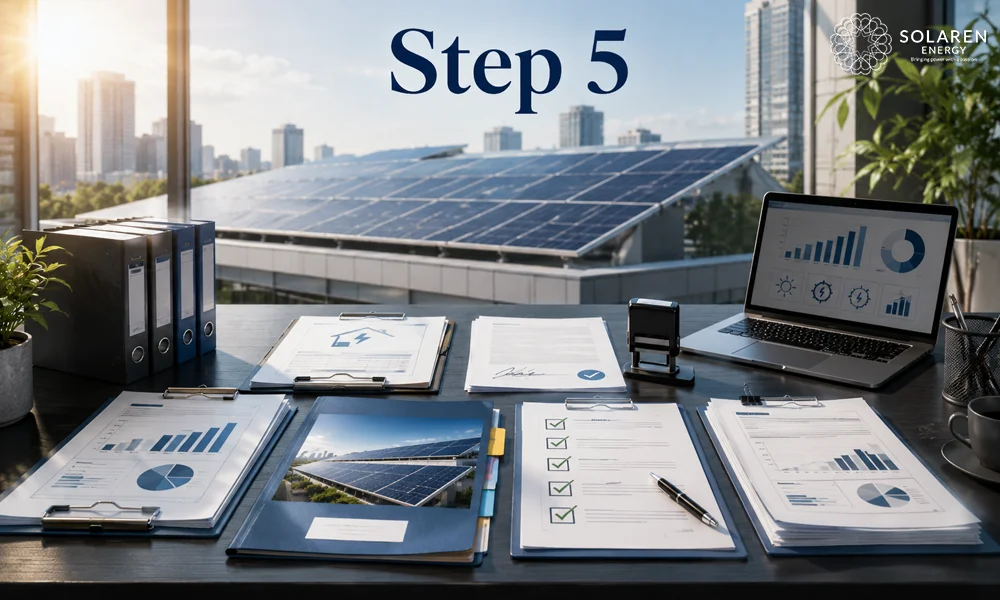
Financing applications move faster when the paperwork is complete from the start. You will typically need your business registration documents, a valid tax identification number, your last 12 months of electricity bills, the technical proposal from your solar provider, and a signed quote. Some lenders will also ask for audited financial statements.
Gather these before you submit. Incomplete applications are the most common reason for delays.
Step 6: Move to Contract and Installation
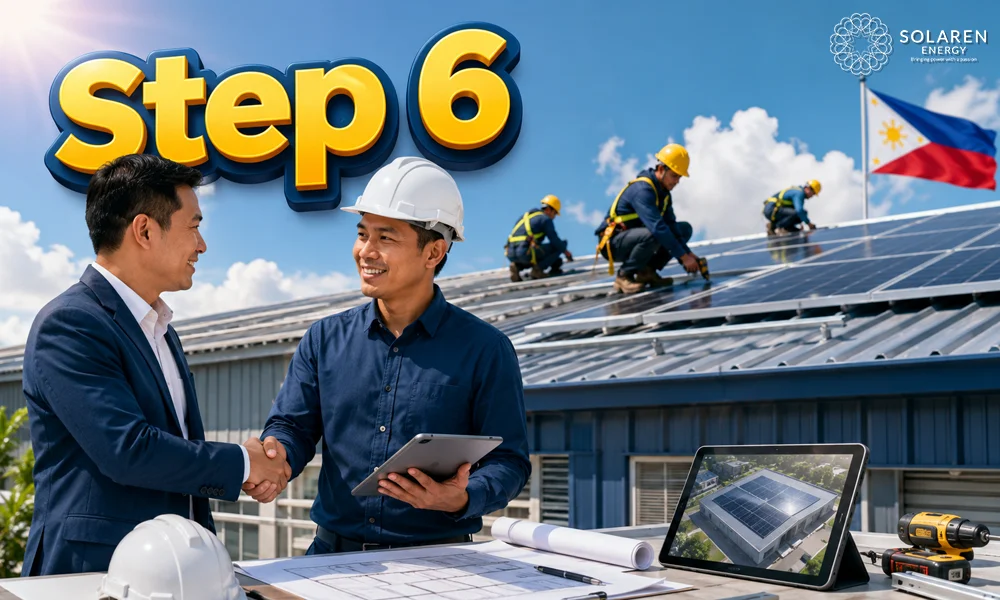
Once financing is in place, your provider finalises the system design and schedules the build. Most commercial solar installation projects in the Philippines run from 45 to 90 days between mobilisation and commissioning. Systems that include battery storage may take slightly longer due to integration requirements.
During this period, your provider should be handling grid interconnection submissions, coordinating inspections, and keeping you updated on progress. You should not need to chase this.
What a Real Project Looks Like?
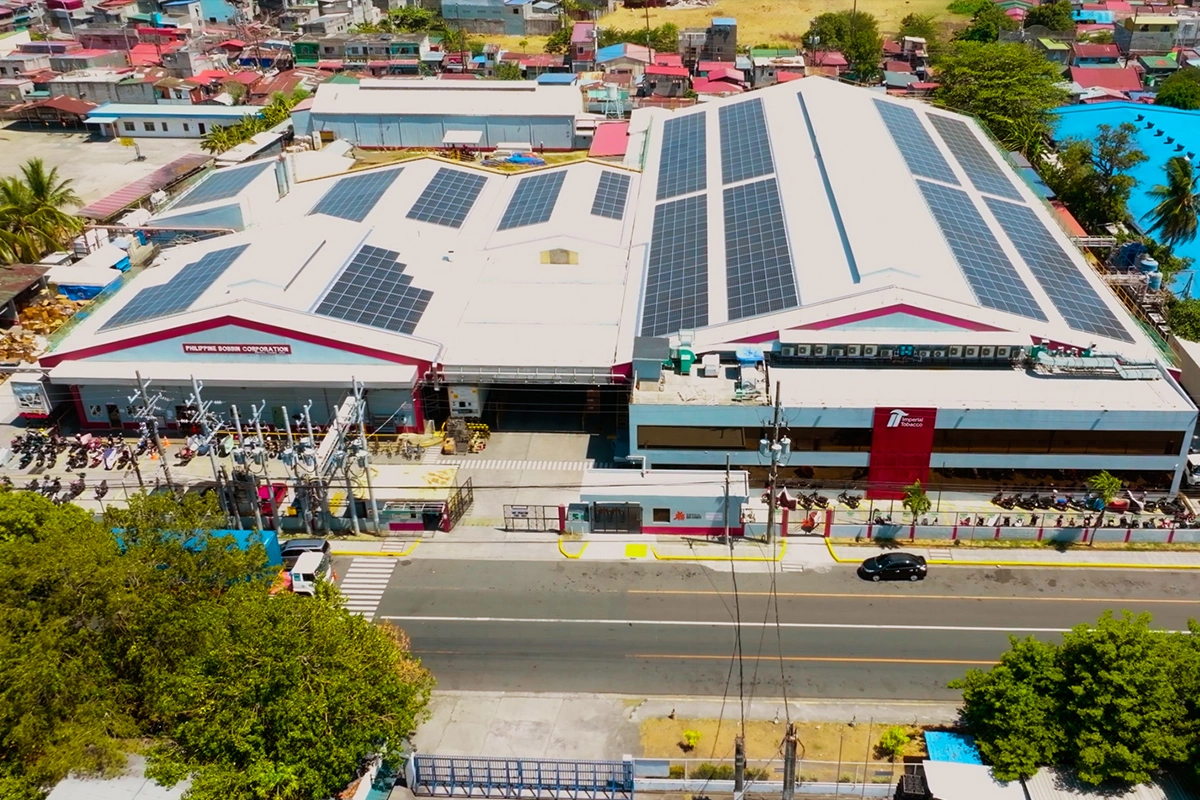
Philippine Bobbin Corporation is one example of a manufacturing business that moved through this process with Solaren. The facility had significant daytime power requirements and a clear case for solar based on consumption volume alone. The project was designed around the site’s actual load profile, not a standard package, and the financial outcome was structured to work within the company’s existing operating budget.
That is the approach that produces real results. Not a system sold on headline figures, but one designed around what a specific business actually needs.
What Your Solar Partner Should Be Doing?
A professional solar power company does more than install equipment. Through the financing process, they should be helping you structure the proposal for lenders, coordinating all technical documentation, managing the utility submission and net metering application, and providing clear warranty-backed aftercare once the system is live.
If a provider is not offering this level of support, that is worth noting before you sign anything.
The Bottom Line
Large upfront capital is no longer the barrier it once was. The right financing structure, combined with a properly designed system and a provider who knows how to support the process, can make your transition to solar faster and more financially straightforward than most businesses expect.
The savings are real. The financing is available. What most businesses are missing is simply the right conversation to start.
Contact Solaren to arrange a free site assessment and financial forecast tailored to your business.
Frequently Asked Questions: Solar Project Financing
-
Do I need good credit to finance a solar installation in the Philippines?
Creditworthiness matters, as it does with any loan, but solar projects are increasingly viewed favourably by Philippine lenders because the asset generates measurable, predictable returns. A well-prepared financial model showing savings versus repayments strengthens any application significantly. Your solar provider should help you build that case before you approach a bank.
-
What is the difference between a green loan and a standard business loan for solar?
Green loans are specifically designed for environmental or energy efficiency investments. Some Philippine banks offer preferential terms for green-classified projects, including slightly lower interest rates or longer repayment periods. Not all lenders offer green loan products, so it is worth asking specifically when you compare options.
-
Can I finance a solar project if my business is relatively new?
It depends on the lender and the financing structure. Newer businesses with limited credit history may find PPAs or lease-to-own arrangements more accessible than bank loans, since these structures shift more of the financial risk to the solar provider rather than the client. Discuss this early with your solar company so the proposal is built around a structure that is actually available to you.
-
How long does it typically take to get solar financing approved in the Philippines?
Timeline varies by lender and how complete your documentation is at submission. With a full application package, approval can come through in two to four weeks. Incomplete submissions are the most common source of delays. Preparing everything before you submit is the single most effective way to speed up the process.
-
What happens if my business grows and I need more solar capacity?
Financing for an expansion is generally structured as a new facility or an amendment to the existing one, depending on the lender. If your system was designed with expansion in mind, the additional capacity can often be integrated without replacing existing equipment. This is worth raising at the original design stage rather than after the fact.
-
Is a power purchase agreement right for every business?
Not always. A PPA works well for businesses that want lower electricity costs without any capital commitment and are comfortable with a long-term contract with a third-party provider. Businesses that prefer to own their assets outright, or that plan to sell or significantly restructure their operations within the contract period, may find outright purchase or lease-to-own more suitable. Your solar provider should walk you through the trade-offs honestly.