The battery will be the most expensive item on your quotation. It will also be the item you understand least, and the one the supplier explains in the vaguest language.
That combination is not accidental.
Working out how to choose a solar battery Philippines conditions will not destroy in five years comes down to a short list of questions, most of which have documentary answers. Not opinions. Documents. If a supplier cannot produce the paperwork, that is your answer, and you have it before you spend anything.
Choosing a solar battery comes down to five decisions: the power and energy rating your load actually needs, the quality and traceability of the cells inside, the capability of the battery management system governing them, the arithmetic of the warranty, and whether the company offering it will still exist to honor it. Every one of those has a documentary answer. A supplier who cannot provide cell test reports, a BMS specification, verified inverter compatibility and a written warranty with stated depth of discharge and temperature limits is asking you to buy on trust alone.
This guide is written for commercial and industrial buyers. The physics apply equally to a large home, but the money, the duty cycle and the consequences of getting it wrong are different at scale.
Start With The Load, Not The Product
Almost every bad storage project we have inherited began with a product decision. Somebody was shown a battery, liked it, and worked backwards.
Start at the other end. Get interval data from your utility and look at the shape of your consumption. That shape determines whether a battery makes sense at all, and if it does, it determines everything about which one.
| What your load looks like | What storage is for | What that means for sizing |
| High flat base load, few excursions | Little to shave. Storage is hard to justify on demand charges alone | Look at solar first, and revisit storage only if the tariff or reliability picture changes |
| Flat base load with short sharp spikes | Peak shaving. The spikes set your demand charge and they are brief | High kW rating, modest kWh. This is the most favorable case |
| Large midday solar surplus, evening load | Shifting your own generation rather than exporting it | Moderate kW, kWh sized to the evening load you want to cover |
| Frequent outages, critical process | Ride through and continuity | kW sized to the critical load, kWh sized to the outage duration you must survive |
| Tariff with meaningful time of use spread | Buying cheap and using expensive | kWh heavy, and only worth it if the spread exceeds round trip losses plus battery wear |
Notice that the first row concludes with no battery. That is a legitimate outcome and it should be on the table in every honest conversation. The economics of the demand charge case are set out in detail in commercial battery storage and peak shaving, including the arithmetic that tells you quickly whether the project is real.
Get The Two Ratings Right
A battery has two numbers and they do different jobs. Most sizing errors we see come from treating them as one.
The kW rating is power. It sets how much load the battery can carry at any instant, which determines how much peak you can remove or how much of your site you can support.
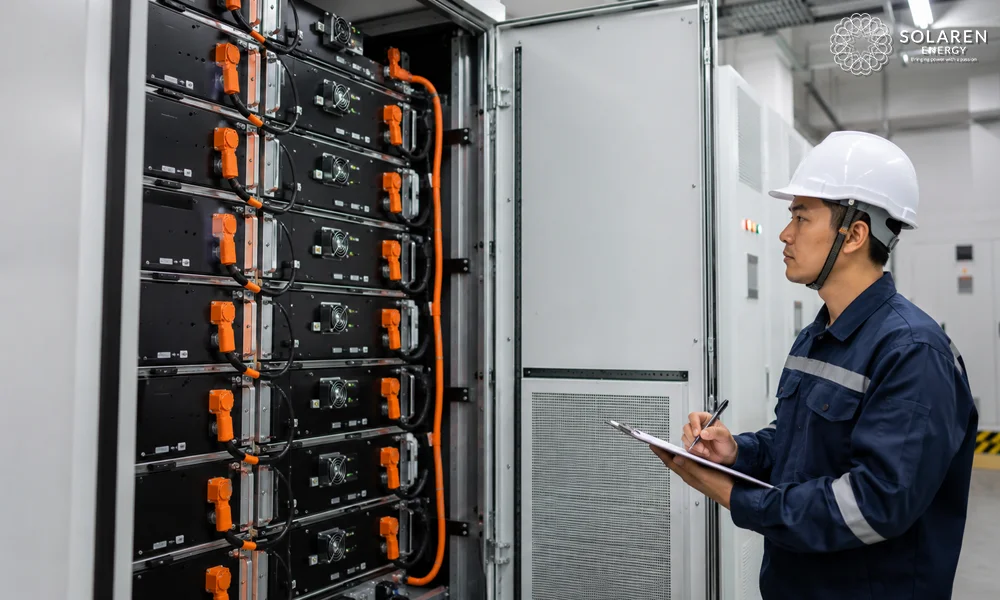
The kWh rating is energy. It sets how long the battery can hold that up before it is empty.
Shaving 100 kW for thirty minutes needs roughly 63 kWh of nameplate capacity at 80% depth of discharge. Holding the same 100 kW for four hours needs around 500 kWh, which costs something like eight times as much. Same peak removed, wildly different project.
When you read a quotation, check three things about the power rating. Whether the figure is continuous or peak. If peak, for how many seconds. And whether the continuous rating was measured at 25C in a laboratory or at 40C, which is closer to what a Philippine plant room actually delivers.
Cells, And Why The Grade On The Invoice Means Nothing
Nearly every commercial pack sold here is LFP, also written LiFePO4 or lithium iron phosphate. Three names, one chemistry, and suppliers switch between them mid-quotation.
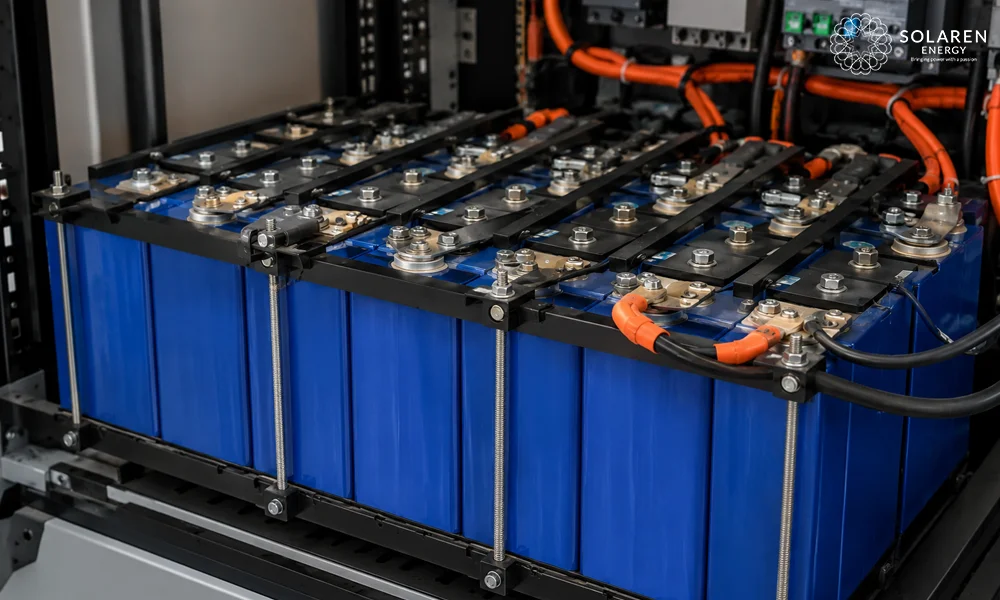
Within that chemistry, quality varies enormously and the labels do not help you. There is no governing body issuing cell grades. Grade A, B and C are supplier conventions, not certifications, and the grade on your quotation is a claim typed by whoever wrote the quotation.
What separates a good pack from a poor one is measurable and documented:
- Cells from a named manufacturer, with a datasheet issued by that manufacturer rather than by the assembler
- Intact serial numbers traceable to a single production batch
- Capacity matched within 1 to 2% across the pack
- Internal resistance matched within about 5%
- Prismatic cells held under compression, commonly around 300 kPa, by a fixture that maintains pressure as cells age
- Busbars sized for the pack maximum continuous current, in copper rather than plated steel
- A stated thermal management strategy, with a derating curve above 35C
That last pair matters more here than in the markets most of these packs were designed for. Aging roughly doubles for every 10C above 25C, and a sealed enclosure in a plant room running at 37C ambient will put cells near 50C under load. The full detail, including why bulging is the most common physical failure we encounter and how to check a sealed pack from the outside, is in LiFePO4, Grade A cells and cell matching.
The Board That Governs Everything
Here is the statistic that reorders most people’s priorities. Across our service history, roughly 60% of battery problems originate in the battery management system rather than in the cells.
The cells are usually fine. Something upstream mismanaged them.
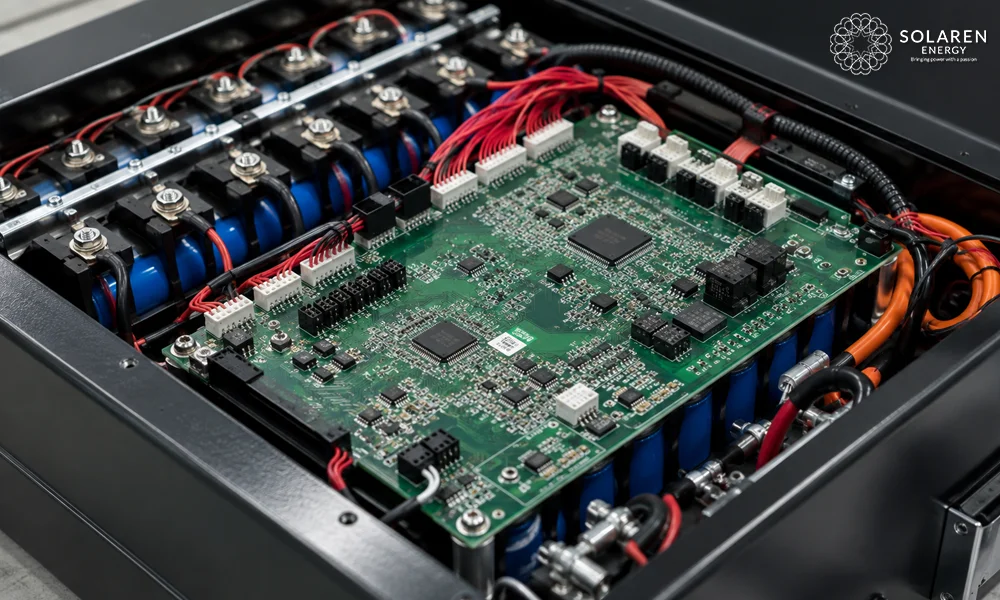
A BMS does five jobs: balancing cells, estimating state of charge, protecting against temperature, physically disconnecting on a fault, and communicating limits to the inverter. A cheap board does a poor version of each rather than failing outright, so the damage arrives as gradual capacity loss rather than as a clear warranty claim.
Four questions separate real hardware from a bought-in board with a sticker on it. Who designed it? What is the balancing current in mA or A? How many temperature sensors are in the pack and where do they sit? Does it keep fault logs you can export yourself?
That last one is worth choosing a battery for, because a fault log is the only evidence you will have when a supplier claims the installation caused the failure. More on all of it in what a battery management system does, and why cheap ones fail.
Warranty Arithmetic, Not Warranty Adjectives
Two suppliers quote you the same battery size. One says 6,000 cycles. One says ten years. Neither statement means anything yet.
A cycle count is only useful alongside four other figures: the depth of discharge it was measured at, the temperature range, the charge and discharge rate, and the capacity retention guaranteed at the end of the term. Leave any of those out and the same physical product can be honestly advertised at 3,000 cycles or 8,000.
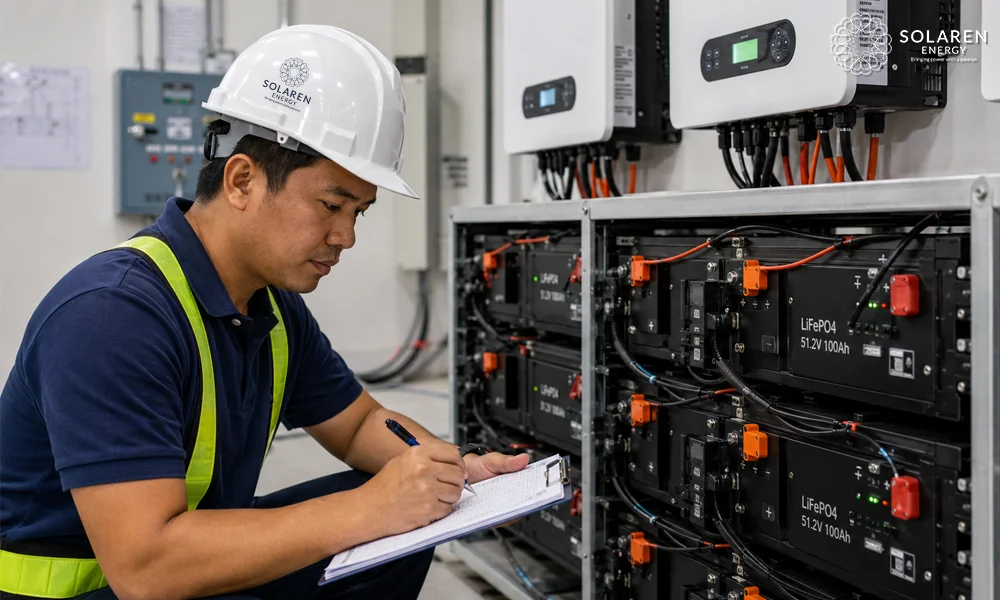
The fix is to convert every offer into total guaranteed throughput in kWh, then divide the price by it. That gives you pesos per kWh of work the battery is contractually obliged to do, and it makes offers genuinely comparable for the first time. Run that calculation on three quotations and the cheapest headline frequently turns out to be the most expensive battery. The worked example is in solar battery cycle life and warranty.
Also check which limit binds first on your own duty cycle. Cycling once a day, ten years is 3,650 cycles and a 6,000 cycle rating is decoration you paid for. Cycling twice, you reach 6,000 cycles in eight years and three months and the calendar term never applies.
Inverter Compatibility Is Not A Checkbox
The battery and the inverter have to agree on charge limits, discharge limits and voltage windows, over CAN or RS485, using a protocol profile written for that specific inverter.
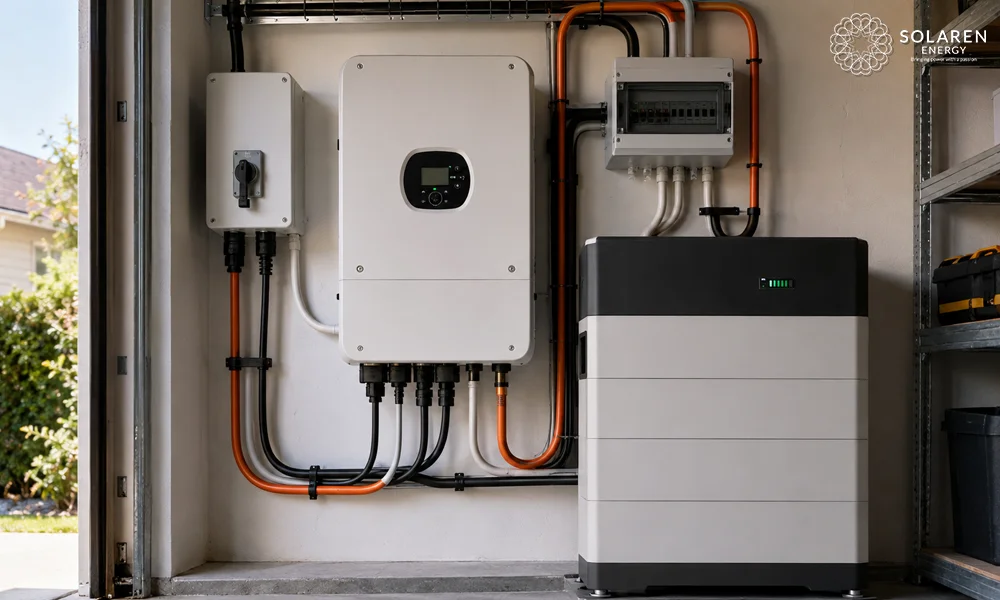
Suppliers claim broad compatibility. The question is narrower than that. Has this exact pack been commissioned with your exact inverter model, on the firmware version being sold to you? Not a relative of it from the same manufacturer. That one.
Ask for a reference site you can call, and ask what the pack does on communication loss. A well-designed system fails safe and raises an alarm. A poorly designed one simply stops, and your storage disappears because of a cable. Choosing the two as a pair rather than separately is why inverter selection belongs in this conversation and not after it.
Who Will Still Be There In Year Eight
A ten year warranty from a company that has traded for two years is a ten year warranty in name only.
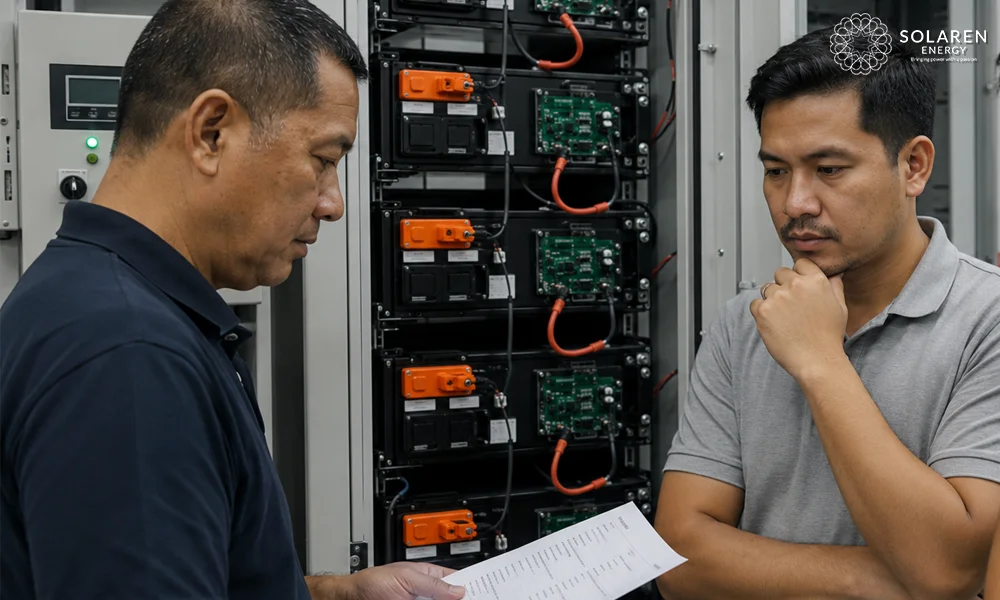
Establish who actually carries the obligation. The cell manufacturer, the pack assembler, the importer, or the installer. They are four different parties with four different levels of exposure, and the one whose logo is on the box is often not the one who pays.
Then ask the question that ends most conversations: show us a warranty claim you have honored in the Philippines. Not a policy document. An actual claim, with an actual outcome.
Ask about spares too. Will BMS boards and modules still be obtainable in eight years, and from whom? A pack whose control board is discontinued is a pack that gets replaced entirely, whatever the warranty says about the cells.
The Documents To Demand Before You Pay
You cannot open the battery. So judge it from paperwork, and get the paperwork before the money moves rather than after delivery.
| Document | What it proves | What it means if you cannot get it |
| Cell manufacturer datasheet for the exact model | The cells came from a named maker and meet published specifications | Nobody is willing to say who made the most expensive part of your system |
| Capacity test report with tolerance band | Cells were tested and matched rather than assumed | No matching was done, so pack capacity will be set by the weakest cell |
| Internal resistance measurements and spread | Cells will share current and age evenly | Resistance imbalance, uneven heating, early failure of one cell |
| Serial numbers traceable to a batch | Cells are new, from one production run, and identifiable | Mixed batches, B grade stock, or cells whose markings were removed |
| BMS specification and model number | The board can be evaluated and looked up independently | The seller did not design it and cannot fix or modify it |
| Compression specification | The pack is built to resist swelling over its life | Bulging is likely, and it is the failure we see most often |
| Written inverter compatibility confirmation | This pack has run with your inverter, not a relative of it | Commissioning risk, nuisance alarms, unmanaged behavior on comms loss |
| Full warranty terms with DoD, temperature and retention stated | There is a measurable threshold you can claim against | There is nothing to claim against, whatever the headline says |
| IEC 62619 and UN38.3 certificates for this product | Safety testing was done on this item, not a similar one | Certification is being borrowed from another product |
| Commissioning report with initial capacity test | You know what you received on day one | No baseline, so degradation can never be proven later |
The serial number row is the sharpest test. Anyone assembling packs properly already records serials, because batch matching is impossible without them. A supplier who has to go away and find out is telling you they did not do it.
Red Flags
Patterns we have learned to treat as decisive rather than as minor concerns.
| What you see | What it usually means |
| Cell manufacturer will not be named | Unknown or unbranded cells, frequently B grade |
| Grade A claimed with no test report attached | The grade is a sales term with nothing behind it |
| Only a peak power rating quoted, never continuous | The continuous figure is materially lower and would weaken the proposal |
| Cycle count with no depth of discharge stated | The number was chosen for the brochure, not measured for you |
| Compatible with all major inverters | No specific commissioning has been verified with yours |
| No fault logging, or logs the supplier alone can read | You will have no evidence in any warranty dispute |
| Warranty carried by a company under three years old | The term outlives the entity offering it |
| Pricing far below every other quotation | Something in the build was removed. Usually compression, busbars, or the board |
What Our Own Record Shows
We have been installing storage here for seven years, and the honest version is more useful than a brochure.
Our early deployments used premium deep cycle gel. We followed the depth of discharge guidance strictly and stayed inside the recommended cycling regime throughout. Those batteries reached roughly 70% of their published life expectancy. Not 70% capacity. 70% of the years we were told to expect. Nothing was done wrong on site, and the likeliest explanation is sustained heat.
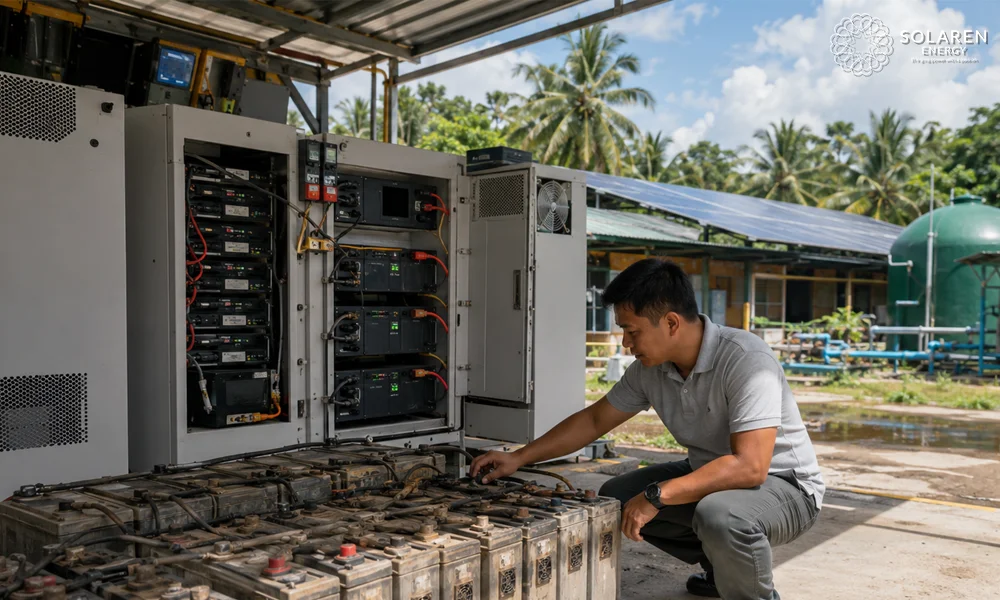
We expect a version of the same effect from LFP. More tolerant chemistry, same direction of travel. Plan the replacement earlier than the datasheet suggests.
Our oldest LFP installation is four years old and running well. Four years is also the honest limit of what anyone in this country can demonstrate from the field, because volume lithium deployment here is simply not old enough. Treat any supplier claiming validated six-thousand-cycle field results with the suspicion that claim deserves.
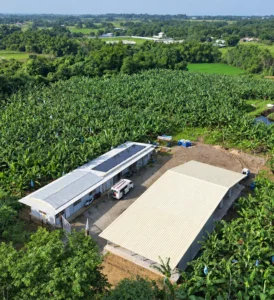
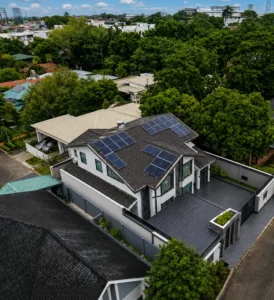
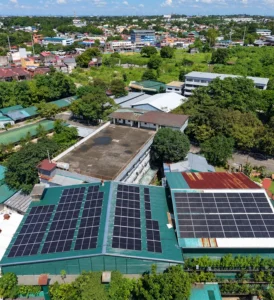
Storage across our project record includes systems at the Inainakay Foundation and Kings Orchard, and dual-source generation at Rivera Agro Industrial, where solar runs alongside an existing biogas plant and the installation has been expanded as the operation grew. The reason we can publish a failure split at all is that the installed base is large enough to show one.
The wider argument sits in why cheap solar costs more over time. Batteries are the sharpest version of it, because a battery fails quietly and the bill arrives years after the decision.
The Order To Do This In
- Pull interval data and look at the shape of your load before considering any product.
- Decide what the battery is for. Peak shaving, solar shifting, continuity, or arbitrage.
- Size the kW rating to the job, then the kWh rating to the duration.
- Shortlist on documentation, not on price. Any supplier who cannot produce the papers is out.
- Convert every remaining warranty into pesos per kWh of guaranteed throughput.
- Verify inverter compatibility against your exact model and firmware, with a reference site.
- Check who carries the warranty and how long that entity has traded here.
- Confirm fault logging exists and that you can export it yourself.
- Get a commissioning report with an initial capacity test, so you have a baseline.
- Only then compare prices.
Most buyers run that list in reverse, starting at step ten. It is the single reliable predictor of a disappointing outcome.
Frequently Asked Questions
- How do I choose a solar battery in the Philippines?
Start with interval data showing the shape of your load, because that determines whether storage is justified and what size it needs to be. Then size the kW rating to the job and the kWh rating to the duration, shortlist suppliers on documentation rather than price, convert each warranty into pesos per kWh of guaranteed throughput, and verify compatibility with your exact inverter model before comparing costs.
- What size battery do I need?
Two ratings matter separately. The kW rating covers how much load you can carry at once, and the kWh rating covers how long you can hold it. Shaving 100 kW for thirty minutes needs roughly 63 kWh of nameplate at 80% depth of discharge, while holding the same 100 kW for four hours needs around 500 kWh and costs about eight times as much.
- Is LFP the right chemistry for the Philippines?
For most commercial applications, yes. LFP is thermally stable and tolerates the duty well. The caution is longevity rather than safety, because aging roughly doubles for every 10C above 25C and plant room ambient here often sits between 35C and 38C. Thermal management and a published derating curve matter more here than in temperate markets.
- What does Grade A actually mean?
It describes cells that passed full manufacturer quality control with capacity at or above nameplate, matched internal resistance, intact serial numbers and traceability to one production batch. There is no international standard behind the term, so it only means something when a test report and a batch number come with it.
- How long should a solar battery last?
Datasheets commonly claim 6,000 cycles or ten years. Expect less in Philippine conditions. Our own premium gel installations reached roughly 70% of published life despite strict adherence to cycling guidance, and our oldest LFP system is four years old, which is the limit of what anyone here can demonstrate from real field data rather than laboratory testing.
- What is the most common cause of battery failure?
In our service record, roughly 60% of problems originate in the battery management system rather than the cells, with the remaining 40% coming from the cells or the physical pack build. Poor balancing, inaccurate state of charge and inadequate temperature monitoring account for most of the first group.
- Should I buy a battery without solar?
Sometimes, if demand charges are high enough and your peaks are short. The battery still has to be charged from somewhere, so the demand saving must exceed the round-trip energy cost. Paired with solar, the case is usually stronger, because surplus midday generation fills the battery at close to zero marginal cost.
- What documents should a battery supplier provide?
Cell manufacturer datasheet for the exact model, capacity test report with the tolerance band stated, internal resistance measurements, serial numbers traceable to a batch, the BMS specification and model number, the compression specification, written inverter compatibility confirmation, full warranty terms including depth of discharge and temperature limits, product-specific IEC 62619 and UN38.3 certificates, and a commissioning report with an initial capacity test.
The Short Version: How to Choose a Solar Battery Philippines
Knowing how to choose a solar battery Philippines buyers can actually rely on is less about technical expertise than most people fear. It is about refusing to accept adjectives where numbers belong.
Who made the cells? What is the balancing current? How many temperature sensors and where? At what depth of discharge was the cycle count measured? What capacity is guaranteed at the end of the term? Which inverter has this pack actually been commissioned with? Who pays if it fails in year eight, and can you show us a case where they did?
Ask those and most of the market answers itself. The suppliers who can produce the paperwork will send it within a day. The ones who cannot will send adjectives, and you will have learned what you needed to know without spending anything.