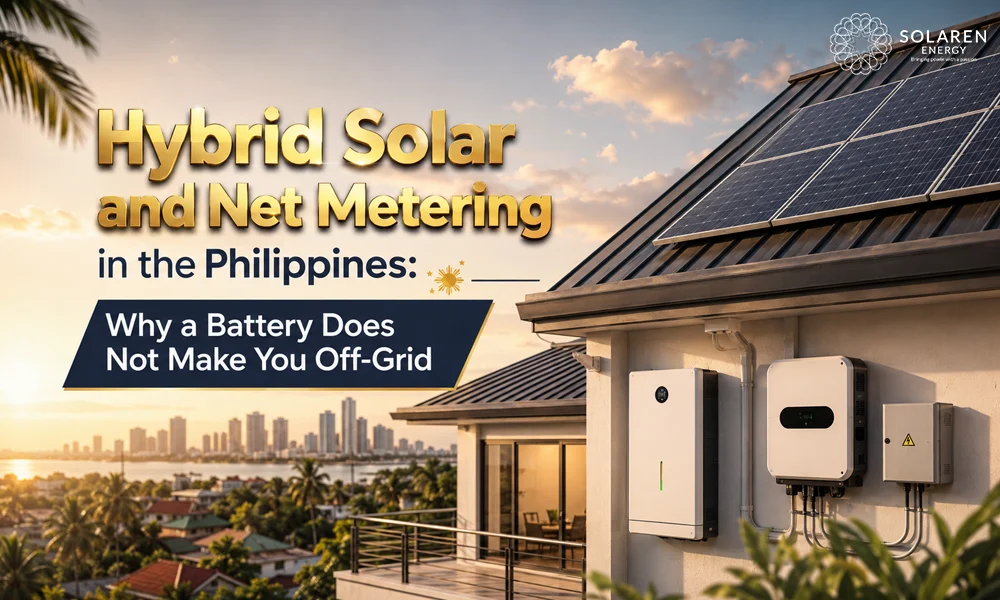
There is a belief we hear almost every week. Add a battery, and you are off the grid and free of the utility’s rules. It is one of the most common misunderstandings about hybrid solar and net metering in the Philippines, and it is wrong in a way that can cost you money and, worse, create a safety hazard. A battery changes how your system behaves. It does not, on its own, change whether your equipment is connected to the distribution utility. For the wider picture, see our complete guide to hybrid solar systems in the Philippines. Those are two separate questions, and people often run them together.
Does a solar battery make you off-grid? No. A battery changes when you use and store your energy, not whether your system is connected to the grid. If your hybrid inverter operates in parallel with the utility supply, you are grid-connected and bound by interconnection rules, even if you never export a single watt. Only a true off-grid system, with no physical connection to the utility at all, sits outside those rules.
Four things people treat as one
Much of the confusion arises from merging four distinct concepts into a single term. These concepts are: interconnection, export, net metering, and anti-islanding. By separating and clearly defining each one, the overall topic becomes more understandable.
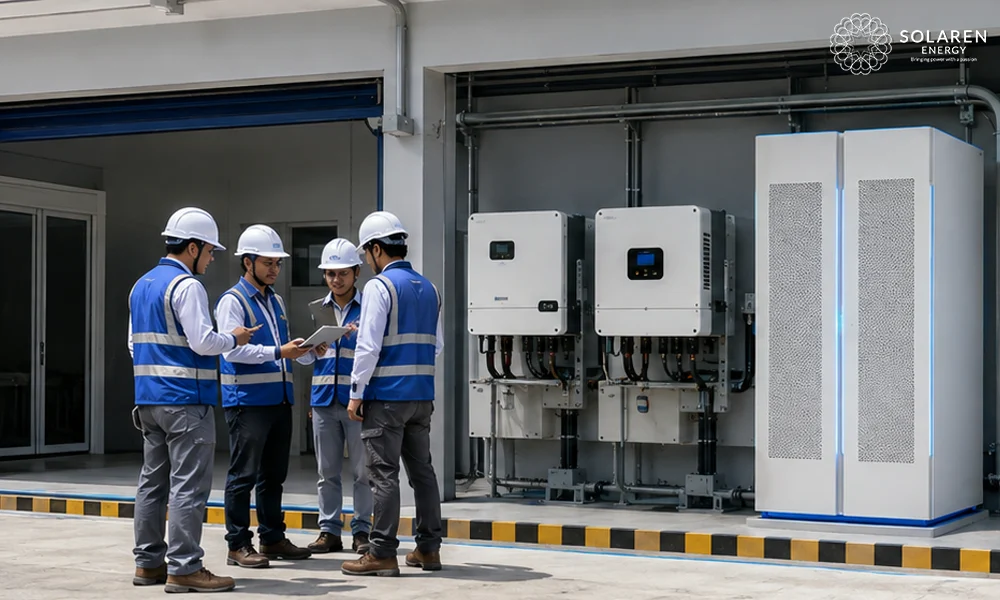
- Interconnection is whether your equipment runs electrically in parallel with the utility grid.
- Export is whether energy actually crosses your meter and flows into the utility’s network.
- Net metering is the commercial arrangement that credits you for the energy you export.
- Anti-islanding is the safety function that stops your system from energizing a dead grid during an outage.
These are related. They are not the same thing. You can be interconnected without exporting. You need anti-islanding the moment you are interconnected, battery or no battery.
The three arrangements, side by side
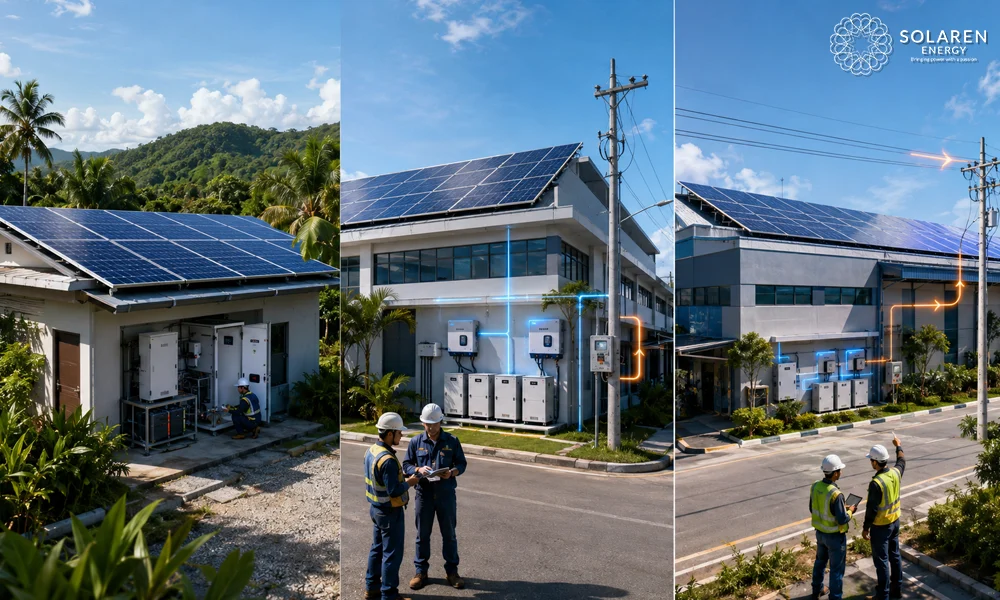
| System | Connected to grid? | Can export? | Net metering? | Anti-islanding? |
| True off-grid solar + battery | No | No | No | Does not arise |
| Grid-connected hybrid, zero export | Yes | No | Not applicable | Yes |
| Grid-connected hybrid + export | Yes | Yes | Yes, if eligible | Yes |
The mistake that causes the most trouble is treating zero export as the same as off-grid. If you are still sorting out the categories, our guide to grid-tie vs hybrid vs off-grid solar lays them out side by side. It is not. Look at the middle row. A hybrid system set to export nothing is still connected, still operating in parallel, and still needs anti-islanding. Setting your export to zero tells the inverter not to push power across the meter. It does not physically disconnect you from the utility.
What the battery changes

Picture an ordinary hybrid setup. Solar, loads, battery, grid, all working together. During the day, the solar supplies your loads and charges the battery, with any surplus flowing outward. At night, the battery carries the loads, and the grid fills any gap. What has the battery done? It has altered when your energy is used and when it is exported. Nothing about that change disconnects the generating equipment from the network. The DOE itself describes a hybrid system as solar plus storage that is not fully off-grid. The battery moves energy through time. It does not move you off the grid.
“But my inverter is set to zero export”
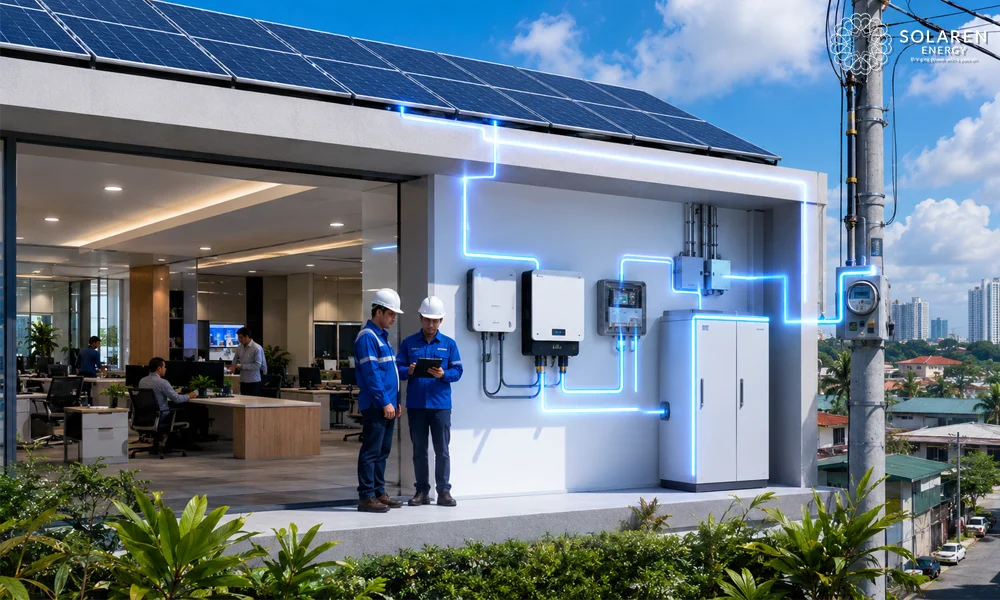
This is where owners, and some installers, get caught. A zero-export setting means the inverter controls its output so power does not intentionally cross into the utility network. That is all it means. It does not mean the installation is electrically off-grid. A Sunsynk, Huawei, SMA, or pretty much any hybrid inverter can sit at zero export while staying synchronized and connected to the grid every second of the day. Zero export is a control setting. Off-grid is a physical fact. Do not confuse the two, because the safety rules follow the physical fact, not the setting.
Anti-islanding, and why a battery raises the risks
Say the utility drops. A properly configured hybrid inverter senses the loss and disconnects your generation from the utility network within a fraction of a second. It can then keep supplying your chosen backup loads from battery and solar, while staying electrically separated from the dead utility line. That separation is anti-islanding, and it exists to protect lives, including the linemen who may be working to restore the very circuit you sit on.
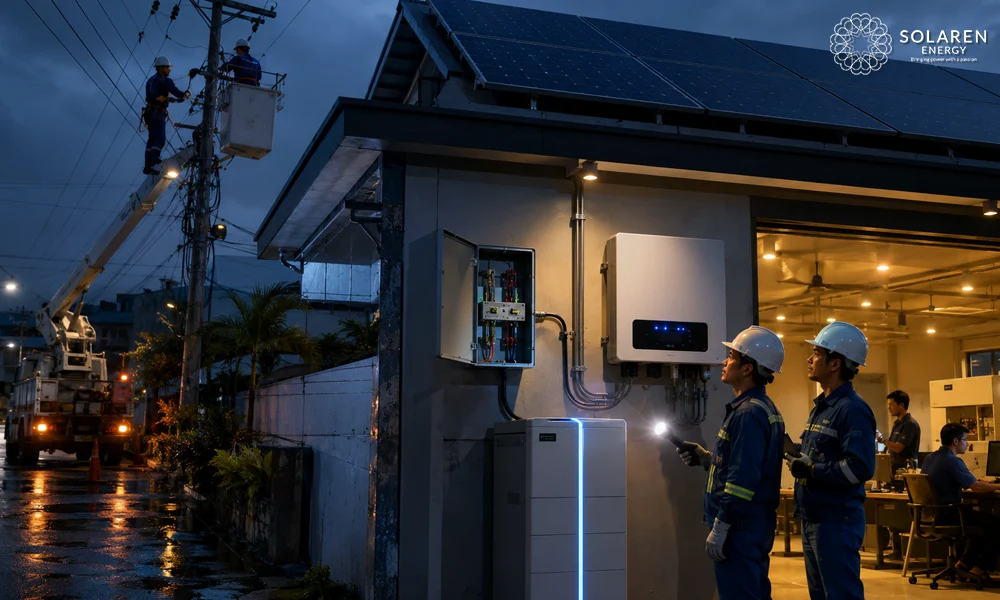
Here is the part that matters. A hybrid system makes correct isolation more important, not less, because your property now has a live energy source even when the utility supply has vanished. Without proper anti-islanding, that battery and solar could backfeed a line everyone assumes is dead. The battery does not entitle you to keep the grid connection energized. It raises the stakes on getting the isolation right.
Net metering is a separate question again
Net metering is not about safety or connection. It is a commercial arrangement. It lets an eligible renewable system export its surplus and receive a peso credit against future bills. The DOE describes it as a facility that primarily supplies the owner’s needs, with any unused output sent to the grid. The utility gets involved for one reason: you are deliberately pushing power into its network. There is a fuller explanation on our net metering in the Philippines page, but two points trip businesses up most often.
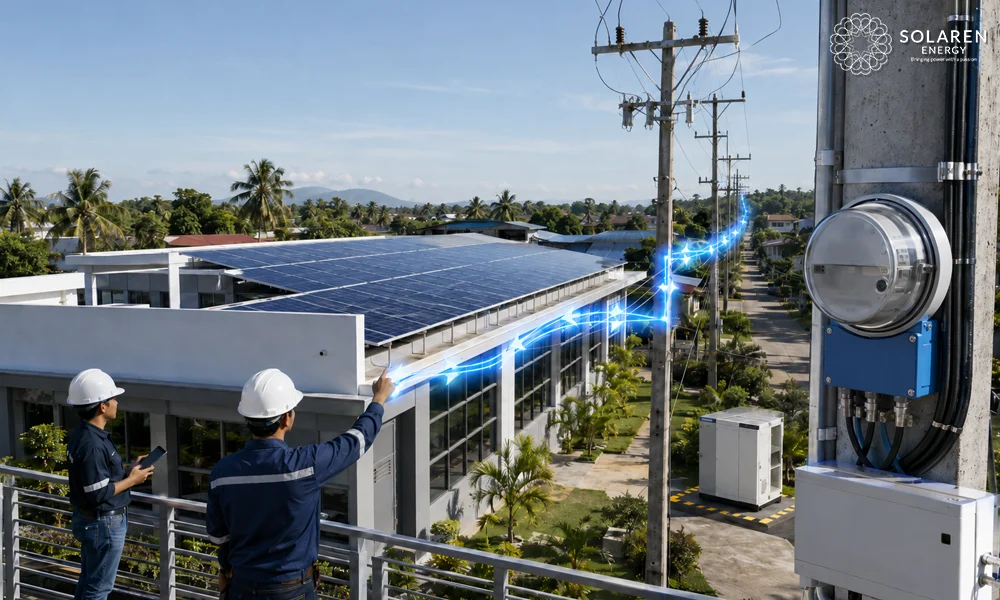
First, it is capped. Only systems below 100 kilowatts peak qualify to export for credit. A larger commercial array cannot net-meter at all, which is often the real reason a large site ends up storing its surplus rather than exporting it, the situation covered in commercial hybrid solar systems.
Second, the rules changed recently, and in your favor. Under the ERC’s 2025 amended net metering rules, issued as Resolution No. 15 on 27 August 2025, unused credits can now be banked and rolled over into future billing periods rather than lost. Credits can transfer to a new owner if the property changes hands, subject to conditions. Distribution utilities now have to publish their net metering processes and their per-transformer hosting capacities. And the renewable energy certificate meter became optional rather than mandatory. If you looked at net metering a few years ago and walked away, it is worth a second look.
The two-question test
When someone asks us whether their hybrid plan triggers utility rules, we do not start with the battery. We ask two questions, in order.
- Can this system operate electrically in parallel with the utility? If yes, you have an interconnection to deal with, and you need proper anti-islanding, regardless of what the battery is doing.
- Will it export energy into the grid? If yes, you also have the net metering and export question to handle.
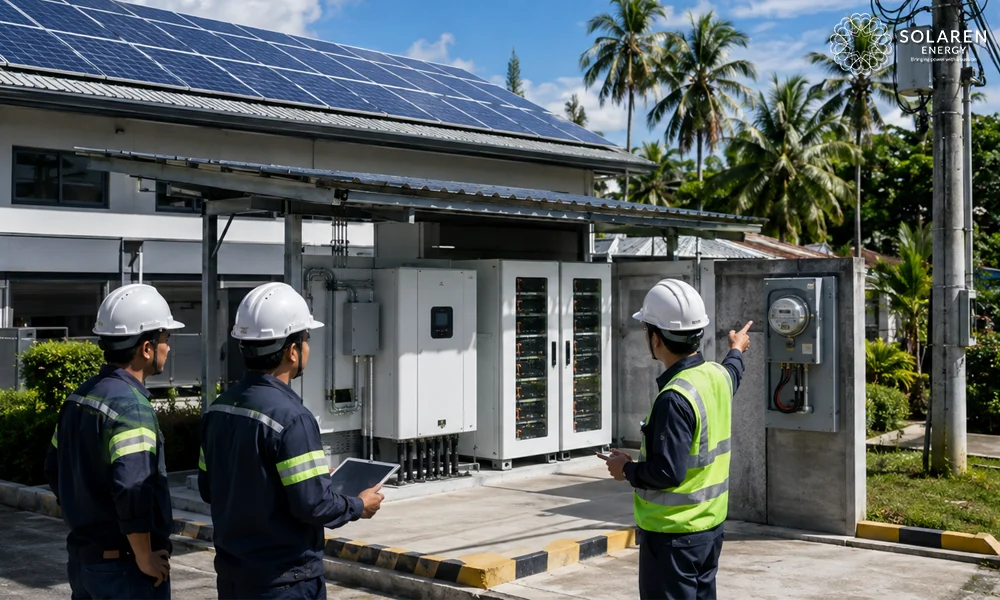
The battery never answers either question on its own. That is the whole point. Net metering, interconnection, zero export, and anti-islanding are four linked yet separate concepts, and a good installer keeps them straight for you rather than blurring them into a sales pitch.
Where this leaves you
Back to where we started. A battery does not make you off-grid, and understanding hybrid solar and net metering in the Philippines comes down to keeping those four ideas apart. Get them straight, and you make better decisions. You stay on the right side of the safety rules, and you know what you are and are not entitled to from your utility. If you want someone to look at your specific site and tell you which arrangement you fall into, ask us. We deal with this every week, and we give you the plain version, not the sales version.
Frequently Asked Questions
Does adding a battery mean I no longer need utility approval?
No. If your hybrid system operates in parallel with the utility, it is interconnected and requires appropriate approval and anti-islanding protection, whether or not it has a battery and whether or not it exports.
Is zero export the same as off-grid?
No. Zero export is an inverter control setting that stops power crossing your meter. Off-grid means no physical connection to the utility at all. A zero-export hybrid system remains connected and operating in parallel.
Can a large commercial system use net metering?
Only if it is below 100 kilowatts peak; larger systems cannot export to the grid for credit, which is often why larger sites store surplus energy rather than export it.
What changed in the net metering rules in 2025?
Under ERC Resolution No. 15, Series of 2025, credits can be banked and rolled over, transferred to a new owner under conditions, distribution utilities are required to publish their processes and hosting capacities, and the REC meter became optional.
Why does anti-islanding matter more with a battery?
Because your property has a live energy source even during a utility outage, anti-islanding prevents your system from feeding power into a line that others believe is dead, protecting utility workers and equipment.