Ask ten people in the Philippine solar market what a hybrid solar system is and you will get at least four different answers. Some mean any system with a battery. Some mean a system that keeps the lights on during a brownout. Some are repeating whatever a salesman told them last week. The confusion is understandable because the word hybrid gets attached to a lot of hardware that behaves in very different ways, and because the honest answer to “should I get one” depends heavily on who is asking.
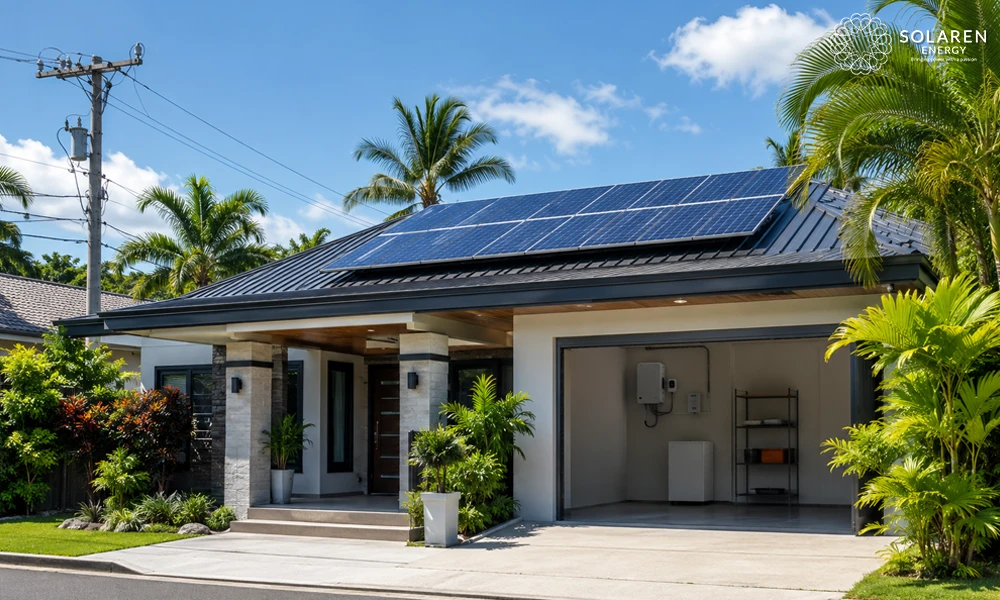
A hybrid solar system combines solar panels, a hybrid inverter, and battery storage in a single installation that stays connected to the grid. It can consume solar power directly, store the surplus, draw from the grid when needed, and keep selected loads running during an outage. It sits between a standard grid-tied system and a fully off-grid setup.
This guide explains what a solar hybrid power system actually is, how it differs from the alternatives, what it genuinely costs, and, most importantly, when it makes financial sense in Philippine conditions and when it does not. Both answers matter. Plenty of hybrid systems are sold in this country to buyers who would have been better served by something simpler.
The Three System Types, in Plain Terms
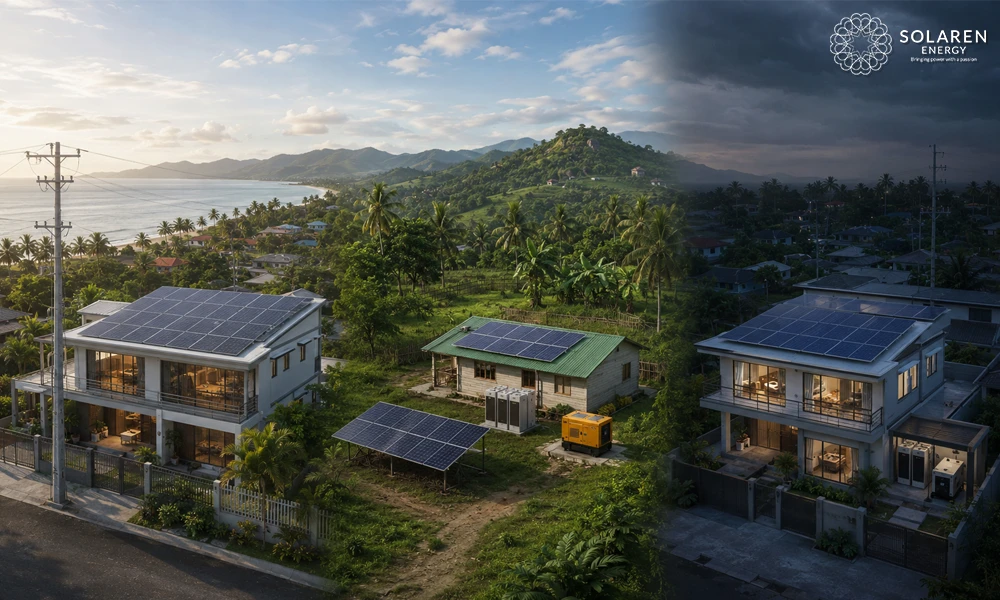
Grid-tied: Panels and an inverter, no battery. Solar powers your loads in daylight, surplus exports to the grid under net metering for bill credits, and the grid covers nights and cloudy spells. When the grid goes down, a grid-tied system shuts down too. That surprises people, but it is a safety requirement: the system must not push power into lines that utility crews believe are dead. Grid-tied remains the workhorse of Philippine solar because it is the cheapest per kilowatt and has the fastest payback. Adding a battery does not change how you are billed for exports, a point covered in hybrid solar and net metering. Net metering is what makes the economics work.
Off-grid: Panels, batteries, and usually a generator, with no utility connection at all. The right answer for islands, remote farms, and sites the grid simply does not reach. Everywhere else, it is the most expensive way to buy electricity, because the battery bank must carry the entire load through every night and every stretch of bad weather.
Hybrid: The middle path. A hybrid solar system keeps the grid connection and its convenience, adds a battery for storage and backup, and uses a hybrid inverter smart enough to juggle all three sources. During an outage, the system islands itself and keeps designated circuits alive. During normal operation, it decides moment by moment whether solar production should feed the loads, charge the battery, or export. If you are still choosing between the three, our guide to grid-tie vs hybrid vs off-grid solar walks through which one each site actually needs.
What is inside a hybrid solar system
Four components define a solar hybrid power system, and the quality of each one matters more than the brochure suggests.
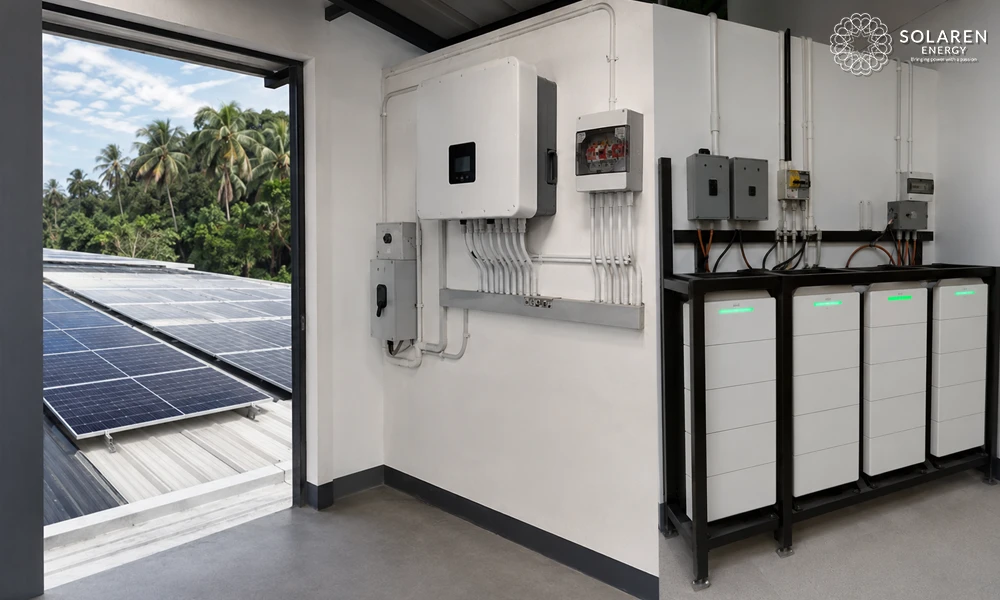
The hybrid inverter: The brain. Unlike a standard grid-tied inverter, it manages bidirectional power flow between panels, battery, grid, and loads, and it must switch to island mode in milliseconds when the grid fails. This is the component where cutting cost hurts most. Cheap hybrid inverters are behind a large share of the underperformance and safety complaints in the local market.
The battery: Lithium iron phosphate (LFP) has effectively won this market: long cycle life, tolerance of Philippine heat, and no maintenance. Battery capacity, measured in kilowatt-hours, determines how long your protected loads run during an outage and how much daytime surplus you can shift into the evening.
The panels: No different from a grid-tied array. Tier 1 modules, properly mounted for Philippine wind loads.
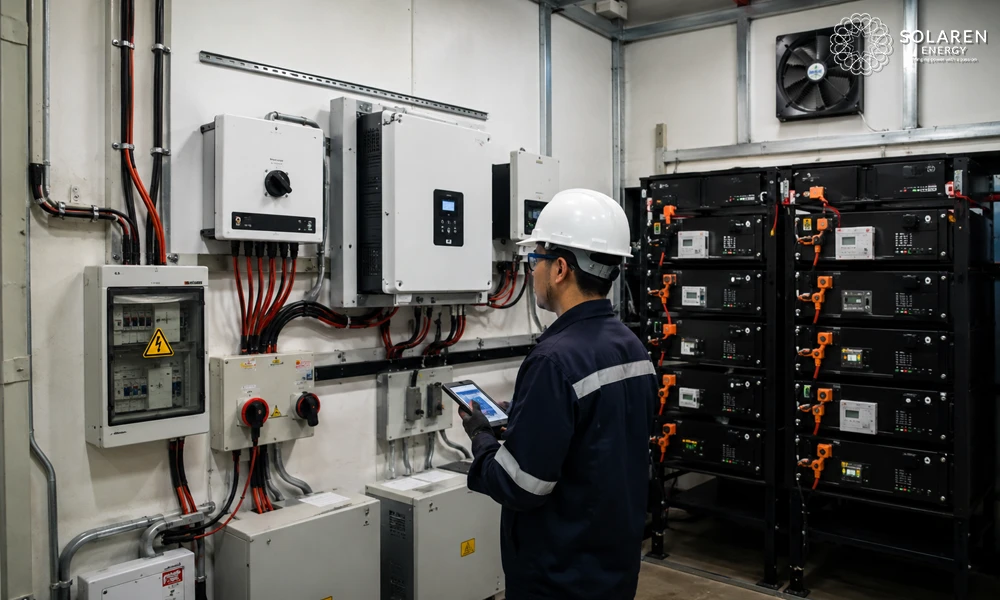
The battery management system and switchgear: The unglamorous parts that decide whether the system is safe. Proper DC protection, correctly rated isolators, and clean installation practice matter enormously on the battery side of a hybrid, where fault currents are unforgiving. This is not a corner to cut, and it is the strongest argument for using an experienced EPC rather than the cheapest quote.
When hybrid solar systems make sense in the Philippines
The Philippine grid gives hybrids a stronger case than they have in most countries. Rotational brownouts remain a fact of life across large parts of Luzon, the Visayas, and Mindanao. Feeder trips follow every serious typhoon. And commercial electricity tariffs keep climbing. Against that backdrop, a hybrid earns its keep in specific situations:
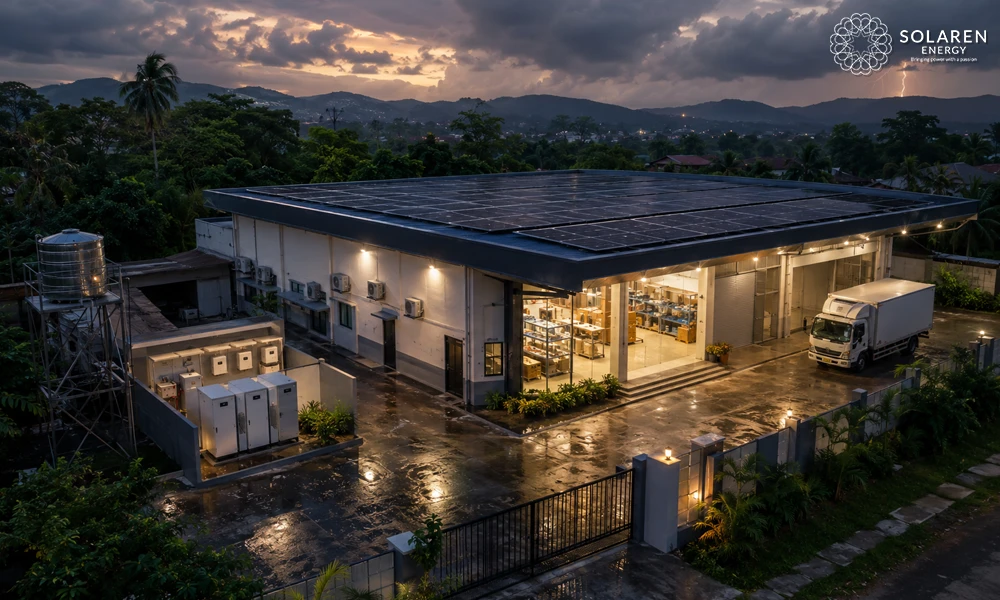
Outage-prone locations: If your area loses power weekly rather than yearly, backup stops being a luxury. For businesses, every outage hour has a cost: spoiled stock, idle staff, lost sales, interrupted production. A hybrid sized to carry critical loads converts an unpredictable operating risk into a fixed, known capital cost.
Loads that cannot stop: Refrigeration, server rooms, security systems, water pumps, medical equipment. Where a two-hour outage does real damage, the battery is buying insurance, and insurance is allowed to cost money.
Businesses with evening peaks: A facility that consumes heavily after sunset can store cheap solar generated at noon and burn it at 7 p.m., displacing expensive grid power, the pattern behind most commercial hybrid solar systems. Combined with demand charge management, this is where commercial storage economics genuinely start to work. We covered the numbers in detail in our guide to energy storage solutions for Philippine businesses.
Weak or unstable supply: Sites at the end of long rural feeders, with chronic voltage sags and surges, get a power quality benefit on top of backup, which is the core case for industrial hybrid solar systems. The battery and inverter buffer the loads from a misbehaving grid.
For commercial and industrial buildings specifically, the sizing logic, load analysis, and payback math have their own dedicated guide: hybrid solar systems for commercial buildings.
When a hybrid is the wrong answer
Now the part most sellers skip.
If your grid supply is stable and your goal is simply a lower electricity bill, a straight grid-tied system with net metering will almost always beat a hybrid on pure financial return. The battery is the most expensive component per useful kilowatt-hour in the whole system, and if the grid rarely fails, that battery spends most of its life doing a job the grid does for free. For a typical household on a reliable Meralco feeder, the extra capital for battery storage often never pays itself back before the battery needs replacing. That is not a popular thing to say in an industry that earns more margin on hybrids, but it is what the numbers show.
The honest decision sequence looks like this. First, how often does your power actually fail, and what does each failure cost you? Second, does your consumption profile let you use stored solar in the evening at a meaningful scale? If the answer to both is “not much,” buy grid-tied, take the net metering credits, and keep the battery money. If either answer is “a lot,” a hybrid solar system moves from nice-to-have to sound engineering.
There is also a middle path worth knowing: many modern hybrid inverters can be installed battery-ready. You pay a modest premium for the inverter now and add the battery later, when your outage experience justifies it or battery prices fall further. For buyers genuinely unsure, this defers the biggest cost without locking anything out.
What does a hybrid solar system cost in the Philippines?
Expect a hybrid to cost meaningfully more than a grid-tied system of the same solar capacity, with the battery bank and the hybrid inverter carrying the difference. As a rule of thumb, the battery adds roughly the price of the solar array again, depending on how many hours of autonomy you specify. That is exactly why sizing discipline matters: the battery should be sized to your critical loads and your evening consumption, not to the total capacity of the building. Oversizing the battery is the single most common way hybrid projects destroy their own payback.
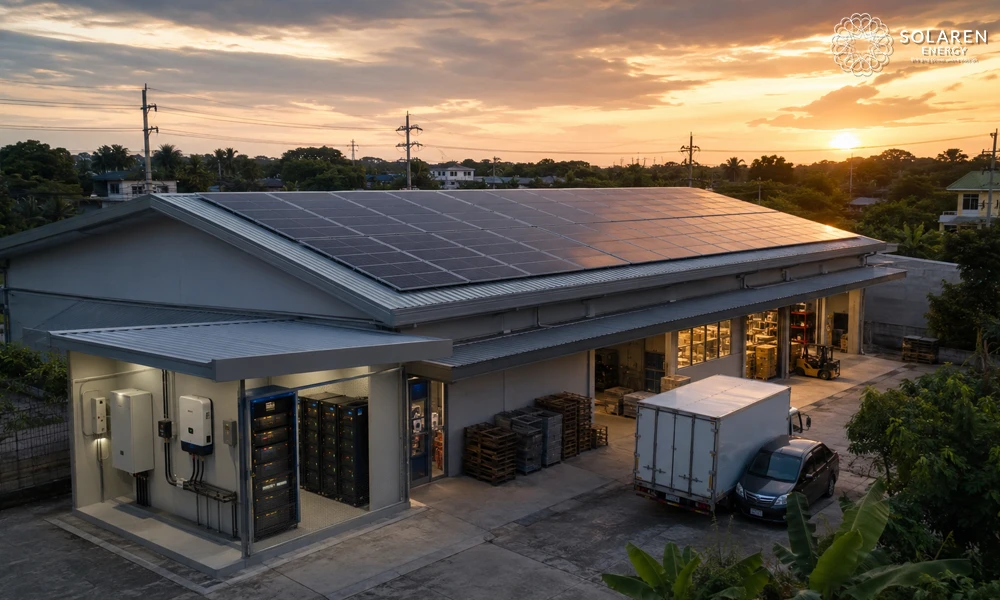
The payback picture splits cleanly. The solar portion of a hybrid pays back the way any Philippine solar array does, typically within a few years for commercial systems with good daytime self-consumption. The battery portion pays back through avoided outage costs and evening tariff displacement, which are real but harder to model, and which depend entirely on your site. A serious EPC will model both parts separately and show you the assumptions. Be suspicious of any quote that presents a single blended payback figure with no workings.
Quality and safety: the part that does not appear on quotes
Hybrid systems concentrate energy. A battery bank holds tens of kilowatt-hours behind DC switchgear, and DC faults do not extinguish themselves the way AC faults do. The difference between a safe installation and a hazard lives in details no buyer sees on a quotation: conductor sizing, DC isolator ratings, combiner box quality, torque discipline on terminations, ventilation of the battery room, and firmware kept current.
The Philippine market currently has a wide quality spread, from engineered systems to assembled kits. The incoming DTI-BPS product certification regime for solar equipment will raise the floor, but until enforcement arrives, the buyer’s protection is the contractor’s engineering track record. Ask who designs the DC protection. Ask who commissions the system and what tests they run. Ask to see comparable installed systems. A portfolio like Solaren’s project record exists precisely so buyers can check claims against reality.
FAQ: Hybrid Solar Systems in the Philippines
- What is a hybrid solar system?
A hybrid solar system combines solar panels, a hybrid inverter, and battery storage while staying connected to the grid. It powers loads with solar, stores surplus in the battery, draws from the grid when needed, and keeps selected circuits running during outages.
- What is the difference between a hybrid solar system and a grid-tied system?
A grid-tied system has no battery and shuts down during a power outage for safety. A hybrid adds battery storage and an inverter that can island the property, so critical loads keep running when the grid fails.
- Are hybrid solar systems worth it in the Philippines?
In outage-prone areas, for businesses with critical loads, or for facilities with heavy evening consumption, yes. On a stable feeder where the goal is purely bill savings, a grid-tied system with net metering usually delivers a better financial return.
- What is a solar hybrid power system?
It is the same thing as a hybrid solar system: the terms are used interchangeably in the Philippine market. Both describe a grid-connected solar installation with battery storage and backup capability.
- How long can a hybrid system run during a brownout?
That depends on battery capacity and the loads you protect. A correctly designed system carries critical circuits such as refrigeration, lighting, and communications for several hours; runtime is a design choice made during sizing, not an accident.
- Can I add a battery to my existing grid-tied system later?
Often yes, either by replacing the inverter with a hybrid model or by AC-coupling a battery system alongside it. If you anticipate wanting storage, specifying a battery-ready hybrid inverter at the outset is the cheaper path.
Conclusion
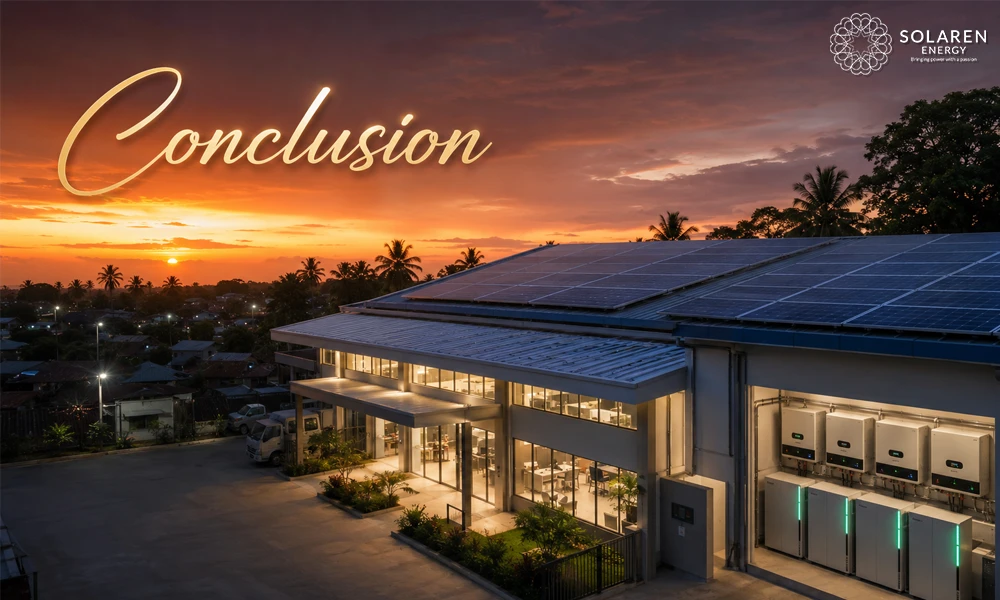
A hybrid solar system is neither a gimmick nor a universal upgrade. It is a specific tool for specific conditions: unreliable supply, loads that cannot stop, and consumption that outlives the daylight. Where those conditions hold, and in the Philippines, they very often do, hybrid solar systems deliver something a grid-tied array cannot, which is continuity. Where they do not hold, the honest advice is to keep your money in the simpler system and let net metering do the work.
Either way, the deciding factors are engineering ones: your outage history, your load profile, and the quality of the design. Solaren has delivered more than 2,500 commercial and industrial installations across the Philippines, including hybrid and storage-backed systems for sites where the power simply cannot go out. If you are weighing a hybrid solar system for your facility, start with the commercial deep-dive linked above, or contact us and we will model both options against your actual consumption data, with the assumptions shown.