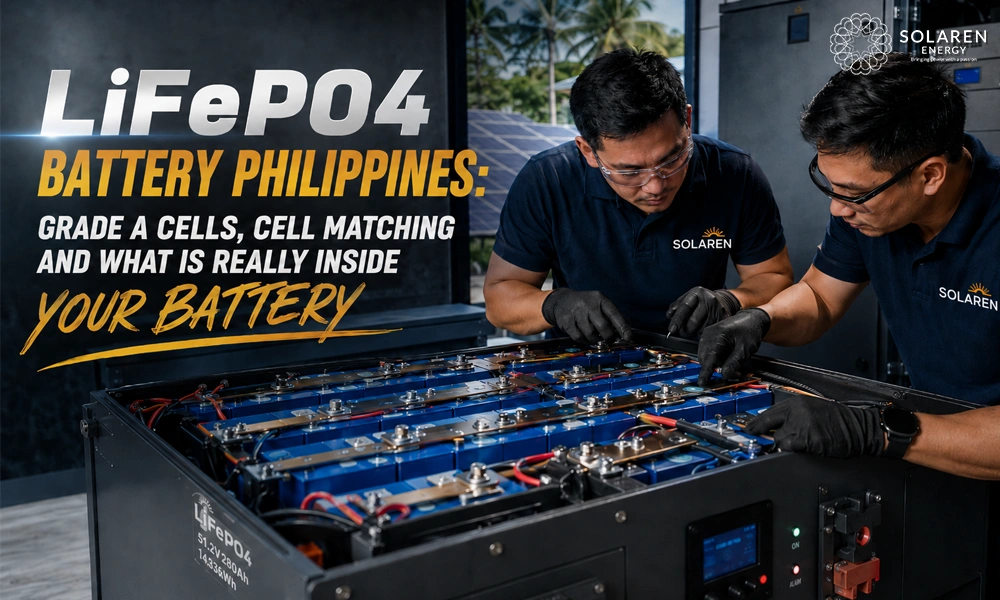
You cannot cut open a battery to see what is inside it. Not before you buy, and not afterward without ending the warranty.
So the whole decision rests on documents, and on a handful of checks you can run from the outside.
That is the real problem with the LiFePO4 battery Philippines market. The cells are the most expensive thing in the box, they sit sealed inside a steel case, and the specification sheet in front of you was written by the person selling it. Sales language fills the space where evidence should be.
One piece of housekeeping first, because it trips up more buyers than it should. LiFePO4, LFP and lithium iron phosphate are three names for the same chemistry. Suppliers switch between them inside a single quotation, sometimes on the same page. If two quotes look like they are offering different products on that basis alone, they are not. From here on this piece uses LFP, which is the shorthand you will see on datasheets.
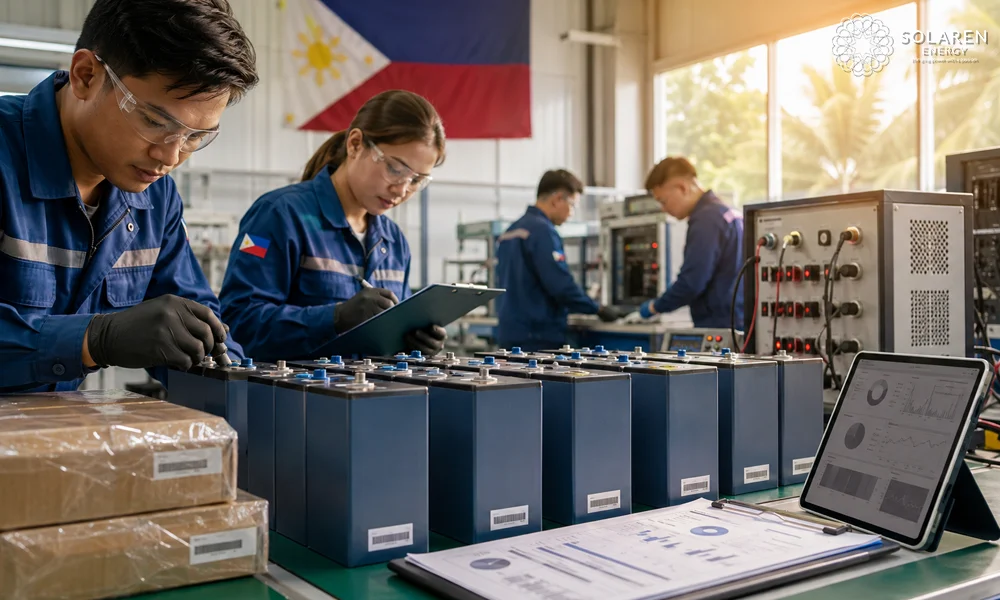
Grade A LiFePO4 cells, also written LFP, are cells that passed the manufacturer full quality control, carry intact serial numbers, and arrive with a datasheet and test report traceable to a single production batch. There is no international standard behind the term. Grade A, B and C are supplier conventions, not certifications, which is why the only reliable test is documentation: cell manufacturer name, batch number, capacity test results, and internal resistance spread. A supplier who cannot produce those four things is not selling you Grade A, whatever the invoice says.
Bulging is the failure we see most
Across our service history, the most common physical failure is a swollen cell. Not a dead cell. A deformed one.
Worth understanding why, because the cause tells you what was wrong with the pack long before the swelling started. LFP is a forgiving chemistry. When it deforms, something was done to it.
| What we see | Mechanism | What it points to |
| Cells swollen across the flat faces | Gas generated inside the cell as electrolyte breaks down, with nothing holding the electrode stack flat | No compression fixture, or a fixture that lost pressure as the cells aged |
| Swelling alongside observable heat under load | Current above the cell continuous rating, resistive heating, faster gas generation | Pack rated on peak figures rather than continuous, or simply undersized for the inverter it was paired with |
| Swelling after a period of overvoltage | Charging above roughly 3.65 V per cell | Protection acting at pack level only, so one cell went over while the pack total still looked normal |
| One cell swollen, the rest normal | That cell was weaker from day one and was worked harder on every cycle | Unmatched cells, or several production batches mixed into one pack |
Notice what is absent from that table. In none of those cases did the cell chemistry simply wear out. Every path traces back to a design decision or a build decision made before the pack was ever energized.
What Grade A actually means, and why nobody can define it
There is no governing body issuing grades. No test standard. No certificate, no audit. The grade on your quotation is a claim made by whoever typed the quotation.
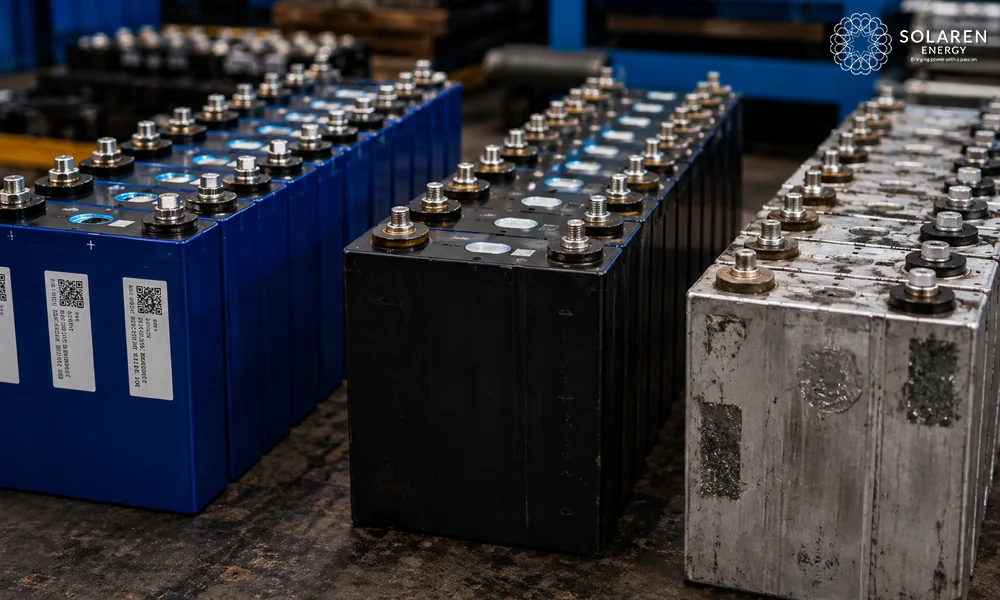
The terms do describe something real in the supply chain though. Here is the working definition the industry operates on, and what each grade means for you in practice.
| Attribute | Grade A | Grade B | Reclaimed or unknown |
| Capacity against nameplate | At or above rated | Typically 90 to 98% | Unknown, often never tested |
| Capacity spread in a pack | Within 1 to 2% | 5% or wider | Uncontrolled |
| Internal resistance spread | Within about 5% | Wider, often unmeasured | Unmeasured |
| Serial numbers | Intact and traceable to a batch | Frequently absent | Ground off, etched over, or relabeled |
| Cell maker warranty | Yes, from the manufacturer | Usually none | None |
| Test report available | Yes, per batch or per cell | Rarely | Never |
| Realistic LFP cycle expectation | Datasheet figure, minus climate derating | Materially less | Unknowable |
| Price signal | Highest | Noticeably cheaper | Cheapest by a wide margin |
The row that matters most is serial numbers. Cells that have had identifying marks removed were removed for a reason. If the supplier will not photograph the cell tops before the lid goes on, treat that as the answer to a question you have not asked yet.
Cell matching, and the arithmetic that shows why it matters
Cells wired in series are forced to carry exactly the same current. There is no negotiation. The weakest cell in the string reaches its voltage limit first on both charge and discharge, so that cell decides what the whole pack can do.
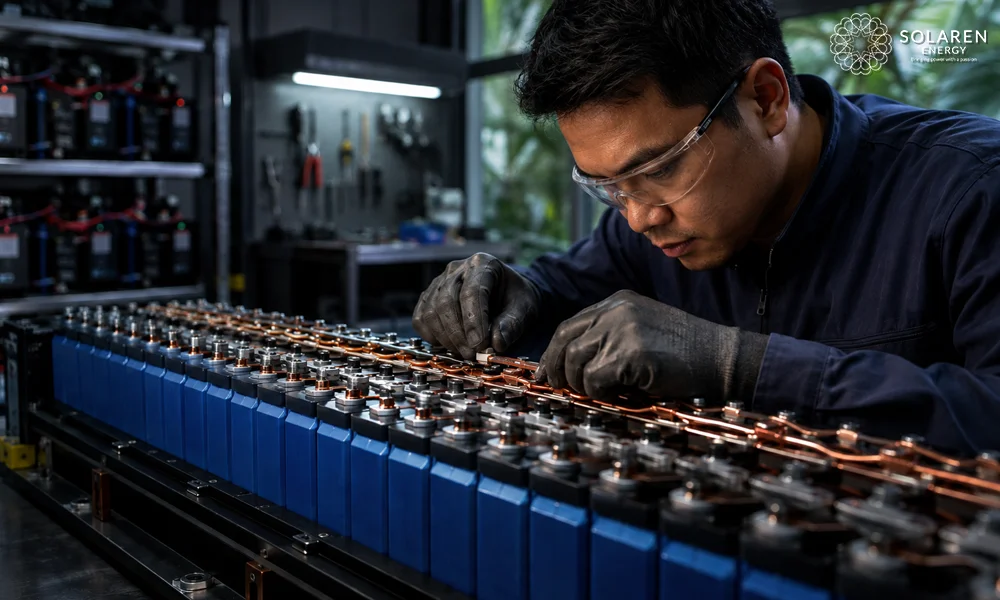
Which is why matching at assembly is not a refinement. It is the point where the outcome gets decided.
| Parameter | Tolerance a serious assembler works to | Why it matters |
| Capacity | Within 1 to 2% across the pack | The smallest cell sets usable pack capacity, so a 5% spread means you paid for capacity you will never reach |
| Internal resistance | Within about 5% | A higher resistance cell runs hotter and sags further under load, so it ages faster than its neighbors and the gap widens |
| Open circuit voltage at assembly | Within 5 to 10 mV | Large initial offsets exceed what balancing can realistically correct once the pack is in service |
| Production batch | Single batch, single date code | Different batches age along different curves, so a mixed pack drifts apart over time even if it started level |
Here is the arithmetic that makes the last point concrete. Most buyers have never seen it.
Take a 280 Ah cell sitting 5% adrift from its neighbors. That is 14 Ah of imbalance. A typical passive balancer shifts 50 mA. Correcting 14 Ah at 50 mA takes 280 hours of continuous balancing, and passive balancing only operates near the top of charge, perhaps thirty minutes in a daily cycle. At that rate the pack needs something in the order of 560 days to fix an imbalance it will never actually catch, because the weak cell keeps drifting while you wait.
Balancing is a maintenance function. It corrects small drift. It cannot repair a pack assembled out of tolerance, and no supplier will tell you that. There is more on what a good board does and does not do in what a battery management system does, and why cheap ones fail.
The build quality that decides how long it lasts
Compression
Prismatic LFP cells breathe. They expand and contract slightly between empty and full, on every cycle, for their entire life. Manufacturers specify an initial compression pressure, commonly in the region of 300 kPa, held by a fixture that maintains that pressure as the cells age.
Without it the electrode stack loses contact, internal resistance climbs, capacity fades faster than the datasheet predicts, and the cell deforms permanently. Compression is not packaging. It is a performance specification, and it is the most common thing missing from a cheap pack.
Busbars and interconnects
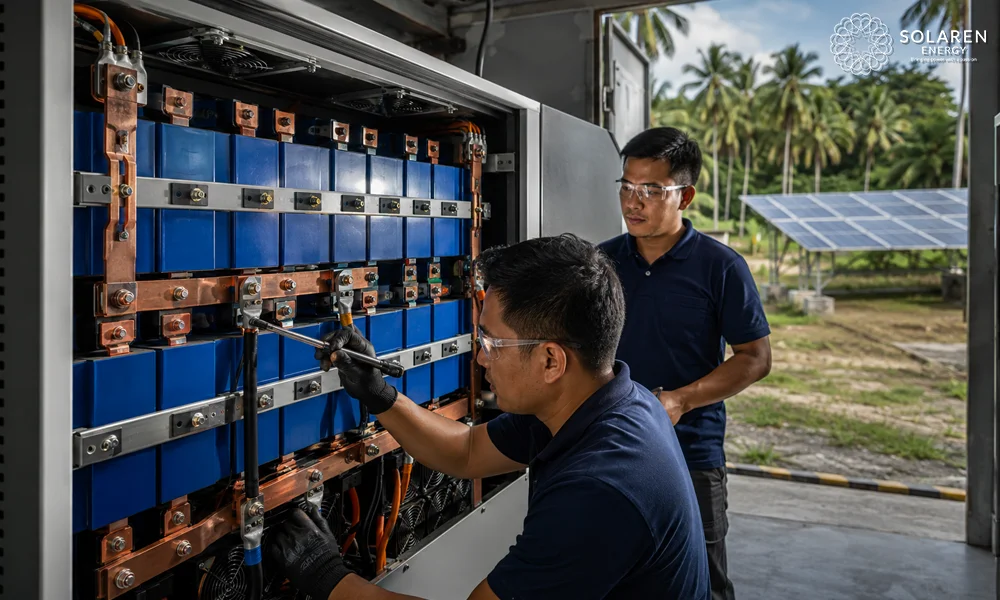
Copper carries roughly 3 to 5 amps per square millimeter continuously before temperature rise becomes a problem in still air. A pack rated at 200 A continuous therefore wants somewhere in the region of 40 to 65 square millimeters of copper at each interconnect. A busbar 20 mm wide and 2 mm thick gives you 40, which sits at the bottom of that range. We have seen interconnects closer to half of it.
The cheaper substitution is nickel plated steel that looks like the real thing. It conducts at a small fraction of copper, it heats under load, and it is magnetic. That last property gives you a free field test, covered below.
Terminals and torque
Prismatic cells use bolted terminals, usually M6, and the manufacturer publishes a torque figure that typically falls between 4 and 6 Nm. Under torqued joints work loose with thermal cycling. A loose joint is a resistance. A resistance under load is heat. Heat at a terminal is one of the more common causes of the sudden voltage drop that reaches you as an unexplained inverter alarm.
Cheap cable lugs and spot welded terminals belong in the same category. Both create a joint whose resistance rises over time, and neither can be re-torqued.
Thermal management
This is where LFP earns its reputation and then quietly loses some of it. Ambient in a Philippine plant room sits between 35C and 38C for much of the year. A sealed enclosure under load runs 10C to 15C above ambient with no active cooling, which puts the cells near 50C.
As a working approximation, chemical aging roughly doubles for every 10C above 25C. A pack running at 45C is therefore aging at something like four times the rate its datasheet assumed. No amount of cell quality survives that. A pack sold for this climate with no stated thermal strategy is a pack designed for somewhere else.
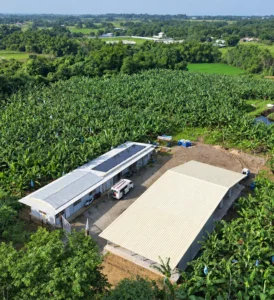
None of this is theoretical, and none of it is a checklist we apply to other people only. Every storage system we specify is ordered against these points, and the installations are documented across our project record, including battery systems at the Inainakay Foundation and Kings Orchard, and dual source generation at Rivera Agro Industrial, where a solar array runs alongside an existing biogas plant and has been expanded as the farm grew. The reason we can publish failure data at all is that the installed base is large enough to show patterns.
What you can check without opening anything

You are not going to dismantle a battery. You can still do more than read the brochure.
| Check | How to run it | Fail signal |
| Magnet on the interconnects | Ask for a photograph of the busbars before the lid goes on, or pass a magnet over them at commissioning | Magnetic busbars mean plated steel, not copper or aluminum |
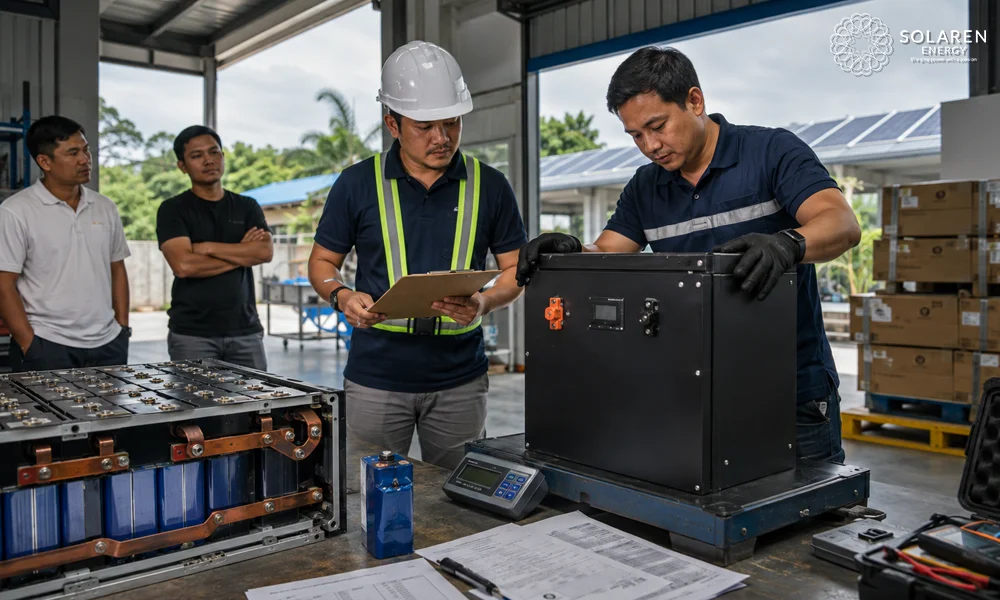
| Weight of the finished unit | Compare the shipping weight against the datasheet | Good LFP cells run around 160 Wh per kg at cell level, so 10 kWh of cells alone is roughly 62 kg. A complete 10 kWh unit much under 90 kg deserves a question |
| Cell serial numbers | Ask for photographs of the cell tops during assembly | Missing, ground off, overprinted, or relabeled |
| Terminal finish | Photographs of the bolted joints | Spot welds on prismatic terminals, undersized lugs, no torque marking on the fasteners |
| Venting | Inspect the enclosure at delivery | No pressure relief path and no defined venting route |
| Case temperature in service | Thermal image or a contact reading after an hour at full load | Uneven temperature across cells, which indicates resistance imbalance |
The weight check is a floor, not a proof. It will not confirm the cells are good. It will reliably catch a pack that does not contain the capacity printed on the label.
The documents to demand

Ask for these in writing before you release payment. Not after delivery.
- Cell manufacturer name. A company, not a grade letter.
- Manufacturer datasheet for that exact cell model, issued by the cell maker rather than the pack assembler.
- Confirmation that cells are new LFP stock, and not B grade, reclaimed, or pulled from electric vehicle packs.
- Cell serial numbers, traceable to a manufacturing batch and date code.
- Capacity test report for the batch, with the tolerance band stated.
- Internal resistance measurements, with the spread across the pack stated.
- Confirmation that all cells in the pack come from a single batch.
- The compression specification the pack is built to, and how the fixture maintains pressure as cells age.
- Busbar material and cross section, against the pack maximum continuous current.
- Terminal torque values and a re-torque schedule.
- Rated temperature range with a published derating curve above 35C, and the thermal management method.
- IEC 62619 and UN38.3 certificates for this product, not for a similar one.
Item 4 separates real suppliers from resellers. Anyone assembling packs properly already records serials, because batch matching is impossible without them. A supplier who has to go away and ask is telling you they did not do it.
Warranty documents are a separate exercise, and they need the same treatment. That is covered in solar battery cycle life and warranty, including how to convert a cycle claim into pesos per kWh of guaranteed throughput.
Where this sits in our failure record
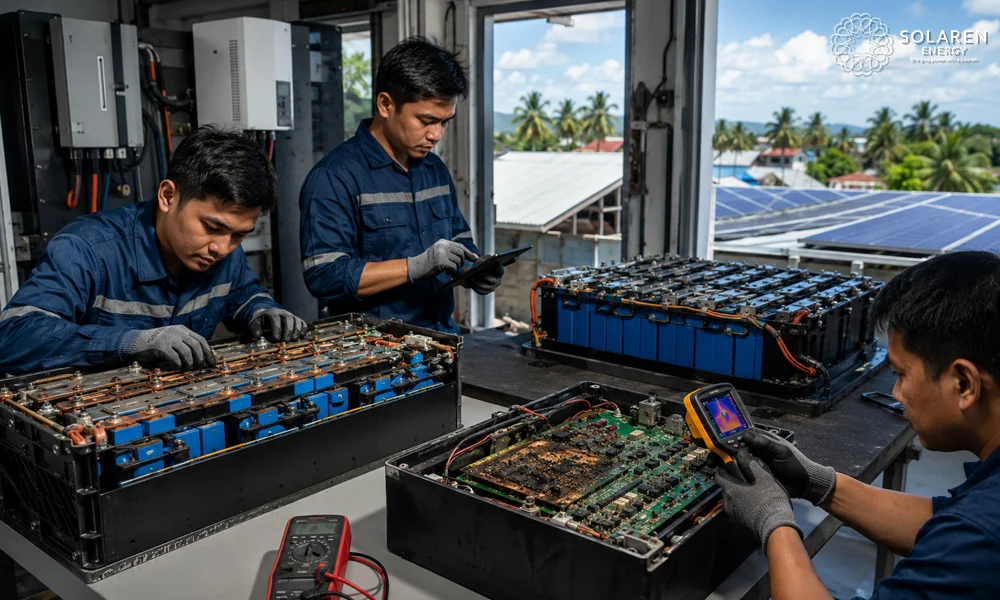
Across our service history, roughly 40% of battery problems trace to the cells or the physical pack build. The other 60% originate in the battery management system, which we cover separately.
Worth holding that split in mind while reading this piece. Cell quality matters enormously, and it is still the minority cause. A pack of excellent cells governed by a poor management board will fail before a pack of ordinary cells governed by a good one. Both need to be right. Buyers usually interrogate neither.
Almost everything in our record came from generic or unbranded packs, or from second and third tier assemblers. Not from cells that were simply worn out. The engineering standard we hold our own work to is set out in why cheap solar costs more over time, and the same argument applies to a battery with more force, because a battery fails quietly.
Frequently asked questions

What does Grade A mean for a LiFePO4 cell?
It means the cell passed the manufacturer full quality control with capacity at or above nameplate, matched internal resistance, intact serial numbers, and traceability to a single production batch. There is no international standard behind the term, so it is only meaningful when backed by a test report and a batch number.
Is LFP the same as LiFePO4?
Yes. LFP, LiFePO4 and lithium iron phosphate all name the same chemistry. LFP is the shorthand used across datasheets and trade documents, LiFePO4 is the chemical formula, and suppliers move between all three inside a single quotation. A difference in wording between two quotes tells you nothing at all about a difference in product.
Why do LFP cells bulge?
Gas builds up inside the cell as electrolyte breaks down, which happens faster under excess current, high temperature, or overcharging above roughly 3.65 V per cell. A properly compressed pack resists the deformation. A pack with no compression fixture does not, which is why bulging is the most common physical failure we see.
Is LiFePO4 safe in Philippine heat?
The chemistry is more thermally stable than other lithium types, so safety is generally not the concern. Longevity is. Aging roughly doubles for every 10C above 25C, so a pack running at 45C ages about four times faster than its datasheet assumes. Thermal management matters more here than in temperate markets.
How can I tell if cells are matched?
Ask for the capacity test report and the internal resistance measurements for your specific pack. Capacity should sit within 1 to 2% across all cells and resistance within about 5%. If the supplier cannot produce those numbers, the cells were not matched.
Can the BMS fix unmatched cells?
No. Balancing corrects small drift during normal service. Correcting a 5% imbalance on a 280 Ah cell means moving 14 Ah, which at a typical 50 mA passive balancing current takes 280 hours of active balancing time. In practice the pack never catches up.
What is cell compression and why does it matter?
Prismatic cells expand and contract on every cycle. Manufacturers specify an initial compression pressure, commonly around 300 kPa, held by a fixture. Without it the electrode stack loses contact, resistance rises, capacity fades early, and the cell deforms.
How do I check a battery without opening it?
Run a magnet over the interconnects to catch plated steel busbars, compare the shipping weight against roughly 160 Wh per kg of cell level energy density, request photographs of cell serial numbers taken during assembly, and thermal image the case after an hour at full load.
The Short Version
Buying a LiFePO4 battery Philippines-wide is an exercise in reading paperwork, because the hardware arrives sealed and stays that way. Call it LFP, call it lithium iron phosphate, the questions do not change. Get the cell manufacturer name, the batch number, the capacity test report, and the internal resistance spread. Ask what compression the pack is built to. Look at the busbars. Weigh the box.
Bulging is what you will see if any of that was skipped, and by then the money is spent. The cells are the most expensive component you will buy, and the one component nobody asks a single hard question about before signing. If you are still working out what you need before you get to this level of detail, start with how to choose a solar battery.