The solar market in the Philippines has grown significantly over the last decade. With that growth has come a proliferation of companies, each presenting credentials, portfolio images, and savings projections that look broadly similar from the outside. Choosing between them is harder than it should be, and the consequences of choosing incorrectly last for twenty-five years.
This is not a theoretical concern. We are currently fixing a commercial installation in Cavite where the original contractor sized the inverters incorrectly and designed the string configuration in a way that prevented the panels on the roof from being fully utilised. Within twelve months of commissioning the system had essentially stopped performing. The client had no contractual basis to demand a remedy because the contract said nothing about engineering standards or compliance obligations.
That situation is not unique. It is a version of something that happens regularly across the Philippine solar market. And it is entirely preventable if you know what to look for before signing anything.
The Philippine Market Is Not Uniform

There are genuinely good solar companies operating in the Philippines. There are also a large number that are not good. The challenge is that the difference is rarely visible in a proposal document, a website, or a sales presentation. Both kinds of companies can show you impressive photographs of completed projects. Both can quote you a system size, an annual generation figure, and a payback period. The number that matters, the one that tells you whether those projections will materialise, is the engineering quality behind them.
Industry estimates suggest around 90 percent of Philippine solar installers will not be operating in their current form within five years. Some will close. Some will change ownership. Some will simply stop answering calls. A system that was properly engineered and installed by a company that subsequently disappeared is inconvenient. A system that was poorly engineered and installed by a company that subsequently disappeared is a capital loss with no recourse.
The selection decision is therefore not primarily about price. It is about identifying the companies whose engineering quality and long-term stability give you a reasonable confidence that the system you are promised is the system you will get, and that someone will be responsible for it in year ten.
What Accreditation Actually Tells You

PCAB accreditation is a legal requirement for commercial solar installation in the Philippines. Not a best practice. A legal requirement. A contractor without current PCAB accreditation is not legally permitted to execute a commercial solar installation in this country. The DOE maintains a separate accreditation register for renewable energy contractors. Both credentials are worth checking before shortlisting anyone.
The practical importance of accreditation goes beyond legal compliance. Some utilities will not process grid connection or net metering applications for systems installed by unaccredited contractors. Local government units in Makati and Imus in Cavite require contractor credential submissions before work permits are issued. Contractor liability insurance may not respond to claims arising from work performed by an unaccredited operator. These are real consequences, not theoretical risks.
Solaren holds current PCAB accreditation and DOE registration, and carries a Dun and Bradstreet rating used by multinational corporations and institutional procurement departments worldwide. These credentials are verifiable. Ask for the certificate numbers and check them. It takes five minutes.
Engineering Quality Is the Variable That Determines ROI
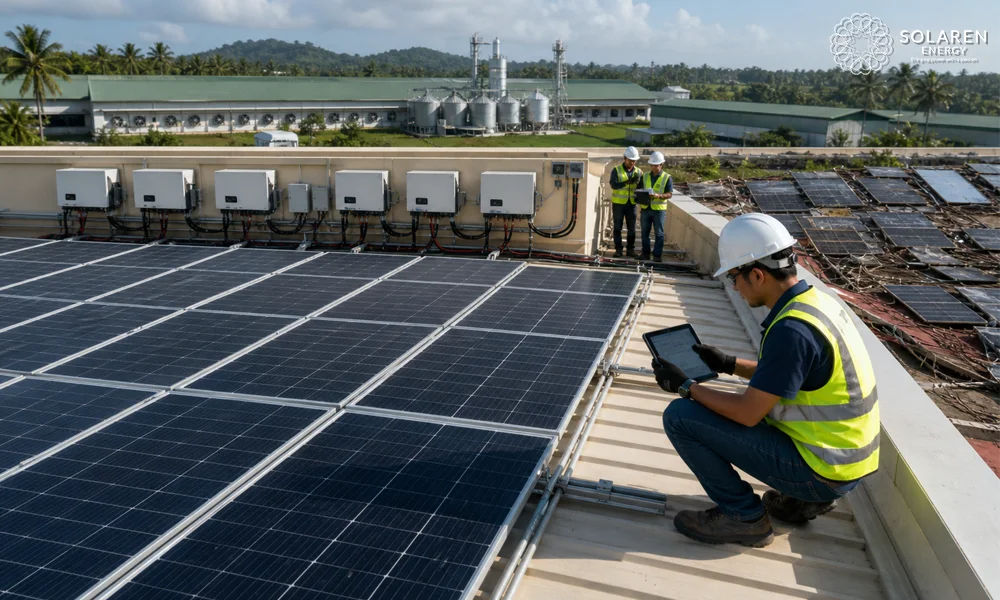
Two solar systems of identical size, installed on identical roofs with identical tariff rates, can produce completely different financial returns depending on the engineering decisions made during design and installation. String configuration, inverter specification for local grid conditions, cable sizing, module selection for Philippine temperatures, and commissioning testing are all decisions that are invisible in a proposal but visible in the generation data over time.
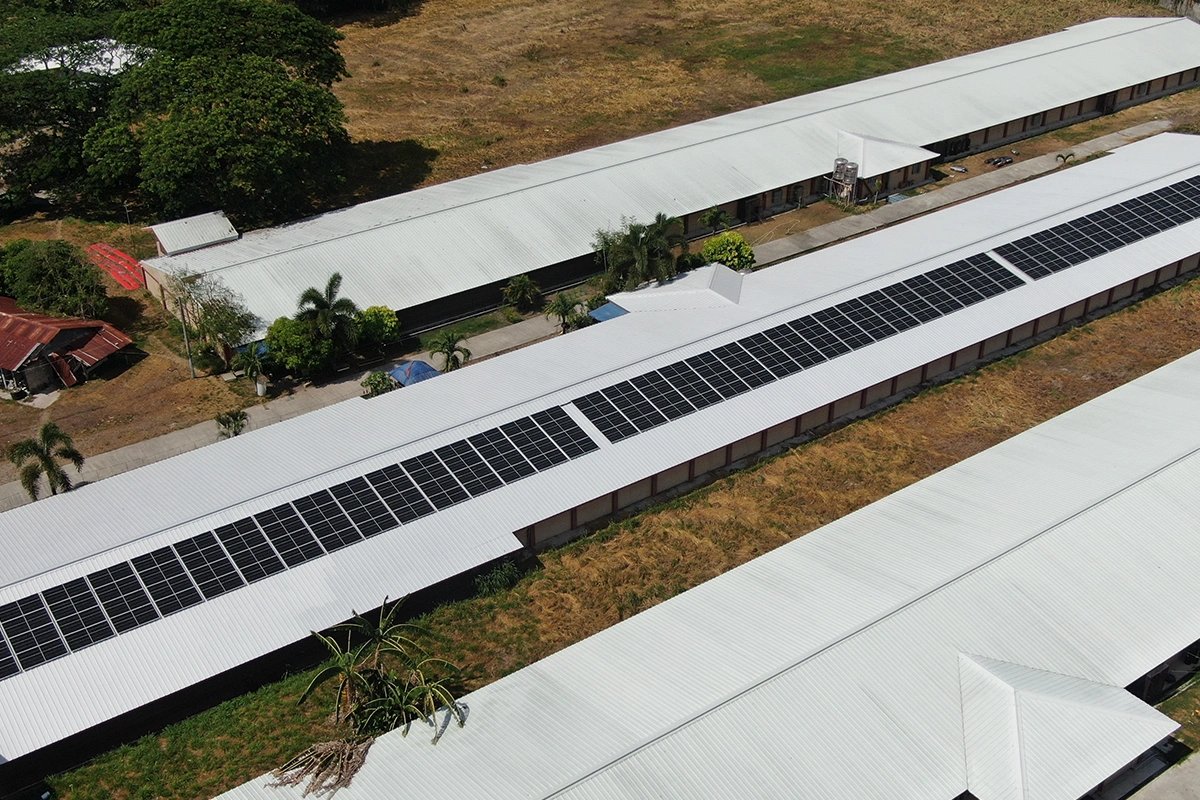
The Tarlac poultry farm case study is the clearest example of what correct engineering delivers. A 100kWp installation generating 458,456 kWh over 40 billing months with zero equipment failure downtime. Verified savings of PHP 5,759,547 from reconciled utility bills. A specific yield of 1,375 kWh per kilowatt-peak per year, consistent with a well-designed system on a clean Tarlac rooftop. These numbers are not projections. They are receipts.
The Imus Cavite failure we described above involved a 300kW system where the string configuration was designed incorrectly and the inverters were undersized for the array. Within twelve months, the system had stopped performing effectively. The client lost the majority of their expected return on a significant capital investment. The engineering decisions that caused it were made months before the first panel was installed.
This is why the engineering question matters more than the price question. A system that costs ten percent more but generates fifteen percent more over twenty-five years because the design was correct is the cheaper system. The upfront numbers do not show that.
Track Record Is the Most Reliable Signal
Any company can show you photographs of recent completions. The question that reveals most about a solar company is what their installations look like three, five, and ten years after commissioning. Not the photographs. The generation data.
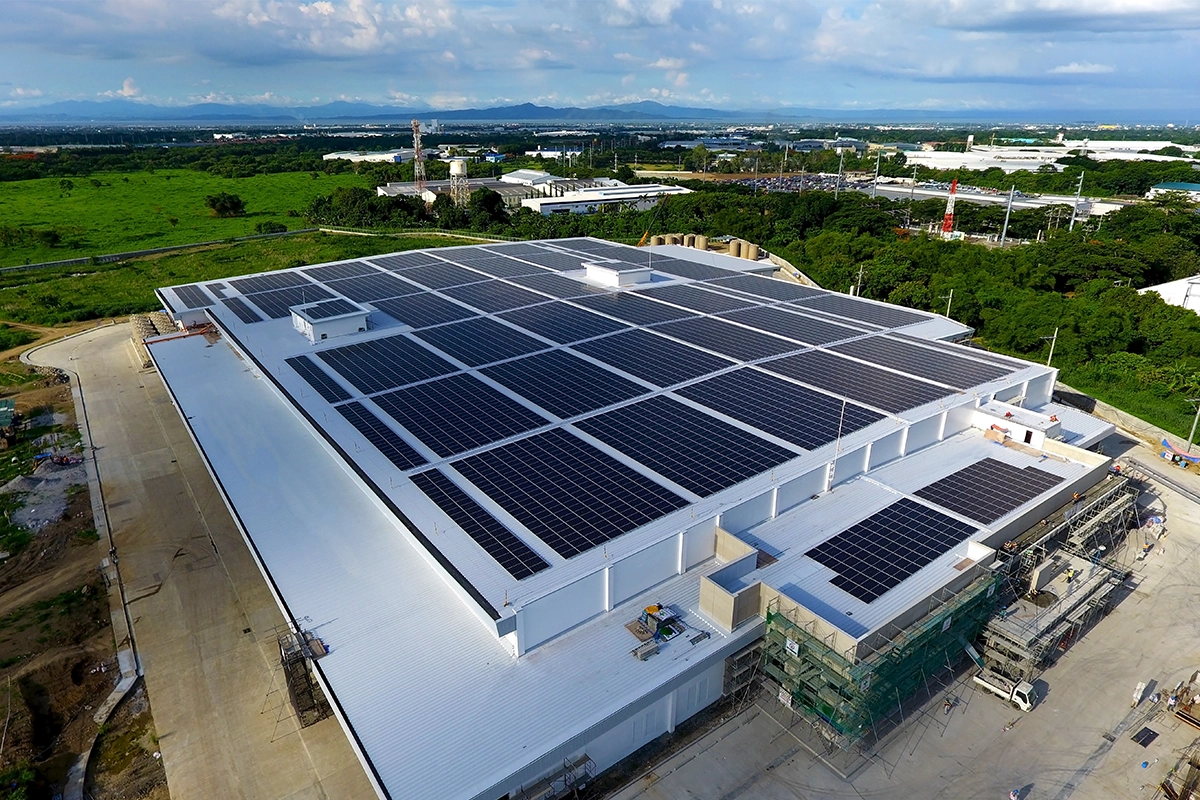
Solaren has been operating for over a decade. The New Zealand Creamery installation won the Asian Power Award for Solar Project of the Year and continues to perform. Atlantic Grains, the largest grain importing and processing facility in the Philippines, has been generating reliably since commissioning. Toyota Bacoor and Toyota Dasma. Oishi across multiple production facilities. Bench Philippines. These are not recent completions chosen for a marketing brochure. They are long-term client relationships with ongoing performance data.
Ask to speak with clients whose systems are more than three years old. Ask specifically what happened when something needed attention. There are always issues with installation over time. What distinguishes a good company from a poor one is not whether problems arise but how they are handled when they do.
The Sectors Where Renewable Energy Makes the Strongest Case

The financial case for solar is strongest where daytime electricity consumption is highest and most consistent. Food manufacturing, agricultural operations, cold storage, retail with long trading hours, and light industrial facilities running day shifts are typically the strongest candidates.
Commercial and industrial facilities with significant daytime loads regularly see electricity bill reductions of 30 to 40 percent. On a business spending PHP 500,000 per month on electricity, that is PHP 150,000 to PHP 200,000 per month returned to operating margin permanently, after a payback period that, on correctly specified commercial systems, typically runs three to four years. For a more detailed breakdown of payback, savings assumptions, generation yield, and long-term financial return, see The Ultimate Guide to Commercial Solar ROI.
For sites with grid reliability problems, the hybrid case adds further value. Battery storage keeps priority loads running through outages, eliminates diesel backup costs, and can reduce demand charges by managing the peak periods that set monthly billing. Why renewable energy companies are increasingly recommending hybrid as the default commercial starting point is covered in detail separately, along with the sites where grid-tied remains the stronger financial choice.
For foreign-funded companies and multinational subsidiaries, the compliance and accreditation question carries additional weight. The combination of PCAB accreditation, DOE registration, and a Dun and Bradstreet rating satisfies most international corporate governance requirements for supplier verification. The specific considerations for foreign-owned operations in the Philippines are covered in a separate piece on what foreign-funded companies need to know about solar projects here.
In the end, the decision is not only about who can install panels. It is about what partnering with the right renewable energy company actually delivers in practice: better engineering, stronger compliance, more reliable savings, and accountability over the full life of the system.
Frequently Asked Questions

-
How do I verify that a renewable energy company in the Philippines is properly accredited?
Ask the company directly for their PCAB license number and category, and their DOE accreditation certificate number. PCAB maintains a public registry where you can verify license status, category, and expiry date. The DOE accreditation register is similarly accessible. Both checks take less than five minutes. A company that becomes vague or evasive when asked for these details is telling you something important about their standing. Do this before shortlisting, not after.
-
What is a realistic payback period for a commercial solar installation in the Philippines?
For correctly specified commercial systems with significant daytime loads, payback periods of three to four years are achievable at current tariff rates and system costs. Food manufacturers, industrial facilities, and agricultural operations with consistent daytime consumption typically fall within this range. Retail and office facilities with predictable operating hours also perform well.
Systems sized against nighttime consumption, installed with incorrect string configurations, or specified with undersized cables will see longer payback periods because the generation underperforms expectations from day one. The payback figure in a proposal is only as reliable as the engineering assumptions behind it.
-
Is solar still worth it if my electricity tariff is relatively low?
Philippine commercial and industrial electricity tariffs are among the highest in Southeast Asia. There are relatively few commercial consumers for whom the current tariff is low enough to make solar difficult to justify. The more relevant question is whether the load profile matches solar generation hours. A facility drawing heavy loads consistently through daylight hours will generate a strong financial return, regardless of whether the tariff is at the lower or higher end of the commercial range. A facility with predominantly nighttime loads needs a more careful analysis, and possibly battery storage to shift solar generation to when it is needed.
-
Does choosing a renewable energy company with an award like the Asian Power Award actually matter?
On its own, no. Awards are not a substitute for engineering quality or verified performance data. What the Asian Power Award for Solar Project of the Year represents in Solaren’s case is external validation from an industry body that reviewed an actual installation against defined criteria. Combined with verifiable accreditation, a decade of operating history, documented long-term client relationships, and real performance data from completed projects, it is one signal among several that point in the same direction. No single credential tells the whole story. The combination of them does.
-
How do I compare renewable energy company proposals in the Philippines accurately?
Compare the generation simulation file, not just the annual kWh estimate. Ask for the inverter model and check the voltage tolerance range in the datasheet. Ask for DC string cable cross-sections and AC output cable sizes. Ask for the module datasheet and check the temperature coefficient and degradation warranty. Ask whether the installation is done by the company’s own engineers or subcontracted.
And ask to speak with clients whose systems are more than three years old. Those questions will reveal more about the likely outcome than any comparison of headline prices or installed kilowatts. Businesses comparing contractors can also use Choosing a Solar EPC in the Philippines as a practical checklist for reviewing credentials, engineering capability, proposal quality, and long-term accountability.