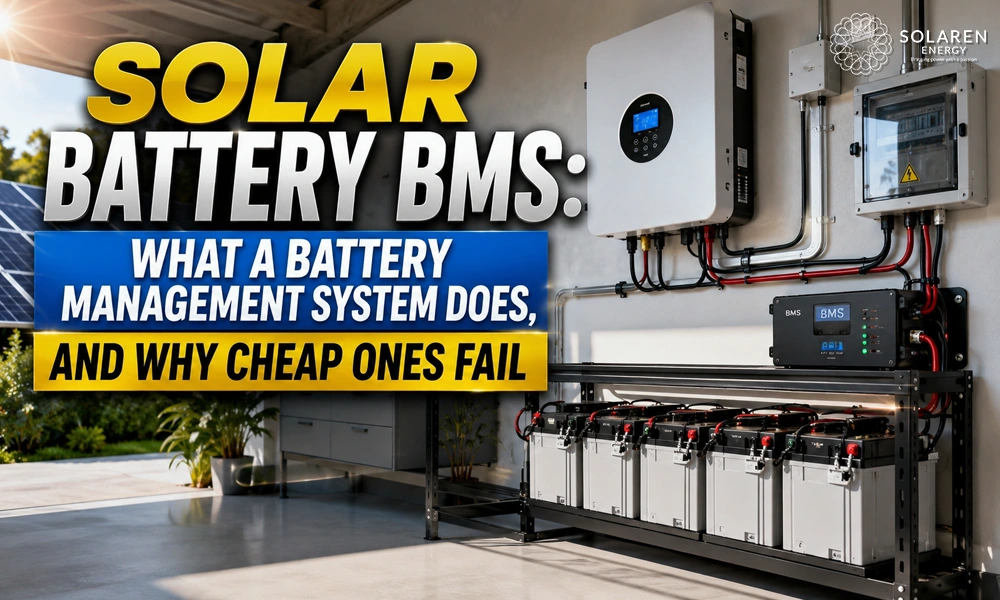
Most people buying storage spend their time on the cells. Which brand, what capacity, how many cycles. Almost nobody asks about the circuit board bolted to the side of them. That is backwards. Across our service history, roughly 60% of battery problems trace back to the solar battery BMS rather than to the cells it is supposed to be protecting. The cells are usually fine. Something upstream mismanaged them into an early grave, quietly, over about eighteen months.
A solar battery BMS, or battery management system, is the electronics that monitor every cell in a pack and act to keep each one inside its safe voltage, current and temperature limits. It handles cell balancing, state of charge estimation, temperature protection, the physical disconnect, and communication with the inverter. A cheap BMS performs all five functions badly rather than failing outright, which is why the damage shows up as gradual capacity loss instead of a clear fault.
That last sentence is the whole problem. A BMS almost never dies in a way that produces an obvious warranty claim. It underperforms, the pack degrades faster than it should, and by the time anyone measures the loss the supplier has an easy argument that the system was simply used hard.
What a BMS actually does
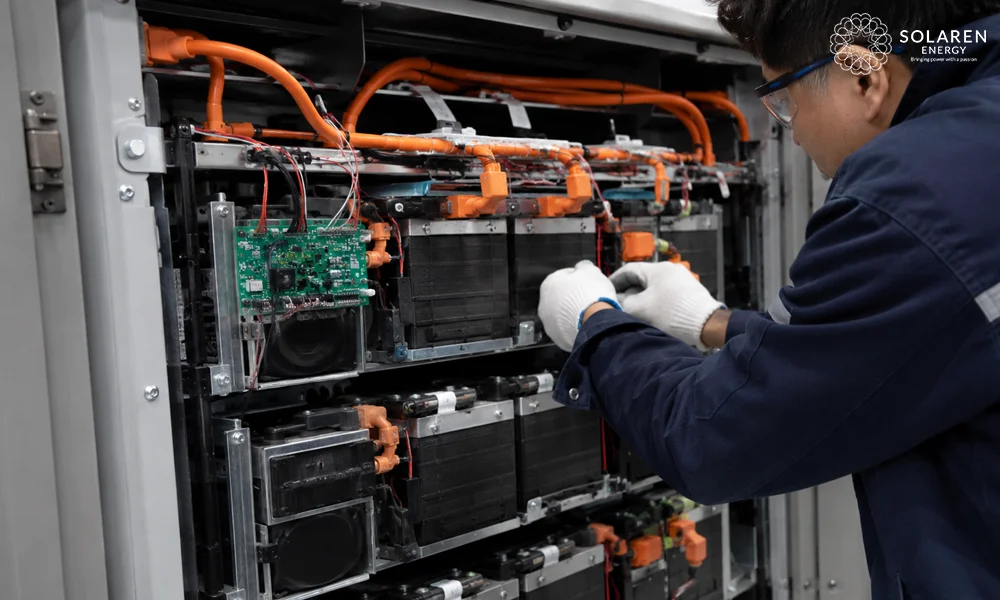
Five jobs. A good board does all five. A cheap board does a poor version of each, and the failures compound.
| Function | The job | What a cheap board does | What you see on site |
|---|---|---|---|
| Cell balancing | Keep every cell at the same state of charge so the pack works as one unit | Passive balancing at 30 to 100 mA, active only near the top of charge | Usable capacity falls year on year while each cell still tests healthy |
| State of charge | Report how much energy is actually left | Counts current in and out with no recalibration reference | The pack cuts off at a reported 40%, or the number jumps after charging |
| Temperature protection | Measure cell temperature and derate or stop before damage occurs | One or two sensors for the whole pack, placed wherever convenient | Cells in the middle of the pack run hot and age faster without anything being reported |
| Disconnect | Physically break the circuit when a fault occurs | Low-grade MOSFETs paralleled without proper current sharing | Heat develops at the disconnect, and in the worst case, the device fails closed |
| Communication | Tell the inverter what the battery pack needs | Generic protocol with no verified profile for your inverter model | Charge limits are ignored, nuisance alarms occur, or the pack stops after communication loss |
None of those produce a dead battery on a Tuesday. They produce a battery that is worth 70% of what you paid for it after three years, and an argument you cannot win.
Balancing, and why the current rating matters more than the word
Every supplier says their BMS has balancing. The word tells you nothing. The number does.
| Passive balancing | Active balancing | |
| How it works | Burns excess energy off the strongest cells through resistors | Transfers charge from stronger cells to weaker ones |
| Typical current | 30 to 100 mA | 1 to 5 A |
| When it operates | Only near the top of charge, so a fraction of each cycle | Across most of the charge and discharge range |
| Heat produced | Wasted as heat inside the enclosure | Minimal, since energy is moved rather than burned |
| Cost | Cheap, which is why it is nearly universal | Meaningfully more expensive |
| Honest use case | Maintaining a pack that was matched properly at assembly | Recovering a pack that has started to drift |
Here is what that difference means in practice.
Take a 280 Ah cell sitting 5% adrift from its neighbors. That is 14 Ah of imbalance. At 50 mA, correcting it takes 280 hours of actual balancing time. Passive balancing only runs near the top of charge, maybe thirty minutes a day, so you are looking at something in the region of 560 days. The same correction at 3 A takes under five hours.
Passive balancing is not useless. It holds a well-matched pack in line. What it cannot do is rescue a pack that arrived out of tolerance, which is why cell matching at assembly matters more than any balancing specification a supplier quotes at you.
State of charge is an estimate, not a measurement
This one surprises people. There is no sensor that reads how much energy is in a battery. The BMS works it out.
The usual method is coulomb counting. The board measures current flowing in and out and integrates it over time. Small errors in the current sensor accumulate, so the estimate drifts, and it needs periodically resetting against a known reference point.
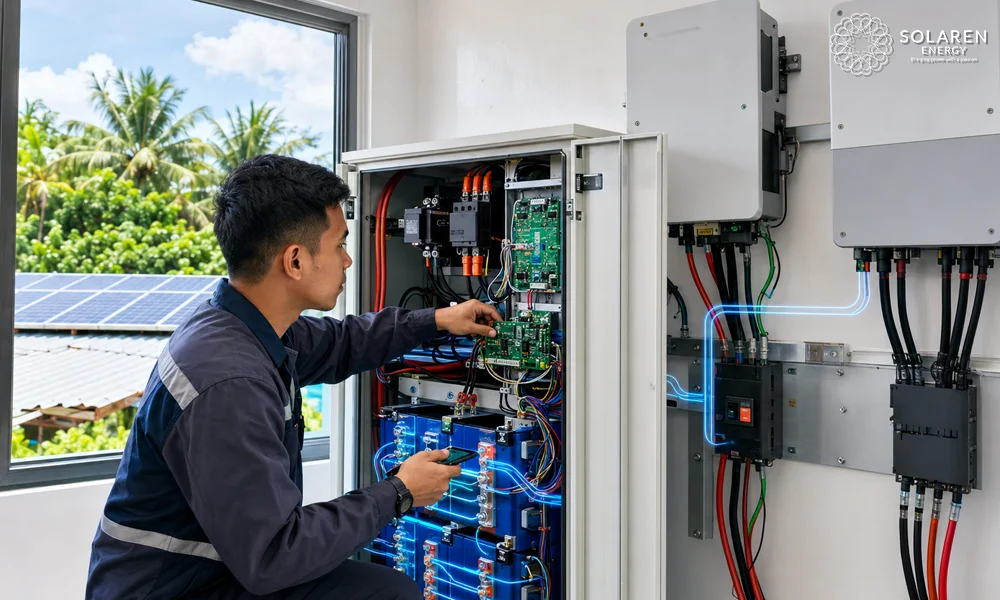
LFP makes that harder than any other common chemistry. Its voltage curve is remarkably flat between roughly 20% and 90% state of charge, often varying by only a few tens of millivolts across that entire range. You cannot infer state of charge from voltage in the middle of the curve, because the voltage barely moves. A cheap board that leans on voltage anyway will give you numbers that are confidently wrong.
A good BMS recalibrates at the ends of the curve, where voltage does change meaningfully, and tracks its own drift. A cheap one counts coulombs and hopes. That is why the pack cuts out at a reported 40%, and why the figure sometimes leaps after a full charge. Nothing broke. The estimate was wrong and just got corrected.
Temperature monitoring, and how many sensors is enough
Ask how many temperature sensors a pack has and where they sit. It is a short question that sorts suppliers quickly.
Cells in the middle of a pack run hotter than cells at the edges, because they are surrounded on both sides and have nowhere to shed heat. A single sensor at one end of the enclosure will report a comfortable number while the center of the pack sits 8C to 10C higher. The board protects against a temperature that is not the one doing the damage.
Aging roughly doubles for every 10C above 25C. So a pack whose hot cells are running unmonitored at 48C while the BMS reports 38C is aging at around twice the rate anybody thinks it is. Nothing alarms. Nothing logs. The capacity just goes.
In this climate that matters more than it does in the markets where most of these boards were designed. Plant room ambient here sits between 35C and 38C for much of the year, so the pack starts closer to its limits before it does any work at all.
The disconnect path, where cost cutting gets dangerous
When a BMS decides to protect the pack, something physical has to break the circuit. Either solid-state switching through MOSFETs, or an electromechanical contactor.
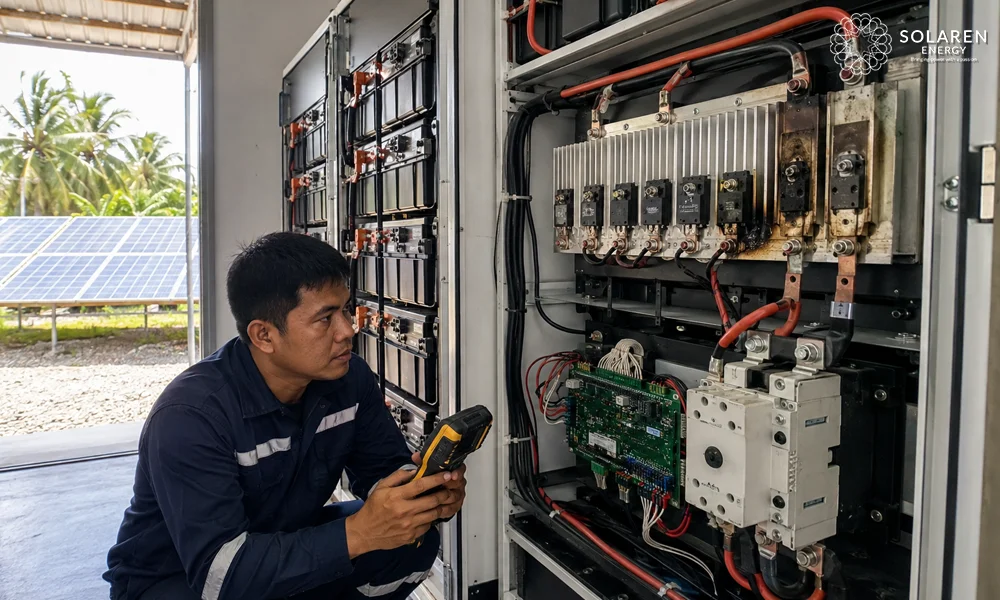
MOSFETs have on-state resistance. Push serious current through undersized devices and they heat, and heat raises resistance further. Cheap designs parallel several small MOSFETs to reach a current rating on paper without ensuring the current actually shares evenly between them. One device takes more than its portion, runs hotter, and degrades first.
The failure mode is what should concern you. A contactor generally fails open, which is safe. A MOSFET that has been cooked can fail short, which means it is stuck closed. The protection you paid for is no longer there, and there is no indication that anything has changed.
Ask for the part numbers and the continuous current rating of the disconnect devices, measured at 40C ambient rather than at 25C.
Communication, and what happens when it stops
The BMS and the inverter have to agree on what the pack can accept. Charge current limit, discharge limit, voltage window, when to stop. That conversation runs over CAN or RS485 using a protocol profile specific to the inverter.
A generic board will claim broad compatibility. The question that matters is narrower: has this exact pack been commissioned with this exact inverter model, on the firmware version you are being sold. Not a similar inverter from the same manufacturer. That one.
Then ask what happens on comms loss. A well designed pack fails safe, continuing at conservative limits and raising an alarm. A poorly designed one simply stops, and your site loses its storage to a broken cable. We have seen both, and the difference is entirely down to firmware nobody asked about at the quotation stage.
It is worth checking this against your inverter choice early, since the inverter and the pack have to be selected as a pair rather than separately.
Inexplicable voltage drops are usually explicable
A common complaint, and one we hear from sites that were not built by us. The system drops out. The inverter throws a warning. Nobody can say why, and the supplier suggests it must be an installation problem.
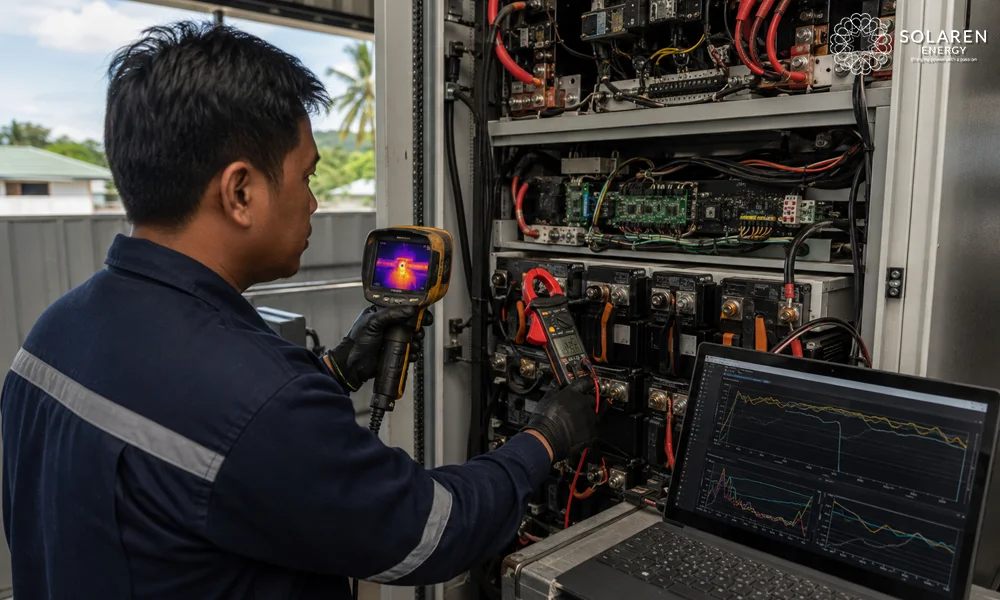
In our experience it is almost never a mystery. There are four usual causes and each one leaves evidence.
| What you observe | Likely cause | How to confirm it |
| Pack cuts out at a reported 40% state of charge | One weak cell reaching low voltage cutoff and taking the whole pack with it | Pull individual cell voltages from the log at the moment of the cutoff |
| Voltage sags hard under load, recovers the instant load drops | Connection resistance at a lug, busbar or loosened terminal | Thermal image the joints under full load, then check terminal torque against spec |
| State of charge jumps or resets after a full charge | Coulomb counting drift being corrected at the top of the curve | Compare reported figures against one measured full charge and discharge |
| Output quietly derates with no alarm raised | Thermal derating happening but never reported to the inverter | Log pack temperature through the event and compare against the derating curve |
Every one of those is diagnosable in an afternoon, provided the BMS keeps logs and lets you read them. Which brings us to the part that decides whether you have a warranty at all.
Fault logs are your only real warranty defense
Warranty inquiries on generic packs end in one of two places. Silence, or the assertion that the installation caused it.
That second one is hard to argue with. The supplier says the pack was over-discharged, or run hot, or wired badly. You are disputing conditions inside a sealed enclosure months after the fact, and you have nothing but your own recollection.
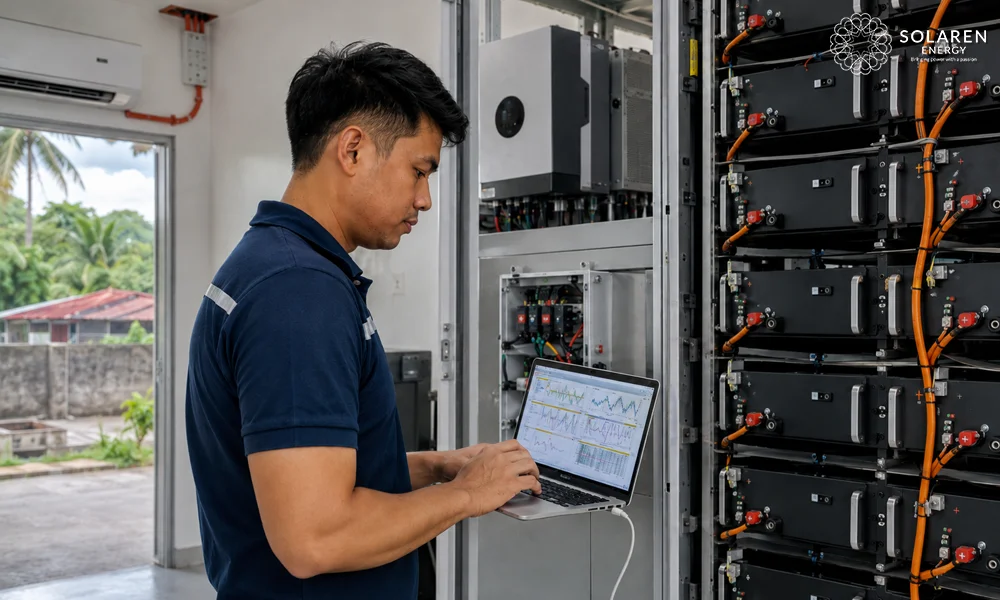
Unless the board logged it. A BMS that records cell voltages, temperatures and protection events, and lets you export that record, converts the argument from opinion into evidence. It is the single most useful feature on the spec sheet and the one nobody asks about, because it does not sound like a feature. It sounds like housekeeping.
Ask before you buy. Ask whether logs exist, how long they are retained, and whether you can pull them yourself without the supplier as intermediary. That last part matters, because the party you will eventually be arguing with should not be the only party who can read the evidence. The same principle runs through solar battery cycle life and warranty, where the warranty document itself gets the same treatment.
The generic board problem
Here is something we found while repairing other people’s systems.
We have replaced failed BMS boards on packs sold as engineered products, and found the identical board openly on sale online. Same layout, same firmware, no manufacturer identity, available to anybody with a card.
That is not automatically a scandal. Plenty of good products use bought-in components. What it does tell you is that the company selling the pack did not design the thing that protects it, cannot modify its firmware, cannot fix a bug in it, and has no more insight into its behavior than you could get from a marketplace listing. When the board misbehaves, they have nowhere to go either.
So ask directly. Who designed this BMS. Is it in house or bought in. What is the model number. Then spend two minutes looking that number up. The answer is often more informative than the entire quotation.
Questions to ask about the BMS
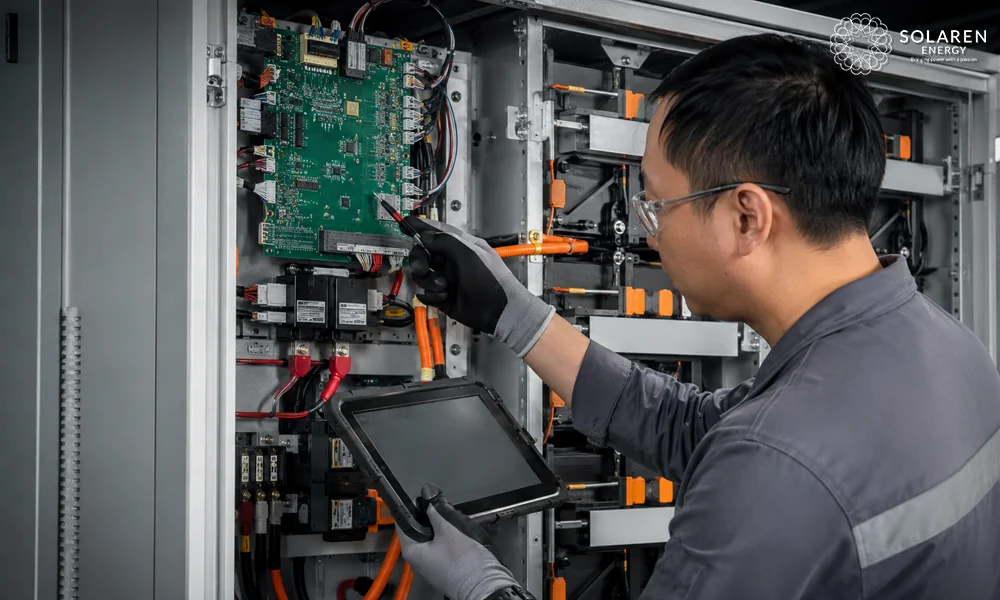
In writing, before payment.
- Who designed the BMS. In house, or an off the shelf board.
- What is the model number of the board, and is it sold openly to anyone.
- Is balancing passive or active, and what is the balancing current in mA or A.
- How many temperature sensors are in the pack, and where are they physically located.
- Does protection act at individual cell level, or only on pack totals.
- How is state of charge calculated, and how does it recalibrate.
- Are the disconnect devices MOSFETs or contactors, and what are the part numbers and continuous ratings at 40C.
- Is the firmware updatable, by whom, and is there a changelog.
- Does the BMS keep fault logs, how long are they retained, and can we export them ourselves.
- What communication protocol is used, and which inverter profiles are verified.
- Has this pack been commissioned with our exact inverter model and firmware version. Provide a reference site.
- What happens on communication loss. Does the pack fail safe or fail off.
- Will replacement boards be available as spares in eight years, and from whom.
Question 9 is the one to insist on. Question 11 is the one most suppliers cannot answer.
Where this sits in our failure record
Roughly 60% of the battery problems we have dealt with originate in the BMS. The remaining 40% come from the cells or the physical pack build.
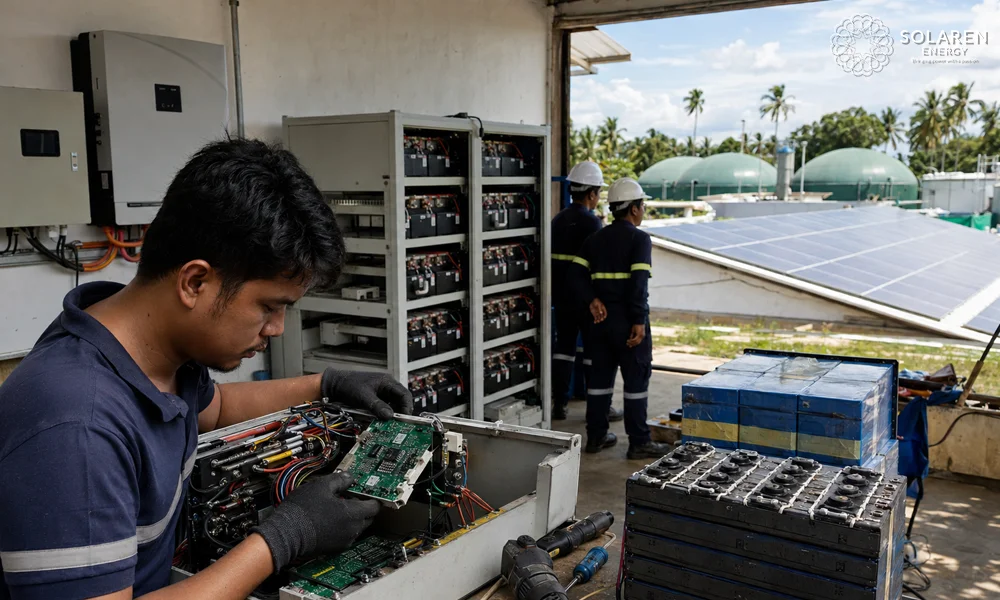
The pattern behind that number is consistent. Almost everything came from generic or unbranded packs, or from second and third tier assemblers. Not from cells that had honestly worn out.
The systems we specify are ordered against the list above before anything is bought, and they are documented across our project record, including battery installations at the Inainakay Foundation and Kings Orchard, and dual source generation at Rivera Agro Industrial where solar runs alongside an existing biogas plant. The reason we can publish a failure split at all is that the installed base is large enough to show one.
The wider argument is the one set out in why cheap solar costs more over time. A battery is the sharpest version of it, because a battery fails quietly and the bill arrives years later.
Frequently asked questions

What does a solar battery BMS do?
It monitors every cell in the pack and keeps each one inside safe voltage, current and temperature limits. In practice that means five functions: cell balancing, state of charge estimation, temperature protection, physically disconnecting the pack on a fault, and communicating charge and discharge limits to the inverter.
Why do cheap BMS boards fail?
They rarely fail outright. They perform each function poorly, so the pack degrades faster than it should without any single obvious fault. Weak balancing, drifting state of charge, too few temperature sensors, undersized disconnect devices and unverified inverter communication all reduce capacity gradually rather than triggering a clear warranty claim.
Is active balancing worth paying for?
It depends on the pack. Active balancing moves 1 to 5 A against 30 to 100 mA for passive, so it can correct real drift. Correcting a 14 Ah imbalance takes roughly 560 days of passive balancing against under five hours of active. If the cells were properly matched at assembly, passive is adequate. If they were not, no amount of balancing fully rescues the pack.
Why is my battery cutting out at 40% state of charge?
Usually one weak cell is reaching its low voltage cutoff and taking the pack offline while the reported average still looks healthy. Occasionally it is coulomb counting drift, meaning the pack is genuinely emptier than the display claims. Cell level voltage logs from the moment of cutoff will tell you which.
How many temperature sensors should a battery pack have?
More than one, and positioned where heat actually builds rather than where they were convenient to fit. Cells in the middle of a pack can run 8C to 10C hotter than cells at the edges, so a single sensor at one end will report a comfortable figure while the center ages at double the rate.
Why is state of charge inaccurate on LFP batteries?
LFP has a very flat voltage curve between roughly 20% and 90% state of charge, sometimes varying by only tens of millivolts. Voltage cannot be used to infer charge level across that range, so the BMS must count current and recalibrate at the ends of the curve. Boards that do not recalibrate drift, and the error surfaces as a sudden jump or an early cutoff.
How do I know if a BMS is generic?
Ask for the model number and look it up. If the identical board is openly for sale online, the company selling your pack did not design it, cannot modify its firmware, and cannot fix a fault in it. That is not automatically disqualifying, but it should change what you expect from support.
The Short Version
The solar battery BMS is the cheapest major component in the pack and the one that decides how long the most expensive component lasts. It is also the one nobody asks about.
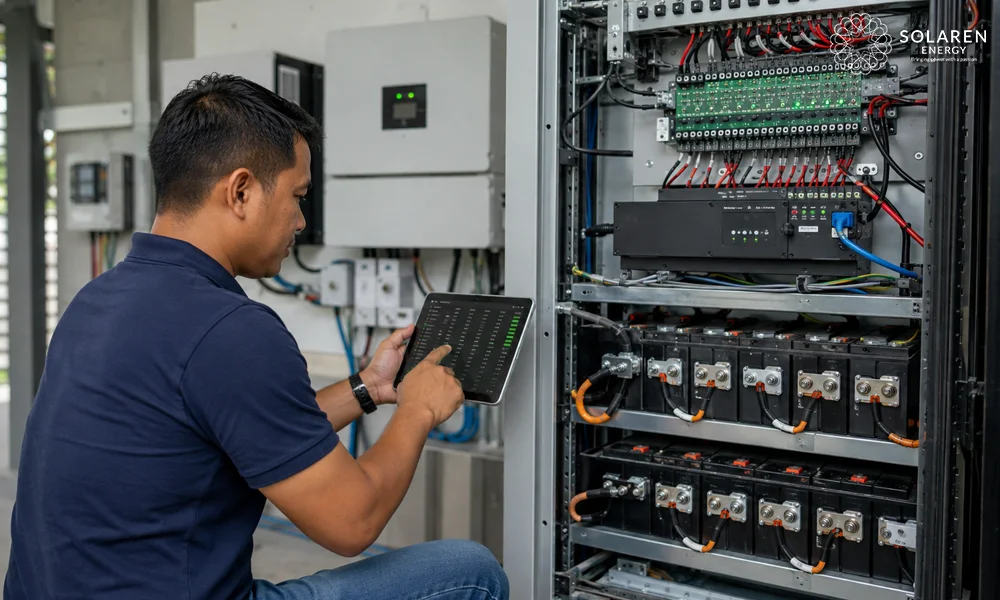
Get the balancing current in amps. Count the temperature sensors and find out where they sit. Ask who wrote the firmware and whether the board is sold openly online. Confirm the pack has been commissioned with your exact inverter, not a relative of it. Above all, confirm the board logs faults and that you can read those logs yourself.
A good board will not make bad cells last. A bad board will absolutely shorten the life of good ones, and it will do it slowly enough that nobody can point at the moment it happened. If you are still at the start of this, work through how to choose a solar battery first and come back to the board once you know what you are pricing.