How much does solar panel installation in the Philippines cost? That is the first question almost everyone asks, and it is the right one, because the price decides whether the numbers work for you. The short answer: a solar panel installation in the Philippines runs roughly ₱45,000 to ₱70,000 per kilowatt, so a typical home system lands around ₱300,000 to ₱350,000 and a large commercial system runs into the millions. But the price on its own means little without the payback behind it, and with electricity rates now among the highest in the region, that payback has shortened to three to four years for most homes and as little as two to four for businesses. This guide gives you the real costs, the price per system size, how quickly you recover them, and how to get the installation done right.
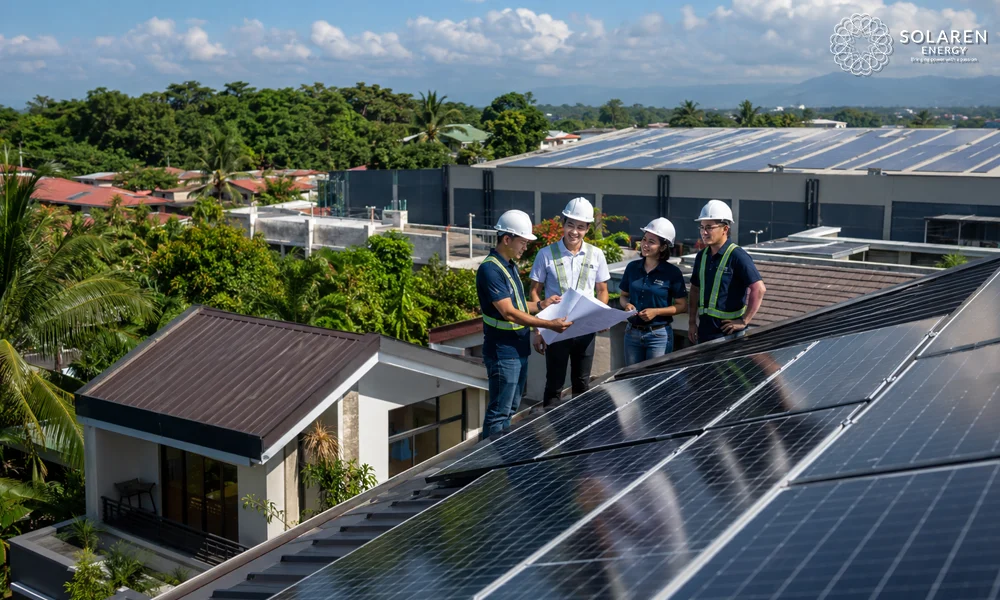
How much does solar panel installation cost in the Philippines? For a grid-tied system (no battery), expect ₱45,000 to ₱70,000 per kilowatt. A 5 kW home system costs about ₱300,000 to ₱350,000 and, with today’s high electricity rates, pays back in three to four years. A 100 kW-plus commercial system costs about ₱4.5 million to ₱6.5 million and pays back in two to four years. Prices per kilowatt fall as system size rises. Adding battery storage (hybrid) costs more and pays back more slowly.
Solar panel installation cost by system size (grid-tied)
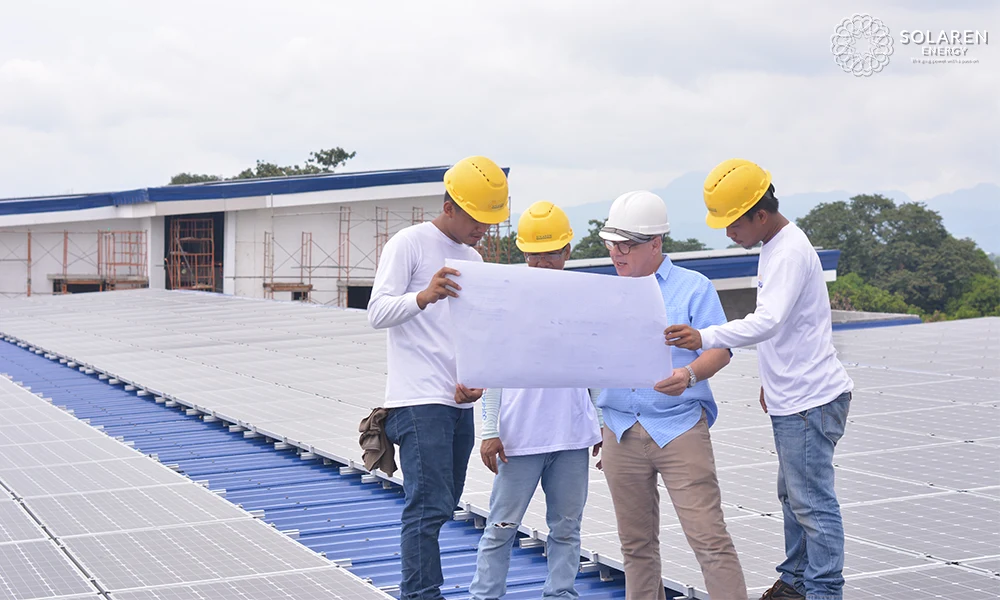
Prices vary with equipment quality, roof conditions, and system size, but the ranges below reflect what a properly specified installation actually costs in the Philippines today. The per-kilowatt price drops as the system gets larger, which is why commercial projects are cheaper per unit than home systems.
| System size | Typical cost | Payback |
| Small home (3 kW) | ₱135,000 – ₱210,000 | 3 – 4 years |
| Typical home (5 kW) | ₱300,000 – ₱350,000 | 3 – 4 years |
| Large home (10 kW) | ₱450,000 – ₱700,000 | 3 – 4 years |
| Commercial (100 kW+) | ₱4.5M – ₱6.5M | 2 – 4 years |
Note: these are grid-tied prices and paybacks, meaning a system with no battery. The per-kilowatt rate of ₱45,000 to ₱70,000 is the anchor. Multiply it by your system size for a quick estimate. The exact figure depends on the panels and inverters chosen and the condition of your roof. Payback depends heavily on your utility rate and on the final installed price, so treat these ranges as a guide, not a quote. Faster paybacks reflect the recent rise in Philippine electricity prices. Adding battery storage (a hybrid system) raises the cost and lengthens the payback, so those figures are different and are covered separately.
What the price actually includes
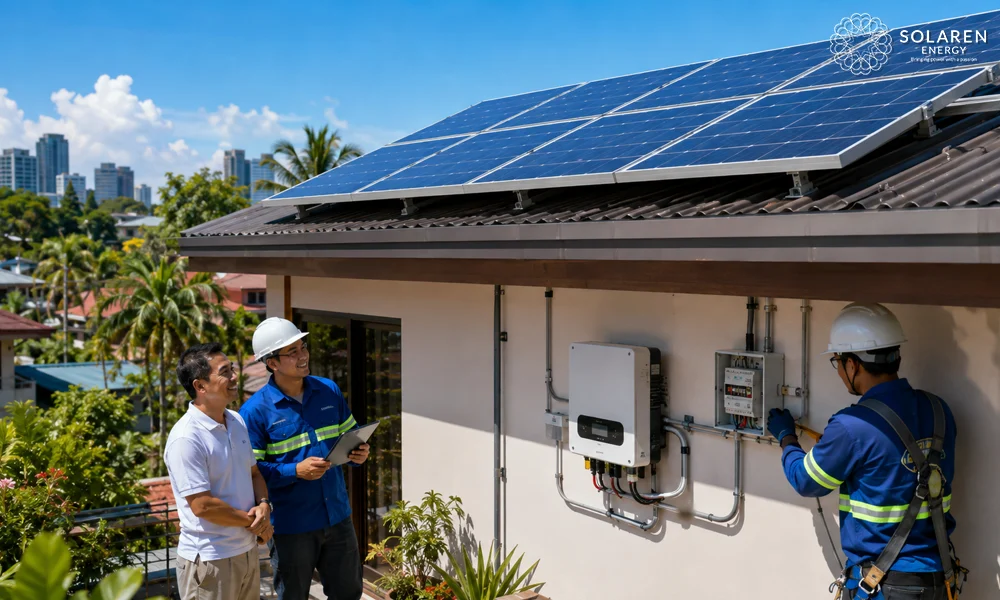
A turnkey solar panel installation price should cover the panels, the inverter, the mounting structure, the wiring and protection, and the installation labor itself. It should also include the permitting and the net metering application, handled by your installer rather than left to you. If a quote looks unusually cheap, check what has been left out. The common omissions are the mounting quality, the protection devices, and the permit processing, and each one costs more to fix later than to do right the first time.
How much you save, and how fast it pays back
Cost only matters against savings. A Metro Manila household paying ₱15,000 a month can often cut that to around ₱7,000 with a well-sized system, and the ₱8,000 difference goes straight into recovering the investment. Because Philippine electricity prices have climbed sharply, that saving is now larger than it was a year ago, which is why paybacks have shortened. At today’s rates a ₱350,000 home system can pay for itself in about three to four years, and over a twenty-five-year life the total savings can pass ₱2 million.
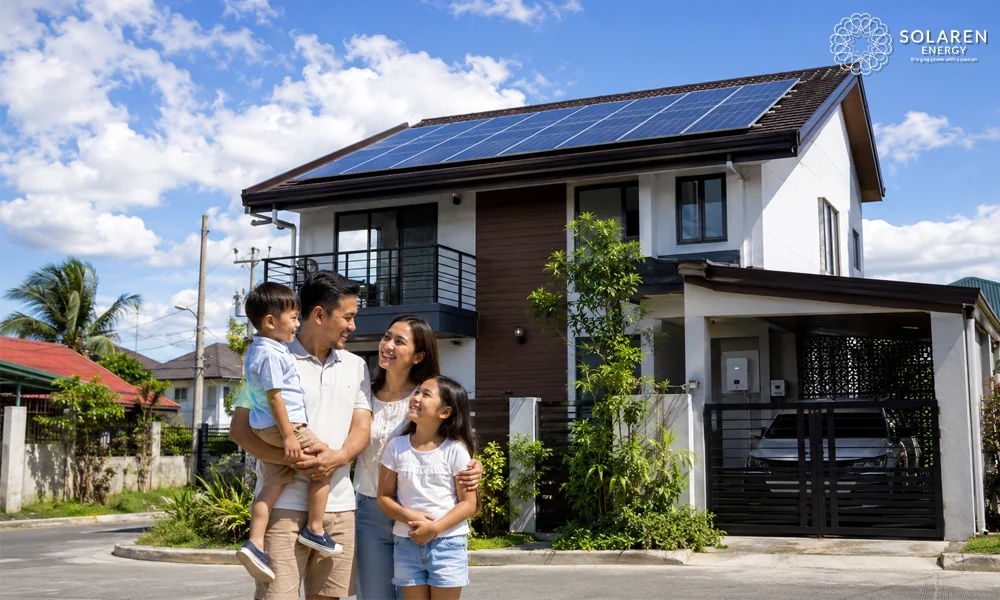
Businesses recover faster still, often in two to four years, because they use most of what they generate during daylight instead of exporting it. The higher your bill and the more of your usage falls in daytime hours, the quicker the payback. After that point, the electricity your system produces costs you nothing for the remaining decades of its life. The one caveat worth stating plainly: payback depends on your utility rate and your final installed price, so your own figure will land somewhere inside these ranges rather than on a fixed number.
The payback equation
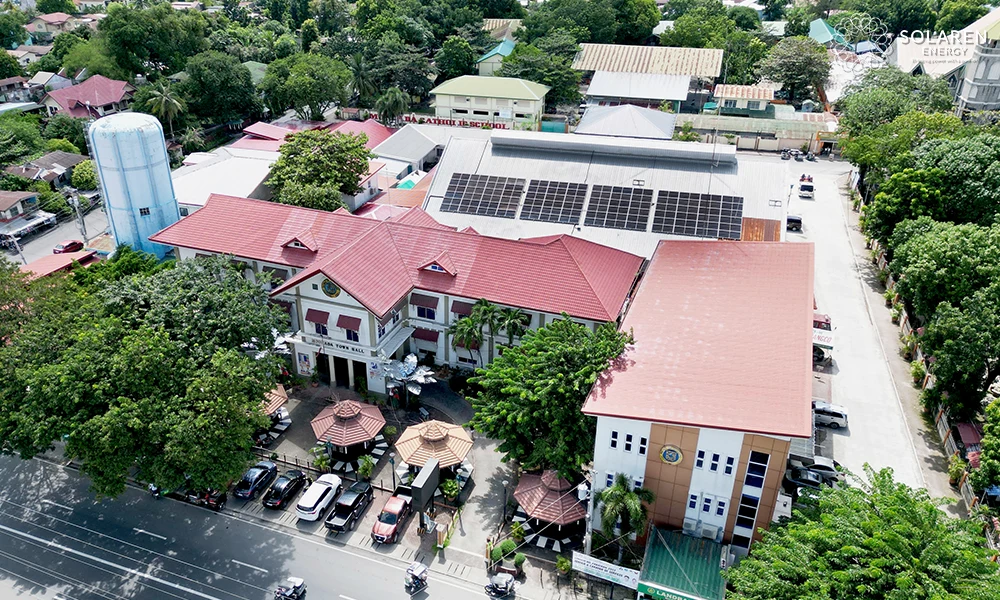
Solar’s return on investment depends mainly on three things: your power consumption, your electricity rate, and how much sunlight your roof receives. For example, a household in Metro Manila paying ₱15,000 per month for electricity can often reduce that to ₱7,000 after installing a well-sized solar power system. The difference goes straight into savings.
At current energy rates, that same household would recover a ₱350,000 investment in about five years. Over a twenty-five-year lifespan, total savings can exceed ₱2 million. Businesses with heavier daytime loads recover costs even faster because they consume nearly all the power they generate in real time rather than exporting it back to the grid.
The math works because solar produces predictable, measurable returns every month, while grid prices keep rising. Unlike volatile markets or depreciating equipment, solar panels quietly generate value with every sunrise.
Step One: Evaluate Your Energy Use
Before you begin, gather at least six months of electricity bills to understand your average consumption. This helps determine the ideal system size. A reliable installer will use your billing data to create a realistic production and savings model.
For homes, consumption between 500 and 800 kilowatt-hours per month typically calls for a three- to six-kilowatt system. For commercial clients, sizing depends on both monthly usage and the building’s available roof space.
Step Two: Choose A Qualified Installer
Accreditation is essential. In the Philippines, solar installers must be registered with the Department of Energy (DOE) and the Philippine Contractors Accreditation Board (PCAB). These credentials confirm that the company meets national safety and quality standards. They also simplify coordination with utilities for net-metering applications.
Solaren Renewable Energy Solutions Corporation, for instance, holds both accreditations and manages all permitting on behalf of clients. This ensures every project is fully compliant and ready for interconnection without costly delays.
Step Three: Confirm Your Site’s Suitability
An initial survey will check your roof’s condition, orientation, and structural integrity. South-facing roofs with minimal shading perform best, but experienced engineers can design efficient layouts even in complex situations.
If your roof is old or in poor shape, it’s best to repair or replace it before installation. Panels can last over twenty-five years, and you want your mounting structure to last just as long.
Step Four: Compare Component Quality
Panels may look similar, but performance varies widely. Choose Tier-1 modules that are tested to international standards such as IEC 61215 and IEC 61730. Glass-glass, Back Contact, or bifacial models perform exceptionally well in the Philippines, resisting heat and humidity better than conventional panels.
Equally important are the inverters that manage energy flow. German and British inverter brands are favored for their efficiency and longevity. When combined with quality panels, they maintain consistent performance and minimize downtime.
Step Five: Understand Net Metering And Financing
The Department of Energy’s net metering program allows you to export excess electricity back to the grid and earn credits for future use. It’s especially beneficial for households or businesses closed on weekends or holidays, when generation exceeds consumption.
If upfront cost is a concern, several financing options are available. Green loans from major banks and lease-to-own programs spread payments across three to seven years. Many clients discover their monthly solar payment is lower than their old electricity bill, turning solar into a cash-flow-positive investment from day one.
Step Six: Focus On Installation And After-sales Service
A professional solar panel installation should take one to three days for homes and up to two weeks for large commercial sites. Reputable installers will handle permits, utility coordination, and post-installation testing.
After commissioning, make sure you have access to a monitoring platform to track daily generation and savings. Routine maintenance, mainly cleaning and inspection, is minimal but necessary to keep your system at peak performance.
Solaren’s systems come with real-time monitoring and scheduled preventive maintenance programs, ensuring consistent efficiency and maximum ROI over the system’s lifespan.
The Bigger Picture
Solar adoption in the Philippines continues to accelerate because it offers something rare: a guaranteed way to reduce costs while helping the environment. Every kilowatt-hour generated by your own panels reduces dependence on fossil fuels and lowers carbon emissions.
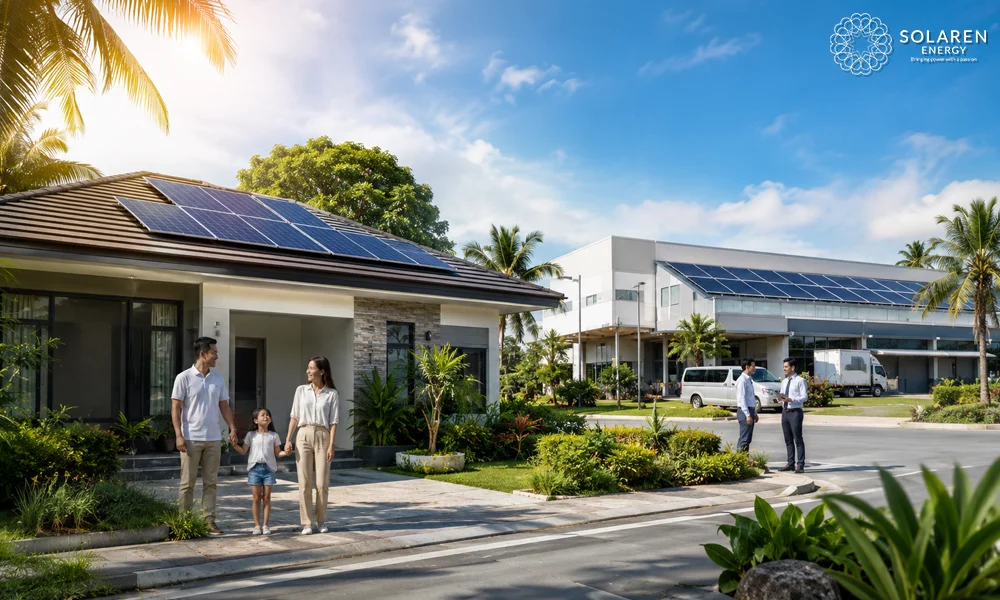
For businesses, that environmental commitment strengthens brand reputation and meets growing corporate sustainability goals. For homeowners, it means long-term savings and a smaller footprint.
Final Takeaway
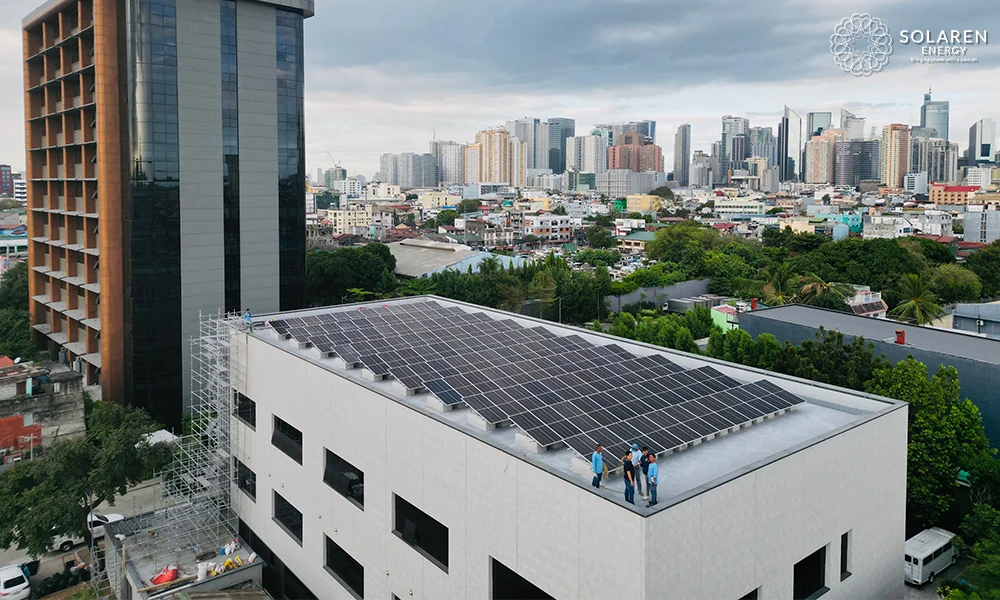
Switching to solar is one of the most straightforward financial decisions you can make. The numbers are predictable, the technology is mature, and the country’s sunlight is abundant. Whether you’re powering a family home or managing a commercial property, a well-planned installation provides independence, savings, and peace of mind.
When you’re ready to explore the possibilities, Solaren Renewable Energy Solutions Corporation offers design, installation, and maintenance services backed by DOE and PCAB accreditation. Their systems use premium components, in-house engineers, and proven methods that deliver lasting performance.
The sooner you start, the sooner your savings begin. Solar isn’t just a smart choice for the planet; it’s a powerful financial tool for the future.
Frequently Asked Questions
How much does solar panel installation cost in the Philippines?
For residential systems, expect to pay between PHP 45,000 and PHP 70,000 per kilowatt depending on equipment quality and site conditions. A typical five-kilowatt home system runs PHP 300,000 to PHP 350,000. Commercial systems of 100 kilowatts or more generally cost PHP 4.5 million to PHP 6.5 million, with per-kilowatt prices dropping as capacity increases. These figures cover panels, inverters, mounting, wiring, and installation. Permits and net metering application processing should be handled by your installer at no additional administrative burden to you.
How long does it take to recover the cost of a solar installation in the Philippines?
Residential systems typically pay back in five to six years at current electricity rates. Commercial and industrial systems with significant daytime loads regularly achieve payback in three to four years because they consume most of what they generate in real time rather than exporting it. After payback, the electricity your system generates costs you nothing for the remaining life of the installation, which on quality equipment, runs well beyond twenty years. The higher your current electricity bill and the more of your consumption falls during daylight hours, the faster the payback.
Do I need permits to install solar panels in the Philippines?
Yes. A compliant solar installation requires an Electrical Permit, a Certificate of Final Electrical Inspection, and a net metering application to your distribution utility if you want to export surplus generation for credit. Your installer should handle all of this on your behalf. In the Philippines, solar contractors are required to hold DOE accreditation and PCAB licensing to legally execute commercial installations and to process grid connection paperwork. Ask for both certificate numbers before signing any contract. An installer who cannot provide them or is vague about the permitting process is a risk worth taking seriously before work begins.
How much does solar panel installation cost in the Philippines in 2026?
For a grid-tied system (no battery), a solar panel installation in the Philippines costs roughly ₱45,000 to ₱70,000 per kilowatt. A typical 5 kW home system runs ₱300,000 to ₱350,000, a 3 kW system around ₱135,000 to ₱210,000, and a 10 kW system ₱450,000 to ₱700,000. Commercial systems of 100 kW or more generally cost ₱4.5 million to ₱6.5 million, with the per-kilowatt price falling as capacity rises. With today’s high electricity rates, home systems now pay back in about three to four years and commercial systems in two to four, depending on your utility rate and final installed price. A hybrid system that adds battery storage costs more and pays back more slowly. These figures cover panels, inverters, mounting, wiring, and installation, with permits and net metering handled by your installer.
What is the price of solar panels per kilowatt in the Philippines?
The installed price is about ₱45,000 to ₱70,000 per kilowatt for a complete, turnkey system, not just the bare panels. The range reflects equipment quality and site conditions. To estimate your own cost, multiply that per-kilowatt figure by the system size your consumption calls for, usually a 3 to 6 kW system for a home using 500 to 800 kilowatt-hours a month.