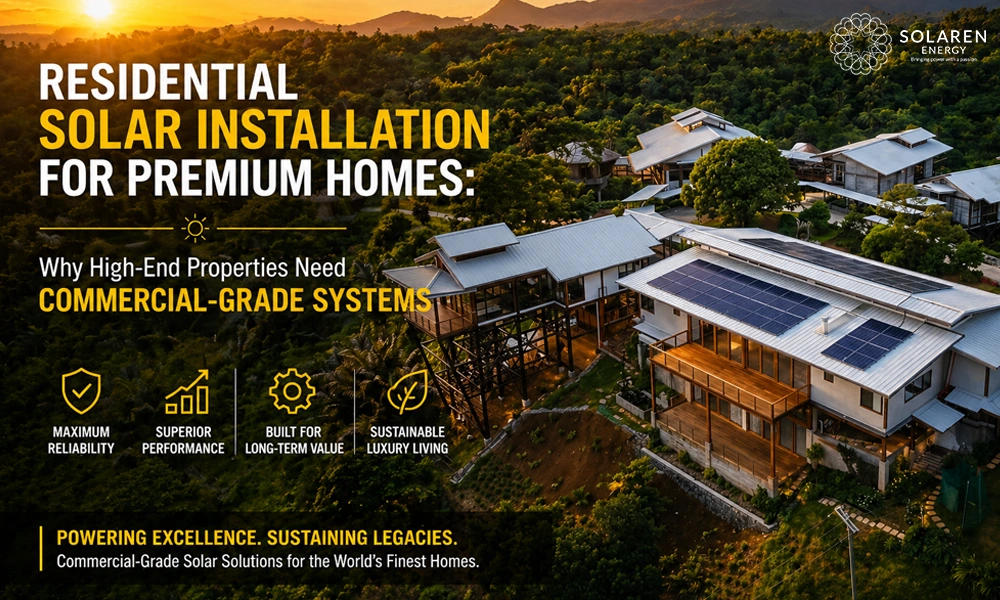
There is an assumption that runs through most residential solar marketing in the Philippines. The bigger and more expensive the home, the more stable and reliable the power supply must be. Exclusive subdivision. Upmarket address. Surely the grid there is fine.
It is often not. Some of the worst power quality problems we encounter are in exactly those locations. A premium home on a hillside in Batangas fed by a single distribution line. A luxury residence inside a gated community in Cavite at the end of a long feeder that was never designed for the load it now carries. A property in Ilocos where the grid has always been unreliable and the address makes no difference to that fact.
Premium homeowners who assume their electricity supply matches the value of their property are often in for a surprise. The ones who have thought it through properly approach solar differently from the start.
The Grid Problem Does Not Respect Property Values
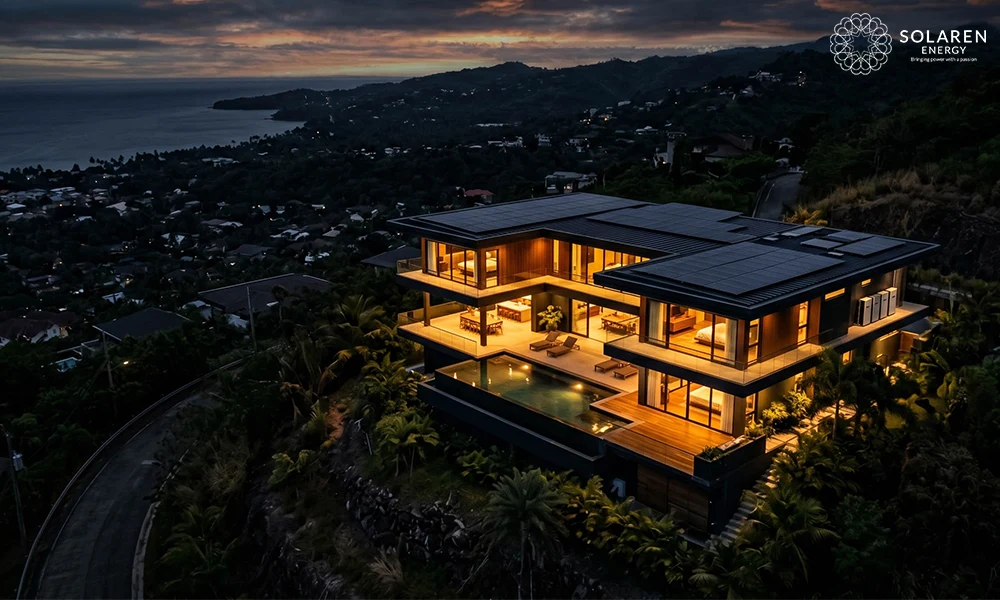
A factory in an industrial estate usually has a dedicated utility connection, sometimes a direct substation feed, and a maintenance team monitoring supply quality. A residential property, regardless of how much it cost, typically sits on the same distribution network as every other house on that street. When that network has problems – voltage instability, frequent interruptions, poor power quality, then the premium home has the same problem as the house next door.
In some cases, it is worse. New residential developments on the outskirts of cities, hillside properties, and homes in provincial locations often sit at the end of long distribution lines where voltage sags are chronic and outages are more frequent than in established urban areas. The view may be spectacular. The grid supply may not match it. Punta Fuego, or Anvaya Cove are prime examples of this.
This is why the most thoughtful premium homeowners we work with approach solar not only as a cost reduction exercise but as a genuine infrastructure decision. They are not just trying to reduce their electricity bill. They are trying to own their power supply in a way the grid does not allow them to.
What Premium Homeowners Ask for That Standard Buyers Do Not
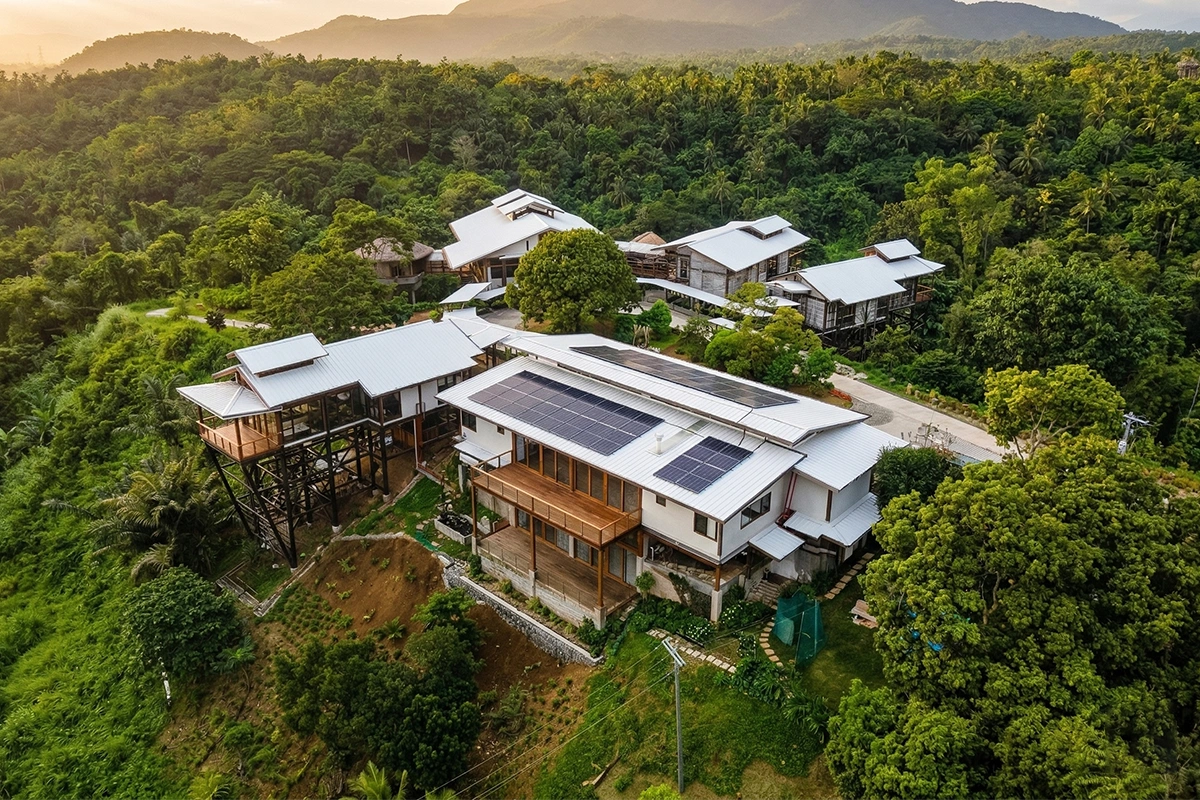
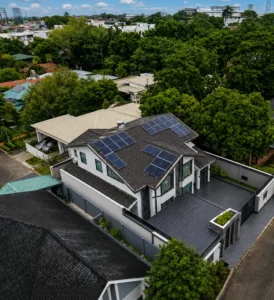
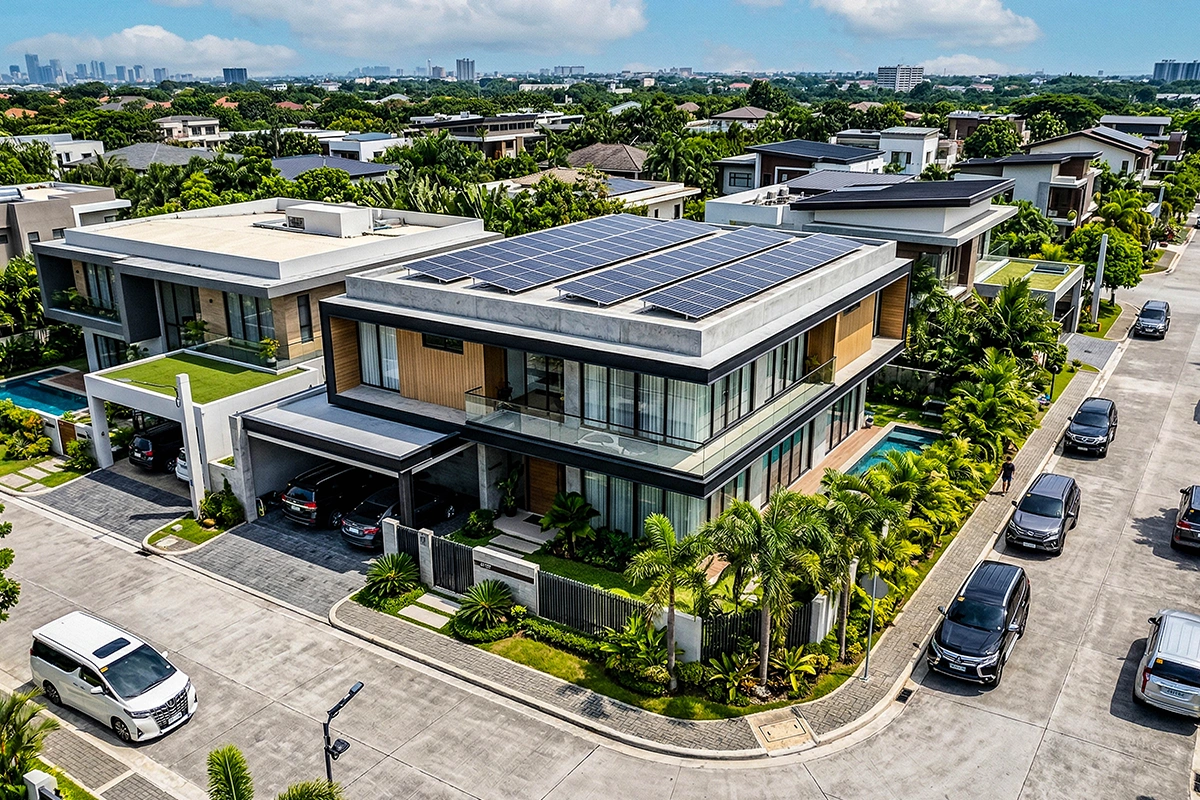
Aesthetics matter in a way they simply do not for most commercial installations. A factory owner wants the system to perform. A premium homeowner wants it to perform and to be invisible, or sometimes as close to invisible as the roofline allows. Panel layout, cable routing, and mounting profiles are all reviewed against how the property looks, not just how the system generates. The Yeung residence in Silang, Cavite, required more than a year of coordination with the property’s architects before installation began. The system sits within the subdivision’s height restrictions without compromising the roofline. That level of care is not standard. It should be, for a property at that level.
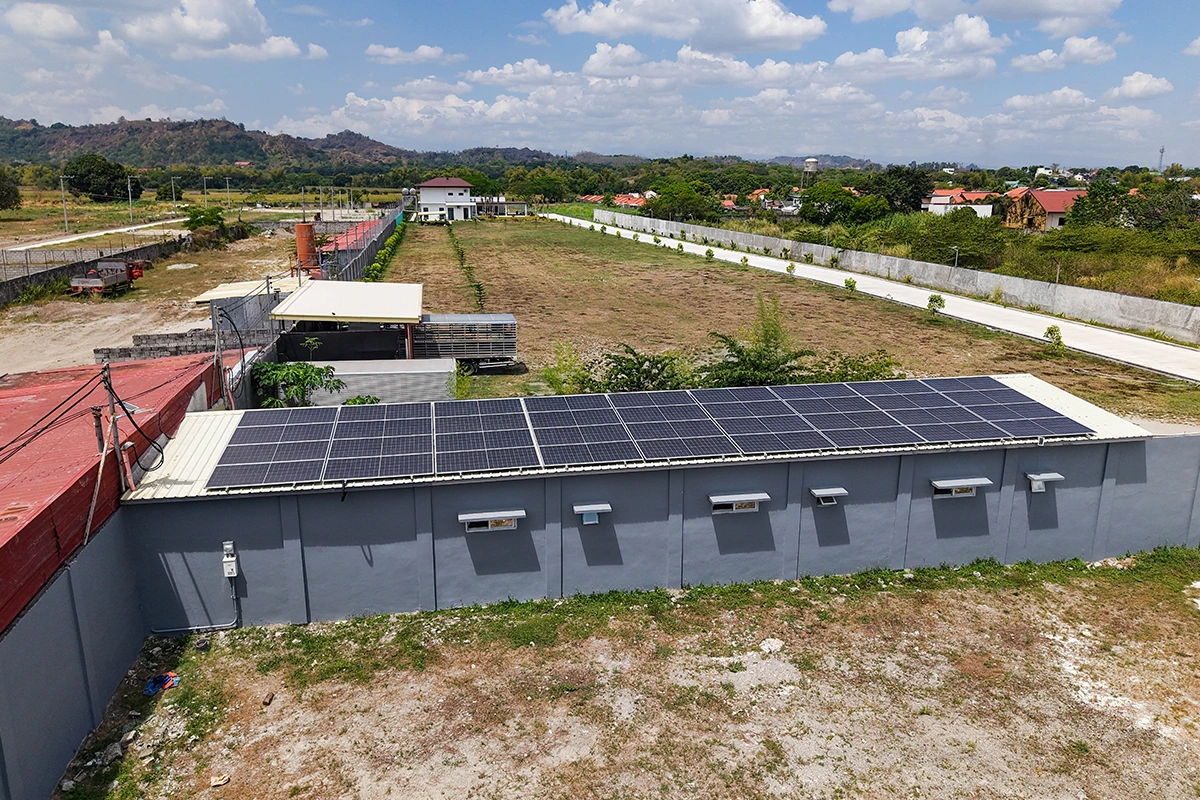
Architectural integration goes further than most buyers initially expect. At the Limsui residence in Bamban, Tarlac, the main house architecture made a standard rooftop installation the wrong answer. The array was installed on staff housing near the property entrance, sharing the same feeder line, keeping the facade of the main residence completely untouched. That is an engineering solution to an aesthetic requirement. Not every contractor thinks to offer it.
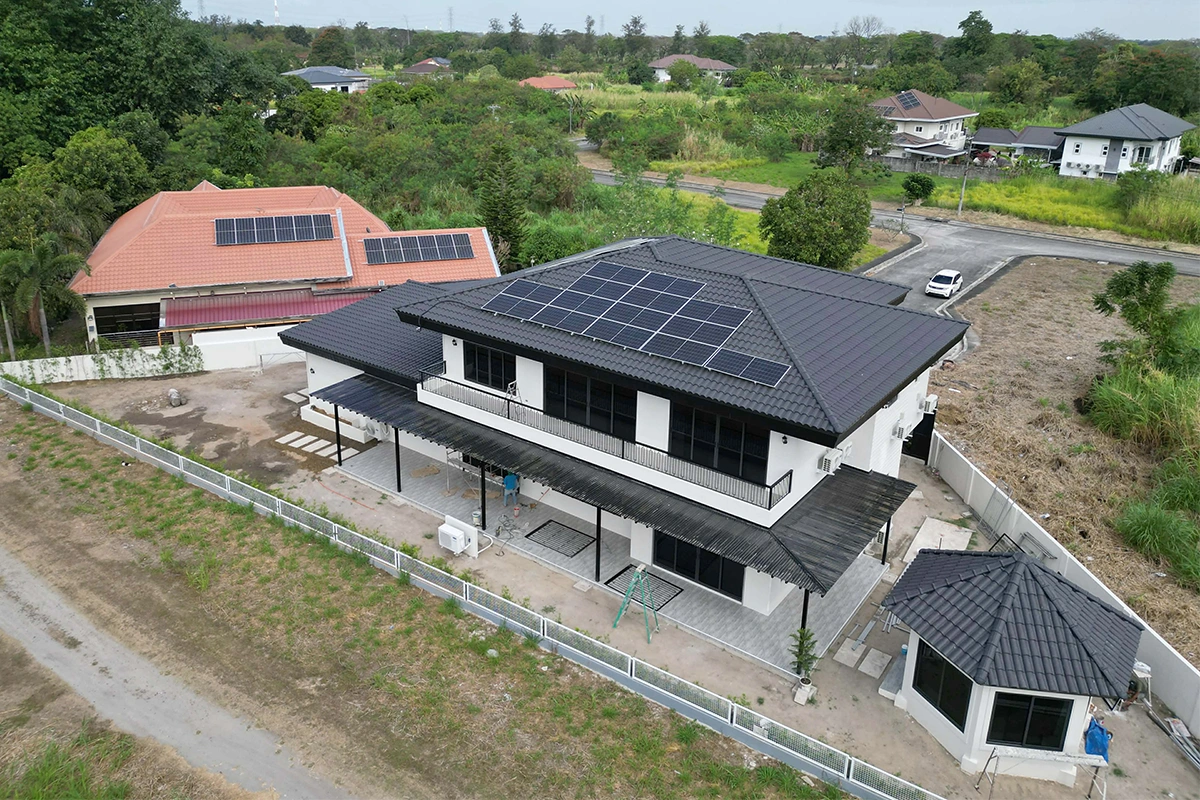
Net metering is consistently a priority for premium residential clients and it very much deserves to be. A well-specified home system generating more than the household consumes during the day should be exporting that surplus to the grid and earning credits against nighttime consumption. Getting net metering approved requires processing after installation. Premium clients want that handled completely by the EPC, without having to chase it themselves. At the Espiritu Residence in Hacienda Luisita, net metering was moved forward immediately after completion. The system was earning credits almost from the outset.
Battery backup is the other consistent request. And given the grid reality described above, it is the right request. A hybrid system with properly sized battery storage keeps priority loads running through outages without interruption. The inverter must switch in milliseconds. The lights stay on. The air conditioner keeps running. For a household with medical equipment, a home office, or simply an expectation that a property of this standard should not be subject to brownout disruption, battery backup is not a luxury addition. It is the whole purpose.
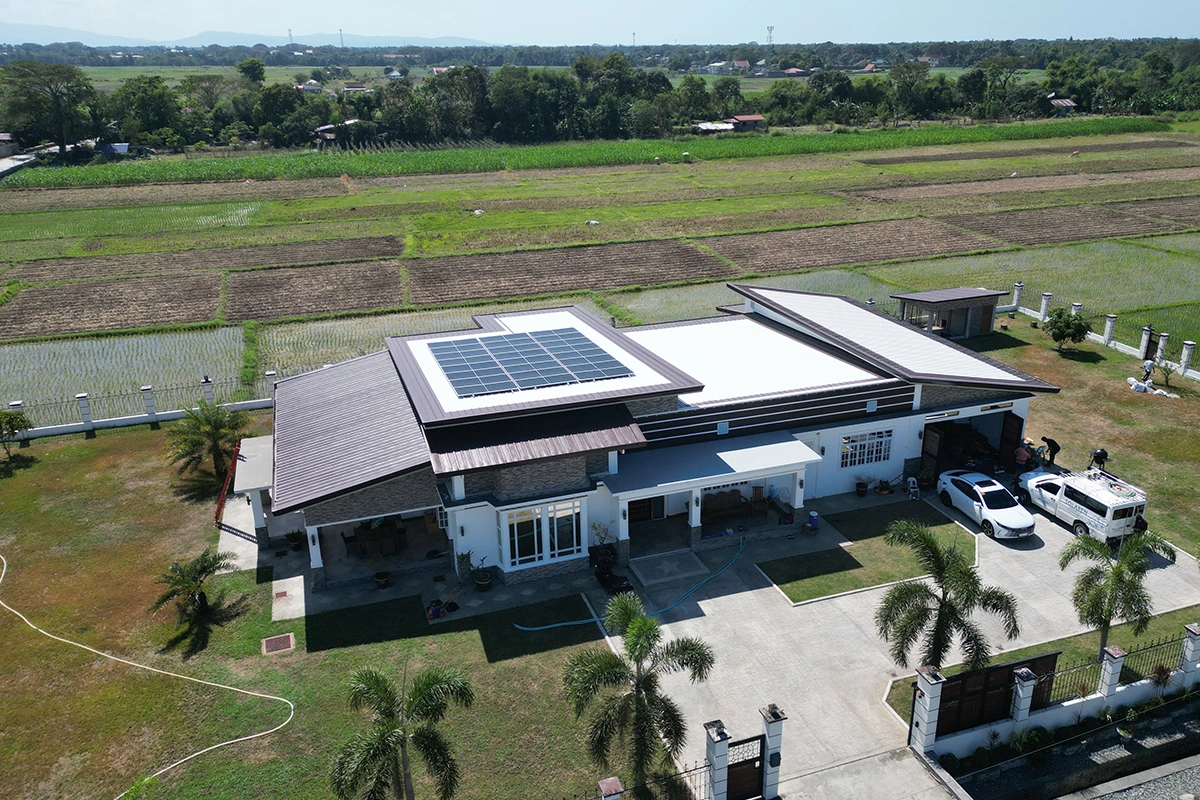
The Mazure residence in Tagudin, Ilocos Sur was designed for up to three consecutive days of full household operation without grid input. Sunsynk hybrid inverters, LONGi back-contact modules, and a battery system sized against a detailed load profile. That is the level of engineering that genuine energy independence requires in a remote location with an unreliable grid.
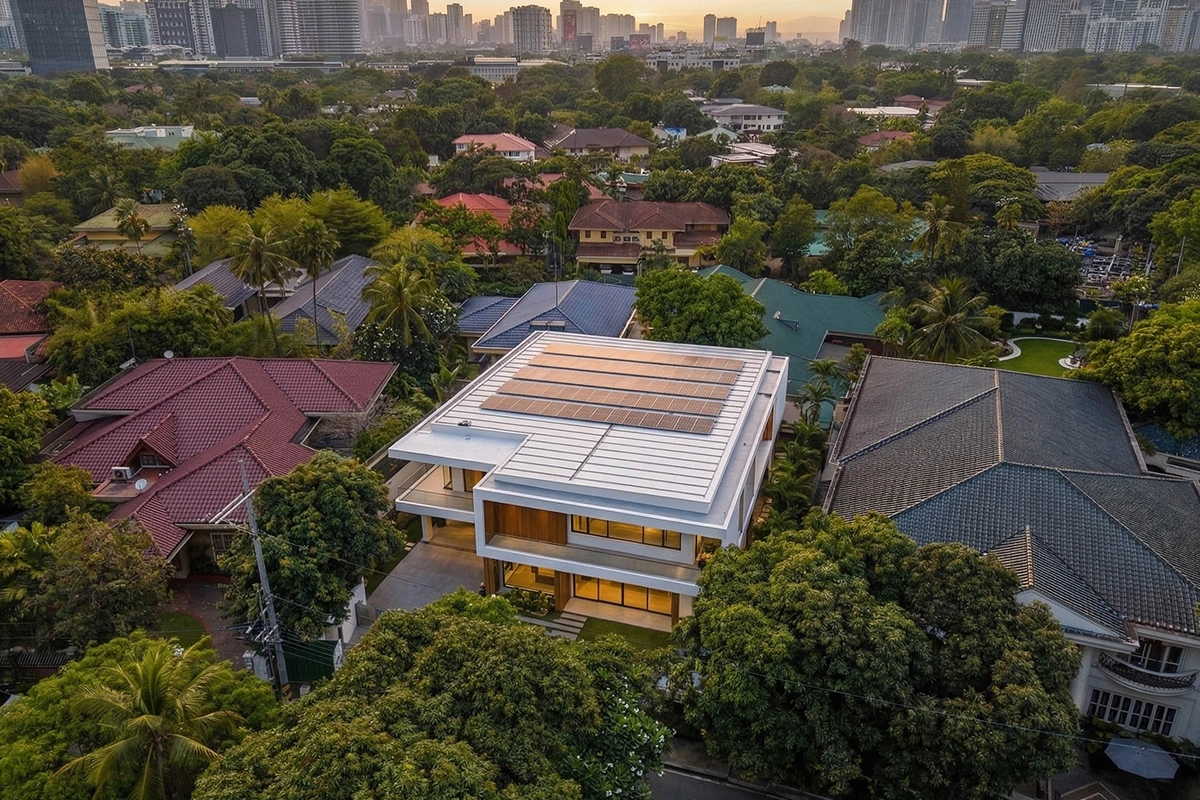
EV charging is increasingly part of the brief for premium residential clients. The Chu residence in Urdaneta Village, Makati, had a dedicated EV charging circuit provisioned into the electrical riser before the slab was poured. Solaren was involved from the planning stage, before construction began, which is exactly when that decision needs to be made. Retrofitting EV charging infrastructure into a completed premium home is expensive and disruptive. Designing it in from the start costs a fraction of that.
Equipment Quality Is Not Negotiable at This Level
Premium homeowners who have spent serious money on a property understand durability. They specify quality finishes, quality fixtures, and quality appliances. Solar equipment deserves the same standard.
A residential system specified with budget panels and a no-name inverter will generate electricity. It will also degrade faster, perform worse in the Philippine heat, and potentially fail outside its warranty period with no meaningful recourse. For a home that was built to last, the solar system should match that standard.
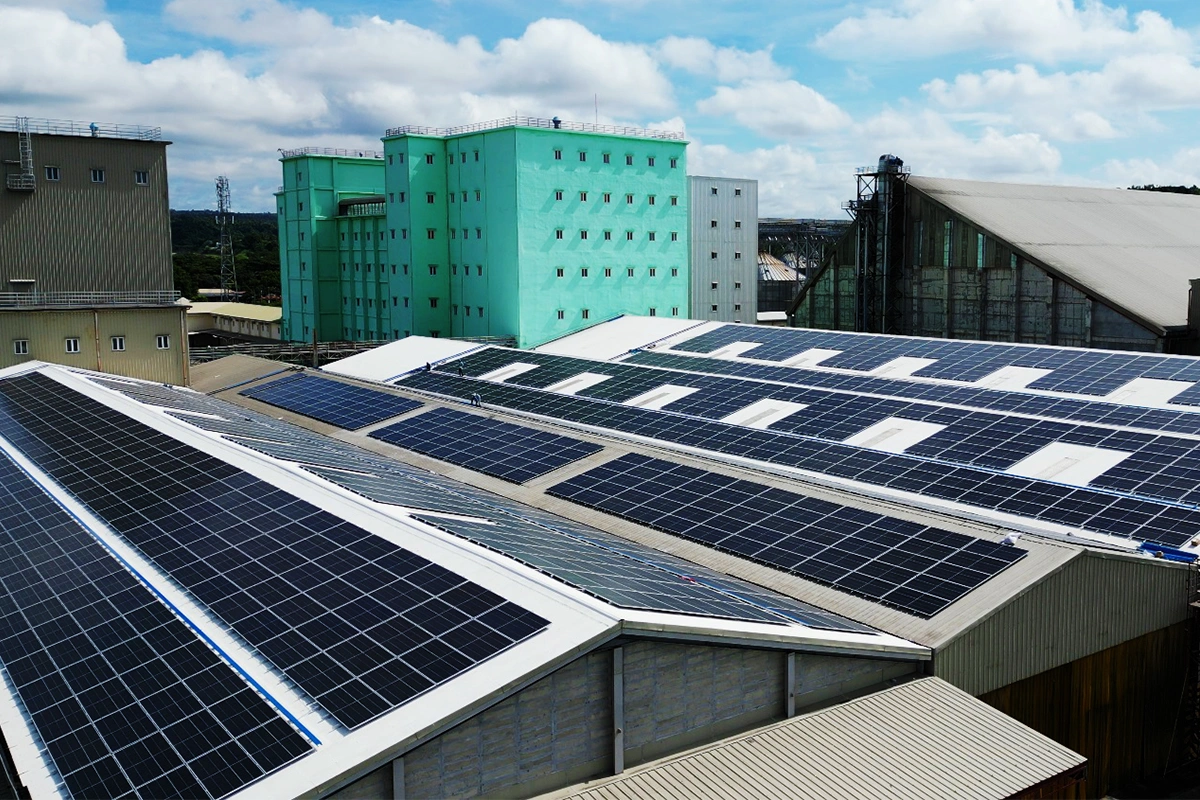
Solaren specifies the same equipment on premium residential installations as on its commercial portfolio. SMA Germany inverters, Sunsynk hybrid platforms, LONGi back-contact modules, Trina Solar and Sunova bifacial panels. These are not residential-grade compromises. They are the same components used on the Atlantic Grains installation and the Toyota facilities. The reason is straightforward. A premium home deserves equipment that will still be performing correctly in twenty years, with manufacturer support that still exists to back it up.
Mounting systems matter too, particularly for properties in typhoon-exposed locations. A system that was installed beautifully and then shifted in a typhoon because the mounting was not specified for Philippine wind loads is a problem that costs far more to fix than it would have cost to specify correctly. Built to Last: Engineering Solar Resilience for the Philippine Climate covers how those decisions get made and why they matter more in the Philippines than in most other solar markets.
The Right Starting Point
The best premium residential solar projects we have worked on had one thing in common. The buying and selection process started early, and was strict and focused. Before the roof was finished. Sometimes before the structure was complete.
That timing changes what is possible. Cable routes go into the fabric of the building. Electrical risers get sized correctly for a three-phase system. EV charging circuits get their own dedicated supply. Battery enclosures get allocated proper space with appropriate ventilation. None of these things are difficult to do during construction. All of them are expensive and disruptive to retrofit.
If you are building or planning a significant renovation, the right time to bring in a solar contractor is the same time you bring in the electrical contractor. Not after.
For a closer look at what residential solar returns actually look like when the system is correctly specified, residential solar installation Philippines covers the financial detail across different property types and consumption profiles.
Frequently Asked Questions
-
Can I add battery storage to my solar system after it has already been installed?
Yes, but it depends entirely on the inverter. A standard grid-tied inverter cannot support batteries without being replaced. A hybrid inverter can. If there is any possibility you will want battery storage in the future, specify a hybrid-capable inverter from the start, even if you are not adding batteries immediately. The incremental cost at installation is modest. The cost of replacing an inverter later is not.
-
Does solar work during a brownout?
A standard grid-tied system stops generating when the grid goes down. This is a safety requirement, not a design flaw. Linemen working on faulted lines cannot have a live generation source pushing current through a system they believe is dead. If keeping your home running through outages matters, and for many premium homes in provincial locations, it matters a great deal, a hybrid system with battery storage is what you need. The inverter switches to stored energy in milliseconds. Most residents do not notice the transition at all.
-
How long does net metering approval take in the Philippines?
The timeline varies by utility. Under ERC rules the process should be completed within a defined period after a complete application is submitted. In practice, some utilities process applications faster than others. Some provincial cooperatives have been considerably slower than the rules require. A good EPC handles the entire application on your behalf and follows up until approval is confirmed. You should not have to chase this yourself. If a contractor leaves net metering processing to the client, that tells you something about how they approach after-sales responsibility generally. The law says weeks, not days.
-
Does the size of my solar system affect how it looks on the roof?
Panel layout has a significant impact on how a system looks, particularly on a premium property. A well-designed layout respects the roofline, keeps cable runs concealed, and positions panels in a way that is visually coherent rather than just functionally convenient. This requires the solar installation contractor to treat aesthetics as part of the design brief from the start. Ask to see completed premium residential installations before committing to any contractor. A contractor with genuine experience at this level will have no hesitation showing you their work.