Running a hotel or resort means your electricity meter never stops. Air conditioning runs around the clock. Kitchens operate in shifts. Laundry, water heating, lighting, pools, and guest room loads all draw continuously. For most Philippine hospitality properties, electricity is one of the two or three largest operating expenses on the books, and unlike food cost or staffing, it only ever moves in one direction.
That is why commercial solar installation has become one of the most financially compelling decisions available to hotel and resort operators right now.
What the Cost Structure Actually Looks Like
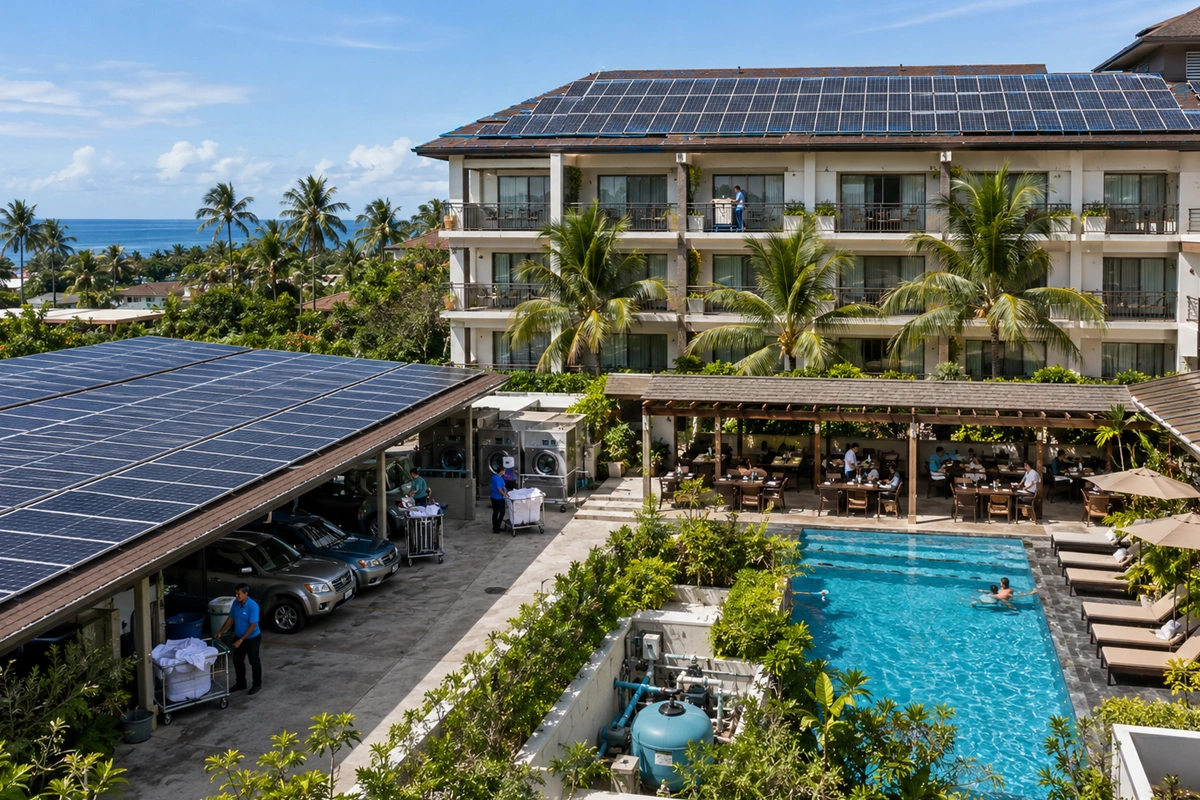
Hospitality properties have a consumption profile that suits solar particularly well. Daytime loads are heavy. Housekeeping, kitchen preparation, laundry, pool systems, and common area cooling all run during daylight hours when a solar system is generating at full output. The match between generation and consumption is close, which means a high proportion of what the system produces is used directly on site rather than exported.
The result is a significant reduction in grid purchases during the hours when solar is generating, with net metering handling the credit side during lower-demand periods. For properties with large rooftop or carport space, systems sized correctly for the property’s load can reduce electricity costs by 50% to 80% or more. Some properties have brought their daytime grid draw to near zero.
At those savings levels, payback periods for well-designed hospitality installations typically run between three and five years. Against a panel life of 30 years, the long-term economics are straightforward.
The Operational Case, Beyond the Numbers
Lower electricity bills are the headline. But there are several other reasons hospitality operators are moving toward solar that do not always appear in the ROI calculation.
Predictable energy costs improve financial planning. When your electricity spend is partially decoupled from utility tariff movements, your operating cost projections become more reliable. That matters for budgeting, for lender conversations, and for long-term investment decisions.
Guests increasingly notice sustainability credentials. Eco-tourism is growing, and a credible solar installation is a tangible, verifiable commitment to clean energy rather than a marketing claim. Some properties have found it influences booking decisions, particularly among corporate clients with sustainability reporting requirements.
A solar-powered property also signals to investors and potential buyers that the asset has been managed with long-term value in mind. A compliant, fully documented solar installation is an income-generating asset that transfers with the property.
Two Hospitality Projects That Demonstrate What Is Possible
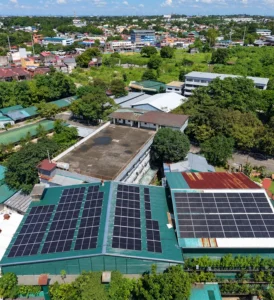
Sun Garden Hotel is one of the clearest examples of what a commercial solar installation delivers for a hospitality operation. The property faced mounting electricity costs that were compressing margins year after year. After switching to solar, the hotel gained control over its daytime energy costs and reduced its dependence on grid power during peak guest hours. The system operates in the background. Guests experience nothing different. The savings appear on the electricity bill every month.
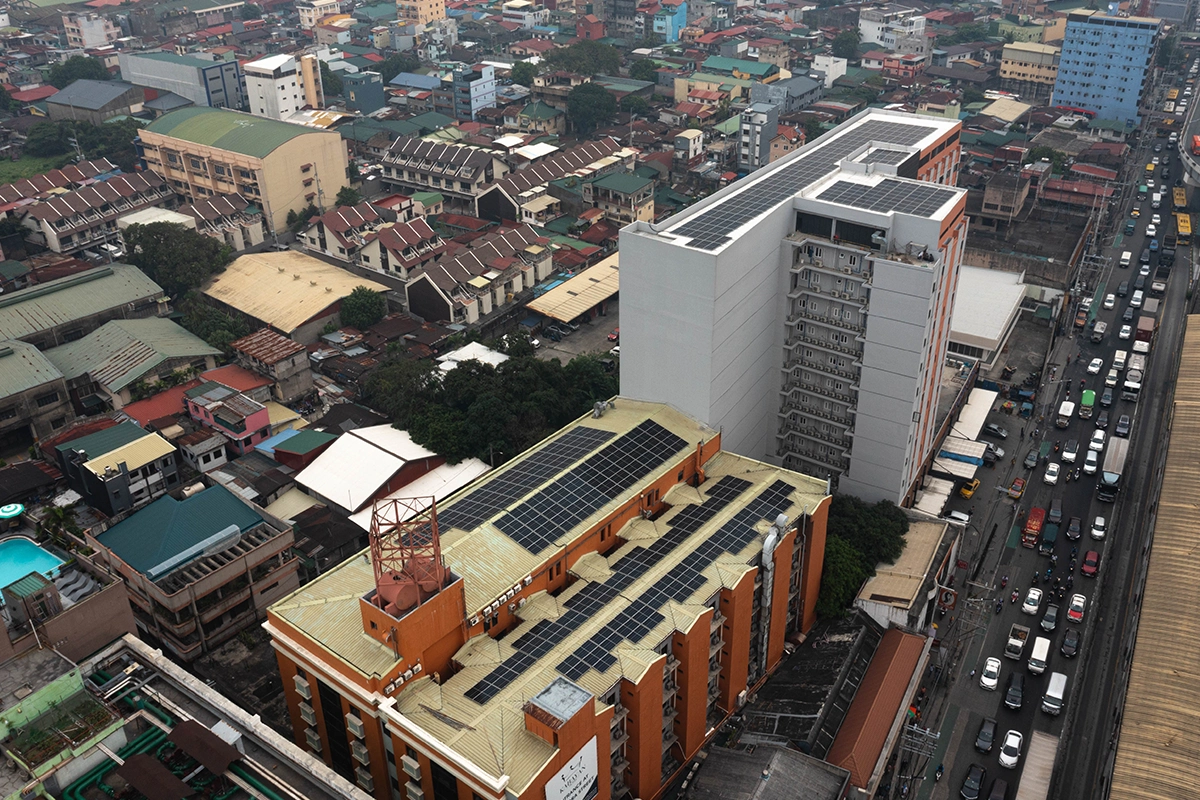
Kabayan Hotel is another Solaren installation that demonstrates the same principle across a different property type. The system was designed around the hotel’s specific consumption profile and available roof space, producing consistent savings from commissioning without disrupting daily operations at any point during the installation process.
These are not showcase projects. They are working installations that continue to generate real savings every day.
Why System Design Matters Especially for Hospitality
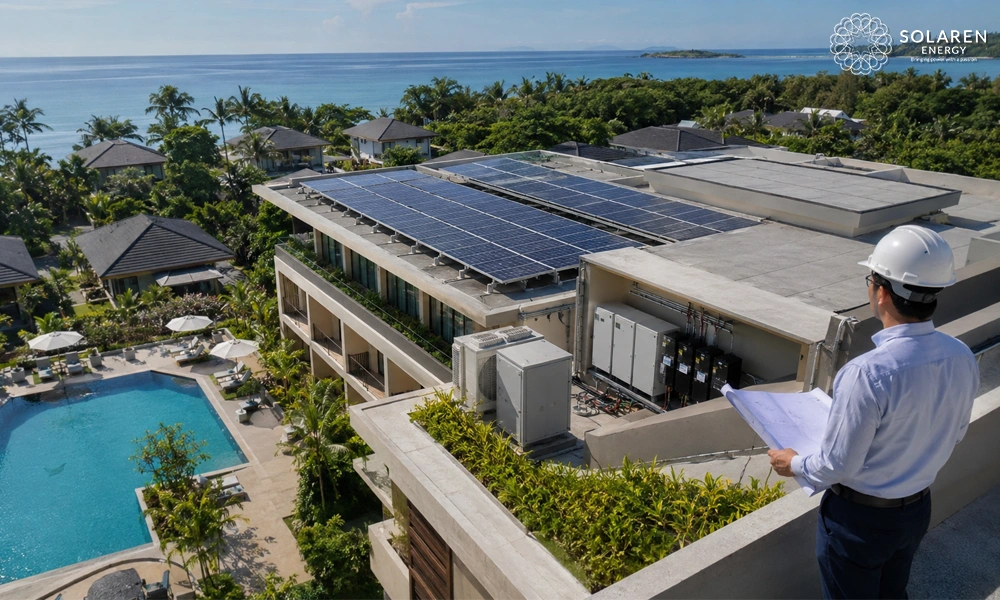
Hotels and resorts present specific design considerations that a generic solar installer may not handle well.
Load profiles vary significantly by property type. A business hotel with conference facilities has different peak demand patterns than a beach resort. A property with a large swimming pool and water heating system has different storage considerations than one without. Systems need to be designed around actual consumption data, not standard assumptions.
Roof structures in older hospitality properties sometimes require structural assessment before installation. Ballast-mounted systems on flat roofs can avoid penetration entirely where load-bearing capacity is sufficient. Solaren assesses this as part of the site inspection.
For properties considering future battery storage, wiring the system to be battery-ready from the start avoids costly retrofitting later. If your property has an unreliable grid supply or critical loads that cannot be interrupted, a hybrid system with storage may be the right specification from day one.
The Compliance Side
Net metering eligibility applies per utility meter at a maximum of 100 kWp. Larger properties with multiple meters can accommodate proportionally larger systems while keeping each meter within the threshold. Getting this design element right is essential. Exceed the limit on any meter and that meter loses net metering status, which reduces the financial return materially.
Solaren handles utility applications, DOE documentation, and all permit submissions as part of the standard installation process. For hospitality operators who cannot afford administrative delays or compliance complications, this matters.
What the Process Looks Like
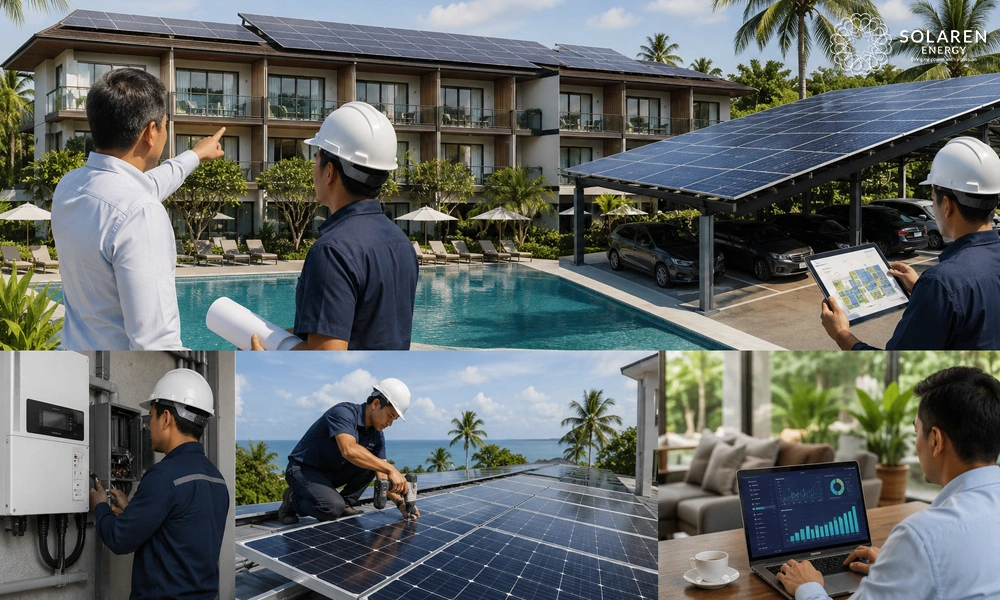
A free site assessment covers your consumption profile, roof and carport space, meter configuration, and grid connection. From there, Solaren produces a system layout, generation forecast, and financial model showing projected savings and payback period based on your actual utility bills.
Installation on a typical hospitality property takes between two and six weeks, depending on system size, with work scheduled to avoid disruption to guest operations. After commissioning, remote monitoring tracks system performance and flags any issues before they affect output.
Contact Solaren to arrange a site assessment for your property. We will assess your specific situation and give you a clear proposal built around your actual energy use and financial goals.
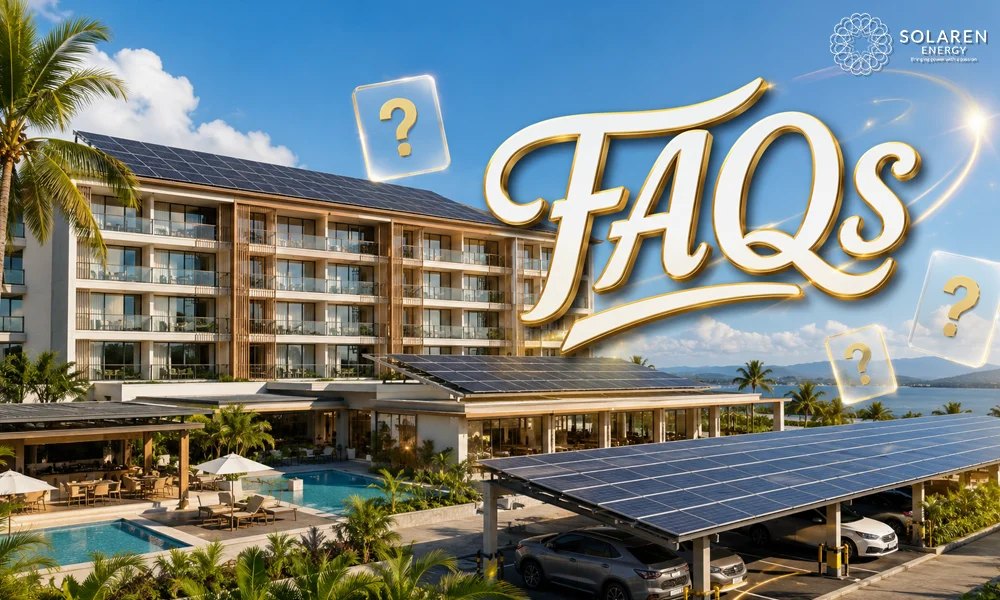
Frequently Asked Questions: Commercial Solar for Hotels and Resorts
-
How much can a hotel realistically save with a commercial solar installation?
It depends on system size, consumption profile, and current utility rates. Properties with significant daytime loads, such as those running continuous air conditioning, kitchen operations, and laundry, tend to see the strongest returns because the match between solar generation hours and consumption hours is close. Savings of 50% to 80% on daytime electricity costs are achievable on well-designed systems. Solaren models this against your actual utility bills during the proposal stage so you have specific numbers rather than estimates.
-
Will the installation disrupt hotel operations or guests?
Installation work is scheduled to avoid disruption to guest-facing operations. Rooftop work does not require access through public areas, and systems do not go live until commissioning is complete and tested. Most hospitality installations are completed without any guest-visible disruption.
-
What happens to solar generation during low-occupancy periods?
During periods when your property has fewer guests and lower consumption, your solar system continues generating. Surplus power is exported to the grid and credited against future bills through net metering. This means generation during quiet periods is not wasted. It accumulates as credits that offset bills during higher-occupancy periods when consumption is greater.
-
Can solar power a hotel’s air conditioning and kitchen equipment?
Yes. Air conditioning and kitchen loads are high consumers of electricity, but they are also predominantly daytime loads, which aligns well with solar generation. A system sized correctly for your property’s peak demand can offset a significant proportion of these loads during daylight hours. Evening and overnight loads are covered by the grid, or by battery storage if a hybrid system is specified.
-
Is battery storage worth it for a hospitality property?
It depends on your grid reliability and whether continuity through outages is a hard requirement. For properties in areas with stable grid supply and no critical loads that cannot tolerate a brief interruption, a grid-tied system typically delivers a better financial return than a hybrid system. For properties with documented grid reliability problems or where a power cut would cause significant guest experience issues, battery storage is worth the additional investment. Solaren advises on this honestly, based on your specific site situation.
-
How does a solar installation affect the resale or rental value of a hospitality property?
A compliant, fully documented solar installation is a verifiable income-generating asset. It reduces the operating cost profile of the property, which is a positive factor in any valuation exercise. Buyers and investors in the hospitality sector increasingly view a well-maintained solar system as an asset rather than a liability, provided the installation has been done correctly with proper permits and ongoing maintenance records.