Picking a renewable energy company in the Philippines is harder than it should be. New installers turn up every quarter, most of them reselling the same panels from the same three or four distributors, and the sales pitches merge into one another. What gets lost in all the noise and advertising is the actual decision you are making. You are not buying panels. You are choosing who will stand behind a system that has to keep working for the next twenty-five years, on your roof, through brownouts and the typhoon season, after your capital is already committed. That is a much shorter list of companies than page one of Google implies.
When you select a renewable energy company in the Philippines, check four things before you ever discuss the price: current DOE accreditation and a valid PCAB license, a track record of completed projects you can independently verify, design and engineering handled in-house rather than farmed out to casual crews, or an online app, and a written warranty from a company financially likely to be here still when you need to use it. Any supplier who cannot produce those on request has answered your question before you spend a single peso.
Most of the market sells. Fewer actually build
There is a difference between a company that sells solar and one that properly engineers it, and that difference dictates how your system performs long after the salesman leaves. A reseller sources equipment, marks it up, and arranges an installation, often through crews hired job to job. Even some large, famous companies have no installation staff. They subcontract, often to inexperienced crews.
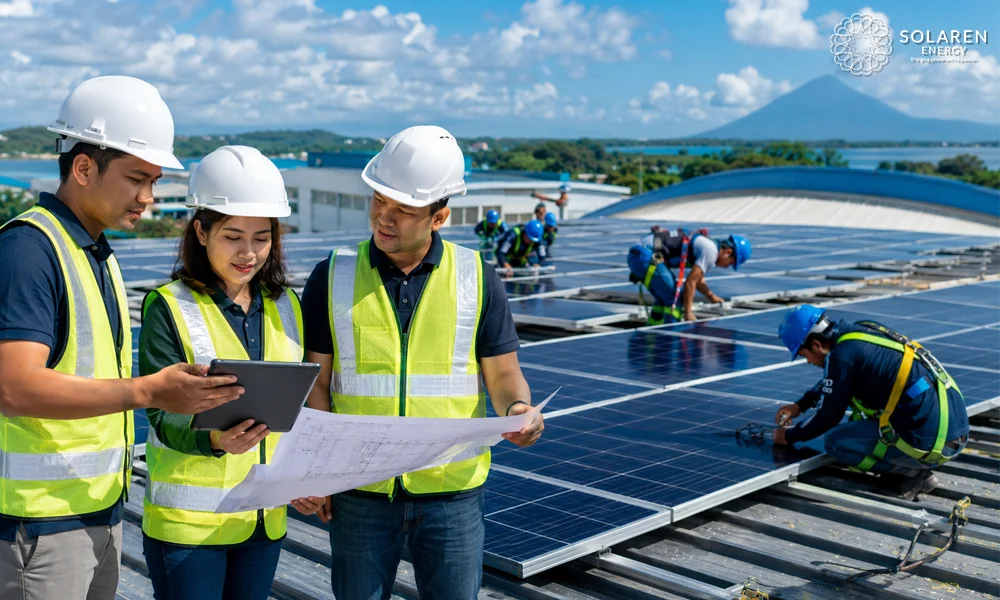
A contractor or EPC, meaning an engineering, procurement, and construction company, designs the system around your specific load, procures against that design, and bears responsibility for the build and the result. The Philippines has hundreds of the former and only a handful of the latter. Working out which one you are actually talking to is the most useful thing you can do early, because the price difference between them is small and the outcome difference is not.
Accreditation is the first filter, not paperwork
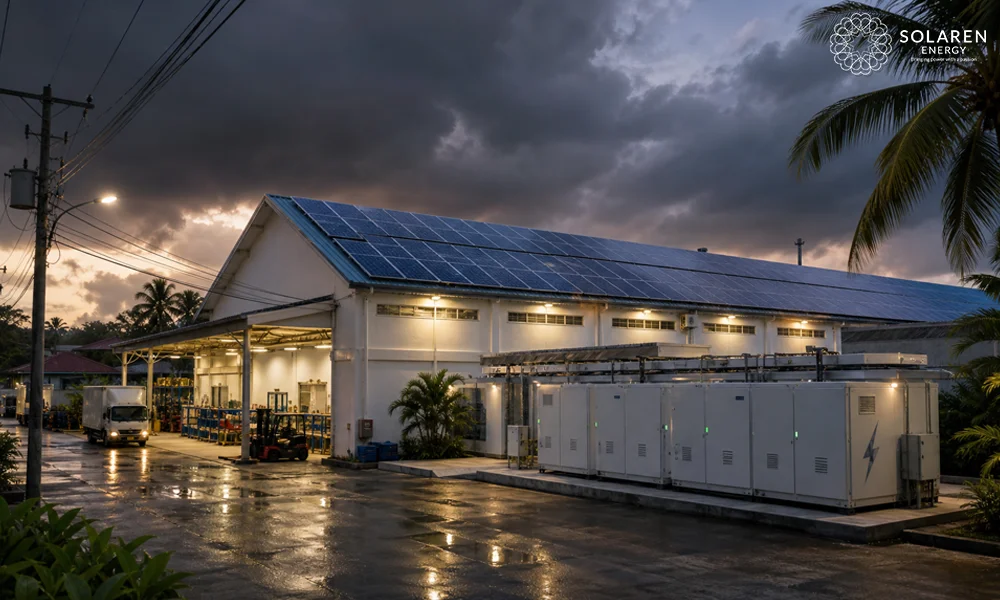
Start with the documents because they are black-and-white. A company either holds them, or it does not. Department of Energy accreditation confirms the company is recognized to operate in the power sector and, where relevant, to handle net metering. A PCAB license, issued by the Philippine Contractors Accreditation Board, confirms it is legally cleared to carry out construction work, which a rooftop array very much is. Current BIR registration and Bureau of Customs registration indicate that the equipment was likely imported and declared by proper channels rather than sourced from the gray market, where hardware often arrives without a valid warranty. Ask to see all of it. A legitimate renewable energy company will send the certificates without hesitation; any hesitation tells you what you need to know.
A track record you can call and check
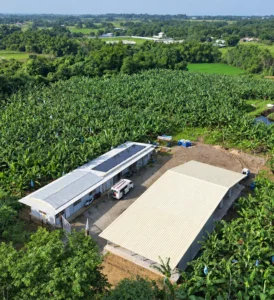
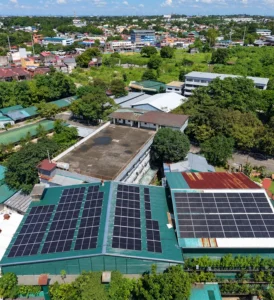
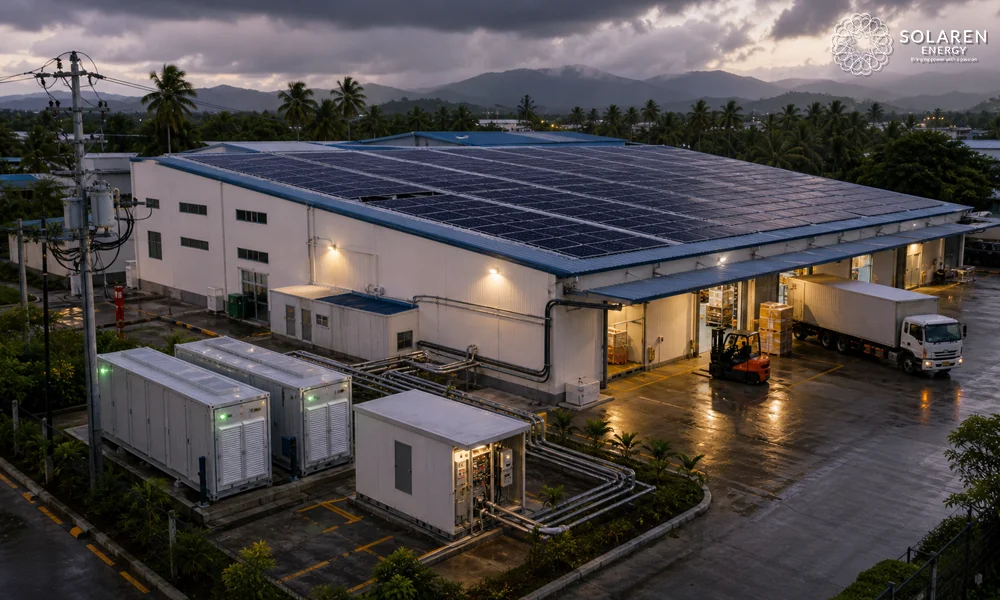
Anyone can claim experience, so ask for the evidence instead. Solaren has completed more than 2,500 commercial and industrial installations and deployed over 100 megawatts across the country since 2014, and those projects are documented rather than just described. In 2019, the company’s 2.16 MWp rooftop array for NZ Creamery won the Asian Power Award, a result judged by an independent panel rather than self-declared. Clients include national names such as Toyota, Oishi, Bench and McDonald’s, whose systems are real and verifiable.
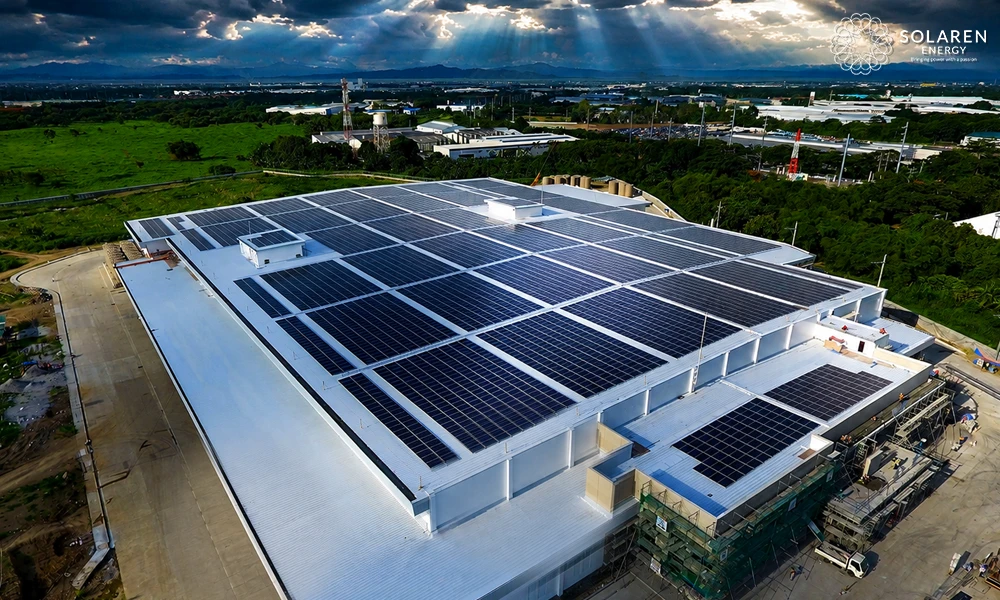
The practical test for any company is simple. Ask for a list of completed projects in your particular sector and permission to contact two of them. A company proud of its work hands it over without hesitation, and speaks to the reference without issue. A company that displays logos but cannot connect you to a single reference is telling you something you should pay attention to.
Engineering and design are what you are really paying for
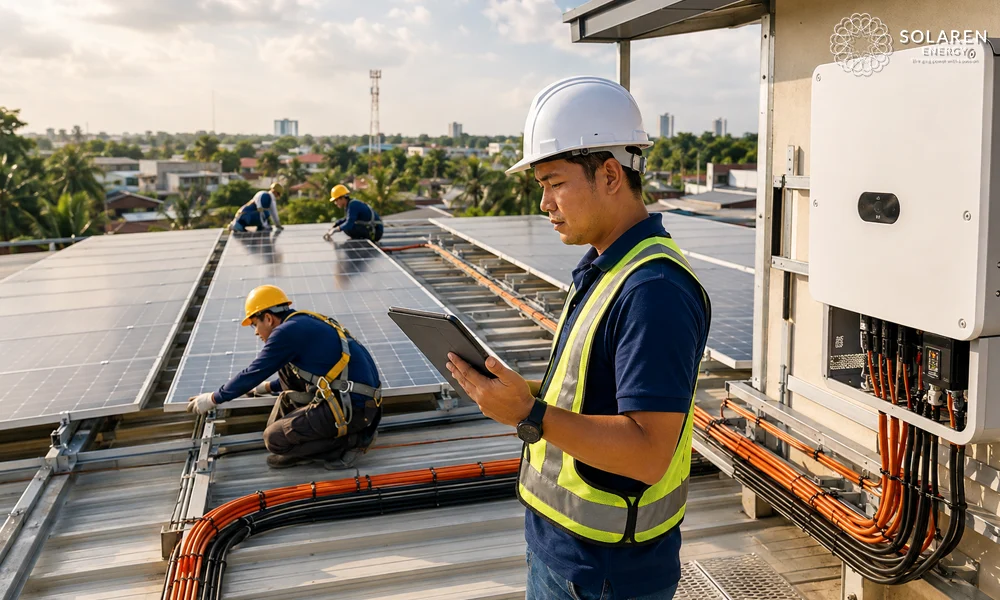
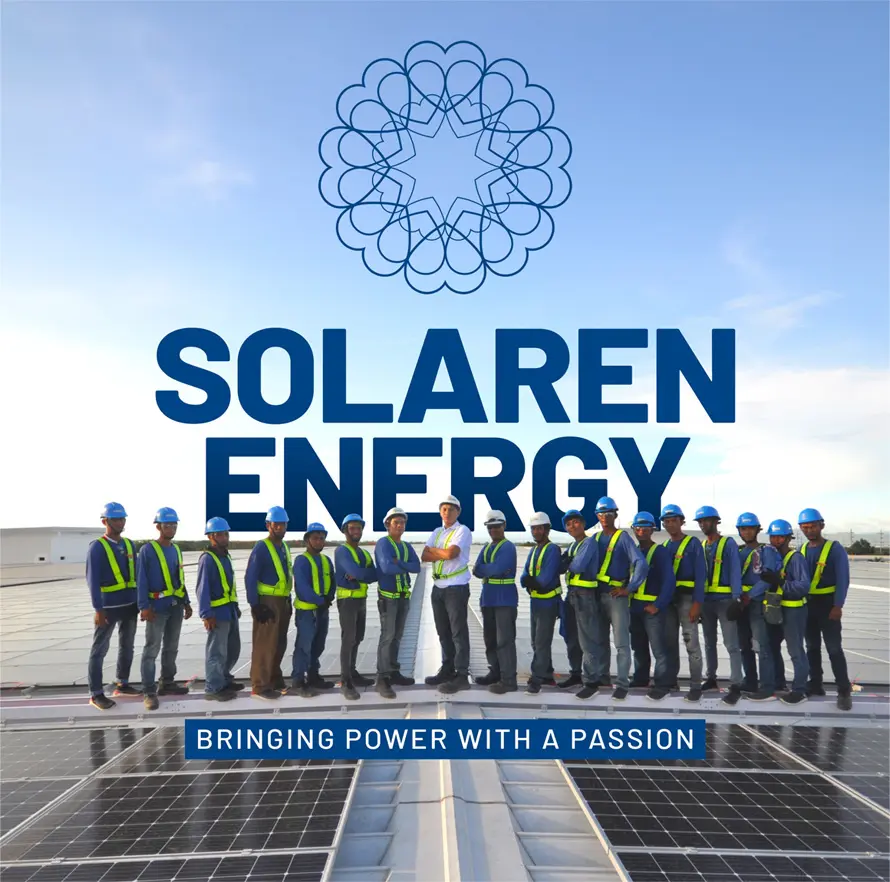
The part of the job you cannot see from the ground is the part that determines whether the system lasts. Mounting torques and seals. DC and AC wiring, string configuration, and the connections between the panels, the inverter, and your building all have to be correct, and getting them right requires engineering and design work. At Solaren, a licensed electrical engineer supervises each stage of the installation rather than leaving it to a crew assembled for the week.
That is not the industry norm here, and the gap tends to surface years later as faults, loose connections, and underproduction that most owners never trace back to the day of the install. When you compare companies, ask who is actually on the roof and what they are qualified to do. The answer distinguishes between a system that performs and one that merely switches on and asks for a check.
The warranty is only as good as the company behind it

A twenty-five-year warranty from a company that may not exist in five years is a piece of paper. When you weigh a warranty, look past the number of years to who honors it and how. Is the warranty written and specific, or verbal and vague? Does the company have the trading history and financial footing to be still answering the phone when a component fails in year eight? A shorter warranty from an established company is often worth more than a longer one from a company that started last year. Read the warranty as a statement about how confident the company is in its own survival.
Where this leaves you
Choosing a renewable energy company in the Philippines comes down to a small set of questions that mostly have documentary answers. Accreditation you can inspect, a track record you can verify, engineering you can name, and a warranty backed by a company that will last. Price still matters, but it belongs at the end of that list, not the start, because the cheapest quote from a company that cannot answer the rest is rarely cheap by the time the system is a few years old. Run the list before you sign. Almost all of it can be settled before you commit a peso, which is exactly when you want the answers in hand.
Frequently Asked Questions
What should I look for in a renewable energy company in the Philippines?
Check four things before price: current DOE accreditation and a valid PCAB license, a track record of completed projects you can verify, in-house engineering rather than subcontracted crews, and a written warranty from a company likely to still be operating when you need to claim on it.
Is DOE accreditation necessary?
For any serious commercial or industrial project, the answer is yes. DOE accreditation confirms that the company is recognized to operate in the power sector and is usually relevant to net metering as well. A company without it is one you cannot fully verify, which is reason enough to keep looking.
What is the difference between a solar reseller and an EPC?
A reseller sources equipment and arranges an installation, often using crews hired job to job. An EPC designs the system around your load, procures against that design, and takes full responsibility for the build and the outcome. The price gap between the two is usually small, while the difference in how the system performs over its life is often very large.
How do I verify a company’s track record?
Ask for a list of completed projects in your sector and permission to contact at least two references. Awards judged by independent panels, such as the Asian Power Award, also have greater importance than any claim a company makes about itself.
Does Solaren work with homeowners?
Not as a rule. Solaren focuses mostly on commercial and industrial clients, from manufacturing and agri-industrial sites through to retail and institutional facilities. That focus is deliberate, and it shapes how each system is built.
How long has Solaren operated?
Since 2014, the company has completed more than 2,500 commercial and industrial installations and deployed over 100 megawatts nationwide.