There is a version of the solar ROI argument that stays entirely theoretical. Projected savings. Estimated generation. Payback periods are calculated from assumptions. It sounds convincing in a proposal. It means absolutely nothing if the engineering behind the system was not done correctly.
We have been on sites where the numbers never materialized. Not because solar does not work. It does. But because so many decisions were made during design, equipment selection, and installation, locked in underperformance from day one, and the client spent years wondering why the savings on paper never showed up on the bill.
The ROI argument for quality solar engineering is not just mathematical. It is demonstrably true, again and again, on real sites with real bills and real meter data. The gap between a well-engineered system and a poorly engineered one is not marginal. It can be the difference between a thriving investment and a near-total loss of capital.
What Poor Quality Solar Engineering Actually Costs
We are currently aware of a 300kW commercial installation in Imus, Cavite, that essentially stopped performing within a year of commissioning. The inverters were incorrectly specified and the string configuration was designed in a way that meant the panels on the roof could not be fully utilized. The system ran. It generated something. But a significant proportion of the installed capacity was effectively inaccessible because the design prevented it from working correctly.
The client invested serious capital. Within twelve months they had a system generating a fraction of what it should. No names. But the situation is real and the financial consequence was close to a total loss of the capex on that portion of the installation.
This is an extreme case. Most engineering failures are less dramatic and more insidious. The system performs at 70 or 75 percent of its potential. The client does not know what 100 percent looks like so they cannot identify the gap. The savings are real but significantly lower than they should be. The payback period stretches. The investment that looked like three years starts looking like five or six. And the engineering decisions that caused it are buried inside the installation, where nobody can see them.
The Net Metering Billing Problem
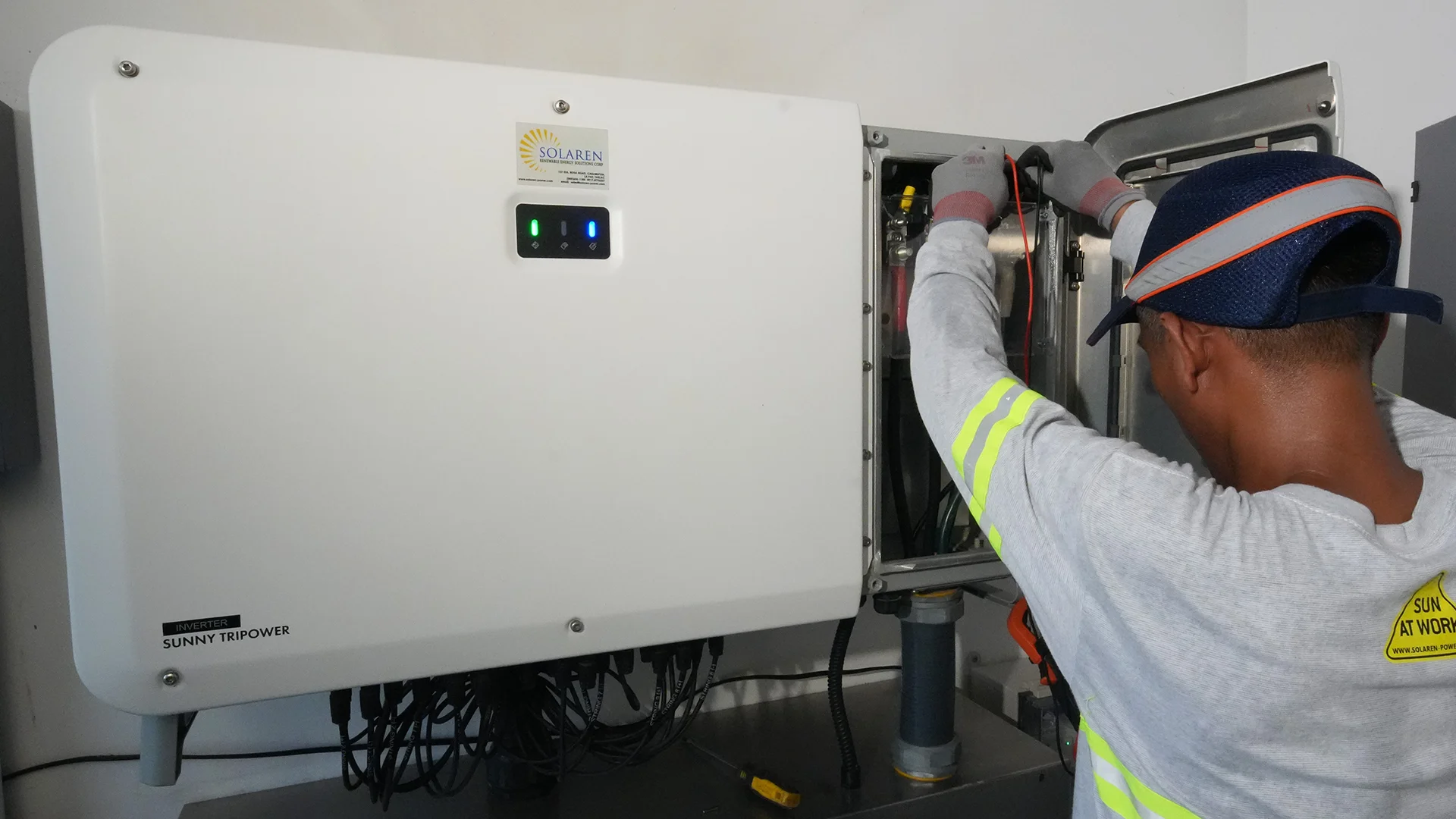
Another engineering failure we encounter regularly is less about generation and more about what happens to it. A solar system feeding into the grid should, under net metering, earn credits for exported energy. The meter records what goes out and subtracts it from consumption. The monthly bill reduces accordingly.
When the hardware controlling export is defective or cheaply specified and fails, the meter does not subtract. It adds. Instead of earning a credit for exported energy, the client is billed for it. We have seen this on multiple sites. The system is generating. The inverter is running. But the limiting hardware has failed silently and the bill is now higher than it was before the solar was installed.
Getting that resolved requires engaging the utility, proving the hardware failure, and in some cases disputing months of incorrect billing. It is entirely avoidable with correctly specified and properly engineered hardware and rigorous commissioning testing. Invisible until the bill arrives. Expensive once it does.
What Verified Performance Actually Looks Like
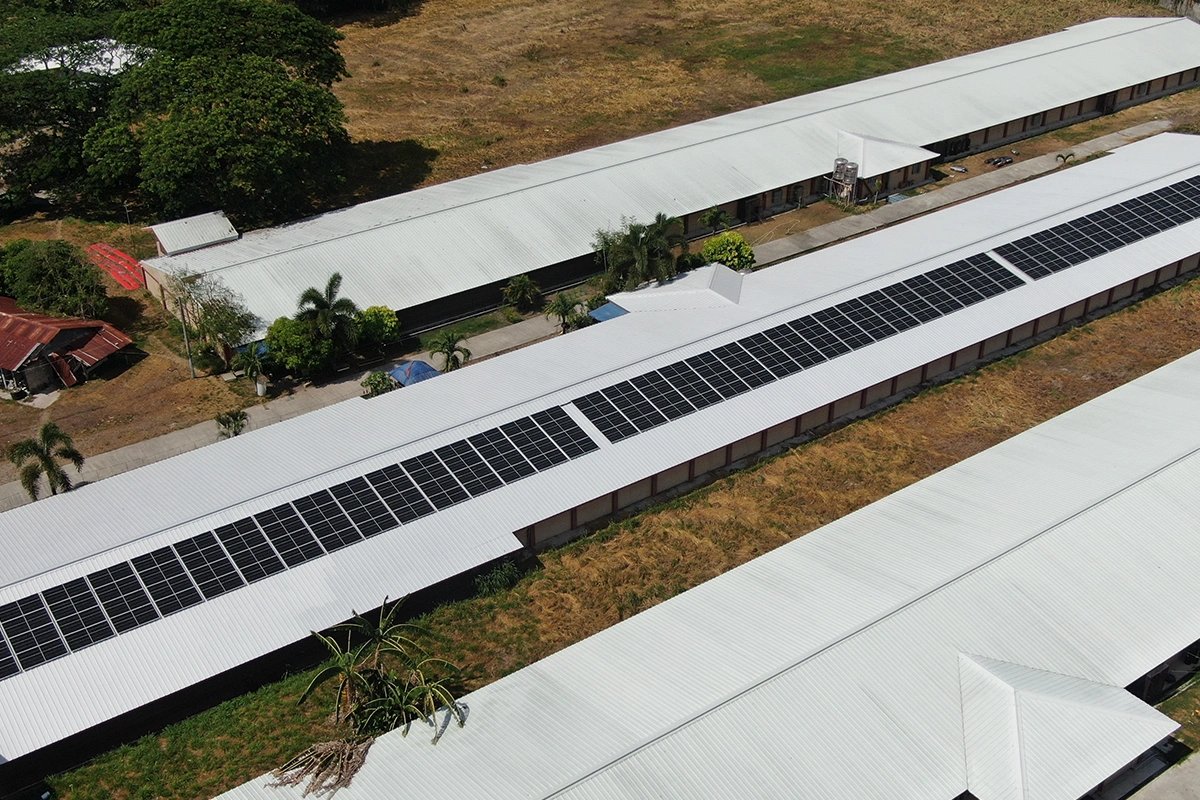
The alternative to these situations is documented, audited, verifiable performance. Not projections. Not estimates. Actual bills reconciled against actual meter data.
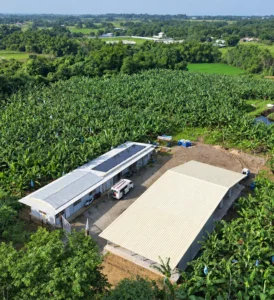
Solaren’s poultry farm solar case study in Tarlac is the clearest illustration of what correctly designed and engineered solar delivers over time. A 100kWp system on a working poultry farm. Forty billing months of verified data. SMA EnnexOS meter readings reconciled against paid utility bills with CT accuracy of plus or minus one percent.
The numbers are not estimates. They are receipts.
Over 40 months the system generated 458,456 kWh. Approximately 80 percent was consumed on site. The remaining 20 percent was exported under net metering at an average credit rate of PHP 6.81 per kilowatt-hour. Verified savings from utility bills: PHP 5,759,547 total, averaging PHP 147,681 per month. Equipment failure downtime across the entire 40-month period: zero.
The modelled bill without solar for the same period was PHP 19,289,896. The actual bill with solar was PHP 13,405,694. The difference is the savings. It is not a projection. It happened.
The specific yield of approximately 1,375 kWh per kilowatt-peak per year is consistent with a well-designed and correctly engineered system on a clean roof in Tarlac conditions. Bifacial TOPCon modules on a white reflective surface, south-facing at 10 percent tilt with zero shading, an SMA CORE2 inverter specified with headroom to avoid clipping, and a tap point close to the main panel to minimize wiring losses. Each of those is an engineering decision. Each one contributed to the outcome.
How Quality Solar Engineering Decisions Determine Long-Term ROI
There are five places in a solar project where engineering quality directly determines financial return. All five are invisible to the client during the sales process. All five show up in the generation data over time.
String configuration and inverter sizing. This is where the Imus Cavite failure happened. Design the string configuration incorrectly or size the inverter wrong and you permanently limit what the array can produce. The panels are on the roof. The kilowatt-hours are not.
Cable sizing and voltage drop. A system losing three to five percent of its DC output to cable resistance before the energy reaches the inverter loses that permanently, every day, for 25 years. The Hidden Power of Proper Solar Cabling covers what the correct specifications look like and why they matter enough to put in the contract.
Export-limited hardware. Cheaply engineered limiting devices fail. When they fail silently and the meter starts running in the wrong direction, the financial consequence arrives on the next bill. Specify quality hardware and test it at commissioning. Verify it again at the first billing cycle.
Module selection for Philippine conditions. Temperature coefficient, bifacial gain on reflective roofing, positive power tolerance. The poultry farm case study shows bifacial modules on a white roof contributing meaningfully to shoulder-hour generation. That is not marketing. It is physics, and it shows up in the specific yield figure.
Monitoring depth and ongoing review. The poultry farm data shows seasonal variation clearly. March and April 2025 produced 16.9 to 18.4 MWh per month. December and January produced 7 to 10 MWh. A monitoring platform that captures that variation allows performance issues to be identified against seasonal norms rather than missed entirely. A system without proper monitoring is a system where problems accumulate undetected.
The Demonstrable Case
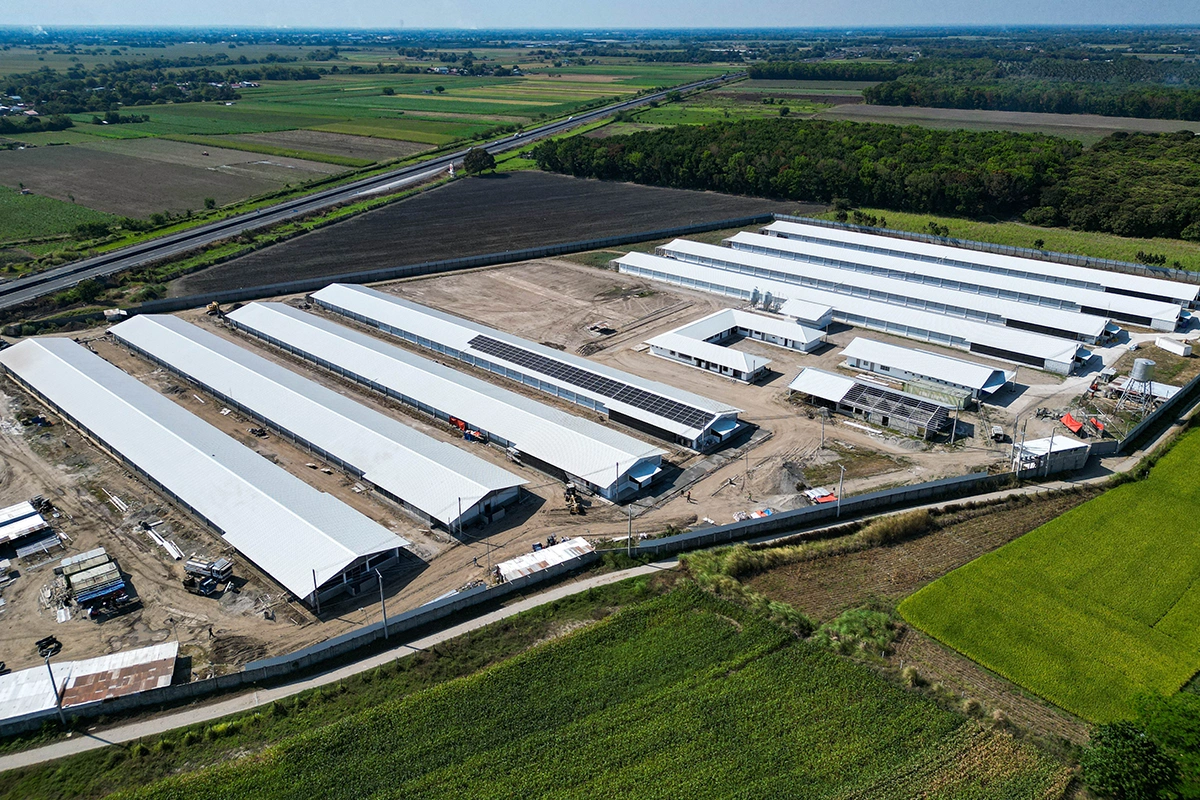
The poultry farm case study exists because the engineering and design were done correctly from the outset. The system was designed to match the load profile. The inverter was engineered with headroom. The cable runs were kept short. The modules were selected for bifacial gain on a reflective surface. Net metering was processed so that exported energy earned credits rather than being wasted or billed against the client.
The result is 40 months of uninterrupted performance, zero equipment failures, and PHP 5.7 million in verified savings from a 100kWp installation. That is the ROI of correct engineering. It is not theoretical. It is documented.
The gap between that outcome and the Imus Cavite situation is not luck. It is not brand. It is engineering decisions made at the design stage and executed correctly at installation. Clients who understand that gap make better decisions when reviewing proposals. The proposal that wins on price on the day of signing is not always the proposal that wins over the life of the system.
Usually, on the evidence we have accumulated across more than a decade of installations, it is not.
For the full financial framework on evaluating commercial solar returns against real performance data, The Ultimate Guide to Commercial Solar ROI in the Philippines sets out the methodology in detail. And for anyone currently reviewing proposals, the New Zealand Creamery project, which won the Asian Power Award for Solar Project of the Year, is another example of what verified long-term performance looks like when the engineering and design is right from the start.
Frequently Asked Questions
-
How do I know if my solar system was engineered correctly from the start?
Compare your actual monthly generation against the simulation in your original proposal for the same period and weather conditions. If actual generation is consistently ten percent or more below the simulated figure, something was not designed, installed, or engineered correctly. The most common causes are string configuration errors, undersized cables, shading that was not modelled, or an inverter specified too tightly against the array size. A performance audit by a qualified contractor with access to your inverter monitoring data will usually identify the cause within a day.
-
What is a realistic specific yield for a commercial solar system in the Philippines?
A well-designed and correctly engineered commercial rooftop system in Luzon should achieve between 1,300 and 1,450 kWh per kilowatt-peak per year, depending on location, orientation, tilt, shading, and module type. The Tarlac poultry farm case study achieved 1,375 kWh per kilowatt-peak per year across 40 months. Systems consistently below 1,200 kWh per kilowatt-peak per year on a clean unshaded roof in the Philippines have an engineering problem worth investigating.
-
Can poor solar engineering void equipment warranties?
Not directly, but it can. It also often makes warranty claims significantly harder to pursue. If a manufacturer inspects a failed inverter and finds it was operating outside its specified voltage or current range due to incorrect string configuration, they have grounds to contest the claim. Similarly, modules operating at consistently high temperatures due to incorrect tilt or inadequate ventilation in the mounting structure may degrade faster than the warranty assumes. Correct engineering and design protect the warranty position as well as the generation performance.