Solar systems do not fail dramatically very often. There is rarely a single moment where everything stops working and the cause is obvious. What happens instead is slower, and in some ways, much more frustrating. The system runs. It generates. But the numbers never match what was promised. The savings are real but significantly smaller than expected. The payback period stretches. The business that invested serious capital in a solar installation finds itself wondering whether it made a mistake.
Top 7 Causes of Commercial Solar Underperformance
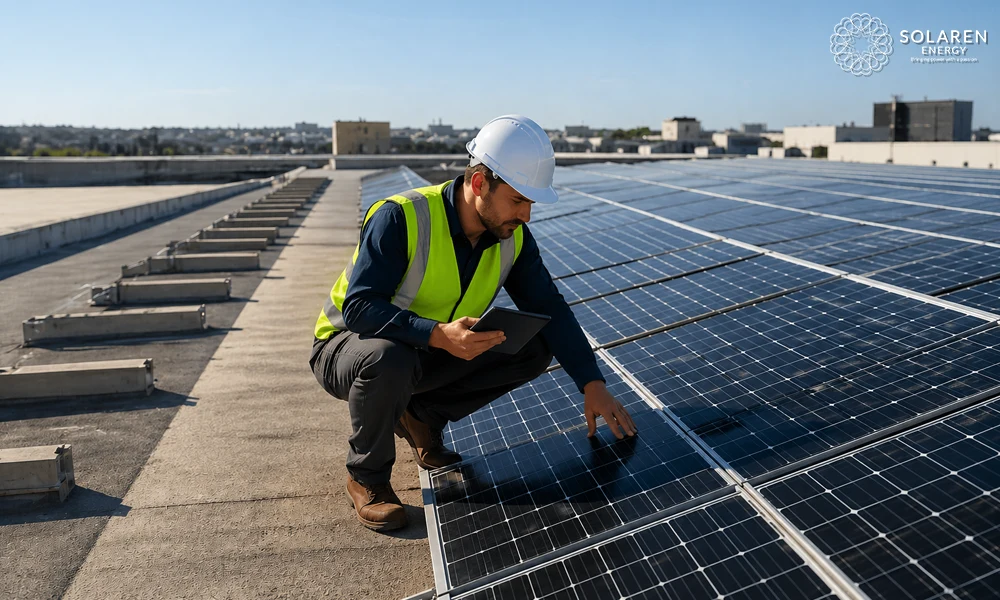
Usually, it did not make a mistake. The technology works. But something in the design, the equipment selection, the installation, or the commissioning was not right. And in the Philippines specifically, there are conditions that make underperformance more likely than in markets where solar has been mature for longer.
We have been on enough sites and had enough experience with enough facility managers to know what those conditions are. Here are the seven causes we see most often.
1. The System Was Sized Against the Wrong Number
This is the most common cause of underperformance and the hardest one to catch after the fact.
A solar system should be sized against measured peak demand and actual consumption data. Specifically, daytime consumption. A factory that draws 400kW across a full day but runs most of its heavy load at night does not need the same solar system as a factory drawing the same total but running that load during the day. The generation profile of solar and the consumption profile of the facility need to match.
What happens instead, particularly with contractors who are moving quickly or competing aggressively on price, is that the system gets sized against the total monthly kWh figure on the electricity bill. That number is easy to obtain and easy to work with. It is also the wrong number. It tells you how much electricity the facility uses. It does not tell you when.
A system sized against total consumption rather than daytime consumption will generate electricity that the facility cannot absorb. It exports to the grid under net metering, which recovers some value, but not as much as avoided grid consumption would have. The payback period extends. The client is disappointed. And the contractor who sized it incorrectly has usually moved on.
2. Shading That Was Not Modelled Properly
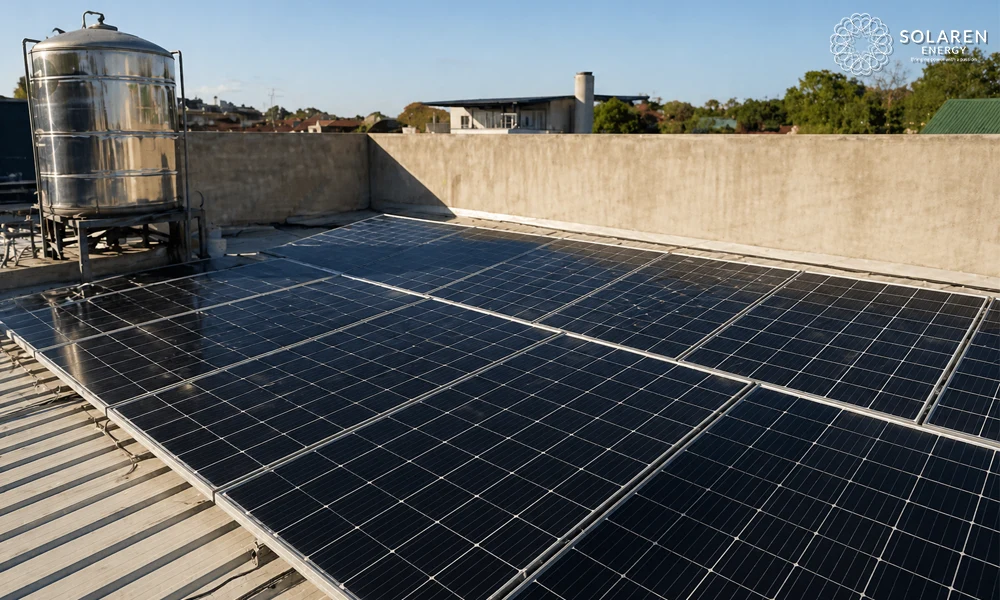
Shading is the enemy of solar performance and it is more complicated than most people expect.
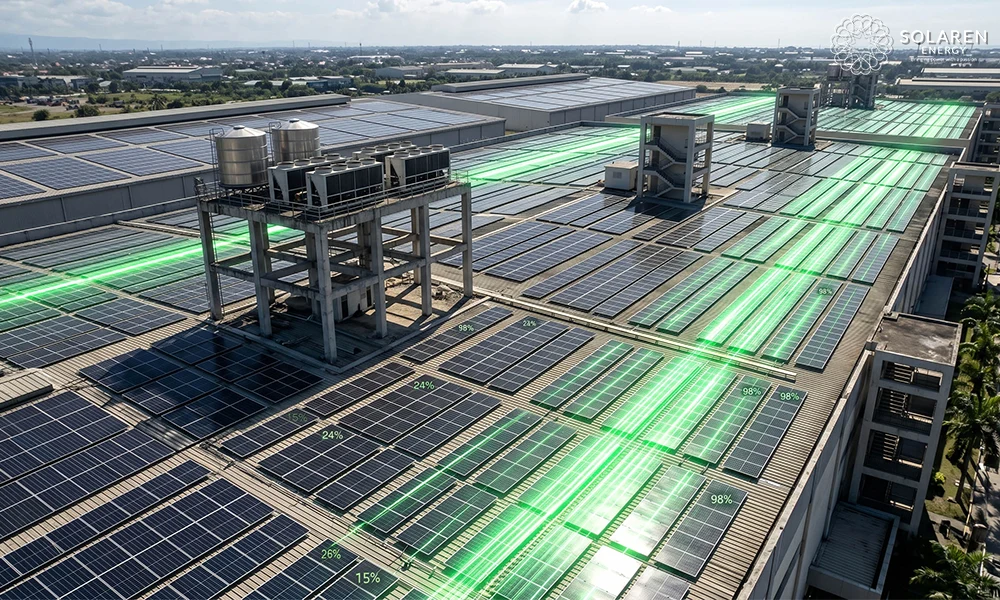
Partial shading of a single panel in a string can reduce the output of the entire string, not just the shaded panel. This is a characteristic of how series-connected panels share current. One underperforming panel forces the whole string to operate at its level. On a rooftop with a water tank, a parapet wall, neighboring structures, or rooftop equipment casting shadows at certain times of day, this can mean significant generation losses that were never visible in the original proposal.
Proper shading analysis uses simulation tools that model shadow movement across the roof throughout the day and across seasons. Many contractors in the Philippines skip this step or underestimate the shading impact when competing for a job. The result is a system that performs well in the morning and poorly from midday onward, or one that performs differently in November than it does in March, in ways nobody warned the client about.
String inverters with optimizers or microinverter configurations mitigate shading losses by allowing each panel to operate independently. They cost more. They are worth it on any roof where shading is a real variable.
3. Inverter Selection That Does Not Match the Site
Not all inverters perform equally well on Philippine grid conditions. This comes up repeatedly in discussions and site visits with facility engineers and it is something that generic solar proposals rarely address.
Philippine grid voltage and frequency can fluctuate significantly, particularly in provincial areas. Some inverters handle this gracefully, operating across a wider voltage and frequency tolerance window before tripping. Others, that are either not capable or incorrectly set up, trip frequently when grid conditions move outside a narrow range, and every trip is lost generation. On a site with an unstable utility supply, an inverter chosen for price rather than grid tolerance can reduce effective generation by ten to twenty percent compared to a well-specified alternative. If an inverter constantly trips, its lifespan is significantly curtailed.
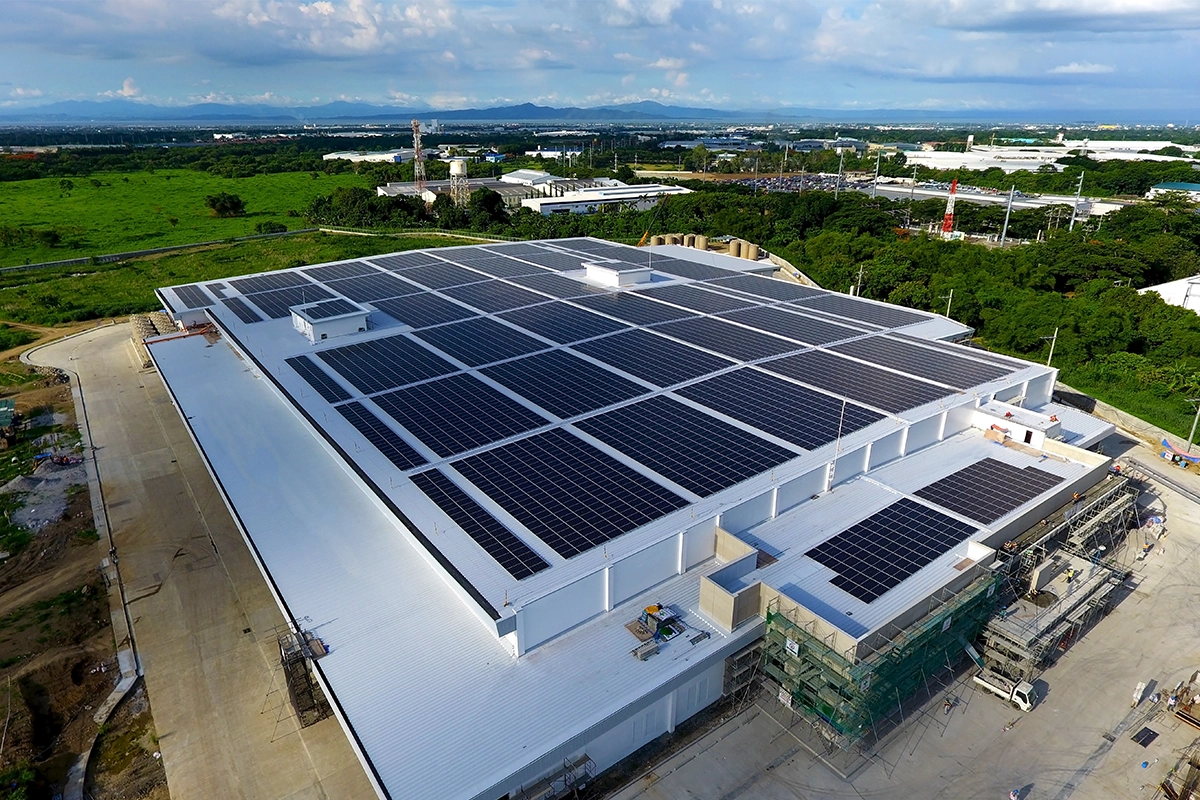
The SMA inverters used across Solaren’s commercial portfolio, including the New Zealand Creamery, which won the Asian Power Award for Solar Project of the Year, are selected partly for their tolerance of the supply conditions encountered on Philippine commercial sites. That is a specification decision that shows up in the generation data over years, not in the initial price comparison.
4. Cable Sizing and Voltage Drop
This one is almost never recognized in commercial solar proposals and it causes underperformance on a significant proportion of installations.
DC cables between panels and the inverter carry current at relatively high voltage. Voltage drop across undersized DC cables is proportional to cable length and current, and on a large commercial rooftop where cable runs can be long, the losses are real. A system losing three to five percent of its DC output to cable resistance before the energy even reaches the inverter is losing that permanently, every day, for the life of the installation.
AC cables between the inverter and the distribution board have the same issue. An undersized AC cable on a system running at full output loses generation and causes the inverter to operate outside its optimal range. If feeding in, there is a potentially significant problem with undersizing.
Cable sizing is an engineering calculation, not a cost-cutting opportunity. The Hidden Power of Proper Solar Cabling covers this in detail and is worth reading by anyone evaluating a solar proposal.
5. Poor Module Selection for Philippine Conditions
The Philippines is hot, humid, and for parts of the year, overcast. Module selection should reflect all three of those conditions.
High ambient temperatures reduce panel output. This is called the temperature coefficient and every panel datasheet lists it. A panel with a high temperature coefficient loses more output per degree above 25 degrees Celsius than one with a low coefficient. In a climate where roof surface temperatures regularly exceed 60 degrees, this is not a minor consideration.
Bifacial modules, which generate from both the front and rear surfaces, perform particularly well on light-colored roofing common in Philippine industrial buildings. The rear surface picks up reflected light from the roof. That additional generation is essentially free once the module is specified correctly.
Tier 1 certification matters here too. A module from a supplier without verified manufacturing consistency will not perform to its nameplate rating across its service life in the way that a certified Tier 1 module will. The savings on module cost at purchase are not savings at all when measured against twenty-five years of generation.
6. Inadequate Monitoring and No Performance Baseline
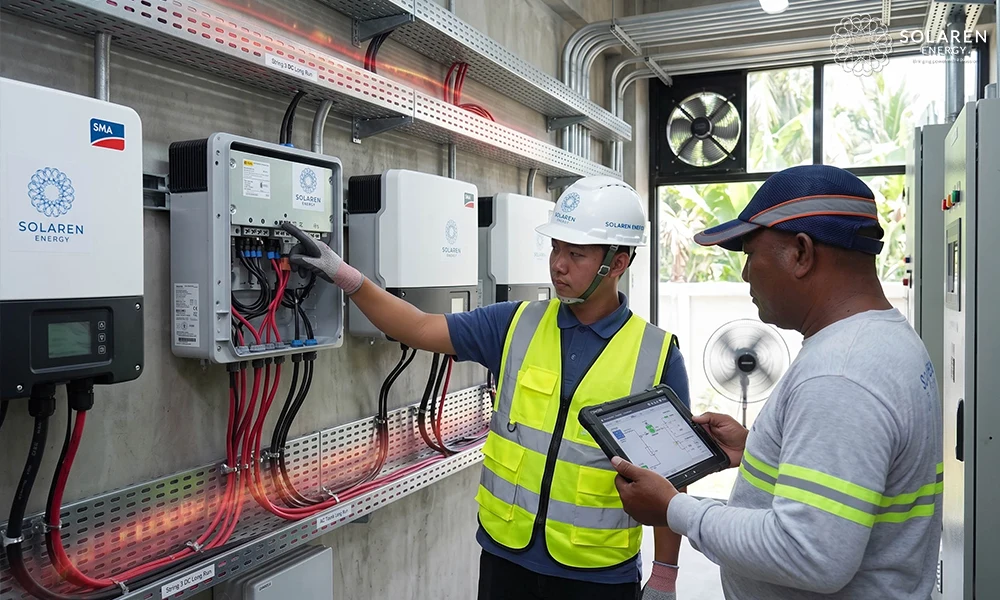
A solar system without proper monitoring is a system where underperformance can go undetected for months or years.
Every commercial installation should have inverter-level monitoring that records generation data continuously and makes it accessible remotely. The facility manager or EPC should be able to see, at any time, whether the system is generating at the level the simulation predicted for that day’s weather conditions. If it is not, there is a reason. And finding that reason early, before it compounds across months of lost generation, is only possible with monitoring in place.
Solaren uses SMA ennexOS and Sunny Portal across its commercial portfolio, and Sunsynk Connect on hybrid installations, specifically because the monitoring depth allows performance issues to be caught and addressed quickly. A system commissioned and then left without an ongoing performance review will almost certainly underperform its potential over time.
7. The Installation Was Subcontracted
This is the one that clients find most uncomfortable to hear, but it is real and it matters.
A significant proportion of commercial solar installations in the Philippines are won by one company and installed by another. The company that sold the system, prepared the proposal, and took the client’s money hands the physical work to a subcontractor whose qualifications, experience, and attention to detail the client has no visibility over. Mounting decisions, cable routing, earthing, string configuration, and commissioning testing all happen at a level the client never sees.
The consequences always show up over time. Mounting hardware that was not correctly installed allows panels to move under typhoon loads. Earthing that was not done properly creates a safety exposure. String configurations that were not optimized affect generation. None of these are visible on day one.
Toyota Bacoor and every other installation in Solaren’s portfolio are designed, engineered, and installed by Solaren’s own licensed engineers. No subcontracting. That is not a marketing or sales statement. It is the reason the generation data on those sites matches the simulation data consistently over time.
For businesses evaluating commercial solar proposals, choosing a solar EPC in the Philippines with verified in-house engineering is the single most reliable indicator of whether the system you are promised is the system you will get.
Frequently Asked Questions
-
How do I know if my solar system is underperforming?
Compare actual monthly generation against the simulation figure in your original proposal for the same period. Most monitoring platforms show this directly. If actual generation is consistently ten percent or more below the simulated figure and the weather has been reasonably normal, something is wrong. Common causes are shading that was not modelled, inverter trips that went unnoticed, or cable losses that were never measured. A performance review by a qualified EPC, with access to your inverter data, will usually identify the cause within a day.
-
Can an underperforming solar system be fixed?
Usually, yes, though the cost depends on what went wrong. Shading issues can sometimes be addressed by reconfiguring string layouts or adding optimisers. Inverter trips caused by incorrect settings can be corrected remotely. Undersized cables are more difficult because replacing them means reopening cable routes, but it is sometimes worth doing on larger systems where the generation loss is significant. The one thing that cannot be fully recovered is the generation already lost. This is why monitoring matters from day one rather than after the problem becomes obvious.
-
What should I ask before signing a solar installation contract to avoid these problems?
Ask for the generation simulation file, not just the annual kWh estimate. Ask how shading was modelled. Ask for the inverter datasheet and check the voltage tolerance range. Ask for DC and AC cable cross-sections in writing. Ask whether the installation will be done by the company’s own engineers or subcontracted. And ask to speak to clients whose systems are more than three years old. The answers to those questions will tell you more about the likely performance of the system than anything else in the proposal.