Most businesses looking for solar do not search for an “EPC.” They search for a solar company, a solar installer, or a solar contractor. The term EPC, which stands for Engineering, Procurement, and Construction, is industry language for the same thing: the company responsible for designing your system, sourcing the equipment, and building the installation from start to finish.
Whether you call it an EPC or a solar company, the selection decision is the same. And it is one of the most consequential operational decisions your business will make.
Here is why. A solar system sits on your roof for 25 to 30 years. The company that installs it makes hundreds of engineering decisions during that process, from how the mounting structure is anchored to how the inverter is configured to how the system connects to your grid. Good decisions produce consistent performance and low maintenance. Poor decisions produce problems that surface months or years later, when the installer may no longer be reachable.
Why the Philippine Environment Makes This Decision Harder
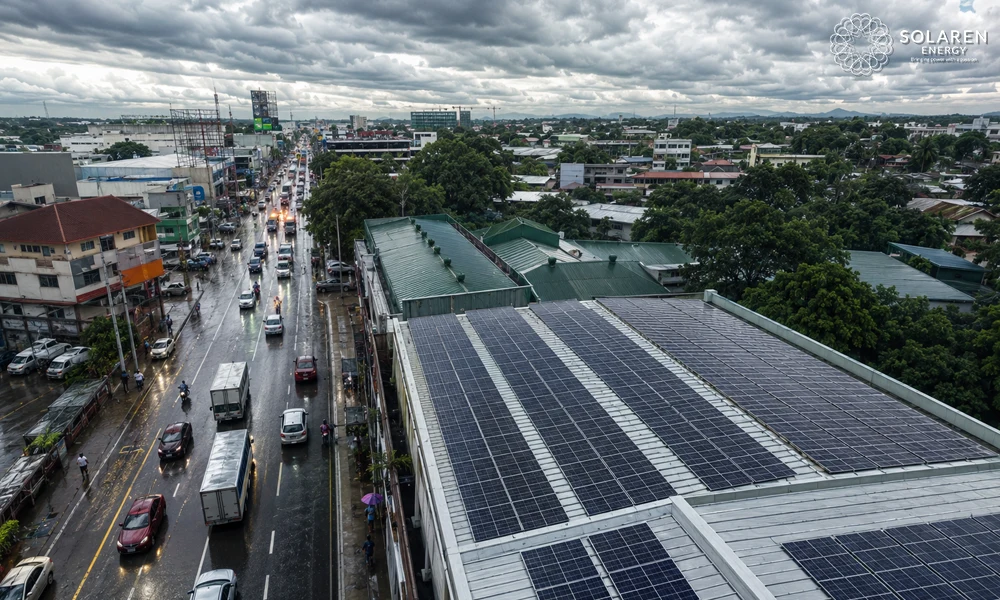
Commercial rooftops in the Philippines face conditions that test solar hardware harder than most markets. Extreme heat cycles. Heavy monsoon rainfall. Corrosion from humidity and salt air in coastal locations. Grid fluctuations. Ageing roof substrates. These conditions expose every engineering decision the installer made during design and installation.
A company with genuine experience in Philippine commercial solar understands how to design around these conditions. A company that primarily sells solar rather than engineers it often does not. The difference between the two is rarely visible during installation. It becomes obvious over the following years.
Engineering Capability Is the First Thing to Assess
Ask any installer you are considering to explain the engineering logic behind their proposed system. A capable EPC can tell you why the mounting structure is rated for your location’s wind zone, why the inverter model matches your load profile, how the electrical design aligns with your transformer and switchboard configuration, and what heat losses and voltage drop assumptions are built into the generation forecast.
You should leave that conversation feeling that they have studied your site specifically. If the answers are vague or generic, the proposal probably is too.
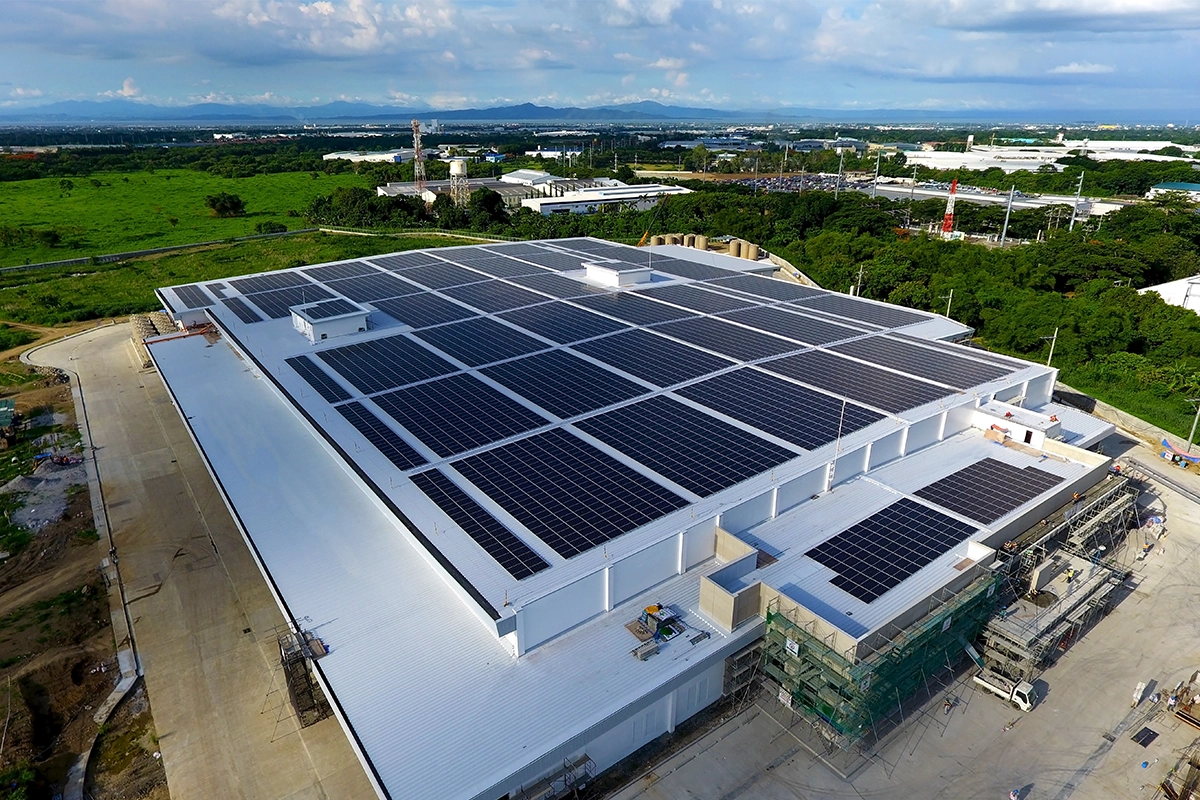
New Zealand Creamery is one example of a project where engineering specificity mattered. A food production facility with strict power quality requirements and no tolerance for operational disruption is not a site where a generic design approach works. The system had to be engineered around the facility’s actual load profile and grid conditions. That is what EPC capability means in practice.
Ask to See Live Performance Data
Any serious solar EPC should be able to show you real, verifiable performance data from existing commercial installations. Not a PDF with projected figures. Not screenshots. A live monitoring portal showing actual historical generation data from a comparable project.
Ask them to walk you through one of their systems on the spot. A confident EPC with genuine commercial experience does not need preparation for this. They know their projects because their engineering team monitors them continuously.
If someone hesitates or deflects this request, that tells you something important about the depth of their commercial portfolio.
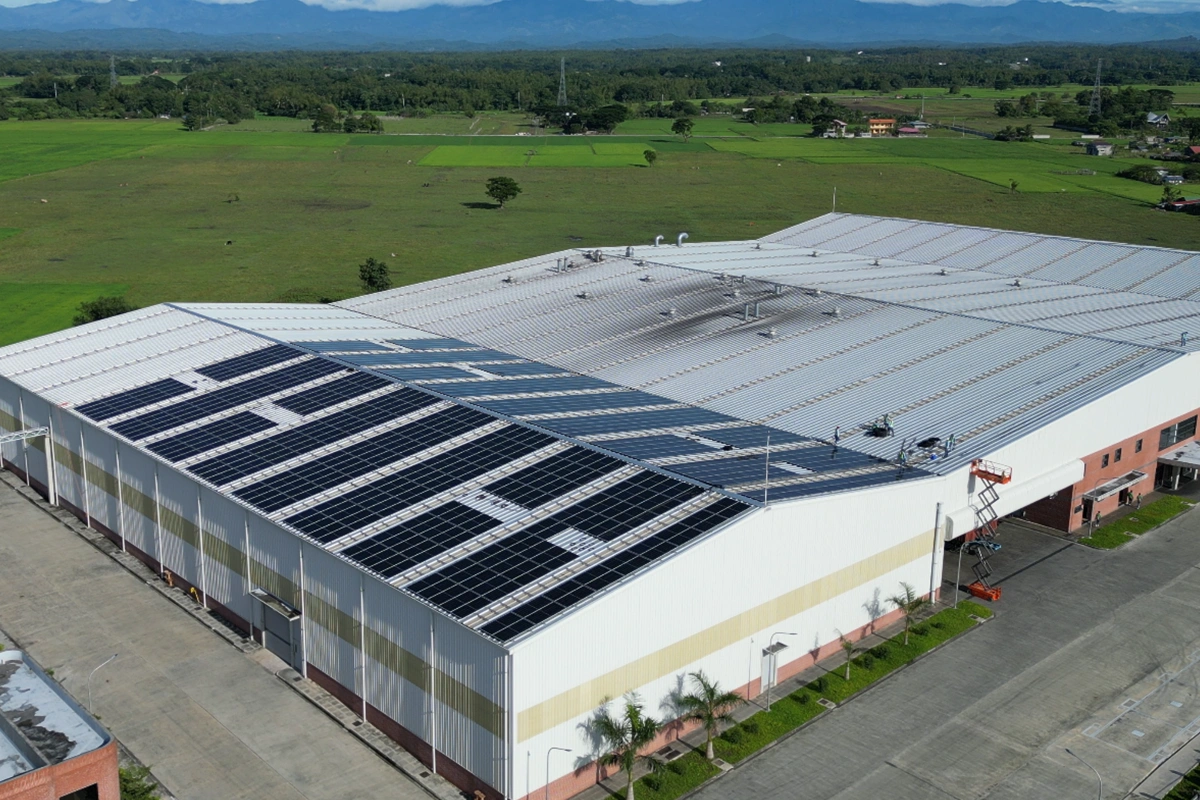
Oishi Iloilo is one of the larger commercial installations Solaren has delivered. A food manufacturing operation with significant and consistent power demands. The system performance is monitored in real time and the data is available. That is the standard a serious EPC should be able to meet.
Equipment Quality Is Not a Minor Detail
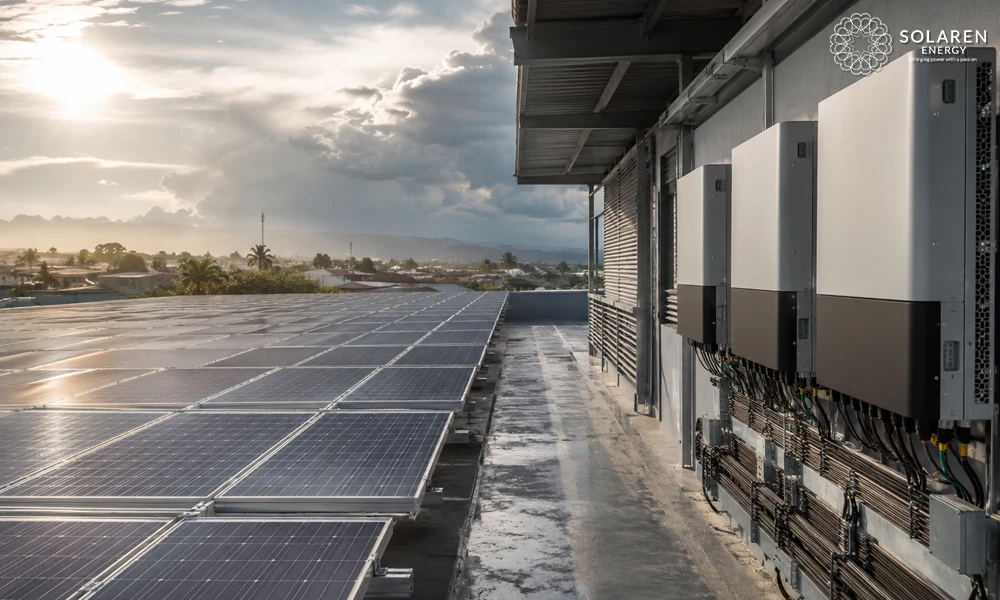
Philippine conditions push solar hardware hard. Heat, humidity, dust, and grid instability are the operating environment, not exceptional circumstances. The best EPCs choose equipment that is engineered for these conditions, with manufacturer warranties that are genuinely enforceable and service networks that actually exist in the region.
Inverters from established manufacturers such as SMA, Fronius, and Enphase carry long warranties and have proven degradation histories. Panels should be selected on the basis of verified performance data under high-temperature conditions, not headline efficiency figures measured in a laboratory.
Cheaper equipment saves the EPC money, not the client. Problems with undersized or low-grade hardware typically appear outside the warranty period, when the supplier may no longer exist and the cost falls entirely on the owner.
After-Sales Support Is Where Most Installers Fall Short
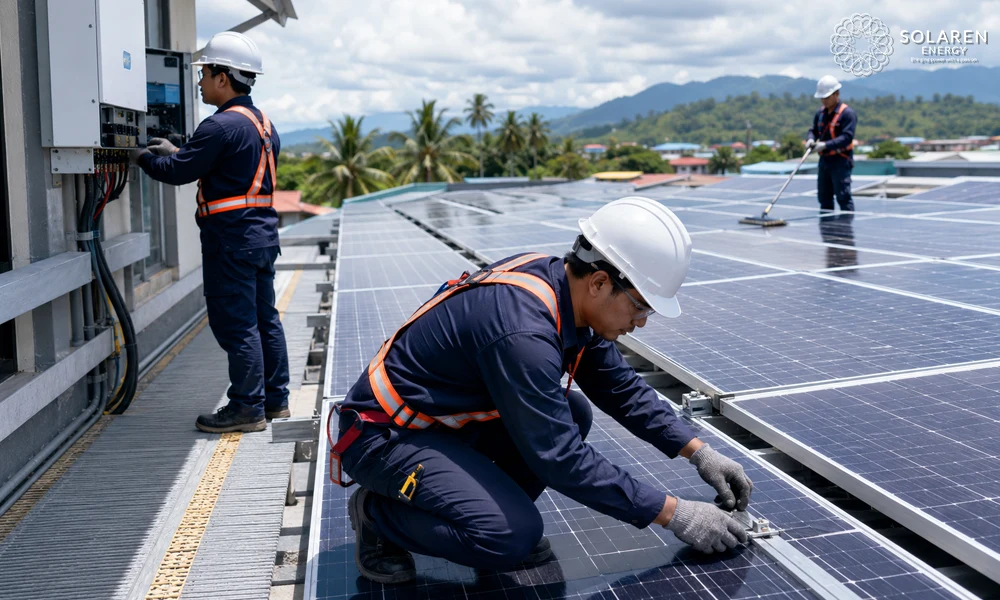
Commissioning is not the end of the project. Panels need cleaning. Mounting hardware needs periodic inspection and re-torquing. Inverters require software updates. Cables should be checked for heat damage or rodent interference. Grid changes occasionally require system adjustments.
An EPC that relies on subcontracted labour or temporary installation crews cannot provide consistent after-sales support. The people who installed your system are gone. Nobody who shows up for maintenance has any direct knowledge of how the system was built.
Solaren’s installation and maintenance teams are in-house. The technicians who commission a system are the same people who support it afterward. That continuity matters when something needs attention.
Procurement Transparency Matters More Than Most Clients Realize
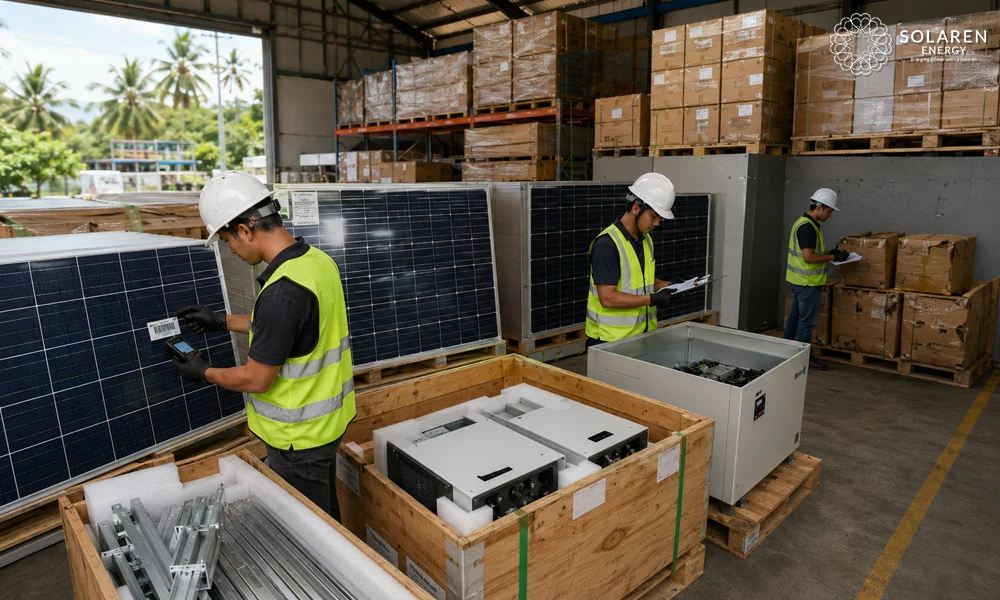
Solar equipment looks identical on paper. The difference between genuine, properly handled components and mishandled, grey-market, or counterfeit batches often becomes visible only years later through degrading performance or unexpected failures. Counterfeiting is a genuine issue in the Philippine market.
A trustworthy EPC can describe its supply chain in detail. Who their suppliers are. How equipment is imported, inspected, and stored. How serial numbers are verified. If an installer cannot or will not answer these questions directly, you are carrying a risk you may not be aware of.
Experience Across Different Industries Produces Better Judgement
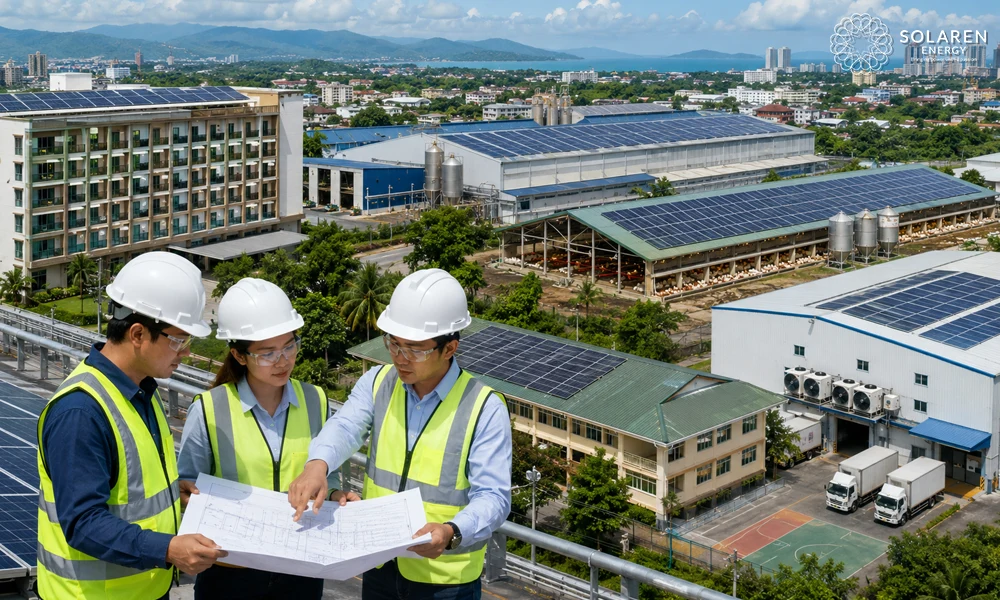
A hotel, a factory, a poultry farm, a school, and a cold storage facility all have different consumption profiles, load behaviours, and structural conditions. An EPC with broad commercial experience learns how to design for these variations. One that primarily serves residential clients, or that has only done a handful of commercial projects, may miscalculate load behaviour, misjudge wiring requirements, or miss structural issues that an experienced engineer would catch immediately.
Ask specifically about projects in your sector and at a comparable scale. References matter more than brochures.
Three Questions That Reveal the Truth Quickly
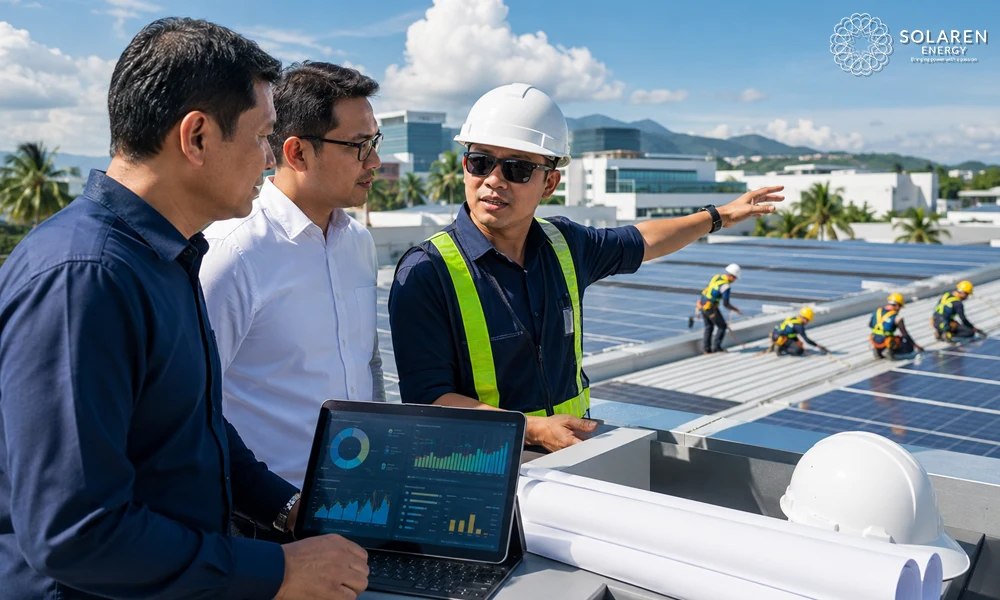
If you want a fast way to evaluate any solar company you are considering, ask these three questions.
Who is your lead engineer and how long have they been working in commercial solar in the Philippines?
Can you show me a live monitoring portal for a current commercial client of comparable scale to my project?
Are your installation teams employed directly by your company, or are they subcontracted?
The answers will tell you more than any sales presentation.
Why Price Should Not Be Your First Filter
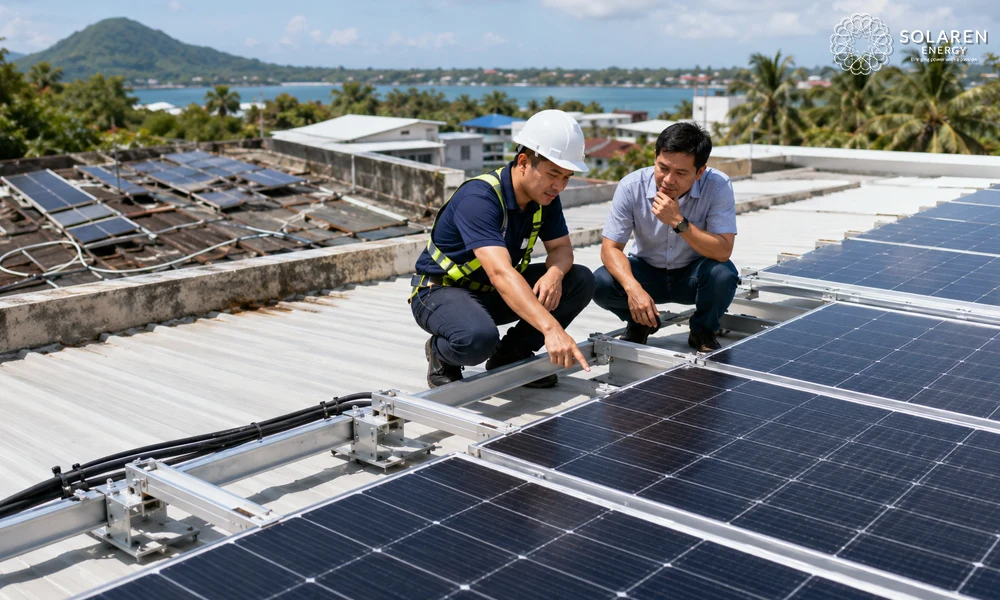
Low pricing is almost always made possible by compromises that are not visible at the time of purchase. Undersized cables. Lighter mounting hardware. Rushed workmanship. Minimal structural reinforcement. These decisions save the installer money, not the client. The costs appear later, in maintenance expenses, performance losses, and in some cases structural failures.
Solar is a minimum 25-year commitment. A modest difference in upfront cost frequently produces a very large difference in lifetime value. Evaluate proposals on the basis of engineering depth, equipment specification, compliance track record, and after-sales capability, not on who quoted lowest.
Contact Solaren for a free site assessment. We will give you a proposal built on a genuine inspection of your site, not a template, and we will answer every question in this guide directly.
Frequently Asked Questions: Choosing a Solar EPC in the Philippines
-
What does EPC stand for and why does it matter for solar?
EPC stands for Engineering, Procurement, and Construction. In solar, it refers to a company that takes full responsibility for designing the system, sourcing all equipment, and completing the physical installation. The reason it matters is accountability. A true EPC owns every decision across the entire project. A company that subcontracts design to one party, procurement to another, and installation to a third has divided accountability, which creates gaps when something goes wrong.
-
How do I verify that a solar company is genuinely DOE-accredited?
Ask for the actual accreditation certificate, not just a logo on a website. The certificate should be current, display the company’s registered name, and be verifiable through the Department of Energy. You can also ask for PCAB licensing documentation, SEC registration, and BIR compliance certificates. A legitimate solar EPC will produce all of these without hesitation.
-
What is the difference between a solar EPC and a solar reseller?
A reseller sells solar equipment or packages, often sourced from a manufacturer or distributor, and may arrange installation through third-party contractors. An EPC designs the system in-house, procures equipment directly, and installs using its own teams. The distinction matters because a reseller’s accountability ends at the sale. An EPC’s accountability continues through the life of the installation.
-
How many commercial projects should a solar EPC have completed before I consider them for my site?
There is no fixed number, but you should be able to see verifiable references in your industry or at comparable system scale. A company with 10 large commercial installations and live performance data is more credible than one with 100 residential systems and no commercial track record. Ask for references you can actually contact, not just a list of client names.
-
What should I do if two proposals have very different system sizes for the same site?
Ask both providers to explain their sizing methodology in detail. Differences in proposed capacity usually reflect different assumptions about your consumption profile, self-consumption ratio, or net metering strategy. Both explanations should be grounded in your actual utility bill data and site conditions. If one provider cannot explain their sizing clearly, that is a concern regardless of which direction their proposal went.
-
Is it worth paying more for a solar EPC with stronger after-sales support?
Yes, consistently. The financial return on a solar system is a function of performance over 25 or more years. A system that degrades faster than projected, or that has recurring issues that are not addressed promptly, produces a materially lower lifetime return than one that is maintained well. The cost of good after-sales support is small relative to the difference it makes to long-term performance.