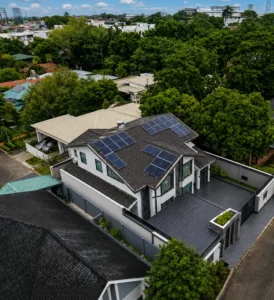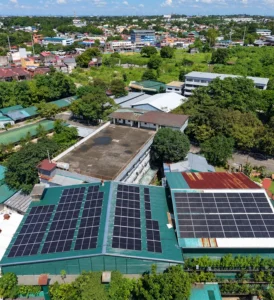
Rising electricity costs in the Philippines are not a temporary problem waiting to be solved. They are a structural feature of operating here. The country imports the vast majority of its fuel. When global energy prices rise, Philippine electricity tariffs move with them. Commercial and industrial consumers absorb those increases through their bills, and the bills flow directly into operating costs. Foreign exchange rates also affect how much everyone pays for power.
For any business where electricity is a significant input, that relationship between tariffs and margins is not abstract. It shows up in the numbers every month. And the businesses that have addressed it through solar are now operating with a meaningfully different cost structure than those that have not.
The margin improvement from correctly specified commercial solar is not small. Across Solaren’s commercial and industrial portfolio, businesses with the right load profile regularly reduce their electricity bills by 30 to 40 percent. On any meaningful energy spend, that is a direct and permanent improvement to operating margin.
How the Margin Improvement Actually Works
Electricity sits in different places on different income statements. For a manufacturer, it is typically part of the cost of goods sold. For a retailer, it is usually an operating expense. For a cold chain operator, it is both. But wherever it sits, reducing it improves the margin at that level.
A business spending PHP 500,000 per month on electricity that reduces that bill by 35 percent saves PHP 175,000 per month. That is PHP 2.1 million per year flowing directly to the bottom line. It is not incremental revenue that requires sales effort to generate. It is a cost that has been permanently reduced by a capital investment with a defined payback period.
After payback, the dynamic changes further. The capital has been recovered. The electricity being generated is essentially free. The margin improvement from that point is no longer offset by any repayment obligation. For a business with a three-to-four-year payback, that means fifteen to twenty years of improved margin from a single investment decision.
The financial framework for modelling this properly is in The Ultimate Guide to Commercial Solar ROI in the Philippines. The numbers work differently depending on tariff level, load profile, and system specification, but the direction is always the same.
Food Manufacturing and Processing
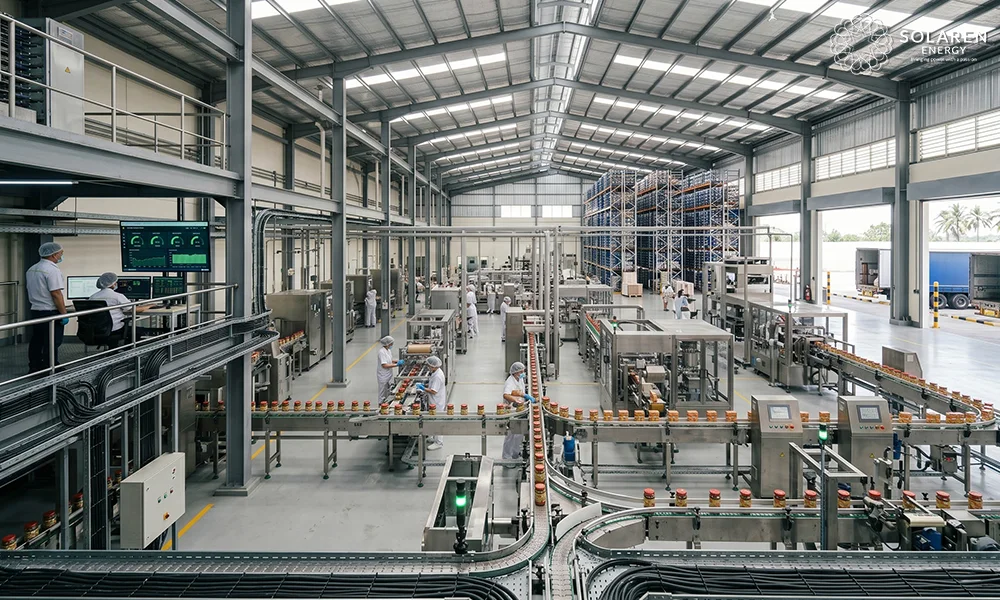
Food manufacturers in the Philippines carry electricity costs at multiple points in their operations. Cooking, mixing, packaging, refrigeration, and climate-controlled storage all draw continuous power during production hours. For facilities running day shifts, solar generation maps directly onto the consumption profile.
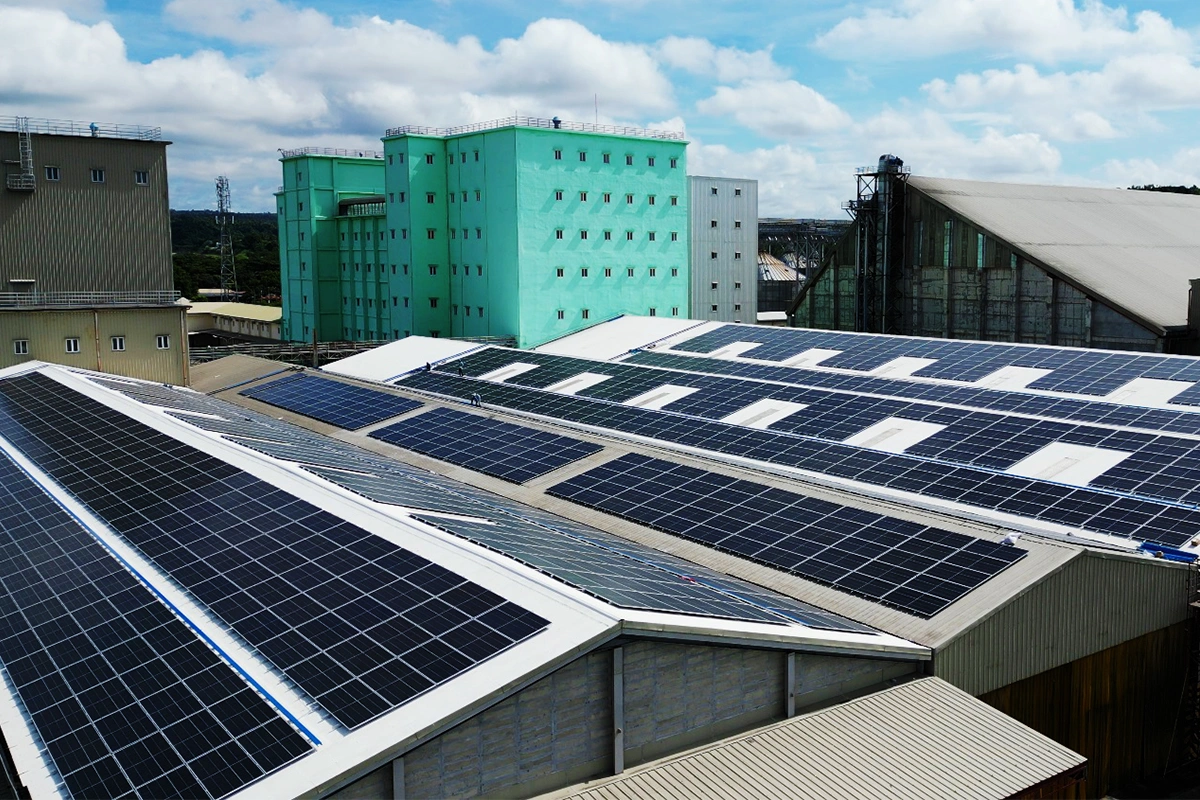
Atlantic Grains operates the largest grain importing, processing, and storage facility in the Philippines. Silos, conveyor systems, drying equipment, and continuous processing lines run throughout the day. The solar installation at Atlantic Grains generates over two million kilowatt-hours annually. At PHP 10 per kilowatt-hour, that is PHP 20 million in avoided grid cost per year. The margin improvement on a facility of that scale is significant and permanent.
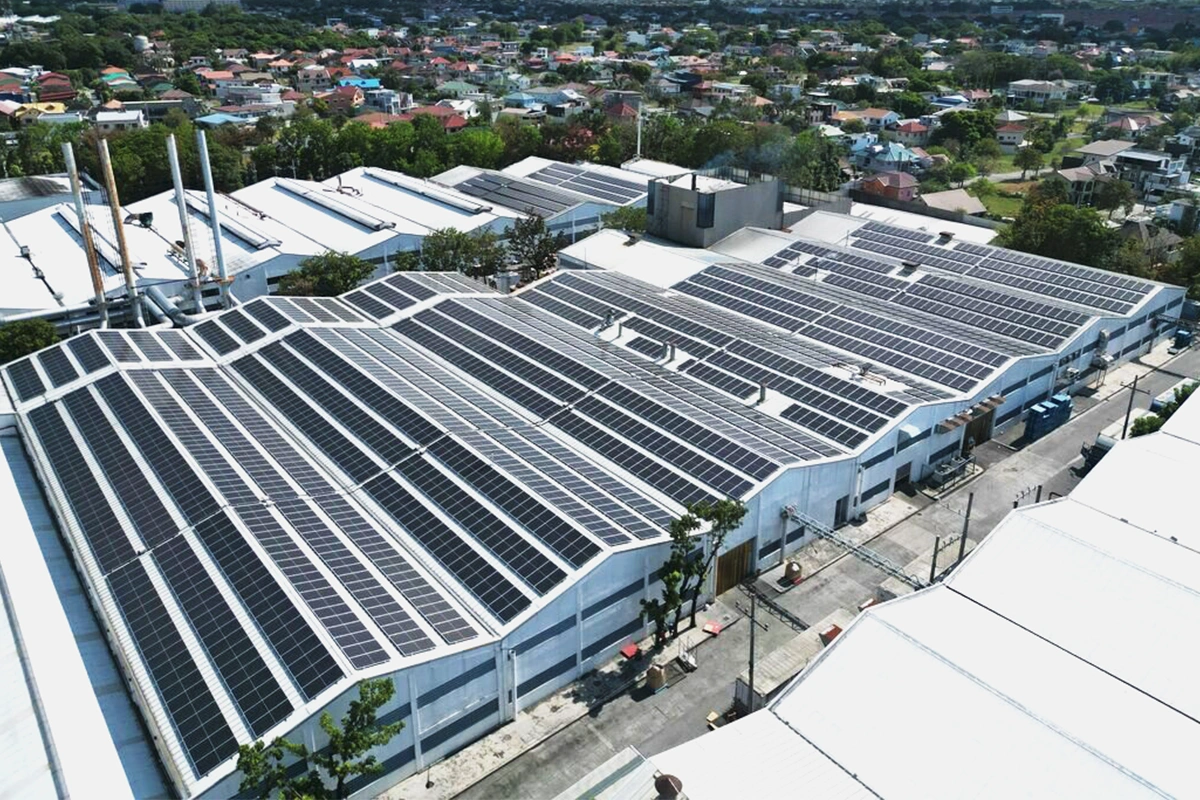
Oishi runs continuous snack food production across multiple facilities. Cooking lines, packaging equipment, and process machinery operate around the clock, with the heaviest load during daytime hours. Multiple phases of solar installation across the Oishi portfolio now offset a substantial portion of daytime consumption. For a business at that production scale, the electricity cost reduction feeds directly into the cost of goods sold and improves the margin on every unit of product produced.
Agriculture and Livestock
For poultry and livestock operations, electricity is not a small cost. Ventilation, feeding systems, water circulation, temperature management, and lighting run continuously. The load is steady and predictable, which makes it an almost ideal match for solar generation.
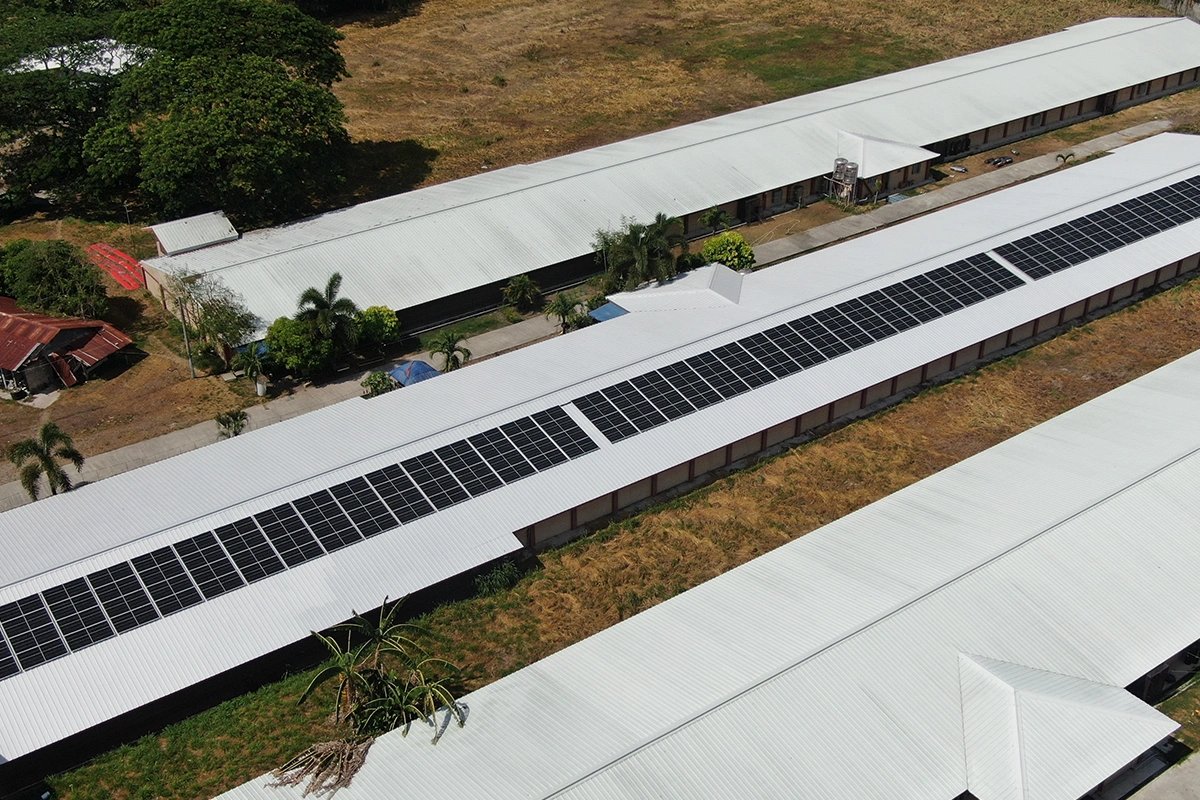
The poultry farm case study in Tarlac documents what this looks like over time with real bills and real meter data. Over 40 billing months, the 100kWp installation saved PHP 5,759,547 in verified electricity costs. That is not a projection. It is a reconciled figure from paid utility bills. The margin improvement on a farm operation of that size is the difference between a profitable grow-out cycle and a marginal one when feed and other input costs are under pressure.
The key point is that 80 percent of the generation was consumed on-site. The load profile matched the generation profile. That alignment is what produces the strongest margin improvement, and agricultural operations are among the best candidates for it because their daytime load is both substantial and consistent.
Retail and Commercial Buildings
For retail businesses, electricity sits primarily in operating expenses. Lighting, air conditioning, refrigeration, and point-of-sale systems run throughout trading hours. For operations in high-tariff areas, electricity can easily represent five to ten percent of total operating costs or more. We have seen 50% on some businesses.
A reduction of 30 to 40 percent in that line item is not trivial. For a retail chain operating multiple sites, the aggregate margin improvement across the portfolio can be substantial. The businesses in Solaren’s retail portfolio that see the strongest results are those where trading hours align well with solar generation hours. A store that opens at nine and closes at nine captures most of the solar day. A 24-hour operation captures only part of it.
Gasoline Stations and Mixed Commercial Sites
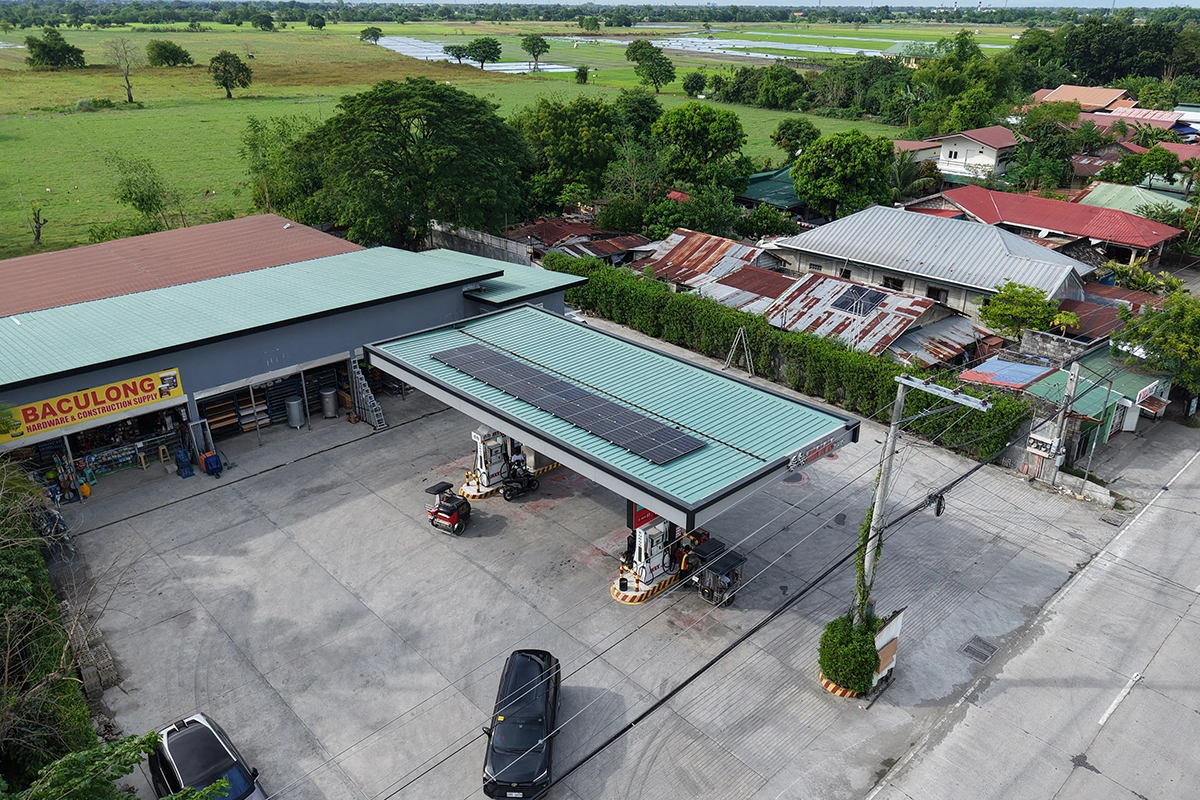
Forecourt lighting, canopy systems, refrigeration in the convenience store, digital POS infrastructure, and back-of-house equipment create a steady daytime load on petrol station sites. A gasoline station network, which operates across Tarlac Province, has installed solar across multiple sites precisely because the load profile is consistent and the margin improvement is predictable.
For mixed commercial sites with multiple tenants, solar reduces the common area electricity burden and can flow through to reduced operating costs for tenants, improving the property’s competitiveness and occupancy economics.
The Facilities Where the Advantage Is Greatest
The margin improvement from solar is not uniform across all business types. It is directly proportional to how well the facility’s daytime load profile matches the solar generation curve.
A facility that runs heavy equipment continuously from six in the morning to six in the evening, six or seven days a week, is an almost perfect solar candidate. Every kilowatt-hour generated is consumed on-site. Nothing is exported. The avoided grid cost is maximized. The margin improvement is as large as the system can deliver.
A facility with a strong nighttime load and light daytime consumption is a weaker candidate for pure grid-tied solar. The generation happens when the facility does not need it. Export under net metering recovers some value, but less than direct consumption would. For those facilities, a hybrid system with battery storage changes the equation by allowing solar generation to be stored and consumed when the load actually exists.
The honest starting point for any margin improvement analysis is a load profile assessment. Understand when your facility uses electricity, match that against when solar generates, and the margin improvement potential becomes a calculable number rather than an assumption.
The Balance Sheet Dimension

Beyond the income statement, solar ownership has a balance sheet effect that improves the overall financial position of the business.
A solar system is a depreciating capital asset. It reduces taxable income through depreciation allowances during the early years of ownership. The energy savings reduce operating costs and improve EBITDA. For businesses seeking financing, a stronger EBITDA position improves debt serviceability. For businesses seeking investment, a lower and more predictable energy cost base is a genuine operational advantage that sophisticated investors recognize.
A PPA, by contrast, produces none of these balance sheet benefits. The payments are an operating expense. There is no asset. There is no depreciation. There is no EBITDA improvement beyond the direct cost saving, which is smaller than ownership would have produced anyway.
The True Cost of Free Solar white paper covers the ownership versus PPA financial comparison in full. The margin and balance sheet arguments both point in the same direction.
The Compounding Effect
The final point on margin improvement is the one that most financial analyses understate. Electricity tariffs in the Philippines do not stay flat. They have increased over time and will continue to do so. A business that locked in its solar generation cost three years ago is now saving against a higher tariff than it was when the system was commissioned. The margin improvement grows as the tariff rises, because the solar cost stays fixed while the avoided cost increases.
That compounding effect is not speculative. It is arithmetically inevitable as long as grid tariffs continue to rise. And in the Philippines, the structural reasons for tariff increases, fuel import dependence, aging generation capacity, and growing demand have not gone away.
The businesses that acted earliest are benefiting most. The ones acting now will benefit for the next two decades. The ones still waiting are absorbing every tariff increase in full.
Frequently Asked Questions
-
How much can solar realistically reduce my electricity bill in the Philippines?
For commercial and industrial facilities with significant daytime loads, reductions of 30 to 40 percent on the total electricity bill are achievable with a correctly sized and specified system. The exact figure depends on how well your daytime consumption profile matches the solar generation curve, your current tariff, and the system size relative to your load. Facilities with consistent, heavy daytime loads typically see the strongest results. The starting point is a load analysis that shows when your facility actually uses electricity, not just how much.
-
Does solar improvement show up in EBITDA?
Yes, directly. Electricity is an operating cost. Reducing it improves EBITDA by the same amount. For a business spending PHP 500,000 per month on electricity and reducing that by 35 percent, the EBITDA improvement is PHP 175,000 per month or PHP 2.1 million per year. Beyond EBITDA, owned solar appears on the balance sheet as a depreciating capital asset, which generates depreciation allowances that reduce taxable income during the early years of ownership.
-
Which types of Philippine businesses see the biggest margin improvement from solar?
Facilities with heavy, consistent daytime loads see the strongest results. Food manufacturers, agricultural operations, cold storage facilities, manufacturing plants running day shifts, and retail operations with long trading hours are typically the strongest candidates. The common factor is that generation and consumption happen at the same time. When they do, every kilowatt-hour generated is a kilowatt-hour not purchased from the grid, and the margin improvement is maximized.