Commercial solar is mostly sold as a transaction. A system size, a price, a payback period, and a short list of components. On paper the decision looks simple. Compare quotes, pick the lowest number, install, move on.
Here is the problem with that. The cost of fitting solar panels is the only number you see clearly on day one. Every other cost arrives later, quietly, and lands on you.
The cost of fitting solar panels is not the cost of owning them. A cheap installation saves money once, at purchase. A poorly built system loses money every month for twenty five years, through lost output, downtime, and repairs that a better design would never have needed.
In reality, solar behaves less like a purchase and more like a long life electrical asset. It has to keep working under heat, humidity, dust, vibration, and a grid that does not always behave. The consequences of early design and workmanship decisions rarely show up in the first few months. They show up later. Output declines. Trips start happening. Maintenance turns reactive instead of preventive. Warranties start to feel abstract.
The mistake is not believing in solar. Solar works. The mistake is assuming every system behaves the same once it is on the roof.
If you want a full grounding in commercial solar economics, including how ROI is actually calculated and why simple payback figures often mislead, this guide lays out the financial side in detail.
That context matters because financial models only stay accurate while the physical system underneath them keeps performing. When performance slips, the spreadsheet does not update itself. The owner absorbs the difference.
This article exists to surface the risks that never appear in proposals, so you can judge whether a system will stay an asset or slowly become a source of friction.
The Price Illusion in Commercial Solar
Most commercial buyers start with price. That is understandable. Capital budgets are real, and solar is a visible line item. EPCs know this, which is why proposals tend to converge toward identical structure and language. Similar module brands. Similar inverter brands. Similar output charts. Similar warranties.
In the early phase, everything looks fine. The system produces power. Bills go down. The supplier closes the project and moves on.
Then time starts to matter.
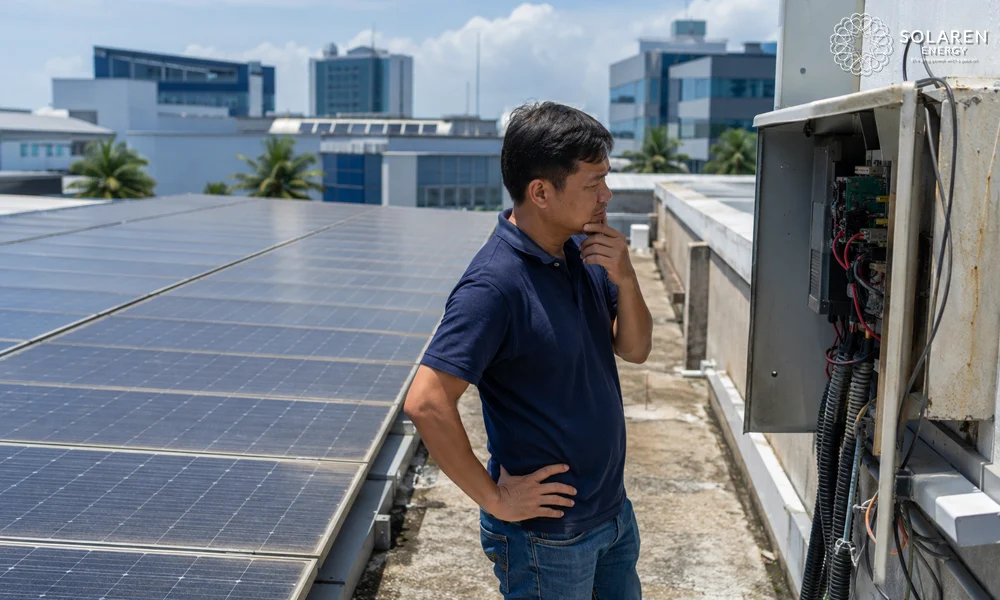
Heat cycles loosen connections. Moisture finds the weak points. Roof movement stresses cable routes. Dust builds up. Inverters run harder during peak production months. The small installation shortcuts nobody noticed at commissioning start making themselves known.
None of it is dramatic at first. That is exactly what makes it dangerous. Output does not drop to zero. It drops just enough that nobody panics. Trips happen occasionally. Faults clear themselves. Someone assumes it is normal.
We usually meet these systems years later, when a client calls because performance feels off and the original installer has stopped returning messages, or site visits keep getting postponed.
This is how systems slip from projected performance into underperformance. Not because the technology failed, but because the system was never built with long term operating conditions as the primary design constraint.
Price driven procurement encourages exactly this outcome. When the decision comes down to who is cheapest today, the future operating risk shifts to the owner. Nobody says so out loud, but that is the trade.
Installed Capacity Is Not Usable Power
Installed capacity is an easy number to sell. It fits neatly into a proposal and looks impressive on a summary page. Usable power is harder to explain, because it depends on how the system behaves in real conditions, not ideal ones.
A system can be oversized for a site and still look good on paper. It can be undersized and still carry a respectable payback claim. It can have panels strung in ways that leave inverter inputs unused, or pushed past sensible operating ranges. It can lose output to thermal derating simply because of where equipment was placed and how airflow was handled.
The gap between installed capacity and usable power is where many systems quietly lose value.
Factories tend to discover this early. Load profiles are not theoretical. Production schedules are fixed. Downtime has a price. Output consistency matters more than peak numbers.
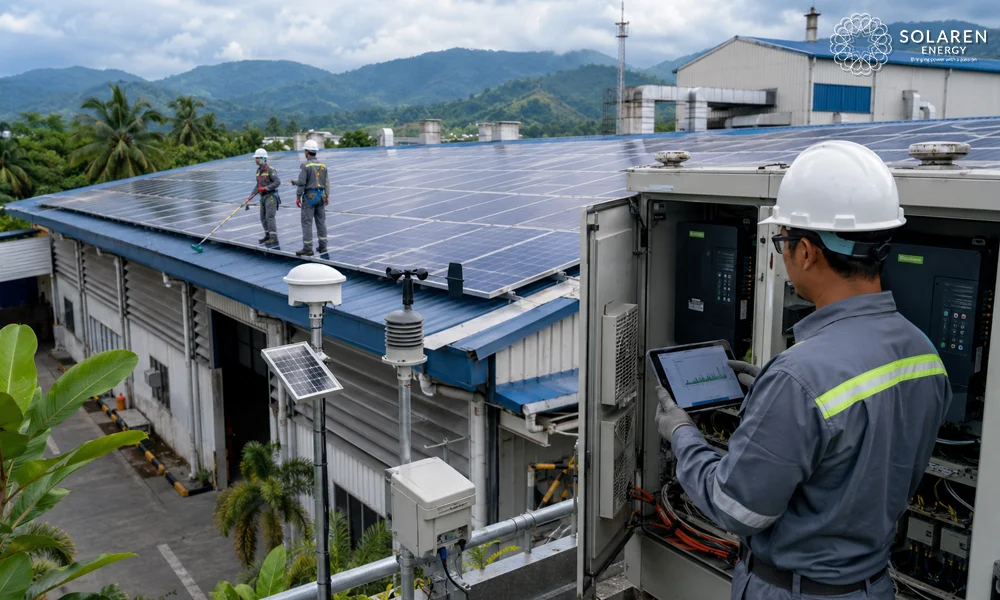
This is why certain industrial clients keep revisiting sizing decisions, monitoring strategies, and maintenance practices instead of treating installation as a one time event. The Oishi facilities are a clear example, with ongoing attention to system sizing, routine cleaning, persistent monitoring, and weather and irradiance sensors used to validate performance over time.
We have had more than one conversation with a factory operator who assumed their system was oversized, only to find through monitoring that parts of it were never fully utilised because of design or configuration choices made at installation.
The lesson is simple. Judge a solar system by what it reliably delivers under operating conditions, not by what it is rated to produce under test conditions.
Where Solar Systems Actually Fail
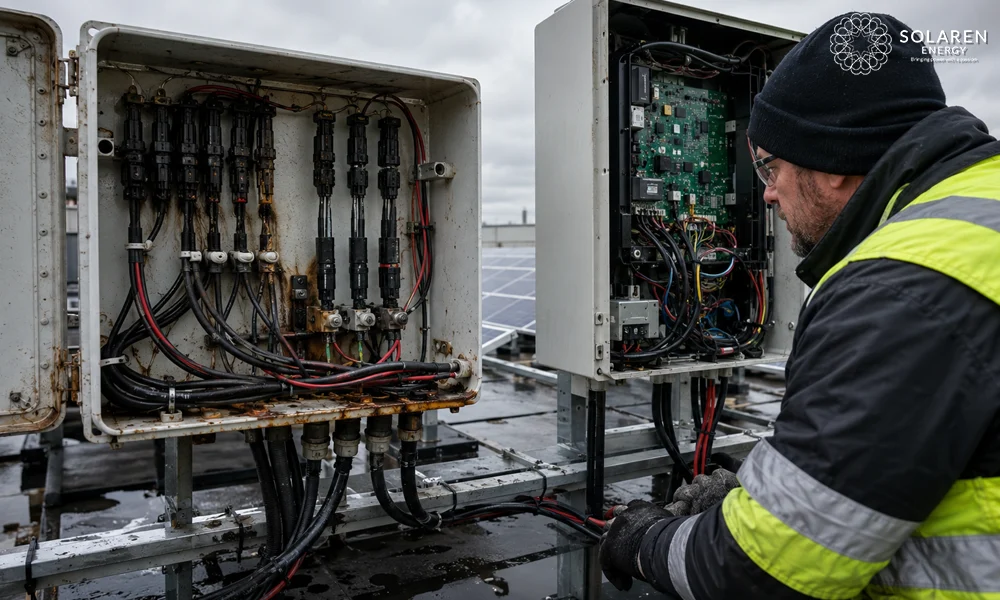
Solar failures rarely begin with panels. They begin with what connects the panels to everything else.
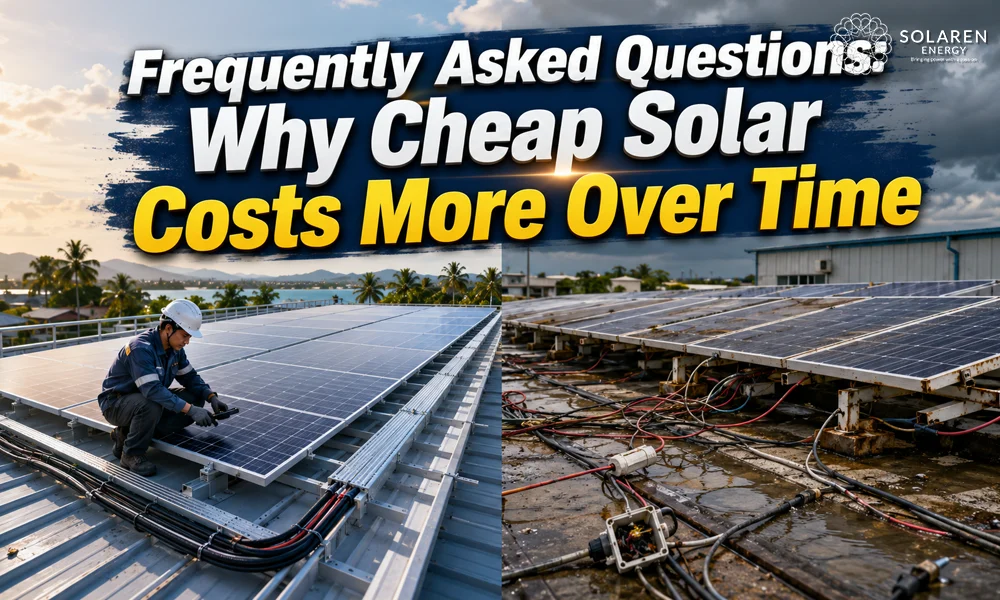
DC cabling, terminations, connectors, routing, protection, and enclosure design determine whether a system stays stable or slowly degrades. Poor workmanship here does not always cause immediate failure. It creates weak points that surface later as heat damage, insulation faults, nuisance trips, or water ingress.
Field data shows the same patterns repeating across sites. Inadequate strain relief. Inconsistent connector crimping. Cables exposed to standing water or UV beyond their rating. Junction boxes that were never designed for sustained humidity. These are not theoretical risks. They are measured outcomes.
A detailed discussion of these issues, based on field experience and failure analysis, is laid out in this white paper.
In several site inspections we have done, the visible failure was an inverter fault. The root cause traced back to DC workmanship decisions made years earlier and never revisited.
What makes these failures expensive is not just the repair. It is the disruption. A DC fault can shut down part of a system indefinitely if it is hard to trace. Repairs may mean lifting panels, stopping production, or replacing components that were never meant to be consumables.
None of this shows up in the cost of fitting solar panels. All of it shows up in the cost of owning them.
Downtime Is the Cost Nobody Models
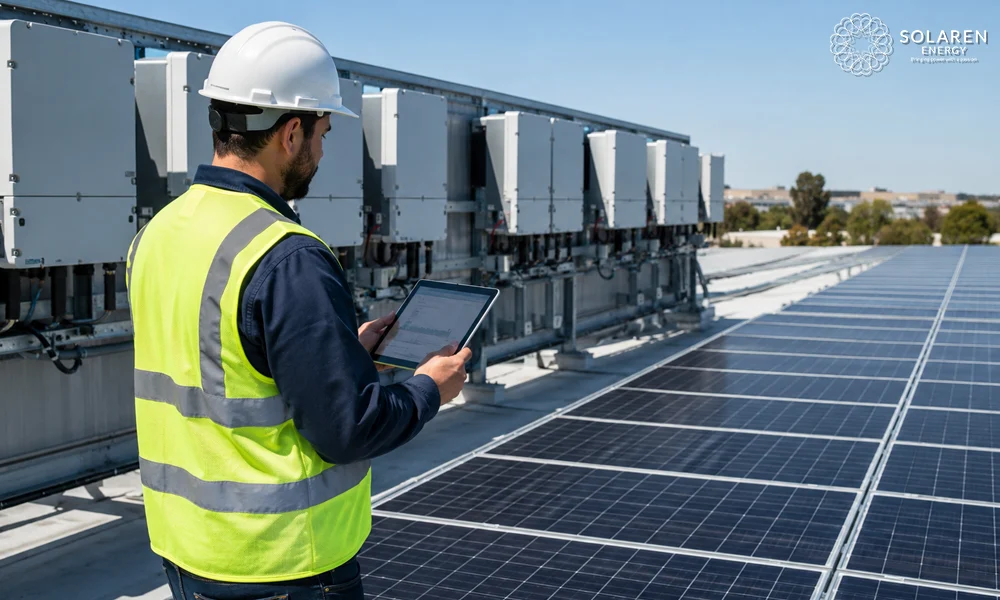
ROI models assume availability. They assume the system is producing whenever the sun is out. They rarely price in trips, partial failures, or long stretches of running below capacity.
Downtime does not always look like a blackout. It often looks like a system running at 70 percent. An inverter that drops out on hot afternoons. A fault that clears itself but comes back every few weeks.
Over the years, those losses add up.
One way to understand what long term dependability actually looks like is to study systems that have simply kept running. Some early commercial installations have held consistent uptime for more than a decade after commissioning. Not because they were overbuilt for marketing purposes, but because conservative design, solid workmanship, and persistent care were treated as non negotiable from the start.
That kind of performance does not happen by accident. It happens because someone took responsibility past installation day.
When you evaluate a proposal, ask yourself one practical question. Who notices if this system underperforms next year? And who has the incentive to fix it?
The Myth of the Warranty
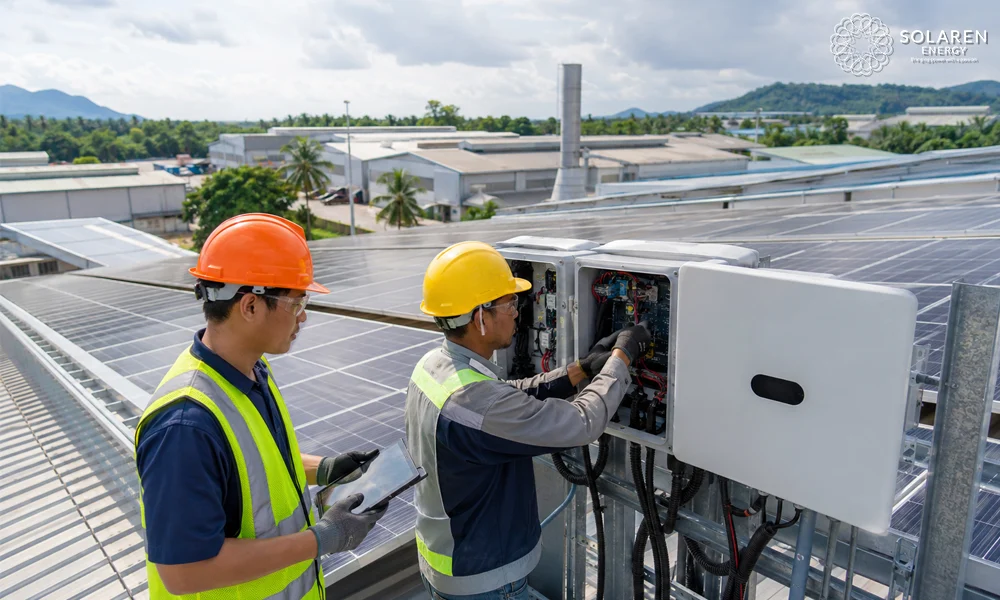
Warranties get presented as a catch all safety net. In practice, they only work if the company standing behind them is still present, staffed, and willing to act.
Plenty of solar warranties sound strong on paper. Far fewer translate into rapid diagnosis, site visits, and real fixes when something goes wrong. Manufacturer warranties do not replace good system design. They do not cover downtime. They do not manage the interface between components installed by different parties.
What actually matters is whether the EPC treats long-term performance as part of its responsibility, or as something that ends at handover.
This page explains how Solaren defines itself differently on exactly this point, putting accountability ahead of sales promises.
Treat a warranty as a backstop, not a strategy. If you are counting on it to rescue a poorly designed system, you are already exposed.
Transaction Mindset Versus Ownership Mindset
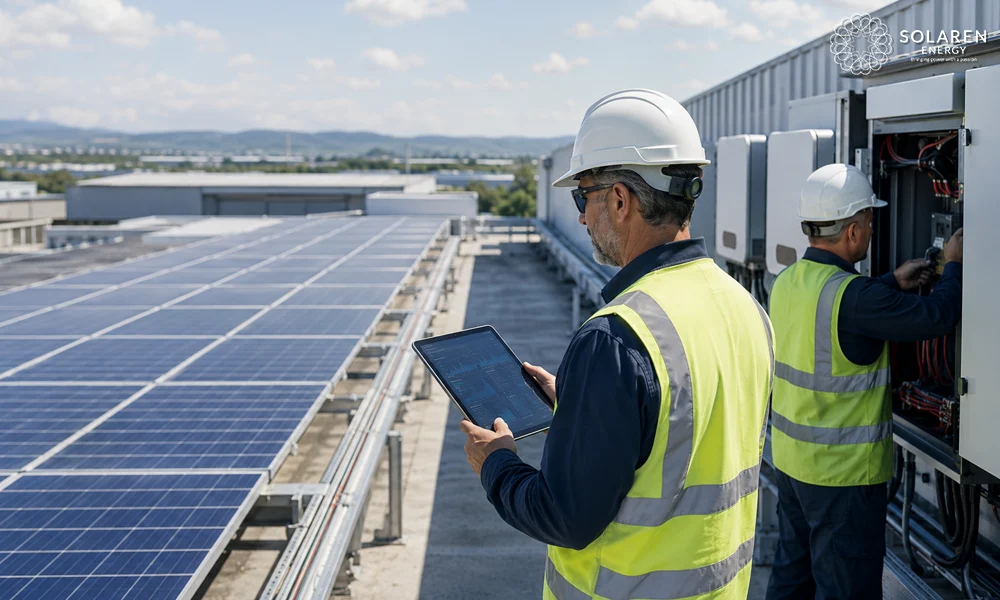
There is a fundamental difference between buying solar as a transaction and owning solar as infrastructure.
A transaction mindset focuses on closing the deal. An ownership mindset focuses on how the system behaves five, ten, or twenty years later. The difference shows up in design margins, component selection, monitoring, maintenance planning, and staffing.
Teams matter here. Long-term accountability does not come from brochures. It comes from people who understand the systems they build and remain involved after commissioning.
This ownership perspective is increasingly relevant as the market matures. Financial engineering and investor-led models commonly prioritise deployment speed and headline capacity. Owner-focused models stress control, reliability, and lifecycle value. That shift is explored in depth in this guest article.
Solar is not only about generating power. It is about controlling risk.
What Quality Looks Like in Practice
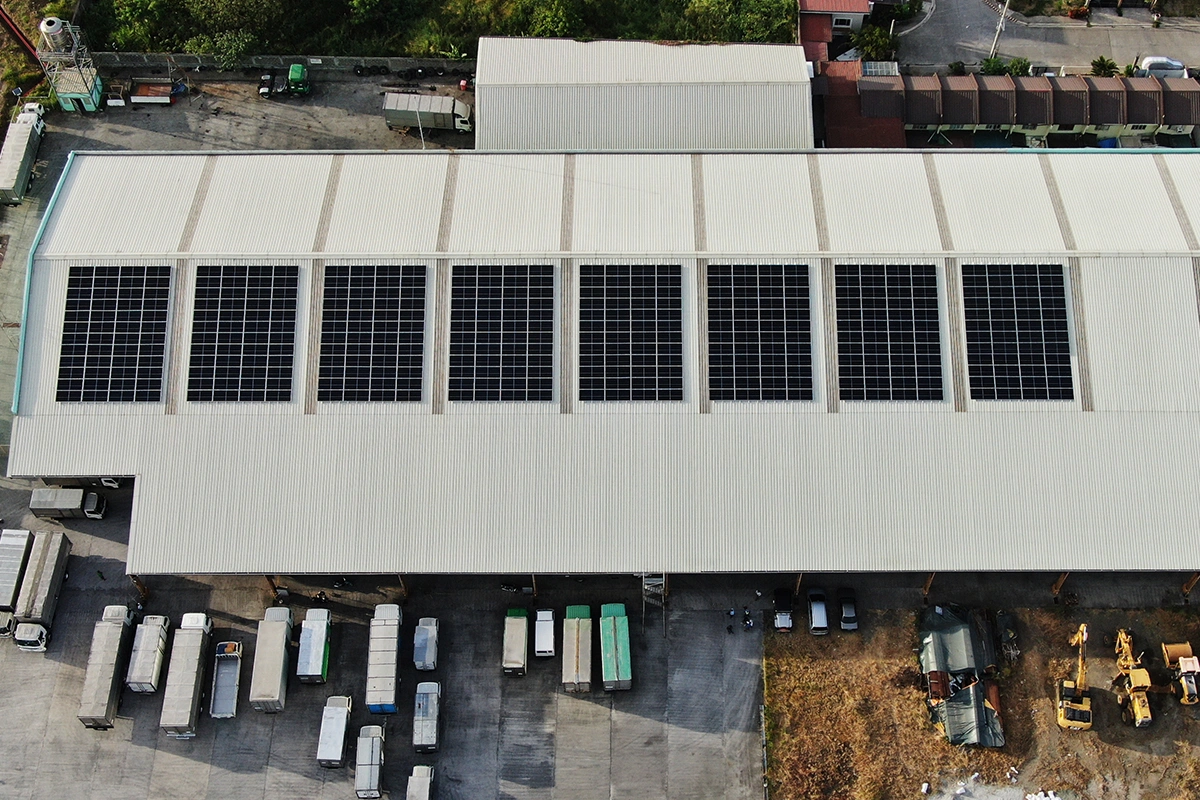
Quality in solar is not obvious at first. It shows up in boring ways. Stable output. Predictable behaviour. Fewer emergency site visits. More inspection visits.
Different sectors reveal this in different ways. Warehousing and storage facilities demand consistency. Milling operations need reliability under load. Educational institutions need protection and endurance.
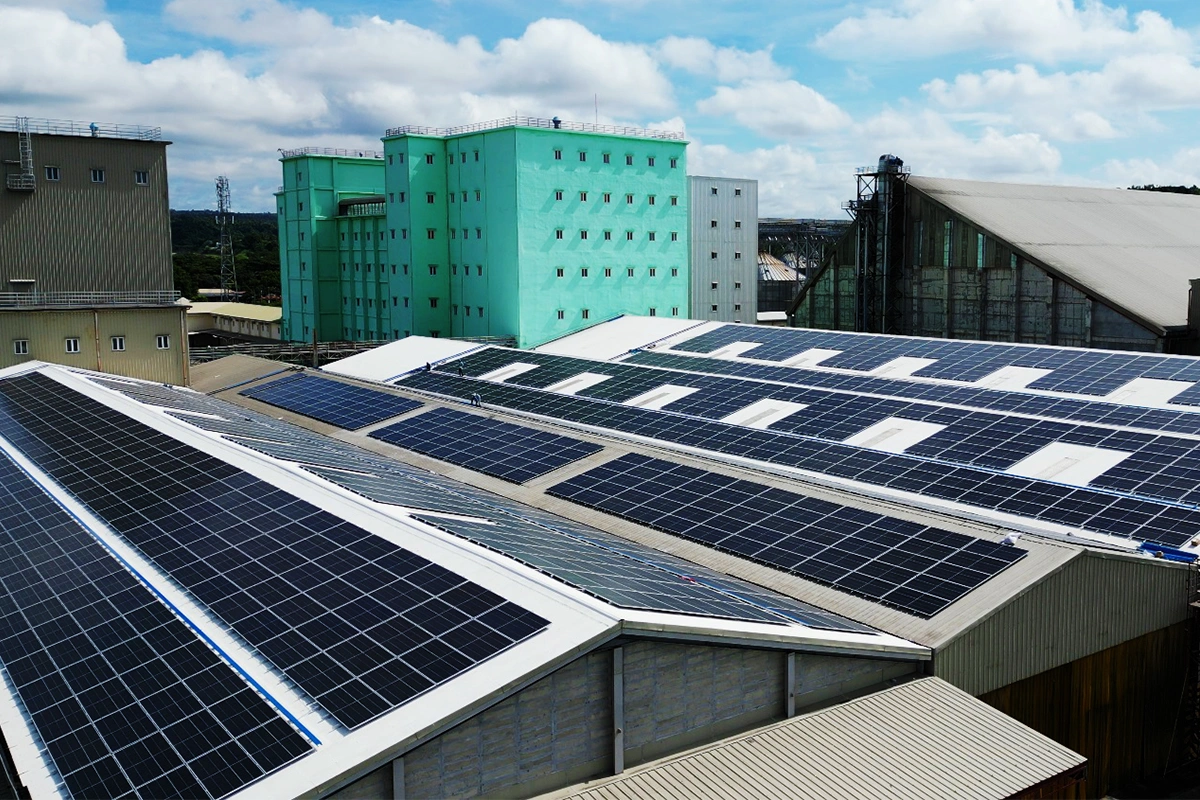
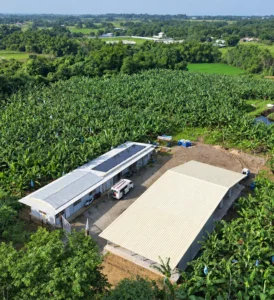
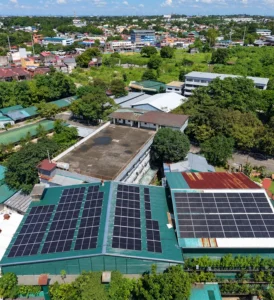
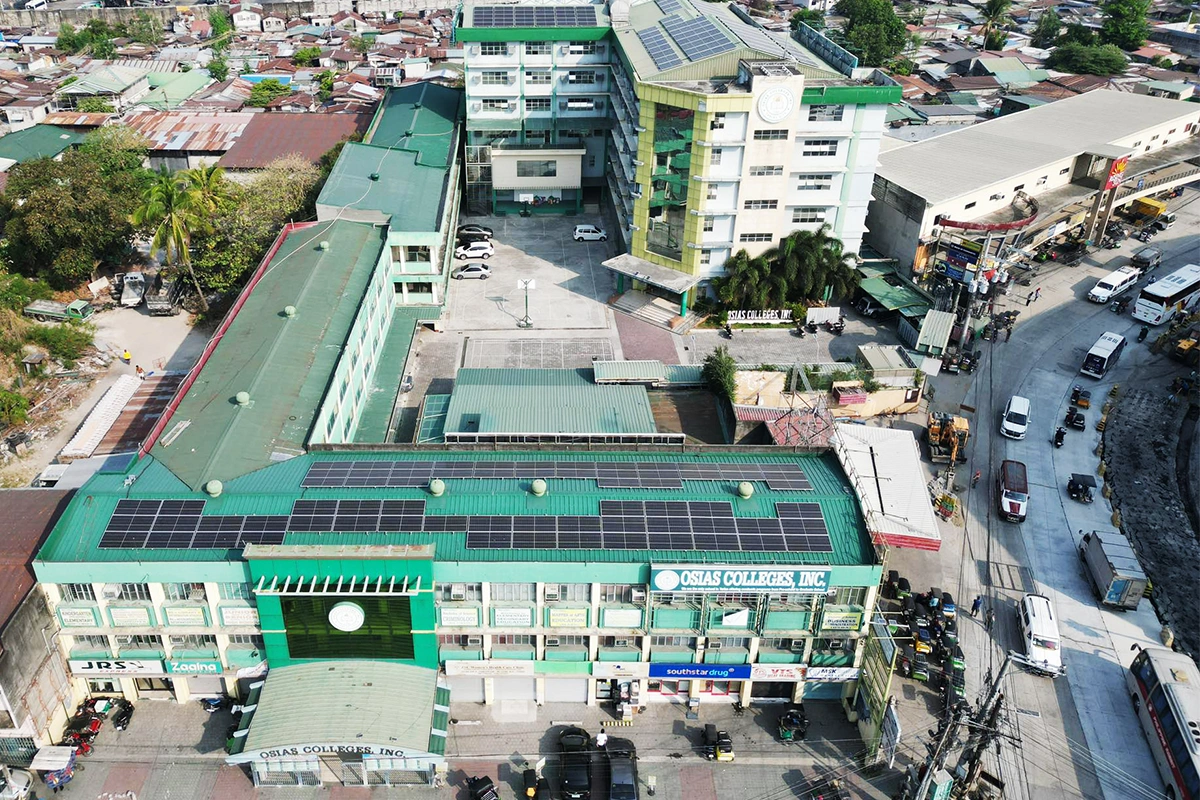
Projects such as J Poon Realty, Atlantic Grains, and Osias Colleges illustrate how design decisions adapt to operating context rather than forcing a standardised solution onto every site.
Modern systems progressively extend this thinking into monitoring and analytics. Predictive instruments, data visibility, and early fault detection are becoming part of what separates stable systems from fragile ones. That broader view of power reliability is explored here.
Quality is not about premium branding. It is about reducing surprises over time.
Frequently Asked Questions: Why Cheap Solar Costs More Over Time
-
How do I know if a low-priced solar proposal is cutting corners?
Ask for the specific brand and model of every major component: panels, inverters, mounting hardware, DC cabling, and connectors. Then research each one independently. Look for verified third party test data, manufacturer warranty terms, and whether the brand has an established service presence in the Philippines. If the installer is vague about component specifications or resistant to sharing them before signing, that is a clear signal.
-
What are the most common failure points in a poorly installed commercial solar system?
Field experience consistently points to DC side workmanship rather than panel or inverter quality. Inadequate connector crimping, poor strain relief, cables routed through areas with standing water or UV exposure, and junction boxes not rated for sustained humidity are recurring issues. These do not cause immediate failure. They create weak points that surface as heat damage, insulation faults, nuisance trips, or water ingress over months and years.
-
Does a longer warranty mean a system is higher quality?
Not necessarily. A warranty is only as strong as the company standing behind it. Many solar companies offer long warranty periods but lack the staffing, systems, or financial stability to honour them years later. What matters more than the length of the warranty is whether the EPC has in-house technical teams, a monitoring infrastructure that detects problems early, and a track record of actually responding to post-installation issues.
-
How much output loss should I expect from a well designed versus a poorly designed system over ten years?
Panel degradation is normal and is factored into quality manufacturer warranties, typically 0.5% to 0.7% per year. A well designed system with quality components and proper maintenance should stay within those published degradation curves. A poorly designed or maintained system can underperform those benchmarks significantly through avoidable losses: thermal derating from poor equipment placement, DC losses from undersized cabling, partial shading from poor layout decisions, and recurring inverter faults. Over ten years, the gap between a well run and a poorly run system of the same nominal capacity can be substantial.
-
Is a higher cost of fitting solar panels worth paying upfront?
Almost always yes. The financial return on a solar system is determined by what it actually generates over its operating life, not what it is projected to generate on installation day. A system that costs 15% more upfront but performs consistently for 25 years produces a far better lifetime return than one that was cheaper at purchase but underperforms by even a small margin year after year. The difference in the upfront cost of fitting solar panels is usually recovered within the first few years through better performance alone.
-
How do I evaluate whether a solar company will still support my system in ten years?
Look at how long they have been operating, whether they have in-house engineering and maintenance teams rather than subcontracted labour, and whether they can show you verifiable performance data from installations that are five or more years old. A company that has been maintaining systems for a decade and can show those systems still performing has demonstrated something no brochure can replicate.
-
What does good ongoing maintenance actually involve for a commercial solar system?
Regular panel cleaning, typically every one to three months depending on site conditions. Annual inspection of all DC connections, cable routes, and mounting hardware. Inverter software updates are released by the manufacturer. Thermographic scanning to catch hotspots in panels or connections before they cause failure. Continuous remote monitoring with alerts for production anomalies. These are not optional extras. They are the difference between a system that holds its performance and one that quietly degrades.
Choosing a Solar System You Can Live With for Twenty Years
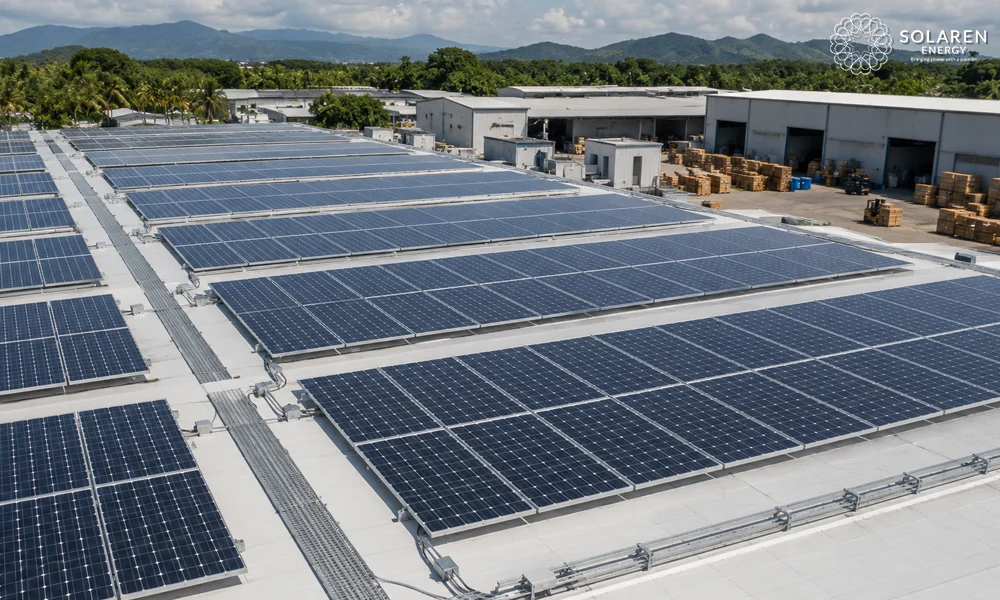
A solar system will outlast the excitement around it. It will sit on your roof while staff, management, and priorities change. The question is not whether it will generate power. The question is whether it will remain an asset you trust.
Before choosing a system, look at how different projects behave over time, not just how they were sold.
From there, understanding who is behind those projects, how they think, and how they approach long term responsibility becomes part of the decision, not an afterthought.
Cheap solar does not usually fail immediately. It fails by accumulating small compromises until ownership becomes a burden. The cost of fitting solar panels is the number on the proposal. The cost of living with them is the number that decides whether the investment was any good.
Well-designed solar does the opposite. It fades into the background, keeps working, and justifies its existence year after year.
That difference is rarely visible on the first page of a proposal. It is visible everywhere else.